The Art of Italian Shoe Making
Italian shoes are famous for a reason, but the reputation only helps you if you know what it rests on. Understanding Italian shoe making is about knowing what separates a well-made pair from one that merely looks the part, so you can spend wisely.
From the Marche factories to the tanneries of Tuscany and the workshops of Naples, shoemaking is a serious craft across Italy. This guide covers what defines the Italian approach to luxury footwear, walks through how high-end Italian leather shoes are made today, step by step, and shows what you can check on the finished shoe at each stage. If you want the full category overview first, start with our Italian Designer Shoes: The Complete Guide.
What Defines the Italian Approach to Luxury Footwear?
Four things recur in how expert writers describe Italian shoes:
- Elegant lasts. The last, the form a shoe is built around, sets its silhouette and fit. Italian lasts are generally longer and sleeker than traditional English ones and lean fashion-forward, which is why sizing and width can differ from what you are used to; see how Italian designer shoes should fit.
- Light, flexible construction. Many quality Italian factory shoes use Blake or Blake-Rapid stitching, which gives a thinner, more flexible sole than the machine-made Goodyear welt typical of English and American shoes.
- A strong leather supply chain. Entire Italian towns are devoted to tanning. See our map of the Italian tannery regions.
- Hand finishing. Many makers finish colour by hand. Santoni, for instance, describes up to fifteen thin layers of hand-applied colour (its “velatura”), each dried before the next.
Why Handmade Italian Shoes Are Special
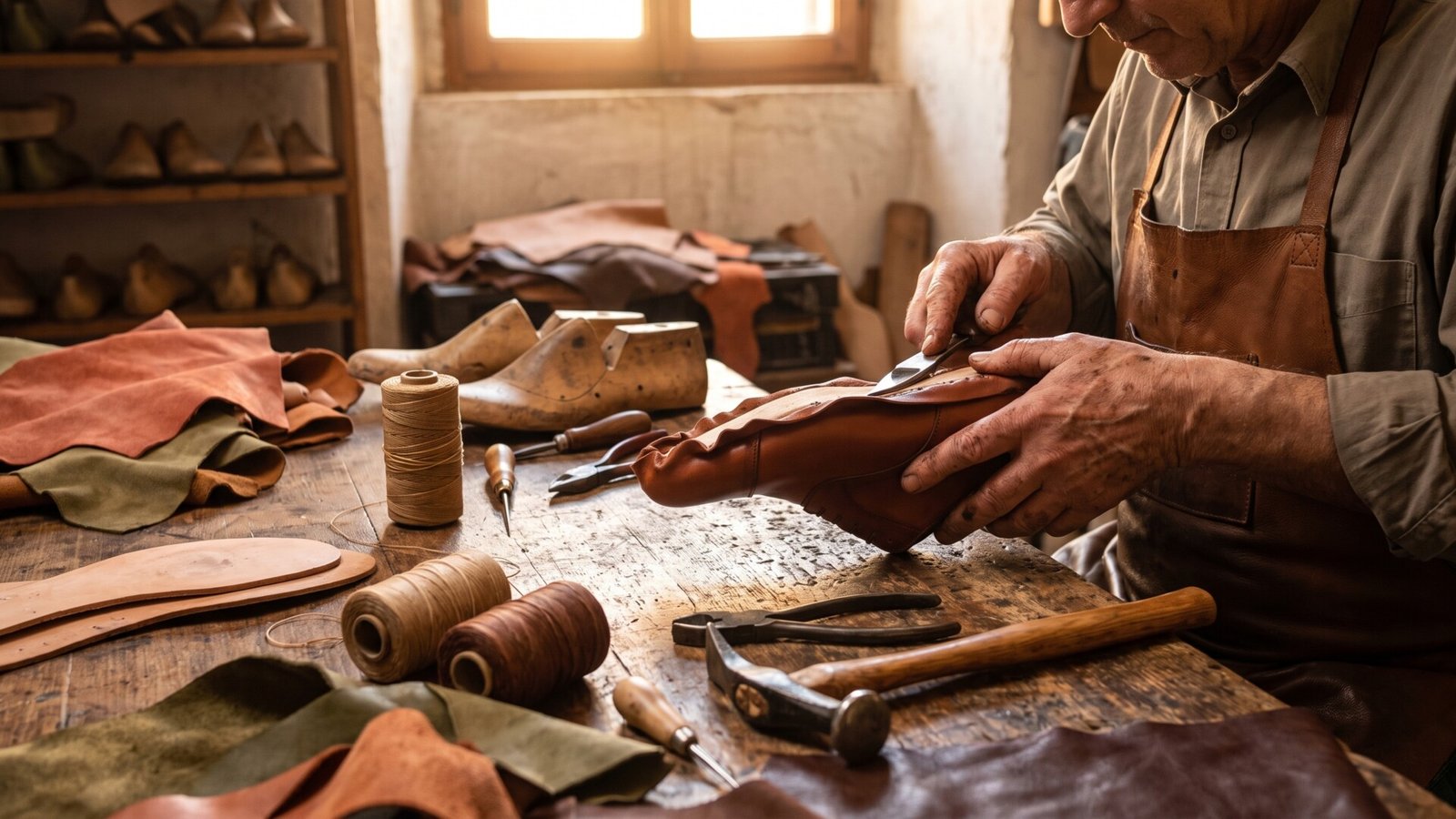
“Handmade” is a spectrum. At one end, bespoke shoemakers build a unique last for each customer and sew shoes by hand; Italian bespoke shoes are usually hand-sewn welted. At the other end are factories where much of the work is mechanised. Most luxury Italian shoes sit between the two: designed and finished by hand in places, assembled with machines in others. Santoni, for example, sells made-to-measure shoes that are entirely handmade, while its retail line combines hand work with some machinery.
That matters for expectations. A well-made leather shoe softens, takes on the shape of the foot and develops a patina whether or not every stitch was hand-sewn. For a deeper look at what “artisan” should and shouldn’t mean, read Handmade Italian Shoes Explained and our shorter craftsmanship spotlight.
Ready-to-Wear, Made-to-Measure and Bespoke
- Ready-to-wear: standard lasts and sizes, bought off the shelf. This is what nearly all boutique and online shoes are.
- Made-to-measure: the maker starts from its own lasts and adjusts fit, leather, colour or sole to your order. Santoni’s made-to-measure double monks have been reported at $7,830 for a first pair and $4,350 for later pairs.
- Bespoke: a last is made from your own measurements, usually with fittings over several months. This is the tradition Naples is best known for.
The labels are not regulated, so ask whether a new last is made for you. That single question separates bespoke from made-to-measure.
How High-End Italian Leather Shoes Are Made Today
Most writing on Italian shoemaking describes the steps and stops there. The more useful question is what each step leaves behind that you can check in a shop. Here is the sequence a luxury Italian factory typically follows, using Santoni’s published process as a reference point, with the evidence each stage leaves on the finished pair:
| Stage | What happens | Where skill matters | What you can check |
|---|---|---|---|
| 1. Last and pattern | The last is chosen or developed; patterns are drawn for each size | Fit, toe shape, heel grip | Heel slip, pressure at the widest part of the foot |
| 2. Hide selection and cutting | Hides are inspected; cutters place pieces to avoid flaws and match grain | Using the best part of the hide for the vamp | Even grain and colour on both shoes; no creasing or loose grain at the toe |
| 3. Closing | Upper pieces are skived, stitched and lined | Stitch density and alignment | Straight, tight stitching; clean seams inside |
| 4. Lasting | The upper is dampened, pulled over the last and left to set | Time on the last; Santoni describes two to three weeks | Shoes keep their shape off the foot; both sides match |
| 5. Sole attachment | Blake, Bologna, Goodyear, Norvegese or cemented | Choice of method and stitch quality | Look for stitching on the sole or welt; a plain glued edge suggests cementing |
| 6. Finishing | Colour, burnishing, edge dressing, polish | Hand colouring and edge work | Smooth, sealed edges; depth of colour rather than a flat painted look |
Two stages tell you most. Closing and finishing are where hand skill is most visible, and the sole attachment decides how long the shoe can be kept going. If a salesperson cannot tell you how the sole is attached, treat that as an answer in itself. Santoni says it employs around 600 artisans at its Corridonia factory, which gives a sense of how labour-intensive this kind of production stays even at scale.
The Regions of Italian Shoe Making
Regional clusters shape what is made where:
- Marche: Italy’s men’s shoemaking heartland, with towns such as Montegranaro and Sant’Elpidio a Mare. It is home to Santoni (founded in 1975 in Corridonia by Andrea Santoni, who built the business with his wife Rosa) and Tod’s, and Loro Piana opened a footwear-only factory in Porto San Giorgio in 2023 (see why Loro Piana shoes are so expensive).
- Veneto: the Riviera del Brenta, between Padua and Venice, specialises in women’s luxury footwear, much of it made under licence for major fashion houses.
- Naples: known for soft, flexible shoes that prioritise comfort, and for tailoring-style craft. Neapolitan makers are especially associated with bespoke work.
- Tuscany: home to the leather itself (vegetable-tanned and sole leather from the Santa Croce sull’Arno district) and to Florence’s workshops; Salvatore Ferragamo founded his house in Florence in 1927.
- Lombardy: Milan is the centre of design and fashion; nearby Parabiago is the home of Fratelli Rossetti, whose first factory opened there in 1958, and Vigevano is a historic shoe and shoe-machinery town.
Regional identity lets designers innovate while staying close to the specialist suppliers of lasts, soles, heels and leather around them.
Materials: The Foundation of Italian Excellence
- Calfskin: smooth, supple and the standard for oxfords, brogues and loafers. Finer, tighter-grained calf takes burnishing and polish well.
- Suede and nubuck: texture and softness for casual shoes, at the cost of more upkeep. See the suede cleaners that actually work.
- Vegetable-tanned leather: develops patina and is often used for soles and linings; it is slower and costlier to produce.
- Exotic skins: crocodile, alligator, ostrich and others appear in statement collections and are subject to sourcing regulations, so ask for documentation.
“Full-grain” is a term brands use loosely, so check whether a product page actually says it; where it doesn’t, treat it as unconfirmed. Even small components (lining, thread, insole, shank) shape how a shoe wears.
Construction Methods Compared
What makes Italian shoe construction considered among the finest is largely the range of methods, matched to the type of shoe:
| Method | How it works | Pros | Trade-offs |
|---|---|---|---|
| Blake | Upper wrapped around the insole and stitched to the sole with a single stitch | Flexible, lightweight, sleek profile; very common on Italian shoes | Can let water wick through; resoling needs a specialist |
| Blake-Rapid | Blake stitch plus a stitched midsole | More water-resistant and durable than plain Blake | Less flexible; thicker sole |
| Bologna (sacchetto) | Upper wrapped around the bottom and sewn up like a bag; sole sewn directly to it | Very flexible; used for moccasin-style shoes. Santoni uses it for premium models | Less durable than Blake or Goodyear |
| Goodyear welt | Upper attached to a welt with one stitch, outsole to the welt with another | Easy to resole repeatedly | Stiffer at first, thicker sole |
| Norwegian (Norvegese) welt | Fully visible exterior stitching | Water-resistant; a recognisable Italian look | Stiff; needs a specialist to resole |
A simple decision rule: choose Bologna or Blake for loafers and city shoes you want light and flexible from day one; choose Blake-Rapid or Goodyear for shoes you will wear hard, in wet weather, or want to resole many times; choose Norvegese for heavier country shoes where water resistance matters more than flexibility. Santoni’s Goodyear-welted monk straps and its Bologna-built loafers show the same maker choosing different methods for different shoes. Sole material is a separate choice; see leather soles vs rubber soles.
Other techniques that add value include hand-lasting, hand-stitching on selected seams such as moccasin aprons, and edge finishing and burnishing. Machines provide consistency, but skilled hands add judgement in the finishing; the best makers combine both.
Iconic Italian Shoe Styles
1. Loafers
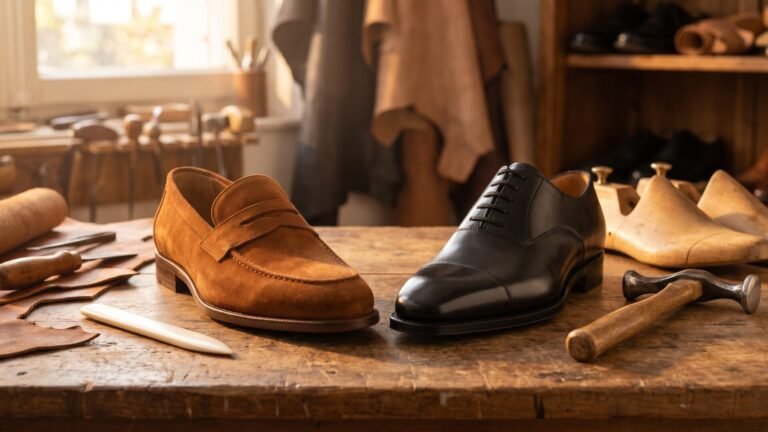
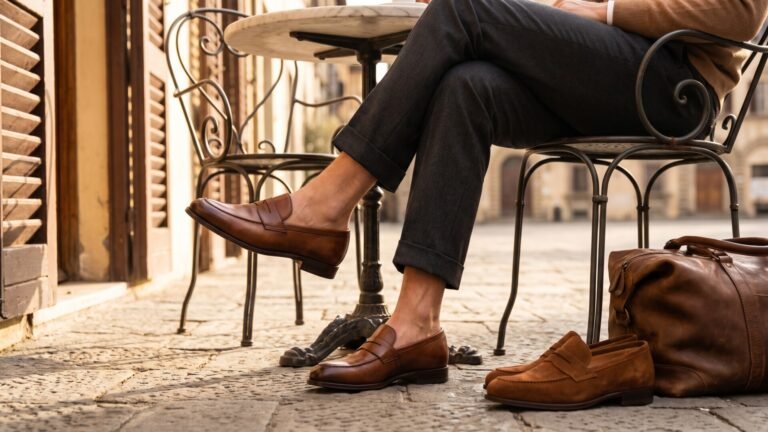
The Italian loafer is a staple: soft, flexible leather, minimal stitching, and elegance that works casually or formally. For ranked lists, see the best Italian loafers, the best Italian penny loafers for men and the best Italian designer loafers for women.
| Loafer | Known for | Approx. US price (late 2026) |
|---|---|---|
| Tod’s Gommino | Suede or leather driving moccasin with a rubber-pebble sole | $645–$800 |
| Santoni Carlo | Penny loafer in suede or leather; hand-finished colour | $1,090–$1,220 |
| Brunello Cucinelli suede loafer | Unstructured suede, leather or light rubber sole | $1,200–$1,300 |
For the Gommino, see why the Gommino is so popular, how it differs from a driving shoe and our wider guide to the best Italian driving shoes. Fratelli Rossetti, a Parabiago family house making shoes since 1953, is the other name buyers compare: Tod’s leads on the pebble-soled driving loafer, while Rossetti is known for classic leather-soled loafers such as the Brera and for dress shoes. Choose by whether you want a driving-style shoe or a conventional leather sole, and try both on, since the lasts differ.
2. Oxfords and Brogues
Classic Italian dress shoes combine precision with a sleeker silhouette than many English counterparts. Santoni and Fratelli Rossetti both make dress shoes; Church’s, often grouped with them, is an English maker owned by the Prada Group, so it belongs to a different tradition. For options, read the best Italian dress shoes and the best Italian Oxford shoes for men.
3. Boots
Italian boots blend style with function, from soft leather Chelsea boots to riding boots. Boots are where Goodyear and Norvegese construction earn their keep, because they take more weather and more miles. Brunello Cucinelli also makes suede boots; see our Brunello Cucinelli guide for the house’s understated approach.
4. Sneakers
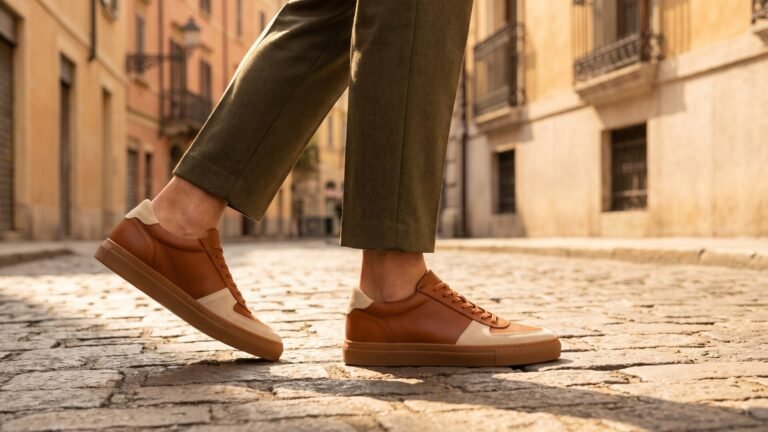
Italian makers elevate sneakers with premium leathers and careful finishing, though most are cemented or cup-soled rather than stitched. For comfort-led picks see Top 7 Italian Luxury Sneakers That Are Actually Comfortable, or browse designer sneakers made with recycled materials and the main Italian designer sneakers guide.
5. Heels and Women’s Shoes
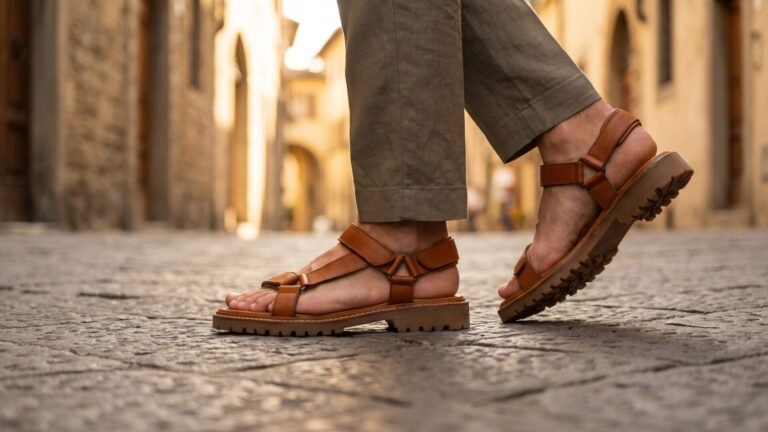
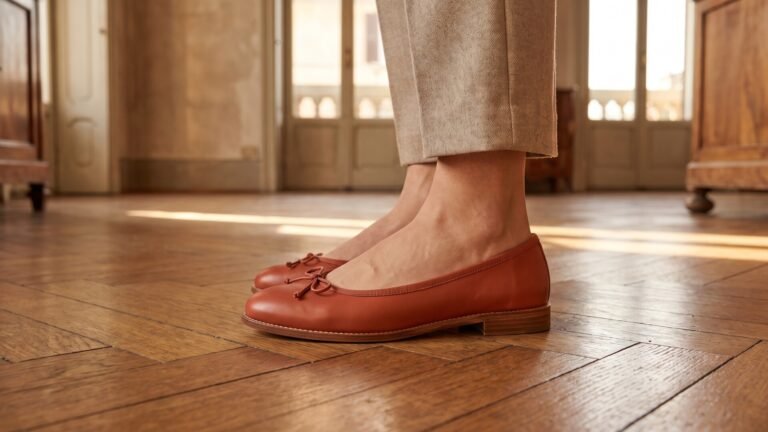
What makes Italian artisan heels comfortable? Mostly fit and balance: a well-shaped last, a properly positioned heel and a steel or fibre shank that supports the arch. For options, see best Italian designer heels for comfortable all-day wear, our overview of Italian designer heels, and the guides to Italian designer flats and Italian designer sandals.
What Defines Exceptional Craftsmanship: A Shop-Floor Checklist
Not every Italian shoe labelled “designer” is handmade. Here is what to look for, and what to be sceptical about:
- Price point: more labour and better materials cost more, but price alone proves nothing; brand premium is part of it. Read are luxury Italian shoes worth the money?
- Stitching and edges: clean, even stitching is a good sign, as are neatly burnished edges. Edges that look plastic-coated may point to a cheaper finish.
- Sole construction: ask whether the sole is welted, Blake-stitched, Bologna-constructed or simply cemented. Cemented soles are the cheapest to produce and the hardest to resole.
- Symmetry: hold the pair side by side. Matching toe shape, stitch lines and colour depth show care at the cutting and lasting stages.
- Leather quality: soft texture, natural grain and small variations suggest real full-grain leather rather than corrected or coated hide.
- The label: “Made in Italy” is a per-product claim. Read handmade vs mass-produced Italian fashion and how to spot authentic Italian designer pieces.
Caring for Italian Shoes
- Break them in gradually: short wears at first, especially with leather soles; see how to break in Italian leather shoes.
- Use shoe trees: cedar trees preserve shape and absorb moisture.
- Rotate pairs: give shoes a day to dry out between wears.
- Condition and protect: condition smooth leather sparingly and treat suede with an appropriate protector, testing on an inconspicuous spot first. Our guide to caring for Italian leather shoes and the best leather conditioner for Italian designer goods cover products and routines.
- Use professional repairs: resole before the welt or insole is damaged. See DIY vs professional cobbler for designer Italian shoes.
Where to Buy and How to Build a Collection
Good starting points by house: Fratelli Rossetti for classic loafers, oxfords and boots; Santoni for hand-coloured dress shoes and loafers made in Corridonia; Tod’s for the Gommino; Brunello Cucinelli for understated suede; and Diadora Heritage for retro sneakers (check each model’s description for materials and construction). Prices vary by house, material and market, so confirm current figures with the brand or an authorised retailer. To compare traditions, see Italian Shoes vs French Shoes and Italian vs French luxury shoe brands.
If you are building a wardrobe, start with one pair of loafers, one pair of dress oxfords, one pair of versatile boots and one pair of well-made sneakers, then add seasonal pieces. Buy the shoes you will wear most often in the most durable construction, and save the delicate Bologna or unlined styles for lighter use. For outfit ideas see how to style Italian shoes for every occasion.
Frequently Asked Questions About Italian Shoe Making
What is an Italian shoe last?
A last is the three-dimensional form around which a shoe is built; it determines the fit, toe shape and silhouette. Makers keep their lasts for years, which is why the fit of a model stays consistent. If you have wide feet, the last matters more than the size label: see Italian designer shoes for wide feet.
How long does it take to make a pair of luxury Italian shoes?
It varies by maker and model. Santoni, for example, says its uppers rest on the last for two to three weeks to set their shape, and its hand-applied velatura colour can take several days on its own, so a pair can take weeks from cutting to finishing even though the hands-on work is far shorter.
How much do handmade Italian shoes cost?
Factory-made luxury Italian loafers run from about $645 for a Tod’s Gommino to roughly $1,100–$1,300 for Santoni or Brunello Cucinelli in the US. Made-to-measure is a different tier, priced in the thousands; bespoke costs more again. Check whether resoling is offered and what it costs, because that decides the real price over the life of the shoe.
Where can I find Italian-made loafers crafted with traditional techniques?
Start with houses that state their construction: Santoni (Corridonia, hand-coloured, Bologna and Goodyear models), Fratelli Rossetti (Parabiago, leather-soled loafers) and Tod’s (Marche, the Gommino). Our guide to Italian penny loafers for men compares models and constructions.
Is “Made in Italy” on shoes a guarantee of handmade?
No. Under EU origin rules, Made in Italy means the last substantial manufacturing step happened in Italy; it says nothing about how much was done by hand, and components or leather may come from elsewhere. Ask what construction is used and which steps are done by hand.
What size should I buy in Italian shoes?
Italian sizes follow the European system, and brands differ in how they convert to US sizes, so use the maker’s own chart and your foot length rather than your usual US size. Our Italian vs US and UK size guide has conversion tables.
Final Thoughts
The art of Italian shoemaking combines a long tradition, strong materials and design sophistication, delivered through a spectrum of methods from bespoke to factory. Knowing the difference between Blake, Bologna and Goodyear, between a last and a style, and between “made in Italy” and genuinely hand-finished, lets you spend on what you will actually feel when you walk. Use the stage-by-stage checks above in the shop, invest in a few well-made staples, and add seasonal pieces for fun.