What to Wear to an Italian Summer Wedding as a Guest
Italian summer weddings are an experience unlike any other: vibrant settings, sun-drenched landscapes, and a celebration of style and elegance. Dressing for such an event is as much about honoring the occasion as it is about embracing the Italian love for fashion. For guests, striking the right balance between formal sophistication, seasonal comfort, and personal style is key. Designers like Dolce & Gabbana, Missoni, and other Italian luxury houses offer ideal options to achieve this. This guide breaks down outfit selection, dress codes, and accessories to help you shine at an Italian summer wedding.
Quick Answer: What to Wear to an Italian Wedding as a Guest
For most Italian summer weddings the safe formula is a knee-length or longer dress (or a lightweight suit), covered shoulders for the ceremony, breathable fabric, shoes you can walk in on uneven ground, and no white, cream, or head-to-toe black. Because invitations and venues vary, the dress code line on the invitation, or a quick question to the couple, always outranks general advice. The table below summarises how the advice in this guide changes by setting.
| Setting | Women | Men | Shoes |
|---|---|---|---|
| Church or cathedral ceremony | Knee-length or longer; shoulders covered with a shawl or jacket; no plunging neckline | Suit with long trousers; jacket kept on inside | Closed or elegant sandals; block heel or flat |
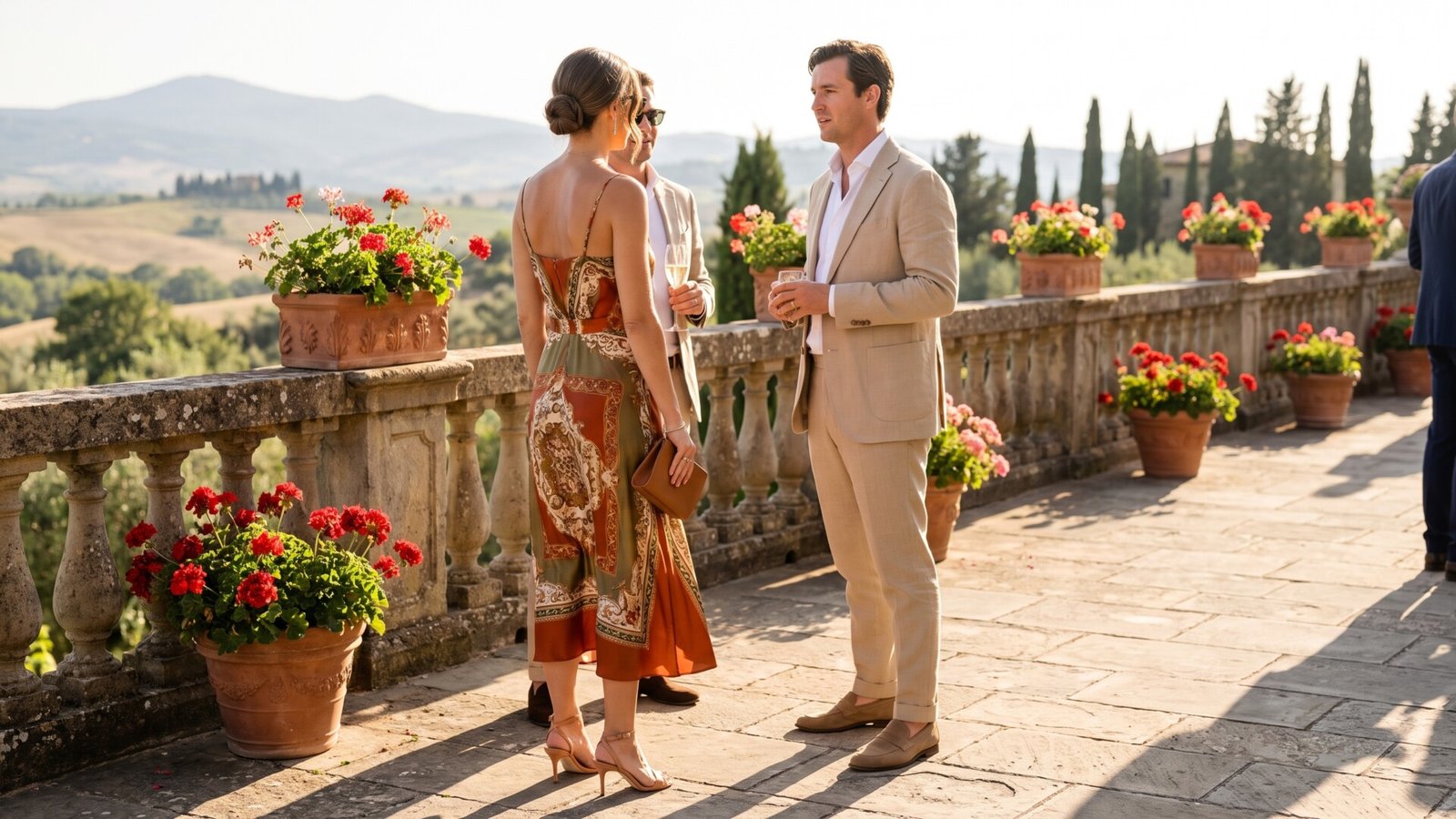
| Garden, villa or vineyard | Midi or maxi dress, jumpsuit; a wrap for the evening | Light-coloured or mid-tone suit in linen or a lightweight wool blend | Block heels, wedges or flat sandals for grass and gravel |
| Beach or seaside terrace | Flowing dress in a light fabric; hem that will not drag | Linen suit, or linen shirt with tailored trousers | Flat sandals or wedges; avoid thin heels on sand |
| Evening reception in a hotel or palazzo | Cocktail dress or evening gown; metallic or jewel tones | Dark suit (navy or charcoal) or dinner jacket if black tie is stated | Heeled sandals or pumps; dress shoes |
Understanding the Italian Summer Wedding Vibe
Before shopping, it’s important to understand what makes Italian summer weddings distinct:
- Outdoor Settings
- Many weddings take place in vineyards, seaside resorts, historic villas, or charming countryside estates. The sun and heat play a role in outfit choices.
- Elegance Meets Festivity
- Guests are expected to dress formal but with flair. Italians appreciate bold colors, prints, and textures, so your outfit should be polished yet lively.
- Day vs Evening Ceremonies
- Daytime weddings: lighter fabrics, pastel tones, and flowing dresses.
- Evening weddings: more formal, structured silhouettes, and elegant accessories.
- Cultural Sensitivity
- Modesty is important for church ceremonies. Covering shoulders with shawls or elegant wraps is recommended.
Dress Codes and Styles for Guests
1. Cocktail Dresses
For most Italian summer weddings, cocktail dresses are a versatile choice:
- Ideal Fabrics: Silk, chiffon, organza, or lightweight satin for comfort in the heat.
- Length: Knee-length or midi for daytime; floor-length for evening events.
- Prints & Colors: Summer florals, geometric patterns, or Italian-inspired prints. Bold colors like coral, emerald, and turquoise are welcomed.
- Designer Picks:
- Dolce & Gabbana: Known for floral prints and romantic silhouettes. A Dolce & Gabbana silk midi dress with bright Sicilian florals makes a statement without overshadowing the bride.
- Missoni: Iconic knit patterns and zig-zag motifs (explained in the history of the Missoni zig-zag pattern) work beautifully for daytime weddings, offering comfort and style.
2. Maxi Dresses
Long flowing dresses are perfect for outdoor venues:
- Pros: Offers elegance, sun protection, and movement in the breeze.
- Fabric Choices: Lightweight silk, georgette, or tulle.
- Styles: A-line, empire waist, or wrap dresses that enhance comfort and silhouette.
- Designer Picks:
- Etro: Known for bohemian prints and flowing fabrics, including its paisley (see the history of Etro’s paisley print). Ideal for countryside or beach weddings.
- Valentino: Light-colored silk gowns with subtle embellishments convey sophistication for a summer evening reception.
3. Jumpsuits and Pant Sets
Modern Italian weddings sometimes welcome contemporary alternatives:
- Advantages: Comfortable, chic, and ideal for venues with dancing or warm evenings.
- Fabric & Fit: Silk blends, tailored waistlines, wide-leg pants.
- Designer Picks:
- Max Mara: Elegant silk jumpsuits with clean lines suitable for sophisticated venues.
- Gianvito Rossi accessories: Pair with bold heels and statement earrings for elevated style.
Colors and Patterns
Italian weddings embrace color and creativity, but some guidelines help:
- Avoid White: Reserve white for the bride. Ivory, cream, and champagne are best avoided too, unless the couple says otherwise.
- Bold Florals: Large, colorful florals reflect the festive, sunlit setting. Dolce & Gabbana often feature these in their summer collections.
- Pastels & Earth Tones: Soft coral, sage, blush, and peach work for daytime events.
- Metallics & Jewel Tones: Ideal for evening receptions or formal venues. Think sapphire, emerald, ruby shades.
Church and Cathedral Dress Rules for Wedding Guests
Many Italian weddings include a Catholic ceremony, and guides on Italian wedding etiquette advise semi-formal or formal dress with shoulders and necklines covered, for example with a jacket or shawl. Typical expectations in Catholic churches are covered shoulders and knees and no deep necklines; a lightweight shawl is the simplest fix and can come off once you are outside. These expectations apply to the religious ceremony, not to symbolic ceremonies held on a terrace, beach, or boat.
Rules are set by each church, and enforcement varies. The Vatican, which publishes the strictest and most widely quoted standard, requires covered shoulders and knees, rules out tank tops, spaghetti straps, crop tops, and mini skirts, asks visitors to remove hats indoors, and lets security staff refuse entry. A wedding in a parish church is a different setting, but using the Vatican standard as your baseline means you will not be caught out.
- Shoulders: carry a silk wrap, pashmina, or a light jacket in your bag; see our notes on Italian silk for what makes a silk scarf drape well.
- Length: choose a hem at or below the knee; a maxi dress solves the question entirely.
- Neckline and back: avoid plunging fronts and very open backs for the ceremony; they can be revealed at the reception by removing the wrap.
- Hats: remove them once inside.
- Sandals: dressy sandals are widely accepted, but closed or more structured shoes are a safer choice for a cathedral.
Beating the Heat: Fabrics That Work in an Italian Summer
Summer weddings often mean long outdoor stretches in direct sun. In Positano, one local wedding source puts summer highs at roughly 27 to 28 degrees Celsius (81 to 82 degrees Fahrenheit), with humidity making it feel warmer, and notes that a September date is noticeably cooler. Elsewhere in Italy temperatures vary by region and by year, so check the forecast for your specific venue a week out.
- Silk and silk blends: light, drape well, and suit ceremony and reception. Silk can show marks from water and perspiration, so choose a print or mid-tone rather than a pale solid if you expect to be outdoors for hours.
- Cotton and linen: breathable and widely recommended for daytime. Linen creases easily; some wrinkling is part of the look, but a linen blend holds its shape better for travel.
- Light knits: fine-gauge knit, such as the Missoni zig-zag, moves with the body and packs without creasing. Check that the knit is not so loose that it clings in humidity.
- Avoid: heavily structured or boned garments, thick satin, and dark heavy fabrics in full sun.
Practical heat management matters as much as fabric. A packable parasol is often more useful than a hat in places with little shade, sunscreen should go on before dressing, and hair and makeup that resist humidity (the earlier section covers this) help you stay comfortable through a long reception. Evenings can be cooler, especially inland and near water, so a wrap or light jacket is worth the suitcase space.
Accessories to Elevate Your Look
Accessories complete your Italian wedding guest outfit. Consider these guidelines:
1. Footwear
- Heels: Strappy sandals or elegant stilettos for formal events.
- Wedges: Perfect for garden or terrace weddings; prevents sinking into grass.
- Designer Recommendations:
- Gianvito Rossi: Strappy silk heels or metallic sandals for day or evening. For more options, see our guide to Italian designer heels for weddings and the Sergio Rossi vs Gianvito Rossi comparison.
- Aquazzura: A Florence-founded label known for strappy sandals and block-heel styles that suit terraces and gardens; check the product page for the specific model’s heel height and sole.
2. Bags
- Clutch or Mini Bag: Keep essentials in a structured mini bag.
- Colors & Materials: Metallics, leather, or silk bags complement floral or patterned dresses.
- Designer Recommendations:
- Bottega Veneta: Woven leather (intrecciato) clutches in a quiet, tone-on-tone look; see our take on whether the house is worth the price. For more evening and bridal-occasion options, browse Italian evening and bridal bags and Italian mini bags.
- Dolce & Gabbana: Printed or embellished evening bags that coordinate with dresses.
3. Jewelry
- Statement Earrings or Necklaces: Italians appreciate bold jewelry paired with minimal outfits.
- Pearls & Gold: Classic choices that elevate a summer dress.
- Designer Picks:
- Pomellato: Colorful gemstone pieces ideal for coordinating with floral dresses.
- Valentino Jewelry: Elegant, understated options for formal evening looks.
- Bulgari: The Rome-founded house is known for its snake-themed jewelry; see the Serpenti collection. More options are in our guide to Italian fine jewelry brands.
4. Hats and Headpieces
- For daytime ceremonies, especially in the countryside, a wide-brimmed hat or fascinator is practical against the sun. Take it off inside a church: hats are expected to come off in religious spaces (a rule stated explicitly for the Vatican and widely followed elsewhere). A hat that can be tucked away is easier than a large structured one.
5. Shoes for Cobblestones, Gravel, Grass and Steps
Italian wedding venues often combine several surfaces in a single day: cobbled lanes, stone steps, gravel drives, and lawns. Thin stiletto heels sink into grass and catch between stones, which is why local wedding guidance for hillside towns such as Positano treats flat or low shoes as the safest choice, and suggests espadrilles for grip on uneven stone in the daytime.
- Block heels: spread your weight over a larger area and suit gravel and cobbles. Our guide to Italian block heels lists options.
- Wedges and espadrilles: good for lawns and terraces and for daytime events.
- Flat sandals: the most reliable for beach and steep towns. See Italian designer flat sandals and Italian leather sandals; for a heritage option, see our Salvatore Ferragamo profile.
- Carry a backup pair: a compact pair of foldable or lightweight flats for walking between venues is easy to pack.
- Outdoor ceremonies: our dedicated guide to Italian designer wedding shoes for outdoor ceremonies covers this in more depth, and Italian luxury sandals for summer travel covers sandals that also work for sightseeing.
- Comfort across a full day: see Italian designer heels for comfortable all-day wear.
Hair and Makeup Considerations
- Heat and Humidity: Lightweight hair updos, braided styles, or elegant buns prevent discomfort.
- Makeup: Focus on long-lasting foundation, waterproof mascara, and natural or sun-kissed tones.
- Italian Flair: Soft red lips, glowing skin, and subtle highlighter complement luxurious Italian fabrics.
Examples of Italian Designer Summer Wedding Looks
Dolce & Gabbana
- Print Focus: Sicilian florals, baroque motifs, and vibrant colors.
- Style Tips: Pair a floral silk midi dress with nude strappy sandals, a metallic clutch, and gold earrings.
- Why It Works: The print carries the outfit, so the accessories can stay simple.
Missoni
- Signature Style: Zig-zag knit patterns, lightweight fabrics.
- Style Tips: A sleeveless Missoni maxi dress with subtle gold accessories and wedges balances comfort and sophistication.
- Why It Works: Knit fabrics breathe and flow, perfect for outdoor receptions.
Valentino
- Signature Style: Silk chiffon gowns with soft embellishments, jewel tones, or pastels.
- Style Tips: Evening gowns with metallic sandals and minimal jewelry.
- Why It Works: Elegance meets modernity; ideal for upscale venue weddings.
Etro
- Signature Style: Bohemian prints and flowing silhouettes.
- Style Tips: Wrap dresses or maxi gowns paired with delicate jewelry and neutral heels.
- Why It Works: Adds a relaxed, yet sophisticated aesthetic for countryside weddings.
Men’s Attire for an Italian Summer Wedding
Italian tailoring is well suited to summer weddings, and the guidance from wedding sources is consistent: in heat, a light-coloured suit in linen or a lightweight wool blend works much better than a heavy dark one, while evening events at upscale venues call for something dressier than a daytime beach or garden wedding. For a formal wedding a dark suit in navy or charcoal with a white shirt is the standard choice; for a beach or garden setting a linen suit, or tailored trousers with a linen shirt, is more comfortable.
| House | What it is known for | Suits the guest who wants |
|---|---|---|
| Brioni | Rome-founded tailoring house; see our profile and Brioni suits guide | A sharply tailored suit for a formal evening wedding |
| Canali | Italian tailoring with suits and separates | A well-cut suit that sits between formal and relaxed |
| Ermenegildo Zegna | Founded in Trivero, Piedmont, in 1910; known for fabrics and tailoring | Lightweight wool or cotton-linen options for a warm-weather wedding |
| Brunello Cucinelli | Umbria-based house known for soft tailoring and knitwear | A relaxed unstructured jacket for a garden or vineyard setting |
| Loro Piana | Natural-fibre specialist, including cashmere and linen | A summer jacket or trousers in a breathable natural fibre |
Shoes matter as much as the suit. Loafers and driving-style moccasins, such as those covered in our Tod’s Gommino guide, suit relaxed garden and seaside weddings with a lighter suit, while polished lace-ups or oxfords are a safer match for a church ceremony and a dark suit. Our guides to the best Italian dress shoes and Santoni cover formal options, and how to style Italian shoes for every occasion covers the rest. Whether to wear a tie depends on the invitation: when it is not specified, a jacket and a collared shirt remain the safe baseline for the ceremony.
- Jacket: keep it on in the church; carry it or hang it on a chair at the reception if the heat is high and others have done so.
- Shirt: a crisp white or pale blue cotton or linen shirt is easy to pair with most suits.
- Colours: navy, mid-grey, stone, and sand work in daytime; avoid black unless the invitation asks for black tie.
Dressing for Different Wedding Venues
1. Beach Weddings
- Flowing dresses, lightweight fabrics, and wedges or elegant flat sandals.
- Light colors or tropical prints are appropriate.
2. Countryside Villas or Vineyards
- Maxi dresses, floral prints, and elegant jumpsuits work well.
- Consider layers or wraps for evening temperatures.
3. Historic Churches or Cathedrals
- Modesty is key: cover shoulders, choose knee-length or longer dresses.
- Avoid overly casual fabrics or flashy prints that may distract.
4. City or Hotel Rooftop Receptions
- Evening gowns, sleek jumpsuits, or cocktail dresses with metallic accents.
- Bold jewelry and statement heels enhance formal elegance.
Regional Notes: Amalfi Coast, Lake Como, Tuscany and Puglia
Italian weddings are shaped by place as much as by dress code. The notes below combine what local wedding sources say with general venue logic; where we cannot verify a regional norm, we say so.
Amalfi Coast and Positano
Local wedding guidance for Positano describes a town built into a cliff, with steady steps and sloped, uneven stone lanes, so a thin heel is a hazard and flat shoes, dressy flats, block heels, and wedges are all more sensible. The same source recommends pastel colours for guests, avoiding neon and busy prints, and keeping a separate, simpler outfit for any boat day, with flat sandals only on a wet deck. Sources also advise asking the couple if you are unsure of the formality.
Lake Como
Lake Como weddings are commonly held in lakeside villas with terraces, gardens and stone paths. We could not source a Lake Como-specific dress rule, so treat this as general guidance: dress for a formal garden venue (a midi or maxi dress, or a lightweight suit), bring a wrap for the water’s cooler evenings, and check whether the villa has gravel or lawn before choosing heels.
Tuscany
Tuscan weddings are often held in villas, wine estates and countryside settings, which makes a garden-wedding wardrobe the sensible default: block heels or wedges for grass and gravel, a breathable fabric for daytime, and a layer for the evening. For a ceremony in a church in Florence, Siena or another historic centre, follow the church rules above; our guide to emerging Florence designers is a starting point if you want to buy locally.
Puglia and the South
Puglia’s countryside estates and coastal venues point to the same practical rules: breathable fabrics, shade, and shoes for uneven ground. We have not verified any Puglia-specific etiquette beyond general Catholic church expectations, so confirm the formality and the ceremony location with the couple.
Practical Packing Tips for a Summer Wedding in Italy
- Lightweight Garments: Summer heat demands breathable fabrics.
- Versatile Layers: Wraps, shawls, or elegant jackets for evenings.
- Comfortable Shoes: Necessary for cobblestone streets or terraces.
- Accessory Bag: Compact clutch with essentials, sunscreen, and minimal emergency kit.
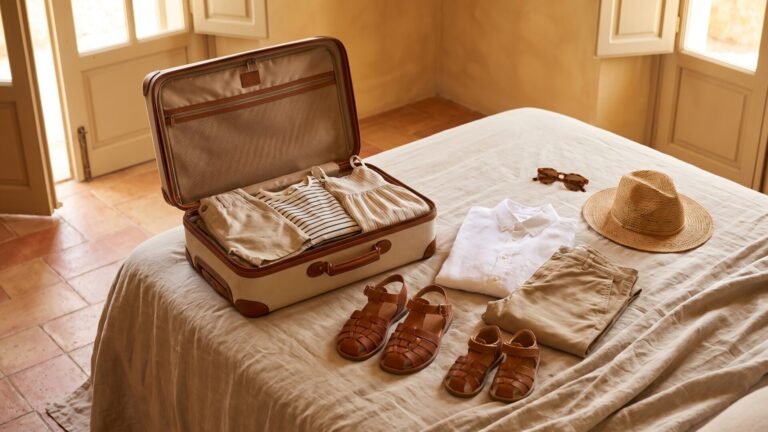
A short checklist for your suitcase, based on the guidance above. If your wedding is part of a wider trip, our family guide to what to pack for a stylish family vacation in Italy covers the rest of the wardrobe.
- Outfit and a backup: one main outfit and a second option in case of weather, spills, or a change in formality.
- Shawl or jacket: for the church and cooler evenings.
- Two pairs of shoes: a ceremony pair and a flat backup for cobblestones and stairs.
- Garment care: a travel steamer or a hotel steaming service for linen and silk; hang the outfit as soon as you arrive.
- Sun protection: sunscreen, sunglasses, and a hat or parasol.
- Small bag: a structured mini bag or clutch that holds a phone, lipstick, a small fan, and tissues; see mini bags versus full-size handbags if you are deciding what fits.
What Not to Wear to an Italian Wedding
- White, ivory and cream: reserved for the bride; one Italian wedding planner notes that white is still considered inappropriate unless the couple asks you to wear it.
- Head-to-toe black: traditionally associated with mourning, so many guides advise avoiding it by day; an evening black-tie event is the usual exception.
- Beachwear in church: shorts, tank tops, crop tops, and mini skirts are the classic reasons for being turned away.
- Thin stilettos on stone or grass: the likeliest cause of a turned ankle.
- Overdoing gold: one source cautions against piling on gold jewellery; keep to one statement piece.
- Overly casual outfits: flip-flops and sundresses meant for the beach read as underdressed at a wedding, even in summer.
- Competing with the couple: a very loud print or a dramatic train is better left for another occasion.
Italian Wedding Customs Guests Should Know
Some customs affect what you wear and carry. These come from wedding planners and cultural sources that note practice varies by region and family, so treat them as general rather than universal.
- Bomboniere and confetti: guests typically receive a small favour called a bomboniera at the end of the celebration, usually containing confetti, which are sugar-coated almonds. Sources cite odd numbers, commonly five or seven, as lucky. Make sure your bag has room for it.
- Same outfit all day: guests usually stay in the outfit they wore for the ceremony through the reception, so choose something that works from morning to night.
- Waiting at the reception: the couple is often away for photographs, and guests are served aperitifs while waiting.
- Congratulations: it is customary to greet the couple outside the church or venue after the ceremony.
- Bouquet toss: some couples still toss the bouquet to single women.
- The invitation: any dress code or colour theme will usually be stated there; follow it over any general rule.
Italian Summer Wedding Etiquette for Guests
- Dress Appropriately for the Ceremony: Conservative and elegant for church weddings; bolder and more playful for secular outdoor celebrations.
- Avoid White and All-Black: White is reserved for the bride. Black is traditionally the colour of mourning, so many guides advise against it for a wedding, though it is generally seen as more acceptable at an evening reception with a formal dress code.
- Respect Cultural Traditions: In some regions, conservative covering is expected in religious venues.
- Coordinate With the Theme: Some Italian weddings have specific color palettes or design motifs.
Conclusion
Attending an Italian summer wedding as a guest is an opportunity to blend elegance, personal style, and cultural respect. With designers like Dolce & Gabbana, Missoni, Valentino, Etro, and Max Mara (see our wider guide to Italian fashion designers), you can achieve a perfect balance of comfort, sophistication, and seasonal flair.
Key takeaways:
- Fabric Matters: Silk, chiffon, and lightweight knits are ideal for heat and movement.
- Dress Codes: Know the venue and time of day; adjust length and formality accordingly.
- Accessories: Statement jewelry, strappy sandals, and elegant bags elevate your outfit.
- Cultural Respect: Cover shoulders for church weddings, avoid white, and embrace local fashion sensibilities.
- Reusable Pieces: A well-made silk or knit dress in a neutral shade can be re-worn for other occasions. Resale value is never guaranteed, so buy what you will actually wear again.
By embracing these guidelines, you’ll not only feel comfortable under the Italian sun but also arrive in an outfit that suits the venue, the weather, and the occasion.
Frequently Asked Questions About What To Wear To An Italian Summer Wedding As A Guest
Can I wear black to an Italian wedding?
Many etiquette guides advise against black because it is traditionally associated with mourning, especially for a daytime or church wedding. An evening black-tie event is the usual exception, and a dark navy or deep jewel tone is a safer alternative.
Do I need to cover my shoulders in an Italian church?
Yes, plan for it. Catholic churches typically expect covered shoulders and knees, and the Vatican spells out the rule explicitly. A lightweight shawl or jacket lets you comply and remove it afterwards. Rules vary by church, so check with the couple if you are unsure.
What should I wear to an Italian wedding in the summer heat?
Choose breathable fabrics such as silk, cotton, linen, or fine knit, in light or mid-tone colours, with a wrap for the church and evening. Avoid heavily structured garments, wear shoes you can walk in, and bring sun protection.
What shoes work for cobblestones and gardens?
Block heels, wedges, espadrilles, and flat sandals are safer than thin stilettos, which sink into grass and catch between stones. In hillside towns with steps, flats are often the most reliable option.
What should men wear to an Italian summer wedding?
A light-coloured suit in linen or a lightweight wool blend suits daytime and warm weather, and a dark navy or charcoal suit suits a formal evening. Wear a collared shirt and polished shoes, and follow the invitation on ties.
Can I wear white, cream or ivory as a guest?
Avoid them unless the couple specifically asks. White is reserved for the bride, and ivory, cream and champagne are commonly avoided as well.
Is a hat or fascinator appropriate?
A hat is practical against the sun at an outdoor daytime ceremony, but remove it inside a church. A packable hat or parasol is often easier to manage than a large structured piece.
What is the bomboniera I will receive?
It is a small favour given by the couple, usually including confetti (sugar-coated almonds). It is a custom to receive it graciously; leave space in your bag for it.
What if the invitation does not state a dress code?
Assume semi-formal to formal: a knee-length or longer dress or a suit, covered shoulders for the ceremony, and a daytime or evening palette that matches the time of the event. When in doubt, ask the couple.