DIY vs professional cobbler for designer Italian shoes
Sooner or later every pair of designer Italian shoes needs more than a wipe-down: a scuffed toe, a worn heel tip, a thinning leather sole or a loose seam. The question is whether to treat it yourself or take it to a cobbler. The honest answer depends on the repair and on how the shoe is built. Cosmetic care is a reasonable DIY job. Anything structural, such as soles, welts, heel blocks and stitching, belongs with a professional.
This guide explains which repairs you can do at home, which you should not, how construction affects what a cobbler can do, how to choose a cobbler, and how to think about cost. It is part of our care and maintenance series, alongside storing luxury boots for long-term protection, restoring the patina on natural Italian leather and waterproofing Italian suede.
Quick Answer: DIY or Cobbler?
| Problem | DIY | Cobbler |
|---|---|---|
| Dust, light scuffs, dull finish | Yes: brush, clean, condition, polish | Optional |
| Replacing laces, using shoe trees | Yes | No |
| Worn heel tips | Only if you have the right tools and a matching tip; cobbler preferred | Yes |
| Worn or holed sole | No | Yes |
| Sole separating from the upper | No | Yes |
| Deep scratches, colour loss | Risky | Yes |
| Loose or broken stitching | No | Yes |
| Tight fit or stretching | Light stretch spray at most | Yes |
How Italian Shoes Are Built, and Why It Matters for Repair
Whether a shoe can be resoled, and by whom, depends on how the sole is attached. Houses such as Salvatore Ferragamo, Santoni and Tod’s use different methods across their ranges, so check the brand’s care information or ask the retailer about your model.
- Goodyear welt: a strip of leather (the welt) is stitched to the upper and a rib on the insole, and the outsole is then stitched to the welt. Because the outsole is stitched to the welt rather than to the upper, it can be replaced repeatedly if the welt and upper are intact. Goodyear welting is common in British and some Italian dress shoes but is not universal among Italian makers.
- Blake and Blake/Rapid: the sole is stitched directly through to the insole. These are often lighter and more flexible, and many Italian makers use them. A cobbler needs the right machine to resole them.
- Bologna (sacchetto) construction: a softer, flexible construction used in some Italian loafers, where the upper is made into a sock-like form. Repair depends on a cobbler familiar with the method.
- Cemented soles: the sole is glued on, which is common on sneakers and some fashion shoes. These are often difficult or uneconomical to resole, and a proper repair may not be possible.
Leather uppers also differ. Some Italian shoes use vegetable-tanned leather, which responds strongly to water, solvents and dyes. Others use finished or painted calf, where a cosmetic mistake shows immediately. These differences are why a repair that works on one pair can ruin another.
Common Repairs for Designer Shoes
- Sole replacement: the most important repair. Leather soles wear faster than rubber, especially on city pavements. Once the leather thins to the welt or insole, the structure is at risk. A resole involves removing the old sole, preparing the welt or edge, and attaching a new sole.
- Heel repair: top-pieces and tips wear first. Replacing them promptly protects the heel block.
- Scuff and colour repair: cleaning, re-colouring and refinishing, with the main challenge being a match with the existing patina.
- Stitching repair: on the upper or where the upper meets the sole, which needs the right thread and often a machine.
- Stretching: a cobbler can stretch leather locally on a shoe stretcher, within limits.
A poor repair can lower a shoe’s value more than the original flaw, so respect for the original design and materials is the first principle.
DIY Shoe Care: Pros and Cons
Benefits
- Lower cost for routine care: a brush, cleaner, conditioner, polish and shoe trees are a modest, one-time purchase that serves many pairs.
- Speed and convenience: you can clean and polish between wears without being without the shoes.
Drawbacks
- Risk of permanent damage: the wrong cleaner can strip a finish, solvent-based glue can stain an upper, and a glued-on sole can fail or damage the welt.
- Limited tools and materials: cobblers use lasts, stitching machines, finishing equipment and mixed dyes. A polish from a shop shelf rarely matches a factory finish.
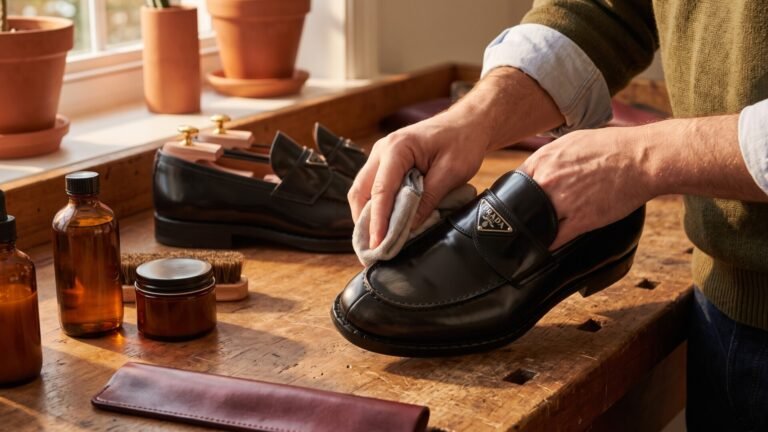
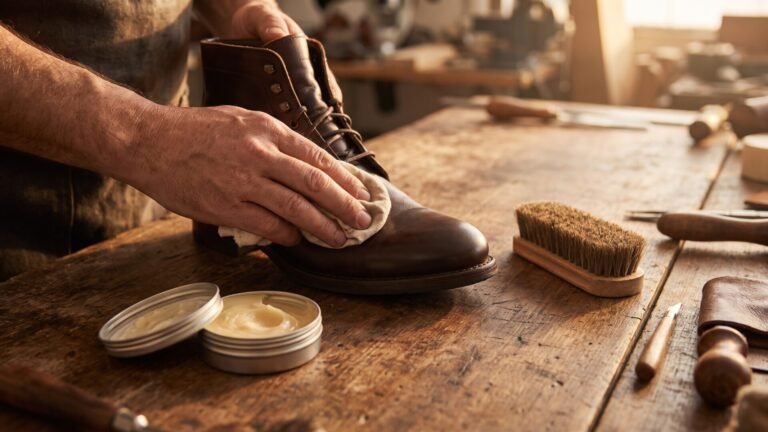
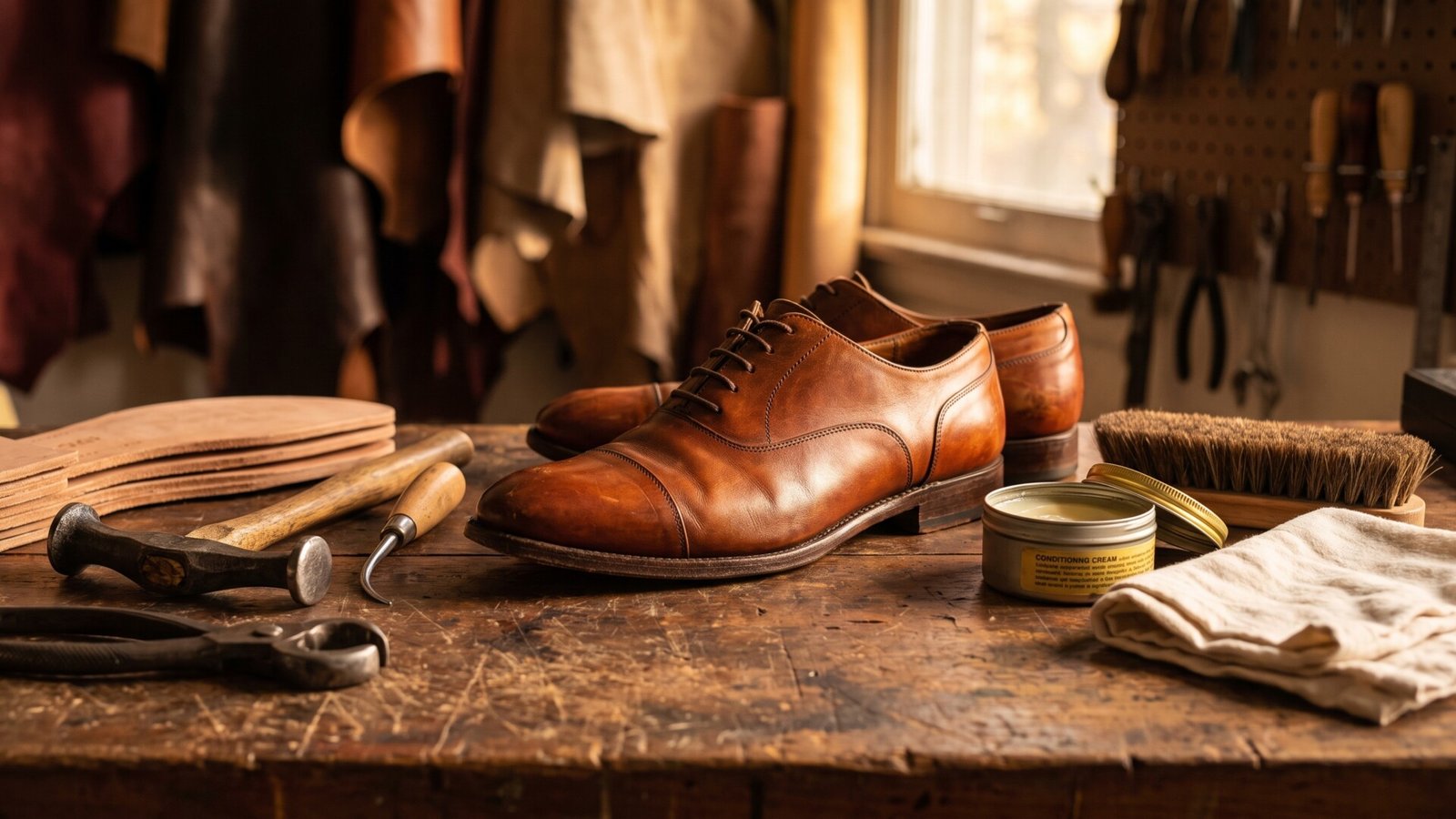
For cosmetic care, popular products include wax polishes such as Kiwi for a basic shine, conditioner for dry leather and cedar shoe trees. Adhesives such as Shoe Goo are sold for rubber and canvas and for temporary fixes, and they are not a substitute for a proper sole repair on welted or stitched shoes. Moleskin padding is a comfort aid, not a repair. Always test a product on a hidden area first.
Professional Cobbler Services: Pros and Cons
Benefits
- Material and construction knowledge: an experienced cobbler knows how a given leather reacts to dye and how a particular construction should be resoled.
- Better materials: a good cobbler can use quality leather soles. Joh. Rendenbach (JR) oak-bark sole leather from Trier, Germany, was long a benchmark for resoling, but the Trier tannery closed in 2021 and fellow German tannery Kilger bought its recipe and brand, now sold as J.R. by Kilger, so ask your cobbler what sole leather they use.
- Accountability: reputable shops stand behind their work and can advise when a shoe is not worth repairing.
Drawbacks
- Cost: professional work costs more than DIY, and prices vary by city, shoe construction and materials. Ask for a written quote.
- Time: local repairs can take days, while mail-in specialists may take weeks. Rago Brothers, a family-run shoe and leather repair shop founded in 1911 in Morristown, New Jersey, is a well-known mail-in option that several luxury brands recommend for repairs; check its current turnaround and pricing on its website. [Affiliate: Rago Brothers mail-in shoe repair]
Cost: How to Think About It
Resole, heel and refinishing prices differ widely by region and shoe, and published price lists change, so we do not quote a fixed price list. As a rule, expect a heel tip or top-piece to be the cheapest job, a resole to be a mid-range job, and a full refurbishment with welt work, new heels and refinishing to cost most. A cobbler can usually give you a written quote after seeing the shoe, and many will advise honestly if the shoe is not worth the investment.
As an illustration only, imagine a pair of $800 loafers worn 100 times a year. If a resole every two years costs $200, five years of use costs about $1,200 for 500 wears, or about $2.40 per wear. If a failed home repair means replacing the pair after two years, the same $800 buys 200 wears at $4 per wear before you count the second pair. The numbers are hypothetical, but the principle holds: a repairable shoe is cheaper per wear when it is repaired properly.
When to DIY and When to Call a Pro
DIY Green Lights
- Minor scuffs on sturdy calf: clean, condition and use a matching cream polish after a hidden-spot test.
- Regular polishing and brushing after wear.
- Replacing laces and using cedar shoe trees.
- Adding a protective sole guard: a cobbler fit is neater, but ask first whether it suits your sole.
Professional Red Flags
- Worn-through soles where you can see the welt, insole or cork filler.
- A sole peeling from the upper: gluing alone rarely lasts and can ruin a stitched construction.
- A broken heel or a loose heel block.
- Deep scratches, gouges or colour loss.
- Damage to the welt or stitching, which holds the shoe together.
How to Choose a Cobbler for Designer Shoes
- Ask whether they have worked on your construction (Blake, Goodyear, Bologna) and brand.
- Ask to see examples of before-and-after work and read independent reviews.
- Ask what sole leather or rubber they use, how they attach it, and whether they offer a guarantee.
- Get a written quote and an estimated turnaround time before leaving the shoes.
- For recent or limited-edition pieces, ask the brand about its own repair service, which may be the safest option.
Side-by-Side Verdict by Repair
| Repair | DIY | Cobbler | Verdict |
|---|---|---|---|
| Sole replacement | High risk of misalignment and poor adhesion | Their core skill | Cobbler |
| Heel repair | Small tips possible, but misalignment affects wear | Correct size and fit | Cobbler |
| Scuff and colour | Fine for light marks | Can mix a custom colour | Cobbler for anything beyond superficial |
| Stitching | Not realistic without equipment | Machines and thread | Cobbler |
| Conditioning | Ideal home task | Part of a wider service | DIY |
Care Habits That Reduce Repairs
- Use cedar shoe trees after each wear to absorb moisture and hold shape.
- Rotate pairs so leather has a day or more to dry between wears.
- Brush after wear to remove grit before it abrades the leather.
- Add rubber protection early to leather soles if you walk on wet pavements, after checking with your cobbler.
- Store properly, away from humidity. Our guide to dealing with mould on stored leather goods explains the risks.
Longevity, Condition and Resale
A well-made, regularly resoled shoe can last many years. When selling, condition, original boxes, shoe trees and a clean, properly repaired sole make a pair easier to sell, although resale prices depend on the brand, model and demand, and no repair guarantees a price. A visible glue line, mismatched colour touch-ups or poor stitching can put buyers off.
Final Verdict
Keep your shoes clean, conditioned and on shoe trees yourself, and let a cobbler handle anything involving the sole, welt, heel block, stitching or colour matching. If you are unsure, ask for an assessment before doing anything, since a quote costs far less than undoing a bad repair. For more care guides, see our guide to repairing a ripped lining in a designer bag.
Frequently Asked Questions About Cobblers For Italian Shoes
What types of repairs can a cobbler do on Italian shoes?
A skilled cobbler can replace soles and heels, repair stitching, stretch leather, restore colour and refinish uppers, and replace hardware such as buckles. What is possible depends on how the shoe is constructed, so ask for an assessment.
Are DIY shoe repair kits effective for designer shoes?
They are suitable for cleaning, conditioning, polishing and minor scuffs. They are not suitable for structural repairs such as replacing a sole or heel block.
How do I choose a professional cobbler?
Look for experience with high-end footwear and your shoe’s construction, ask to see examples, request a written quote and turnaround time, and ask what materials they use. For recent pieces, consider the brand’s own repair service. Rago Brothers in Morristown, New Jersey, is a well-known mail-in option; check its current terms. [Affiliate: Rago Brothers mail-in shoe repair]
Can I restore the original finish of my Italian shoes?
A professional can often refinish a shoe by cleaning, recolouring and applying a new topcoat, but a perfect match to the factory finish is not always possible, especially on painted or patinated leather.
How much does it typically cost to repair designer shoes?
It varies by city, shoe construction and the work involved. A heel tip is typically the cheapest job and a full resole or refurbishment costs more. Ask for a written quote and compare it with the value of the shoes.
How often should I bring my shoes to a cobbler?
Have them checked when you notice wear on the sole or heel, and at least once a year if you wear a pair often. Catching wear before it reaches the welt keeps repairs simpler.
Can every Italian shoe be resoled?
No. Goodyear-welted and many Blake-stitched shoes can usually be resoled, but cemented soles often cannot be resoled economically. Check your shoe’s construction with the brand or a cobbler.