Restoring the patina on natural Italian leather bags
Natural leather is meant to change. Light, handling, hand oils and weather darken it, smooth it and mark it, and on the right leather that change is called patina and is usually welcome. The trouble starts when change tips into neglect: dry, dull, blotchy or cracking leather is not patina, and it needs help. This guide explains how to tell the two apart, how to clean, condition and protect a natural Italian leather bag, when to leave it alone, and when to go to a professional.
It is part of our care and maintenance series. Related reading includes repairing a ripped lining in a designer bag, dealing with mould on stored leather goods and storing luxury boots for long-term protection.
Quick Answer: How to Restore Patina on a Natural Leather Bag
- Identify the leather (vegetable-tanned, nappa, coated or suede) from the label, the brand’s care guide or a retailer.
- Dust and gently clean with a leather-specific cleaner on a barely damp cloth.
- Let it dry fully, away from heat and sun.
- Condition thinly only if the leather feels dry, then buff.
- Protect and store properly, and test every product on a hidden spot first.
Understanding Patina
Patina is the change in colour, sheen and surface texture that develops as leather is used. On vegetable-tanned leather, which is tanned with plant tannins from sources such as tree bark rather than chromium salts, the change is especially visible: the leather typically darkens and gains a glossy, warmer surface through exposure to light, contact with skin oils and repeated handling. Tuscan makers such as Il Bisonte have built their identity around natural vacchetta leather that the brand describes as designed to change with use; check the brand’s own care notes for the specific leather on your bag.
Not every Italian leather bag will develop patina. Many luxury bags use finished leathers that are designed to look the same for years. Bottega Veneta’s intrecciato bags, for example, are woven from strips of nappa leather, which is soft and dyed through, and Prada’s Saffiano has a printed cross-hatch and a protective finish. Both can wear at edges and corners, but they do not darken in the way an untreated vegetable-tanned handle does. Knowing which type you own is the first step in deciding what restoration means.
| Leather type | Typical look over time | Care approach |
|---|---|---|
| Vegetable-tanned (e.g. natural vacchetta) | Darkens, deepens in colour and gains sheen | Light cleaning, occasional thin conditioning, keep out of rain and sun |
| Nappa (soft, dyed through) | Softens; may scuff or show wear at edges | Gentle wiping, minimal products, professional help for colour loss |
| Coated or pigmented (e.g. Saffiano-style finishes) | Largely unchanged; wear shows at corners | Wipe clean; avoid oils and waxes that can mark the finish |
| Suede and nubuck | Flattens, marks and stains | Brush and specialist products only; see our guide to waterproofing Italian suede |
Patina or Neglect? How to Tell
Healthy patina is even, warm and slightly glossy, with fine scratches that blend into the surface, and the leather still feels supple. Neglect shows as a dry, chalky or rough surface, stiff handles, flaking, deep cracks along folds, uneven pale patches, dark water rings and a musty smell. Dryness and dullness can usually be improved at home. Cracking, peeling, mould or structural damage cannot be fixed with conditioner and calls for a specialist.
Why Maintenance Matters
Leather is a natural material made of fibres that rely on some oil and moisture to stay flexible. When it dries out, it becomes stiff, and stiff leather cracks where it bends, usually around handle attachments, corners and folds. Dirt and body oils trapped on the surface also darken it unevenly. Gentle upkeep prevents most of this, and the same care makes a bag easier to repair, resell or hand down.
Condition does affect secondhand value, because buyers on resale platforms pay for leather that is clean, supple and free of cracks. Resale prices depend on the brand, model, season, demand and platform, and no restoration guarantees a particular price, so treat care as protection rather than a financial strategy.
Restoring Patina: Key Considerations
The type of leather. Vegetable-tanned leather is the most absorbent and is the type that best responds to conditioning. A rough check is to place one small drop of water on a hidden spot: untreated vegetable-tanned leather will absorb it and darken for a while, while finished or coated leather will let it sit on the surface. This test is only an indication, and it can leave a mark, so use a spot such as the inside of a strap end. If in doubt, ask the brand or a specialist.
The condition of the bag. Dry and dull leather can be improved with conditioning. Light scratches on soft leather can often be blended with gentle buffing. Deep cracks, peeling, loose stitching and mould should be seen by a professional.
The result you want. Decide whether you want to even out the patina and keep the bag’s history or return it to a near-original colour. The first is mostly cleaning and conditioning. The second involves colour restoration, which is much harder to do well at home.
Steps to Restore Patina on Italian Leather Bags
Always read the bag’s care label and the brand’s guidance first, and test each product on a hidden area such as the underside of a flap, then wait a full day to see the dried result. If the bag is valuable, a rare vintage piece, or lined with delicate materials, consider leaving the whole job to a leather specialist.
Cleaning the Leather
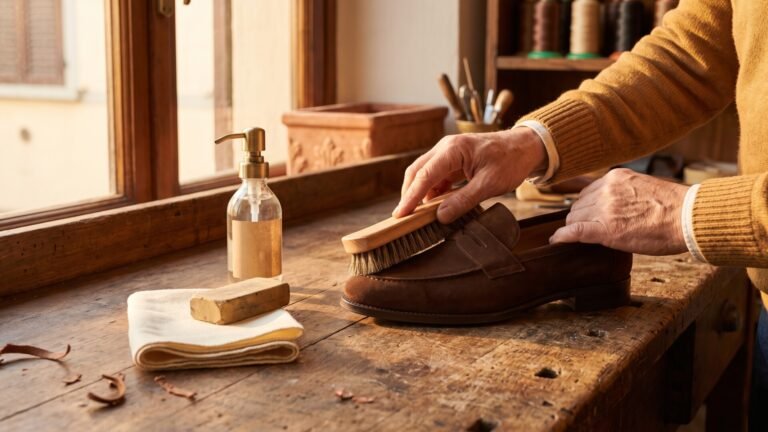
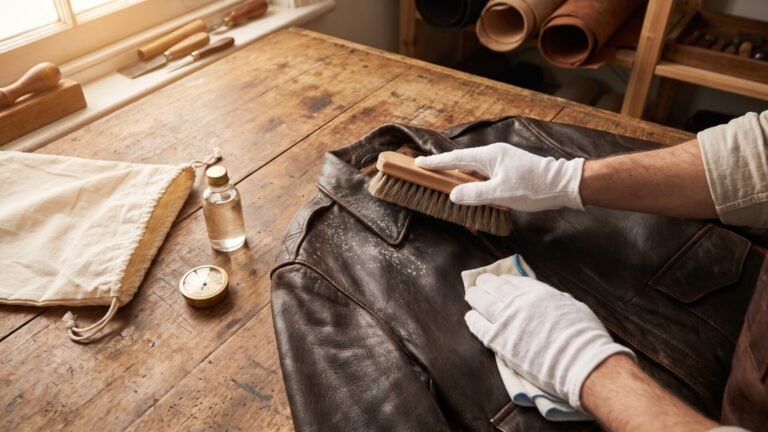
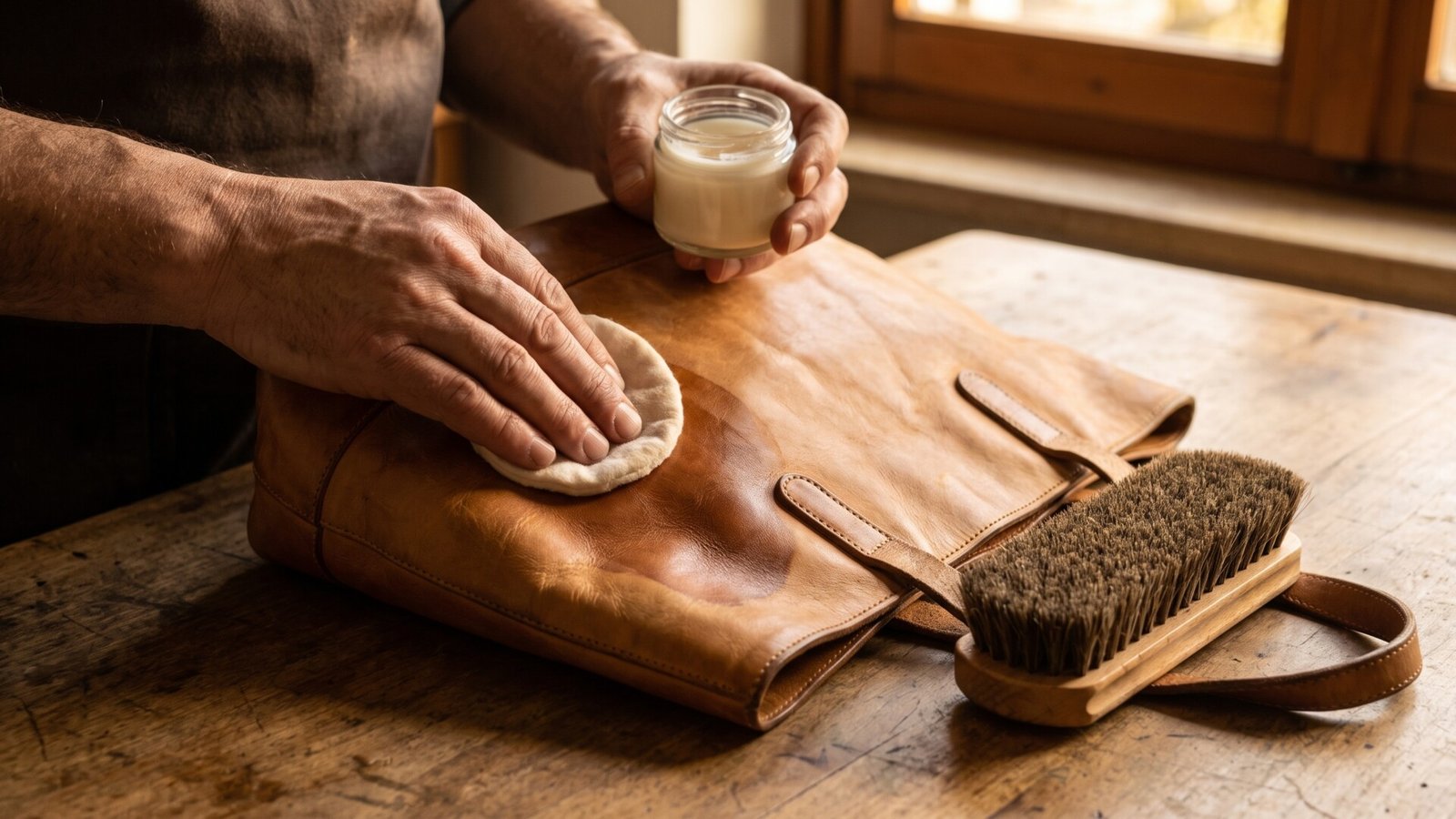
Conditioning dirty leather seals dirt into the surface, so clean first. Remove surface dust with a soft dry cloth or a soft horsehair brush. Then use a gentle cleaner made for smooth leather. One option is [Affiliate: Saphir Médaille d’Or Leather Lotion], a beeswax, lanolin and mink oil lotion that cleans and nourishes in one step and that retailers list as suitable for vegetable-tanned and vacchetta leather.
Apply a small amount to a soft cloth that is only slightly damp, and work in gentle circles, paying attention to handles, corners and the base where oils and dirt gather. Wipe off residue with a clean dry cloth and let the bag dry completely at room temperature. Too much cleaner or water can soak into vegetable-tanned leather and leave dark, uneven marks as it dries, so use less than you think you need.
Conditioning the Leather
Once the bag is fully dry, conditioning replaces some of the oils and waxes that use and light remove. [Affiliate: Leather Honey Leather Conditioner]
Apply a very thin layer with a soft lint-free cloth, let it absorb for at least half an hour, and assess before adding more. Heavy or repeated coats can leave leather greasy, darker than the rest of the bag and sticky, particularly on pale vegetable-tanned leather, which darkens when oiled. Condition when the leather feels dry or looks dull rather than on a fixed schedule. Avoid conditioner on suede, nubuck and coated leathers unless the brand says it is safe.
Polishing, Blending and Colour
Light scratches on smooth leather can often be blended with a restorative cream or by warming the mark gently with a clean fingertip. For a general-purpose restorer, one option is [Affiliate: Saphir Renovateur]. Check the product page for what it contains and which leathers it suits, since restorers and creams can darken some leathers.
For larger colour loss, a leather dye such as [Affiliate: Fiebing’s Leather Dye] is one option, but dyeing is the step most likely to go wrong at home. Patina is not a flat colour, so a single dye will not match it, and dye is hard to remove. For colour loss on a valuable bag, ask a leather restoration specialist for a written quote and examples of past work.
Protecting the Leather
A protector helps repel light rain and spills. One commonly used spray is [Affiliate: Apple Brand Garde Rain & Stain Water Repellent]. Check the label for the leathers it is intended for and test a hidden spot first, since sprays can darken or alter some finishes. Apply a light, even coat from the distance the label recommends, in a ventilated space, and let it dry fully before use. A protector reduces risk but does not make leather waterproof, and it will not stop patina from developing.
Maintenance Tips for Natural Italian Leather Bags
Keep a light routine. Wipe the bag with a dry cloth after heavy use, check the handles and corners every few weeks, and clean and condition only when the leather needs it.
Store properly. Keep the bag in the breathable dust bag it came with, lightly stuffed with acid-free paper to keep its shape, in a cool, dry cupboard. Avoid plastic bags, which trap moisture, and avoid hanging a bag from its handles for long periods.
Limit water and sun. If the bag gets wet, blot with a soft cloth, stuff it loosely, and let it dry naturally away from radiators, hairdryers and direct sun. Leaving a bag on a sunny windowsill can fade one side unevenly.
Plan for the right bag. If you want a bag that develops patina, choose natural vegetable-tanned leather and expect it to change. If you prefer a bag that looks the same for years, look for coated or heavily finished leather. Our guides to Italian tote bags and Italian crossbody bags are a starting point for comparing styles.
Cost of Restoration: DIY vs Professional
A home care kit generally means a cleaner, a conditioner, a protector and a few cloths. Product prices vary by brand and size and change often, so check current prices at the retailer. The same kit can usually treat several bags over a long time because only thin coats are needed.
Professional services typically include cleaning and conditioning, colour restoration, edge and handle repair, and relining. Prices depend on the bag’s size, leather, brand and the work involved, and quotes vary between workshops, so request a written quote before agreeing. Some brands also offer their own repair services, which may be worth contacting for bags still within a repair programme. As a rule of thumb, home care suits routine upkeep, while colour loss, cracks and structural problems justify a specialist, especially on a high-value bag.
Doing routine care yourself has another benefit: regular handling means you notice dryness, loose stitching or edge wear early, when they are cheap to fix.
Common Mistakes to Avoid
- Skipping the patch test. Test every product on a hidden area and let it dry fully before treating the visible surface.
- Over-conditioning. More product does not mean more protection; it can leave leather greasy and dark.
- Using the wrong products. Shoe polish, furniture polish and household cleaners are not designed for handbag leather and can strip or stain it. Saddle soap is best left to people who know the specific leather.
- Rubbing stains. Blot rather than rub; rubbing spreads water marks and abrades the surface.
- Drying with heat. Radiators and hairdryers can shrink and crack leather.
- Ignoring problems. Dry leather that is left alone is more likely to crack, and cracks are far harder to repair than dryness.
Conclusion
Good patina is the result of use plus restraint: clean the leather gently, condition it only when it feels dry, protect it from water and sun, and know when to stop. Match your approach to the leather your bag is actually made from, and take valuable or damaged pieces to a specialist. If you are still choosing a bag, our Italian tote bags guide and the Italian designer accessories collection are good places to compare leathers and styles.
[Affiliate: shop our full line of leather care products here]
Frequently Asked Questions About Restoring The Patina On Italian Leather Bags
What is patina, and why is it important?
Patina is the change in colour, sheen and texture that develops on natural leather as it is used, through light, skin oils and handling. It is valued because it gives each bag individual character, but it only develops on suitable leathers such as vegetable-tanned leather.
How often should I restore the patina on my leather bag?
There is no fixed schedule. Check the leather every few weeks, and clean and condition it when it feels dry or looks dull. Occasional-use bags need care less often than bags carried daily.
Can I restore patina myself, or should I hire a professional?
Basic cleaning and thin conditioning are reasonable for a careful owner. Significant colour loss, deep scratches, cracks, mould or structural damage are better handled by a professional, particularly on a high-value bag.
What products should I avoid when restoring leather?
Avoid bleach, ammonia, strong solvents and alcohol-based cleaners, and products not made for the type of leather you have, such as shoe polish or furniture polish. Always test on a hidden area first.
How do I know if my leather bag needs restoration?
Look for dryness, a rough or chalky surface, stiff handles, uneven pale patches or deepening scratches. If the leather is cracking, flaking or smells musty, see a specialist.
Will restoring my bag increase its resale value?
Condition is one of the factors buyers consider, so clean, supple leather is easier to sell than dry or cracked leather. Resale prices also depend on brand, model, demand and platform, and no restoration guarantees a price.
Do all Italian leather bags develop patina?
No. Vegetable-tanned leathers change the most. Coated, pigmented and heavily finished leathers are designed to stay looking the same, and suede behaves differently again. Check the care guidance for your specific bag.