Best Italian Luxury Sneakers for Everyday Walking
I bought my first pair of "walking" luxury sneakers in a hotel room in Florence, after a day that had reduced me to sitting on a stone step near Santa Croce with one shoe half off, pressing my thumb into an arch that had given up somewhere around the Duomo. The sneakers were beautiful. Hand-stitched, vegetable-tanned, the kind of pale grey that makes everything else you own look considered.
They were also, by the third hour, a pair of elegant wooden clogs.
That is the trap. The best Italian luxury sneaker for everyday walking is not the most recognizable model, and it is usually not the most expensive one. Comfort comes down to foot shape, upper flexibility, sole construction, weight, and fit – in that order. Brand prestige comes somewhere after all of it.
Here is the distinction that decides everything. A sneaker built for polished casual dressing is not automatically built for four hours of pavement. The shortlist below weighs cushioning, stability, break-in, durability, maintenance, and cost per wear. None of these will perform like a technical walking shoe. Some of them will get you across a city beautifully.
What Makes an Italian Luxury Sneaker Suitable for Everyday Walking
Occasional wear asks very little of a shoe. You put it on, you sit down, you stand up, you take it off. Everyday walking asks for repeated flexing at the ball of the foot, thousands of small heel impacts, uneven pavement, wet stone, and hours of continuous load. The same sneaker that feels wonderful for a dinner reservation can be a genuine problem by lunchtime.
The features that matter, in rough order of importance:
- A flexible rubber outsole. It should bend where your foot bends – across the ball, not in the middle of the arch. An outsole that hinges at the wrong point forces your foot to work against the shoe with every step.
- A supportive but not rigid heel counter. That is the stiffened panel at the back of the shoe that holds your heel in place. It should grip without digging. If your heel lifts with each step, you will feel it in your Achilles by the end of the week.
- A breathable lining. Leather linings are excellent and will mold to your foot. Synthetic linings trap heat. Either way, an unlined or thinly lined shoe runs cooler in summer and colder in winter.
- Manageable weight. A heavy sole feels substantial in the hand and exhausting on the foot after two hours.
- An upper that softens without collapsing. Good leather breaks in and holds its shape. Cheap leather breaks down and sags at the vamp – the front section over the toes.
Then there is the difference between comfort at try-on and comfort after several hours. This is where most buyers get caught. A heavily padded collar feels like a cloud in the shop and turns into a heat trap and a pressure point by mid-afternoon. Very soft leather can feel luxurious immediately and then allow the foot to slide forward, jamming your toes on every downhill stretch.
I use six criteria to judge a walking sneaker: walking comfort over distance, fit range across different foot shapes, durability of the parts that wear first, versatility with an actual wardrobe, maintenance burden, and value retention. Every recommendation below is assessed against those six, not against how the shoe looks on a shelf.
The Best Italian Luxury Sneakers for Everyday Walking
Each of these is a real option for a real buyer. None is a universal winner, and the differences between them matter more than the similarities.
Zegna Triple Stitch
The Triple Stitch is the strongest choice for a polished sneaker that has to work with tailored trousers, a smart casual wardrobe, and a travel outfit that has to do everything. The laceless elastic-cord construction – three thin cords running across the instep instead of laces – gives it a clean profile and makes it fast to put on, which is why it has become the default shoe of people who spend a lot of time in airports.
It is light. Noticeably light, in the hand and on the foot. The upper is soft from the first wear, and the sole flexes easily across the ball. For office commuting, hotel walking, and moderate city use, it is genuinely pleasant.
The catch is the fit. A slip-on design with elastic cords cannot be tightened the way laces can. If your heel is narrow or your instep is low, you may find the shoe secure at the toe and loose at the back. Walk a full lap of the shop, then another, and pay attention to whether your heel lifts. On uneven terrain – cobbles, gravel, long flights of stone stairs – the lack of a locked-in fit becomes more noticeable.
[Internal: Read our full Zegna Triple Stitch Sneaker Review: Why Every CEO Owns a Pair] for the deeper construction detail. If you are weighing it against the other great minimalist sneaker, our planned [Internal: Zegna Triple Stitch vs. Common Projects Achilles Low] comparison will settle it.
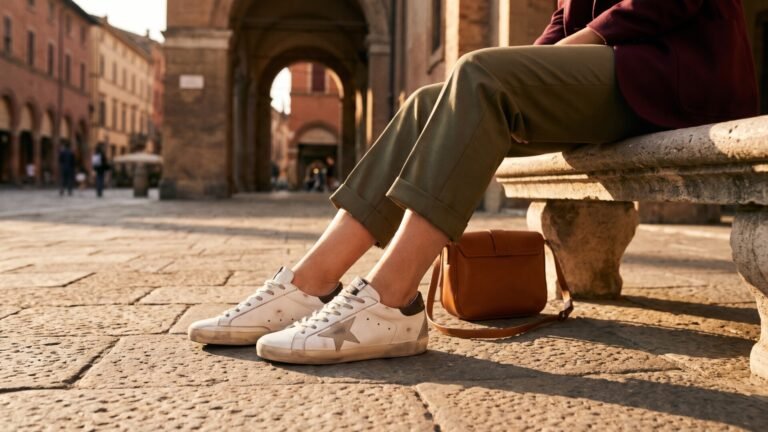
Golden Goose Super-Star
The Super-Star is the best fashion-led option, and it is worth being clear about what that means. You are buying a recognizable Italian design with a deliberately worn-in appearance and a great deal of wardrobe personality. The distressing is the point.
Comfort varies enormously by pair, by foot shape, and by how much walking you actually do. The insole feel is not plush. The shoe is not light. What the distressed finish does give you is freedom from anxiety about minor marks – a scuff on a pristine white sneaker ruins your afternoon, a scuff on a Super-Star is invisible. That is a real ownership benefit, though it does not replace actual care.
Styling is where it earns its keep: denim, relaxed tailoring, dresses, travel clothing. It goes with nearly everything casual. What it does not do is disappear. The star and the silhouette are visible from across a room, which is either the reason you want it or the reason you do not.
[Internal: Golden Goose Super-Star Review: Are They Worth the Price?] covers the value question properly. And if the material story interests you, [Internal: Golden Goose Super-Star: Why the 2026 ‘Bio-Based’ Leather is a Game Changer] explains what actually changed.
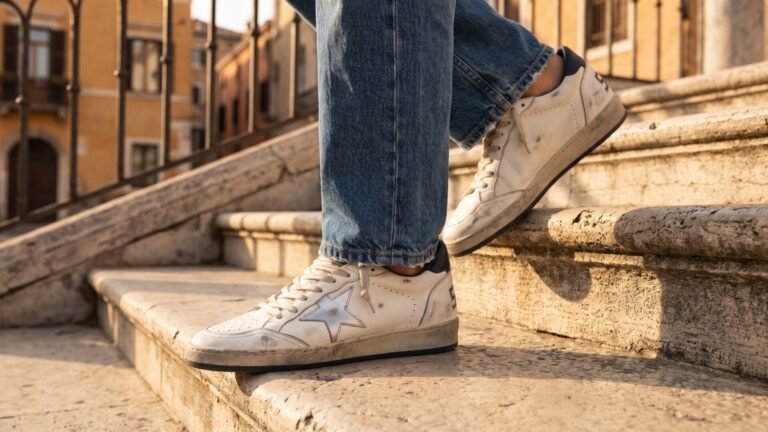
Golden Goose Ball Star
The Ball Star is the better Golden Goose choice for anyone who wants a roomier, more retro basketball-inspired silhouette. It has more interior volume than the Super-Star, which suits a wider forefoot or a higher instep, and it feels more substantial underfoot.
That substance is the trade-off. The chunkier shape reads casual and works best with relaxed clothing – it looks slightly incongruous under a sharply tailored trouser. If your wardrobe leans formal, the Super-Star is the more flexible pick; if it leans denim and knitwear, the Ball Star is more at home.
Pay close attention to two things when you try it. First, interior volume: a roomier shoe can become a sloppy shoe if your heel moves. Second, the relationship between that thicker-looking sole and actual cushioning. A visually substantial sole can still be firm. Press your thumb into the midsole and see how much it gives.
[Internal: Golden Goose Ball Star Review: Fit, Comfort and Styling] goes deeper, and [Internal: Are Golden Goose Sneakers Comfortable for All-Day Wear] answers the question most buyers ask after they have already bought.
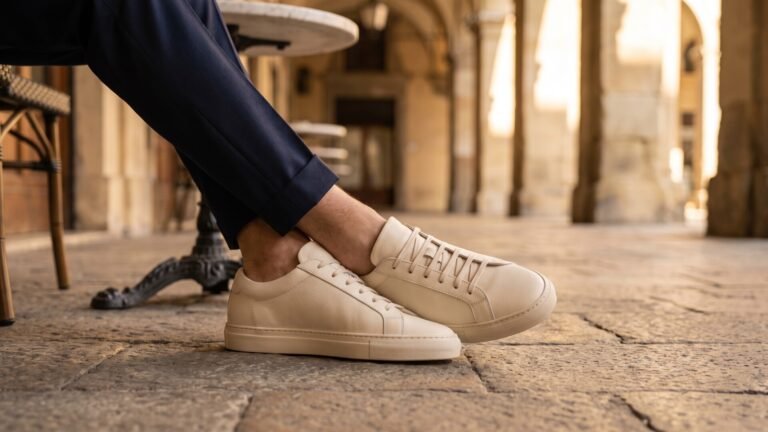
Common Projects Achilles Low
The Achilles Low is the best minimalist option, full stop. Clean lines, no visible logo, a shape that moves between jeans, trousers, and understated workwear without announcing itself. It is the sneaker you can wear to a meeting and then to dinner.
Because there are so few design details, everything else is exposed. The leather quality, the way it creases, the sole wear, the fit – all of it is visible, all of the time. A well-maintained pair looks better at year three than at month one. A neglected pair looks tired.
The honest drawback is the feel. The Achilles Low is relatively firm and pared back compared with more cushioned fashion sneakers. It suits moderate daily walking well. It is not a performance walking shoe, and treating it like one will disappoint you. Buy it for the restraint and the longevity, not for plushness.
Premiata Sneakers
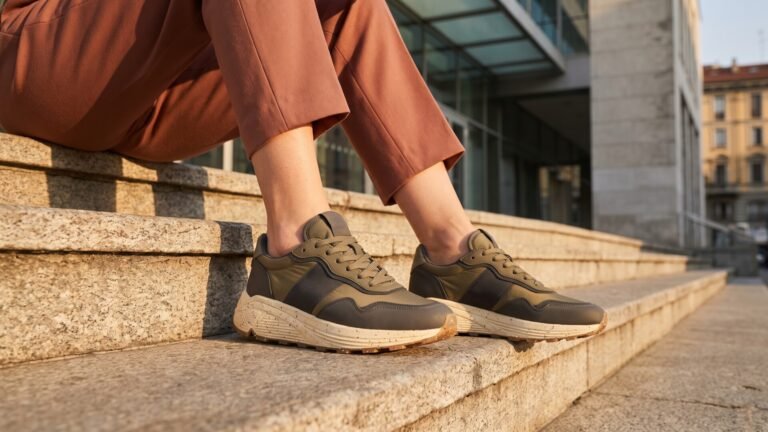
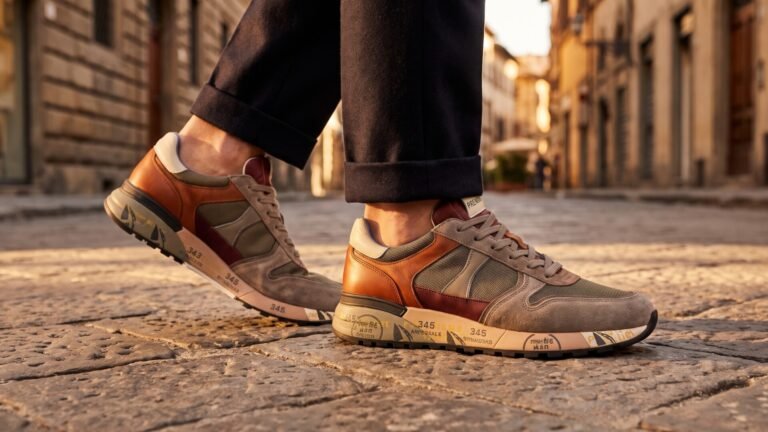
Premiata is the best choice for buyers who want visible sole design, layered materials, and a fashion-forward alternative to minimalist leather. The brand builds shoes with more visual complexity – mixed uppers, sculpted soles, contrasting panels – and that complexity has practical consequences.
Mixed materials can genuinely improve comfort. A textile panel where the shoe flexes reduces the stiffness of an all-leather upper, and lighter materials cut weight. They can also complicate cleaning, since suede, mesh, and smooth leather each want different treatment. And a busier design is harder to wear with formal clothing and more likely to date than a restrained one.
For casual city walking, travel, and relaxed everyday dressing, Premiata works well. Check outsole traction carefully – some of the more sculpted soles prioritize looks over grip on wet pavement.
[Internal: Premiata Sneakers Review: Italian Design Meets Everyday Wear] covers the model range.
Brunello Cucinelli Sneakers
Brunello Cucinelli is the premium quiet-luxury option, and it is genuinely lovely in the hand. Soft leathers, restrained branding, fine finishing, and a palette that integrates effortlessly with elevated casual clothing. The handfeel is the reason people buy them.
The distinction that matters here is between luxurious handfeel and structural walking support. Soft leather and beautiful finishing improve the pleasure of ownership. They do not automatically make a sneaker better over long distances. Some Cucinelli models are excellent for a day on your feet; others are essentially a soft slipper with a rubber sole.
At this price, do the cost-per-wear arithmetic honestly. Divide the price by the number of times you will realistically wear them in a year, then again by three. If the number still looks reasonable against a wardrobe that will actually support frequent use, they are a fine purchase. If you mainly need durable commuting footwear, you are paying for subtlety you may not need.
[Internal: Brunello Cucinelli Sneakers: Quality, Comfort and Value] breaks down the range.
Santoni Sneakers
Santoni is a strong option for buyers who appreciate traditional Italian shoemaking cues – refined leather, clean finishing, a dressier profile – in a sneaker format. The brand comes from the formal shoe world, and it shows. These are sneakers that look correct with tailored trousers.
That polish comes with maintenance obligations. Santoni’s smoother, more refined leathers show scuffs and water marks more readily than deliberately distressed or technical-looking alternatives, and they want conditioning and protection rather than neglect.
Before buying, check three things: outsole flexibility across the ball, insole comfort under your arch, and overall fit through the instep. A dressier construction can feel more structured during extended walking, and break-in may matter more than it does on a softer shoe. [Internal: Santoni Shoes Review: Quality, Comfort and Value] has the detail.
Ferragamo casual sneakers
Ferragamo is the option for buyers who want a recognizable Italian luxury house with a polished, office-friendly approach to casual footwear. The heritage is real and the finishing is generally good.
But Ferragamo’s casual range is wide, and the name alone tells you very little about walking comfort. Some models are built on proper rubber cupsoles with decent cushioning. Others are essentially a leather upper on a thin fashion sole. The recommendation depends entirely on the specific model’s outsole and upper, which is why you inspect rather than assume.
Ferragamo suits business-casual wardrobes better than heavily distressed sneakers do. It sits naturally with chinos, wool trousers, and knitwear. Just do the model-by-model check on cushioning before you commit to a walking-heavy week. [Internal: Ferragamo Shoes Guide: Signature Styles and Sizing] covers sizing, which runs inconsistently across the range.
Comparison Table: Which Italian Luxury Sneaker Is Best for Walking?
| Sneaker | Best for | Walking comfort profile | Styling range | Main trade-off | Value perspective |
|---|---|---|---|---|---|
| Zegna Triple Stitch | Polished travel and smart casual | Light, flexible, good for moderate walking; fit security varies | Very broad with trousers and tailoring | Elastic-cord fit is not ideal for every foot | Strong wardrobe utility if worn often |
| Golden Goose Super-Star | Fashion-led everyday outfits | Depends heavily on fit and tolerance for a less technical feel | Casual and expressive | Distressed look and visible branding | Cost per wear improves if you embrace the design |
| Golden Goose Ball Star | Retro casual styling | Roomier and more substantial; check heel hold | Best with relaxed clothing | Bulkier silhouette | Good for casual wardrobes, less universal |
| Common Projects Achilles Low | Minimalist wardrobes | Clean, pared-back comfort for moderate walking | Extremely versatile | Minimal cushioning and visible creasing | Strong long-term relevance if maintained |
| Premiata | Fashion-forward casual wear | Often fine for city use; assess sole and materials by model | Casual to elevated casual | More complex design and care | Better for style value than resale |
| Brunello Cucinelli | Quiet luxury and soft tailoring | Material comfort is the strength; support varies by model | Excellent with refined casual clothing | Very high entry price | Justifiable only with frequent, careful wear |
| Santoni | Dressier Italian casual | Structured and polished; break-in may matter | Smart casual and office-friendly | Can be less forgiving on long walks | Good for one refined casual pair |
| Ferragamo | Branded business-casual | Model-specific; prioritize outsole and insole | Office-friendly and polished | Not every model is built for distance | Useful where polish matters more than technical comfort |
This table ranks suitability for everyday lifestyle walking. It does not rank athletic performance. No luxury fashion sneaker should replace a specialist walking or running shoe for long-distance exercise, foot conditions, or demanding terrain – that is a different category of object built for a different job.
[Affiliate: Browse Zegna’s sneaker collection] | [Affiliate: Shop Golden Goose sneakers] | [Affiliate: See Common Projects at a retailer]
What Most Buyers Get Wrong About Luxury Walking Sneakers
The single most expensive mistake is assuming the softest leather is the most comfortable shoe. It is not. Comfort is a system: where the shoe flexes, how the heel is held, what the arch feels like under load, how much room the toes have, and how the outsole geometry rolls you forward.
A very soft upper with a stiff sole is worse than a moderately firm upper on a well-flexing sole. I have handled sneakers where the leather was like glove leather and the sole was a rigid plank – beautiful to touch, punishing to walk in.
The second mistake is reading sole thickness as cushioning. A visually substantial sole can be firm, unstable, or mismatched to your gait. Thickness and cushioning are related but not the same thing, and a tall, narrow sole can actually increase the risk of rolling an ankle on uneven ground.
The third mistake is judging in the first ten minutes. In a shop, you stand, you take a few steps, you look in the mirror. That tells you almost nothing. Instead:
- Walk a full lap of the shop, then a second one, at normal walking pace.
- Flex the shoe across the ball with your hands and check that it bends where your foot does.
- Stand and try to lift your heel out of the shoe. If it comes up easily, the fit is too loose.
- Wiggle your toes. They should have room to move without touching the front.
- Wear the socks you normally wear. A thick sock changes everything.
- Go late in the day, when your feet are at their largest.
And the central point, the one that costs the industry the most: a luxury sneaker’s price reflects finishing, branding, design, and the cost of making it in Italy. It does not reflect superior walking performance. A $900 sneaker is not three times as comfortable as a $300 one. Often it is not more comfortable at all – it is more beautiful, and beauty is a legitimate thing to pay for, as long as you know that is what you are buying.
Fit, Materials, and Construction: How to Choose for Real Walking
Fit and foot shape
Measure both feet late in the day, because feet swell. They are also frequently different sizes, and you should fit to the larger one. Then check four zones: toe room, forefoot width, pressure across the instep, and heel hold.
Slip-on designs like the Zegna Triple Stitch differ fundamentally from lace-ups. Laces let you adjust tension independently across the instep and the ankle. Elastic cords and slip-on constructions give you one setting, and your foot has to match it. If you have a high instep, a slip-on may press across the top of your foot. If you have a narrow heel, it may not hold you.
The warning signs are consistent. Toes touching the front. Pressure at the little toe. A heel that slips with every step. A collar that rubs before the leather has softened. Any of these will get worse, not better, with distance. [Internal: How Should Italian Designer Shoes Fit?] covers this in detail.
Leather, suede, and mixed materials
Smooth leather breaks in gradually, molds to the foot, and ages attractively if conditioned. It handles light rain reasonably and shows scuffs clearly. Suede is softer from the start and visually rich, but it dislikes wet weather and needs protecting before first wear. Technical fabric is light and breathable but ages less gracefully. Mixed uppers combine the advantages and the maintenance burdens of each material.
A recycled or bio-based material claim should be assessed separately from comfort and durability. A material can be environmentally preferable and still be a poor choice for your foot, or wear out faster than conventional leather. [Internal: Best Italian designer sneakers made with recycled materials] looks at this properly.
Outsoles, insoles, and construction
Rubber outsoles are more practical than leather for urban walking. They grip wet pavement, they cushion hard indoor flooring, and they tolerate abrasion. Leather soles on sneakers look refined and wear quickly. [Internal: Leather Soles vs. Rubber Soles: Which Is Better for Luxury Shoes?] explains when each makes sense.
Check the flex point, the tread depth, and the heel-to-toe transition – how smoothly the sole rolls you from heel strike to toe-off. Check whether the outsole is stitched or glued. Most luxury sneakers use a glued (cemented) sole construction, which is light and flexible but difficult to repair economically once separation begins. Very few fashion sneakers can be resoled the way a Goodyear-welted dress shoe can, and you should not buy one expecting that.
Insoles matter more than people expect. A removable insole can be replaced with a better one, which is a cheap way to extend a shoe’s walking life. A glued-in insole limits your options.
Which Option Still Makes Sense in Three Years?
Three years is a useful horizon. It is long enough for real wear to show and short enough that you will still remember what you paid.
The frequent walker should prioritize secure fit, a flexible rubber sole, easy cleaning, and understated design. Prestige details are irrelevant here. The shoe that holds your heel and flexes correctly wins, even if it is the least exciting thing on the shelf.
The luxury wardrobe buyer should prioritize styling range, material quality, and the ability to wear the sneaker with several outfits they already own. A shoe that only works with one pair of trousers is a costume, not a wardrobe piece.
The fashion collector can accept a stronger design statement – provided the sneaker fills a clear role rather than duplicating three pairs they already have.
Aging patterns differ predictably. Smooth white leather shows creases and dirt quickly. Distressed leather disguises minor wear almost completely. Suede needs weather management and looks terrible when wet. Complex mixed-material uppers require the most maintenance because each material wants different treatment.
Cost per wear is simple arithmetic: purchase price divided by realistic annual wears, then adjusted for cleaning products, replacement insoles, and whether you will still want to wear the shoe after visible wear sets in. A $900 pair worn 150 times a year for three years is $2 per wear. A $400 pair worn twelve times because it does not fit your wardrobe is $11 per wear. The cheaper shoe was the expensive one.
The likely three-year winners: Common Projects Achilles Low for restrained longevity, Zegna Triple Stitch for polished versatility, and Golden Goose Super-Star for buyers who specifically want its intentionally worn aesthetic.
Practical Styling and Ownership Advice
Style these the way you would style any good wardrobe piece – by integration, not by trend. Dark denim and a knitwear layer flatters the Golden Goose models and the Ball Star. Straight-leg trousers and relaxed tailoring suit the Zegna Triple Stitch and the Common Projects. Understated workwear and minimal sneakers are natural partners.
For business-casual settings, the strongest options are the Zegna Triple Stitch, Santoni, restrained Ferragamo models, Common Projects, and the quieter Brunello Cucinelli styles. For casual and expressive wardrobes, the Golden Goose Super-Star, Golden Goose Ball Star, and Premiata do the work.
Ownership habits extend useful life more than any product:
- Rotate pairs. Wearing the same sneaker every day compresses the insole and never lets the lining dry fully.
- Use shoe trees where appropriate. They hold shape and draw moisture out of the leather. Cedar is traditional and works.
- Let moisture evaporate between wears. Never dry leather on a radiator.
- Clean according to material. Leather wants conditioner; suede wants a brush and protector; mixed uppers want each section treated separately.
- Replace insoles before the upper gives out.
[Affiliate: A good leather conditioner] and [Affiliate: a suede protector spray] cost very little against the price of the shoe. [Internal: How to Care for Italian Leather Shoes] has the full routine, and [Internal: How to Style Italian Shoes for Every Occasion] covers wardrobe pairing.
Buying Verdict: The Best Italian Luxury Sneaker for Each Buyer
- Best overall for polished everyday walking: Zegna Triple Stitch, provided the elastic-cord fit holds your heel securely and you mainly walk on ordinary urban surfaces.
- Best minimalist investment: Common Projects Achilles Low, for buyers who value quiet design and long-term visual relevance over maximum cushioning.
- Best fashion statement: Golden Goose Super-Star, for buyers who genuinely want the distressed look and will wear it often enough to justify the price.
- Best retro casual option: Golden Goose Ball Star, for a roomier, more substantial silhouette when formal versatility is not required.
- Best premium quiet-luxury option: Brunello Cucinelli, but only for buyers who value refined materials and accept that price does not guarantee technical walking performance.
- Best design-led alternative: Premiata, for a more distinctive sole and layered construction than minimalist sneakers offer.
Skip luxury fashion sneakers entirely if you want long-distance walking performance, specialized support, a wide technical fit, or the lowest possible cost per wear. A proper walking shoe costs less and does the job better. That is not a criticism of these shoes. It is a description of what they are for.
Choose by walking volume, foot shape, wardrobe, maintenance tolerance, and willingness to pay for design. The most expensive option is rarely the best one for your feet.
The pair I should have bought
That hotel room in Florence taught me the lesson I have been passing on ever since. The grey sneakers were beautiful. They were also the wrong shoe for a week of walking, and no amount of admiration for the stitching changed what my arches said at the end of each day.
The pair I should have bought was lighter, flexed across the ball, held my heel, and looked almost as good with the same trousers. It cost less. It is still in my rotation six years later, resoled once, creased in a way I have come to like.
That is the whole test. Hold the shoe, flex it where your foot flexes, check that your heel stays put, and ask yourself honestly how far you will walk in it. If it passes those, the label matters far less than you think. Start with the [Internal: Italian Designer Sneakers: The Complete Guide to Luxury Casual Footwear] hub if you want the full landscape, or [Internal: Top 7 Italian Luxury Sneakers That Are Actually Comfortable] if comfort is your only criterion.
Frequently Asked Questions About Italian Luxury Sneakers For Everyday Walking
Which Italian luxury sneaker is best for walking all day?
It depends on your fit and your walking environment, but the Zegna Triple Stitch, Common Projects Achilles Low, and selected Santoni or Ferragamo models are the strongest starting points for polished everyday use. None of them is a technical walking shoe, and a full day of hard pavement will test any of them.
Are Golden Goose sneakers comfortable for everyday walking?
Many buyers enjoy them for casual city use, but comfort varies by model, foot shape, insole feel, and how much walking you do. The Super-Star and Ball Star feel quite different on the foot. [Internal: Are Golden Goose Sneakers Comfortable for All-Day Wear] covers the model-by-model differences.
Are Italian luxury sneakers worth the price?
For craftsmanship, design, wardrobe versatility, and frequent wear, often yes. For athletic-level cushioning or automatic durability, no. The price buys finishing and design, and you should decide whether those are worth it to you before you buy.
Which Italian sneakers are best for business casual outfits?
Polished, minimally branded options work best: Zegna Triple Stitch, Common Projects Achilles Low, Santoni, Ferragamo, and restrained Brunello Cucinelli models. Distressed or highly technical designs read too casual for most offices.
How long should a luxury leather sneaker last?
There is no guaranteed lifespan. It depends on rotation, walking volume, construction, climate, cleaning, and fit. What usually fails first is outsole wear, then the heel lining, then sole separation, then staining and deep creasing. A rotated pair that is cleaned regularly will outlast a single pair worn daily.
Are white Italian leather sneakers difficult to maintain?
Manageable, but they show dirt, creasing, and abrasion quickly. Rotate them, clean promptly rather than letting marks set, use a suitable protector, and avoid harsh household products that strip the finish.
Should I buy leather or mixed-material Italian sneakers for walking?
Leather gives a refined appearance and ages well. Mixed materials can improve flexibility and reduce weight but complicate cleaning. Decide based on your climate, how often you walk, and how much maintenance you will actually do.
Do luxury sneakers need breaking in?
Most smooth leather sneakers soften over the first week or two of wear. Suede and soft leathers need less. If a shoe is painful in the shop, break-in will not fix it – it will only make the pain more familiar.