Italian Designer Accessories
Italian designer accessories cover belts, wallets, sunglasses, silk scarves, ties, gloves, jewelry, watches and small leather goods made by Italian houses and specialist makers. This hub explains what to look for, where each category comes from, who the key brands are, and how to choose and care for what you buy. It links to our category guides and brand pages so you can go deeper on each. Related hubs: Italian designer handbags, Italian designer shoes, Italian designer clothing and Italian leather craftsmanship.
Where to Start: Italian Accessories by Category
| Category | Known Italian names | Read next |
|---|---|---|
| Belts and wallets | Ferragamo, Gucci, Prada, Bottega Veneta, Il Bisonte | Top Italian leather brands |
| Eyewear | Persol, Prada, Gucci | See the eyewear section below |
| Silk scarves and ties | Ferragamo, E. Marinella, Gucci | Storing silk scarves, caring for a silk tie |
| Cashmere scarves | Loro Piana, Brunello Cucinelli, Falconeri | Best Italian cashmere scarves |
| Gloves | Workshops in Naples and Tuscany; designer houses | Leather gloves for extreme cold |
| Work and laptop bags | Many Italian leather brands | Italian leather laptop bags |
Why Italy Is Strong in Luxury Accessories
Italian accessories draw on regional specialisation in materials and workshops. These are general regional associations rather than guarantees about any one product:
- Tuscany (Florence and the Arno valley): the centre of Italian leather goods and tanning, including vegetable-tanned leather; see how Italian leather is made and the Italian tannery regions.
- Veneto: historically the home of Italian eyewear manufacturing, including Luxottica, which was founded in Agordo.
- Como (Lombardy): the traditional centre of Italian silk weaving and printing, used for scarves and ties by many houses.
- Naples and Campania: known for tailoring, handmade ties and gloves; E. Marinella, founded in Naples in 1914, is a well-known tie maker.
- Biella (Piedmont): a centre for fine wool and cashmere yarns and fabrics, used in scarves and knitwear.
“Made in Italy” is a labelling claim made per product and does not tell you where each material came from, so check the product page, and see why Italian leather has its reputation for context.
What Defines a Well-Made Italian Accessory?
- Leather: full-grain or top-grain, ideally vegetable-tanned for pieces meant to patina. Avoid bonded or heavily corrected leather where possible.
- Stitching and edges: even, dense stitching and sealed edges (burnished or painted) that do not crack or peel.
- Hardware: buckles, clasps and hinges that work smoothly and hold their finish.
- Fabric: silk with hand-rolled edges, fine wool or cashmere that does not pill easily, and acetate (cellulose acetate) frames for eyewear.
- Branding: discreet branding often signals a quiet-luxury approach, while bold monograms signal a statement approach; neither indicates quality on its own.
Core Accessory Categories
Eyewear: Persol, Prada, Gucci
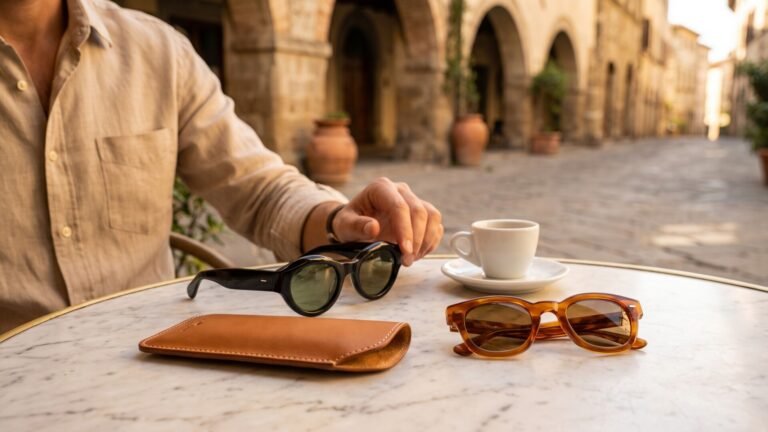
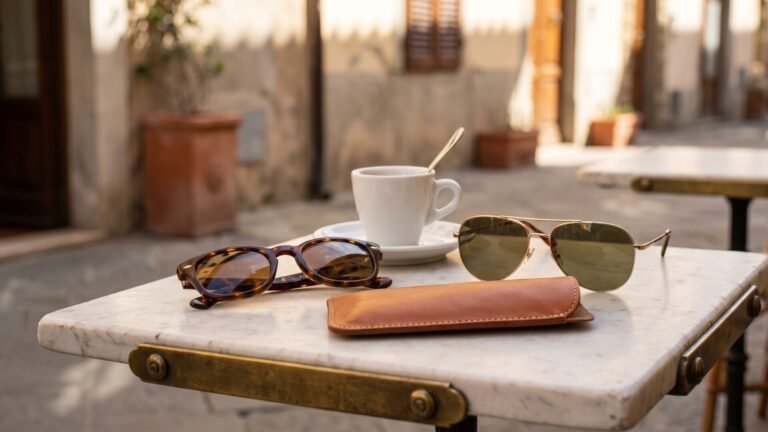
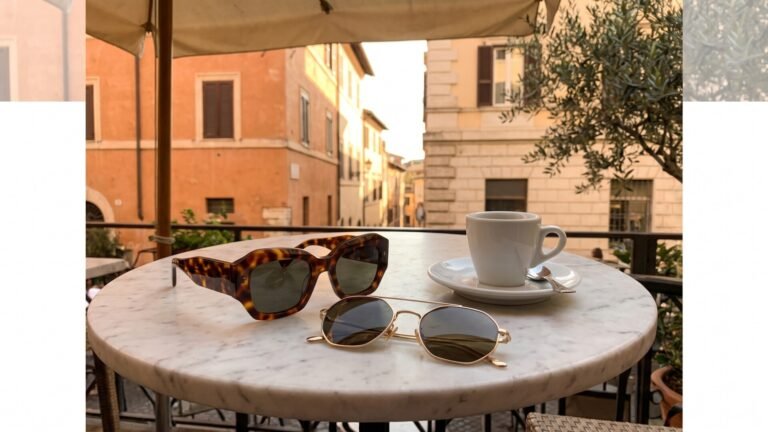
Persol was founded in Turin in 1917 by Giuseppe Ratti and is now owned by Luxottica. Its name comes from the Italian “per il sole”, its trademark is a silver arrow, and its patented Meflecto flexible temple system is one of its signature features; its acetate frames are made in Italy. Prada and Gucci also make sunglasses and optical frames in a range of acetate and metal styles. Look for UV protection information on the label and try frames on for fit.
Belts and Wallets
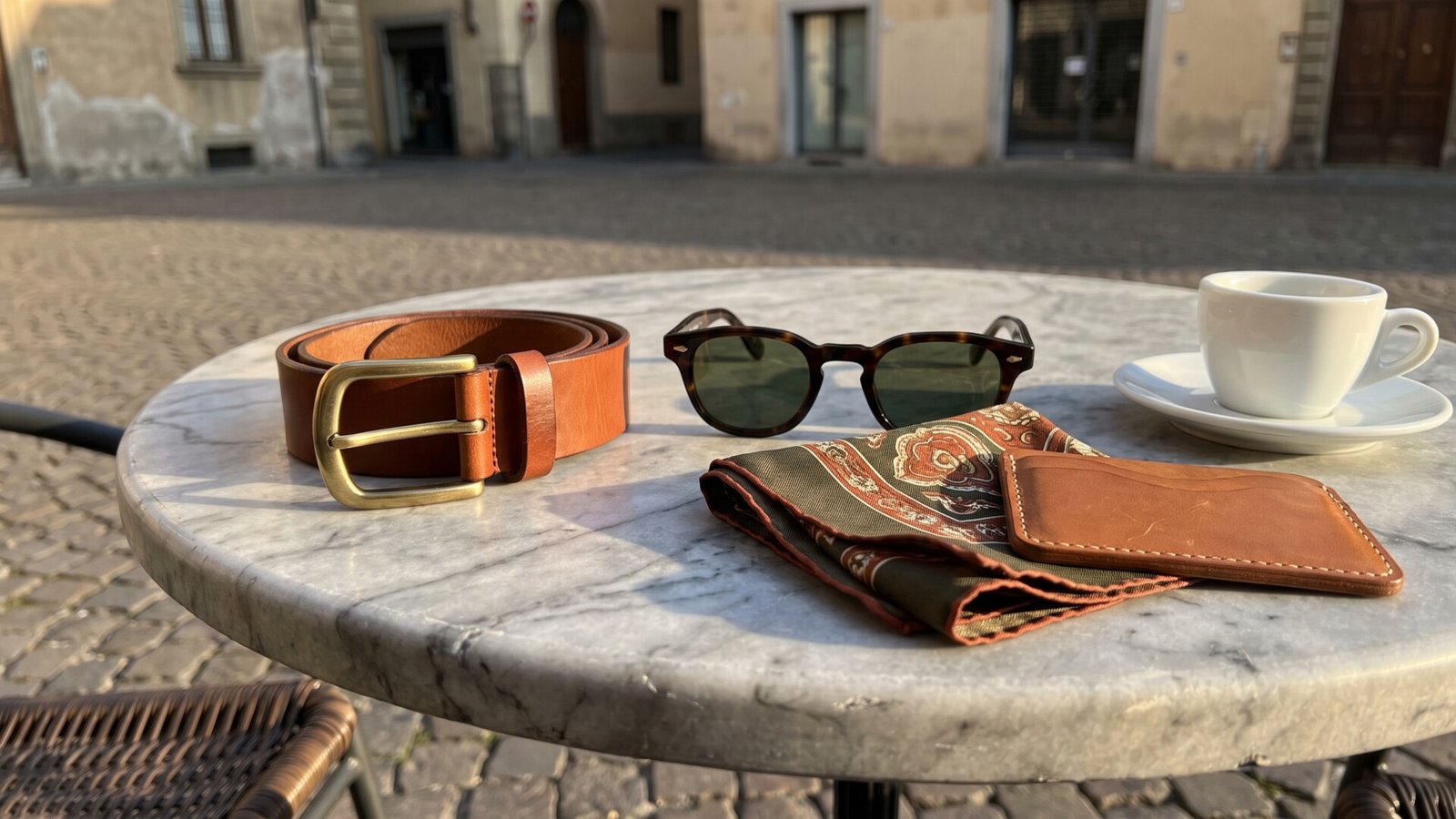
Belts and wallets are the usual entry point into Italian leather goods. A reversible belt that flips between black and brown covers more outfits than a single colour, but check that the two sides are stitched and not simply glued. For wallets, a slim cardholder suits front-pocket use, while a bi-fold suits more cards and cash. Specialist makers such as Il Bisonte and The Bridge are good alternatives to large houses.
Silk Scarves, Ties and Pocket Squares
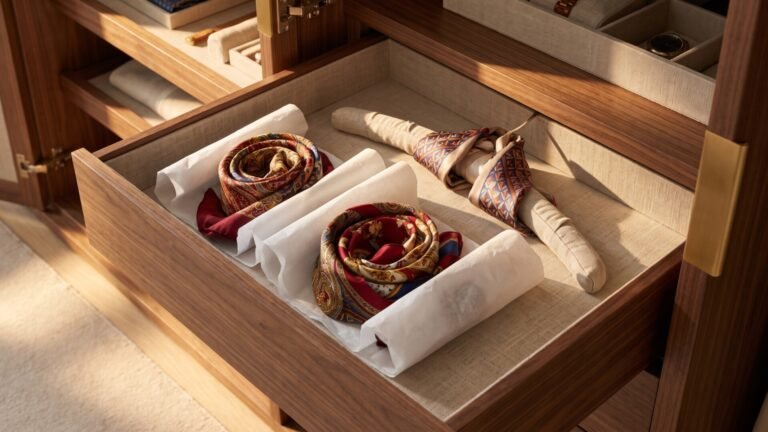
Silk is printed and woven in Como and used by houses such as Ferragamo and Gucci. E. Marinella, founded in Naples in 1914 and run by the Marinella family, is best known for handmade silk ties and has shops in several cities. Storage matters for silk: see proper storage for silk Italian scarves and our silk tie care guide.
Cashmere Scarves, Gloves and Hats
Cashmere scarves are covered in our best Italian cashmere scarves guide and the wider Italian cashmere guide. For leather gloves see gloves for extreme cold and affordable leather gloves for men. Gloves are cut small to fit closely, so try before buying.
Jewelry and Watches
Italian fashion houses including Bottega Veneta and Gucci sell jewelry in silver, gold and gold-plated pieces, and Italian houses such as Bulgari and Panerai make watches with strong Italian case design. Check each product’s metal (solid gold, silver, plated brass) and movement origin before comparing prices.
Bags as Accessories
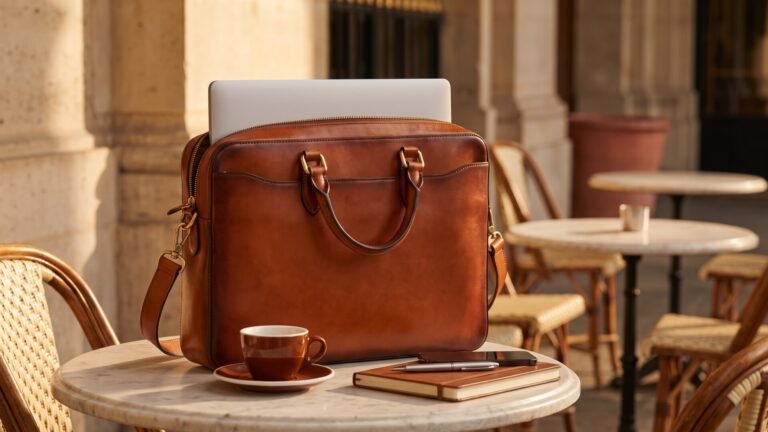
Work bags and laptop cases are covered in our Italian leather laptop bags guide, and for the full bag picture see the handbags hub.
Key Italian Accessory Brands
| Brand | Style | Best known accessories |
|---|---|---|
| Gucci | Bold, logo-led | GG Marmont and Horsebit belts and wallets, Web stripe scarves |
| Prada | Minimal, modern | Saffiano leather goods, nylon accessories, eyewear |
| Salvatore Ferragamo | Discreet heritage | Gancini belts, silk scarves and ties, leather goods |
| Loro Piana | Quiet luxury | Cashmere scarves, suede gloves, leather belts |
| Ermenegildo Zegna | Tailoring-led | Belts, wallets, silk ties |
| Tod’s | Relaxed elegance | Leather belts and small leather goods |
| Bottega Veneta | Craft-led | Intrecciato woven belts, wallets and cardholders |
| Valextra | Minimalist leather goods | Small leather goods and travel accessories |
| Golden Goose | Distressed casual | Belts, hats and small leather goods |
| Persol | Heritage eyewear | Acetate sunglasses with Meflecto temples |
| E. Marinella | Neapolitan tradition | Handmade silk ties |
For specialist and smaller makers, see emerging and niche Italian designers, Italian fashion designers and our Italian designer brands guide.
We have deliberately not listed per-brand price ranges here, because prices change quickly and differ by market; check the brand’s own site for current USD pricing before you buy.
How to Choose Italian Designer Accessories
- Start with what you use daily: a good belt, a wallet and sunglasses get the most wear, so they repay quality most clearly.
- Buy neutral first: black, brown, navy and beige work with most wardrobes; add statement pieces later.
- Match metals and leather tones: keep belt buckle, watch and jewelry broadly consistent, and keep belt and shoes in the same tonal family.
- Check the details: hardware finish, edge sealing, stitching, lining and country of manufacture on the product page.
- Consider alternatives to the big names: specialist makers often give similar construction without the logo premium.
Are Italian Designer Accessories Worth It?
For items used every day, paying more for better leather, hardware and construction often makes sense, because cost per use falls the longer a piece lasts. For example, a $300 wallet used daily for five years works out to about $0.16 per use, while a $50 wallet replaced yearly works out to roughly $0.27 per use. Part of a designer premium, though, pays for the name and branding, not the build, which is why independent makers are worth comparing. Resale values vary a lot by item and condition and should not be assumed; accessories are best bought to use. Buy from authorised sellers and keep receipts, because fakes of popular belts and wallets are common.
Care
- Leather: wipe with a soft dry or barely damp cloth; condition sparingly and test first; see how to care for Italian leather goods and how often to condition. Store in dust bags, never plastic.
- Suede: brush and protect; see waterproofing suede.
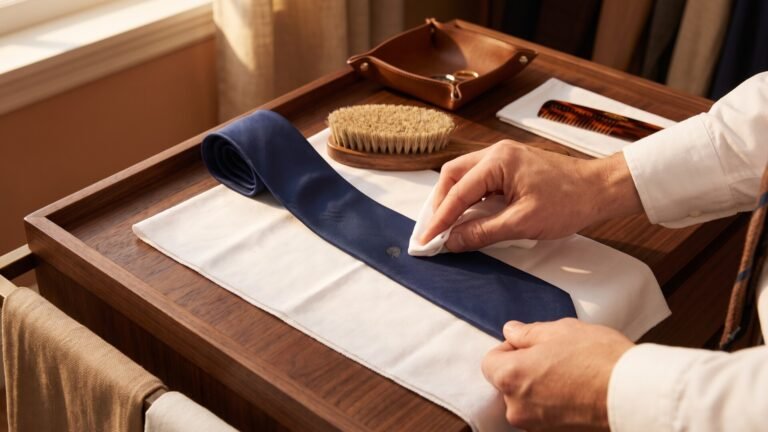
- Silk: follow the care label, usually dry cleaning; store flat or rolled.
- Cashmere: hand wash cool with a gentle detergent or dry clean, and store folded.
- Metal and jewelry: wipe after wear and keep away from perfume and lotion.
- Rotate: do not wear the same leather belt every day, so it can recover its shape.
Frequently Asked Questions About Italian Designer Accessories
What are Italian designer accessories?
Belts, wallets, eyewear, scarves, ties, gloves, jewelry, watches and similar items designed or made by Italian houses and specialist makers.
Where can I find luxury accessories that reflect true Italian heritage and skill?
Look at heritage makers with a clear regional tradition, such as Persol for eyewear (Turin, 1917), E. Marinella for ties (Naples, 1914), Ferragamo for leather goods, and specialist leather brands such as Il Bisonte and The Bridge. Check each product page for where it is made.
Which Italian brands make the best accessories?
It depends on the category: Persol for eyewear, E. Marinella for ties, Loro Piana for cashmere, Ferragamo and Prada for leather goods, Bottega Veneta for woven leather. See the brand table above.
Why are Italian accessories expensive?
Prices reflect materials, labour, brand positioning and retail costs. Part of the price is the brand name, so compare construction details as well as logos.
Are Italian accessories worth the money?
For daily-use items such as belts and wallets, better materials and construction can lower cost per use over time, but a higher price does not always mean better quality, so check the details.
How long do Italian leather accessories last?
It depends on the leather, construction and care. Well-made, well-maintained leather belts and wallets can last many years, but no brand guarantees a specific lifespan.
Conclusion
Start with the accessories you use most, choose materials and construction over logos, and use this hub to move into the category and brand pages above. For your next step, explore the top Italian leather brands or the Italian designer brands guide.