Santoni: The Definitive Guide to Italian Luxury Footwear and Leather Goods
Santoni is a family-owned shoemaker from Corridonia in Italy’s Marche region, founded in 1975, best known for hand-coloured leather shoes, double monk straps and a growing women’s and leather-goods line. If you are searching “what is Santoni” or “is Santoni a good brand”, the short answer is that it sits in the upper tier of Italian footwear: priced above most mainstream designer labels, below bespoke-led houses, and built around a finishing technique rather than a logo.
This guide is the full Santoni resource on ItalianDesignerVault.com. It covers the history, how the shoes are made, the main categories and models, approximate pricing in US dollars, how Santoni compares with Ferragamo, Tod’s and others, where to buy, and how to look after the leather. For a more detailed look at fit, comfort and value, see our Santoni shoes review.
[Shop the full Santoni collection at the links throughout this guide.]
Quick Answer: Is Santoni a Luxury Brand?
Yes. Santoni sells through its own boutiques and through high-end retailers, produces its shoes in its own ateliers in Corridonia, and prices them in the same band as other established Italian luxury footwear. What distinguishes it from louder labels is that the product itself, particularly the hand-applied colour on the leather, does most of the work. Whether it is worth the money depends on the buyer: someone who wants visible branding will find little here, while someone comparing hand-finished leather shoes will find it a serious option.
- Best known for: hand-coloured (“velatura”) leather, double monk straps, loafers and refined sneakers.
- Ownership: private and family-led, with Giuseppe Santoni, the founder’s son, as executive chairman.
- Typical price band: roughly $550 for a leather sneaker to well over $1,000 for hand-finished loafers and dress shoes, with exotic leathers higher (approximate figures, explained below).
- Closest comparisons: Salvatore Ferragamo for formal footwear, Tod’s for casual luxury, and Gianvito Rossi on the women’s side.
The History of Santoni
Founding in Corridonia
Santoni was founded in 1975 by Andrea Santoni in Corridonia, in the Marche region on Italy’s Adriatic side. Marche has long been one of Italy’s main shoemaking regions, yet it is far less famous with consumers than Milan or Florence, even though many well-known footwear brands source production from the area. Corridonia is still the brand’s home: the ateliers, the headquarters and the company’s craft identity are all tied to it.
Santoni grew from a single Marche workshop into an international brand while keeping its production base in the same town, which helps explain why its reputation rests on workmanship and finishing rather than on a fashion-led image.
Growth into an International Brand
According to published company profiles, Santoni began expanding internationally in the 1990s under Giuseppe Santoni, who later became executive chairman. The brand today depends heavily on exports: FashionUnited reported in 2025 that exports account for about 82 percent of total revenue.
The brand has since added women’s shoes, bags, small leather goods and accessories. It also built a retail network of its own. Recent reporting by Il Sole 24 Ore lists openings in Doha, Monte Carlo and Jakarta, with more boutiques planned in cities including Dubai, Capri, Las Vegas, London, Palm Beach and Vienna.
The 50th Anniversary: Meraviglia
In 2025 Santoni marked fifty years with the “Meraviglia” celebrations, including a book of the same name published by Assouline and written by Luke Leitch, as reported by Wallpaper. The anniversary year also brought a new flagship on Madison Avenue in New York.
Who Owns Santoni?
Santoni is a private company still led by the founding family. Giuseppe Santoni, Andrea’s son, is described in the business press as executive chairman. There is no listed parent group, which sets it apart from houses such as Berluti (part of LVMH) or Ferragamo (a listed company).
Santoni by the Numbers
Published figures differ slightly between outlets, so treat them as approximate. FashionUnited reported that Santoni’s first-half 2025 revenue rose 10.5 percent, with retail sales up more than 46 percent and online up about 23 percent. Full-year 2025 revenue was reported at somewhat over 130 million euros, which is roughly $150 million at recent exchange rates, and Il Sole 24 Ore puts the figure marginally higher. Women’s products were reported as roughly 30 to 35 percent of turnover depending on the source, and direct online sales at close to 15 percent.
Two points are useful for a buyer. First, the brand is growing mainly through its own retail and online channels, so the boutique and santonishoes.com are the most complete places to see the range. Second, a mid-sized family company has less marketing budget than a conglomerate house, which is one reason the product, rather than the advertising, tends to be the selling point.
What Makes Santoni Special
Hand-Coloured Leather (Velatura)
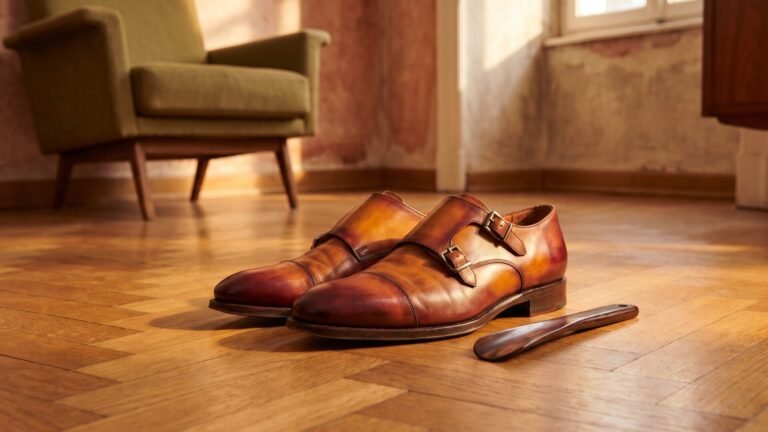
The technique most associated with Santoni is hand colouring. The Homo Faber cultural foundation, which has profiled the company’s artisans, describes a hand-colouring method called velatura, refined by Santoni’s craftspeople, that produces dense, rich and almost pictorial shades. In practice this means pigment is worked into the leather by hand in layers, so the colour can build a gradient (“degradé”) effect rather than the flat, uniform finish of a machine-dyed upper.
Two practical consequences follow. No two pairs are identical, and the finish is a surface treatment that wears and ages: scuffs, creasing and polish will gradually change the colour. Many buyers like that evolution; others prefer to keep the original tone with regular cleaning and cream polish. Either way, the brand itself describes the result as a finish that deepens with time, which is a claim about appearance, not durability or resale value.
Craftsmanship and Where the Work Happens
Homo Faber states that more than 400 shoemakers work in the Corridonia ateliers, and Wallpaper reported around 500 people at the factory, with many living nearby. Published figures differ, so we describe it simply as several hundred artisans. The skills the foundation highlights are hand cutting, hand stitching and hand colouring, with older artisans training younger ones.
A note on “Made in Italy”: it is a legal label applied product by product. Santoni is based in Italy and the retailer pages we checked list Italy as the country of origin for specific shoes, but we cannot confirm that every item in every line, especially accessories and some leather goods, is made there. Check the label on the exact pair or bag you are buying.
Construction Methods Explained
Santoni shoes are not built one single way. Depending on the line, makers in this category use Goodyear welting, Blake stitching and the Bologna (sacchetto) method. Retailers list Santoni models described as Blake-stitched, for example. Here is what each method means for you:
- Goodyear welt: the upper is stitched to a strip (the welt) which is stitched to the sole. It is sturdy, somewhat water-resistant and straightforward for a cobbler to resole repeatedly.
- Blake stitch: the upper is stitched directly through to the sole. The shoe is slimmer and more flexible, with a closer-cut profile, and can still be resoled, although it needs a cobbler with the right machine.
- Bologna: the upper is stitched into a sock-like shape before it is lasted, which makes a soft, light shoe with a very flexible feel. It is more often used on loafers and casual styles.
Ask which construction a specific model uses before you buy. It affects weight, flexibility and how and where it can be repaired. Our guide to handmade Italian shoes explains what the term does and does not guarantee.
[Browse Santoni’s collection of men’s dress shoes.]
Santoni’s Main Shoe Categories
Double Monk Straps
The double monk strap is the style most closely associated with Santoni. Two buckled straps replace laces, giving a shoe that is dressier than a loafer yet easier to wear than a lace-up Oxford. Santoni makes the style in smooth calf, suede, and exotic leathers such as alligator, in both formal and casual versions. A known example is the Atlantis double monk-strap loafer, listed in suede with a rubber sole and described by one retailer as made in Italy.
Fit tip: because the straps hold the foot, double monks suit most feet but can be awkward on a high instep. Try them on or confirm the return policy before ordering online.
Oxfords
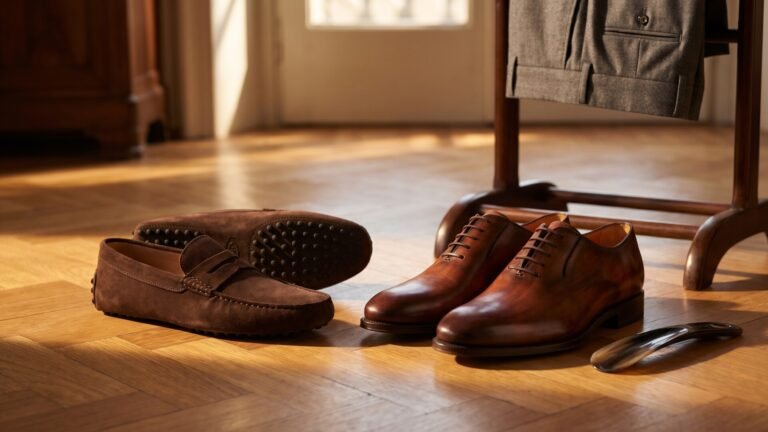
Santoni’s Oxfords are the dressier end of the range and suit business and formal wear. The Adrian Oxford in black calf is one model currently stocked by European retailers. Pair them with tailoring in dark colours; if you want a better value Oxford to compare, our dress shoe guide covers alternatives across the market.
Loafers
Loafers are the entry point for many buyers. The Easy penny loafer in black calf and the Detroit loafer in navy suede are examples from the current men’s range, with penny loafers in dark brown calf positioned a little higher in price. If you are weighing options, see our best Italian loafers guide.
Sneakers
Santoni sells minimalist leather sneakers that sit in the same price territory as many designer sneakers but carry little visible branding. The low-top grain leather sneaker in white calf and the double-buckle sneaker are two listed examples. They suit buyers who want a refined casual shoe and who are comparing against Golden Goose or Gucci. More options appear in our guide to Italian designer sneakers.
Boots
The boot offering includes Chelsea and lace-up styles in calf and suede. Model names and availability change by season, so we have not listed specific current models. For alternatives, see our guide to Italian designer Chelsea boots.
Santoni for Women
Women’s Shoes
Women’s products have grown into a substantial part of the business, reported at roughly a third of turnover by the business press, with Il Sole 24 Ore noting the company wants the women’s side to match the men’s. The collection covers pumps, sandals, loafers, boots and sneakers. In the heeled category the brand competes with specialists such as Gianvito Rossi, Sergio Rossi and Aquazzura, which tend to emphasise silhouette and heel design more than colour treatment.
Women’s Bags and Accessories
Santoni also produces handbags, small leather goods, and belts for women. The design language is restrained, usually without prominent logos. Because bag lines change often and we could not verify current model names or prices, we recommend checking the brand’s own site for current styles. For comparison within the Italian handbag market, Valextra is a useful reference for minimalist leather goods.
Santoni Leather Goods and Accessories
Beyond shoes, Santoni offers men’s bags (briefcases, travel bags, laptop bags), belts, wallets and cardholders, and, according to the brand, items in silk, wool, cashmere, socks and gloves. These are best viewed as extensions of the shoe business. If your priority is a leather bag or wallet, specialists such as Valextra or Il Bisonte have deeper bag ranges, while Santoni is mostly bought for its shoes.
Santoni Price Guide in US Dollars
Santoni does not publish a single price list, and prices vary by market, season and retailer. The figures below are approximate. They are based on euro prices seen at a European retailer in late 2026 and converted at roughly 1.15 dollars per euro, so treat them as ballpark figures and check the current price at the retailer you plan to use.
| Style (example model) | Approximate US price |
|---|---|
| Leather sneaker (low-top grain leather, white calf) | about $575 |
| Easy penny loafer (black calf) or Detroit loafer (navy suede) | about $750 |
| Adrian Oxford (black calf) | about $830 |
| Penny loafer (dark brown calf) | about $1,000 |
Hand-patinated, limited-edition and exotic-leather models (such as alligator) are priced well above these figures, and made-to-order and bespoke services cost more again. We could not verify current bespoke prices, so we do not quote any here. Sale prices can be far lower: one Canadian retailer lists a Santoni suede double monk loafer at roughly half its original price, so it is worth checking end-of-season sales.
Is Santoni Worth the Price?
What You Are Paying For
- Finishing time: hand-colouring adds labour that machine-dyed shoes skip.
- Hand work in Italy: cutting, stitching and colouring are done by skilled staff in the company’s own ateliers.
- Materials: calf, suede and exotic skins in varying grades; exotic leathers add cost for the material itself.
- Repairability on welted models: where the shoe is Goodyear-welted, a good cobbler can replace the sole, which extends the life of the shoe.
- A smaller marketing footprint: less of the price goes to logo-led branding than at large fashion houses, although retail markups still apply.
Where the Value Is Weaker
You are also paying for the name and the boutique network. If you mainly want durable, resoleable welted shoes, brands with more traditional English-style construction may give more shoe per dollar. If you like patina but want a lower price, a smaller maker may suit you better; compare Officine Creative for a more artisanal and design-led look. And a hand-applied colour finish is not for everyone: it will change as you wear the shoes.
Longevity and Repair
No shoe lasts “forever”, and care and wear patterns matter more than the brand. Shoes with replaceable soles, rotated between pairs and kept on shoe trees, last longest. We do not claim any Santoni shoe holds its resale value, and pre-owned prices vary widely by model and condition.
Who Should Buy Santoni
- Professionals who want a dressier shoe with more character than a plain black Oxford.
- Shoe enthusiasts who enjoy colour, depth and hand finishing.
- Quiet-luxury buyers who prefer no logos and a refined look.
- Gift buyers looking for a recognisable, well-regarded Italian name.
It may be less suitable if you want conspicuous branding, ultra-trend-driven designs, or the lowest possible cost per wear.
Santoni vs Other Luxury Shoe Brands
| Brand | Style | Signature | Best for |
|---|---|---|---|
| Santoni | Understated, hand-coloured leather | Velatura finish, double monk straps | Professionals, collectors |
| Salvatore Ferragamo | Formal, heritage footwear | Gancini hardware, Vara bow | Dress shoes, executives |
| Tod’s | Casual elegance | Gommino driving shoe with rubber pebbles | Travel, casual luxury |
| Berluti (French house) | Patina-led, high price | Venezia leather | Patina enthusiasts with larger budgets |
| Gucci | Fashion-led, logo-forward | Horsebit hardware, GG logo | Fashion-focused buyers |
| Golden Goose | Distressed, casual | Star logo, pre-worn finish | Weekend and creative wear |
Santoni vs Ferragamo
Santoni and Ferragamo overlap most in men’s dress shoes. Ferragamo is older, listed and carries a recognisable design vocabulary (Gancini, Vara). Santoni is smaller, family-owned and leans on colour and finish. If you want a shoe that signals the brand, Ferragamo is clearer; if you want one that looks distinctive only up close, Santoni is. Compare both on the same construction and leather before deciding.
Santoni vs Tod’s
Tod’s is better known for casual shoes and driving loafers; Santoni is more formal and more focused on dress styles. They overlap in loafers and sneakers, where Tod’s has a more recognisable silhouette.
To compare Santoni with other Italian houses and see the full map, visit our guide to Italian designer brands.
How to Style Santoni Shoes
Business Formal
Oxfords and double monk straps in black, dark brown or burgundy pair with suits. A hand-coloured finish adds visible depth even in conservative colours. Match the belt to the shoe colour as usual.
Smart Casual
Loafers in suede or coloured calf work with chinos, tailored jeans and unstructured blazers. Suede suits dry weather and softer tailoring; keep calf loafers for city wear.
Luxury Casual
Minimal leather sneakers go with trousers, knitwear and casual jackets. A restrained shoe like this works best with clean lines and little pattern. For knitwear that fits that look, see Loro Piana or Brunello Cucinelli for the quiet-luxury end of the market.
Where to Buy Santoni
Official Channels
Santoni operates its own boutiques, including in Milan, New York (Madison Avenue), Monte Carlo and Doha, and sells through santonishoes.com. Opening hours, locations and shipping vary, so check the brand site.
Retailers
Wholesale partners listed by public sources include Nordstrom, Neiman Marcus and Bergdorf Goodman in the US, and European and online retailers such as Selfridges and Care of Carl stock Santoni too. Stock and return policies vary by retailer.
Pre-Owned
Pre-owned pairs appear on resale platforms and marketplaces. Treat those with caution: buy from sellers with authentication or a return policy, ask for photos of the inside label, sole and stitching, and compare against the brand’s own listings. Photos and a checklist cannot prove authenticity; for expensive pairs, use a platform that authenticates for you.
Care Guide: Maintaining Santoni Footwear
This advice is general. Where the maker gives different instructions, follow those, and test any product on a hidden area first. Our care guide to Italian leather goods has more detail on leather types.
Calf Leather
Remove dust with a soft brush after wear, then wipe with a barely damp cloth if needed. Use a cream polish in a matching colour sparingly, because a hand-applied finish may react to strong solvents or cleaners. Avoid soaking; if shoes get wet, let them dry naturally, away from heaters, with shoe trees inserted.
Suede
Use a suede brush and eraser, and a protective spray suited to suede, applied after testing. Avoid wearing suede in heavy rain.
Storage and Repair
Use cedar shoe trees, rotate pairs so each rests a day or more, and store in the dust bags. For soles, heels or a refresh of colour, use a skilled cobbler or ask the brand about its repair services; we could not verify details of any named Santoni care programme, so confirm with the boutique.
Further Reading
- Santoni Shoes Review: Quality, Comfort and Value
- Italian Designer Brands: A Complete Guide
- Salvatore Ferragamo: Complete Guide
- Tod’s: Complete Guide
- Gianvito Rossi: Complete Guide
- Officine Creative: Complete Guide
Frequently Asked Questions About Santoni
Is Santoni a luxury brand?
Yes. Santoni is an Italian family-owned luxury footwear and leather-goods house founded in 1975 in Corridonia, sold through its own boutiques and high-end retailers, at prices comparable with other established Italian luxury shoe brands.
Is Santoni a good shoe brand, and are the shoes good quality?
Santoni is well regarded for its hand-coloured leather and finishing, and its shoes are made in company ateliers in Corridonia. Quality varies by model and line, so check the construction (Goodyear, Blake or Bologna) and the leather of the specific pair, and read independent reviews.
Where are Santoni shoes made?
The brand is based in Corridonia, in Italy’s Marche region, and its shoes are made in its ateliers there. Made in Italy labelling applies per product, so check the label on the exact item, especially for bags and accessories.
How much do Santoni shoes cost?
Approximate US prices run from roughly $550 for a leather sneaker to about $750 to $1,000 for loafers and Oxfords, with exotic and limited-edition pairs costing considerably more. Prices vary by retailer and market, so check current listings.
Santoni vs Ferragamo: which is better?
They overlap in men’s dress shoes. Ferragamo is a larger, listed house with recognisable hardware such as Gancini; Santoni is smaller and family-owned and is known for hand-coloured leather. Choose by the look, construction and fit that you prefer.
Who owns Santoni?
Santoni is a private, family-led company. Giuseppe Santoni, son of the founder Andrea Santoni, is executive chairman.
Are Santoni shoes worth the money?
They can be if you value hand-applied colour and a low-logo look. If your priority is a resoleable, durable welted shoe at the lowest price, compare constructions and brands first. Resale value is not guaranteed.
Conclusion
Santoni makes a clear case for buyers who care about colour and finishing more than visible branding. It is not the cheapest route to Goodyear-welted durability, and it is not for logo seekers, but for dress shoes, double monk straps and refined loafers it is a credible and distinctive choice. Check the construction and country of origin of the exact pair, compare it with Ferragamo or Tod’s, and buy from a retailer with a clear return policy.
[Explore the full Santoni collection and find your perfect pair.]
[Shop Santoni Double Monk Straps]
[Shop Santoni Oxfords]
[Shop Santoni Loafers]
[Shop Santoni Women’s Collection]