Best Italian Designer Winter Coats for Extreme Cold
A designer winter coat for extreme cold has to do two jobs at once: hold in heat when the wind is cutting and the temperature is well below freezing, and still look right once you step indoors. Italian houses approach the problem from different directions. Moncler and Herno build down jackets around insulation and lightweight shells, Peuterey brings a similar outerwear-first approach with Alpine-inspired parkas, Stone Island and C.P. Company come from technical sportswear and fabric research, and Loro Piana or Zegna work in cold-weather wool and cashmere with weather-resistant finishes.
This guide compares the Italian winter coats worth considering, matches each one to a specific kind of cold, and explains the specifications that decide warmth. It is part of our wider Italian designer clothing guide, and the broader Italian outerwear guide covers lighter coats for milder winters.
Quick Comparison: Italian Winter Coat Brands at a Glance
| Brand | Known for | Typical cold-weather piece | Best for | US price, Nov 2026 |
|---|---|---|---|---|
| Moncler | Quilted down outerwear; Grenoble ski line (since 2010) and the Genius collaborations (since 2018) | Down jackets and parkas in nylon shells | Sub-zero city winters and mountain trips | Maya $1,950–$2,690; Grenoble $1,590–$4,195 (Neiman Marcus) |
| Herno | Lightweight down and rainwear, founded 1948 in Lesa | Slim down coats, wool coats with down elements | Understated, lightweight warmth | Down jackets and coats $1,025–$1,410 (Neiman Marcus); Laminar not verified |
| Peuterey | Outerwear-focused label launched in 2002, named after the Peuterey ridge of Mont Blanc | Hooded down parkas and padded jackets | Cold city winters at a lower price point than Moncler | Kasa parkas about $1,000–$1,450 (US-facing retailers) |
| Stone Island | Fabric research and treatments (founded 1982 by Massimo Osti) | Technical parkas and padded jackets | Utility styling, wet and windy weather | Crinkle Reps NY hooded down jacket $1,350 (Farfetch) |
| C.P. Company | Garment dyeing and the Goggle jacket (founded 1971) | Padded and shell jackets | Casual, understated technical looks | Chrome-R Goggle Down Jacket $1,020 (C.P. Company US) |
| Loro Piana | Cashmere, vicuña and wool outerwear | Wool and cashmere overcoats with weather-resistant finishes | Formal cold-weather dressing | Cashmere Storm System International Coat $6,500 (Loro Piana US) |
| Gucci and Dolce & Gabbana | Fashion-led outerwear | Puffers, padded and wool-blend coats | Style-first buyers in moderate cold | Not verified; varies by season |
Prices in the table are full US retail prices (not sale prices) checked in November 2026 at the named retailer or brand site. They vary by model, size and season and change often, so check the current listing for the price and for the fill power, shell fabric and country of manufacture printed on the product page.
Choose by Climate: Which Italian Coat for Which Cold?
Most brand guides rank coats by name. A more useful question is what kind of cold you face, because a short lacquered-nylon puffer, a long GORE-TEX parka and a cashmere overcoat fail in different conditions. Designer coats rarely carry a standardized temperature rating, so treat any stated comfort range as the brand’s own claim and use this table as the decision rule:
| Your winter | What matters most | Start with | Think twice about |
|---|---|---|---|
| Cold, dry city days (short trips outside) | Light warmth, easy to wear indoors | Moncler Maya or Montbeliard, C.P. Company Chrome-R Goggle Down Jacket, Herno down jackets | Heavy expedition parkas you will carry around indoors |
| Cold and wet or windy (sleet, coastal or lake winters) | Windproof, waterproof shell and a hood | Herno Laminar GORE-TEX parkas, Stone Island Crinkle Reps NY in the longer cut | Uncoated wool coats and short jackets that leave the hips exposed |
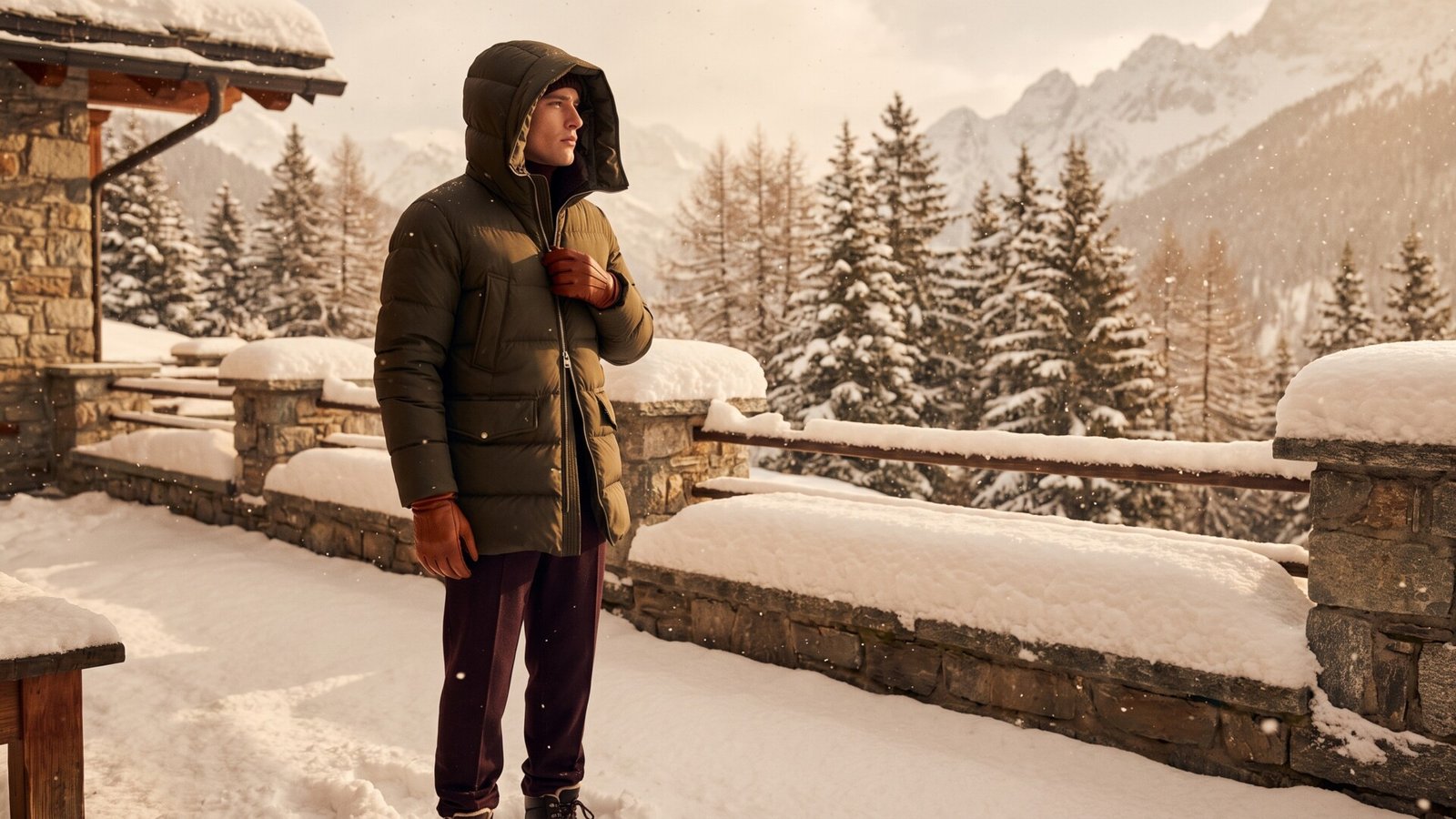
| Long hours outside, far below freezing | Length, fill weight, hood and drafts sealed | Moncler Grenoble GORE-TEX pieces, long hooded down parkas from Moncler or Peuterey | Fashion puffers with no stated fill or shell details |
| Formal city dressing in dry cold | Looks right over tailoring, layers well | Loro Piana Storm System coats, Zegna or Brunello Cucinelli overcoats | Relying on wool alone for sustained wet or sub-zero days |
| Style first, moderate cold | Design and brand signature | Gucci or Dolce & Gabbana puffers and wool-blend coats | Assuming a high price means high warmth |
One rule covers most buyers: if you will be outdoors for more than half an hour at a time, choose a coat that covers your hips and has a proper hood before you compare logos.
Italian Label, Not Always Italian-Made: Check Origin and Size
“Italian” can mean different things. Some houses were founded in Italy; others, like Moncler, were founded elsewhere and are now Italian-owned and Milan-based. A “Made in Italy” label also applies to a specific product, not to a whole brand. Moncler’s own US product page for the Maya Matte short down jacket lists it as made in Armenia or Romania, while a US retailer listing for Peuterey’s long Kasa down jacket gives Italy as the origin. Neither tells you how warm the coat is, but if Italian manufacture matters to you, read the label of the exact model rather than the brand’s story.
Sizing is the other trap. Moncler uses numeric sizes: on its US size chart, size 1 corresponds to S, 2 to M, 3 to L and 4 to XL, and the Maya is described as having fitted shoulders and chest with a boxier waist. Retailer fit notes on some Herno Laminar pieces suggest sizing up. Whatever the brand, try the coat over the thickest sweater you plan to wear under it.
What Decides Warmth: Fill, Down, Shell and Construction
1. Fill Power and Fill Weight
Fill power measures how much space one ounce of down occupies (cubic inches per ounce). Higher numbers mean loftier down that traps more air per gram. As a general industry guide, around 600-700 is good everyday down for cold city winters, around 800 is a common benchmark in premium jackets, and 900 and above appears mainly in lightweight technical pieces, where the extra loft shows mostly as lower weight and pack size.
- Fill weight matters too: total warmth also depends on how much down is in the coat. A 700 fill coat packed generously can be warmer than a thinly filled 900 fill coat.
- Testing differs: US and European test methods give different numbers for the same down, so compare like with like and treat brand claims cautiously.
- Not always disclosed: many luxury houses do not print fill power on the product page. If it is missing, ask the retailer and check the composition label for the down-to-feather ratio instead.
2. Goose, Duck or Synthetic
- Goose down: usually larger clusters, so higher potential fill power and better warmth-to-weight; it is the premium choice.
- Duck down: typically a little less lofty and more affordable, but still effective when properly processed.
- Synthetic or blended padding: keeps more of its warmth when damp but is generally heavier and bulkier for the same warmth. Some jackets use it in exposed zones to cope with moisture.
- Sourcing: look for a stated standard such as the Responsible Down Standard if animal welfare matters to you. Not every brand certifies every product.
3. Shell Fabrics and Membranes
- Nylon and polyamide: lightweight, windproof and water-resistant, usually with a durable water-repellent (DWR) finish that wears off and needs reapplying. Ripstop and coated polyamide resist snagging better than ultralight fabrics.
- Membranes: GORE-TEX or proprietary equivalents give real wind and water protection and matter most in wet snow, sleet and coastal winters. A breathable shell also stops trapped sweat from reducing insulation on the move.
- Wool and cashmere: natural warmth and classic Italian tailoring, best for dry cold and formal wear, less effective in wet weather unless treated. See our guides to Italian cashmere and how it is made.
4. Construction and Length
- Baffles: stitched-through baffles are lighter but can leave cold spots at the seams; box or offset baffles are warmer.
- Closures: a storm flap over the zip, adjustable hood, inner cuffs and a drawcord waist or hem keep drafts out.
- Length: a coat that covers the hips or thighs is noticeably warmer than a short bomber-style jacket.
Best Italian Designer Winter Coats
Below are the Italian houses and ranges most relevant to serious cold, with the facts we could verify and the points to check before you buy.
1. Moncler Down Jackets and Parkas
Background: Moncler was founded in 1952 in Monestier-de-Clermont, near Grenoble, France, by René Ramillon and André Vincent. Remo Ruffini bought the company in 2003 and moved it to Milan, which is why it is usually grouped with Italian luxury today. Its quilted jackets were chosen for the 1954 Italian expedition to K2, and that technical heritage is the reason it dominates this category.
Lines to know: The main collection covers everyday down jackets and parkas. Moncler Grenoble (launched 2010) is the technical ski and après-ski line, and the better starting point if you need real mountain performance. Moncler Genius (launched 2018) is a rotating series of designer collaborations, which has included designers such as Simone Rocha and Richard Quinn; it is more about design statements than maximum warmth.
Models to look at: The Maya is Moncler’s best-known jacket: a short, hooded down jacket in lacquered nylon with a detachable hood and a 90% down, 10% feather fill. It is hip-length, so it suits cold city days more than long hours outside. The Montbeliard is a similar short hooded jacket with a shiny nylon shell and a removable hood. For snow and mountain use, look at Grenoble pieces that pair down with a GORE-TEX shell, such as the women’s Ampay hooded ski down jacket. In November 2026, Neiman Marcus listed men’s Maya jackets at $1,950 to $2,690 (Nordstrom had one at $1,995), Montbeliard styles at $2,150 to $2,400 and Grenoble pieces at $1,590 to $4,195. Model names and specifications change between seasons, so confirm details on the current listing.
2. Herno Down Coats
Background: Herno was founded in 1948 by Giuseppe Marenzi and his wife Alessandra Diana in Lesa on Lake Maggiore, starting with raincoats before moving into down jackets and wool coats. The label is discreet and branding is minimal, so it is a good fit if you want a slim, light down coat that reads as quiet luxury. Our Herno guide covers its collections and a direct comparison with Moncler.
Models to look at: Herno’s Laminar line is the one to check for wet, windy cold. Laminar parkas combine a GORE-TEX shell with goose down (one listed parka uses an 80% goose down, 20% feather fill), and retailers describe taped seams for wind and water protection. Some versions use a long GORE-TEX parka with a detachable inner down jacket, which lets you wear the shell alone on milder wet days. Neiman Marcus listed Herno men’s down jackets and coats at $1,025 to $1,410 in November 2026; we could not verify a current full US price for a Laminar GORE-TEX parka, so check the listing.
3. Peuterey Down Parkas
Background: Peuterey launched in 2002 as an outerwear-focused label and is the main brand of the Peuterey Group. The name comes from the Peuterey ridge on the Italian side of Mont Blanc, and the brand says the three red dots in its logo represent that peak. Its collections centre on down jackets, parkas, field jackets and trench coats for men, women and children.
Why it works: Peuterey sits between technical outerwear and city dressing: hooded down parkas with water-repellent, windproof shells, drawcord waists and detachable hoods, priced well below Moncler. In November 2026, Kasa parkas were listed at about $1,000 to $1,450 full price at US-facing retailers such as Farfetch. Recurring parka names include the Kasa and Kruger, and the Seriola is a long quilted parka with a removable fur-trimmed hood. Fill type varies by model (some goose down, some duck down, some synthetic padding), so read the composition label before buying for extreme cold.
4. Stone Island Padded and Down Jackets
Background: Massimo Osti founded Stone Island in 1982 in Ravarino. The first collection used Tela Stella, a stiff double-sided tarpaulin fabric that was pigment-coated and enzyme stone-washed, and the brand introduced reflective fabric in 1991. Moncler announced its acquisition of Stone Island in December 2020 and completed the deal in March 2021. Stone Island is recognizable by its removable compass patch on the left sleeve.
Why it works: Stone Island’s strength is its shell fabrics and finishes, which suit wet, windy and urban conditions. Insulation varies by model (some jackets are lightly padded rather than heavily down-filled), so read the product details before assuming it is an expedition-grade parka.
Model to look at: The Garment Dyed Crinkle Reps NY Down Jacket is a long-running Stone Island down style. Its shell is a tightly woven recycled nylon rep with a resin coating that gives the crinkled texture and adds wind resistance; the jacket is garment dyed after construction, feather and down filled, with a drawcord hood and the removable compass patch. It comes in short and longer hooded cuts, so choose the longer one for serious cold. Farfetch listed a hooded Crinkle Reps NY down jacket, filled with 80% RDS duck down, at $1,350 in November 2026.
5. C.P. Company Padded and Technical Jackets
Background: Also founded by Massimo Osti, C.P. Company dates to 1971 in Bologna. It began developing whole-garment dyeing in 1974, and the Goggle (Mille Miglia) jacket with lenses built into the hood first appeared in 1988. Understated, garment-dyed colors and practical hoods make it a better pick for cold commutes and weekends than for serious alpine use.
Model to look at: The Chrome-R Goggle Down Jacket puts the Goggle hood, with its integrated lenses, on a quilted down jacket. Chrome-R is C.P. Company’s recycled nylon with a slight sheen and a water-repellent finish, and the jacket is down and feather filled, with a two-way zip, elasticated cuffs and a drawcord hem. It is a short jacket, so it is best for cold, dry city days rather than long exposure. C.P. Company’s US site listed it at $1,020 in November 2026.
6. Loro Piana, Zegna and Brunello Cucinelli Cold-Weather Coats
If your “extreme cold” is a harsh city winter and you dress formally, a technical down jacket may look out of place over a suit (our Italian suits guide covers the tailoring underneath). Loro Piana is known for cashmere and wool outerwear and for weather-resistant finishes such as its Storm System fabrics, which the house describes as windproof and water-repellent; its International Coat in cashmere Storm System was $6,500 on Loro Piana’s US site in November 2026. Zegna and Brunello Cucinelli also make cold-weather overcoats and padded jackets in fine wool and cashmere. These are warm and elegant, but a wool coat does not match a down parka for sustained, wet or sub-zero conditions without layering.
7. Gucci and Dolce & Gabbana Winter Coats
Gucci and Dolce & Gabbana are fashion-led houses rather than technical outerwear specialists. Both make puffers, padded jackets and wool-blend coats, with strong styling such as Gucci’s monogram patterns or Dolce & Gabbana’s tailoring and prints. They suit moderately cold weather and dressy occasions; for genuine extreme cold, compare the stated insulation and fabric against the specialists above. Leather is a similar case: our Italian leather jackets guide covers pieces that look the part but are built for cool rather than freezing days.
Layers and Accessories for Extreme Cold
A coat only works as well as what is under it and at its edges:
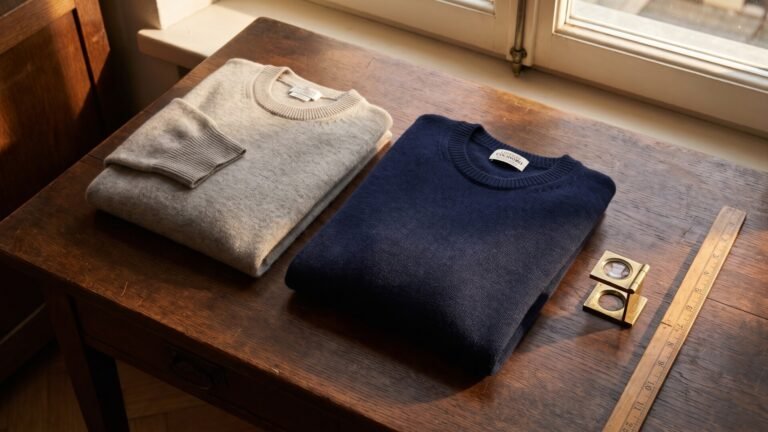
- Mid-layers: a merino or cashmere sweater adds more warmth than a heavier coat in many cases. Our Italian knitwear guide explains gauge and fibre, and the best Italian cashmere brands roundup covers makers such as Malo and Fedeli.
- Base layers: a fine knit or long-sleeve tee from our Italian luxury basics guide fits under a slim designer cut without bulk.
- Hats and gloves: cashmere or wool for warmth, with lined leather for elegance. See our guide to Italian designer leather gloves for extreme cold.
- Scarves: wool, cashmere or silk-wool blends that tuck neatly under a collar.
- Footwear: insulated leather boots with grippy soles; see our Italian Chelsea boots guide and advice on storing luxury boots.
Tips for Buying Italian Designer Winter Coats
- Read the label, not just the brand: check the insulation type, fill power if stated, shell composition and country of manufacture.
- Look for technical details: storm flaps, adjustable hoods, inner cuffs and sealed or taped seams.
- Be careful with resale and secondhand: counterfeit outerwear is common for the best-known names. Read our guide on how to spot authentic Italian designer pieces, and buy from sellers that provide documentation.
- Compare cost per wear: a well-made coat worn every winter for years can justify a higher price, but quality varies by model, so the price tag alone does not prove it.
Care and Maintenance
Always follow the care label first, since it varies by fabric and construction. These are general principles:
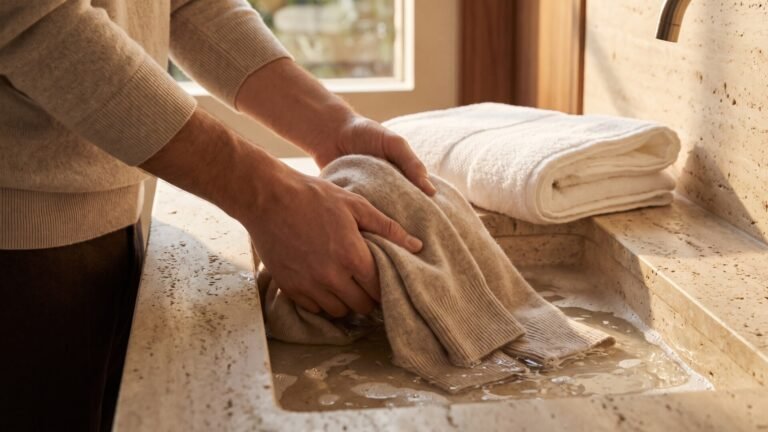
- Cleaning: use a cleaner experienced with down and technical fabrics. Wool and cashmere coats need less frequent cleaning, with brushing in between.
- Storage: hang in a breathable garment bag; do not keep down garments compressed for months.
- Water repellency: reapply a DWR treatment if water stops beading on the shell.
- Repairs: fix small tears and loose stitching promptly; check whether the brand offers a repair service.
Frequently Asked Questions About Italian Designer Winter Coats
Stone Island vs Moncler: which puffer lasts longer?
There is no independent durability test comparing them, and both now belong to the same group. Longevity depends more on the shell and on care than on the label: Stone Island’s Crinkle Reps NY uses a resin-coated nylon rep, while the Moncler Maya uses a lighter lacquered nylon. Choose the longer cut for cold, keep the down uncompressed in storage and repair small tears early.
What temperature can a Moncler jacket handle?
Moncler does not give a standardized temperature rating for its main-line jackets, so any number you see online is a guess. Judge warmth by length, fill and shell instead: a short Maya suits cold city days with short spells outside, while a long hooded parka or a Grenoble GORE-TEX piece is the better choice for long hours well below freezing.
Is Peuterey as good as Moncler?
For many city buyers, yes in practical terms. Peuterey makes hooded down parkas with water-repellent shells at roughly half to two-thirds of Moncler’s prices, and some long styles are listed as made in Italy. Moncler offers a wider range, the technical Grenoble line and stronger brand recognition. Compare the fill and shell of the specific models rather than the logos.
Are Italian designer winter coats worth the price?
It depends on the model. Specialist outerwear brands usually put real work into insulation and shell fabric, while fashion-led pieces can cost more for design than for warmth. A coat worn every winter for years can justify its price; one bought for a logo and worn rarely usually cannot. Check the specifications and repair options before judging value.
Should I choose down or wool for very cold weather?
In dry cold, down gives the most warmth for its weight and is the stronger choice for long sub-zero days. In wet cold, down loses much of its insulation once soaked, so pair it with a waterproof shell such as GORE-TEX or choose synthetic padding in exposed areas. Wool and cashmere overcoats suit dry cold and formal settings, with warm layers underneath.
Can I machine wash a Moncler down jacket?
Some Moncler jackets carry a machine-wash care label; retailer listings for the Maya give machine washing at 30°C. Follow the label of your exact piece, use a down-specific detergent, and dry it thoroughly with low heat so the down does not clump. If the label says dry clean, or the piece has leather or fur trims, use a specialist cleaner.
Conclusion
Start with your climate, not the label: short down jackets for dry city cold, long GORE-TEX or hooded down parkas for wet wind and long hours outside, and wool or cashmere overcoats for formal dressing in dry cold. Within that, Moncler and Herno lead on down outerwear, Peuterey is the well-priced parka alternative, Stone Island and C.P. Company bring technical shells, and Loro Piana, Zegna and Brunello Cucinelli cover tailored warmth.
Keep exploring: Italian Outerwear | Italian Designer Clothing | Moncler | Herno | Loro Piana | Why Quiet Luxury Became a Global Trend