Gran Sasso vs Brunello Cucinelli: Craftsmanship, Quality, and Price Compared
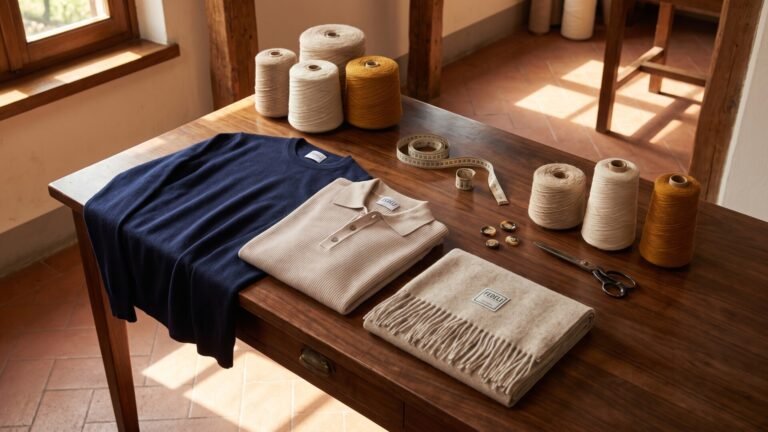
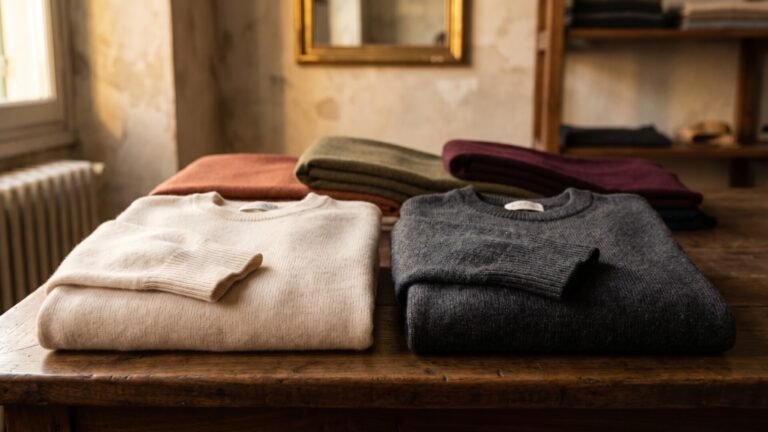
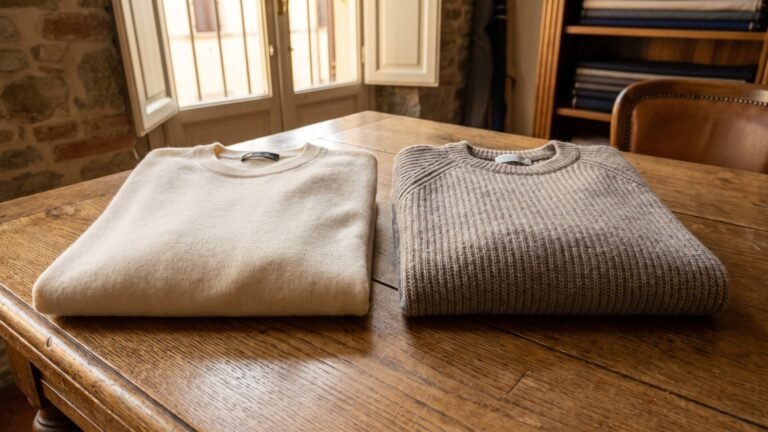
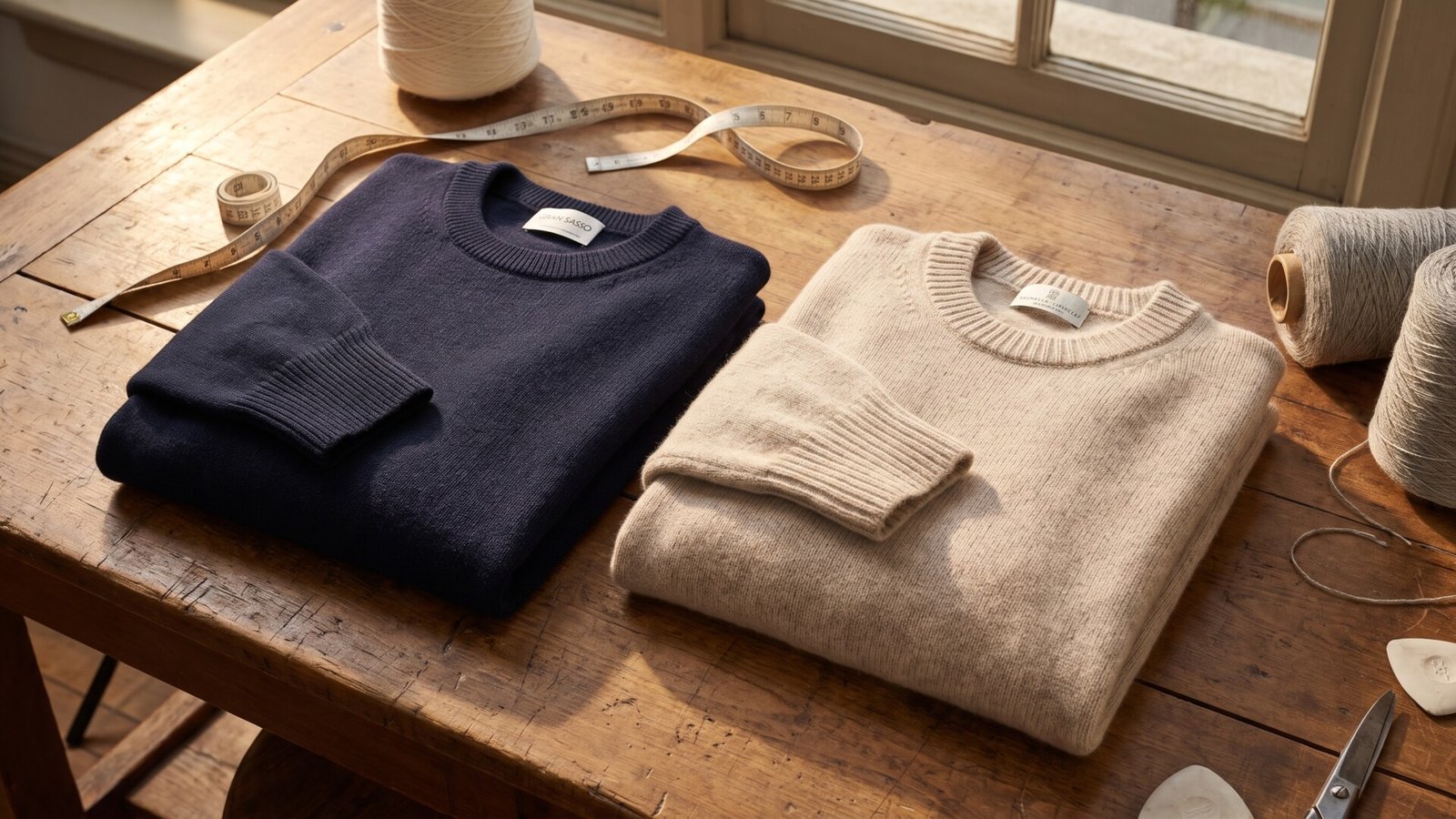
Linking is the step where the knitted panels of a sweater are joined stitch for stitch, and it is one of the slowest parts of making a fine cashmere crewneck. Pull the shoulder of a well-linked sweater and the seam lies flat; pull a rushed one and it puckers, and by the second winter it drags the shoulder out of shape. That seam is a good place to start a Gran Sasso vs Brunello Cucinelli comparison, because it is where the two brands are closer than their price tags suggest. In US stores in late 2026, a plain Gran Sasso cashmere crewneck lists at about $500-$850 and often sells off-price for $300-$350, while a plain Brunello Cucinelli cashmere crewneck costs about $1,250-$1,400.
The Short Answer
Gran Sasso is the more rational purchase for most buyers who care about knitwear quality and value. Brunello Cucinelli is worth its premium only when you are deliberately buying the design language, the styling and the luxury experience alongside the garment.
That verdict needs unpacking, because this is not a simple question of which sweater is better made. Both brands sit inside the Italian knitwear tradition, both use real cashmere and wool, and both label their knitwear Made in Italy. What separates them is not usually the fiber in the yarn. It is what the buyer is paying for around the fiber: design development, finishing choices, retail presentation, brand overhead and exclusivity. The real question is whether the extra cost of a Brunello Cucinelli sweater creates enough practical or emotional value for the wardrobe you actually wear. For some buyers it does. For most, it does not.
Two Brands, Two Different Businesses
Gran Sasso is a knitwear manufacturer. Four brothers, Nello, Eraldo, Alceo and Francesco Di Stefano, founded Maglificio Gran Sasso in 1952 in Sant’Egidio alla Vibrata, in the province of Teramo in Abruzzo, and the company is still family-owned and still knits there, in a large purpose-built plant that brings knitting, finishing and warehousing under one roof. Knitwear is not a side category; it is the business. It works across merino, cashmere, cotton, silk blends and technical yarns at real scale, and a company that makes that many sweaters a season develops pattern libraries, yarn relationships and finishing routines that compound.
Brunello Cucinelli is a different animal. Founded in 1978 with a small line of colored cashmere sweaters, headquartered since 1982 in the restored hamlet of Solomeo near Perugia, and listed in Milan since 2012, it built its reputation on cashmere and on a very specific idea of relaxed luxury: soft shoulders, tonal color stories, unstructured tailoring, and a world in which a cashmere sweater sits next to suede loafers and a linen jacket. The brand is a lifestyle proposition, wrapped in a story about humanistic capitalism that it has told consistently for decades.
Here is the detail most comparisons get backwards. Cucinelli does not knit everything in one Solomeo factory: the company says its products are made by about 400 selected artisan workshops, roughly 70% of them in Umbria. Gran Sasso, the cheaper brand, knits in its own plant. So the Cucinelli premium is not paying for more in-house manufacturing; it pays for design direction across a full collection, selective distribution, flagship retail and the marketing of a global luxury brand. Some of that reaches you as a better garment. Some of it reaches you as a better shopping experience and a more recognizable label.
This comparison focuses on comparable knitwear: cashmere sweaters, fine-gauge knits, cardigans and relaxed luxury layers. Comparing a Cucinelli suede jacket with a Gran Sasso sweater would tell you nothing.
Craftsmanship and Construction
Gran Sasso’s Technical Strength
Gran Sasso’s advantage is specialization. When knitwear is your entire product line, quality control tends to be tighter and more consistent across the range: regular stitch structure, clean linking at the shoulders and armholes, rib bands that recover after stretching, and consistent gauge within a style. None of that is glamorous. All of it decides whether a sweater still looks right after fifty wears. The details worth checking:
- Gauge: the number of stitches per inch. Fine-gauge knits drape and layer better; chunkier gauges feel warmer and more casual.
- Linking: run your thumb along the inside shoulder seam. If it lies flat and even, it was linked properly. If it puckers or bunches, it was sewn quickly.
- Rib recovery: stretch the cuff and hem and let go. Good ribbing snaps back.
- Collar finishing: turn the neck inside out. A clean collar has a neat, covered join; a rushed one shows raw edges or a visible overlock.
Gran Sasso’s breadth also means you can buy a merino crewneck for daily wear, a cashmere V-neck for layering and a cotton-silk knit for summer without changing brands, and some of its product pages even state the fiber fineness in microns, which few luxury brands do.
Brunello Cucinelli’s Finishing and Design
Brunello Cucinelli’s strength is not raw construction superiority; it is design coherence and finishing refinement. The proportions are deliberate: relaxed shoulders, slightly longer bodies, sleeves that sit just so. The color palettes are developed as a system, so a sweater bought this season still works with trousers bought three seasons ago. Surface treatments, garment washing and the integration of knitwear with tailoring are where the brand earns much of its reputation.
Judge construction garment by garment, not from the label. A Cucinelli cashmere crewneck is generally very well made. A heavily embellished seasonal piece, such as one with the house’s Monili bead trim, may be more delicate than a plain knit, and its price reflects design work as much as durability.
What the Price Gap Buys
- Design direction: a full collection developed around a consistent aesthetic.
- Finishing choices: garment washing, surface treatments and color development.
- Retail and presentation: the environment in which you buy it, which shapes how the garment feels.
- Brand identity: the quiet signal that comes with the label.
It does not automatically buy better fiber, denser knitting or longer life. Gran Sasso can match or beat Cucinelli on those measures in specific garments. What Gran Sasso rarely matches is the styling distinction and the brand theater. Check fiber content, feel the knit density, test seam and cuff recovery, and try the fit with the layers you actually wear before you look at the label, and you will make a better decision than the price tag would lead you to.
Materials, Hand Feel, and Durability
Cashmere quality depends on fiber fineness, staple length, yarn construction, knit density and finishing, not on the word “cashmere” alone. A short-staple, loosely spun cashmere feels wonderful in the shop and pills within weeks. A longer-staple fiber knitted at a higher density feels slightly firmer at first and holds its surface for years. That is the central trade-off: exceptionally soft, lightweight cashmere often comes from finer yarn and looser knitting, which feels luxurious immediately but demands careful rotation.
Gran Sasso’s broader material range is an advantage here. For daily office wear, a merino or wool-cashmere blend may serve you better than pure cashmere: it is more resilient, easier to care for and cheaper. Cucinelli is more strongly associated with pure cashmere and refined natural fibers, though it also sells blends such as wool-cashmere crewnecks at around $1,295.
Common failure points affect both brands:
- Pilling: short fibers working loose; worse on looser knits and under friction at the underarm and side.
- Elbow wear: thin spots where the arm rests on desks and tables.
- Cuff stretching: poor rib recovery, or pushing sleeves up repeatedly.
- Moth damage: cashmere is a protein fiber and moths love it; storage matters more than brand.
- Shoulder distortion and shrinkage: from hanging knits, hot water or machine agitation.
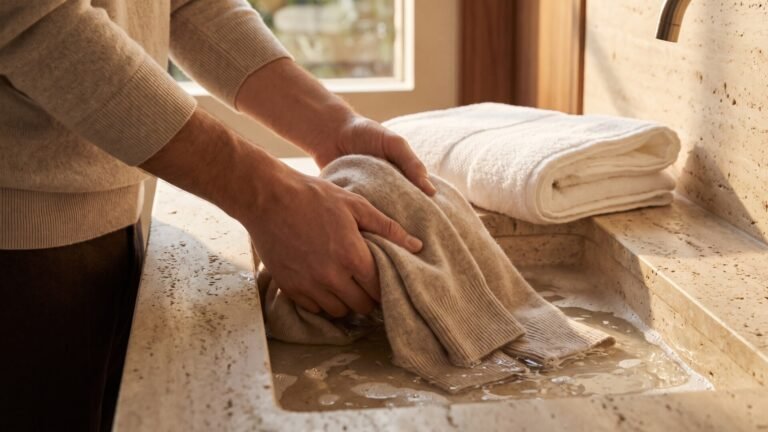
Neither brand’s cashmere is indestructible. Ownership habits produce a larger difference in lifespan than a modest difference in fiber quality, and a well-cared-for Gran Sasso sweater will outlast a neglected Cucinelli one every time. Our cashmere cleaning guide covers washing, drying and storage for any brand.
What Most Buyers Get Wrong
The most common mistake is assuming the more expensive sweater must be proportionally softer, stronger or longer-lasting. Softness can be engineered through finishing and a lighter knit, which feels more luxurious in the hand but may wear faster under regular use. A Gran Sasso garment may look less impressive on a product page yet perform better as a repeat-wear basic, because it was designed for exactly that.
The second mistake is comparing the wrong garments. An embellished Cucinelli piece against a basic Gran Sasso crewneck tells you nothing about relative quality. Compare like with like: a plain cashmere crewneck against a plain cashmere crewneck, a fine-gauge cardigan against a fine-gauge cardigan.
The third mistake is ignoring use case. Match the garment to its role before you match it to the label:
- Daily office knitwear: durability and neutral color matter most; Gran Sasso’s technical focus serves this well.
- Travel layers: packability and wrinkle recovery; a denser, simpler knit is less stressful.
- Weekend sweaters: comfort and casual drape; both brands work, depending on the styling you want.
- Statement luxury pieces: design identity and brand presence; this is where Cucinelli earns its premium.
Side-by-Side Comparison
| Feature | Gran Sasso | Brunello Cucinelli |
|---|---|---|
| Founded | 1952, Sant’Egidio alla Vibrata (Abruzzo) | 1978; Solomeo (Umbria) since 1982 |
| Ownership | Founding Di Stefano family | Milan-listed; founder’s family holding controls about half |
| Where it is knitted | Its own plant in Abruzzo | About 400 partner workshops, mostly in Umbria |
| Material range | Wool, cashmere, cotton, silk and many blends | Strong emphasis on cashmere and refined natural fibers |
| Design language | Understated, classic, technically driven | Relaxed, tonal, highly recognizable |
| Cashmere crewneck (US) | About $500-$850; often $300-$350 off-price | About $1,250-$1,400 |
| Resale | Limited demand and recognition | Greater visibility, still condition-dependent |
| Main risk | Buying a basic piece without checking its construction | Paying a large premium for design when a simpler knit would do |
This table is a decision aid, not a laboratory scorecard. Gran Sasso leads on rational value. Cucinelli leads when intangible luxury factors, design identity, presentation and exclusivity, are part of what you are actually buying.
Price, Cost Per Wear, and Long-Term Value
These are US prices at the time of writing (November 2026); both brands change prices by season and fiber.
| Piece | Gran Sasso | Brunello Cucinelli |
|---|---|---|
| Plain cashmere crewneck | About $500-$850 list; $300-$350 off-price | About $1,250-$1,400 (Neiman Marcus: $1,250) |
| Wool-cashmere or wool-silk-cashmere crewneck | About $400 | About $1,295 |
| Cashmere and silk crewneck | Varies by season | About $1,650-$1,800 |
| Rib or textured cashmere | About $690 (felted cashmere crewneck) | Up to about $3,200 (English rib crewneck) |
At list price, a plain Cucinelli cashmere crewneck costs about 1.5 to 2.5 times a Gran Sasso one. Because Gran Sasso is widely sold through department stores and then off-price retailers, while Cucinelli’s own boutiques discount far less, the gap a patient buyer actually pays can reach four times.
Cost per wear is the number that settles it. A $350 Gran Sasso crewneck worn twice a week through five six-month winters gets about 250 wears, roughly $1.40 each. A $1,250 Cucinelli crewneck saved for weekends, worn twice a month over the same period, gets about 60 wears, roughly $21 each. The expensive sweater you avoid wearing because you are worried about it is the worst value in the wardrobe. Our guide to Brunello Cucinelli as a long-term purchase runs this maths across more pieces.
Hidden costs apply to both brands but bite harder on the more expensive garment: specialist cleaning, careful storage, lower tolerance for rough use, repairs for moth holes and snags, and the opportunity cost of a budget tied up in one garment instead of the layers you need.
Resale is where Cucinelli has a real advantage in visibility: a neutral, classic cashmere sweater in good condition may find a buyer more easily than a Gran Sasso equivalent. But cashmere garments depreciate, and an unusual seasonal design can be harder to sell than a plain crewneck. For many Gran Sasso buyers, the low entry price makes resale irrelevant; they wear the sweater until it is done. If brand value matters but full retail does not fit your calculation, consider a pre-owned Cucinelli piece from an authenticating platform.
Which Brand Makes More Sense in Real Wardrobes?
Work and Tailored Dressing
Gran Sasso is the stronger option for building several dependable office layers without exhausting the budget. A fine-gauge merino crewneck, a cashmere V-neck and a wool cardigan will cover most tailored dressing needs for less than one Cucinelli sweater, and they sit cleanly under a jacket. Cucinelli is compelling when you want soft, relaxed luxury that bridges tailoring and casual dressing; if your office wardrobe is already built around that aesthetic, the brand’s coherence is a genuine benefit.
Travel and Repeated Wear
Packability, wrinkle recovery and layering ease matter more on the road than brand prestige. A denser, simpler Gran Sasso knit tolerates being folded, worn repeatedly and washed in a hotel sink more gracefully than a delicate cashmere piece. Neither brand should be chosen solely because a garment feels exceptionally soft in a store; comfort over a full day, warmth, fit and maintenance matter more than the first touch.
A Small Luxury Wardrobe
Gran Sasso suits buyers who want several colors, gauges and silhouettes across a controlled budget: a neutral core plus a few seasonal accents. Cucinelli suits buyers who prefer fewer garments with a stronger visual signature and are comfortable paying for a complete aesthetic. Fit matters here: Cucinelli’s relaxed proportions suit buyers who want modern ease, while Gran Sasso is easier to fold into a conventional wardrobe. Both size in Italian sizes, so check the conversion chart. Our Italian knitwear guide covers gauge and fit across more makers.
Buying Verdict
Choose Gran Sasso if: you want the strongest quality-to-price balance, need knitwear for frequent use, prefer understated design, or would rather own several well-made sweaters than one statement piece.
Choose Brunello Cucinelli if: you value the brand’s relaxed-luxury language, want knitwear that functions as part of a wider luxury wardrobe, and place meaningful value on exclusivity and presentation.
Choose neither at full price if: the garment has an impractical fit, an overly delicate construction for your lifestyle, or a price that would make you avoid wearing it.
- Best value: Gran Sasso.
- Best luxury experience: Brunello Cucinelli.
- Best for wardrobe depth: Gran Sasso.
- Best for recognizable quiet luxury: Brunello Cucinelli.
[Affiliate: Browse Gran Sasso knitwear collections]
[Affiliate: Explore Brunello Cucinelli cashmere and knitwear]
The Caveat
The Gran Sasso recommendation holds for the vast majority of wardrobes, but only if the specific garment fits you well and suits how you actually dress. A well-made sweater in the wrong fit is worse value than a beautifully styled one you reach for constantly. Judge the garment in your hands, not the label on the neck.
If you want to widen the field, Gran Sasso vs Falconeri vs Brunello Cucinelli adds a third price point, Brunello Cucinelli vs Falconeri and Gran Sasso vs Falconeri cover the cheaper end, and Piacenza 1733 vs Brunello Cucinelli and Lanificio Colombo vs Brunello Cucinelli set Cucinelli against two cashmere mills. For Gran Sasso against the top of the market, read Gran Sasso vs Loro Piana, and for the whole category, the Italian cashmere guide.
Frequently Asked Questions About Gran Sasso Vs Brunello Cucinelli
Is Gran Sasso as good as Brunello Cucinelli?
In knitwear expertise and practical construction, Gran Sasso competes strongly: it is a specialist that knits in its own Abruzzo plant and offers consistent quality across a wide range. Brunello Cucinelli offers a different combination of design identity, brand prestige and a coherent luxury aesthetic. Which is better depends on whether you are buying a garment or an experience.
Where are Gran Sasso and Brunello Cucinelli made?
Both label their knitwear Made in Italy. Gran Sasso knits in its own plant in Sant’Egidio alla Vibrata, Abruzzo. Brunello Cucinelli is headquartered in Solomeo, Umbria, and says its products are made by about 400 selected artisan workshops, roughly 70% of them in Umbria. As always, check the label of the specific garment you are buying.
Why is Gran Sasso so often discounted?
Gran Sasso sells through a wide wholesale network of department stores and boutiques, and unsold seasonal colors and sizes move on to off-price retailers, where cashmere crewnecks listed around $800 often sell for $300-$350. The discount reflects distribution, not lower quality. Brunello Cucinelli also reaches seasonal markdowns, but far less of its range ends up off-price.
Which brand has better resale value?
Brunello Cucinelli, generally. A classic, neutral cashmere sweater in good condition resells more easily than a Gran Sasso equivalent, partly because plentiful discounted new Gran Sasso stock keeps used prices low. Neither brand guarantees strong returns, and condition, color, size and season all affect demand, so do not buy either as an investment.
Should I buy Gran Sasso or Brunello Cucinelli on sale?
Check construction and fit first. A sale is useful when it reduces the price of a garment you already consider suitable, not when it tempts you into an unnecessary purchase. Off-price sales are often final, so be sure of your Italian size. A discounted Cucinelli sweater that does not fit your wardrobe is still a bad buy.