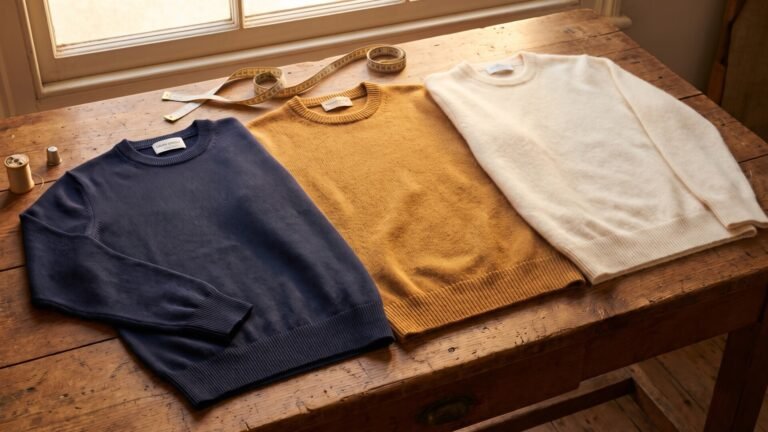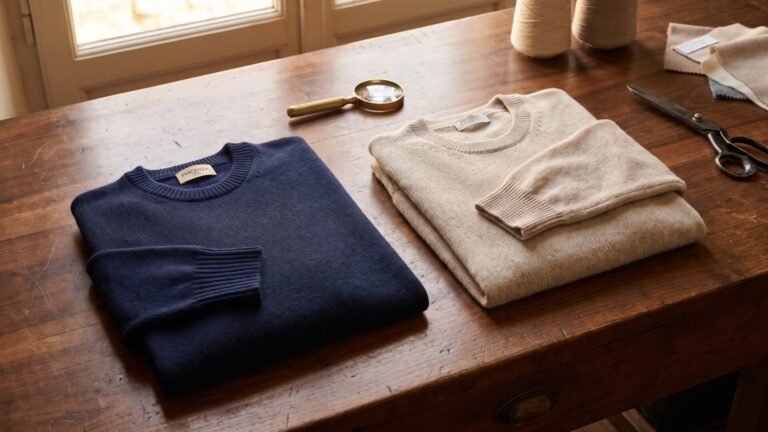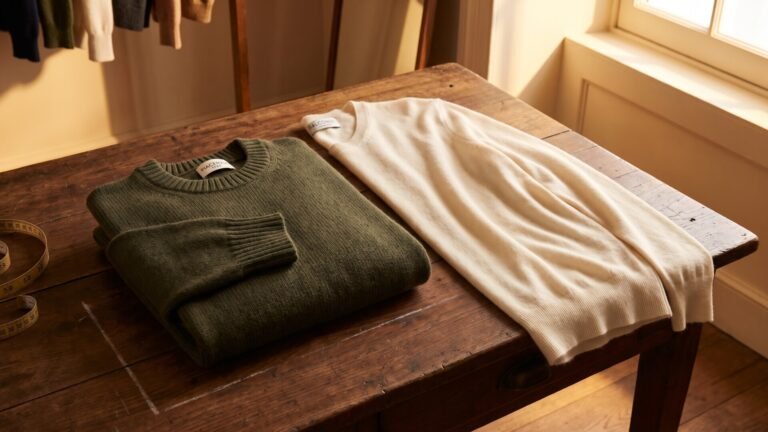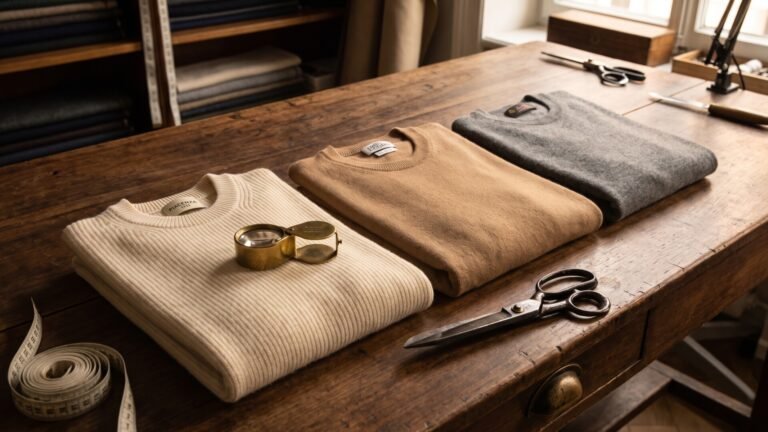
Piacenza 1733: Exploring Italian Cashmere Excellence
Most buyers assume the most expensive Italian cashmere is the best one. It is a reasonable guess, and it is wrong often enough to matter. The price on a cashmere sweater reflects fiber cost, knitting time, finishing, retail positioning, distribution and the name on the label, and those things do not move in lockstep. Piacenza 1733 sits in the interesting middle: a family mill from the Biella wool district, making restrained knitwear from serious yarn, priced well below Loro Piana and above the accessible specialists. Whether that makes it the right purchase depends on which of those things you actually value. Here is how to work that out with the garment in your hands.
This guide is part of our Italian designer brands guide and sits alongside the wider Italian cashmere guide.
Piacenza 1733’s Heritage and Position in Italian Cashmere
One correction first, because the name misleads many buyers: Piacenza 1733 has nothing to do with the city of Piacenza in Emilia-Romagna. The name is the family’s. The mill is in Pollone, in the foothills above Biella in Piedmont, Italy’s fine-wool and cashmere district, the same area that produced Zegna and Loro Piana.
| Detail | What to know |
|---|---|
| Founded | 1733, by Pietro Francesco Piacenza and his son Giovanni, as a woollen mill |
| Base | Pollone, near Biella (Piedmont) |
| Ownership | Family-owned; run by the 14th generation, brothers Vasiliy and Ettore Piacenza |
| Main business | Cashmere and fine-wool cloth for other houses, plus knitwear and accessories under the Piacenza 1733 label |
| Recent history | Acquired the Biella mill Lanificio Cerruti in 2022; the two run as separate brands |
| Typical price (Nov 2026) | Cashmere and cashmere-silk crewnecks about $550-$850 at full price at MR PORTER |
MR PORTER describes the company as entirely family-owned, with a fully integrated chain from raw fiber to finished product, and reports that it reinvests around 8% of annual turnover in machinery. Treat the mill’s longevity as context rather than proof of quality: it tells you where the knowledge came from, not what happened in every decade since. What matters for a buyer is the modern reality, a fabric-led house with knitwear built on top of its cloth business rather than the other way around.
That distinction shapes the product. A mill-led brand cares first about the yarn: its fineness, its twist, how it takes dye, how it recovers after being stretched. A fashion-led brand cares first about the silhouette and the season’s story. Piacenza 1733’s output leans toward the first: clean shapes, restrained colors and a design language that does not announce itself.
In the Italian cashmere landscape, that puts it in a particular slot. Loro Piana and Lanificio Colombo sit at the top on fiber sourcing and price; Brunello Cucinelli leads on design language and lifestyle identity; Gran Sasso and Falconeri occupy the practical end; Malo and Fedeli bring color and resortwear character. Piacenza 1733 belongs with the textile specialists, closer in spirit to Colombo than to Cucinelli, and less visible than either. Our best Italian cashmere brands guide maps the whole field.
The Price Ladder: Where Piacenza 1733 Actually Sits
Brand pages rarely show competitors’ prices side by side, so here is the ladder for a plain cashmere crewneck at full price, checked in November 2026 unless noted:
| Brand | Typical crewneck price | What the premium buys |
|---|---|---|
| Falconeri | About $285 (Ultrasoft, late 2023) | Accessible Italian-made cashmere, big store network |
| Gran Sasso | About $295-$495 for wool and blended knits | Broad range, dependable construction |
| Piacenza 1733 | About $550-$850 | Mill-made yarn, restrained design, little branding |
| Lanificio Colombo | About $1,300-$1,850 | Top-tier fiber and rare fibers, very low visibility |
| Loro Piana | $1,900 (Baby Cashmere Classic Crewneck) | Benchmark fiber, global recognition, full wardrobe |
The decision rule that follows: choose Piacenza 1733 if you want mill-level cashmere for roughly half of Loro Piana money and do not need recognition or a large store network. Choose Colombo or Loro Piana only if you can feel and value the difference in the specific garment. Choose Falconeri or Gran Sasso when you need several sweaters for heavy rotation. Piacenza pieces are also frequently discounted in end-of-season sales, which widens the gap further.
What Makes Piacenza 1733 Cashmere Different?
The word "cashmere" on a label tells you almost nothing. It is the undercoat of cashmere goats, and it ranges from coarse to extraordinarily fine. Fiber fineness is measured in microns, and finer fiber feels softer and costs more because each goat yields very little and sorting is slow. But fineness alone does not make a good sweater.
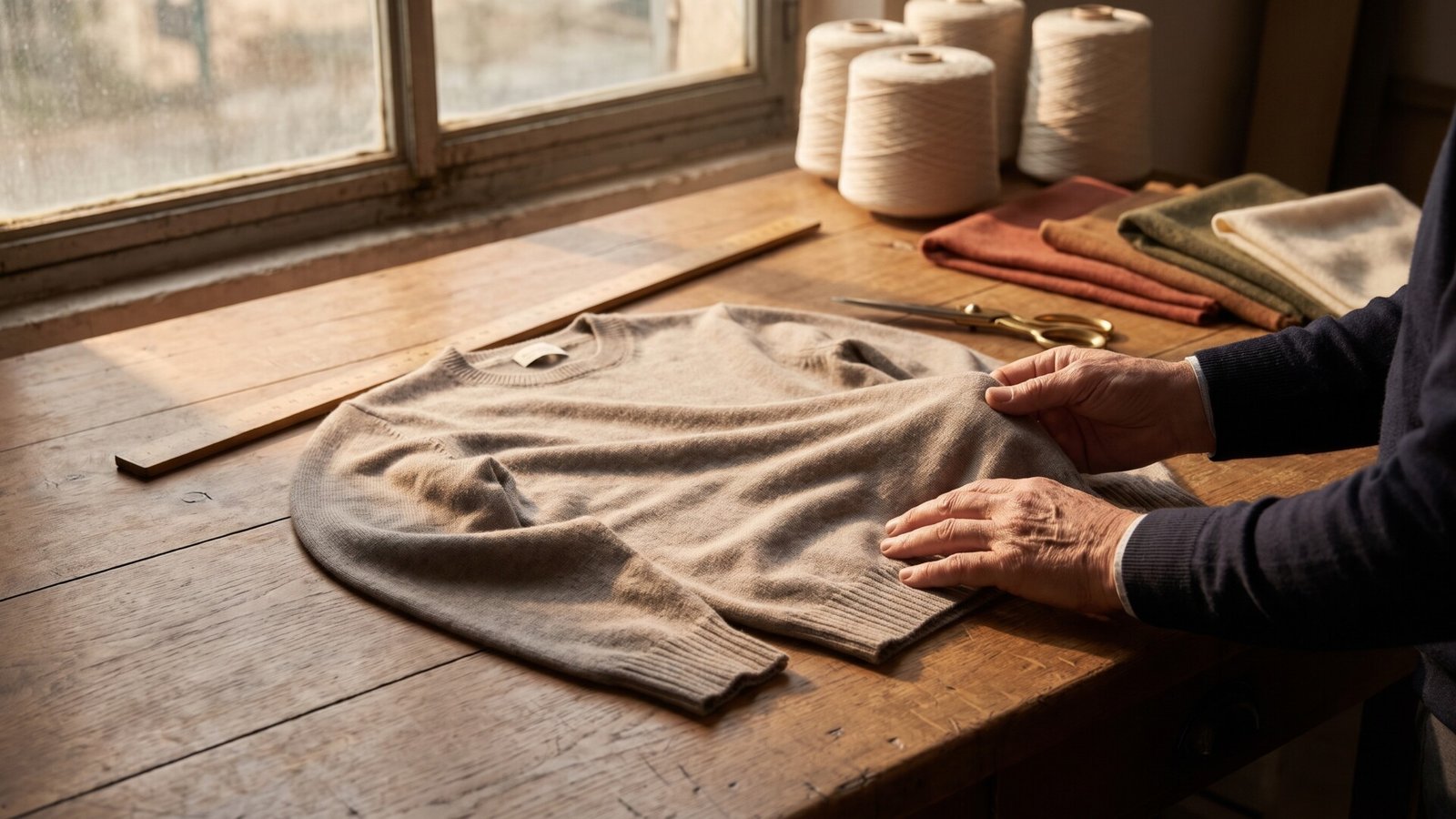
What separates a garment that lasts from one that disappoints is the relationship between four things: fiber fineness, yarn construction (a tighter twist gives more resilience and less surface fuzz), knit density (felt as weight and seen as opacity) and finishing (how the garment is washed, pressed and stabilized). A very fine fiber knitted loosely and finished softly will feel magnificent in the shop and thin out within a season. A slightly firmer knit of good fiber will feel less dramatic on day one and look better in year three. Our guide to how Italian cashmere is made explains each stage.
This is where a textile house has an advantage: the people designing the sweater also understand the yarn, so they tend to build in the density and twist that make a garment hold its shape. Expect a slightly more substantial feel than the softest competitors, with a surface that stays even rather than blooming into fuzz.
The hand test for any cashmere garment
- Stretch the ribbing at the cuff and hem, then release. It should snap back close to its original size. Slow recovery means the rib will bag out within weeks.
- Hold it up to natural light. You want an even, opaque surface. Light showing through in patches means the knit is uneven or too loose for the weight.
- Run your thumb along the inside seam. A flat, covered seam sits comfortably against skin; a bulky overlocked edge will abrade and eventually split.
- Rub the surface gently with your palm. A little loose fiber is normal on new cashmere. A cloud of fuzz is not.
- Weigh it in your hand. A medium-weight sweater should feel like something. Featherweight is a legitimate category, but a different garment.
- Check the neckline. A crewneck that already looks stretched on the hanger will not improve.
Piacenza 1733 Product Categories and Best Uses
Cashmere sweaters and knitwear
The core of the range is classic knitwear: crewnecks, V-necks, rollnecks, cardigans and polos, with cashmere-silk and cashmere-linen blends for warmer months. The crewneck is the workhorse. A V-neck earns its place if you wear collared shirts often. Rollnecks are the highest-value winter item in a cold climate, because they replace a scarf and a layer at once. Cardigans are the most underrated piece in the category. Compare options across brands in our guide to the best Italian cashmere sweaters for men.
Cashmere accessories
Scarves, hats and gloves are the lower-commitment entry point; Piacenza scarves are among its most widely sold pieces. Be clear-eyed about wear: scarves take friction at coat collars and gloves take constant abrasion, so they can pill and thin faster than a sweater in rotation. See our round-up of the best Italian cashmere scarves for alternatives.
Blended and seasonal fabrics
The blends deserve more respect than they get. Wool-cashmere gives structure and durability with a softer hand than pure wool. Silk-cashmere is lighter and drapes more, which suits fine-gauge pieces for milder weather and travel. Cashmere-linen is a spring fabric, breathable and less precious. For maximum softness, pure cashmere wins; for a garment that survives real use, a well-chosen blend is often the smarter buy.
The best first purchase
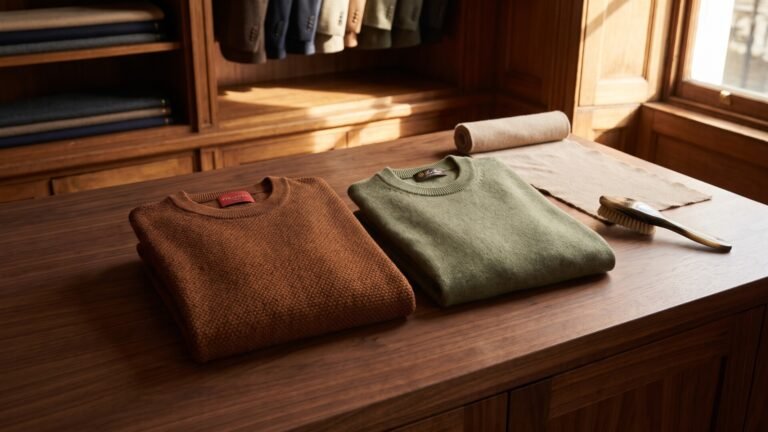
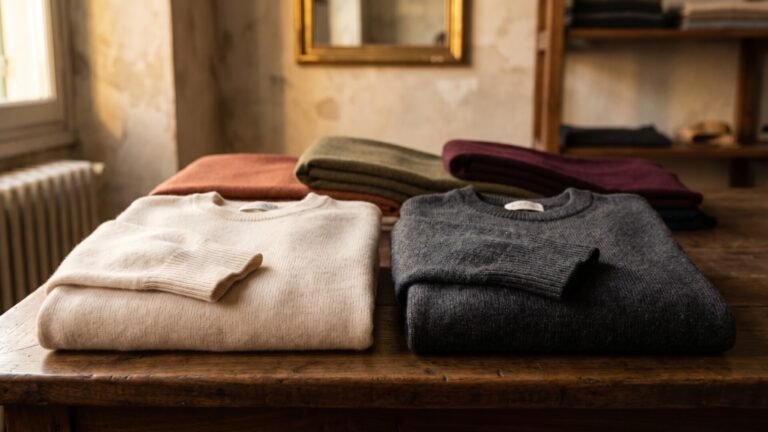
For most buyers, a neutral, medium-weight crewneck or cardigan is the right entry. Charcoal, navy, oatmeal, camel and dark brown will each earn their keep; a bright seasonal color will not, unless it fills a gap you can actually name. Buy the neutral first. The second purchase can be the interesting one.
How Piacenza 1733 Fits Real-World Wardrobes
The restrained aesthetic is the point. A Piacenza 1733 crewneck under a tailored jacket reads as considered rather than branded. Under a jacket, a fine-to-medium gauge crewneck replaces a shirt and tie without looking casual. Over an Oxford shirt, a slightly heavier knit gives smart-casual with structure. With denim, the same sweater is weekend-appropriate. That is the definition of versatility: it changes register with what surrounds it.
Friction is the enemy. The areas that show wear first are almost always the same: underarm, cuff, the side where a bag sits, and the center front where a seat belt crosses. Rotate the garment and change which shoulder carries the bag. When packing, roll a sweater loosely rather than compressing it, and do not leave it on a hotel hanger for a week.
Who will be disappointed? Buyers who want a visible status symbol, dramatic silhouettes, an ultra-light piece to wear hard on a daily commute, or the softest possible first touch. Piacenza 1733 is not trying to be any of those.
What Most Buyers Get Wrong About Luxury Cashmere
The most persistent error is believing that price and durability rise together. Price reflects fiber cost, but also knitting time, retail positioning, marketing and the premium the name commands. Two sweaters at very different prices can be made from comparable yarn on comparable machines.
The second error is treating gauge as a quality ranking. Gauge is stitches per inch: finer gauge means thinner, more refined fabric; coarser gauge means chunkier and more casual. A fine-gauge silk-cashmere for summer is not inferior to a heavy winter knit; it is a different tool.
The third error is panicking about pilling. All cashmere pills when new, as shorter fibers work their way out of the yarn. What matters is what happens next: does the garment settle after a few wears and a combing, or does it keep pilling, thin out and lose shape? The second pattern suggests a mismatch between yarn, construction and use, not necessarily a bad brand.
Piacenza 1733 Compared With Other Italian Cashmere Brands
| Brand | Best known for | Design character | Best buyer |
|---|---|---|---|
| Piacenza 1733 | Biella mill heritage since 1733 | Understated, fabric-led | Discreet luxury with strong wardrobe utility |
| Lanificio Colombo | Top-tier and rare fibers | Quiet, polished | Buyers prioritizing material refinement |
| Loro Piana | Global prestige, exceptional materials | Minimal, polished | Buyers wanting prestige and broad choice |
| Brunello Cucinelli | Cashmere within a lifestyle look | Relaxed, design-led | Buyers who want distinctive styling |
| Gran Sasso | Italian knitwear breadth | Classic to contemporary | Dependable everyday knitwear |
| Falconeri | Accessible cashmere essentials | Clean, modern | First-time buyers and big rotations |
| Malo | Cashmere heritage, colorful knits | Expressive, tactile | Buyers wanting more personality |
| Fedeli | Resortwear and refined knitwear | Elegant, lifestyle-oriented | A polished leisure wardrobe |
Piacenza 1733 versus Lanificio Colombo. Both are Piedmont mills first, and both make knitwear that rewards handling. Piacenza is far older; Colombo is the larger fiber producer and its knitwear costs roughly twice as much. Compare garment to garment: density, rib recovery, seam finishing and weight, and decide whether the difference you can feel justifies the difference you will pay. Our Lanificio Colombo vs Piacenza 1733 comparison and the three-way Piacenza 1733 vs Lanificio Colombo vs Loro Piana guide go deeper.
Piacenza 1733 versus Loro Piana. Loro Piana is the global reference point, with the broadest material range and the strongest recognition, owned by LVMH since 2013. Piacenza 1733 is quieter and, at full price, roughly half the cost for a comparable crewneck. If prestige and the widest choice matter, Loro Piana wins; if you want textile expertise without paying for global visibility, Piacenza is the more efficient purchase. See Piacenza 1733 vs Loro Piana for the full comparison.
Piacenza 1733 versus Gran Sasso and Falconeri. Gran Sasso, founded in Abruzzo in 1952, is the practical answer for most people building a wardrobe: breadth, dependable quality and prices that let you buy two or three sweaters instead of one. Falconeri is the entry point. Piacenza is the step up you take when you want the fabric to be the point. Our Piacenza 1733 vs Falconeri and Gran Sasso vs Falconeri guides compare the accessible end.
Piacenza 1733 versus Brunello Cucinelli. Cucinelli sells a lifestyle as much as a garment: relaxed, sunlit, unmistakably designed. Piacenza 1733 sells fabric and cut with the design turned down. See Piacenza 1733 vs Brunello Cucinelli for the detailed breakdown.
Is Piacenza 1733 Worth the Price?
The only honest answer is cost per wear. An $800 crewneck worn twice a week from October to March for five years (about 250 wears) costs around $3.20 per wear before care. A $300 sweater worn four times and then left in the drawer costs $75 per outing. A sweater you are afraid to wear is not an investment; it is a museum piece with a receipt.
Durability deserves a realistic frame. Cashmere is a delicate fiber; it will not survive the abuse merino or cotton tolerate. Judge Piacenza 1733 by whether it strikes the right balance for its category: enough softness to be a pleasure, enough density to hold shape through seasons of rotation, and finishing that keeps the surface even.
When is a cheaper option smarter? More often than the luxury market would like you to believe. If you are building a rotation of five or six sweaters, buying Gran Sasso or Falconeri for the high-rotation basics and spending the premium on one or two special pieces is a genuinely intelligent strategy. If your sweaters face heavy friction (a backpack commute, small children, frequent travel), the calculus shifts further toward the practical end. [Affiliate: Browse Gran Sasso knitwear] and [Affiliate: Browse Falconeri cashmere] are both worth a look before you commit upward.
Buying, Fit, Care, and Long-Term Ownership
Fit
You want a close but not restrictive fit. The shoulder seam should sit at the edge of your shoulder, sleeves should reach the wrist bone, and the body should skim without pulling across the chest; horizontal tension lines mean size up. A mid-layer needs a little room; an outer layer can be closer. A crewneck should sit flat without gaping.
Care
Follow the label on the individual garment. Where hand washing is permitted, use cool water and a wool-specific detergent, never wring, and dry flat, reshaping while damp. Never hang a wet sweater. Store folded, clean and away from moths, give each sweater a day of rest between wears, and use a cashmere comb every few wears. Our guide on how to care for luxury sweaters covers the full routine. [Affiliate: See cashmere care essentials] covers the comb, detergent and storage that make the difference.
Buying checklist
- Inspect the fabric under natural light, not shop lighting.
- Check the seams and ribbing using the hand test above.
- Confirm the fiber composition and percentages on the label, not just the word cashmere.
- Buy from an authorized or reputable retailer with a clear returns policy, so you can inspect properly at home.
Who Should Buy Piacenza 1733?
The best buyer wants understated Italian luxury, values textile quality over visible branding, and will wear the garment regularly. The best first products are a medium-weight cashmere crewneck, a neutral cardigan or a versatile scarf.
Choose Piacenza 1733 over Loro Piana when discreet textile expertise matters more than global prestige, and over Brunello Cucinelli when fabric-first value matters more than design signature. Choose Gran Sasso or Falconeri when budget, rotation size and everyday practicality come first. Skip it if you need rugged daily performance, dislike careful garment care, want an obvious status symbol, or judge entirely by softness at the till. The value only materializes if you actually wear the thing: buy it to wear twice a week, not to admire in tissue paper. For the rest of the wardrobe, see our Italian knitwear guide.
Frequently Asked Questions About Piacenza 1733
Is Piacenza 1733 from the city of Piacenza?
No. Piacenza is the founding family’s name. The mill has been in Pollone, near Biella in Piedmont, since 1733. The city of Piacenza in Emilia-Romagna is unrelated, a common mix-up in brand round-ups.
Who owns Piacenza 1733?
It remains family-owned and is run by the 14th generation of the Piacenza family. In 2022 the group acquired the Biella mill Lanificio Cerruti, which continues as a separate brand. The company has not sold a stake to a luxury conglomerate.
Where can I buy Piacenza 1733 in the US?
Online, MR PORTER carries a selection of Piacenza 1733 knitwear and ships to the US, and some independent menswear stores stock its polos and knits. US boutiques are rare, so check returns policies before ordering, and watch end-of-season sales, when discounts of 40-50% have been common.
Does Piacenza 1733 cashmere pill?
All cashmere can pill, especially at cuffs, underarms and where a bag strap rubs. Early pilling is normal as short fibers work loose. Persistent pilling together with stretching or thinning suggests a mismatch between the garment and how it is used, rather than a brand-wide defect.
Is textile-house cashmere softer than fashion-brand cashmere?
Not necessarily, and softness is not the right test on its own. A mill tends to build in more density and twist, which can feel slightly firmer at first and hold shape better over years. Judge the garment on the hand test, not on the first touch.
Does Piacenza 1733 knitwear hold its value?
Not reliably. Neutral, well-kept knitwear from Italian houses resells more easily than seasonal colors, but one moth hole or a stretched neck can halve its value. Buy it to wear. Our guide on whether cashmere holds its value explains what affects resale.