Fendi Handbags: The Italian Legacy of Style, Innovation, and Iconic Design
Few handbag makers have produced as many recognisable models as Fendi. The Roman house, founded in 1925 and part of LVMH, is behind the Baguette, the Peekaboo and the Spy, three bags that each defined a different decade. This guide covers the history, the signature models, how they are made, and how to choose between them. It is the bag-focused companion to our main Fendi brand guide, which covers the house as a whole, and part of our wider guide to Italian designer brands.
Fendi Handbags at a Glance
| Bag | Introduced | Known for | Suits |
|---|---|---|---|
| Baguette | 1997 | Compact under-the-arm shape; widely seen as the first “it bag” | Collectors and anyone wanting a small, characterful bag |
| Spy | 2005 | Slouchy, hand-stitched look | Those wanting a soft everyday shoulder bag |
| Peekaboo | 2008 | Openable flap and a structured, roomy interior | Day-to-evening use |
| Selleria | Heritage line | Saddle-stitched, artisan leatherwork | Buyers who prioritise hand finishing |
| 2Jours and Kan I | 2010s | Structured lines and statement clasps | Buyers who want a more architectural look |
The Origins of Fendi Bags
Fendi was founded in Rome in 1925 by Adele and Edoardo Fendi, starting as a leather and fur workshop and boutique. Handbags were a natural extension of the leatherwork. Adele and Edoardo’s five daughters later took over the business, and the house grew into a global name.
LVMH acquired a stake in Fendi in 2000 and became its majority shareholder in 2001. The house remains headquartered in Rome.
Karl Lagerfeld and Silvia Venturini Fendi
Karl Lagerfeld began working with Fendi in 1965, a collaboration that lasted 54 years until his death in 2019. His contribution included the double-F logo, introduced in 1965, and a playful approach to fur, texture and colour that moved the house into fashion.
The handbags most people think of as Fendi, however, are largely the work of Silvia Venturini Fendi, a member of the family’s third generation who joined Lagerfeld as artistic director in 1992 and designed the Baguette (1997), the Spy and the Peekaboo (2008). She became sole artistic director after Lagerfeld’s death in 2019 and was named Honorary President in 2025. In October 2025 LVMH announced Maria Grazia Chiuri as the house’s new creative director. For a review of that first collection, see Maria Grazia Chiuri’s Fendi debut.
Iconic Fendi Handbags
1. The Baguette Bag
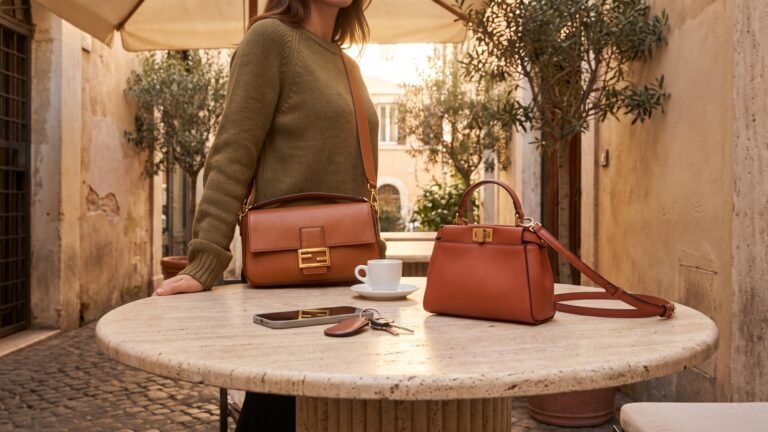
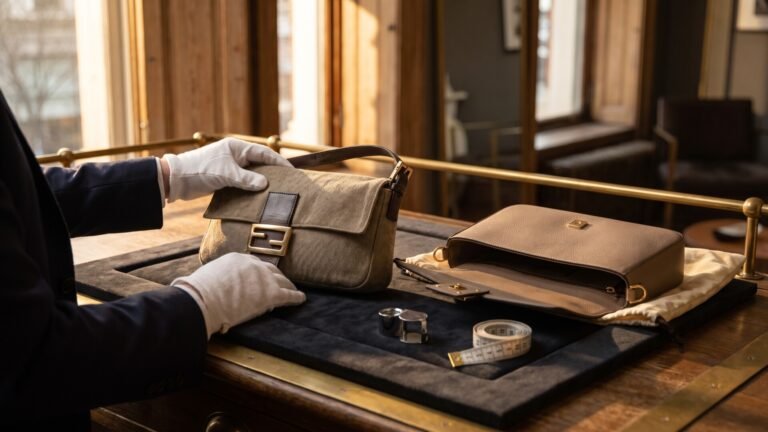
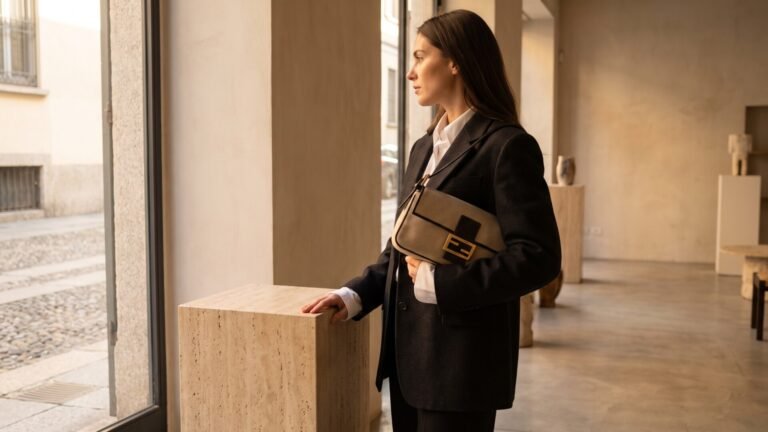
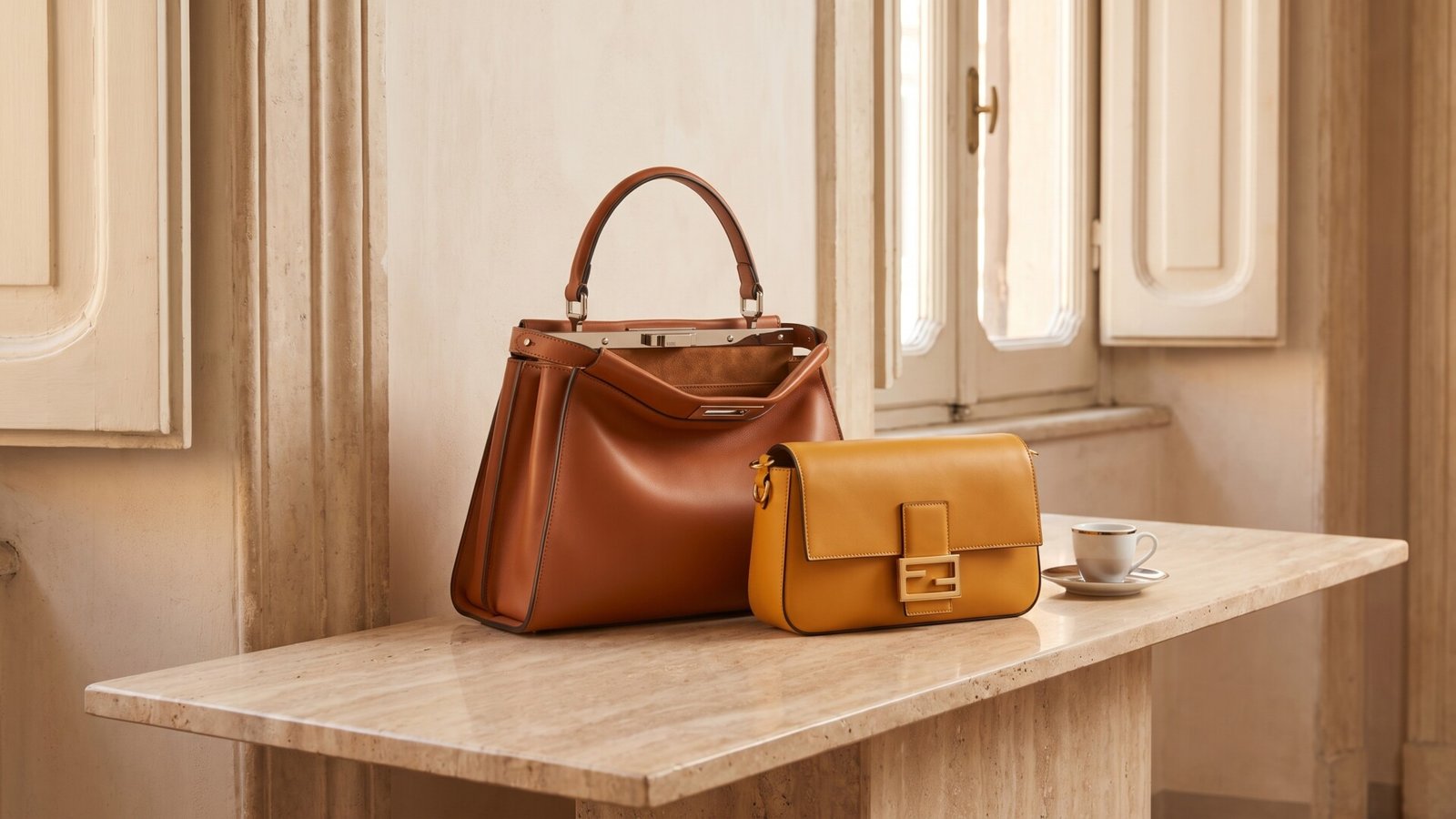
Designed by Silvia Venturini Fendi in 1997, the Baguette was made to be tucked under the arm like a loaf of French bread. It followed her earlier Croissant bag, which had a similar crescent shape. The Baguette gained a much larger audience when it appeared in Sex and the City in 2000, in a scene where Carrie corrects a mugger: “It’s a Baguette!”
- Materials: The Baguette has appeared in a very wide range of materials, including leather, fur, embroidered fabric and sequins, which is why vintage pieces vary so much.
- Re-editions: The house has revived the shape repeatedly. See our review of the Baguette 1997 Re-Edition and the history of the Baguette and its resale value.
- Comparison: For a head-to-head with another famous small bag, read Fendi Baguette vs Dior Saddle.
2. The Peekaboo Bag
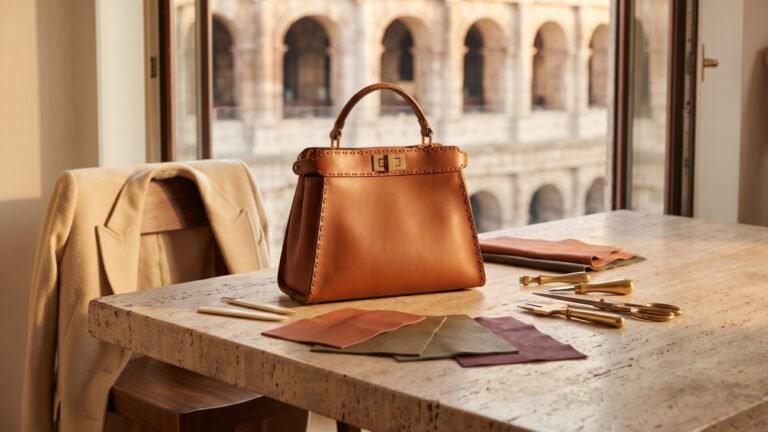
Launched in 2008, the Peekaboo was originally known as the Hide and Seek. Its signature is an openable front flap, which reveals a second compartment, and a structured body that holds its shape. It is sold in several sizes (the range includes Mini and Medium versions).
- Works for day and evening because the structure looks tidy but the interior is organised into sections.
- Available in everyday leathers and in more exotic or seasonal versions.
3. The Spy Bag
The Spy, launched in 2005, has a slouchy shape and hand-stitched, saddle-style detailing. It is a softer alternative to the Peekaboo and a good option if you want a relaxed shoulder bag rather than a structured one.
4. The 2Jours and Kan I
The 2Jours is a structured tote-style bag with clean lines, aimed at work use. The Kan I has a geometric look and a prominent metal clasp. Both are regularly updated in new colours and materials. If you are choosing between current Fendi shapes, check Fendi’s website for the models currently in production, since the range changes.
5. The Selleria Collection
The Selleria line reflects Fendi’s craft roots, with saddle-style stitching and hand-finished leatherwork. It sits at the artisanal end of the range and is the line to look at if you care most about hand finishing.
6. Crossbody Bags
For hands-free use, Fendi makes several crossbody shapes. Our guide to Fendi crossbody bags compares them in detail.
The FF Logo
The double-F logo, created by Karl Lagerfeld in 1965, is one of the most recognisable monograms in fashion. It appears on bags, shoes, scarves and ready-to-wear. Fendi also makes plenty of bags with no or minimal logos, so the monogram is a choice rather than a requirement.
Materials and Craftsmanship
- Leather: the main material, treated and finished in many textures and colours.
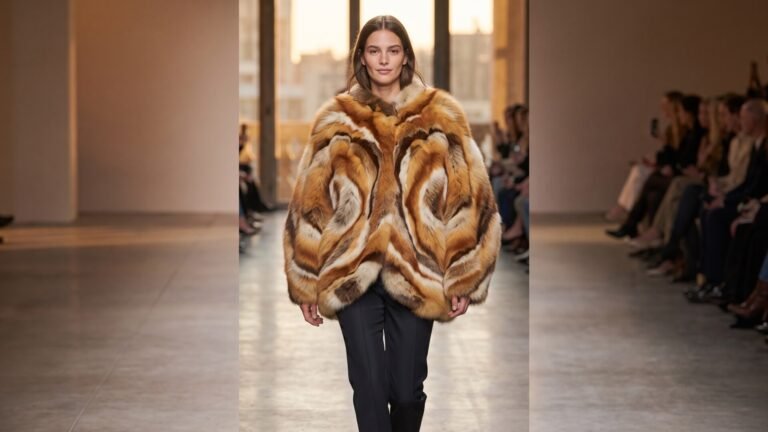
- Fur and shearling: historically central to the house; availability depends on the collection and the current policy of LVMH and Fendi.
- Exotic skins: used in limited, seasonal versions.
- Fabric: canvas, jacquard and embroidered materials appear in seasonal collections.
To understand how the leather in an Italian bag affects its lifespan, read Why Italian Leather Bags Last a Lifetime, and for upkeep see how to care for Italian leather goods.
How to Choose a Fendi Bag
- If you want a small collectible with a story: the Baguette.
- If you want a structured day-to-evening bag: the Peekaboo.
- If you want a soft, slouchy everyday bag: the Spy.
- If you want hands-free carrying: a Fendi crossbody (see our crossbody guide).
- If hand finishing matters most: look at the Selleria line.
Check the size name and measurements on Fendi’s product page, because sizing varies a lot between models, and prices change by market and season. For more on how Fendi compares with other Italian bag brands, see our top Italian handbag brands for 2026.
Fendi Handbags and Popular Culture
The Baguette’s appearance in Sex and the City turned it from a fashion bag into a cultural reference point, and its revival through re-editions shows how closely the bag is tied to that era. The Peekaboo has become the house’s modern flagship. The house also works with artists and designers on limited editions, which tend to sell out quickly and vary in availability.
Fendi Bags for Men
Fendi also makes men’s bags, including messenger and shoulder bags, totes and travel bags, and backpacks. Silvia Venturini Fendi has long led the house’s menswear and accessories, so men’s bags share the same leather and finishing traditions as the women’s line.
Sustainability
Luxury houses publish sustainability commitments that change over time. For specific claims about leather sourcing, fur policy and recycled materials, check Fendi’s and LVMH’s current sustainability reports rather than relying on summaries. As a general principle, durable construction and repairability reduce waste more than any marketing claim.
Collectibility and Resale
The Baguette in particular has an active resale market, and limited editions can attract collectors. That said, resale prices vary by model, condition and year, and handbags are not guaranteed to hold value. Treat any resale figure as a snapshot, and see the Baguette resale history for more context. If you buy pre-owned, use a reputable seller with authentication and return terms.
Why Fendi Handbags Stand Out
- Heritage craftsmanship: a house that began as a Roman leather and fur workshop in 1925.
- Distinctive shapes: the Baguette, Spy and Peekaboo are each immediately recognisable.
- A family design voice: Silvia Venturini Fendi’s long role in accessories gives the bags a consistent character.
- Range: from understated leather to heavily decorated limited editions.
Frequently Asked Questions About Fendi Handbags
Who designed the Fendi Baguette?
Silvia Venturini Fendi designed the Baguette in 1997.
When was the Fendi Peekaboo launched?
The Peekaboo launched in 2008 and was originally called the Hide and Seek.
Who owns Fendi?
Fendi is part of LVMH. LVMH acquired a stake in 2000 and became the majority shareholder in 2001.
Who is Fendi's creative director?
In October 2025 LVMH announced Maria Grazia Chiuri as Fendi’s creative director. Silvia Venturini Fendi, who led the house’s design after Karl Lagerfeld’s death in 2019, became Honorary President in 2025.
Which Fendi bag is best for everyday use?
The Peekaboo and the Spy are the most common everyday choices. The Peekaboo is structured, while the Spy is softer and slouchier.
Do Fendi bags hold their value?
Some, such as the Baguette, have an active resale market, but there is no guarantee. Value depends on the model, condition and demand.
Conclusion
Fendi handbags run from the small, collectible Baguette to the structured Peekaboo and the relaxed Spy, all with a common thread of Roman leatherwork. Choose the shape that fits how you carry a bag, check size and current price on Fendi’s own site, and use our linked guides to go deeper on the model you are considering.