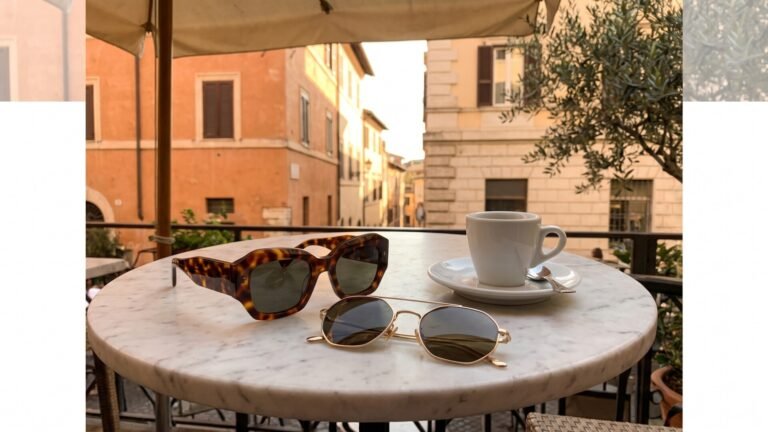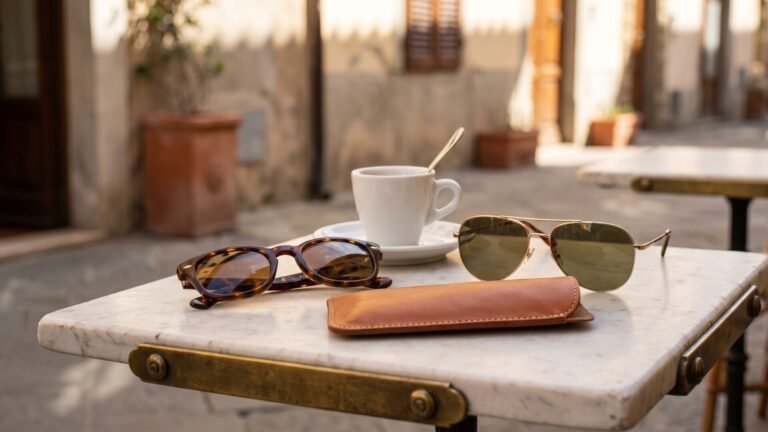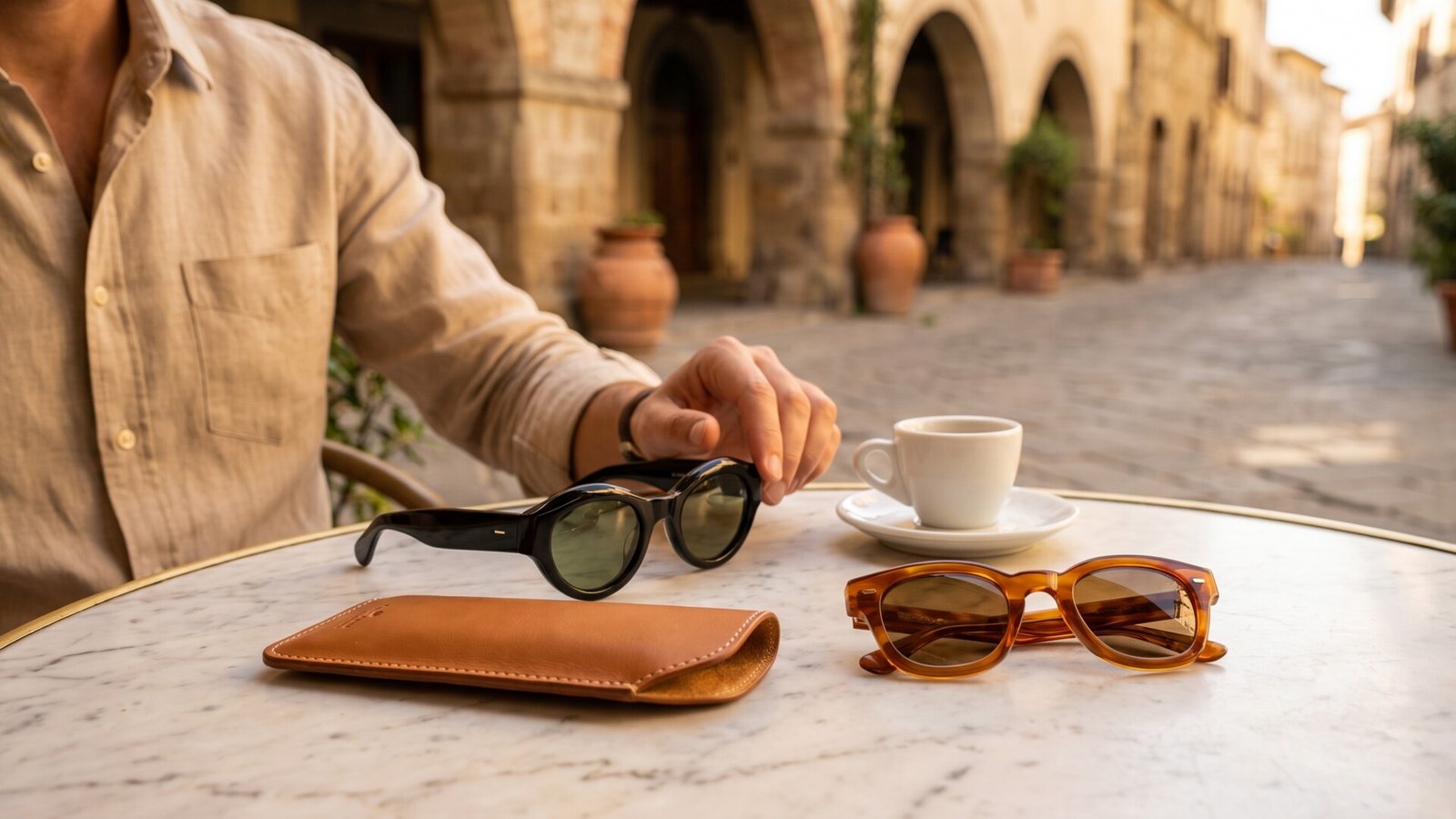
Sunglasses & Eyewear from Top Italian Brands
Let’s talk sunglasses — not the throwaway kind you grab at the airport, but the Italian stuff. The kind that changes how your face looks, how an outfit lands, and how long the pair stays in your rotation. Italy doesn’t just make sunglasses; it is the world’s leading producer of high-end eyewear, from luxury fashion houses to specialist frame makers that supply much of the industry.
This is a no-nonsense guide to sunglasses and eyewear from top Italian brands. We’ll cover heritage, design approach, materials, who actually manufactures the frames, why certain frames feel different on your face, and which brands are worth caring about right now.
No hype. No fake “must-haves.” Just real perspective. If you already know your budget, jump to our guides to the top 10 Italian designer sunglasses brands under $400 or designer sunglasses brands made in Italy under $300. Sunglasses are one part of the wider category covered in our Italian Designer Accessories hub.
Sunglasses & Eyewear from Top Italian Brands
Eyewear is one of those categories where Italy quietly dominates. Even sunglasses branded by non-Italian fashion houses are often designed, manufactured, or finished in Italy, because Italy built the eyewear ecosystem decades ago: frame factories, acetate specialists, lens technology and technicians who only do eyewear. This isn’t fashion cosplay. It’s infrastructure.
Where Italian Eyewear Comes From: The Cadore District
Much of that infrastructure sits in one place: the Belluno–Cadore area in the Veneto Dolomites. Italy’s first eyewear factory was founded there in 1878, in Calalzo di Cadore, by Angelo Frescura, and the district today accounts for about 70% of Italian eyewear production, according to Italy’s trade promotion portal. It is home to large groups and to a dense network of small specialists that make components, machinery and finishing treatments.
Two groups explain most of what you see on shelves. Luxottica, founded by Leonardo Del Vecchio, merged with the lens maker Essilor in 2018 to form EssilorLuxottica. It owns Ray-Ban, Persol, Oakley and Oliver Peoples, and manufactures eyewear for fashion houses under licence, including Prada, Miu Miu, Giorgio Armani, Versace and Dolce & Gabbana. Safilo, founded in 1934 in Calalzo di Cadore and now headquartered in Padua, owns Carrera (an Austrian brand it acquired) and Polaroid Eyewear and has produced eyewear for houses including Gucci and Bottega Veneta in the past. Kering, the group that owns Gucci and Bottega Veneta, now makes much of its own eyewear through its Kering Eyewear business, which is why those licences moved away from Safilo.
Who Actually Makes the Frame: A Quick Lookup
The name on the temple and the company that makes the frame are often different, and that affects warranty, repairs and where you can buy. Use this table as a starting point, and confirm on the brand’s site because licences change.
| Brand | Frame maker | Relationship |
|---|---|---|
| Persol, Ray-Ban | EssilorLuxottica | Owned by the group |
| Prada, Miu Miu | EssilorLuxottica | Licence; Prada Group announced a ten-year renewal in December 2024 |
| Giorgio Armani, Versace, Dolce & Gabbana | EssilorLuxottica | Licence |
| Gucci, Bottega Veneta | Kering Eyewear | In-house within the owning group |
| Valentino | Reported as Akoni Group | Licence moved after Luxottica ended its agreement in 2021; confirm the current holder |
The practical takeaway: a Prada frame and a Persol frame may come from the same corporate group, while Gucci frames come from a different one. The “Made in” mark on the specific pair tells you more than the logo does.
Italian Sunglasses Brands at a Glance
| Brand | Style | Typical retail range (USD)* | Best for |
|---|---|---|---|
| Persol | Classic, acetate, heritage | about $310–$570 | Timeless daily wear |
| Prada | Clean, intellectual | about $400–$755 | Modern, understated outfits |
| Gucci | Large, branded, expressive | about $295–$650 | Statement eyewear |
| Dolce & Gabbana | Glamorous, decorative | about $295–$645 (crystal-embellished pairs well over $1,000) | Bold, glamorous looks |
| Ray-Ban | Classic mass-market icons | about $160–$255 for core styles; premium pairs to about $535 | Accessible classics |
| Miu Miu, Bottega Veneta, Valentino | Playful, sculptural, polished | varies by season | See sections below |
*Approximate full retail prices on the brands’ US sites and at Nordstrom at the time of writing (November 2026); prices differ by model, lens type and retailer, so check the current listing before buying.
Why Italian Eyewear Is Different
Italian sunglasses tend to focus on balance (how frames sit on the face), material quality (especially acetate), longevity over trend cycles, and comfort over exaggerated shapes. They’re designed to be worn all day, not just photographed. Italian brands also treat eyewear as a design object, not an accessory afterthought, which is a big reason they age well.
Persol
If you know Italian eyewear, you know Persol. It is one of those brands that doesn’t need to shout. Persol was founded in 1917 in Turin by Giuseppe Ratti and is deeply tied to Italian design culture; it is now part of the Luxottica group. Its plastic frames are made in Italy from cellulose acetate. They feel solid without being heavy, classic without being boring.
What Persol does best is timeless shapes, comfortable hinges and acetate that ages well. Acetate can be adjusted by an optician with gentle heat, so a well-fitted Persol frame often sits better after a few years of wear than it did on day one. They’re the kind of sunglasses you forget you’re wearing, which is exactly the point.
Prada
Prada eyewear sits at the intersection of fashion and restraint. Prada sunglasses are manufactured under licence by Luxottica, and the design direction comes from the Prada house; see our Prada brand guide for the wider story.
Unlike brands that use sunglasses purely as logo carriers, Prada frames usually focus on shape and proportion first. Logos are there, but they’re rarely screaming. You’ll see clean lines, slightly intellectual silhouettes and minimalist frames that still feel distinct. They work well for people who want something modern but not trend-chasing, and who rotate outfits often and want eyewear that adapts instead of dominating. Prada also does strong optical frames: understated and professional, but not dull.
Miu Miu
Miu Miu eyewear is where things get playful. Miu Miu is Prada Group’s younger sister label, and its eyewear is also made under licence by Luxottica. This is the brand that experiments more, with bold shapes, oversized lenses, retro references and feminine but slightly offbeat designs.
Miu Miu sunglasses aren’t trying to be universal. They’re meant to be styled, and they work best when you lean into them: simple outfit, strong eyewear, done. Despite the playful design, the construction is still solid, which is the Italian part showing through.
Gucci
Gucci sunglasses have gone through multiple eras, but one thing stays consistent: they’re meant to be seen. Gucci eyewear is produced by Kering Eyewear, the in-house arm of the group that owns the brand, and frames are typically stamped “Made in Italy” on the temple. See our Gucci guide for more on the house.
Expect larger frames, distinctive shapes and clear branding elements. Some pairs feel vintage-inspired, others very modern, but most Gucci sunglasses are designed to be part of the outfit, not just a functional add-on. Quality is generally strong; the key is choosing designs that align with your personal style, not just the logo.
Bottega Veneta
Bottega Veneta approaches eyewear the same way it approaches bags: quietly, confidently, and with a focus on material. Like Gucci, its eyewear sits within the Kering group. Our Bottega Veneta guide explains the house’s logo-free philosophy.
Bottega sunglasses usually avoid obvious branding. Instead, you’ll notice thick acetate frames, strong sculptural silhouettes and subtle design details. These are frames for people who like understatement but still want presence: modern, architectural and very intentional, and especially good with minimalist wardrobes.
Ray-Ban (Italian-Made Reality)
Ray-Ban is often seen as global rather than Italian, and the truth is mixed. The brand was American in origin, but it has been owned by the Italian group Luxottica (now EssilorLuxottica) for decades, and a significant share of its frames are designed and produced within that Italian system. Production is not limited to Italy, though, so check the “Made in” mark on the specific pair rather than assuming an origin.
Where the pair is Italian-made, it tends to show in frame consistency, lens quality and overall durability. Classic styles like aviators and wayfarers endure because they’re balanced, wearable and adaptable across decades. Ray-Ban is proof that mass appeal doesn’t have to mean low quality.
Dolce & Gabbana
Dolce & Gabbana eyewear reflects the brand’s personality: bold, expressive, and unapologetically Italian. It is made under licence by Luxottica; our Dolce & Gabbana guide covers the house itself.
Expect strong shapes, decorative details and frames that lean glamorous rather than minimal. These sunglasses are meant to stand out and work best when styled with confidence. Construction is solid, but the appeal is really about aesthetic impact.
Valentino
Valentino eyewear strikes a balance between elegance and edge. See our Valentino guide for the house’s signature details. Trade reports show Luxottica and Valentino ended their licence in 2021, and a later report named Akoni Group as the new licensee, so check the label and the brand’s site for the current maker.
You’ll see clean silhouettes, subtle branding and the occasional rockstud-inspired detail. Valentino sunglasses often feel refined without being conservative, versatile enough for daily wear but still elevated. They also translate well into optical frames, especially for people who want something polished but not corporate.
Giorgio Armani and Versace
Two more names belong in any Italian eyewear list. Giorgio Armani eyewear is made by Luxottica under a licence that has been in place since 1989 and was renewed in 2022; the frames follow the designer’s minimalist line, with soft shapes and muted colours. Our piece on why Giorgio Armani became the king of minimalism explains that design language, and Giorgio Armani versus Emporio Armani clarifies the two labels you will see on the shelf. Versace eyewear, also made by Luxottica under licence, goes the other way: large, graphic and recognisable, built around the Medusa head and Greca motifs.
Italian Independent Eyewear Brands
Beyond the big fashion houses, Italy has a strong scene of independent eyewear brands that focus almost entirely on frames. They often emphasize hand-finished acetate, small-batch production and unique shapes that aren’t trend-driven. Many supply or collaborate with larger fashion houses behind the scenes, so this is where you’ll find some of the best quality-for-design ratios if you’re willing to look beyond logos. Our guide to sunglasses brands made in Italy under $300 covers several of them.
Acetate: The Italian Advantage
One of the biggest reasons Italian eyewear stands out is acetate. Cellulose acetate is a plant-derived thermoplastic made from cotton or wood pulp. It is produced in sheets, cut into frame fronts and temples, tumbled and polished. Italian makers use it widely, and it offers several advantages over injected plastic:
- It can be layered for depth of color and pattern
- It can be heated and adjusted by an optician for a better fit
- It takes a deep polish and tends to hold it
- It is generally comfortable against the skin
Cheap sunglasses often use injected plastic. Quality acetate frames take longer to produce, and the difference in weight, finish and fit is usually noticeable once you wear both. Not every Italian frame is acetate, and not every acetate frame is Italian, so the material is a guide rather than a guarantee.
Lenses: More Than Tint
Italian eyewear brands take lenses seriously. When you compare pairs, look for:
- UV protection stated on the label (look for UV400 or 100% UVA and UVB protection)
- Polarized options, which cut glare from water and roads but can make some phone and car screens harder to read
- Gradient lenses that are darker at the top, useful for driving and for reading a map or phone
Good lenses reduce eye strain, especially during long wear. Tint darkness does not equal UV protection, so check the label rather than judging by how dark the lens looks.
Optical Frames: Italy Does These Best
Italy doesn’t just excel at sunglasses; optical frames are a huge part of the industry. Italian optical frames tend to be designed around nose-bridge fit, even weight distribution and long-term comfort. This matters if you wear glasses daily: fashion matters, but comfort matters more after eight hours. If you plan to put prescription lenses in a sunglasses frame, ask the optician whether your prescription range suits the frame’s curve; strongly wrapped frames can distort high prescriptions.
How to Choose the Right Italian Sunglasses
Instead of chasing trends, think about your face shape, your wardrobe style, how often you’ll wear them, and whether you want them to blend in or stand out. Italian brands offer options across the spectrum, from invisible elegance to bold statements. The best pair is the one you reach for without thinking.
A Simple Face-Shape Guide
As a rule of thumb, contrast works: round faces usually suit angular or squarer frames, square faces suit rounder or oval shapes, oval faces suit most shapes, and heart-shaped faces often suit frames that are wider at the bottom or lightweight rimless styles. Frame width matters as much as shape: the frame should be about as wide as your face, with the temples sitting without pinching behind your ears. Try pairs on if you can, and use an optician’s adjustment for the nose pads and temples.
Buying Safely and Spotting Fakes
Designer sunglasses are among the most counterfeited accessories. The safest approach is to buy from the brand, an authorised optician or a major department store, and be wary of prices far below the usual range. Look for model and colour codes on the inner temple, a case and cloth that match the brand, and consistent hinge and lens quality, but remember that no single checklist can prove authenticity; if in doubt, ask the retailer for proof of authorisation.
Caring for Italian Eyewear
Good sunglasses deserve basic care: use a hard case, clean lenses with proper cloths, avoid leaving them in hot cars, and have the fit adjusted professionally if needed. Italian frames are durable, but no eyewear likes abuse. Heat can warp acetate, which is why a dashboard is a poor place to leave a good pair.
Why Italian Sunglasses Hold Value
While sunglasses aren’t traditional investment pieces and resale values are modest, Italian frames often stay relevant longer, look better with age and avoid rapid trend fatigue. This can make a well-chosen pair a smarter long-term purchase than cheaper alternatives you replace every season. For more ideas on the category, see our list of must-have Italian accessories for 2026 and the broader Italian designer brands guide.
Frequently Asked Questions About Italian Sunglasses
Which Italian brands make the best sunglasses?
Persol is the classic heritage choice, Prada suits understated style, Miu Miu and Dolce & Gabbana suit bolder looks, Gucci suits statement eyewear, and Bottega Veneta suits sculptural minimalism. The best pair is the one that fits your face and wardrobe, so try frames on or buy from a retailer with an easy returns policy.
Are all sunglasses from Italian brands made in Italy?
No. Italy is the leading producer of high-end eyewear, with about 70 percent of Italian production concentrated in the Belluno and Cadore area, but production also takes place elsewhere, and some brands are not Italian at all. Check the Made in mark on the temple of the specific pair rather than relying on the brand name.
Who makes Prada, Gucci and Bottega Veneta sunglasses?
Prada and Miu Miu frames are made under licence by EssilorLuxottica, which announced a ten-year renewal with Prada Group in December 2024. Gucci and Bottega Veneta eyewear comes from Kering Eyewear, the in-house business of the group that owns both houses. Licences change, so confirm on the brand site.
Is Persol an Italian brand?
Yes. Persol was founded in Turin in 1917 by Giuseppe Ratti and its plastic frames are made in Italy from cellulose acetate. It is now owned by Luxottica, the Italian eyewear group that also owns Ray-Ban, so it is Italian by origin and manufacture even though it sits inside a large corporate group.
Is Ray-Ban Italian?
Ray-Ban began as an American brand and has been owned by the Italian group Luxottica for decades. Many frames are produced within that Italian group, but not all are made in Italy, and some are made elsewhere. The Made in mark on the specific pair is the reliable way to check where it was produced.
How much do Italian designer sunglasses cost?
At US retailers at the time of writing (November 2026), full prices ran from about $160 for core Ray-Ban styles to about $755 for Prada runway frames, with most Persol, Gucci and Dolce & Gabbana sunglasses between roughly $300 and $650. Crystal-embellished and limited pieces cost more, and prices vary by model and retailer.
How can I tell if designer sunglasses are real?
Buy from the brand or an authorised retailer, check model and color codes inside the temple and the quality of hinges and lenses, and be wary of prices far below normal. No single check proves authenticity, so if you are unsure, ask the seller for proof that they are an authorised dealer before you pay.
Final Thoughts
Italian eyewear sits in a sweet spot between fashion and function. It’s not about flexing logos or chasing trends. It’s about good materials, thoughtful design and frames that feel right on your face.
Whether you lean classic with Persol, modern with Bottega Veneta, playful with Miu Miu, or bold with Gucci, Italian sunglasses offer depth that goes beyond surface-level style. Once you get used to that, it’s hard to go back.