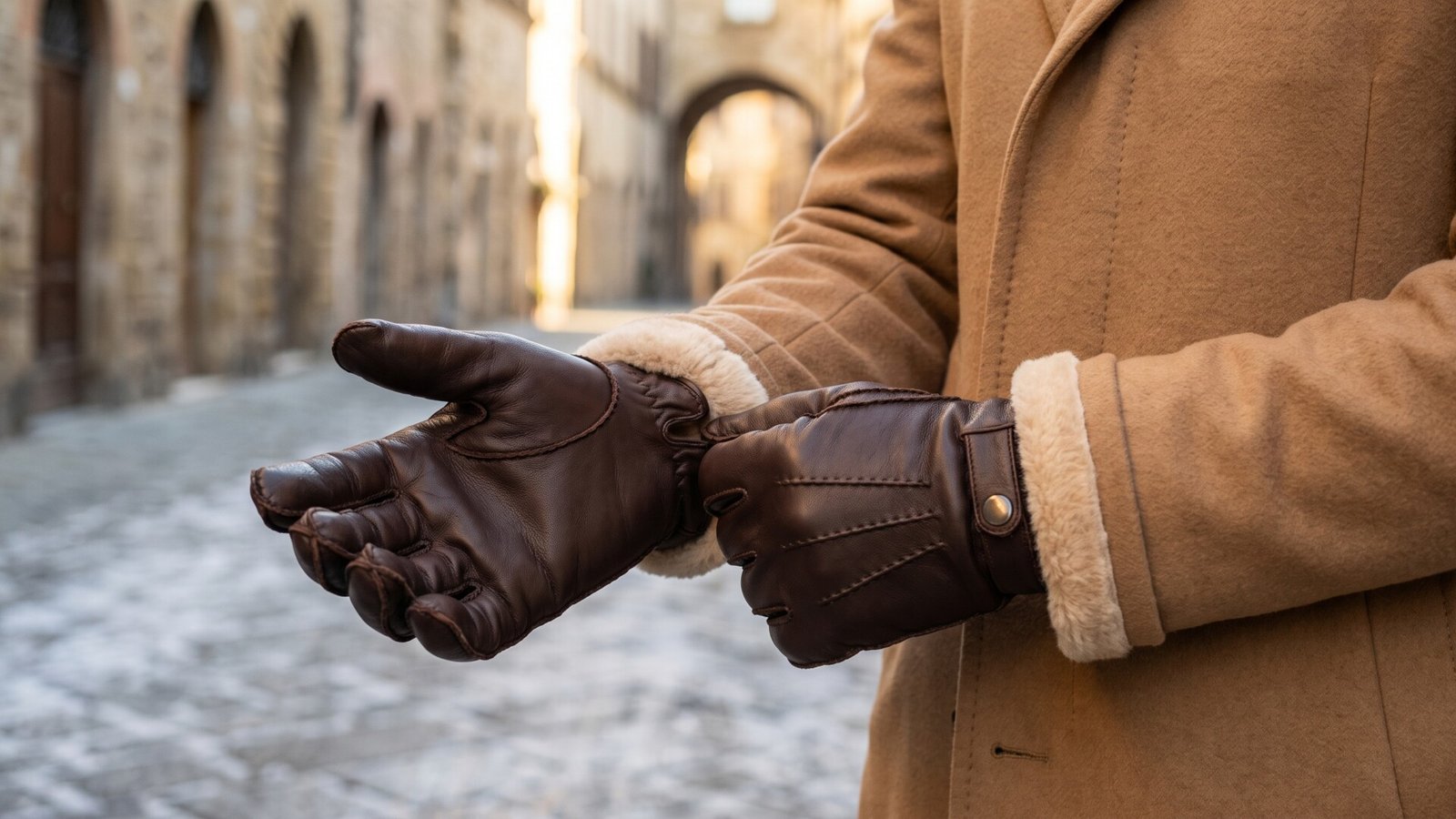
Best Italian designer leather gloves for extreme cold
Most winter gloves are chosen for warmth alone, and most of them end up bulky, clumsy and hard to use with a phone. Italian leather gloves take a different route: thin, close-fitting leather cut to the hand, with a lining chosen for insulation. Done well, they keep your fingers warm in a hard city winter and still look right with a tailored coat. This guide explains what actually makes a leather glove suitable for cold weather, what the major Italian houses offer, how to size and care for a pair, and where the honest limits are.
A realistic expectation first: a fashion leather glove, even with a shearling or cashmere lining, is built for city cold, commuting and winter events. It is not a replacement for insulated mountaineering gloves or mittens in true arctic conditions. Check the lining and the brand’s own product description for the specific pair you are considering, because warmth varies enormously between models.
The Legacy of Italian Leather Craft
Italian leatherworking is concentrated in a few regions: Tuscany around Florence and Santa Croce sull’Arno for tanning, Lombardy and Veneto for fashion production, and Naples, which has a long reputation for glove-making. Glove-making is a specialised trade within leathergoods because the pattern pieces are small, the hide must be matched for stretch, and a cutter has to judge how the leather will give once it is worn. The craft sits within the wider story told in our guide to how Italian leather is made.
Gloves were once part of everyday dress for men and women, a sign of respectability, and the modern luxury houses have turned them into a fashion accessory while keeping the practical job of protecting the hands. For the wider brand landscape, see our overview of Italian designer brands.
The Anatomy of an Exceptional Glove
Before comparing brands, it helps to know what makes a glove suitable for cold. The leather matters, but so do the lining, the seams and the cuff.
Design and Construction
Cheap gloves are often cut from many pieces and machine-sewn with bulky seams that chafe and let in air. Better gloves use a pattern with fewer, well-placed seams and fourchettes (the narrow strips between the fingers) that give the fingers room to bend.
- Stitching: Fine, even stitching along the fingers keeps seams flat and flexible. Some makers hand-stitch details; confirm this on the product page rather than assuming it.
- Outseam versus inseam: An outseam (stitching visible on the outside) is a feature of some casual and driving gloves and keeps seams off the fingertips; an inseam gives a cleaner, dressier line.
- Cut: Fewer weak points and well-matched leather improve both durability and fit.
Materials: What Keeps You Warm
- Lambskin: The standard for dress gloves. Soft, supple and good for dexterity, but thinner and less naturally insulating than heavier hides, so the lining does the work.
- Deerskin: Soft, elastic and durable, and often chosen for casual and driving gloves. It is less common in high fashion.
- Shearling: Sheepskin with the wool still attached, the warmest natural option, but bulkier and less refined in look.
- Cashmere lining: Not a leather, but a lining that adds warmth without bulk. Silk liners add a thin extra layer.
Features for Real Cold
- Insulation: Look for cashmere, wool, silk or shearling linings, or a technical insulation such as Thinsulate on more practical models. Check what the lining actually is; “warm lining” alone says little.
- Weather resistance: Leather is not naturally waterproof. A water-repellent finish helps in snow and drizzle; membranes add protection but stiffen the glove.
- Cuff length: A longer cuff closes the gap at the wrist where wind gets in.
- Gloves versus mittens: Mittens keep the fingers together and are warmer than gloves of the same material; if cold is your main concern, consider them.
The Italian Houses That Make Leather Gloves
Product ranges change each season, so treat the descriptions below as the character of each house rather than a guarantee that a specific style is in stock. Check lining, leather and sizing on the product page.
Gucci: The Bold Statement
Gucci gloves tend to carry the house’s visual codes, such as the GG motif and strong colour, and are the choice if you want your accessories to be noticed. The house offers leather styles with knit or shearling-type linings, so read each listing for the lining and leather used. They suit buyers who treat gloves as a style statement first and a technical layer second.
Prada: The Practical Innovator
Prada is known for combining leather with technical materials such as nylon, so its glove offering often reads as more functional and minimal than Gucci’s. If you want a clean, understated glove that still feels modern, Prada is a sensible first stop; as always, check whether a given style is lined with shearling or a lighter material.
Bottega Veneta: The Quiet Power
Bottega Veneta is built on logo-free luxury. Its gloves are generally simple and smooth, occasionally using the house’s intrecciato weave, and rely on leather quality and finish rather than branding. They suit buyers who want a quiet, refined glove.
Ferragamo: The Timeless Classic
Salvatore Ferragamo is known for classic, well-proportioned accessories. Its gloves are traditional in cut and generally use wool or cashmere-type linings, which suits buyers who want a style that will not look dated.
Fendi, Loro Piana and Specialist Glove Makers
Fendi works with fur trims and bold colour, which suits buyers who want a glove with more personality. Loro Piana is known for cashmere and may be worth checking for cashmere-lined styles. Beyond the fashion houses, Italian specialist glove makers such as Sermoneta Gloves and Mario Portolano focus on gloves alone and are worth comparing if you want more choice of lining, colour and size than a fashion house offers. Verify availability and specifications with each maker.
Comparison at a Glance
| Brand | Character | Typical lining options | Best for |
|---|---|---|---|
| Gucci | Bold, house codes visible | Knit, shearling-type (check model) | Style-led buyers |
| Prada | Minimal, modern, technical | Varies by model | Daily commuting |
| Bottega Veneta | Quiet, logo-free | Cashmere on some styles | Understated luxury |
| Ferragamo | Classic, traditional cut | Wool or cashmere-type | Long-term classic |
| Fendi | Playful, bold colour | Varies; fur trims on some | Statement winter looks |
Choosing Size and Colour
Sizing. Glove sizes are usually based on the circumference of your hand around the knuckles, excluding the thumb, measured in inches or centimetres, and brands then map that to sizes such as 6.5 to 9. Always use the brand’s own size chart. Leather gloves are meant to fit snugly and then give slightly with wear, so avoid buying a size too large to compensate. If you are between sizes, check whether the brand recommends sizing up for lined styles, because shearling and thick linings take up room. Small hands should look for brands that list half-size increments, and some specialist makers offer more granular sizing.
Colour. Black and dark brown work with almost everything and hide wear. Tan, camel and burgundy add colour without looking out of place. Bold colours are where houses such as Gucci, Fendi and Prada are most playful; if you want one, pick a colour that matches at least two of your winter coats and scarves.
Styling Your Italian Gloves
- The formal look: With a tailored wool coat and a suit, a sleek black or dark brown glove adds polish. Keep the glove unadorned.
- The casual look: With a puffer or parka, tan or burgundy adds colour. Shearling-lined styles suit this look well.
- The commute: Choose thin, supple leather with a lining that still allows a secure grip on a steering wheel or handrail.
Where These Gloves Fit Best
- City commuting: Good protection from wind and cold without ski-glove bulk.
- Winter events: A finishing touch for winter weddings and formal dinners.
- Light outdoor use: Shearling-lined styles can handle a winter walk or market, but they are not a substitute for technical gloves on mountains.
Are Designer Gloves Worth the Price?
Designer glove prices vary widely by brand, leather and lining, and change by season and market, so check current prices on each brand’s site. The more useful way to judge value is cost per wear. As a simple illustration (not a price quote): a pair costing a few hundred dollars and worn on 100 days each winter for five winters is worn 500 times, so the cost per wear falls quickly, while a cheap pair that falls apart after one season has to be replaced. Better construction also means a pair can be conditioned and kept for years.
Resale is a possibility on established brands, but gloves are a small, personal item and secondhand demand is limited, so do not rely on it. Buy for the fit and use.
The Trade-Offs
Leather gloves are delicate compared with technical gloves. They are not for shovelling snow or manual labour, and leather is not fully waterproof. If a pair gets wet, let it dry naturally at room temperature, away from heat sources, because heat stiffens and cracks the leather. You are trading ultimate ruggedness for style, feel and fit.
The Buying Verdict
Invest in Italian leather gloves if:
- You live in or regularly visit a cold city climate.
- You value craftsmanship and are willing to pay for it.
- You want a versatile accessory that works with casual and formal outfits.
- You are prepared to care for leather.
Consider alternatives if:
- You need a glove for heavy-duty outdoor activities such as mountaineering or snowmobiling. A technical glove from a brand like Hestra or Black Diamond is a better tool.
- You are on a tight budget and cannot justify the cost.
- You want true arctic warmth; choose mittens with technical insulation.
Top Picks for Cold Weather
These are the styles to start with, chosen by lining and the buyer they suit. Check current availability and specifications on the product page.
-
For maximum warmth: Prada’s shearling-lined gloves. Shearling is the warmest natural lining, so this is the pick for the coldest city days. [Affiliate: Shop Prada Shearling-Lined Gloves]
-
For timeless elegance and versatility: Ferragamo’s wool-lined gloves. Wool is warm and breathable, which suits a wider temperature range. [Affiliate: Shop Ferragamo Wool-Lined Gloves]
-
For a fashion-forward statement: Gucci’s leather gloves, often lined with knit or shearling-type materials, add a visible dose of Italian glamour to a winter coat. [Affiliate: Shop Gucci Leather Gloves]
-
For understated luxury: Bottega Veneta’s classic leather gloves, logo-free and refined; choose a cashmere-lined pair for warmth. [Affiliate: Shop Bottega Veneta Classic Leather Gloves]
Look at the lining first, then the fit, then the style. A perfectly fitted glove with a warm lining serves you better than a more expensive glove with a thin one.
The Trend of Timelessness
Winter fashion has moved toward quieter, longer-lasting pieces, which fits leather gloves well. Buying one durable pair and caring for it is also a more sustainable choice than replacing cheap pairs each season. The same thinking applies across Italian leather goods, such as the Italian leather handbags covered elsewhere on the site.
Frequently Asked Questions About Italian Leather Gloves For Cold Weather
What makes Italian leather gloves different from other leather gloves?
The difference is the combination of leather selection and cutting craft. Italian tanneries are well known for soft, supple leather, and glove makers cut and sew it to fit the hand closely. Quality still varies by maker, so check the product details.
Are designer leather gloves warm?
They can be, depending on the lining. Shearling is the warmest, followed by cashmere and wool; unlined or silk-lined styles are dressy but not warm. For true arctic cold, mittens with technical insulation are a better choice.
Are Italian leather gloves worth the investment?
They can be if you wear them often and look after them, because good construction lowers the cost per wear over several winters. Resale value is limited and not guaranteed.
How should I care for my Italian leather gloves?
Condition them sparingly with a leather conditioner suited to the leather type, testing on an inconspicuous area first. If they get wet, dry them naturally at room temperature, away from radiators, and never use a hair dryer.
Can I wear Italian leather gloves in wet conditions?
Light snow or drizzle is usually fine, especially with a water-repellent finish, but heavy rain can damage leather. Dry them carefully afterward.
What is the best way to store leather gloves?
Store them flat in a cool, dry place, ideally in a breathable cotton bag, never in plastic.
Do Italian leather gloves run true to size?
It varies by brand and style, so use the brand’s own size chart. Measure around your knuckles, excluding the thumb, and check whether lined styles run snug.
Which Italian brand makes the most timeless gloves?
Ferragamo and Bottega Veneta are known for classic or logo-free designs that date slowly, while Gucci and Fendi lean toward bolder styling.
For more on building a winter wardrobe of lasting pieces, explore our guides to Italian designer brands, Italian leather handbags and how Italian leather is made.