How often should you condition high-end Italian leather?
I have a confession. I used to think leather conditioning was like seasoning a cast-iron skillet—something you did once, maybe twice, if you remembered, and then you were set for life.
I learned the hard way that this is profoundly, almost painfully, wrong.
It was a cold January evening in New York. I was wearing a pair of dark brown Italian leather boots that I had saved for months to buy. They were hand-finished, vegetable-tanned, the kind of leather that develops a patina that makes grown men stop and stare. I had worn them every single day for three months without a second thought. No conditioner. No cream. Just wear and tear.
As I sat down to remove them that night, I noticed it. A fine, hairline crack running across the vamp of the left boot. It wasn’t a scuff. It wasn’t surface wear. It was a structural failure in the leather itself. My heart sank.
I had spent $850 on those boots, and I had destroyed them through sheer neglect.
That was the day I started researching leather conditioning the way a scientist researches a cure. I read everything from the Gemological Institute of America’s leather care guidelines to the meticulous recommendations of French and Italian artisans. I spoke with cobblers in Florence and tanners in Tuscany. And what I learned changed the way I treat every single leather item I own.
Let me save you the years of trial and error.
The World of Italian Leather
Before we talk about conditioning frequency, we need to understand what we are actually dealing with. Italian leather is not just leather that happens to be made in Italy. It is a category of its own, governed by centuries of tradition and some of the strictest quality standards in the world.
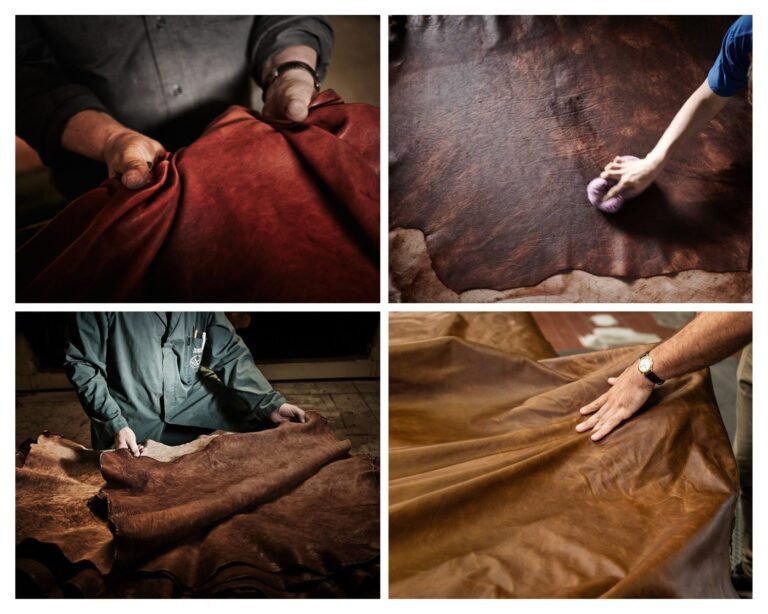
High-end Italian leather comes from tanneries in regions like Tuscany and Veneto, where the craft has been passed down through generations. The hides are often vegetable-tanned, a process that uses natural tannins from tree bark and plant extracts rather than harsh chromium salts. This process takes weeks, sometimes months, but it produces a leather that is dense, supple, and capable of developing a beautiful patina over time.
The unique qualities of this leather are precisely what make conditioning so critical. Vegetable-tanned leather is more porous than its chrome-tanned counterparts. It absorbs moisture from the air, which is why it can dry out in arid climates, and why it can develop mildew in humid ones. It is a living material, and it requires a delicate balance of moisture to remain healthy.
Here is the thing: most luxury leather goods are not designed to last forever without intervention. They are designed to last forever with proper care. The difference between a leather bag that looks stunning after ten years and one that looks like a crumpled paper bag after two is almost entirely about conditioning.
Understanding Conditioning and Its Importance
Let me define what conditioning actually means, because I used to think it was just about making leather look shiny. It is not.
Conditioning is the process of replenishing the natural oils and fats in leather that are lost over time through use, exposure to sunlight, and environmental factors. These oils are what keep the leather fibers flexible and resistant to cracking. When they deplete, the leather becomes dry, stiff, and eventually begins to crack.
Think of it like your own skin. If you never moisturize, your skin becomes dry, flaky, and prone to cracking. Leather is no different. It is an animal product, and it needs hydration to stay supple.
The benefits of conditioning high-end Italian leather go beyond just preventing cracks. A well-conditioned leather surface is more resistant to water damage, stains, and everyday wear. It also maintains its color better, because the oils help keep the dye from fading. And, of course, it looks better. A conditioned leather bag has a depth and richness to its color that a dry one simply cannot achieve.
But here is where it gets complicated. Over-conditioning is a real problem. Too much conditioner can saturate the leather, making it feel greasy and attracting dust and dirt. It can also soften the leather too much, causing it to lose its shape. This is why the question of frequency is so important.
How Often Should You Condition Italian Leather?
There is no single answer that works for everyone. I wish there were. I would have saved myself that pair of boots.
The frequency of conditioning depends on three main factors: how often you use the item, the environment you live in, and the type of leather you are dealing with.
The General Rule of Thumb
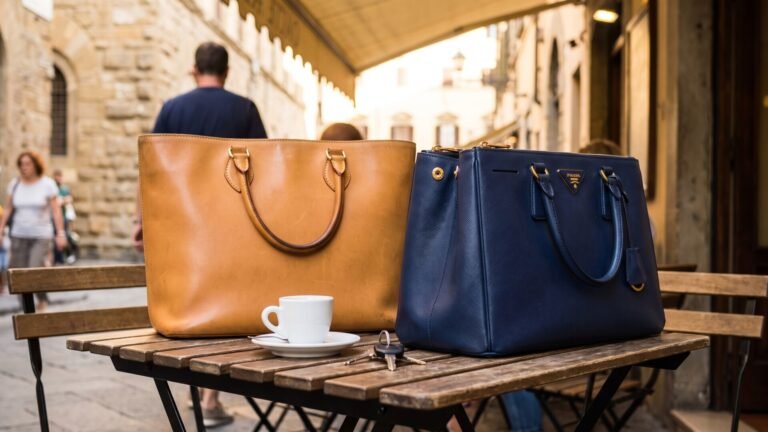
For most high-end Italian leather items, I recommend conditioning every three to six months. This is the sweet spot for items that are used regularly but not daily. If you use a leather bag every single day, you should lean toward the three-month mark. If you only use it on special occasions, you can stretch it to six months or even a year.
But let me be more specific, because the scenarios matter.
Daily Use vs. Occasional Use
I have a leather tote that I carry to work every day. It goes through rain, sun, subway rides, and the occasional spilled coffee. That bag gets conditioned every two to three months. It needs it. The constant handling, friction from clothing, and exposure to the elements strip the oils much faster than you would expect.
On the other hand, I have a pair of Italian leather dress shoes that I wear maybe twice a month. Those get conditioned twice a year, and that is sufficient. They spend most of their time resting in a shoe bag, protected from the elements.
Here is the principle: the more you use it, the more often it needs conditioning. That sounds obvious, but you would be surprised how many people treat a daily-use bag and a special-occasion bag the same way.
Variations in Climate
Climate is the factor that most people overlook. I live in a city with harsh winters and dry indoor heating. During the winter months, the humidity in my apartment drops to around 20 percent. That is brutal on leather. The dry air sucks the moisture right out of it.
If you live in a dry climate, whether it is a desert or a cold winter region, you need to condition more frequently. I would say every two to three months during the dry season. If you live in a humid climate, you can stretch it out more, but you also need to watch for mold and mildew, which thrive in damp environments.
Here is a rule I have developed over the years: if your skin feels dry and tight in your environment, your leather is suffering too.
Handbags, Shoes, and Furniture
The type of item also matters. Handbags are generally easier to care for than shoes because they are not subjected to the same level of stress. Shoes flex with every step, which puts tremendous strain on the leather fibers. They also come into contact with the ground, salt, and other harsh substances. For this reason, shoes need more frequent conditioning than handbags.
Furniture is a different beast entirely. A leather sofa is not subjected to the same kind of wear as a handbag, but it is exposed to sunlight and body oils constantly. I recommend conditioning leather furniture every six to twelve months, depending on how much use it gets and how much sunlight it receives.
Signs That Your Leather Needs Conditioning
You do not have to rely solely on a schedule. Your leather will tell you when it needs attention, if you know what to look for.
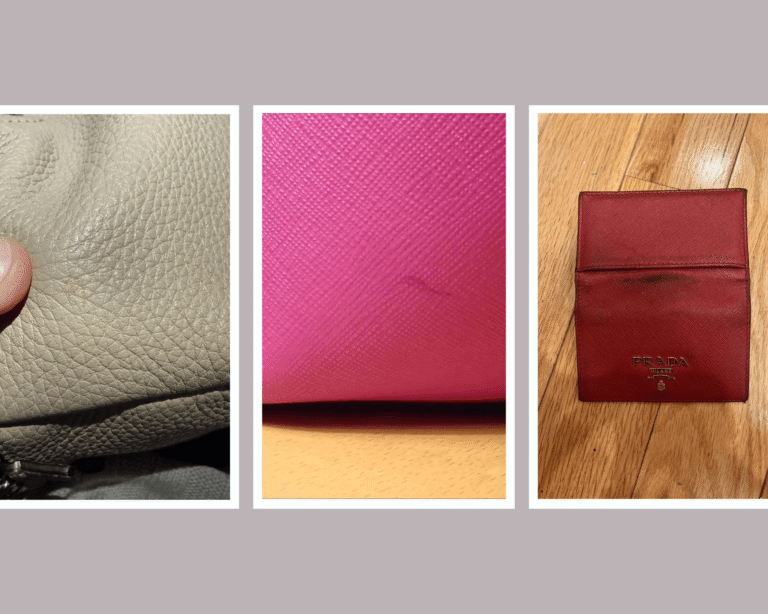
The most obvious sign is a change in appearance. If the leather looks dull or lifeless, if the color has faded, or if you notice fine cracks beginning to form, it is time to condition. Cracks are the last stage before structural failure, so do not wait until you see them.
The tactile test is even more reliable. Run your finger across the surface of the leather. If it feels rough or dry, like paper, it needs conditioning. A well-conditioned leather should feel smooth and slightly supple, almost like a firm skin.
There is a simple test you can do at home. Place a single drop of water on the leather surface. If the water beads up and sits on the surface, the leather is adequately conditioned. If it absorbs immediately, leaving a dark spot, the leather is thirsty and needs conditioning.
I have used this test on every leather item I own for years. It has never failed me.
The Right Conditioning Products for Italian Leather
Not all conditioners are created equal. I learned this the hard way when I used a cheap, silicone-based product on a beautiful handbag and ended up with a sticky, greasy mess that attracted dust like a magnet.
For high-end Italian leather, you want conditioners that use natural oils and waxes, not petroleum-based products that sit on the surface. Here are the products I trust with my own collection.
Saphir Renovateur
This is the gold standard. Saphir is a French brand with a reputation that precedes it. Their Renovateur is a cream-based conditioner that cleans and conditions in one step. It contains mink oil, which is excellent for replenishing the natural fats in leather, and it is gentle enough for the most delicate Italian leathers.
I use this on my handbags and dress shoes. It leaves a subtle, natural shine that does not look artificial. It is more expensive than most conditioners, but it is worth every penny.
Leather Honey Leather Conditioner
If you have a leather item that is severely dry, Leather Honey is your best friend. This is a deep-conditioning product that penetrates deeply into the leather fibers. It is made from a proprietary blend of natural oils and is free of harsh chemicals.
I used this on a vintage Italian leather jacket that I bought at a flea market. The leather was so dry it was almost crispy. After two applications, it was supple and wearable again. This is a heavy-duty product, so I do not recommend using it on items that are already well-conditioned. It can oversaturate them.
Bickmore Bick 4 Leather Conditioner
For versatility and ease of use, Bick 4 is hard to beat. It is a lightweight conditioner that does not darken the leather, which is a huge advantage if you have a light-colored bag or shoes. It is also safe for use on all types of leather, including suede and nubuck, which is rare.
I keep a bottle of Bick 4 on hand for items that need a quick refresh without a full conditioning session. It is also my go-to for leather items that I am unsure about, because it is so gentle.
Moneysworth & Best Leather Conditioner
This is a budget-friendly option that still delivers solid results. It contains a blend of oils and waxes that moisturize and protect the leather. It is not as refined as Saphir, but it does the job.
I use this on leather items that I do not care as much about, like my everyday belt or a pair of loafers that see a lot of wear. It is a good value for the price.
Application Techniques for Conditioning
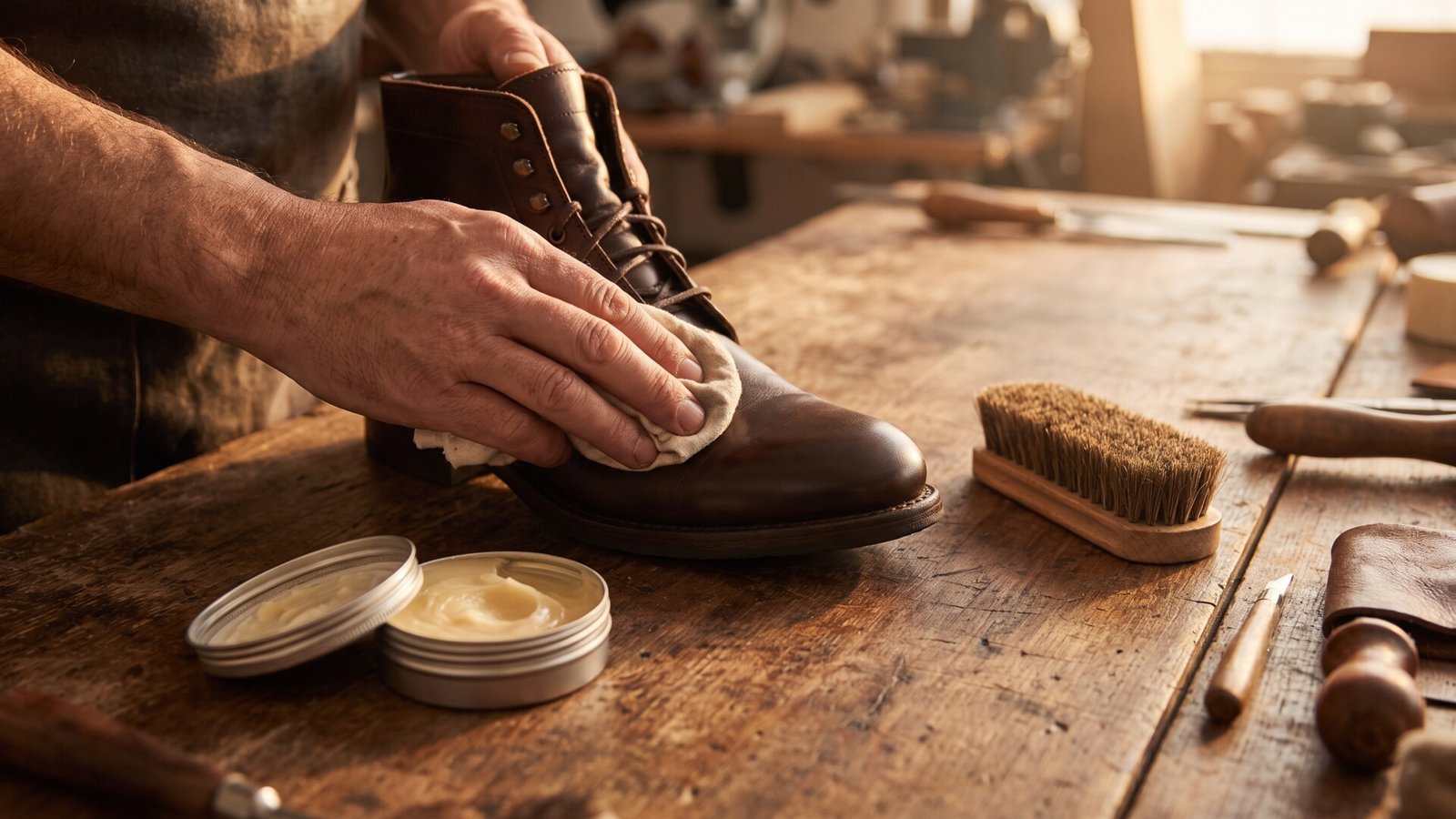
The way you apply conditioner is just as important as the product you use. I have seen people ruin beautiful leather by applying conditioner with a rough cloth and rubbing too hard.
Here is my step-by-step process.
First, clean the leather. You never want to condition dirty leather, because you will just push the dirt deeper into the pores. Use a soft, dry cloth to wipe away dust and surface dirt. For deeper cleaning, use a leather cleaner, but make sure it is pH-neutral and safe for your type of leather.
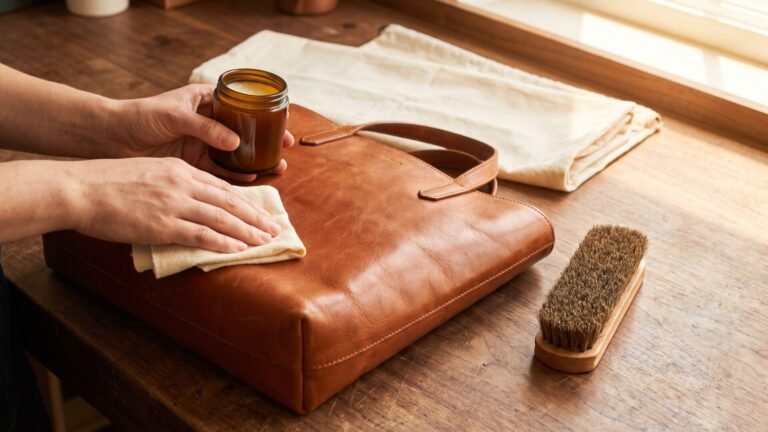
Second, apply the conditioner with a soft, lint-free cloth. I prefer a microfiber cloth or a cotton flannel. Apply a small amount of conditioner to the cloth, then work it into the leather in gentle, circular motions. Do not apply conditioner directly to the leather, because it is easy to use too much.
Third, let the conditioner absorb. This is the step that most people skip, and it is the most important. Give the leather time to drink in the oils. I usually wait at least 15 to 20 minutes, but some deep conditioners require several hours.
Fourth, buff the leather. After the conditioner has absorbed, use a clean, dry cloth to buff the surface. This removes any excess conditioner and brings out the natural shine.
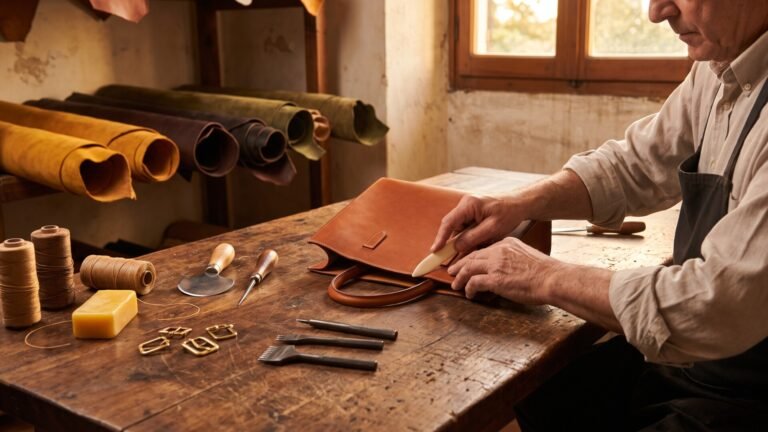
Here is a tip I learned from a cobbler in Florence: less is more. You can always add more conditioner, but you cannot take it away. Start with a small amount and build up if needed.
Integrating Conditioning into Your Leather Care Routine
The best way to ensure your leather gets the care it needs is to make conditioning part of a larger routine. I have a simple system that I follow for all my leather items.
At the beginning of each season, I do a full inspection of my leather goods. I check for stains, scuffs, and signs of dryness. I clean each item thoroughly, then condition it. This seasonal rhythm ensures that nothing gets neglected for too long.
For items that see heavy use, I do a quick check at the end of each month. If the leather feels dry, I do a light conditioning with Bick 4. If it feels fine, I leave it alone. This prevents over-conditioning while ensuring I catch problems early.
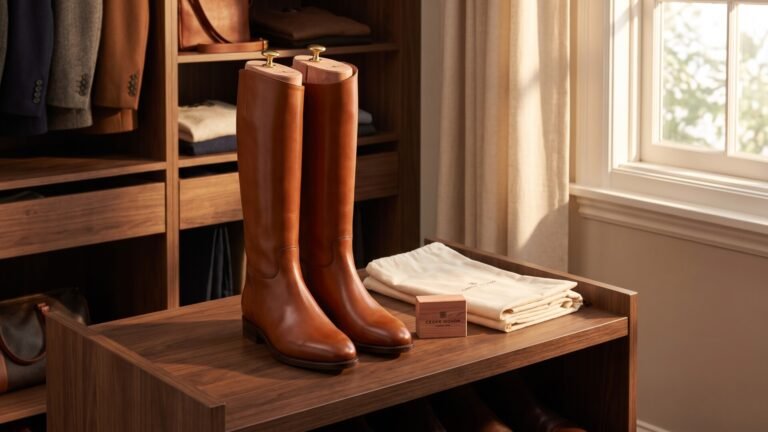
Proper storage is also crucial. Leather items should be stored in a cool, dry place away from direct sunlight. I use dust bags for my handbags and shoe trees for my shoes. Shoe trees are especially important, because they help maintain the shape of the shoes and absorb moisture from the leather.
If you store your leather properly, you will need to condition it less frequently. It is that simple.
The Value of Conditioning: Cost-Per-Wear and Long-Term Investment
Let me talk about money, because that is ultimately what this is about.
A high-end Italian leather handbag costs anywhere from $1,500 to over $5,000. A pair of quality Italian leather shoes can set you back $800 to $1,200. These are not trivial purchases. They are investments.
Now, let me do some math. A $2,000 leather bag that you use for five years costs you $400 per year, or about $1.10 per day. That is the cost-per-wear if you use it daily. But that assumes the bag lasts five years. Without conditioning, it might only last two or three years before it starts looking worn and cracking. That pushes the cost-per-wear up to $2.74 per day.
With proper conditioning, that same bag can last ten years or more. That brings the cost-per-wear down to $0.55 per day. Over the lifetime of the bag, you are saving over $700 in replacement costs.
And that is not even accounting for resale value. A well-maintained Italian leather bag can retain 60 to 70 percent of its original value on the resale market. A neglected bag might only fetch 20 to 30 percent. That is a difference of hundreds, sometimes thousands, of dollars.
I have a Gucci Jackie bag from the 1970s that I bought for $400 at a vintage store. It was in excellent condition, and I have maintained it meticulously. Today, it is worth over $2,500. That is not because the bag is rare. It is because the leather is still in pristine condition after 50 years.
Conditioning is not an expense. It is an investment in the longevity and value of your leather goods.
The Secret at the Heart of Leather Care
I think about those boots often. The ones I destroyed through neglect. I have replaced them with a new pair, and now I treat them with the reverence they deserve.
The truth is, leather conditioning is not just about maintenance. It is about respect. Respect for the craftsmen who spent hours hand-finishing that hide. Respect for the animal that provided it. And respect for your own investment, both financial and emotional.
The leather you carry in your heart — that is the one that matters. But the leather you carry on your shoulder deserves a little care too.
If you are ready to start caring for your Italian leather properly, I have gathered the products I trust most in our [Internal: Leather Care Hub]. You can also [Affiliate: Shop the Saphir Renovateur] or [Affiliate: Try Leather Honey for deep conditioning] to get started.
Frequently Asked Questions About Conditioning Italian Leather
What happens if I don't condition my Italian leather?
The leather will gradually dry out, becoming stiff and brittle. Over time, it will develop cracks that are irreversible. The color will fade, and the surface will lose its luster. Eventually, the leather can crack so severely that the item becomes unusable.
Can I use any conditioner on Italian leather?
No. You should use a conditioner specifically formulated for leather, and ideally one that uses natural oils and waxes. Avoid products that contain silicone, petroleum, or other synthetic ingredients, as they can damage the leather over time.
How do I know if my leather is too dry?
Perform the water drop test. Place a single drop of water on the leather surface. If it absorbs immediately, the leather is dry and needs conditioning. You can also feel the leather. If it feels rough or papery, it is too dry.
Is conditioning necessary for new Italian leather items?
Yes. New leather items are often conditioned at the tannery, but that conditioning wears off over time. I recommend conditioning a new leather item within the first few months of ownership to establish a baseline of protection.
How much conditioner should I use?
Less is more. Start with a small amount, about the size of a pea for a small item like a wallet, and a dime-sized amount for a handbag. You can always add more, but you cannot remove excess conditioner easily.
How long does conditioning last?
It depends on the product and the conditions. Generally, conditioning lasts three to six months. Items that are used daily or exposed to harsh environments will need conditioning more frequently.
Should I condition leather after cleaning it?
Yes, but only after the leather has completely dried. Cleaning can strip the leather of its natural oils, so conditioning afterward is essential to restore moisture and protect the leather. —