Fendi: The Legacy and Luxury of Italian Fashion Innovation
Fendi is an Italian luxury house. It was founded in Rome in 1925 by Adele and Edoardo Fendi, started as a fur and leather shop, and is today controlled by the French group LVMH while remaining headquartered and rooted in Rome. It now sells ready-to-wear, handbags, shoes, small leather goods, eyewear, watches and fragrance. This page is the hub for everything we cover on Fendi: its history, how its materials and bags are made, who designs for it today, what its bags cost, and links to our detailed articles on individual models.
Part of our Italian designer brands guide, this page sits alongside the other major houses: Gucci, Prada, Versace, Valentino, Dolce & Gabbana and Salvatore Ferragamo.
Is Fendi Italian? Quick Facts
| Founded | 1925, Via del Plebiscito, Rome, by Adele and Edoardo Fendi |
|---|---|
| Origin | Fur and leather goods shop |
| Ownership | Controlled by LVMH, which took control in the early 2000s after an initial 1999 deal with Prada; the current shareholding split is not something we have verified (see LVMH’s filings) |
| Headquarters | Palazzo della Civiltà Italiana, EUR district, Rome |
| Main leather-goods plant | Fendi Factory, Bagno a Ripoli, near Florence (opened October 2022) |
| Signature design | Double-F (“Zucca”) logo by Karl Lagerfeld, Baguette, Peekaboo, Selleria stitching |
| Creative leadership | Maria Grazia Chiuri was named chief creative officer in October 2025; Silvia Venturini Fendi, the third-generation family designer behind the Baguette and Peekaboo, moved from creative director to honorary president in autumn 2025 |
The short answer to the question many readers search is yes: Fendi is Italian by origin, design base and heritage, even though its parent company is French. As with any large house, individual products can be made in different places, so check the “Made in” label on the exact item.
The Origins of Fendi: From Furriers to Fashion House
Adele and Edoardo Fendi opened their first shop on Via del Plebiscito in Rome in 1925, selling fur and leather goods. After the founders, their five daughters (Paola, Anna, Franca, Carla and Alda) ran the company, which is the reason the house is still described as a family business despite its LVMH ownership.
Fendi’s reputation in the early decades was built on fur craft, and later on treating fur as an experimental material rather than a simple status symbol. The house’s later reputation in leather goods grew from the same workshop skills: cutting, sewing and finishing skins by hand.
Ownership: From Family Firm to LVMH
Fendi stayed in family hands for most of the twentieth century. Press accounts of the company’s history report that the five Fendi sisters each held a fifth of the business and that the family controlled it until 1999, when Prada and LVMH jointly bought a 51 percent stake. Prada later sold its share to LVMH, and by the early 2000s LVMH was the controlling shareholder. Carla Fendi is reported to have stayed on as chairwoman and a minority owner until 2008.
Today Fendi belongs to LVMH’s Fashion & Leather Goods division alongside houses such as Dior and Celine. In practice, Fendi benefits from group-level resources for stores, supply chains and marketing, while the creative identity is still tied to Rome, to the family’s third generation and to the house’s fur and leather workshops. We have not verified the current shareholding split, so the exact percentage held by LVMH and by any family members is deliberately left out; LVMH’s annual report is the place to check.
Karl Lagerfeld and the Designers Who Followed
Karl Lagerfeld joined Fendi in 1965 as creative director for fur and stayed until his death in 2019, one of the longest creative partnerships in fashion. He drew the interlocking double-F logo for the house, short for “Fun Fur”, and pushed fur into lighter, dyed and cut-out forms that were unusual for the time. Fendi moved into ready-to-wear under him, and his playful, graphic approach still shows in the FF logo and in seasonal colour use.
After Lagerfeld’s death, Kim Jones designed womenswear from 2020, while Silvia Venturini Fendi continued to lead menswear and accessories. One memorable episode was “Fendace” in September 2021, a swap in which Kim Jones and Silvia Venturini Fendi designed a Versace-branded collection and Donatella Versace designed for Fendi, shown at the close of Milan Fashion Week.
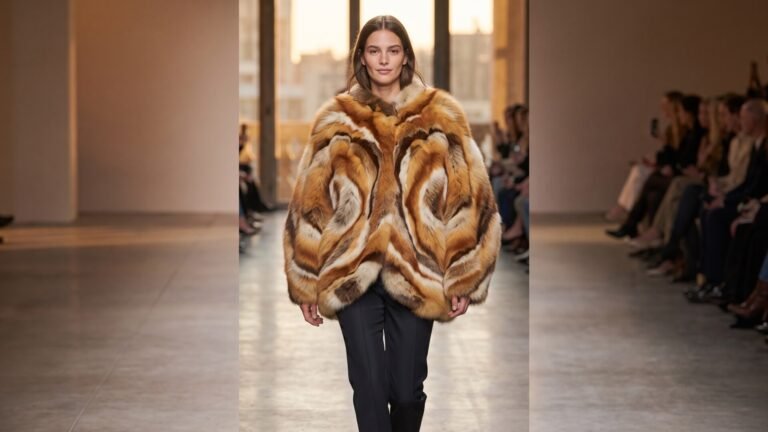
In October 2025 LVMH announced Maria Grazia Chiuri as Fendi’s chief creative officer, a return to the house where she began her career. Around the same time, on 29 September 2025, Silvia Venturini Fendi was reported to be leaving the creative director role to become honorary president, staying connected to accessories, menswear and the house’s heritage. Chiuri’s first collection was shown at Milan Fashion Week in February 2026 and, according to press coverage, reworked older furs into new pieces; our review of the Echo of Love collection covers what she showed. Leadership details change, so confirm current roles on Fendi’s website.
Innovation vs. Tradition: How to Read a Fendi Collection
Readers often ask how Fendi balances innovation and tradition, or how it follows trends while staying timeless. The practical answer is that Fendi runs two tracks at once, and knowing which track a piece belongs to is the most useful buying decision you can make.
- The heritage track: the Baguette and Peekaboo shapes, Selleria hand-stitching on Cuoio Romano leather, plain smooth leather and the classic brown FF Zucca jacquard. These change slowly, are reissued rather than replaced, and are the pieces most likely to look current in ten years.
- The seasonal track: embroidered, beaded, sequinned or brightly coloured versions of those same shapes, oversized logos, charms and collaborations such as Fendace. This is where Fendi follows or sets trends, and it is the part of the range that dates fastest.
The decision rule: if you want one Fendi piece to wear with many outfits for years, buy a heritage shape in a heritage material and a neutral colour; buy the seasonal track when you want impact now and accept that it will look of its moment. A black or brown leather Baguette, or a Selleria Peekaboo, works with tailoring and denim alike, which is what makes a Fendi accessory versatile, rather than any claim on the label.
Fendi Handbags: The Core Category
Handbags are what most readers come to Fendi for. Our Fendi Handbags article is the overview; the models below each have their own deeper guides. Prices are approximate US retail ranges from Fendi’s US site and a July 2026 price tracker; they vary widely by material and change often.
| Bag | Launched | What it is | Approx. US price | Read more |
|---|---|---|---|---|
| Baguette | 1997, designed by Silvia Venturini Fendi | A small, rectangular shoulder bag carried under the arm; reissued repeatedly | Mini $2,250-$3,900; medium $3,650-$7,500 (exotics far more) | History and resale, 1997 Re-Edition |
| Peekaboo | Runway debut 2008, in stores for spring 2009 | Structured bag with a front opening that reveals a second compartment; designed by Silvia Venturini Fendi | Mini $5,300-$5,500; ISeeU small or medium about $6,300-$6,700 | Fendi Handbags |
| Kan I | 2017 (Runway collection) | Compact bag with a metal F-shaped clasp | Not verified | Fendi Crossbody Bags |
| Men’s Baguette Urban and Crossover | Current men’s range | Flap shoulder and crossbody bags in leather, Cuoio Romano or FF jacquard | About $3,000-$3,900 in leather or jacquard | Fendi Crossbody Bags |
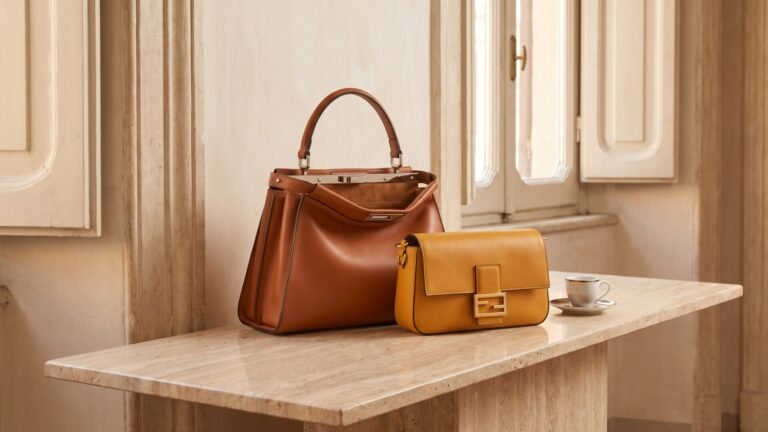
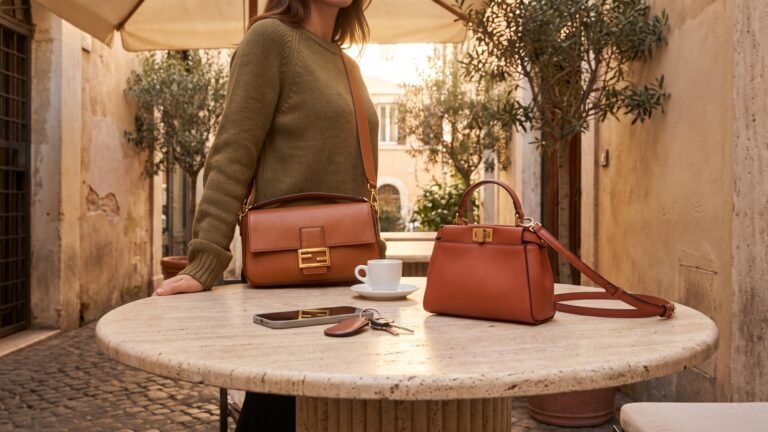
The Baguette was designed to be carried tucked under the arm, which is where the name comes from. The original is small, with a short flat strap and a magnetic flap closure, and Fendi has produced it in hundreds of versions, from embroidered and beaded to plain leather. It became a late-1990s phenomenon, helped by its appearance on the TV series Sex and the City. Because reissues vary in size, hardware and lining, check dimensions before you buy; a very small Baguette holds little more than a phone, keys and cards.
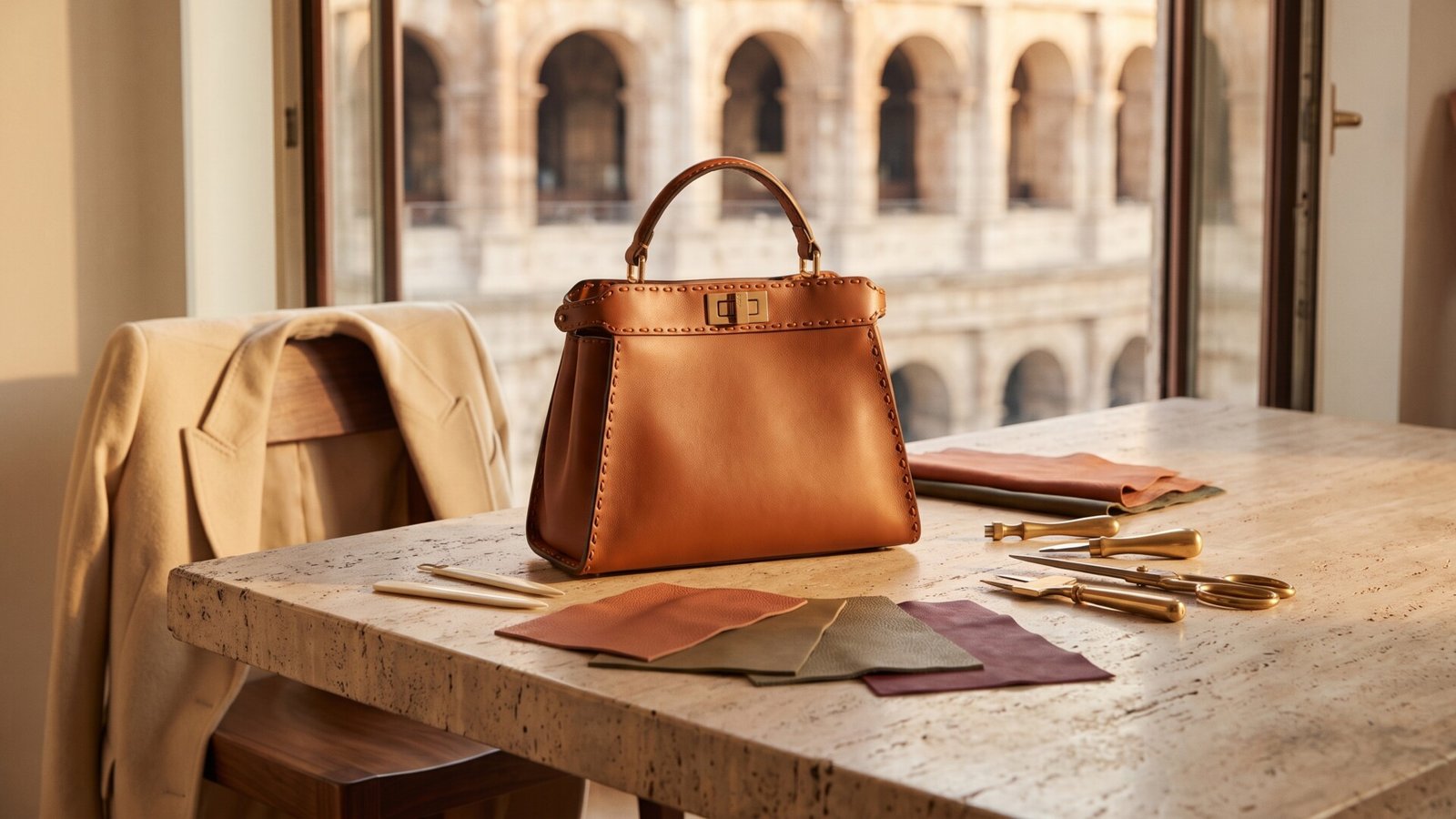
The Peekaboo is a structured, roughly briefcase-shaped bag with a twist-lock and a front opening that unfolds to show a lined inner pocket. It comes in sizes from mini to large (the larger versions suit laptops and documents) and in leather, shearling, exotic skins and jacquard. Because the front panel opens, items inside are visible when it is unlocked, so it is better as a shoulder bag than a rummage-through tote.
The Kan I is built around a metal clasp in the shape of an F. Handbag press describes it in two sizes, small and standard, with an interior split into two compartments and, on most versions, a sliding chain strap. Reviews report that only the larger size is long enough to wear comfortably crossbody, so confirm the strap drop on the exact listing if you want hands-free use; our Fendi crossbody bags guide compares it with other Fendi shapes.
Selleria: The Saddle-Stitch Tradition
Selleria is the part of Fendi’s bag-making that most directly connects to the 1925 shop. The word is Italian for saddlery, and Fendi’s own heritage page says the first Rome boutique learned the technique from the city’s master saddlers and used it for the house’s first bag line. In the brand’s description, the tone-on-tone topstitching is still done entirely by hand, on Cuoio Romano leather, both for Selleria bags and as an embellishment on some ready-to-wear. Fendi also states that each Selleria icon carries a sterling silver tag engraved with 1925 and a unique serial number, and its product names often give the stitch count, such as a Baguette “with 612 hand-sewn stitches”.
Treat that as the house’s account rather than a guarantee about every Selleria-labelled item; how much of any particular bag is hand-finished is something the product description should tell you. Visible, slightly irregular hand stitching in a matching thread colour is a different look from the printed or embossed FF patterns, and it tends to suit buyers who want texture rather than a logo.
Where Fendi Bags Are Made
Readers ask about Fendi’s quality control, which the house does not publish in detail. What is documented is where much of its leather goods are made. In October 2022 Fendi inaugurated the Fendi Factory at Bagno a Ripoli, outside Florence, a leather-goods plant that Italian press reported as an investment of roughly $50 million employing about 700 people, with a training school for artisans on site. Bringing production into its own facility in the Tuscan leather district gives the house more direct control over cutting, stitching and finishing than relying only on outside workshops.
Italian leather-goods making is concentrated in clusters, notably around Florence and Tuscany, where specialist workshops cut, sew and finish bags for many houses. Our guides to how Italian leather is made and Italian leather craftsmanship explain the tanning and construction steps. A “Made in Italy” label does not by itself tell you how much of a bag was made by hand; see handmade vs mass-produced Italian fashion for what to look for.
Fendi Ready-to-Wear and How to Judge Its Durability
Fendi’s clothing combines tailoring with unusual material pairings: fur with technical fabric, leather with knitwear, and prints that often use the FF motif. Coats and outerwear remain a strength. For comparison with other Italian outerwear houses, see Moncler, Herno and our Italian outerwear guide.
Readers often ask how Fendi ensures the durability of its ready-to-wear. Fendi does not publish wear-test data for its clothing, so the most honest answer is to judge the individual piece. Fibre content on the care label matters first: wool and cashmere blends in coats usually hold shape better than pure viscose or silk, which snag and crease. Check the lining (a fully lined coat hangs better and protects the outer fabric from friction), the seams (even, flat and not puckered), the buttonholes and the fastenings. Heavily embellished or sequinned pieces are more fragile than plain tailoring, and fur or shearling needs cool, ventilated storage rather than plastic.
Shoes, Small Leather Goods, Eyewear and Fendi Casa
Fendi sells sneakers, heels, boots and loafers, often with FF detailing, plus belts, scarves, wallets and card holders in the same logo and pattern vocabulary. Durability depends on construction rather than the label. For shoes, look at whether the sole is leather or rubber (leather soles look better but wear faster on wet pavement), whether the heel cap is replaceable, and how the upper is attached; a resoleable shoe can be repaired by a cobbler, while a cemented sneaker sole usually cannot. Coated canvas and jacquard uppers resist scuffs better than pale smooth leather. For wallets and card holders, the stress points are the edges, corners and fold lines, so check for tidy edge paint and stitching that is not pulling the leather. Our Italian designer shoes guide explains construction methods in more depth.
Eyewear production moved to Thelios, LVMH’s eyewear company, from the earlier Safilo licence, according to industry reporting; see sunglasses from top Italian brands for context. Fendi also has a fragrance line, which we have not reviewed, and Fendi Casa, a furniture and interiors business that is outside the scope of this guide.
Care by Material
Fendi pieces mix several materials, so care depends on what the item is made of. Light-coloured leather also shows dye transfer from dark jeans. The table summarises conservative, general practice; always follow the care label and our guide to caring for Italian leather goods, test on a hidden area first, and take valuable pieces to a specialist.
| Material | Everyday care | Avoid |
|---|---|---|
| Smooth calf leather | Wipe with a soft dry cloth; store stuffed in the dust bag | Soaking, direct heat, dark denim rubbing on pale leather |
| Suede and nubuck | Brush gently with a suede brush; use a protector spray after testing | Rain, grease, liquid cleaners |
| Coated canvas and jacquard | Spot-clean with a lightly damp cloth | Abrasive scrubbing that lifts the coating or print |
| Fur and shearling | Cool, ventilated storage; professional cleaning | Plastic covers, humidity, home washing |
| Metal hardware | Wipe dry; keep apart from other bags in the dust bag | Polishes and chemicals that can mark the plating |
Fendi, Fur and Sustainability
Fur is the most sensitive sustainability topic for Fendi because it is part of the house’s origin. In a July 2019 interview reported by the Italian trade site La Conceria, then-CEO Serge Brunschwig said Fendi would not abandon fur, describing it as a defining trait of the brand. Press coverage in 2026 of Milan’s fashion chamber asking brands not to show fur described Fendi as a notable holdout, and noted that Chiuri’s first collection used remodelled older furs rather than newly sourced skins. Most other large Italian houses have announced fur-free policies, as our look at how Italian designers are embracing sustainability sets out.
We have not verified Fendi’s current written position on fur or its sourcing. If fur matters to your purchase decision, read the product page and LVMH’s latest published reports, and ask the retailer directly. Buyers who prefer to avoid fur have plenty of non-fur Fendi options in leather, canvas and jacquard.
How Fendi Compares With Other Italian Houses
| House | Known for | Trade-off | Suits |
|---|---|---|---|
| Fendi | Playful logo, Baguette, Selleria, fur heritage | Seasonal and logo-heavy versions date more visibly than heritage ones | Buyers who want a bag with personality and a recognisable name |
| Gucci | GG, horsebit, wide range | Quality and style vary a lot between lines | Buyers who want a large choice of shapes and price points |
| Prada | Saffiano and nylon | A more utilitarian look | Daily users who want a bag that tolerates commuting and weather |
| Bottega Veneta | Intrecciato weave | Woven leather can snag | Buyers who want luxury without a visible name |
Fendi sits in the upper tier of Italian luxury, where price reflects the brand name, hand-finishing in some lines, hardware, material cost and store overheads. Cheaper Italian options with sound construction exist: Il Bisonte and Furla are examples, and Valextra offers a logo-free alternative. For a ranked overview of the houses, see our top Italian handbag brands.
Fendi Timeline
| Year | Milestone |
|---|---|
| 1925 | Adele and Edoardo Fendi open a fur and leather shop in Rome |
| 1965 | Karl Lagerfeld joins as creative director for fur and designs the FF logo |
| 1997 | Silvia Venturini Fendi designs the Baguette |
| 1999-2002 | Prada and LVMH buy a majority stake; LVMH becomes the controlling shareholder |
| 2008-2009 | Peekaboo shown on the runway in 2008 and in stores for spring 2009 |
| 2017 | Kan I appears in the Runway collection |
| 2019 | Karl Lagerfeld dies; Silvia Venturini Fendi continues leading accessories and menswear |
| 2021 | “Fendace” swap with Versace shown in Milan |
| 2022 | Fendi Factory leather-goods plant opens at Bagno a Ripoli, near Florence |
| 2025 | Maria Grazia Chiuri named chief creative officer |
Buying Fendi New or Pre-Owned
- Decide the use first: daily commute (Peekaboo medium or large), evening (Baguette or mini), or travel (crossbody; see Fendi crossbody bags).
- Pick the track: heritage shape and material for longevity, seasonal version for impact.
- Check the material: smooth leather scratches easily; jacquard and coated fabric resist day-to-day wear better.
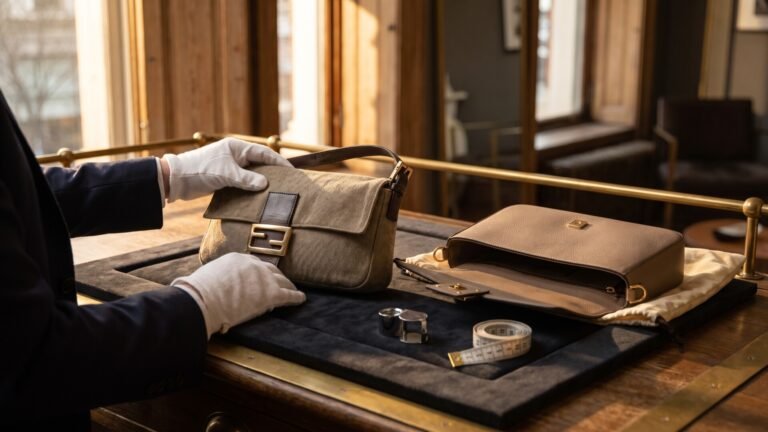
- Inspect construction: even stitching, clean edge paint, firmly set hardware, tidy lining.
- Buy from a trusted source and keep the paperwork and dust bag for resale and repair.
Second-hand is a sensible route for Fendi, particularly for discontinued Baguette versions, but it carries more risk than buying new; fakes of the Baguette and Peekaboo circulate widely. Start with the seller rather than the bag: a reputable consignment platform or boutique that authenticates items in-house and offers returns is safer than a private listing with only photographs. Ask for clear images of the interior stamp, the hardware, the stitching and the lining, and compare them with Fendi’s product pages for the same model, remembering that older and newer Baguettes legitimately differ.
No photo checklist can prove a bag is genuine, which is why independent authentication and a return policy matter more than any single tell, and a price far below comparable listings deserves suspicion. Stretched straps, peeling edge paint and a sticky lining are common problems with older bags; a specialist can restore some of them but not all. Our authenticity guide covers the general principles, and our resale value comparison offers context, though no resale value is guaranteed.
Fendi, Rome and the Italian Fashion Landscape
Fendi is one of the few major houses based in Rome rather than Milan; Valentino is another. Its fur and saddlery roots set it apart from the more restrained, knitwear-led quiet luxury of Loro Piana and Brunello Cucinelli. For historical context, read the history of Italian luxury fashion houses, and for a French comparison see Italian vs French fashion.
Fendi Guides on This Site
- Fendi Handbags: The Italian Legacy of Style, Innovation, and Iconic Design
- Fendi Crossbody Bags
- Fendi Baguette 1997 Re-Edition
- History of the Fendi Baguette and its modern resale value
- Maria Grazia Chiuri’s Fendi debut
Frequently Asked Questions About Fendi
Is Fendi more expensive than Gucci or Prada?
Broadly similar at the core of the range, though it depends on the model. A Fendi Baguette in leather or jacquard sits roughly in the same band as many Gucci and Prada shoulder bags, while the Peekaboo ISeeU is priced above most of their everyday bags. Compare the exact size and material, because exotic and embellished versions cost several times more.
Do Fendi bags hold their value?
Some do better than others. Classic Baguettes and Peekaboos in neutral leather or Selleria usually resell more easily than seasonal, embellished or heavily logoed versions, but no bag guarantees a return. Condition, the original paperwork and dust bag, and current demand all affect the price, so treat resale as a bonus rather than a reason to buy.
What size Baguette should I buy for everyday use?
For daily carry, the medium (often called the standard) Baguette is the practical choice: it fits a phone, wallet, keys and small essentials and usually comes with a shoulder strap and a longer crossbody strap. The mini suits evenings or a second bag. Check the listed dimensions, because reissues vary.
Does Fendi offer repairs?
Fendi boutiques can arrange after-sales care for its products, such as strap, hardware or edge repairs, but services, costs and turnaround vary by item and market. Ask the boutique for a quote before agreeing to a repair, and keep your receipt, as proof of purchase may be requested.
Where can I buy Fendi in the US?
From Fendi boutiques and Fendi’s US website, and from authorised department stores and luxury e-tailers. Buying from Fendi or an authorised retailer gives you access to after-sales care and a clear proof of purchase. For pre-owned pieces, use resellers that authenticate in-house and accept returns.