History of the Fendi Baguette bag and its modern resale value
The Fendi Baguette was designed in 1997 by Silvia Venturini Fendi as a small, streamlined bag carried tucked under the arm on a short strap. Fendi sold well over a million of them across hundreds of designs, and the bag became one of the first handbags to be treated as a pop-culture object, helped by its place on Sex and the City. This guide covers the history of the Baguette, how its many versions differ, what drives resale value, and how to buy one safely. Resale prices change quickly, so use the sections below as a framework and check current listings rather than relying on fixed numbers.
In short: the Baguette is not one bag but a platform, so value depends on the specific edition, material and condition. Common versions in ordinary materials tend to be inexpensive on the secondhand market; rare editions, special materials and collaborations are where collector interest concentrates. No Baguette should be bought on the assumption that it will rise in value.
Fendi’s Foundation: A Roman House
Fendi was founded in Rome in 1925 by Adele and Edoardo Fendi as a leather goods and fur business. In 1965 the five Fendi sisters, who ran the company after their parents, hired a young Karl Lagerfeld, who stayed with the house for more than fifty years. He introduced the double-F logo, often explained as standing for “Fun Fur,” and brought a playful, graphic approach to a traditionally conservative craft. The house is now part of LVMH. For the full story, see our Fendi guide and our overview of Italian designer brands.
In 1997 Silvia Venturini Fendi, a third-generation member of the family, designed the Baguette: a small, rectangular bag with a short strap, named for the way it was carried under the arm like a loaf of bread. It was small at a time when large totes and minimalist bags dominated, and it was designed from the start to be reinterpreted in different colors and textures.
The Design: A Platform Rather Than One Bag
The Silhouette
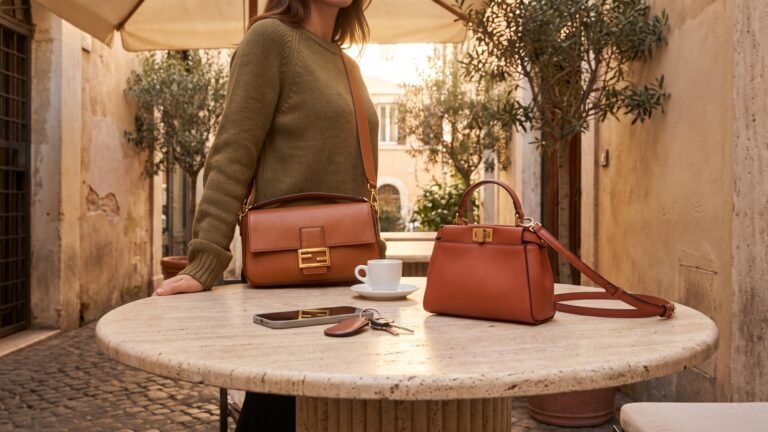
The Baguette has a compact, slightly curved rectangular body, a short shoulder strap and a flap with a magnetic closure on many versions. It sits high on the body and holds little: a phone, cards, keys and a few small items. In later years Fendi added longer straps, crossbody versions and different sizes; see our Fendi crossbody bags guide for those.
Materials and Craftsmanship
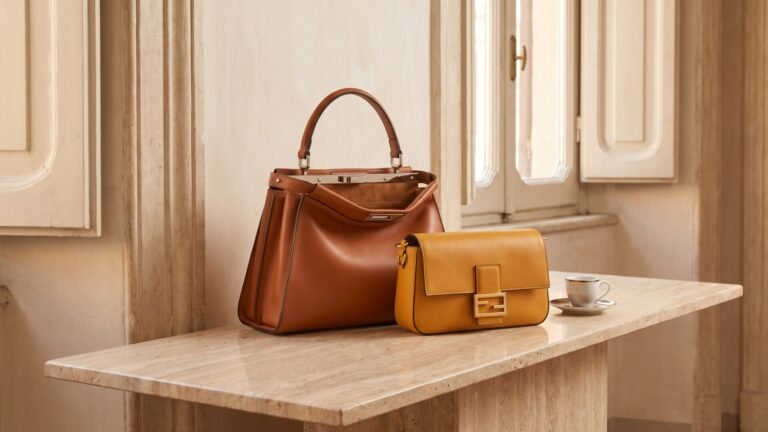
The Baguette has been made in leather, canvas, denim, sequins, beading, embroidery, fur, exotic skins and many other materials. The house made hundreds of designs, so two bags that both look like “a Baguette” can be very different objects in construction and desirability. Fendi describes its leather goods as made in Italy, but “Made in Italy” applies product by product, so read the label on the specific bag you are considering.
This variety matters for buyers. A plain leather Baguette is easy to find, while an embroidered, beaded or special-edition piece is more difficult to source and is judged on condition, material and documentation. Delicate materials such as sequins, silk, beading and light fabrics are also harder to keep in good condition, which affects both price and what you should pay.
The Cultural Moment: Sex and the City
The Baguette is closely associated with Sex and the City. The show’s costume designer, Patricia Field, used the bag for Carrie Bradshaw, and in one memorable scene a mugger demands her bag and she answers, “It’s a Baguette.” That moment helped turn a handbag into a recognizable character in its own right and is often credited with launching the “It bag” era of waiting lists and celebrity-driven demand. That cultural weight is the main reason people still search for the Baguette today.
The bag later returned to the spotlight through anniversary celebrations and a 2019 relaunch, again overseen by Silvia Venturini Fendi, and through the revival of late-1990s and early-2000s style. For the current take on the model, see our article on the Fendi Baguette 1997 re-edition.
The Resale Market: A Tale of Two Baguettes
It helps to think of the market in two segments.
Vintage Baguettes (late 1990s to early 2000s)
Value here is driven by rarity, material, condition and documentation. Standard versions in common materials are widely available and priced accordingly; unusual materials, embroidered or beaded designs, special editions and well-preserved examples attract more interest and higher prices. Check recent sold listings, not asking prices, to see what bags actually sell for.
Current and re-edition Baguettes
Bags made since the 2019 relaunch are new production, so they lack the scarcity of the originals. As with most new luxury handbags, pre-owned examples usually sell below the current retail price, and the gap depends on model, size, color and condition. Compare the retail price on Fendi’s website with recent sold listings on resale platforms before you decide.
The practical lesson is that “Baguette” does not guarantee value. The edition, material and condition do.
How the Baguette Compares for Resale
Comparisons with other well-known bags are useful for understanding how resale works, as long as you treat them as general tendencies, not guarantees.
| Factor | Fendi Baguette | Classic flap-style bag | Monogram canvas icon |
|---|---|---|---|
| Design consistency | Low: hundreds of designs and materials | High: one core shape | High: few core shapes |
| What drives value | Edition, material, condition | Size, leather, condition | Condition, age, size |
| Supply | Varies by edition | Large and steady | Very large |
| Best suited to | Buyers who enjoy the specific piece and its history | Buyers who want a predictable, well-known bag | Everyday users |
If your priority is predictability, a bag with one core design and a deep resale market will be easier to value. If you want something with a story and character, the Baguette is a more personal, less predictable choice. For a head-to-head against another small shoulder bag, see our comparison of the Fendi Baguette vs Dior Saddle.
Ownership Reality
The Baguette is small. Most versions hold a phone, a card holder, keys and a lipstick, and not much more. It works as an occasion or city bag rather than an all-day workhorse, which matters for cost per wear. Corners rub on leather and canvas, and delicate materials need careful storage in a dust bag away from sun and heat.
Cost Per Wear and the Collector’s Approach
Cost per wear is price divided by wears. A hypothetical $3,000 bag worn once a week for a year costs about $58 per wear in year one, and the figure falls each additional year you keep using it. A $1,000 pre-owned bag worn once a month costs about $83 per wear in year one. The bag you actually use wins, which is why a simple leather Baguette suits most buyers better than a fragile embellished one.
If you are buying with a collector’s eye, these factors typically matter most:
- Documented provenance and rarity. Runway pieces and limited editions are scarcer than standard production.
- Collaborations. The 2021 Fendi and Versace “Fendace” collection is a well-known recent example of a collaboration that generated collector attention.
- Unusual materials and finishes. Embroidery, beading and special skins are harder to find, but also harder to maintain and, in some cases, subject to legal restrictions on international sale.
- Condition and completeness. Dust bag, authenticity card or receipt, if available, help with confidence and price.
If your main goal is storing value, a bag with deeper, more predictable resale demand is safer. Treat a Baguette as something you buy because you like it, with any resale gain as a bonus.
How to Buy: Authenticity and Trusted Platforms
Fendi is widely counterfeited and online listings can be misleading. No checklist can prove a bag is genuine, so use the following as sensible checks, not a verdict.
Basic Checks
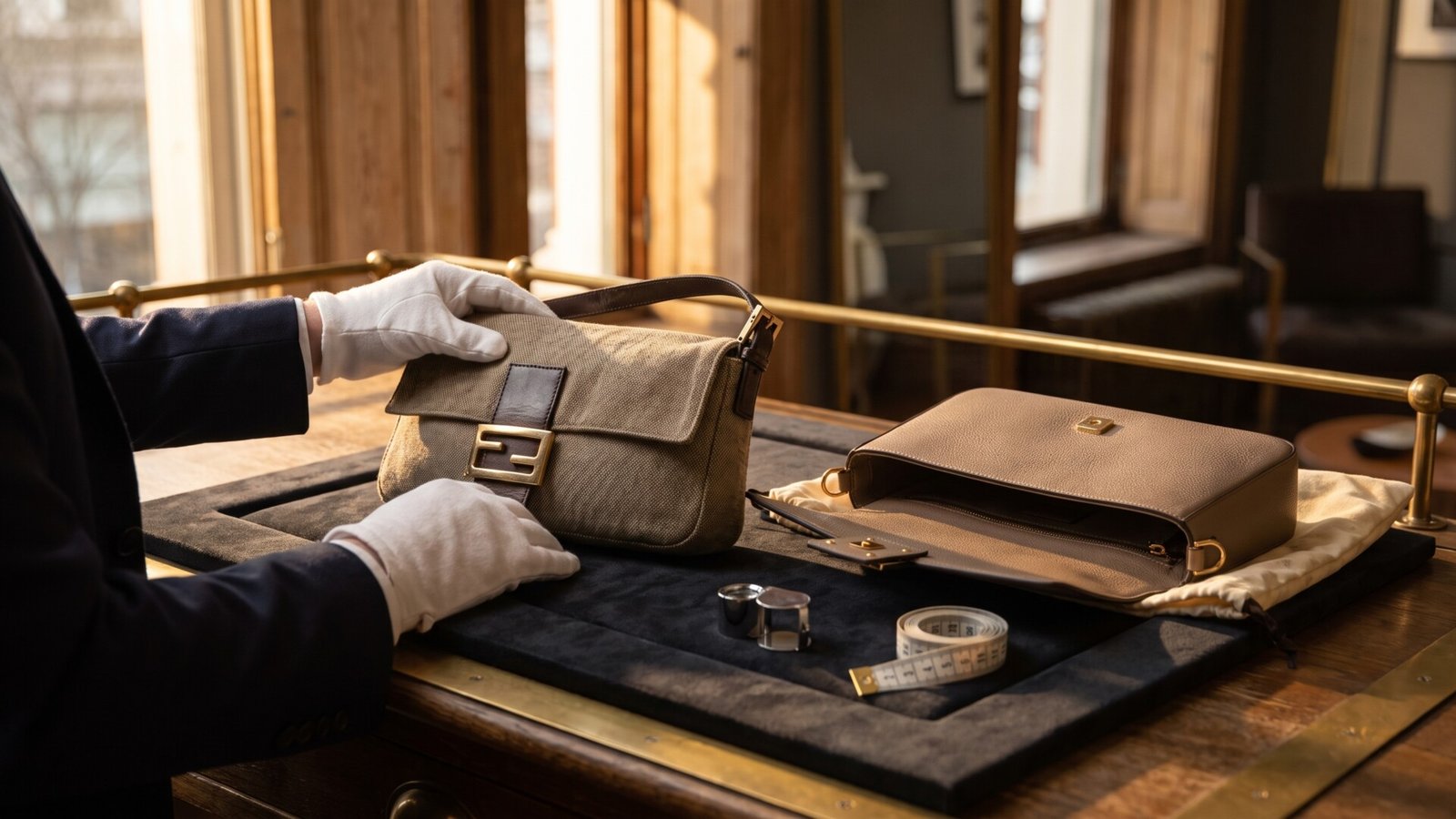
- Logo and canvas. Compare the FF pattern, spacing and alignment with photographs of the same model from Fendi or a reputable retailer.
- Interior tags and labels. Look for a clean, evenly sewn label. Formats changed over the years, so compare with examples from the same period.
- Hardware. Check weight, finish, engraving and smooth operation against reference photos.
- Stitching and edges. Even stitching and clean edges are a minimum standard, not proof.
- Price and seller. A price far below comparable listings is a warning sign. Prefer sellers with a clear return policy.
For high-value or unusual pieces, use a professional authentication service in addition to the platform’s checks.
Where to Look
Platforms with their own authentication processes are the more cautious choice. Compare policies for returns and authentication guarantees before buying.
- [Affiliate: Check Current Fendi Baguette Listings on The RealReal]: a major resale platform with an authentication process; check its current return policy.
- [Affiliate: Explore Vintage Fendi on Vestiaire Collective]: a good source of European vintage listings; it also runs an authentication process, and a second opinion on high-value pieces is sensible.
- [Affiliate: Shop Current Fendi Baguette Styles at Fendi.com]: for new pieces, buying directly from Fendi is the most reliable way to be sure of authenticity.
Styling the Baguette
- Casual: a denim or canvas Baguette with a white shirt, jeans and a blazer.
- Evening: a satin, beaded or sequined Baguette works as a compact evening bag.
- Work: a plain leather version in black, brown or beige is the most discreet.
- Retro look: pair it with slip dresses or a trench to lean into the late-1990s association.
For more ways to wear Fendi bags, see our Fendi handbags guide.
The Verdict: Is It Worth It?
The Baguette is a significant piece of design and cultural history. It is worth buying if you love the bag, will use it, and are paying a price that reflects its edition and condition. It is a poor choice if your main aim is a predictable investment. To weigh it against a similar small bag, read our Baguette vs Dior Saddle comparison. Before buying, check recent sold listings for the exact model, compare retail prices, and use authenticated sellers.
Frequently Asked Questions About The Fendi Baguette
Who designed the Fendi Baguette and when?
Silvia Venturini Fendi designed the Baguette in 1997. It was named for the way it is carried under the arm.
Is the Fendi Baguette a good investment?
Not reliably. Value depends on the edition, material and condition, and many common versions sell for modest prices. Rare editions attract more collector interest, but there is no guarantee of appreciation.
How do I authenticate a Fendi Baguette?
Compare logo, hardware, labels and stitching with reference photos of the same model and era, buy from sellers with an authentication process, and use a professional service for high-value bags. No single checklist proves authenticity.
Which Baguette editions are most collectible?
Runway pieces, limited editions, collaborations such as the 2021 Fendi and Versace collection, and unusual materials usually attract the most interest, particularly in excellent condition.
What fits inside a Baguette?
Most standard versions hold a phone, a card holder, keys and a small cosmetics item. Sizes vary, so check the dimensions of the model you are considering.
Where can I buy a Fendi Baguette?
New bags are sold by Fendi and authorized retailers. Pre-owned and vintage bags are sold on resale platforms with authentication policies. Compare return terms before buying.
How should I look after a Baguette?
Store it in a dust bag away from heat and sunlight, avoid overfilling it, and take delicate materials such as sequins or silk to a professional for cleaning.