Gucci: Italian Craftsmanship Meets Modern Luxury
Gucci is a Florentine leather-goods house, founded in 1921 by Guccio Gucci, that grew into one of the best-known names in Italian luxury. This sub-hub is a guide to the house: how it began, who has designed for it, which bags and shoes define it, what they cost in the US (checked November 2026), and where to read deeper on each topic. It links to our detailed articles on Gucci handbags, crossbody bags, horsebit loafers, the Jackie, the green and red stripe and more.
If you are comparing models or deciding what to buy, start with the quick facts and the bag table below. If you are reading for history, the timeline and creative-director table will save you time. Facts about the house’s current leadership change often, so each current-state statement here carries a date.
Gucci at a Glance (as of November 2026)
| Detail | What we can verify |
|---|---|
| Founded | 1921, Florence, by Guccio Gucci (1881–1953) |
| Ownership | Part of the Pinault group, today Kering, since a 1999 stake purchase (Wikipedia) |
| Artistic director | Demna, who succeeded Sabato De Sarno in March 2025; first collection shown September 2025, first runway show in Milan on 27 February 2026 (Numéro) |
| CEO | Stefano Cantino, CEO since October 2024 (Wikipedia; confirm on Kering’s site before relying on it) |
| Signature codes | Horsebit hardware, green-red-green web stripe, bamboo handles, double-G logo (introduced 1964), the Jackie shape |
| Core categories | Handbags, shoes, ready-to-wear, belts and small leather goods, eyewear, jewelry, fragrance, home |
The Origins of Gucci
Guccio Gucci founded Gucci in 1921 in Florence. According to the standard biography, he had moved to London in 1897 and worked at the Savoy Hotel, where he handled the luggage of wealthy guests and observed what travelers carried. In 1921 he bought a shop on Via della Vigna Nuova in Florence, where he sold imported leather luggage, and then opened a small workshop for local craftsmen to make his own leather goods; as demand grew he moved to a larger workshop that housed around sixty artisans.
The early range centered on luggage, leather accessories and equestrian-inspired designs. The house still draws on that heritage: the horsebit and the green-red-green web stripe both refer to riding. The Victoria and Albert Museum, which holds an early-1960s Gucci bag with red and green striped canvas, describes the stripes as mimicking a horse’s saddle girth and the handle hardware as resembling a horsebit, together alluding to the brand’s equestrian origins.
History also forced the house to adapt. After the League of Nations embargo on Italy in 1935 made leather scarce, Gucci worked with alternative materials such as raffia, wicker, wood, linen and jute. The same logic of making do produced the Bamboo handle: after the Second World War, material shortages led the house to introduce bamboo handles, which first appeared on Gucci bags in 1947.
Gucci Through the Decades
Gucci’s story runs through family dynamics, ownership changes and a succession of very different designers. Each era contributed something that is still visible in the product today.
1950s–1960s: International Expansion
This period marked Gucci’s emergence on the global stage. The loafer with the horsebit arrived in 1953, the date Gucci itself uses (some references give 1952), and entered the permanent collection of New York’s MoMA in 1985. The Jackie bag was introduced in 1961 and later named after Jacqueline Kennedy, and the double-G logo for belt buckles and other accessories followed in 1964. International travelers, aristocrats and film audiences helped build the reputation, but we do not have a reliable source for specific celebrity claims, so we leave them out.
1970s–1980s: Ready-to-Wear and Lifestyle
During these decades Gucci widened beyond leather goods into ready-to-wear, fragrance and lifestyle products, reaching a broader global audience. The house also went through family disputes and management upheaval, which fed directly into the ownership changes of the 1990s.
1990s–2004: Tom Ford and the Pinault Group
Tom Ford led the design of the house from 1994 to 2004. His sleek, provocative direction reset Gucci’s image for a younger, fashion-forward audience and is the era most often cited when people talk about Gucci’s modern revival. In March 1999 the Pinault group (then Pinault-Printemps-Redoute, later renamed Kering) bought a large stake in Gucci, which began the house’s current corporate chapter.
2006–2022: Giannini and Michele
Frida Giannini was creative director from 2006 to 2015, a period that produced bags such as the Soho Disco (2012). Alessandro Michele followed in January 2015 and left in November 2022. His maximalist, eclectic style, with historical references and pop-culture detail, produced the Dionysus (shown in Fall 2015), the GG Marmont (2016), the Ace sneaker (2016) and the revived Jackie 1961 (2020).
2023–Present: De Sarno and Demna
Sabato De Sarno was appointed in January 2023 and Gucci announced his departure on 6 February 2025. His quieter, more tailored direction and signature red are covered in The Sabato De Sarno Effect. In March 2025 Gucci named Demna, previously of Balenciaga, as artistic director. His first collection, La Famiglia, was presented in September 2025 as a film directed by Spike Jonze, and his first Milan runway show, for Fall/Winter 2026-2027, took place on 27 February 2026. It is too early to say what a lasting Demna-era signature will be, so treat any list of “new icons” with caution.
Gucci Creative Directors at a Glance
| Designer | Dates | Known for |
|---|---|---|
| Tom Ford | 1994–2004 | Sleek, provocative reset of the house in the 1990s |
| Frida Giannini | 2006–2015 | Soho Disco (2012) |
| Alessandro Michele | January 2015–November 2022 | Maximalism; Dionysus, GG Marmont, Ace, revived Jackie 1961 |
| Sabato De Sarno | January 2023–February 2025 | Cleaner lines, Rosso Ancora red |
| Demna | March 2025–present (November 2026) | La Famiglia (SS26), Milan debut show February 2026 |
Dates follow Wikipedia and press coverage; Gucci’s official corporate site is the authority if you need them for citation.
Gucci Handbags
Gucci handbags are the center of the house’s reputation, and the range spans archive reissues and designs from the last decade. Our full guide covers sizes, materials and the buying decision in detail; the table and notes below give the short version.
Iconic Bags
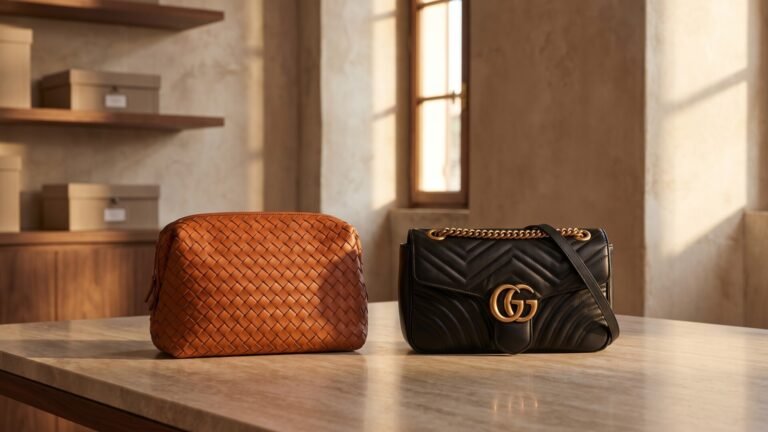
- GG Marmont: Introduced in 2016 under Alessandro Michele. Chevron quilting with a double-G hardware closure; the line is built around a flap shoulder bag.
- Dionysus: Shown in Fall 2015, also under Michele. Named for the Greek god of wine, with a tiger-head closure and a structured shape.
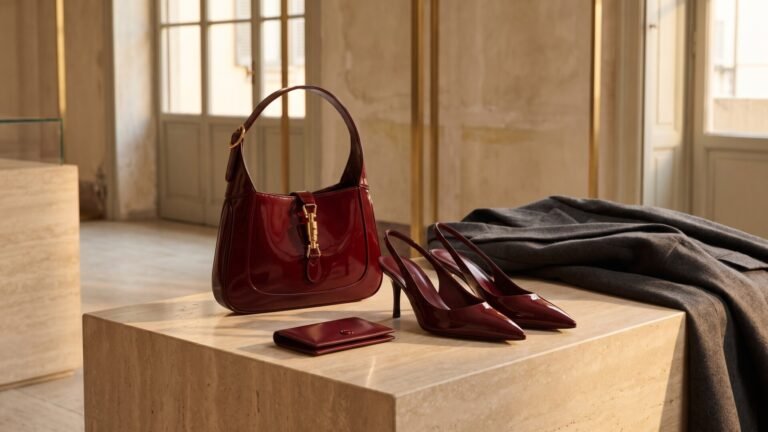
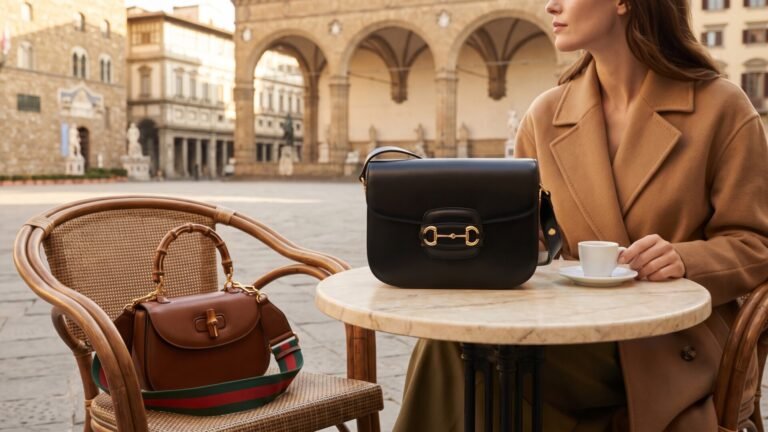
- Jackie 1961: A hobo shape introduced in 1961 (reportedly as the Constance) and later renamed after Jacqueline Kennedy, who was often photographed carrying it. Michele revived it in 2020 from the archive.
- Bamboo 1947: Built around the bamboo handle introduced in 1947 as a response to postwar shortages.
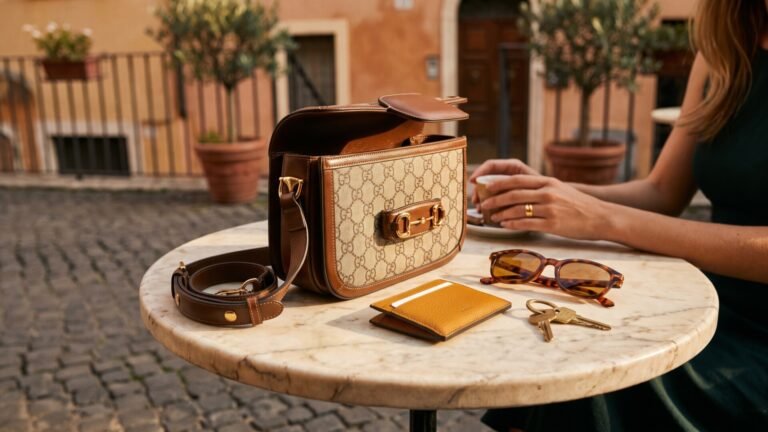
- Horsebit 1955: Introduced a couple of years after the horsebit loafer and using the same hardware.
- Diana: Named for Diana, Princess of Wales, who was photographed with it; relaunched in 2021.
- Ophidia (2018) and Attaché (revived in 2021 from a 1975 design): more recent additions to the bag range.
Gucci Bag Comparison: Price Bands
Prices below are full US retail prices (not sale prices) from Mytheresa’s US store, an authorized Gucci stockist, checked in November 2026. Each figure is for a specific size and material, as noted, so other sizes and finishes cost more or less. Prices change by season, so check Gucci’s own site before you buy.
| Model | Launch | US price, Nov 2026 (Mytheresa US) | Best for |
|---|---|---|---|
| GG Marmont | 2016 | $1,400 (mini, leather) to $2,850 (25 cm leather shoulder bag) | A structured everyday shoulder or crossbody bag |
| Dionysus | 2015 | $1,950 (small GG canvas) to $3,650 (medium leather); embellished from $7,900 | Anyone who wants a statement closure |
| Ophidia | 2018 | $1,850 (small GG canvas) | Buyers who prefer a canvas-and-leather shoulder bag |
| Horsebit 1955 | 1955 (archive) | $3,550 (leather shoulder bag) | A compact bag with direct equestrian hardware |
| Jackie 1961 | 1961 / 2020 | $2,950 (small, canvas) | A slouchy hobo shape across sizes and materials |
| Bamboo 1947 | 1947 (archive) | $4,900 (small leather top-handle) | A top-handle bag built around the Bamboo handle |
| Diana | 1991 / 2021 | $4,490 (mini, GG canvas) | A tote that revives the 1991 design |
Price guides and resale sites often quote older or different figures for the same models, usually because of date or size, so compare like for like. For longer comparisons, see Gucci Dionysus vs Marmont and the Gucci crossbody bags guide. For a French counterpoint, our sister site looks at how Gucci compares with Louis Vuitton.
How to Choose
- Everyday use: A Marmont or Ophidia in a small size is the usual entry point and sits at the lower end of the price table.
- Heritage: The Bamboo 1947, Horsebit 1955 and Jackie 1961 are the bags tied most directly to the archive, which is also why they cost more.
- Statement piece: The Dionysus is the most sculptural option; check the closure and the strap before buying second-hand.
- Comparing houses: If you are weighing Gucci against a rival, Gucci vs Prada and Bottega Veneta Intrecciato vs Gucci Marmont set out the trade-offs.
Materials and Craftsmanship
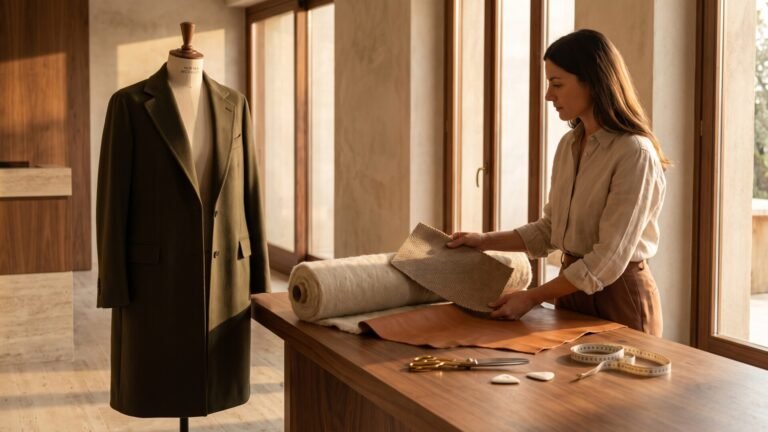
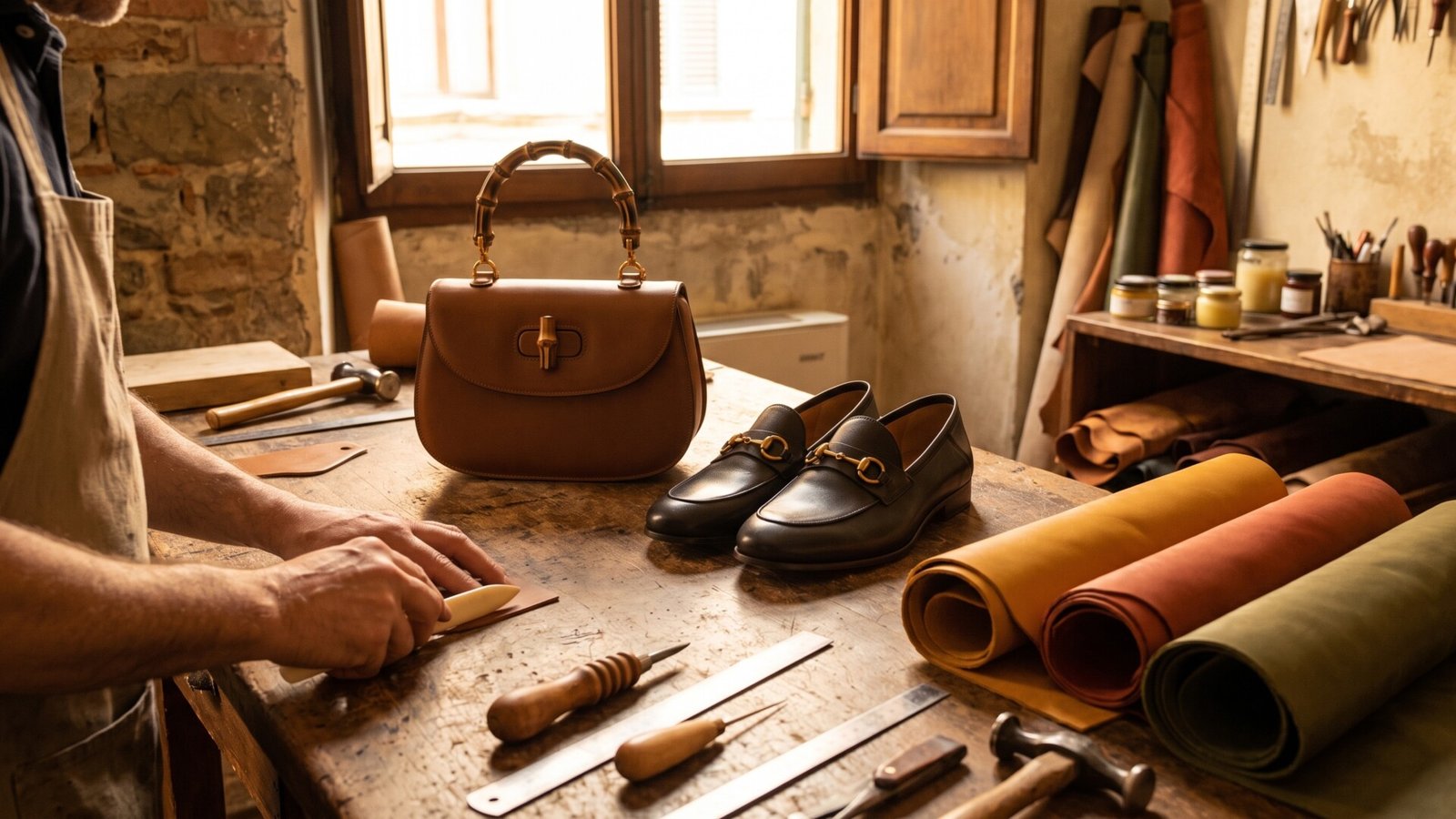
Gucci uses Italian leather, canvas, exotic skins and technical fabrics across its bags. The house runs its own ArtLab, a 37,000-square-meter innovation center outside Florence that opened in April 2018 and works on leather goods, footwear, hardware and packaging. We have not found a source that says every Gucci product is made in Italy or by hand, so check the label and the product page for the specific piece you are considering.
Gucci Shoes & Footwear
Gucci’s shoe range runs from loafers to sneakers, boots and heels. The loafer is the oldest and best documented; the sneakers are more recent additions.
Notable Styles
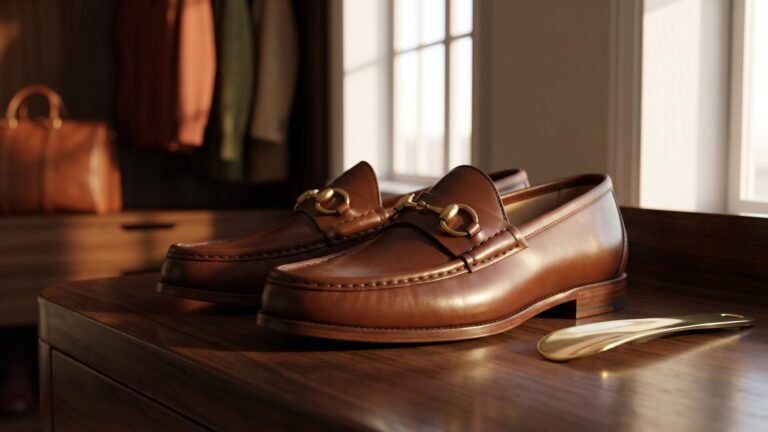
- Horsebit Loafers: The house’s moccasin-style loafer with a metal horsebit across the vamp arrived in 1953 and entered MoMA’s permanent collection in 1985. See our horsebit loafer guide for how to identify specific editions.
- Ace Sneakers: A low-top court-style sneaker introduced in Gucci’s 2016 pre-fall collection and known for the green-red-green web stripe. In November 2026 Net-a-Porter’s US store listed the classic white leather Ace with the web stripe at $950 full price; embroidered and special versions cost more.
- Rhyton Sneakers: A chunky retro-styled sneaker from the Michele era; launch details are not stated in the sources we checked, so we do not date it here.
- Screener and Tennis 1977: Two further sneakers introduced in 2019 (Cruise 2019 and a December 2019 Miami show, respectively).
- Statement Boots and Heels: Seasonal designs that change collection to collection.
When a loafer or sneaker is described as a good buy, ask what it is made of and how it is built. Gucci’s own product pages list the upper, lining and sole material for each style; we do not state a construction method for the range because it varies by model.
Gucci Ready-to-Wear
Gucci’s apparel has swung from Ford’s sleek tailoring to Michele’s embellished maximalism, De Sarno’s cleaner shapes and Demna’s first collections. Collections often reference music, film and art. The house presents silk, cotton, wool and technical fabrics; the specific origin of a garment appears on its label.
- Prints and Patterns: Florals, logos and geometric motifs recur from season to season.
- Materials: Silk, cotton, wool and technical fabrics, with fiber content listed on each product page.
- Direction changes: The look of the clothes depends heavily on who is creative director, so a piece from 2018 and a piece from 2026 can read as very different brands.
Gucci Accessories & Leather Goods
Accessories are the most accessible way into Gucci and often the first purchase:
- Belts: Double-G and horsebit buckles are the best-known designs; the double-G buckle dates from 1964.
- Wallets & Small Leather Goods: Card cases and wallets in GG canvas and leather, usually at the lowest price points.
- Scarves & Shawls: Silk, wool and blended fabrics.
- Eyewear & Jewelry: Eyewear and jewelry carry the house’s logos and motifs.
The stripe and horsebit that run through these categories are explained in The Significance of Gucci’s Green and Red Stripe.
Gucci Lifestyle & Home
Beyond fashion, Gucci has sold fragrance, eyewear, jewelry and home items such as tableware and decor. These lines extend the logos and patterns of the clothing collections to new objects. We do not cover home pieces in depth here, because prices and availability change quickly and we have no verified catalog to cite.
What You Are Paying For
A Gucci price reflects several things at once: the materials, the construction, the design work, the brand itself and the retail network. The logo and the house’s cultural weight are a real part of the price, and some buyers will find that a smaller Italian maker offers comparable construction for less. Equally, archive designs such as the Bamboo, Horsebit and Jackie are priced higher than newer ranges partly because of their heritage and more complex hardware.
- Materials: Leather grade, canvas type and hardware finish differ between lines and sizes.
- Design pedigree: A bag with documented archive roots tends to cost more than a recent seasonal design.
- Size and finish: Mini and small sizes sit at the bottom of each band; larger sizes and exotic skins push toward the top.
- The brand premium: Part of the price is the name. Compare construction details, not just the logo.
If quiet, logo-free luxury is what you want, our guides to Bottega Veneta, Loro Piana and Valextra take a different approach.
Buying Gucci: Practical Notes
- Buy from the source when you can. Gucci’s own boutiques and website, and authorized department stores, give you documentation and return rights.
- Second-hand needs diligence. Use a reputable reseller with an authentication policy, ask for clear photos of stitching, hardware and interior labels, and treat a price far below the bands above as a warning sign. No checklist can prove authenticity on its own.
- Check the care label and product page. Leather, GG canvas, suede and exotic skins each need different treatment, and Gucci’s care guidance for the specific material takes priority.
- Test any cleaner first on a hidden area, and take valuable pieces to a specialist rather than experimenting.
Gucci in Pop Culture
Gucci has been a fixture in fashion media for decades, from Tom Ford’s 1990s reset to Michele’s runway presentations and Demna’s film-led debut. We avoid listing specific celebrity endorsements without a source. What we can say is that each creative director has produced a visibly different Gucci, and that shapes what a given piece signals today.
Gucci and Sustainability
Gucci and its parent Kering publish sustainability commitments, including goals on sourcing, packaging and emissions. These are company statements and results are measured in the group’s own reports, so read them as the house’s position rather than independent verification. For a comparison of how several Italian houses stack up, see Top 5 Italian Designers for Sustainable Luxury.
Durability is the simplest sustainable argument for any luxury purchase: a well-made piece that you keep and repair is better than one replaced every season. That said, we cannot promise how long any particular Gucci product will last, because it depends on the model, the material and how it is used.
Collecting and Resale
Some Gucci pieces, especially limited editions and archive-reissued bags, trade on the second-hand market, and resale prices can be higher or lower than retail depending on the model, condition and demand. There is no guarantee that any Gucci product will hold or gain value, so we suggest buying a piece because you will use it. If resale matters to you, Gucci vs Prada for brand reputation and resale value discusses the factors, and Gucci Jackie 1961 vs the 2026 Piston Clasp compares two versions of the same bag.
The Future of Gucci
Under Demna, the house is early in a new chapter. As of November 2026, he has presented a spring/summer 2026 debut (La Famiglia) and a Fall/Winter 2026-2027 show in Milan. Kering’s shares fell about 10 percent on the news of his appointment in March 2025, which shows how much investors watch the house’s direction. We will update this page as the direction becomes clearer.
Explore the Gucci Guides
Use these articles to go deeper:
- Gucci Handbags: sizes, materials and the full model range.
- Gucci Crossbody Bags: the crossbody options in detail.
- Gucci Horsebit 1953 Loafers: how to spot the 70th anniversary edition.
- Gucci Jackie 1961 vs the 2026 Piston Clasp: comparing two versions.
- Gucci Dionysus vs Marmont Bag: a comparison of the two bags.
- Gucci vs Prada: brand reputation and resale.
- Bottega Veneta Intrecciato vs Gucci Marmont: a head-to-head.
- The Sabato De Sarno Effect: Rosso Ancora and the 2023–2025 direction.
- The Significance of Gucci’s Green and Red Stripe: where the web comes from.
- Top 5 Italian Designers for Sustainable Luxury: how Italian houses compare.
Other Italian Houses to Compare
For context, read our guides to Prada, Fendi, Versace, Salvatore Ferragamo, Tod’s and Valentino. The full list of houses is in Italian Designer Brands: A Complete Guide to Italy’s Most Influential Fashion Houses.
Frequently Asked Questions About Gucci
When was Gucci founded and by whom?
Gucci was founded in 1921 in Florence by Guccio Gucci, who sold imported leather luggage from a shop on Via della Vigna Nuova and made his own leather goods in a workshop.
Who owns Gucci?
Gucci is owned by Kering, the French group formerly known as Pinault-Printemps-Redoute. The Pinault group bought a stake in 1999. Confirm current ownership on Kering’s website.
Who is Gucci's creative director in 2026?
Demna, who was named artistic director in March 2025 after Sabato De Sarno’s departure. His first collection, La Famiglia, was shown in September 2025 and his first Milan runway show on 27 February 2026.
What is the horsebit on Gucci products?
The horsebit is a metal hardware motif that resembles a horse’s bit. It appears on the Gucci loafer, which arrived in 1953, and on the Horsebit 1955 bag. It alludes to the house’s equestrian origins.
What does the green and red stripe mean?
The Victoria and Albert Museum notes that the stripes mimic a horse’s saddle girth and allude to the brand’s equestrian origins. See our dedicated article on the stripe for more.
How much does a Gucci bag cost?
In November 2026, Mytheresa’s US store listed the Dionysus from $1,950 (small, GG canvas) to $3,650 (medium leather), the GG Marmont from $1,400 (mini) to $2,850 (25 cm leather shoulder bag) and the small canvas Jackie 1961 at $2,950. Embellished and exotic versions cost more. Check Gucci’s own site for current prices.
Is Gucci a good investment?
There is no guarantee that any Gucci item will hold or gain value. Some archive and limited pieces trade well second-hand, but prices vary by model, condition and demand, so buy because you will use the piece.
How can I tell if a Gucci bag is real?
No single checklist proves authenticity. Buy from Gucci or authorized retailers, or from resellers that guarantee authentication, and compare stitching, hardware and labels against official product images.
Is everything Gucci makes made in Italy?
We have not found a source confirming that. Made-in labeling applies per product, so check the label and the product page for the item you are buying.
Final thoughts. Gucci’s identity is built on a small set of verifiable codes (horsebit, web stripe, bamboo, double-G) and a rotating cast of designers, which is why the same house can feel so different from one decade to the next. Use this page to orient yourself, then follow the guides above for the specific bag, shoe or comparison you are considering.