How to clean and care for a silk Italian tie
A silk tie is easy to damage and hard to repair. The outer silk is delicate, the interlining sits inside and reacts differently to moisture, and the whole piece is cut and sewn to hang a particular way. That is why a quick wash that suits a shirt can leave a tie puckered, twisted or stiff. This guide explains how a silk tie is built, how to treat spots and stains, when to go to a professional, and how to store and wear ties so they last. It is part of our Italian accessories coverage.
The advice below is general and conservative. Always check any care label first, test products on a hidden spot, and use a professional cleaner for valuable ties.
Quick Answer: What to Do First
- Blot, don’t rub. Lift any solid residue with a utensil, then dab with a clean cloth.
- Do not machine wash a silk tie or soak it in hot water.
- Act soon, but gently. Fresh stains are easier to treat than set ones.
- For anything greasy, large or old, go to a cleaner who handles silk, and tell them what caused the stain.
How a Silk Italian Tie Is Made
Italy, and the area around Como in particular, is a long-established center for silk weaving and printing, and many ties sold as Italian use silk woven or printed there. A “100% silk” label describes only the outer shell, not the interlining inside it.
Quality ties are usually cut on the bias (at 45 degrees to the weave) so they drape without twisting, and are typically assembled from three pieces. The interlining gives the tie body; wool or cotton interlinings are generally preferred over thick polyester, which can make a tie stiff. Many better ties are sewn by hand with a loose slip stitch, and the inner edges may be covered by a tipping fabric. Seven-fold ties are made by folding a larger piece of silk several times, usually without interlining. Neither construction is automatically better; both are valid choices.
This matters for care because water and heat act on each layer separately. Silk is a protein fiber that can weaken in hot water and with alkaline detergents. The interlining can absorb moisture and shift or shrink at a different rate from the shell, which is what causes puckering. Treat a tie as a layered object, not a flat piece of fabric.
Spot Cleaning: The First Line of Defense
Most ties never need a full clean. They sit away from skin, so the usual problems are food, drink and the occasional mark. Work as follows:
- Remove excess. Lift solids with a spoon or the edge of a card.
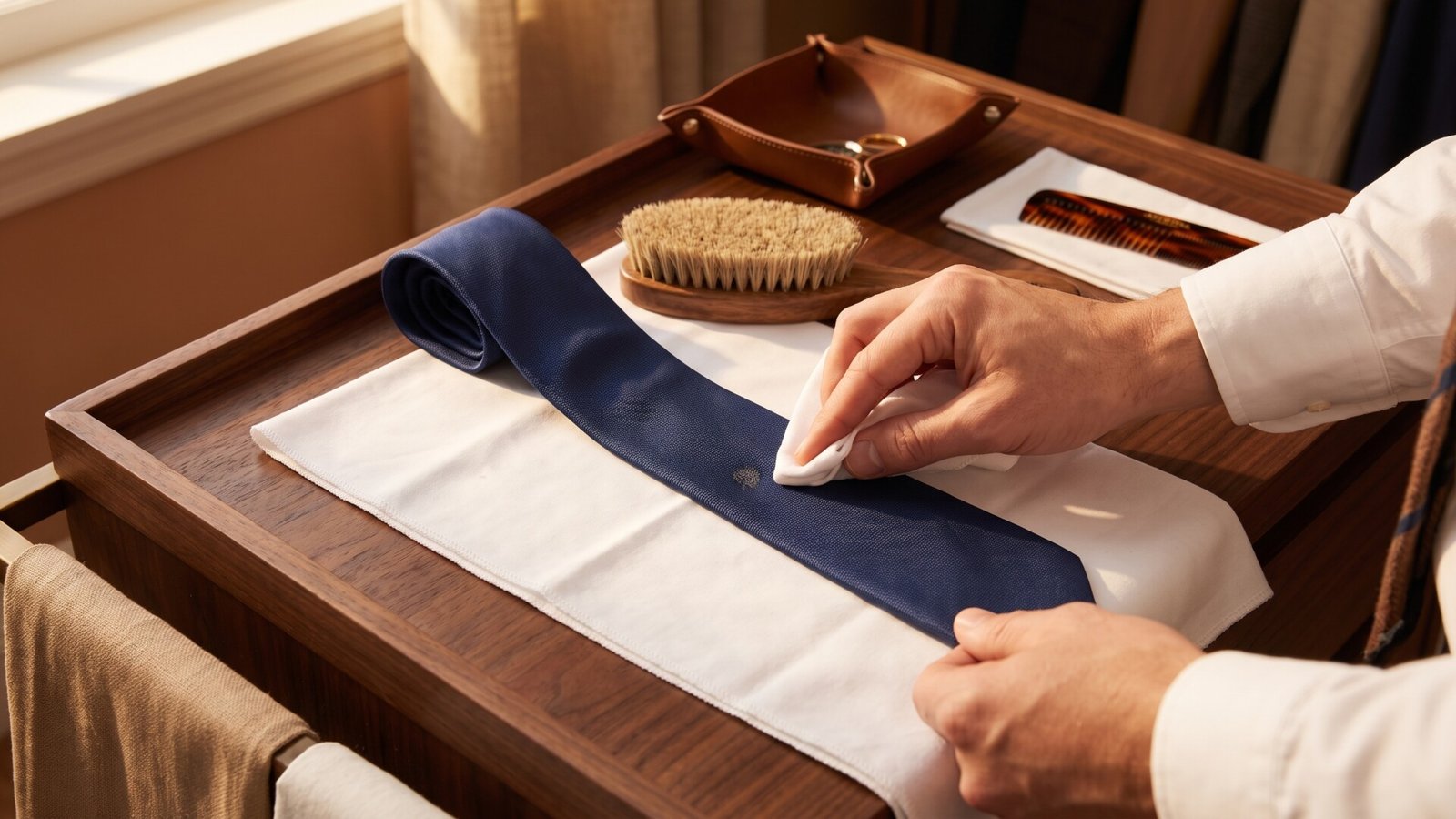
- Blot with a white cloth. Press and lift. Rubbing drives the stain into the weave and can roughen the surface.
- Test first. Try any cleaner on the inside of the narrow tail or another hidden area and check for color transfer.
- Use as little liquid as possible. A cloth barely dampened with water is often enough for water-based marks. A product made specifically for silk, used according to its label, is safer than household cleaners.
- Dab from the edge inward so the mark does not spread.
- Blot dry and air dry flat at room temperature, away from heat and direct sun. Water rings can form on silk, so stop if the area is spreading.
Ink, oil, wine and makeup are the difficult ones. Do not experiment with home remedies on a valuable tie; take it to a professional and describe the stain.
Should You Wash a Silk Tie?
We do not recommend hand washing a structured silk tie. Even careful washing can cause the interlining to move or the shell to pucker. If the tie is inexpensive and you accept the risk, use cool water and a mild detergent made for delicates, never wring or twist, roll in a towel to remove water, and dry flat. For a tie you care about, a professional is the safer option.
When to Use a Professional Cleaner
Dry cleaning is often the right choice for set or oily stains, but it has downsides: the pressing step can flatten the tie and reduce its body, so ask how they will press it. Questions worth asking:
- Do they have experience cleaning silk ties specifically?
- Will they spot-treat the stain before cleaning?
- Will they avoid heavy pressing and keep the iron temperature low?
- Will they return the tie rolled or hung flat rather than folded?
If a tie is a high-value or vintage piece, ask a specialist or the maker for advice before cleaning. Do not clean a tie more often than needed.
Common Mistakes That Ruin Silk Ties
- Machine washing. Agitation, heat and detergent can ruin the shell and distort the interlining.
- Hot water. It can weaken silk and set some stains.
- Rubbing or wringing. Both damage fibers and distort the shape.
- Bleach and strong detergents. They can break down silk and strip color.
- High-heat ironing. Silk scorches and shows pressing marks. Use low heat with a pressing cloth, or hold a steamer at a distance.
- Leaving it knotted. A knotted tie stays creased and stressed. Untie it after each wear by reversing the steps rather than pulling the narrow end through the knot.
- Using a tie clip or pin through the same spot. Move it to avoid permanent holes.
Wearing and Untying a Tie Correctly
The knot affects wear. A four-in-hand is the simplest and suits most collars and weights of tie. A half-Windsor makes a fuller, more symmetrical knot, and a full Windsor is bulkier and works best with spread collars and lighter silks. Heavier knots stress thick fabrics more. To remove a tie, loosen the knot, then reverse the steps you used to tie it.
Storing Silk Ties
After wearing. One suggestion from tie specialists is to roll the tie for around a day after wearing to release wrinkles, then hang it on a tie rack. Do not leave it rolled for longer, because it can end up curved.
Hanging. Use a rack that supports the tie without a sharp bend, and leave space between ties so they do not rub or snag.
Rolling for storage and travel. Roll ties loosely from the narrow end, with the roll not too tight, and store them in a drawer or a case with compartments. Do not fold them into tight squares, which can leave permanent creases.
Climate. Keep ties in a cool, dry place out of direct sunlight. Silk absorbs moisture, so avoid damp cupboards. For related guidance on storing silk accessories, read our guide to storing silk Italian scarves to prevent creasing.
Do You Need Special Products?
Not usually. The basic kit is a few clean white cloths, a hanger or tie rack, a case for travel and, if you like, a stain remover made specifically for silk. If you do buy a cleaner, read the label, check that it is suitable for silk, and test it on a hidden spot.
- [Affiliate: Check the price of a silk-safe stain remover on Amazon]
- [Affiliate: Check the price of a wooden tie rack on Amazon]
- [Affiliate: Check the price of a tie travel case on Amazon]
Is It Worth Caring for Your Ties?
A well-made tie uses a lot of labor and material, so replacing a ruined one costs more than the care it needs. Wearing a tie only occasionally and avoiding cleaning unless necessary preserves it best. Professional cleaning is cheaper than replacing a good tie, but each clean carries some wear, so spot-treat first and clean only when needed. Resale of pre-owned luxury ties depends on the maker, condition and demand, so do not assume value is retained.
Final Thoughts
The best care for a silk tie is mostly prevention: untie it correctly, rest it between wears, store it flat or loosely rolled and treat spills quickly and gently. Leave stubborn stains to a professional who works with silk. For more Italian accessories worth building a wardrobe around, see our guide to must-have Italian accessories for 2026.
Frequently Asked Questions About Cleaning A Silk Italian Tie
What is the best way to clean a silk tie?
For small spots, blot gently with a clean white cloth and, if needed, a product made for silk after testing it on a hidden area. For greasy, large or set stains, use a professional cleaner who handles silk.
Can I wash a silk tie in a washing machine?
No. Agitation, heat and detergent can damage the silk and distort the interlining, leaving the tie puckered or twisted.
How often should I clean my silk tie?
Only when needed. Ties rarely need cleaning unless they are stained, and each professional clean and press can reduce body and luster.
Is dry cleaning safe for silk ties?
It is often the safest way to treat stubborn stains, but pressing can flatten a tie. Choose a cleaner with silk experience, tell them what caused the stain and ask them to press lightly.
Should I use home remedies such as vinegar, club soda or talcum powder?
We recommend against experimenting on a valuable tie. Household products can affect dyes or leave marks, and some are not suitable for silk. Test on a hidden area at minimum, or ask a professional.
How do I get wrinkles out of a silk tie?
Rolling the tie loosely for a day after wearing often releases creases. If needed, hold a steamer at a distance or press on low heat through a pressing cloth. Avoid direct high heat.
How should I store silk ties?
Hang them on a rack that supports the tie without a sharp bend, or roll them loosely in a drawer or case. Keep them dry, cool and out of direct sunlight, and never store them knotted.