How to Style Italian Handbags Like a Pro
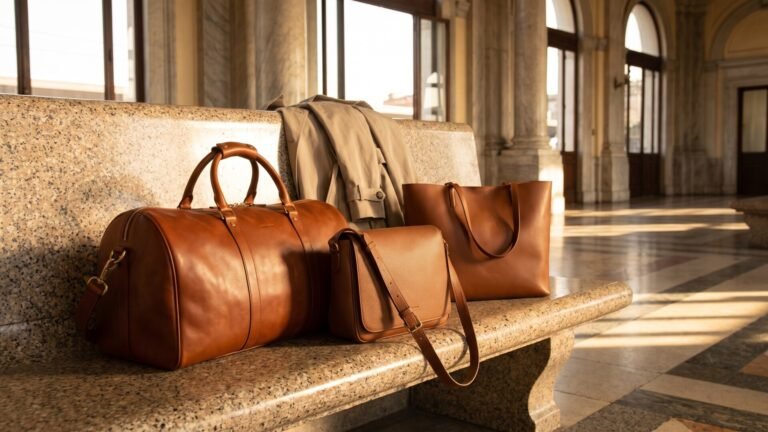
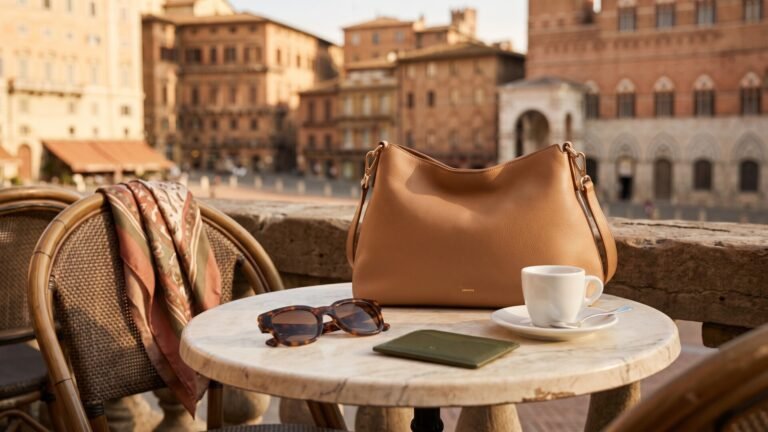
Italian handbags have a reputation for a reason. You carry them differently, you treat them differently, and when they are styled well they quietly tell people you know what you are doing: no shouting logos, no trend-chasing, just craft and judgement.
Styling one well isn’t about owning the most expensive bag in the room. It’s about balance, proportion, materials, and knowing when the bag should speak and when it should blend in. This guide covers how to choose a bag by lifestyle, which leather finish suits which day, how to get proportion and strap length right, how to style signature bags from Bottega Veneta, Prada, Gucci, Fendi and smaller makers, and how to look after a bag so it keeps looking good as it ages. If you are still choosing, start with our guide to the top Italian handbag brands for 2026 or the overview of Italian leather handbags; to know how a bag will hold up over the years, read why Italian leather bags last a lifetime.
First Things First: Italian Bags Are Built to Be Lived In
Many Italian handbags are made from natural leather that ages with use. Whether it’s smooth calfskin, pebbled leather, Saffiano or woven leather, these bags won’t stay perfect forever, and some finishes (vegetable-tanned leather especially) change more than others. Softening edges and slight colour shifts are character, not damage. If you treat your bag like museum glass, you miss the point: style comes from use.
Know Your Leather: How Material Changes the Way You Style a Bag
The finish of the leather decides how formal a bag looks and how it behaves with fabric. A few finishes come up again and again in Italian handbags:
- Saffiano: Prada’s cross-hatch pattern, pressed into the leather and finished with a wax-type coating. It is stiff, holds a crisp outline and tends to resist light scratches and water, which is why it suits tailoring and commuting. See our guide to Prada Saffiano versus the Gucci GG Marmont for a direct comparison.
- Nappa and smooth calfskin: soft, fine-grained leather with a quiet sheen. It drapes over the arm and pairs well with knitwear and fluid trousers, but it marks more easily than a coated finish.
- Woven leather (intrecciato): Bottega Veneta’s signature, made by interlacing strips of leather. The weave is the decoration, so keep the rest of the outfit plain and let the texture carry the look.
- Vegetable-tanned leather: tanned with plant tannins rather than chromium salts. It starts pale and firm, then darkens and softens with handling, so it rewards daily use. Our edit of vegetable-tanned leather purses under $500 is a good place to start.
- Suede: a velvety surface that suits autumn and winter dressing, but it needs more careful handling in rain. Our autumn suede bag edit covers the options.
If you want to understand where these differences come from, our explainer on how Italian leather is made walks through tanning and finishing.
Which Finish for Which Day
Most styling advice stops at the outfit. In practice the weather and the day’s wear matter just as much, because the wrong finish on the wrong day is how bags get marked. Before you pick a bag, check the forecast and how you will travel:
| Finish | Best days | Avoid | Pairs with |
|---|---|---|---|
| Saffiano / coated leather | Commutes, travel, light rain | Little; edges and corners still scuff | Tailoring, crisp shirting, outerwear |
| Nappa / smooth calf | Office, dinners, dry days | Crowded transit, rough wool coats rubbing one spot | Knits, silk, fluid trousers |
| Intrecciato (woven) | Light-carry days, weekends | Overstuffing, which strains the weave | Plain, solid-colour clothes |
| Vegetable-tanned | Everyday, casual | Rain and long direct sun on a new bag | Denim, linen, workwear |
| Suede | Dry autumn and winter days | Rain, snow, oily hands | Wool, cashmere, corduroy |
The rule that follows: keep one coated or Saffiano bag for bad-weather and heavy-carry days, and save the delicate finishes for days when you control the conditions.
The Golden Rule: Let the Bag Match the Lifestyle, Not the Outfit
A common mistake is styling a bag only for the outfit of the day. Choose it by how you are moving through the world instead. Ask yourself whether this is a full day out, whether you will walk a lot, whether you need your hands free, and whether the setting is casual, work or social. Function should lead, even when the bag looks elegant.
Everyday Casual: Making Luxury Look Effortless
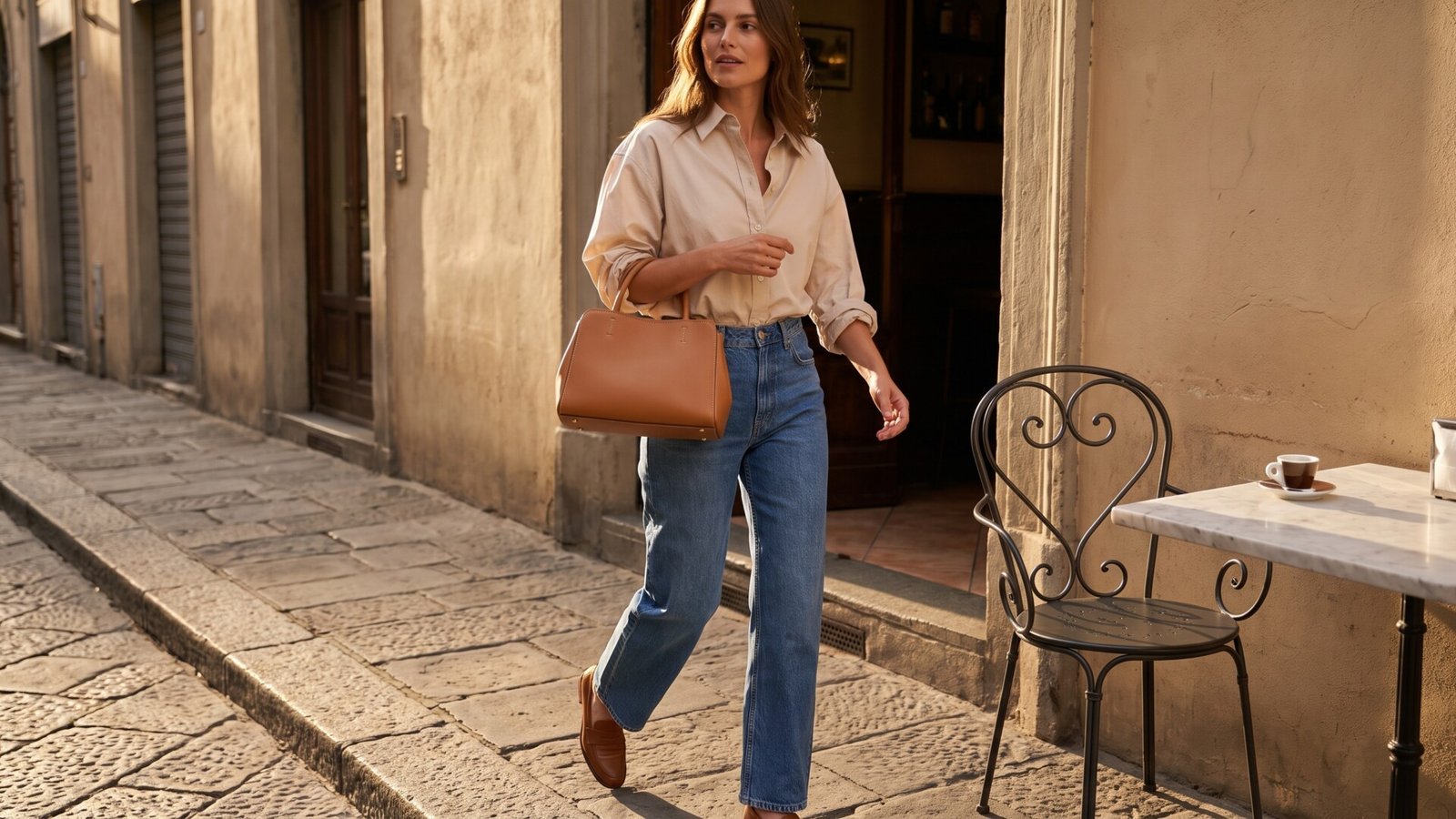
This is where Italian handbags shine. A structured leather bag with a clean silhouette lifts simple outfits: jeans and a white tee, a knit sweater and sneakers, tailored trousers with a relaxed shirt. The trick is contrast. When your clothes are relaxed, your bag should be polished; when your clothes are sharp, your bag can soften the look.
For casual styling:
- Stick to neutral tones like black, tan, brown, navy, or ivory
- Avoid oversized logos
- Choose mid-sized bags that don’t dominate the outfit
The goal is that people notice the bag after they notice the overall look.
Choosing a Silhouette: Tote, Shoulder, Crossbody, Bucket, Hobo or Mini
Shape matters as much as colour. Use this table to match the silhouette to how you dress and how much you carry, then follow the link for brand-by-brand picks.
| Silhouette | How it looks | Style it with | Best for |
|---|---|---|---|
| Tote | Open top, usually structured, carried by handles | Blazers, shirting, tailored trousers | Work days and carrying documents or a laptop |
| Shoulder bag | Sits at the hip or underarm; can be soft or structured | Denim, knitwear, relaxed tailoring | Everyday carry with a free hand |
| Crossbody | Long strap, compact body | Casual outfits, coats, travel looks | Walking days and hands-free errands (see shoulder vs crossbody) |
| Bucket | Rounded, drawstring or open top | Flowing skirts, linen, relaxed separates | Casual and weekend wear |
| Hobo | Slouchy crescent shape that softens with use | Simple knits, wide-leg trousers | Relaxed, comfortable everyday styling |
| Mini | Small and graphic, holds essentials only | Evening dress, monochrome outfits | Events and light-carry days (see mini vs full-size) |
Proportion and Strap Drop
Product pages list a bag’s width, height and “strap drop” (the distance from the top of the strap to the top of the bag). Those numbers tell you more about how a bag will look on you than any photo:
- Short drop (roughly 4–8 in): the bag sits tucked under the arm, like a Fendi Baguette. Best over fitted tops; bulky coats push it out of place.
- Shoulder drop (roughly 8–12 in): the bag rests around the waist and can be worn over a coat. This is the most versatile range for a first bag.
- Crossbody drop (roughly 20 in or more): the bag sits at the hip. Look for an adjustable strap if you will wear it over winter layers.
- Bag size and height: a petite frame is overwhelmed by a wide tote, while a tall frame can make a mini look like a keyring; our notes on Italian designer totes for tall women cover the larger end.
If you can, measure a bag you already like wearing and compare its numbers with the one you are considering. That single check prevents most “it looked different online” returns.
Workwear: Power Without Trying Too Hard
For work, structure matters. Clean lines, sturdy handles and leather that holds its shape send a message without saying a word. Match the bag’s structure to your tailoring: avoid slouchy bags with sharp suits and ultra-rigid bags with relaxed outfits.
- A tailored blazer → structured leather tote or top-handle bag
- Relaxed tailoring → soft leather shoulder bag
- Minimalist outfit → let texture do the talking
For a more detailed shortlist, see our guides to the best Italian designer work bags for women, Italian designer shoulder bags for work and Italian shoulder bags that hold a laptop. Check the interior dimensions against your laptop before you buy.
Evening & Events: Less Bag, More Presence
For nights out, weddings or dinners, the pro move is restraint. Choose smaller bags with clean hardware, rich textures like velvet, satin or smooth leather, and deep tones such as black, burgundy or emerald with gold accents. If your outfit is dramatic, the bag goes quiet; if your outfit is simple, the bag can add interest.
If you are shopping for an occasion, our guides to Italian evening and bridal bags and the best Italian handbags for the holidays cover the formal end of the range. Small bags are worth checking for capacity first: what actually fits inside a micro bag is often less than you expect, so decide what you need to carry before you commit to the look.
Colour and Texture: Harmony, Not Matching
Matching your bag exactly to your shoes looks dated. Italian styling thinks in colour families instead: warm tones work together, cool tones work together, and neutrals go with everything. A brown bag doesn’t need brown shoes, and a black bag doesn’t require black everything. Aim for similar undertones and visual balance across the outfit.
Texture is the other lever, and it separates considered styling from simply carrying a bag. Pebbled leather, woven leather, smooth calfskin and suede all add depth. Use the opposite of what you are wearing:
- Flat outfit → textured bag
- Textured outfit → smoother bag
Day-to-Night and Seasonal Switches
One great bag can do two jobs. For day-to-night, choose a medium-sized bag in a neutral colour with a removable strap and modest hardware. Wear it crossbody or on the shoulder during the day; in the evening, remove the strap and carry it by hand or under the arm.
Seasons work the same way. In spring and summer, lighter colours, softer leathers and relaxed shapes; in autumn and winter, darker tones, structured shapes and heavier textures such as suede and pebbled leather. You don’t need a new bag every season, just bags that adapt.
Styling Signature Bags From Italian Houses
Each house has a recognisable shape or material, and each one asks for a slightly different approach to the outfit around it.
Bottega Veneta
Bottega Veneta, founded in Vicenza in 1966, is known for the woven intrecciato technique. Because the weave already provides pattern and texture, it works best against smooth, solid-colour clothing: a plain knit, a straight coat, a pale shirt. Compare the two best-known woven shapes in Bottega Veneta Hop versus Jodie, and read whether Bottega Veneta is worth the price before you buy.
Prada
Prada’s Saffiano totes and the Galleria are structured, so they sit naturally with tailoring and clean-lined dressing. The nylon Re-Edition shoulder bags are the casual counterpart and look best with denim, simple tees and flat shoes. Our Prada Galleria versus Saffiano Lux and Re-Edition 2000 versus 2005 comparisons explain the differences, and the Prada brand page gives the wider picture.
Gucci
The GG Marmont and the Jackie are the two Gucci shapes most people ask about. The Marmont’s quilted leather and large GG hardware read as a statement, so keep the rest of the outfit simple. The softer, curved Jackie sits comfortably under the arm with relaxed tailoring. See the Jackie 1961 versus the 2026 reimagining, Dionysus versus Marmont and the Gucci brand page.
Fendi
The Baguette, introduced in 1997, was designed to be carried tucked under the arm, which is still the way to wear it: short strap, small body, an outfit with quiet lines so the bag is the single accent. Browse Fendi handbags, the Baguette 1997 re-edition and the Fendi brand page.
Quieter Italian makers
If you prefer minimal branding, look at Valextra for clean geometric shapes and Il Bisonte for soft, vegetable-tanned leather that darkens with use. Our guide to underrated Italian handbag brands covers more. Other houses worth a look for specific styling needs include the Ferragamo Hug bag, the Valentino V Logo tote, the Tod’s Di Bag and the Dolce & Gabbana Sicily bag.
Men Styling Italian Leather Bags
Men have carried leather bags for as long as there have been briefcases. The rules are the same, only stricter: keep it simple, avoid flashy logos and put function first. Crossbody bags, leather briefcases and structured totes work best when the outfit is clean and the fit is sharp, so the bag looks chosen rather than added.
For commuting and travel, a leather backpack is often more practical than a briefcase; see our picks of affordable Italian leather backpacks for business travel and the best Italian travel bags by price range. A belt in a similar leather tone ties the look together without matching exactly: our guide to affordable Italian designer belts for business attire is a good companion, and the broader must-have Italian accessories for 2026 list covers the rest.
The “Quiet Luxury” Approach
Italian makers have built much of the quiet luxury look, with logo-free bags that rely on cut and material. Quiet luxury styling means no obvious branding, careful proportions, good materials and confidence over attention. Done well, people ask “what bag is that?” instead of recognising it instantly.
To see why the idea took off, read why quiet luxury became a global trend. For a practical comparison of a woven and a logo bag, see Bottega Veneta intrecciato versus Gucci Marmont, and for how the two houses are perceived on the resale market, see Gucci versus Prada for brand reputation and resale value. Resale values vary by model, condition and year, so treat any figure as a snapshot rather than a guarantee.
Keeping a Bag Looking Good: Care That Supports Your Styling
A well-styled bag still needs to look cared for. Using a bag daily is fine, but a few habits make the difference between pleasing wear and avoidable damage:
- Condition natural leather occasionally. Smooth and vegetable-tanned leathers benefit from a suitable conditioner; test it first on an inconspicuous area. Coated finishes such as Saffiano usually need much less. Our guides on the best leather conditioner for Italian designer goods and how often to condition high-end Italian leather go into detail.
- Know what patina is, and what it is not. Darkening and softening are normal on natural leather; see restoring the patina on natural Italian leather bags if you want to even out wear.
- Deal with stains early and gently. Ink on a pale Saffiano bag is a common problem; our guide on removing ink stains from Prada Saffiano leather sets out cautious steps, and valuable pieces are safer with a professional.
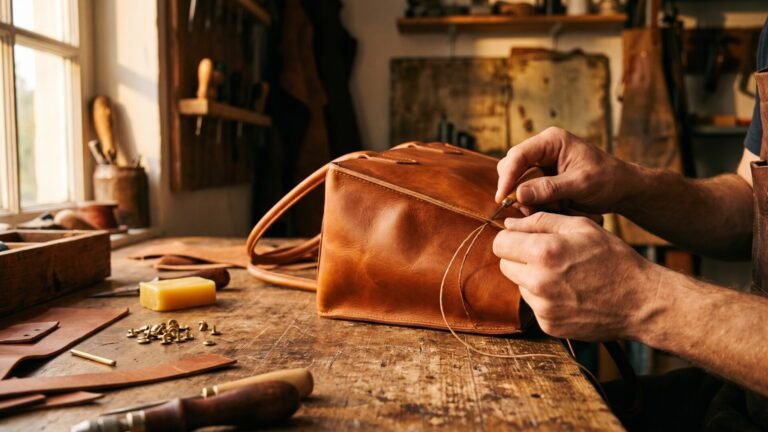
- Repair, do not retire. Torn linings, loose stitching and worn edges can often be repaired; read can you repair a ripped lining in a designer bag before deciding a bag is finished.
- Stuff and store it properly. Keep the shape with acid-free paper or a soft insert, use the dust bag, and avoid hanging a heavy bag by its strap for long periods.
Common Styling Mistakes to Avoid
- Over-accessorising around the bag. A statement bag plus statement jewellery plus a printed scarf leaves nothing for the eye to rest on.
- Wearing two logo pieces at once. One recognisable monogram is a choice; two start to look like an advertisement.
- Taking a delicate finish into a high-wear day. Suede at a festival or pale nappa on a packed commute ends in marks; see the finish table above.
- Buying from photos alone. Ignoring the dimensions and strap drop is the most common reason a bag ends up unworn.
- Treating luxury as fragile. A bag kept in its dust bag is not being styled at all.
Building a Smart Italian Handbag Rotation
You don’t need ten bags; three or four cover most situations if each does a different job:
- One structured everyday bag, ideally in a coated or Saffiano finish for bad-weather days
- One relaxed casual bag in a softer leather
- One evening or event bag
- Optionally, one seasonal statement piece
If you are building the rotation from scratch, the top Italian handbag brands and best Italian shoulder bags for everyday luxury are good starting points, and Italian leather shoulder bags under $1,000 lists options at a lower budget. Anything beyond that is collecting, which is fine, but it’s a different game.
Confidence Is the Final Touch
The best-dressed people don’t constantly adjust their bag or worry about scuffs. They pick the right bag for the day, then forget about it. Italian handbags are made to follow your rhythm, not interrupt it: carry yours like it belongs there, and it will.
Frequently Asked Questions About Styling Italian Handbags
Which handbag colour goes with the most outfits?
Black is the safest for formal and evening wear, but a mid-brown such as tan or cognac often works with more everyday outfits, because it sits well with denim, navy, grey, white and camel. If you can only own one bag, choose the neutral that matches the coats and shoes you wear most.
Can you wear a crossbody bag over a coat?
Yes, as long as the strap is long enough to sit at the hip without pulling the coat out of shape. An adjustable strap helps between seasons. Over heavily textured wool or shearling, a leather strap can rub one spot, so move it around or carry the bag on the shoulder on those days.
Can I wear a logo bag with a quiet-luxury outfit?
Yes, if the bag is the only branded piece. Quiet luxury is about restraint overall, not a ban on logos, so a monogrammed bag with plain, well-cut clothes reads as deliberate. Pairing it with logo shoes or a logo belt is where the look tips over.
Is it better to buy a structured or a slouchy bag first?
For most people, structured. It works with tailoring and casual clothes, holds its shape on a desk or a restaurant chair, and looks newer for longer. A slouchy hobo or bucket is easier to add later, once you know which gap in your wardrobe it fills.
Should a handbag match your belt?
Not exactly. A belt in the same colour family and a similar leather finish ties a look together, while an exact match can look formal or dated. For work, keep the hardware tones consistent, gold with gold or silver with silver, which matters more than matching the leather shade.