Top Italian Handbag Brands for 2027
Searching for Italian handbag brands usually returns the same dozen names. This guide covers those houses and the quieter makers that deserve a place beside them: the signature bags each one is known for, what the materials and construction actually are, and which kind of buyer each brand suits. It is not a ranking, because the right bag depends on whether you want a recognisable icon, a discreet signature, or leather that ages with you. For the wider category, start with our Italian Designer Handbags guide.
Going into 2027, two things are worth knowing. Several of the big houses have new creative directors since 2025, so their bag lines are shifting; and the move away from loud logos toward construction and material has helped smaller makers in Tuscany and Lombardy. This is a research-based guide, not a record of hands-on testing, so where a detail comes from a brand’s own description we say so.
Italian Handbag Brands at a Glance: Craftsmanship Strengths and Watch-Outs
Most brand lists stop at “known for”. The table adds what each house does well in construction terms and the one thing to check before you buy, so you can compare craftsmanship rather than reputation.
| Brand | Founded | Signature | Craftsmanship strength | Watch-out |
|---|---|---|---|---|
| Gucci | 1921, Florence | GG, horsebit, bamboo, Web stripe | Archive shapes and durable coated canvas | Quality varies a lot between lines |
| Prada | 1913, Milan | Saffiano leather, Re-Nylon | Scuff-resistant coated leather for daily use | Deep cuts in the coating cannot be blended away |
| Bottega Veneta | 1966, Vicenza | Intrecciato weave | Visible hand-weaving, no logo | Woven surfaces snag; soft styles sag |
| Valentino | 1960, Rome | Rockstud, VLogo | Structured shapes with distinctive hardware | Studs scratch other items |
| Fendi | 1925, Rome | Baguette, Peekaboo, Selleria | Hand saddle-stitching on Selleria lines | Most-imitated shapes; buy from documented sources |
| Dolce & Gabbana | 1985, Milan | Sicily bag | Decorative, hand-finished special series | Printed versions date quickly |
| Salvatore Ferragamo | 1927, Florence | Gancini, Vara bow | Understated leather work from a shoe house | Less recognisable, so weaker resale |
| Versace | 1978, Milan | Medusa, Greca | Heavy, bold hardware | Plating wear on gold-tone metal |
| Serapian | 1928, Milan | Mosaico woven nappa | Artisan-signed woven pieces | Limited store network |
| Valextra | 1937, Milan | Black Costa edges, no logo | Hand-lacquered edges, lifetime repair service | Smooth calf shows marks |
| Il Bisonte | 1970, Florence | Vegetable-tanned leather | Leather that darkens and softens with use | Water-spots; looks plain when new |
| The Bridge | 1969, Scandicci | Full-grain Tuscan leather | Finished, established look from day one | Heavier, structured bags |
| Furla | 1927, Bologna | Accessible pricing | Neat, efficient construction | Check the “Made in” label per bag |
Gucci
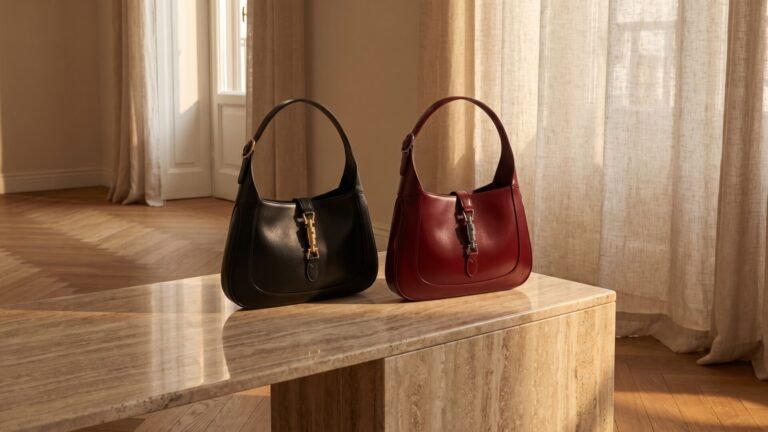
Gucci was founded in Florence in 1921 by Guccio Gucci and has belonged to Kering since 1999. After Alessandro Michele (2015–2022) and Sabato De Sarno (2023 to February 2025), Demna was appointed creative director in March 2025. Its bags are built around recognisable codes: the GG, the horsebit, bamboo handles and the green-red-green Web stripe. Key bags are the Dionysus (a structured shoulder bag with a tiger-head spur closure, from the Fall 2015 collection), the quilted GG Marmont, the coated-canvas Ophidia, the Jackie 1961 hobo and the Horsebit 1955. Archive shapes such as the Jackie and Horsebit tend to outlast any one designer’s era; see Gucci Jackie 1961 vs the newer Jackie versions.
Choose the surface first. Coated canvas tolerates rain, keys and crowded commutes; quilted matelassé leather is softer and dressier, but the raised quilting is where edges rub first. Read Gucci vs Prada for brand reputation and resale value before treating any bag as a store of value, and see our Gucci brand guide for the house itself.
Prada
Prada was founded in Milan in 1913 by Mario Prada, who is credited with patenting Saffiano that year; Miuccia Prada has shaped the label for decades. Its bags are the practical end of Italian luxury. The Galleria is a structured Saffiano top-handle bag; on Prada’s US site in November 2026 the small was $4,800 and the medium $5,100. The Re-Edition 2000 and 2005 revive 1990s and 2000s nylon shapes; the Re-Nylon Re-Edition 2000 mini-bag was $1,320 and the Re-Edition 2005 $2,250 on the same site. Only styles labelled Re-Nylon use Prada’s regenerated nylon. The Cahier is a structured shoulder bag the house presents as a nod to vintage notebooks.
Saffiano’s pressed, coated finish resists scuffs and light moisture better than untreated calf, which is why Prada totes suit office use; we compare it in Prada Saffiano vs Gucci GG Marmont. Our Prada brand guide has the full history.
Bottega Veneta
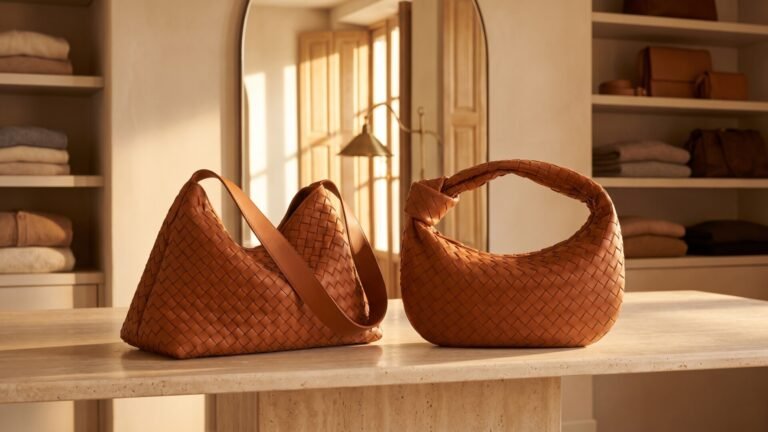
Bottega Veneta was founded in Vicenza in 1966 by Michele Taddei and Renzo Zengiaro and has been part of Kering since 2001. Its identity rests on the intrecciato weave, strips of leather woven by hand, and on the absence of an outward logo. After Tomas Maier (2001–2018), Daniel Lee (2018–2021) and Matthieu Blazy (2021–2024), Louise Trotter was announced as creative director in December 2024. Key bags include the gathered-leather Pouch, the padded Cassette crossbody, the slouchy Jodie and the woven Andiamo, which we price-check here.
The weave is not identical across models: the Cassette uses a grid of stiffer strips with small gaps, while the Pouch uses a denser, more supple weave. Compare strip width and stiffness rather than assuming equal durability. See our Bottega Veneta guide and intrecciato vs the Gucci Marmont.
Valentino
Valentino was founded in Rome in 1960 by Valentino Garavani and Giancarlo Giammetti. Its accessories are known for the pyramid-shaped Rockstud, introduced in 2010, on structured totes and shoulder bags, plus the compact Locò chain bag and VLogo styles. Alessandro Michele has led the house since 2024. Studs can scratch other items, so store the bag upright in its dust bag. Background is in our Valentino guide.
Fendi
Fendi was founded in Rome in 1925 by Adele and Edoardo Fendi as a fur and leather shop and has been controlled by LVMH since the early 2000s. Maria Grazia Chiuri was appointed chief creative officer in October 2025, after Silvia Venturini Fendi became honorary president. Silvia Venturini Fendi designed both signature bags: the Baguette (1997), a small bag carried under the arm, and the Peekaboo (runway 2008, in stores spring 2009), with a front opening that reveals a second compartment. The Kan I has an F-shaped clasp, and the softly curved Croissant ranged from about $1,900 to $3,750 on Fendi’s US site in October 2026, when Baguettes ran from about $3,100 to $6,300.
If construction matters more than the logo, look at the hand-stitched Selleria line. Because the Baguette is so widely imitated, buy from the brand or a documented reseller. See the Fendi brand guide, Fendi handbags and Fendi Baguette vs Dior Saddle.
Dolce & Gabbana
Founded in Milan in 1985 by Domenico Dolce and Stefano Gabbana, the house makes bags that often draw on Sicilian imagery. The structured Sicily top-handle bag comes in many leathers and prints, alongside the quilted Devotion and the compact DG Millennials. Plain leather versions work with more outfits; printed ones date faster. See the Dolce & Gabbana brand guide.
Salvatore Ferragamo
Salvatore Ferragamo opened his Florence business in 1927; the house is known first for shoes, then for bags that grew from that leather expertise. Look at the Vara Bow bag (its grosgrain bow echoes the 1978 Vara pump), the structured Studio Bag and the sculpted Hug bag, reviewed here, with the Gancini hook as hardware across the range. The bags are understated and work well with business clothes. See the Ferragamo brand guide.
Versace
Gianni Versace founded the house in Milan in 1978. Prada Group completed its acquisition of Versace from Capri Holdings on 2 December 2025, according to press reports, so the house now sits in the same group as Prada and Miu Miu. Dario Vitale left as creative director in December 2025 after a single season, and Pieter Mulier, previously at Alaïa, joined as chief creative officer on 1 July 2026, so expect the bag line to shift once his collections reach stores. Current bags include La Medusa, the Greek-key Greca Goddess and the Pivot, for buyers who want gold-toned hardware and a clear logo. See the Versace brand guide.
Serapian
Serapian was founded in Milan in 1928 by Stefano Serapian, an Armenian-born craftsman, and is listed among Richemont’s maisons. Its signature is Mosaico, a hand-woven weave of lamb nappa strips that Stefano Serapian introduced in 1947; each Mosaico piece carries an inner tag signed by the artisan who made it, and a bespoke service is led by Giovanni Nodari Serapian, a third-generation family member. Like Bottega Veneta it sells woven leather without an outward logo, but in softer lamb nappa rather than calf. The brand says its pieces are made entirely in Italy.
Valextra
Valextra was founded in Milan in 1937 by Giovanni Fontana; the name combines “valigia” (suitcase) and “extra”. It is the house most often named for quiet luxury in Italian leather. Key bags are the Brera (1950s), the Tric Trac (a patented 1967 design inspired by camera cases), the Iside (2011), the Serie S (1961, relaunched 2019) and the 24 Ore, which won a Compasso d’Oro at the award’s first edition in 1954. Bags are mainly calfskin with hand-applied black Costa lacquered edges, carry an embossed serial and artisan number, and come with lifetime cleaning and repair, which matters because painted edges are where structured bags show wear first. See our Valextra guide.
Il Bisonte and The Bridge
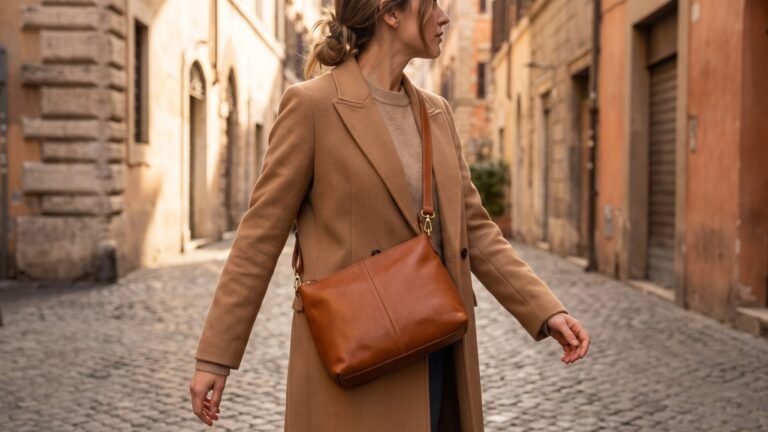
Il Bisonte was founded in Florence in 1970 by Wanny Di Filippo and his wife Nadia. It has used vegetable-tanned, full-grain leather since the 1980s and says all production stays within 30 km of Florence. Its crossbodies, unlined totes and soft hobos look plain when new; the appeal is how the leather darkens and softens with use. That suits buyers who want a natural patina at a lower price, and not anyone who wants a bag to look the same in five years.
The Bridge began in 1969 as Il Ponte Pelletteria, took its current name in 1975 and moved manufacturing to Scandicci, near Florence, in 1987. It works with full-grain, vegetable-tanned Tuscan leather and describes its look as “Anglo-Tuscan”. Where Il Bisonte starts plain and earns its character, The Bridge suits buyers who want a bag that looks established from day one.
Lieta Milano, San Rocco Italia and Their Alternatives
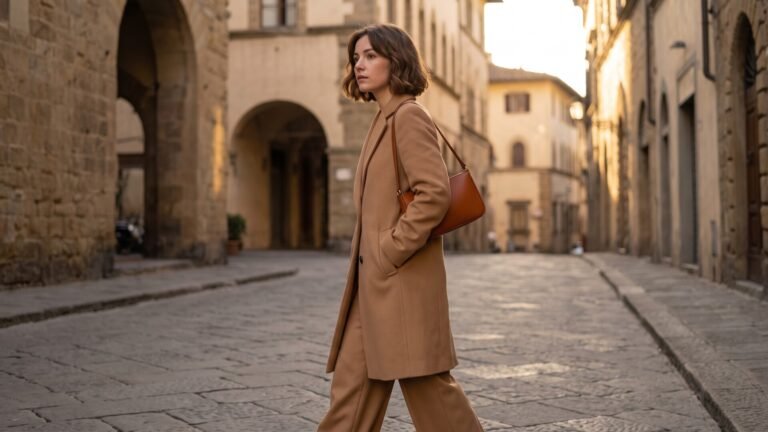
Lieta Milano is a small direct-to-consumer label that describes itself as Milanese but says its bags are cut and stitched in the Florence leather district, around Scandicci. It does not publish a founding date or its founders’ names, so the details here come from its own site. The range is small (the Abbraccio, Lungo, Mercato and Piazza), priced in November 2026 at €255-€295, roughly $285-$335. The brand says its main leather is Walpier Buttero, a full-grain, vegetable-tanned calf dyed through the hide, with brass hardware plated in Arezzo, and that it hand saddle-stitches load-bearing points such as handle attachments while machine-stitching long seams. It sells only online in small drops that go to a waitlist first.
San Rocco Italia is an online leather-goods retailer founded in 2019 and based in Mulazzo, in northern Tuscany. It says it works with established Italian leather specialists and “selected European makers”, so check each product page for where that bag was made.
The trade-off with both is track record: newer online labels cannot offer the store network, repair service or resale history of an established house. If what appeals is Tuscan leather without major-house pricing, these established makers cover the same ground:
- Il Bisonte: the closest match on leather, vegetable-tanned and left to darken, from a Florentine house operating since 1970.
- The Bridge: also made in Scandicci in full-grain Tuscan leather, with a more finished look.
- Campomaggi: a more rugged, washed-leather take at a mid-range price.
- Furla and Coccinelle: smoother, more polished leather and wide availability in department stores, if you would rather see a bag before buying.
More Italian Handbag Brands Worth Knowing
Tod’s is best known for the Gommino driving shoe, with a bag range led by the Di Bag (see Tod’s Di Bag vs The Row Margaux). Sara Battaglia offers fringe and colour at mid-range prices, and Loro Piana, Brunello Cucinelli and Moschino are clothing-led houses that also make bags. Our list of underrated Italian handbag brands goes further, emerging and niche Italian designers covers newer names, and top Italian leather brands surveys leather-led labels. If you are weighing Paris against Milan, our sister site covers the best French handbag brands, and Italian vs French fashion explains the difference in approach.
Signature Bags Compared: Materials, Hardware and Trade-offs
Dimensions differ by size and season, so the table compares character rather than centimetres; take exact measurements, empty weight and strap drop from the brand’s product page.
| Bag | Main material | Shape and construction | Best for | Trade-off |
|---|---|---|---|---|
| Prada Galleria | Saffiano, a pressed and coated calf leather | Structured top-handle bag that holds its shape | Office and daily carrying | Deep cuts are hard to disguise |
| Gucci GG Marmont | Quilted matelassé leather | Soft chevron quilting with a flap and double-G plate | Dressier everyday wear | Raised quilting shows scuffs earlier |
| Gucci Ophidia | Coated GG canvas with leather trim | Lighter bag with Web stripe | Low-maintenance daily use | Canvas cannot be conditioned like leather |
| Bottega Veneta Cassette | Intrecciato leather | Padded, woven crossbody | Logo-free, texture-led style | Woven surface can snag |
| Bottega Veneta Jodie | Soft intrecciato leather | Slouchy shoulder bag with a knotted handle | Comfortable shoulder carrying | Can sag under heavy loads |
| Fendi Baguette | Leather, jacquard or other fabrics | Small bag worn under the arm | Collectors of an established silhouette | Small capacity, widely imitated |
| Valentino Locò | Leather | Compact shoulder bag with a metal chain | Evening and light daytime use | Metal fittings can scratch |
| Ferragamo Vara Bow | Leather | Understated shape with a grosgrain bow | Business clothing | Less instantly recognisable |
Leathers, Price Tiers and What You Are Paying For
The same shape behaves very differently depending on the surface. Saffiano is calfskin hot-pressed into a crisscross pattern and wax-coated: stiff, scratch-resistant and easy to wipe. Intrecciato is a construction method, not a tannage; woven leather conceals light marks, but snags are harder to repair than a scratch. Matelassé is quilting, soft and dressy, with raised points that abrade first. Vegetable-tanned leather darkens with sun and handling and shows water spots, while chrome-tanned leather stays more uniform; neither is better. Prada’s technical nylon is light and weather-tolerant, with wear showing first on the trim. Our Italian leather handbags guide, how Italian leather is made and Italian leather craftsmanship go deeper.
On price, Furla, Coccinelle, The Bridge and Il Bisonte form the accessible entry tier; Campomaggi, Sara Battaglia and Tod’s sit above it; Gucci, Prada, Fendi, Valentino, Dolce & Gabbana, Versace and Ferragamo are the major houses, where a large share of the price is the name and the hardware; and Bottega Veneta, Valextra, Serapian and Loro Piana are the logo-free top end, where the argument is material and labour. Inside each major house the range is wide, so a canvas or nylon bag and a hand-finished leather bag from the same label are very different purchases. Vegetable-tanned purses under $500 narrows the choice by budget, and 10 best Italian designer handbags to invest in covers the upper end.
Whatever the name, open the bag before you pay. Stitching should be even and dense where handles attach and at the corners; edge paint should be smooth or edges neatly turned; the lining should be tightly attached; hardware should feel solid rather than thinly plated; and the bag should not feel heavy when empty. A “Made in Italy” label applies per product, so check the label on the exact bag, and see handmade vs mass-produced Italian fashion for what the label does and does not tell you.
Which Italian Bag Brand Should You Choose?
- You want a recognisable icon: Gucci, Prada or Fendi, ideally an archive shape that outlasts any one designer.
- You want a discreet, logo-free bag: Bottega Veneta, Valextra or Serapian.
- You want leather that ages, on a more modest budget: Il Bisonte or The Bridge.
- You need a hard-wearing work or travel bag: Prada for coated leather and nylon, Ferragamo or Valextra for understated structure.
- You are about to buy at a new creative director’s debut: wait a season, or choose a long-running shape, since bag lines shift after a change at the top (Gucci, Fendi and Versace all changed in 2025-2026).
Then match the shape to the job with our guides by bag type: shoulder bags, crossbody bags, tote bags, hobo bags, bucket bags, mini bags, evening and bridal bags, work bags and travel bags. For specific needs, see designer work bags for women, affordable Italian leather backpacks for business travel, bags every wardrobe needs, Italian suede bags, designer straw bags and Golden Goose Super-Star vs Ball Star if you are pairing a bag with Italian sneakers.
Caring for, Authenticating and Repairing Italian Handbags
Store bags in their dust bags, lightly stuffed with acid-free paper, upright and away from damp and direct sun. Wipe Saffiano with a barely damp cloth, expect vegetable-tanned leather to darken, avoid aggressive polishing of plated hardware, and test any conditioner on a hidden area first. Our guides to caring for Italian leather goods, the best leather conditioner and restoring the patina on natural leather bags cover the details.
No checklist can prove a bag is genuine from photographs, and counterfeiters copy stitching and date codes. The safest protection is the source: buy new from the brand or an authorised retailer, and for pre-owned bags use a platform that authenticates each item and has a clear return policy. Be cautious when a price is far below the market for that model or a seller will not provide close photographs of the interior, hardware and labels. Our guide to spotting authentic Italian designer pieces covers the principles; keep dust bags, receipts and care cards for resale and repairs.
Brand boutiques commonly offer repair or refurbishment, with Valextra’s lifetime service the most explicit among the houses here. Independent leather specialists can often restitch seams, replace zips and recolour edges on conventional leather; woven, quilted and heavily hardware-led bags are harder to work on. A bag with simple construction and standard parts is usually the easiest to keep in service, which is one reason a plain structured tote often outlasts a trend-led design. See repairing a ripped lining for what is realistic.
Frequently Asked Questions About Italian Handbag Brands
Which bag brands are based in Italy?
The major Italian handbag houses are Gucci (Florence), Prada (Milan), Bottega Veneta (Vicenza), Fendi and Valentino (Rome), Dolce & Gabbana, Versace, Valextra and Serapian (Milan) and Ferragamo (Florence). Smaller Italian makers include Il Bisonte and The Bridge (Florence area), Furla (Bologna), Tod’s, Coccinelle and Campomaggi. Several are owned by foreign groups, but their design bases remain in Italy.
Are all bags from Italian brands made in Italy?
No. “Made in Italy” is a per-product label, and some Italian brands produce certain lines or components elsewhere. The big houses make most of their leather bags in Italy, often in the Tuscan leather district around Florence, but always check the label and product page of the exact bag rather than assuming it from the brand name.
Who owns Gucci, Bottega Veneta, Fendi and Versace?
Gucci and Bottega Veneta belong to the French group Kering, Fendi and Loro Piana to LVMH, and Serapian to Richemont. Versace was acquired by the Italian Prada Group in December 2025, while Ferragamo and Dolce & Gabbana are still controlled by their founding families. Ownership changes, so check the latest company reports before relying on it.
What is a good Italian bag brand for a first luxury purchase?
Furla and Coccinelle are the usual first steps: recognisable, widely stocked and far cheaper than the major houses. If you want a major-house name, a long-running shape such as Prada’s Re-Edition in nylon or a canvas Gucci style costs less than leather icons and is easier to look after.
Are Italian handbags a good investment?
Treat them as purchases, not investments. Classic shapes in neutral colours from Prada, Gucci, Fendi and Bottega Veneta tend to resell more easily than seasonal styles, but prices depend on condition, demand and the original paperwork, and many bags resell below retail. Buy one you will use for years.
Does vegetable-tanned leather suit a rainy climate?
It needs more care. Vegetable-tanned leather, as used by Il Bisonte and The Bridge, marks and darkens when wet, so blot rain promptly and let it dry away from heat. In a wet climate, Prada’s Saffiano, coated canvas or nylon will cope with daily rain with far less attention.