Italian leather jacket brands known for durability
The Italian leather jacket brands that tend to last are usually small specialists rather than the biggest fashion names: houses that choose their hides carefully, finish seams and linings well, and will repair what they sell. This guide ranks no one on guesswork. It compares Stewart, Rifugio, Valstar, Giorgio Brato and Luca Faloni, explains where the large houses and two non-Italian performance names fit, and shows you how to judge durability yourself, whether the label says Florence, Naples, Milan or Bologna.
It is part of our Italian leather jackets guide, within Italian designer clothing. Prices below are approximate and come from press coverage and retailer listings converted to US dollars; confirm current figures before buying.
Italian Leather Jacket Brands at a Glance
| Brand | Based in / founded | Known for | Read more |
|---|---|---|---|
| Stewart | Florence, 1975 | Hand-tanned leathers treated with olive oil, Vin Santo and Brunello wine; biker and bomber styles | Stewart guide |
| Rifugio | Naples; Alfredo Rifugio has made leather jackets for 50+ years | Soft suede, deerskin and goatskin jackets with a large share of hand finishing | Rifugio guide |
| Valstar | Milan, 1911 | The Valstarino suede bomber, introduced in 1935 | Valstar guide |
| Giorgio Brato | Bologna, 2001, founded by Giorgio Braschi | Washed, patinated nappa leather jackets | Giorgio Brato guide |
| Luca Faloni | Veneto production | Goatskin suede bomber with cashmere hem, the brand’s first outerwear | Luca Faloni guide |
What Makes a Leather Jacket Last
Before the brands, here is a framework you can apply to any jacket. We are describing general leather practice, not testing these jackets ourselves.
Grain and thickness. Full-grain leather keeps the strong outer layer of the hide, while corrected-grain leather is sanded and coated. Full-grain develops a patina over time rather than cracking at the surface, though a jacket’s thickness and the animal matter as much: heavy cowhide is stiffer and more abrasion-resistant than light lambskin, which is softer but wears faster.
Tanning. Chrome tanning, developed in the 19th century, is fast and gives uniform, supple leather. Vegetable tanning uses plant tannins, takes far longer and tends to give firmer leather that darkens as it ages. Neither is automatically better for a jacket: lighter garment leathers are very often chrome- or combination-tanned, so ask a brand how a specific jacket was tanned rather than assuming.
Construction. Look at the seams, the stitch length, the way the lining is attached and whether stress points such as the underarms, collar and zipper ends are reinforced. Hand finishing can improve fit and detail, but good machine stitching is not inherently weak.
Hardware and linings. Check the zipper, snaps and buttonholes for smooth action, and look for linings that are sewn neatly and will not tear easily. A jacket with a poor lining can fail long before the leather does.
“Made in Italy.” This label applies product by product and tells you where the final significant production steps took place, not necessarily where the hides were tanned. If origin matters, ask the brand where the leather was tanned and where the jacket was cut and sewn.
The Florentine Standard
Stewart: Florence, Since 1975
Stewart was founded in Florence in 1975 and has made leather jackets since its start. The brand’s Pitti Immagine Uomo profile describes production and raw materials as 100% Italian, with leathers that are hand-tanned and treated with Italian olive oil, Vin Santo and Brunello wine, and says its garments are designed to last and age gracefully. Those are the brand’s own descriptions of its process.
The practical appeal is leather with visible character: treated hides that are meant to show wear and darken in use rather than staying uniform. Stewart’s presence at Pitti Uomo, the Florence menswear trade fair, shows it is an established name in the trade.
Best for: buyers who want a lived-in leather jacket with Italian provenance and do not mind a jacket that looks worn from the start.
Check our Stewart profile here
The Neapolitan Artisans
Rifugio: Naples
Rifugio is the label of Alfredo Rifugio, a Neapolitan leather jacket tailor who began at 13 and has worked at the trade for more than fifty years; his son Alfonso moved the business from contract manufacturing into the family’s own brand. Production is in Naples. Press coverage from The Rake and Permanent Style describes much of the finishing as done by hand, particularly on winter pieces, while noting that more of the range is now machine-made as the tailoring team has grown.
Rifugio works in goatskin (including baby goatskin suede), deerskin, calf, exotic skins and shaved lightweight suede. Permanent Style also reports that Alfredo was at one point commissioned to make a white piece for the Pope, which refers to his earlier career rather than to a claim by the label itself. Treat the story as press-reported background, not as a measure of durability.
Approximate pricing: UK retail coverage listed short suede jackets at about £1,300 to £1,500 and hand-worked pieces around £2,200, which is roughly $1,700 to $2,900; deerskin costs more, and prices have since changed.
Best for: buyers who want soft suede and leather jackets with a high share of handwork.
Take a look at the Rifugio brand article
The Milanese Icon
Valstar: Milan, Since 1911
Valstar was founded in Milan in 1911. In 1935 it introduced the Valstarino, an Italian-style take on the American A-1 military flight jacket with a cleaner cut, adapted for civilian wear.
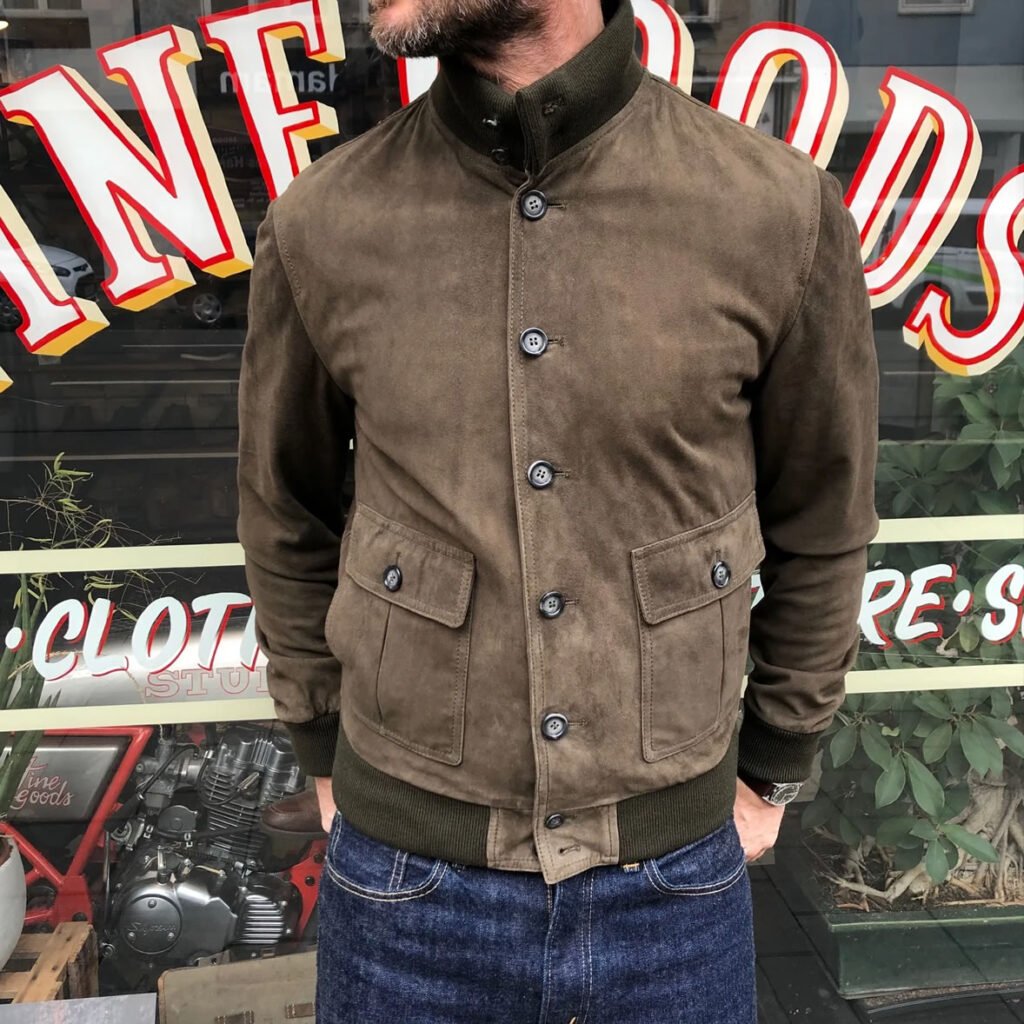
Press coverage describes the Valstarino as made in goat suede with horn buttons instead of a zip, two flap pockets, and knitted cuffs and waistband, with a stand-up collar in cotton, wool or cashmere depending on the season. Goat suede is a good choice for a casual jacket because it is lighter and more flexible than cowhide, though suede of any kind is more vulnerable to water and stains than smooth leather. Our suede care guide covers the basics of protection.
Best for: buyers who want a classic bomber silhouette with more than a century of brand history behind it.
Check the Valstar brand profile here
The Quiet Craftsmen
Giorgio Brato: Bologna
Giorgio Brato is the label of designer Giorgio Braschi, who grew up around leather and launched high-end leather jackets in 2001 in Bologna. The house favors artisanal methods, soft nappa leather and patinas created with specific dyes, and it says the leather is meant to adapt to the wearer’s body over time. Linings are mainly organic cotton, according to press coverage.
A pre-worn, washed look has a durability consequence worth knowing: because the surface is already softened and patinated, small scuffs and creases blend in rather than looking like damage, which many wearers prefer. It also means the jacket will not look crisp.
Best for: buyers who want a jacket that looks broken in from day one.
Check out more about Giorgio Brato here
The Slow Luxury Specialists
Luca Faloni
Luca Faloni is known for knitwear and linen, and its goatskin suede bomber marked the brand’s first foray into outerwear. Wallpaper reports that the jacket is crafted by artisans in the Veneto region, made from goatskin suede with a soft brushed finish and a pure cashmere hem, and launched in navy and hazelnut brown at £1,625 (roughly $2,100 at the time). Goatskin is a sensible material for a lightweight jacket because it is relatively flexible and abrasion-resistant for its weight, but it is still suede and needs protection from rain.
Best for: minimalist wardrobes that already include Luca Faloni knitwear and want a matching bomber.
Find out all about Luca Faloni here
The House Names to Compare
Big houses such as Gucci, Prada and Armani make well-regarded leather jackets, and you are partly paying for design and brand. That does not make them weaker; it means durability should be judged garment by garment, not by name. Read about Giorgio Armani’s influence on Italian fashion for the design background.
Ermenegildo Zegna is better known for tailoring but offers leather outerwear aimed at business settings, where refinement matters as much as ruggedness. Bottega Veneta is known for woven intrecciato leather and a logo-light look, and Brunello Cucinelli for soft leathers in earthy palettes. For a hardier outerwear alternative from a technical Italian house, see Herno.
Performance Names Worth Knowing
Belstaff is a British brand, founded in 1924 in Longton, Staffordshire, not an Italian one. It had Italian owners for part of its history, including Franco Malenotti’s Sponsor from 2004, but it was acquired by the UK brand Castore in August 2025, and we could not confirm where its jackets are made today. We mention it only because its waxed cotton and leather jackets are often compared with Italian options.
Dainese is an Italian specialist in protective motorcycle gear, including leather jackets with integrated armor. If you ride, a purpose-made protective jacket is the correct choice; fashion leather jackets do not offer the same impact or abrasion protection.
How to Choose by Use
- Daily wear in mixed weather: choose smooth leather over suede; ask for a jacket with a lining suited to your climate.
- Smart casual and office: a suede bomber such as the Valstarino or Luca Faloni jacket sits better with tailored trousers than a heavy biker.
- Worn-in, rugged look: Stewart and Giorgio Brato are the closest matches.
- Soft handwork: Rifugio is the one to look at.
What You Are Paying For
At the low end, a jacket in corrected-grain leather with a basic lining may cost a few hundred dollars and show wear sooner. The specialists above sit roughly in the $1,500 to $3,000 range for suede and leather jackets, based on the figures cited, and the premium buys better hides, more hand finishing and a brand that can repair what it sells. Houses with larger marketing budgets add a brand premium on top. We cannot give you a lifespan in years because it depends on use, climate and care.
How to Make Them Last
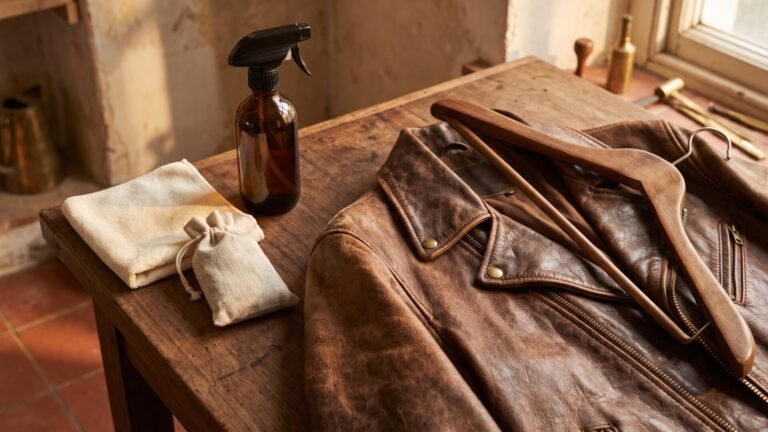
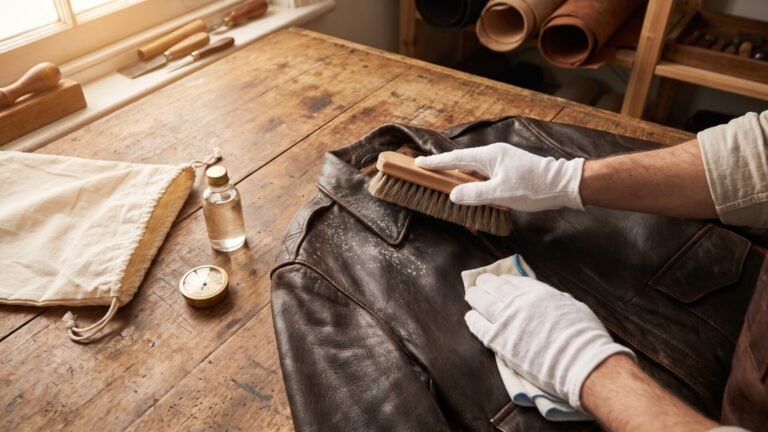
Condition sparingly. Use a conditioner suited to your jacket’s leather and test it on a hidden area first; over-conditioning can darken leather and make it soft. Suede and nubuck need a brush and protector spray instead.
Store properly. Hang on a wide padded hanger in a breathable garment bag, never plastic, and keep it away from heat and prolonged sun.
Clean carefully. A damp cloth for surface dirt, and a professional leather cleaner for serious stains. If a jacket is damp, let it dry naturally.
Deal with problems early. Our guides to mold on stored leather goods and removing smells from vintage leather jackets cover two common ownership problems.
Frequently Asked Questions About Italian Leather Jacket Brands
What are the best Italian leather jacket brands?
Specialist makers such as Stewart (Florence, 1975), Rifugio (Naples), Valstar (Milan, 1911), Giorgio Brato (Bologna) and Luca Faloni (Veneto production) are well regarded, and larger houses such as Gucci, Prada and Armani also make leather jackets. The best choice depends on style, budget and how you will wear it.
Are Italian leather jackets better than other leather jackets?
Not automatically. Italy has strong tanning and tailoring traditions, but quality depends on the hide, tanning, construction and finishing of the specific jacket. Check the details rather than relying on the country label.
How do I know a jacket is really made in Italy?
A Made in Italy label is a product-level claim about where final production happened, not necessarily where the hide was tanned. Ask the brand where the leather was tanned and where the jacket was cut and sewn.
What is the Valstarino?
The Valstarino is Valstar’s suede bomber, introduced in 1935 as an Italian take on the American A-1 flight jacket.
Is vegetable-tanned leather more durable?
It is firmer and develops a patina, but lightweight garment leathers are often chrome- or combination-tanned for softness. Neither method guarantees durability on its own.
How much does an Italian specialist leather jacket cost?
Based on cited press prices, specialist suede and leather jackets roughly fall between $1,500 and $3,000, though prices vary by brand, material and year. Check current prices before buying.
Is Belstaff Italian?
No. Belstaff is a British brand founded in 1924, though it has had Italian owners in the past. It was acquired by Castore in August 2025.
[Shop Stewart Leather Jackets]
[Shop Rifugio Handmade Jackets]
[Shop Valstar Valstarino]
[Shop Luca Faloni Goatskin]
[Browse All Durable Italian Jackets]
If you want to learn more, head back to our Italian leather jackets hub.