Dealing with mold on stored designer leather goods
Mould on a stored leather bag, jacket or pair of boots usually starts quietly: a musty smell when you open the cupboard, a white bloom along the piping, or fuzzy spots in the stitching. Leather is an organic, protein-based material, so when humid air and a lack of airflow meet dust and skin oils, mould can establish itself in a few weeks. The good news is that surface mould is often treatable if you act early, and almost all of it is preventable.
This guide covers what causes mould on designer leather goods, how to identify it, how to prevent it, how to treat it safely at home, and when to take a piece to a specialist. It sits within our Italian leather jackets guide and the wider Italian designer clothing collection, and it applies equally to handbags, belts, boots and small leather goods.
Quick Answer: What to Do if You Find Mould on Leather
- Isolate the item away from your other leather goods and move it outside or to a ventilated space.
- Protect yourself with gloves and a well-fitting mask, especially if you have asthma or allergies.
- Brush off loose growth with a soft brush, outdoors.
- Wipe gently with a lightly dampened cloth and a leather-safe cleaner, testing a hidden spot first.
- Dry slowly in moving air, away from heat and direct sun.
- Condition lightly once fully dry, and fix the storage problem that caused it.
Understanding Mould and Its Causes
Mould is a fungus that spreads by airborne spores. The spores are everywhere, and growth starts when moisture, warmth and food are available. Leather supplies the food in the form of collagen fibres, finishing oils, waxes and surface dirt. Moisture does not need to be visible: sustained high relative humidity is enough. The US Environmental Protection Agency advises keeping indoor humidity below 60 percent and ideally between 30 and 50 percent. Many wardrobes in humid climates or during summer exceed that without anyone noticing.
The main causes are:
- High humidity: prolonged relative humidity above about 60 percent favours mould growth.
- Temperature swings: warm air meeting a cooler wall or surface can produce condensation, so exterior walls and basements are risky.
- Poor storage: plastic bags, sealed containers and overcrowded rails trap moisture and block airflow.
- Storing damp or dirty items: a bag or boots put away after rain or heavy use keep moisture and residue locked in.
A cotton dust bag protects against dust, scratches and light, but it does not control humidity. If the room is damp, the air inside the dust bag is damp too, so climate control matters more than the bag itself.
Identifying Mould on Leather Goods
- White or grey powdery spots: the most common early sign, often mistaken for salt residue or a wax bloom.
- Green, blue or black patches: more established growth, which is more likely to have left a stain.
- A musty, earthy smell: sometimes the first sign, before anything is visible.
- Discolouration or stiffness: mould can leave stains and dry the leather as it grows.
Not every white mark is mould. Some leathers develop a harmless wax bloom, and some finishes show salt marks after rain. A quick check is to look at the stitching, piping and creases first, since mould tends to start where moisture lingers. If the mark brushes away, comes back within days, smells musty or has a fuzzy texture, treat it as mould.
| Material | Mould risk | Notes |
|---|---|---|
| Vegetable-tanned leather | Higher if stored damp | Absorbent; can stain and darken when cleaned. See our patina restoration guide |
| Smooth finished leather (jackets, bags) | Moderate | Mould usually sits on the surface and in seams and linings |
| Suede and nubuck | High | Porous nap traps spores; specialist help is often safer. See our suede guide |
| Coated or pigmented leather | Lower on the surface | Check linings, edges and stitching, where mould often hides |
Check linings, pockets, the inside of boots and the base of handles as well as the visible surface. Mould in stitching can also weaken thread over time, so a piece with repeated or deep growth is better assessed by a specialist.
Preventing Mould in Stored Designer Leather
Ideal Storage Conditions
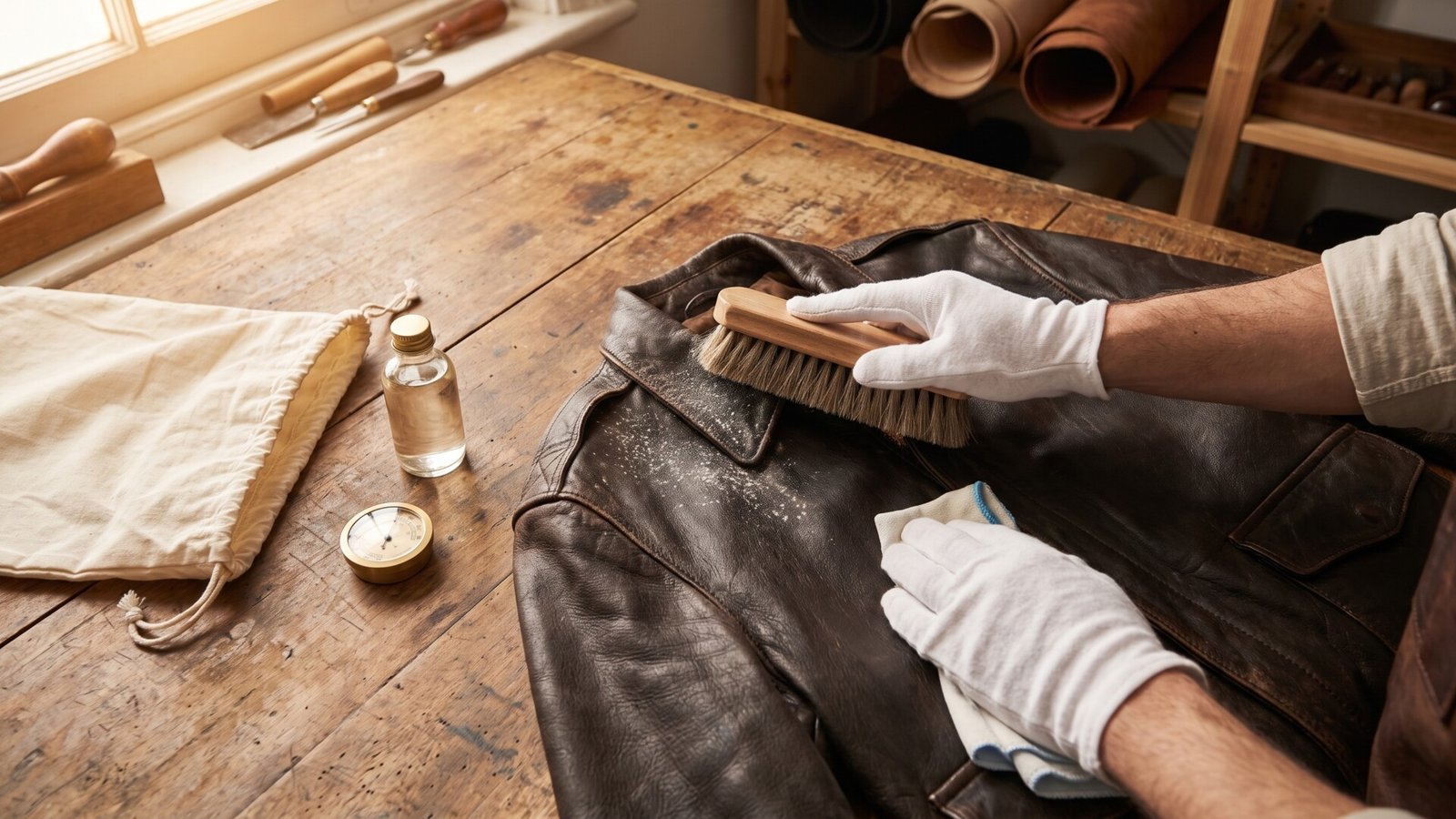
- Humidity: aim for relative humidity roughly in the 40 to 50 percent range and keep it below 60 percent. A small hygrometer costs little and tells you what the cupboard is actually doing.
- Temperature: a stable room-temperature environment is best. Avoid attics, basements, garages and exterior walls.
- Airflow: leave space between items and use breathable cotton bags rather than plastic.
- Light: keep leather out of direct sun, which fades and dries it.
Clean and Dry Before Storing
Skin oils, lotions and dust feed mould, so clean before long-term storage:
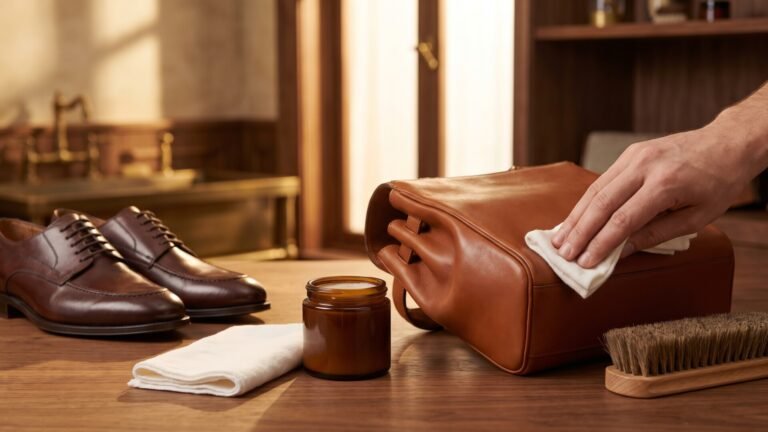
- Wipe the surface with a soft dry microfibre cloth.
- Use a leather-safe cleaner on a barely damp cloth if the item is soiled.
- Let it dry completely, including linings, pockets and the inside of boots. Items that got wet need a full day or more.
- Apply a thin layer of conditioner only if the leather is dry, and let it absorb before storing.
Dust Bags, Shape and Space
- Stuff bags with acid-free tissue so they hold their shape.
- Close the dust bag loosely to protect from dust and light while letting air move.
- Store bags upright instead of stacking them, since stacking compresses leather and traps moisture between items.
- Hang jackets on wide, shaped hangers in a breathable garment bag, not plastic. Our guide to removing smells from vintage leather jackets covers what to do if odour persists, and Italian leather jacket brands known for durability lists makers whose jackets are built to last.
Moisture Control and Inspection
In humid climates, a closet dehumidifier or moisture absorber helps keep the air stable, and a small fan or open door improves circulation. Moisture absorbers need emptying or replacing, so check them on a schedule. Inspect stored pieces every month or two, and more often in humid weather, and let them air in a shaded, ventilated room for a few hours at the same time. This doubles as a check for the early musty smell that often precedes visible mould.
Treating Mould on Leather Goods
Treat light surface mould promptly. If a piece is valuable, vintage, suede or heavily affected, skip to the professional section below. Always work in a ventilated space, wear gloves and a mask, and keep the treatment area away from food and children.
Step One: Brush and Assess
Take the item outside and brush loose growth away with a soft-bristled brush, such as a horsehair shoe brush, working away from your face. Brush gently so you do not grind spores into the leather. Look at how far the mould has spread, whether there is staining, and whether the lining and stitching are affected.
Step Two: Choose a Cleaning Solution
- Diluted isopropyl alcohol: a commonly used option is 70 percent isopropyl alcohol mixed one-to-one with distilled water, applied with a barely damp cloth. Alcohol can dry and lighten some leathers and damage some finishes, so test a hidden spot, let it dry, and do not use it on suede, nubuck, aniline or delicate finishes.
- A leather-specific cleaner: products such as [Leather Honey Leather Cleaner](Affiliate: Leather Honey Leather Cleaner) are made for leather. Follow the label and test first.
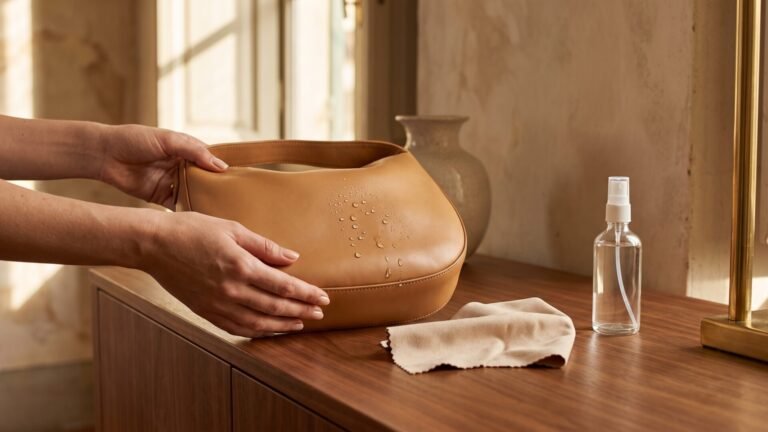
Use as little liquid as possible. Extra moisture is what caused the problem, so the cloth should be damp, not wet. Avoid bleach, vinegar, ammonia and household sprays, which can stain or damage leather.
Step Three: Clean Gently
Work from the outside of each patch inward in small motions so you do not spread mould to clean areas. For seams and crevices use a soft toothbrush with very light pressure. Finish with a clean dry cloth, then let the item dry completely in a ventilated room away from radiators, hairdryers and direct sun. Discard or wash the cloths and brushes used so spores do not transfer to other items.
Step Four: Condition
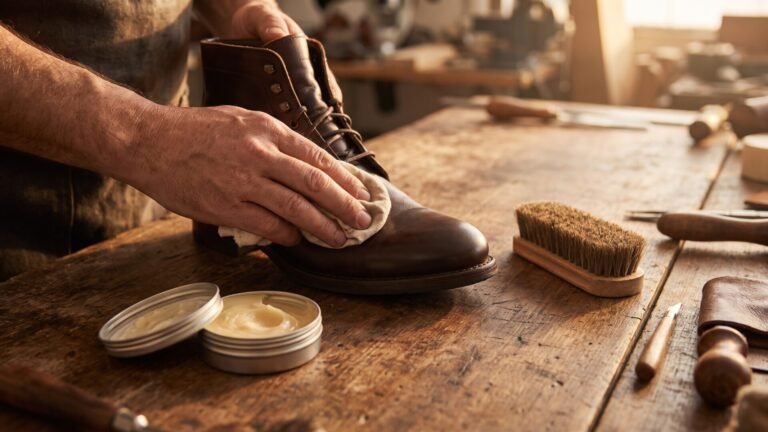
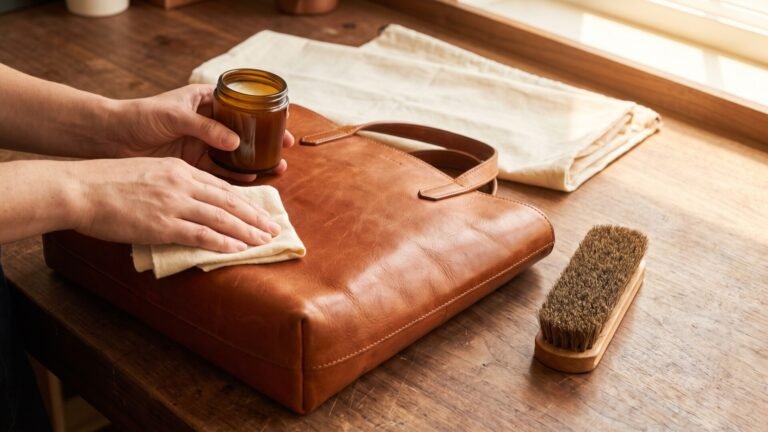
Cleaning can dry leather, so once it is fully dry, apply a leather conditioner in a thin coat, let it absorb and buff off any excess. One option is [Bickmore Bick 4 Leather Conditioner](Affiliate: Bickmore Bick 4 Leather Conditioner); check the label for the leathers it suits and test first.
Step Five: Watch for Recurrence
Return the item to a drier, better-ventilated place, and check it again after a week and a month. If the smell or spots return, the mould is still active in the leather or lining, and it needs professional treatment. Also treat the storage space: wipe shelves and the inside of the cupboard, fix the humidity problem, and check neighbouring items.
When to Seek Professional Help
- Extensive or dark mould, or mould that has soaked into linings or padding.
- Suede or nubuck, which are porous and easily marked by cleaning.
- Mould that returns after cleaning, which suggests it is deep in the material.
- Vintage, sentimental or high-value pieces, where a mistake cannot be undone.
- Stitching or lining damage, which may need repair. See our guide to repairing a ripped lining in a designer bag.
Look for a leather restoration or luxury-goods cleaning specialist, ask what treatment they use and whether they have handled your type of leather, and request a written quote. The brand’s own repair service is also worth asking about for recent pieces.
Cost Considerations
Prevention is inexpensive compared with restoration. A basic prevention kit consists of a hygrometer, a moisture absorber for the wardrobe, breathable cotton storage bags, acid-free tissue, and a leather cleaner and conditioner. Check current prices at the retailer, since they change.
Professional mould treatment costs depend on the size of the item, the leather, the severity and the workshop, and quotes vary widely, so get a written estimate before you agree to work. For a high-value bag or jacket the specialist fee is usually small compared with replacement, but severely affected pieces may not be fully recoverable. Condition also affects resale: odour, staining or visible repairs can lower what a buyer will pay, and resale prices depend on the brand, model and platform, so no figure is guaranteed.
The Value of Maintaining Designer Leather Goods
Italian leather goods from houses such as Gucci, Prada, Fendi, Ferragamo and Bottega Veneta are built to last for years with sensible care, and a well-kept piece can be repaired, resold or passed on. A routine of cleaning before storage, steady humidity, breathable covers and occasional inspections protects that value far more reliably than any treatment after the fact. Keeping original dust bags, receipts and care cards also helps if you ever sell the piece.
Conclusion
Mould on leather is mostly a storage problem: too much humidity, too little airflow, and items put away dirty or damp. Fix those and the problem rarely appears. If it does, act early, treat gently, test products first, and send valuable or suede pieces to a specialist. For more on caring for leather outerwear, see our Italian leather jackets guide.
[Shop leather care products](Affiliate: Shop leather care products)
Frequently Asked Questions About Mold On Leather Goods
Is mould on leather goods reversible?
Often, yes. Surface mould caught early can usually be removed without lasting damage. Mould that has soaked into the leather, lining or stitching may leave stains or odour, and a specialist should assess it.
What should I do if I find mould on my leather bag?
Move it away from other items, brush off loose mould outdoors while wearing gloves and a mask, clean gently with a lightly dampened cloth and a leather-safe cleaner after a patch test, dry it slowly in moving air, and condition it lightly. If it persists or covers a large area, consult a specialist.
How can I prevent mould from returning?
Keep stored leather in a stable, ventilated space with relative humidity below 60 percent and ideally around 40 to 50 percent, clean and dry items before storage, use breathable cotton covers, avoid plastic, and inspect pieces regularly.
Are some leather types more prone to mould?
Absorbent, minimally finished leathers such as vegetable-tanned leather, and porous leathers such as suede and nubuck, tend to be more vulnerable than coated or heavily finished leather. Linings and stitching can grow mould on any type.
Can I use household cleaners on my leather goods?
It is best not to. Bleach, vinegar, ammonia and general-purpose sprays can strip, stain or dry leather. Use a leather-specific cleaner and test it on a hidden spot first.
How often should I check my stored leather goods for mould?
Check every month or two, and every couple of weeks in humid weather. Look at seams, linings and the base of handles, and note any musty smell.
Does sunlight kill mould on leather?
Direct sun is not a safe treatment. It can fade, dry and crack leather, and it will not reach mould in stitching or linings. Dry leather in a shaded, ventilated room instead.