The Evolution of Armani Suits Through the Decades
An Armani suit is easy to dismiss as a status symbol, a label you pay for. The reality is more specific: Giorgio Armani changed how a man’s jacket is built, taking out the heavy padding and stiff lining of traditional tailoring so that the cloth could move with the body. That one decision explains why an Armani suit from 1985 and one from 2025 can look so different, and why the same name covers very different garments at very different prices.
The Armani suit you buy today is not the one your father wore. The house has shifted through the decades in response to culture, celebrity, and its own creative vision, and understanding that evolution is the key to a smart purchase. This guide walks through each decade of Armani’s tailoring, then turns to what matters when you buy: the difference between the lines, how a suit should fit, what a suit really costs per wear, and where to find one, new or vintage.
Historical Context of Armani Suits
To understand the suit, you have to understand the man and the moment. Giorgio Armani didn’t just start a fashion house in 1975; he staged a quiet revolution. The 1970s were a loud time in menswear—think wide lapels, garish patterns, and a silhouette that seemed to be recovering from a hangover of the previous decade’s excess. Armani, a former window dresser and menswear designer for Nino Cerruti, looked at that chaos and saw an opportunity for restraint.
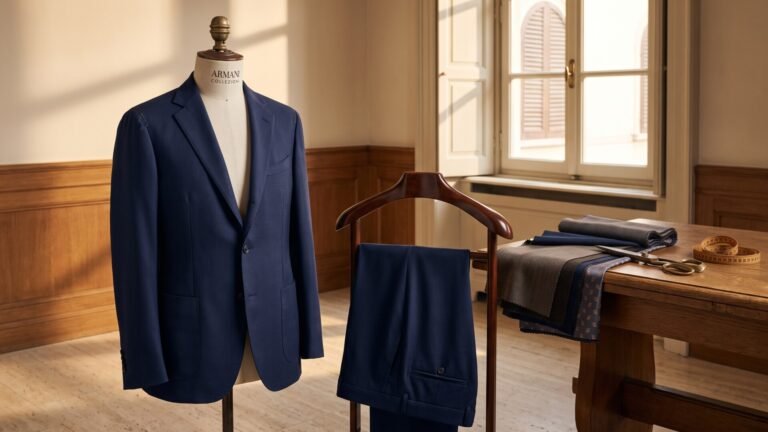
His masterstroke was the deconstructed jacket. He removed the heavy padding and stiff linings that had defined men’s tailoring for a century. He let the fabric drape. He softened the shoulders. In a world of rigid conformity, he introduced fluidity. This wasn’t just a design choice; it was a philosophical one. Armani understood that the modern man didn’t want to be boxed in—literally or figuratively. He wanted to move, to breathe, to project power without looking like he was wearing a costume.
The 1980s cemented his status. When Richard Gere wore that iconic, unbuttoned Armani suit in American Gigolo, the world took notice. Suddenly, the Italian silhouette wasn’t just for European aristocrats; it was for every man who wanted to look like he was in control. The brand became synonymous with power dressing, but it was a softer, more sensual kind of power. This historical foundation is crucial because it explains the brand’s core philosophy: the suit is not a cage, but a canvas.
One date matters for anyone buying today. Giorgio Armani, who founded the house in 1975 with Sergio Galeotti, died on 4 September 2025 at the age of 91. The group continues, and reports at the time named his long-time collaborator Leo Dell’Orco as a key figure in the succession. If you are weighing a current-season suit against a vintage one, you are now choosing between the founder’s own era and the house’s next chapter. For more on the man and the minimalism, read why Giorgio Armani became the king of minimalism and how Giorgio Armani changed Italian fashion.
The Design Evolution of Armani Suits
Walking through the decades of Armani’s design is like watching the pendulum of fashion swing, but always returning to a center point of elegance. Each era brought distinct changes, and knowing these differences is your first tool in identifying which suit is right for you.
The 1980s: The Birth of a Classic
This was the decade of the power suit, but Armani’s version was a paradox. While Wall Street was wearing pinstripes with razor-sharp shoulders, Armani offered a looser, more fluid cut. The colors were bold for the time—rich earth tones, deep blues, and greys that seemed to absorb light. The lapels were wide, but the construction was light. It was a statement of confidence that didn’t need to shout.
Vintage jackets from this era tend to be roomy: a drape fit rather than a slim fit. To wear one today, you need to embrace a more relaxed, Italian aesthetic. This is the era that defined the “Armani look”—a look that remains instantly recognizable.
For a modern take on this classic, the [Affiliate: Armani Men’s Wool Suit Jacket – Classic Fit] offers that heritage silhouette with contemporary construction. It’s a bridge between the bold past and the present.
The 1990s: Redefining Luxury
The 1990s were a strange time. Grunge was on the radio, but minimalism was on the runways. Armani navigated this shift with brilliance. The suits became slimmer, the colors more muted—greys, blacks, and navies dominated. Lightweight, fluid wools suited the easy, travel-friendly feel of the suits. This was luxury in motion.
The silhouette was still soft, but it was more precise. The shoulders were still natural, but the waist was defined. This was the era of the “modern fit” that many men still prefer today. It was a suit that could go from a boardroom in London to a dinner in Tokyo without missing a beat. This is where Armani proved he wasn’t just a designer; he was a problem-solver for the global man.
If you’re looking for that refined, late-20th-century elegance, the [Affiliate: Armani Collezioni Men’s Suit – Modern Fit] is a direct descendant of this philosophy. It’s the suit you buy when you want to look authoritative without appearing stuffy.
The 2000s: Contemporary Elegance
The new millennium brought with it the rise of celebrity culture, and Armani was at its epicenter. The red carpet became his runway. This was the era of the slimmer lapel, the lower button stance, and a silhouette that was increasingly sleek. The “slim fit” became the standard, a reaction to the baggy trends of the late 90s.
Armani suits were a fixture of red carpets in these years, and the dark, impeccably cut look suited the cameras. The fabric was often a matte, unstructured weave that photographed beautifully, catching the light without glare. This period solidified Armani’s place in Hollywood history and pushed the brand toward a younger, more fashion-forward audience.
For that sleek, contemporary look, the [Affiliate: Emporio Armani Men’s Slim-Fit Suit] is the perfect entry point. It captures the energy of that era while remaining versatile enough for today’s events.
The 2010s: Sustainability and Innovation
As the world woke up to climate change, luxury had to adapt. Sustainability moved up the agenda across luxury. In March 2016 the Armani Group announced that it would stop using real animal fur in its collections, one of the most visible policy changes of the period.
The suits of this decade reflected a new consciousness. The silhouettes continued to slim down, but there was a new emphasis on comfort and functionality. Fabrics were lighter, more breathable, and often blended with technical fibers for stretch.
The [Affiliate: Armani Exchange Men’s Suit – Eco-Friendly Fabric] is a testament to this era. It proves that you don’t have to sacrifice style for sustainability. It’s a suit for the man who thinks about his footprint.
The Current Era: Timeless Versatility
Today, Armani suits are less about a single “look” and more about a versatile system. The rigid rules of menswear have dissolved. You can wear an Armani jacket with jeans. You can dress down a suit with a knit polo. The current collections offer a range of fits—from the classic drape to the aggressive slim—allowing men to choose a silhouette that reflects their personal style, not just a trend.
The craftsmanship remains impeccable, but the aesthetic is more democratic. The colors are often tonal, the patterns subtle. The focus is on the fabric’s hand and the perfection of the construction. This is a suit that whispers, it doesn’t shout. It’s designed to make you feel good, first and foremost.
The [Affiliate: Giorgio Armani Men’s Two-Button Suit Jacket – Versatile Style] embodies this modern ethos. It’s a foundational piece that can anchor a wardrobe for years, adapting to changing occasions and personal tastes.
Buying Considerations for Armani Suits
Now for the practical side. Knowing the history is lovely, but it won’t help you if you buy the wrong suit. The most important rule of Armani—and all high-end tailoring—is that fit is king. A $5,000 suit that fits poorly looks worse than a $500 suit that’s been expertly altered.
First, understand the collections. There are three main lines you’ll encounter:
- Giorgio Armani (formerly sold as Black Label): The main ready-to-wear line and the top of the house’s tailoring (Armani Privé is the separate haute couture line). Expect more refined fabrics and construction than the lower lines, but treat any suit as clothing, not as an investment.
- Emporio Armani: The diffusion line. It’s younger, more fashion-forward, and often uses slightly more casual styling. It’s a great entry point for the brand, offering excellent quality at a more accessible price.
- Armani Exchange (A|X): The most casual and accessible line. It’s focused on lifestyle and streetwear-inspired pieces, but it is mostly casual wear rather than a tailoring line, so check the product page before expecting full suit construction.
- Armani Collezioni: A business-focused tailoring line positioned below Giorgio Armani. Our guide asks whether Armani Collezioni counts as high fashion.
When you’re trying on a suit, pay attention to the shoulders. The seam should sit exactly at the edge of your shoulder bone—no overhang, no pinching. The jacket should button comfortably without pulling at the waist. The trousers should break gently on your shoe, with a clean drape. Armani’s cuts are designed to flatter, but they still require a good tailor to perfect the details.
Consider your lifestyle. If you’re buying a suit for weekly business wear, invest in a classic navy or charcoal in a durable wool. If you’re buying for a wedding or special event, you can afford to be a bit more adventurous with texture or color. For travel, look for high-twist wools or blends that resist wrinkles.
Investment Potential of Armani Suits
Let’s talk about the money. Is an Armani suit an investment? The answer is nuanced. Most clothing is a depreciating asset. The moment you wear it out of the store, its resale value drops. Resale demand is stronger for mainline Giorgio Armani pieces than for many suits, but values vary widely and no suit is guaranteed to hold its price.
Vintage Armani from the 1980s and 1990s attracts interest from collectors and stylists looking for authentic pieces, though prices vary widely. The key is condition. A suit that has been well-maintained—dry-cleaned properly, stored on a quality hanger, and rarely worn—will resell far better than a worn one.
But let’s be honest about cost-per-wear. If you buy a $2,000 suit and wear it once a year to a gala, that’s $2,000 per wear. That’s not an investment; that’s an expense. However, if you buy a versatile suit and wear it 50 times a year for work and events, your cost-per-wear drops to $40. That’s a value proposition that rivals any fast-fashion purchase, especially when you factor in the superior construction and longevity.
The hidden trade-off is trend risk. A slim-fit suit from 2015 might look dated today if the pendulum swings back to a looser silhouette. That is why buying for the long term pays off. Choose a classic fit, a timeless color, and impeccable fabric. That way, your suit will still look relevant in a decade, just as the best pieces from the 1990s do today.
What Owning an Armani Suit Involves
What should you expect from an Armani suit over a year of wear? We have not wear-tested these suits ourselves, so this is general guidance on good wool tailoring. Quality wool breathes in warm weather and insulates in cold, and fine, tightly twisted yarns resist wrinkling better, which helps when you travel.
Next, consider the wear pattern. The trousers may start to show a slight sheen after repeated wear, which is normal. The jacket will conform to your body, creating a personalized drape that no off-the-rack suit can match. This is the beauty of a well-made garment; it becomes yours.
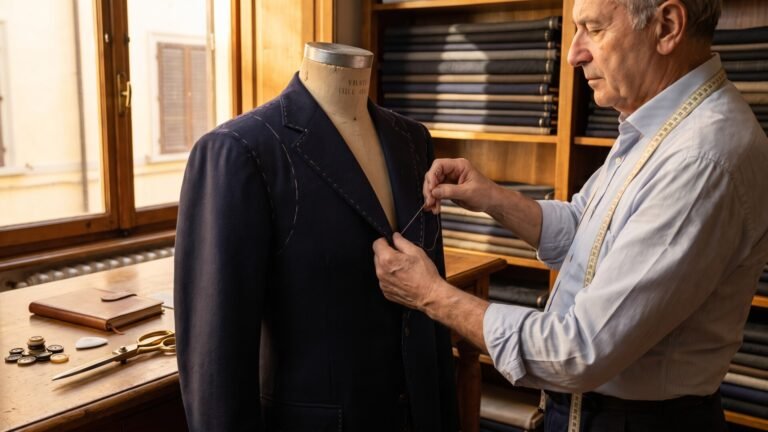
However, there are responsibilities. You can’t just throw it in the washing machine. You need to invest in a quality garment bag, a proper wooden hanger, and a good steam iron. You should rotate your suits to give the fibers time to recover. You should brush the jacket after wearing it to remove dust and debris. This care is a commitment, but it’s one that pays dividends in longevity.
A single suit can be surprisingly versatile. A charcoal suit can serve at a funeral, a wedding, a business presentation, and a dinner; with a change of shirt, tie, and shoes it transforms completely. This is the real value of buying into a system like Armani—you’re not just buying a suit; you’re buying a wardrobe solution.
Reading a Vintage Armani Suit: Which Era Is It?
If you are shopping resale, the decade decides how the jacket will fit today. A jacket from the 1980s is cut roomy through the body and shoulder, so expect to size down or accept a relaxed drape. Suits from the 1990s are closer to a modern classic fit and are often the easiest vintage pieces to wear without alteration. Suits from the 2000s onward run slimmer, with narrower lapels and a lower button stance, which can look dated if the cut is very close. Check the care label, the lining, and the label placement, measure the shoulders and chest against a jacket that fits you, and ask for photos of the inside. Our guide to spotting authentic Italian designer pieces covers the basics of authentication, and our piece on buying used Armani Privé online explains the risks of pre-owned couture.
Armani Suits Compared With Other Italian Tailoring
Armani’s soft, unstructured line is one school of Italian tailoring, not the whole of it. If you want a different approach, read about Neapolitan handwork at Kiton, Roman ultra-luxury at Brioni, Piedmontese quiet luxury at Zegna, or the more accessible tailoring at Canali. For the full picture, see our Italian suits guide, the broader Italian designer clothing guide, and the Giorgio Armani vs Emporio Armani comparison. The overview of all the houses is in Italian designer brands.
Where to Find Your Armani Suit
When you’re ready to make a purchase, you have several avenues. For the best selection of current collections, consider:
- Nordstrom: A department store that has carried Armani lines; stock changes, so check the current range.
- Mr Porter: A curated luxury menswear retailer; read the size guide and fit notes on each product page.
- Farfetch: A global marketplace that connects you with boutiques worldwide. You can often find unique pieces or last-season gems at a discount.
For vintage pieces, The RealReal and Vestiaire Collective are the usual places to look. Be sure to check the measurements carefully and be prepared for the fact that vintage sizing runs larger than modern fits.
Conclusion
An Armani suit is more than a label: it is a record of how one designer changed what men wear. The evolution of Armani suits through the decades tells a story about how we, as men, choose to present ourselves to the world. It’s a story of soft power, of confidence that doesn’t need to shout, of craftsmanship that respects the human form.
The suit you choose to wear is a reflection of who you are and who you aspire to be. It’s an investment not just in your appearance, but in your self-assurance. Buy with your real life in mind, not the occasion you imagine.
If you’re ready to find the Armani that speaks to you, I encourage you to explore the options we’ve discussed. Whether you’re drawn to the classic drape of the 1980s or the sleek lines of today, there’s an Armani waiting for you. See our complete guide to Italian suits for more. And remember, the best suit is the one that makes you feel like the best version of yourself.