Ermenegildo Zegna (Zegna): The Complete Guide to Italy‘s Quiet Luxury Menswear Empire
Italian luxury menswear tends to split into two camps: stiff, heavily structured suits and hype-driven streetwear. Zegna sits in a third camp: soft tailoring, serious fabric and almost no logos. This guide covers what Zegna is, how it differs from “Ermenegildo Zegna” and Z Zegna, where it came from, what it makes and costs, how it compares with Loro Piana and Brunello Cucinelli, and whether it is worth the money.
Zegna is part of our wider look at Italian houses, Italian Designer Brands: A Complete Guide, which is the best place to compare it with the rest of the field.
Zegna at a Glance
| Topic | Detail |
|---|---|
| Founded | 1910, Trivero (Biella Alps), by Ermenegildo Zegna at age 18 |
| Origin | Wool mill and fabric supplier, later menswear |
| First boutique outside Italy | Paris, 1980 |
| China | First luxury label to open a store there, 1991 (Beijing flagship) |
| Listed | NYSE: ZGN since 20 December 2021 |
| Name | “Ermenegildo Zegna” became simply “Zegna” in 2021 |
| Leadership (2026) | Gildo Zegna, executive chairman; Gianluca Tagliabue, group CEO; Edoardo and Angelo Zegna, co-CEOs of the Zegna brand |
| Artistic director | Alessandro Sartori, since 2016 |
| Group brands | Zegna, Thom Browne, Tom Ford Fashion, Tessitura di Novara |
Zegna vs Ermenegildo Zegna vs Z Zegna: What Is the Difference?
Zegna and Ermenegildo Zegna are the same brand. It was long known by its founder’s full name. In 2021, alongside the company’s New York stock market listing and a new logo, the brand name was shortened to ZEGNA. You will still see “Ermenegildo Zegna” on older labels, on resale listings and in the group’s own corporate name (Ermenegildo Zegna Group), which is why both names are in use.
Z Zegna was a separate, younger line. It launched in 2003 with Alessandro Sartori as creative director, aimed at buyers who wanted slimmer, more casual and lower-priced pieces than the main line. In 2021 the company consolidated its lines (the main Ermenegildo Zegna collection, Couture and Z Zegna) under the single ZEGNA brand, so Z Zegna no longer appears as a label on new collections. On the resale market, a Z Zegna piece usually signals a more fashion-led cut and a lower original price than mainline Zegna, so compare it on cloth and construction rather than on the name.
The Origins of Zegna
Founding in Northern Italy
Zegna began in 1910, when 18-year-old Ermenegildo Zegna opened a wool mill in Trivero, in the Biella area of the Italian Alps. The Biella district was already a centre of Italian wool processing, and the mill’s early focus was producing high-quality cloth. The company built long-term relationships with Australian merino growers: in 1963 it launched the Ermenegildo Zegna Wool Awards in Australia to encourage finer wool production, and a Mohair Trophy followed in South Africa in 1970. It also developed Oasi Zegna, a protected natural area of about 100 square kilometres in the Biellese Alps, formally established in 1993.
From Mill to Global Luxury House
For decades Zegna was best known as a supplier of fabric to tailors, and that textile background is still the brand’s real differentiator. The move into menswear accelerated in the second half of the twentieth century. Zegna opened its first owned boutique abroad in Paris in 1980, and in 1991 became the first luxury label to open a store in China, a flagship in Beijing. The third generation joined the business in the 1990s, and Ermenegildo “Gildo” Zegna became chief executive in 1997.
The company listed on the New York Stock Exchange on 20 December 2021 under the ticker ZGN and remains controlled by the Zegna family. In November 2025 the group announced a new structure effective 1 January 2026: Gildo Zegna became executive chairman, CFO and COO Gianluca Tagliabue became group CEO (on an interim basis pending formal appointment at the 2026 annual meeting), and fourth-generation cousins Edoardo and Angelo Zegna became co-CEOs of the Zegna brand, covering image and design, and product and commercial strategy, respectively.
The Zegna Group: More Than One Brand
Zegna today is a group, which matters if you are researching what you are actually buying:
- Zegna: the namesake menswear brand, covering tailoring, knitwear, outerwear, shoes and accessories.
- Thom Browne: Zegna bought an 85 percent stake in 2018. Thom Browne’s shrunken, grey-flannel tailoring is a very different look from Zegna’s soft drape.
- Tom Ford Fashion: Zegna acquired the Tom Ford fashion licence from Estée Lauder with effect from 29 April 2023, on a 20-year term.
- Tessitura di Novara: a textile business in which Zegna took a majority stake in 2009.
If you are comparing Zegna with other Italian tailoring names, our guides to Canali, Kiton and Brioni cover the traditional tailoring end of the market, and our guide to Italian suits compares their cuts and US price bands side by side.
Is Zegna a Luxury Brand?
Yes. Zegna is a luxury menswear house, positioned above premium brands such as Boss or Armani Exchange and alongside the highest-priced Italian names in men’s tailoring and knitwear. Its prices, its fabric sourcing and its made-to-measure and couture-level service all support that position.
Is Zegna a good brand? It depends on what you value. If you want soft, light, well-made clothing with discreet branding, it is among the most consistent choices in Italian menswear. If you want fashion novelty or visible status, other houses will suit you better.
Why Zegna Is the Definition of Quiet Luxury
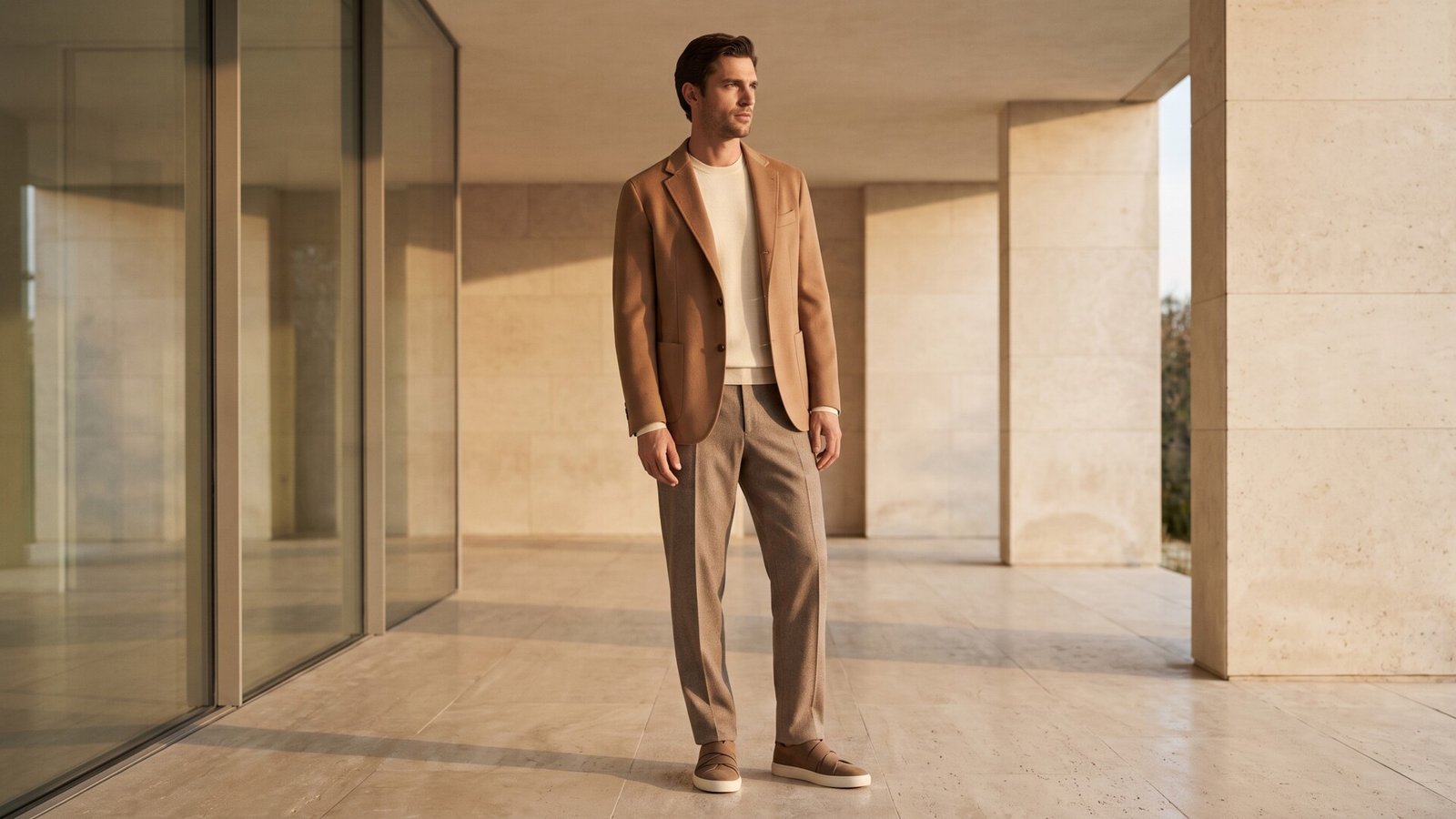
Zegna’s approach is that quality should be felt rather than seen. Logos are small and discreet, often limited to an interior label or a small metal plaque, which has made it a staple of the quiet luxury movement. Under Alessandro Sartori the house has built its image around a soft, lightly constructed silhouette: relaxed shoulders, lighter jackets and trousers with a fluid drape, made for travelling and daily wear rather than for being “broken in”. Where many luxury houses rely on seasonal “it” products, Zegna’s proposition is slower: the same jacket shapes, knits and sneaker reappear across seasons with fabric and detail updates, which is what attracts buyers who want a wardrobe, not a trend.
Zegna’s Fabric and Material Innovation
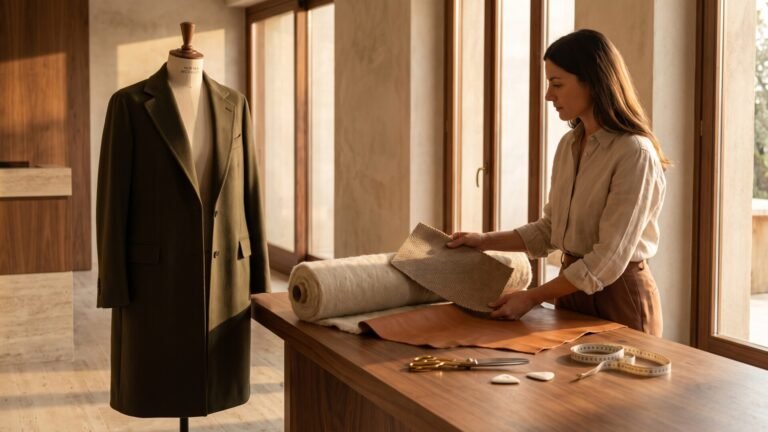
Zegna’s identity is built on fabric. Because the group weaves its own cloth and works directly with wool growers, it can develop and name its own fabrics in a way few menswear houses can:
- Fine merino wool: sourced largely from Australia and the foundation of the house’s tailoring, from lightweight summer weaves to flannel. Trofeo and Centoventimila are two of its named fine-wool cloths.
- Oasi Cashmere: the house’s traceable cashmere line, which it presents as part of a broader traceability programme.
- Oasi Lino: the house’s linen line, positioned around transparent sourcing.
- Technical luxury fabrics: natural fibres combined with performance finishes for travel-friendly, crease-resistant clothing.
Sustainability claims here are Zegna’s own, so check the company’s current sustainability report before relying on specific certification or traceability statements. Zegna is one of several Biella-area mills; our guides to Piacenza 1733 and Lanificio Colombo cover two other mill-born brands from the same district.
Zegna Cloth Without the Zegna Label
Most guides treat Zegna’s fabric as something you can only get by buying a Zegna garment. That is not quite true, and it changes the value calculation. The group’s mill, Lanificio Ermenegildo Zegna, also sells cloth to other makers. In November 2026, for example, Suitsupply’s US site listed a ready-to-wear suit in Lanificio Ermenegildo Zegna wrinkle-free 4-ply wool at $1,199, against roughly $3,400 to $4,950 for full-price Zegna wool suits at US retailers in the same month.
The two are not equivalent. With a Zegna suit you also get Zegna’s pattern, construction, finishing and the specific cloths it keeps for itself; with a third-party suit you get the cloth and that maker’s cut and canvas. The useful rule: if the cloth is what you are paying for, a well-made suit in Zegna cloth from another maker can deliver much of it for a third of the price; if the cut and the house’s own fabrics are what you want, buy Zegna, ideally through Su Misura. Either way, read the cloth label inside the jacket, and check the garment’s own origin label too: a Zegna wool suit on Mytheresa’s US site in November 2026 was listed as made in Switzerland, a reminder that “Made in Italy” applies product by product.
Zegna Tailoring: The Heart of the Brand
Zegna belongs to the Italian tradition of soft construction, which generally uses lighter canvassing and less padded shoulders than classic British tailoring. Within that tradition, houses differ: Neapolitan makers such as Kiton lean more hand-sewn, while Zegna combines machine and hand work across several quality levels, with a cleaner, more northern line.
| Level | What it means | Best for |
|---|---|---|
| Ready-to-wear | Standard sizes, available in boutiques and from retailers | Buyers who fit standard patterns and want to try on |
| Su Misura (made-to-measure) | Zegna’s custom service: you choose fabric, fit and details | Buyers who want a personal fit and a wider fabric choice |
| Couture / bespoke | The house’s highest level of hand-tailoring | Buyers who want the most hand work and are happy to wait |
For the top tier, ask a boutique for current lead times and pricing. Zegna’s reputation rests on perfecting essentials: dependable cloth, a consistent cut and a wide range of fabric weights. It is also one of the more accessible entry points into high-level Italian tailoring, because it is widely stocked and offers made-to-measure in many markets.
Zegna’s Most Important Product Categories
Tailoring and Suits
Suits remain the core of the house, from classic two-button jackets to relaxed, deconstructed ones. Full-price US listings for Zegna wool suits in November 2026 ran from about $3,400 at Mytheresa to $4,300 to $4,950 for Trofeo and patterned suits at Nordstrom, Neiman Marcus and Mr Porter, with Centoventimila and other top cloths higher still. Prices vary by cloth, line and market, and multi-brand retailers mark down past-season stock, so check current listings.
Knitwear, Outerwear and Leather Goods
Cashmere and fine-gauge knitwear are a strong part of the offer, including the Oasi Cashmere line; our guide to the best Italian cashmere sweaters for men compares Zegna with specialist makers, and Falconeri and Luca Faloni offer lower-priced alternatives. Field jackets, trench coats and lightweight bombers combine natural fibres with technical finishes for travel and all-weather wear; if outerwear is your main interest, compare Herno and Moncler. The leather goods range includes travel bags, briefcases, belts and small leather accessories.
Footwear
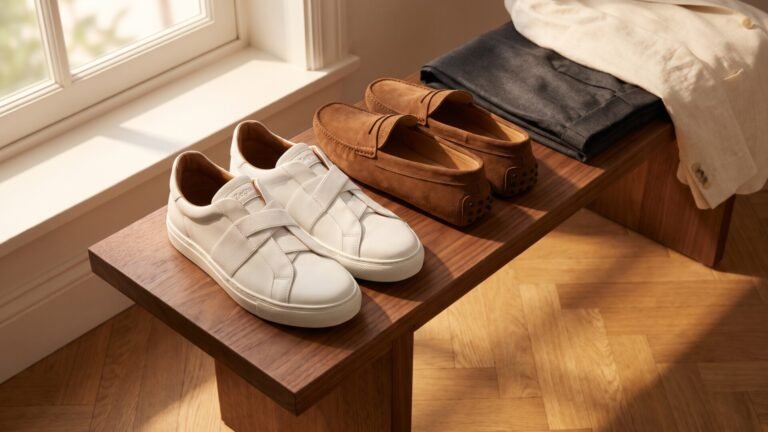
Footwear has become an important part of the brand’s identity. The Triple Stitch sneaker is the modern icon, and Zegna also makes loafers, driving shoes and dress lace-ups. For other Italian shoe options, see Tod’s and Santoni.
The Triple Stitch Sneaker: Zegna’s Modern Icon
The Zegna Triple Stitch sneaker is arguably the brand’s most recognisable product of the last decade. Its defining feature is the triple-stitch detail on the upper in place of conventional branding, a reference to the stitching on tailored jackets, and some versions are designed to be slipped on with the laces left tied or concealed.
Triple Stitch pairs are made in Italy. As an example, a blue suede pair with leather lining and insole and a rubber outsole was listed at Mytheresa at $1,190 (including duties, excluding taxes and shipping) in October 2026. Other leathers, canvas and shearling-lined versions are priced differently, and retailers run sales, so check current listings. The low-profile shape looks as at home under tailoring as with jeans; suede versions need protection from water and regular brushing. It is more understated than Golden Goose‘s deliberately distressed look, and our Triple Stitch review covers fit and wear in detail.
Comparison Table: Zegna vs Other Italian Luxury Brands
| Brand | Core identity | Style philosophy | Branding level |
|---|---|---|---|
| Zegna | Quiet luxury menswear | Soft, understated tailoring | Very low |
| Gucci | Fashion-forward luxury | Bold, eclectic heritage fashion | High |
| Prada | Intellectual minimalism | Architectural, material-led | Medium |
| Brunello Cucinelli | Casual luxury lifestyle | Relaxed elegance | Low |
| Loro Piana | Textile-driven quiet luxury | Leisure sophistication | Very low |
Zegna is most often compared with Loro Piana and Brunello Cucinelli. Loro Piana leans toward leisurewear and ultra-soft materials, Cucinelli toward a relaxed, village-based luxury lifestyle, while Zegna occupies the tailoring middle ground: more tailored than either, and quieter than Gucci or Prada.
Zegna Under Modern Leadership
In 2021 the company shortened the brand name to ZEGNA, refreshed its identity and folded its separate lines into one collection. Alessandro Sartori has been artistic director since June 2016, overseeing the creative functions of all Zegna brands. He joined Zegna in 1989, led Z Zegna from 2003 and was artistic director of Berluti from 2011 to early 2016 before returning. His work has focused on keeping Zegna’s tailoring roots while making the brand relevant to younger, more casual buyers: softer jackets, technical cloths and sneakers sit alongside traditional suiting.
Why Is Zegna So Expensive?
- Fabric: fine wool and cashmere cost far more than commodity cloth, and Zegna weaves much of its own.
- Construction: soft tailoring uses a lot of skilled handwork even when it looks simple.
- Retail model: boutiques, made-to-measure service and global distribution all add cost.
- Brand position: part of the price is the name, as with any luxury house. The gap between a Zegna suit and a third-party suit in Zegna cloth, described above, is a rough guide to how much.
Is Zegna Cheaper in Italy?
Luxury prices differ by country because of local taxes, import duties and currency movements, and brands set regional price lists. Visitors from outside the EU can often claim back part of the VAT on purchases, which can narrow the gap. We cannot give a reliable percentage here, so compare the same item on Zegna’s regional sites in your currency and check the tax-refund rules before you travel.
Are Zegna Products Worth the Money?
Whether Zegna justifies the price depends on how often you will wear the piece and how you value fabric and fit. A hypothetical example, not a quoted price: a $3,500 suit worn twice a week for five years (about 520 wears) costs roughly $6.73 per wear; a $700 suit worn the same number of times costs about $1.35 per wear, but may need replacing sooner depending on cloth and care. The more you wear a garment and the longer it lasts, the more the higher price is spread out. Zegna pieces circulate on the resale market, but resale value is never guaranteed, so treat clothing as something to wear, not as an asset.
Who Should Buy Zegna?
- Professionals and executives. Office-ready luxury that is polished but not flashy.
- Quiet luxury enthusiasts. A refined alternative if you have moved beyond logos.
- Capsule-wardrobe builders. Clean lines and neutral palettes work well together.
- Cloth-first buyers on a budget. Consider made-to-measure or a third-party suit in Zegna cloth.
- Who may prefer other brands. If you want bold logos or fashion-forward experimentation, look at Gucci or Prada.
Zegna helped normalise comfortable formalwear and, through the Triple Stitch, sneakers with tailoring. It did not invent quiet luxury, but it is one of its best-known proponents.
Frequently Asked Questions About Zegna
Who owns Zegna?
The Zegna family. The parent company, Ermenegildo Zegna Group, has been listed on the New York Stock Exchange since December 2021, but the family remains the controlling shareholder. From January 2026 Gildo Zegna is executive chairman, Gianluca Tagliabue is group CEO, and Edoardo and Angelo Zegna, the fourth generation, are co-CEOs of the Zegna brand.
Where are Zegna clothes made?
Much of Zegna’s cloth is woven at its own mill in Trivero, Italy, and many garments are labelled Made in Italy. Origin is set product by product, though, and some pieces are made elsewhere: one Zegna wool suit on Mytheresa’s US site was listed as made in Switzerland in November 2026. Check the garment’s own label or product page before you buy.
Does Zegna clothing run large?
Some pieces do. Retailer notes vary by model, and Yoox flagged one Zegna suit in 2026 as running large, while Zegna’s slimmer cuts can feel close-fitting. Zegna uses Italian sizing for tailoring, roughly your US chest size plus 10, so a 50 is about a US 40. Try two sizes where you can and judge a jacket by the shoulder seam.
What is Oasi Zegna?
Oasi Zegna is a protected natural area of about 100 square kilometres in the mountains above the Trivero mill, formally established in 1993 and open to visitors for walking, skiing and nature tourism. The name also appears on Zegna’s Oasi Cashmere and Oasi Lino fabric lines, which the company presents as traceable, but the products and the reserve are separate things.
Is Zegna better than Canali?
They sit at different price points. In late 2026 full-price Canali wool suits ran from roughly $1,850 to $3,600 in the US, against about $3,400 to $4,950 for Zegna. Zegna weaves much of its own cloth and has a stronger casualwear and sneaker offer; Canali is the more affordable route to a classic Italian business suit. Try both on: the cuts differ more than the labels suggest.
[Shop Zegna Triple Stitch]
[Shop Zegna Suits]
[Shop Zegna Cashmere]
[Shop Pre‑Owned Zegna]