Pierpaolo Piccioli: The Poet of Modern Couture
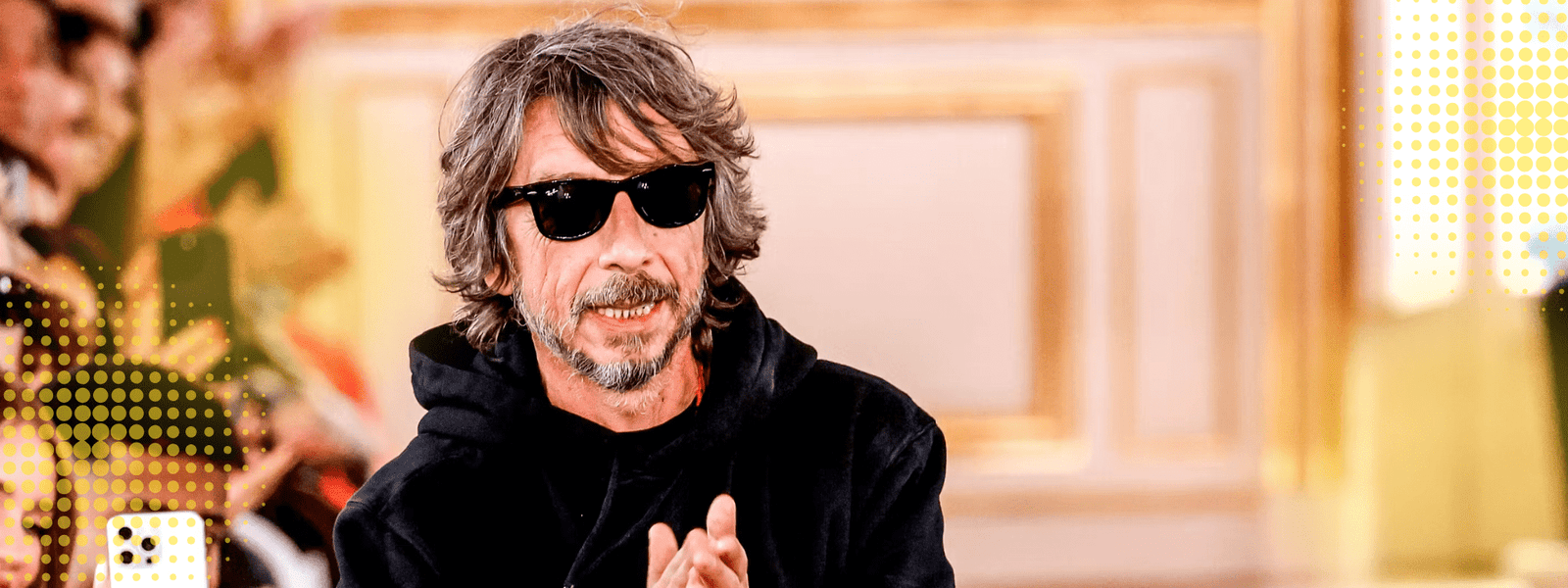
Pierpaolo Piccioli (sometimes searched as “Pier Paolo Piccioli”) is the Italian designer best known for turning Valentino, a house built on Roman glamour, into something softer, more colourful and more human. He led Valentino from 2008, first with Maria Grazia Chiuri and then alone, and from 2025 brought a similar approach to Balenciaga as creative director, until Kering announced his departure in November 2026.
This profile covers who he is, his career from Fendi and Valentino to Balenciaga, the Pierpaolo Piccioli designs and collections that defined his work, and the signatures that make a Piccioli piece recognisable. Facts below were checked against press coverage and official announcements, with dates given so you can see how current each statement is.

Pierpaolo Piccioli at a Glance
| Detail | Summary |
|---|---|
| Born | 29 August 1967, Rome; grew up in Nettuno, a seaside town south of the capital |
| Training | Reported to have studied at the Istituto Europeo di Design in Rome (some biographies also mention earlier literature studies at university in Rome) |
| Early career | Accessories at Fendi, working with Maria Grazia Chiuri |
| Valentino | Joined in 1999; co-creative director with Chiuri from 2008; sole creative director from 2016; departure announced March 2024 |
| Balenciaga | Named creative director on 19 May 2025; role began 10 July 2025; first collection shown 4 October 2025; departure announced 5 November 2026 |
| Awards | Designer of the Year at The Fashion Awards (London) in 2018 and 2022 |
| Best-known ideas | Colour as emotion, “Pink PP”, couture with a human tone, inclusive casting |
Status check: the Balenciaga dates, including his November 2026 departure, reflect Kering’s announcement and press reports available as of November 2026; creative-director roles change, so check official announcements for anything newer.
Early Life in Rome and Nettuno
Pierpaolo Piccioli was born on 29 August 1967 in Rome and grew up in Nettuno, a seaside town just outside the capital. He did not grow up around couture; in interviews he has described himself as a kind of “fashion worker” rather than a celebrity designer, and reports note he never did a formal internship.

He is reported to have studied at the Istituto Europeo di Design in Rome, and sources differ on whether he first studied literature at university, so we treat that detail cautiously.
Before Valentino: Fendi and a Partnership
Piccioli’s first major job was in the accessories department at Fendi, where he worked alongside Maria Grazia Chiuri. That partnership shaped the next quarter-century of his career. Chiuri later returned to Fendi in 2025; our review of her first collection back at the house is here: Maria Grazia Chiuri’s Fendi debut. Fendi’s own bag story is a useful comparison point for this era of Italian accessories design; see our guide to Fendi handbags.
The Early Days at Valentino
Piccioli joined Valentino in 1999, alongside Chiuri, to revive the house’s accessories line: bags, shoes and small leather goods. It was not the most glamorous assignment, but the pair gave Valentino’s accessories a sleeker, more modern feel and built the working partnership that would later run the whole house.
Taking Over the House
When Valentino Garavani, the brand’s founder, retired in 2008, the house named two creative directors: Maria Grazia Chiuri and Pierpaolo Piccioli. Together they inherited Valentino’s red, its romance and its couture ateliers, and brought the house back to relevance with collections that felt softer and younger while staying elegant: tulle, lace and embroidery handled with restraint. For the wider story of the house, see our Valentino brand guide and the history of Italian luxury fashion houses.
The Rockstud Era: Accessories That Defined the House
The Chiuri and Piccioli years also produced one of the most recognisable accessories of the 2010s. The Rockstud, the pyramid-stud detail on pumps, flats and bags, first appeared in Valentino’s Fall/Winter 2010 collection, during their shared tenure (a few sources date it to 2011). It gave a house known for evening gowns an everyday product with a clear visual signature.
For the full product history, read our history of the Valentino Rockstud and the practical Rockstud vs Jimmy Choo sizing and comfort comparison. For a later-generation Valentino bag, see the Valentino VLogo tote.
Sole Creative Director: 2016 to 2024

In 2016 Maria Grazia Chiuri left for Dior, becoming the first woman to head that house’s women’s collections as artistic director. (She left Dior in 2025 and was subsequently named to lead Fendi.) Piccioli stayed at Valentino as sole creative director. His solo collections, from 2016, were widely described by the fashion press as romantic: soft silhouettes, ethereal fabrics and a shift away from clothes as status symbols toward clothes as feeling. Over the next eight years this became the house’s defining voice.
Career Timeline
| Year | Milestone |
|---|---|
| 1967 | Born in Rome (29 August); grows up in Nettuno |
| 1999 | Joins Valentino with Maria Grazia Chiuri to develop the accessories line |
| 2008 | Valentino Garavani retires; Chiuri and Piccioli named creative directors |
| 2010 | Rockstud debuts in Valentino’s Fall/Winter 2010 collection |
| 2016 | Chiuri leaves for Dior; Piccioli becomes sole creative director |
| 2018 | Designer of the Year at The Fashion Awards; Fall/Winter 2018 couture show in Paris (4 July) |
| 2019 | Spring 2019 couture show closes with Naomi Campbell (23 January) |
| 2021 | Valentino Des Ateliers couture show in Venice (Fall/Winter 2021, July) |
| 2022 | Pink PP collection; second Designer of the Year award |
| 2024 | Announces departure from Valentino (March); Alessandro Michele named successor |
| 2025 | Named Balenciaga creative director (19 May); starts 10 July; debuts 4 October in Paris |
| 2026 | First Balenciaga haute couture show (8 July, Paris); Spring/Summer 2027 show in Paris (early October); Kering announces his departure from Balenciaga (5 November) |
Balenciaga: 2025 to 2026
On 19 May 2025, Kering announced that Piccioli would become creative director of Balenciaga, succeeding Demna, who had moved to Gucci. His role began on 10 July 2025.
His first Balenciaga collection, for Spring/Summer 2026, was shown in Paris on 4 October 2025. Press coverage described a reworking of Cristóbal Balenciaga’s own vocabulary (the sack, balloon and “peacock tail” shapes) in a palette that mixed the house’s signature black with pale pinks, mint, lilac and chartreuse. Reports also mention a new silk-and-wool fabric called “Neo Gazar”, a softer take on the house’s original gazar, and a bridal-style look that referenced a wedding dress Cristóbal Balenciaga made for Queen Fabiola of Belgium.
On 8 July 2026 he presented his first haute couture collection for the house during Paris Haute Couture Week. Reports described it as Balenciaga’s 55th couture collection and its first outdoor couture show, staged in the courtyard of the Cité Internationale Universitaire de Paris, with colour drawn from Spanish painters including Zurbarán, El Greco and Goya. His Spring/Summer 2027 show followed in early October 2026 at the Tennis Club de Paris, where reviewers noted couture techniques translated into everyday clothes: corset-style stitching on leather jackets and T-shirts, bias-cut jeans and tailoring, and hand-draped, knotted handbags.
Where Balenciaga had leaned on irony and exaggeration in the previous decade, Piccioli’s work there emphasised archive shapes, craft and colour. The chapter proved short: on 5 November 2026 Kering announced his departure after less than two years. See our Balenciaga brand breakdown on our sister site FrenchDesignerVault.com.

The Piccioli Aesthetic: Emotion Over Excess
Piccioli’s work sits where couture technique meets restraint in styling: flowing gowns in saturated colours, layers of fabric that move, clean faces with little make-up, and a balance of softness and strength. He has repeatedly framed his work around humanity and inclusion; in a 2022 Instagram post he wrote, “I want my children to be free.” That outlook shows in the way he cast and styled his shows.
Pierpaolo Piccioli Designs: What to Look For
Readers who search for “Pierpaolo Piccioli designs” are usually trying to recognise his work or understand what separates it from other houses. This table summarises the recurring elements, with the caveat that individual collections vary.
| Element | What it looks like | Where you see it |
|---|---|---|
| Volume and drape | Gowns with generous skirts, cape-like sleeves and fabric that moves rather than clings | Valentino haute couture, Fall/Winter 2018 onward |
| Saturated colour | Single-colour looks in red, pink, gold, and white; monochrome head to toe | Pink PP (Fall/Winter 2022 ready-to-wear), many red-carpet gowns |
| Pared-back styling | Minimal make-up, simple hair, little jewellery, so the garment carries the show | Valentino couture and ready-to-wear shows |
| Atelier techniques | Embroidery, feather work, plissé, tulle and silk gazar | Valentino Des Ateliers (Venice, 2021); Balenciaga couture (2026) |
| Archive reinterpretation | Reworking a house’s own historic shapes instead of replacing them | Balenciaga Spring/Summer 2026, couture and Spring/Summer 2027 |
Colour as Emotion: Pink PP
Colour is the clearest thread in his work. Under Piccioli, Valentino’s palette widened dramatically, culminating in Valentino Pink PP, the hot-pink shade at the centre of the Fall/Winter 2022 ready-to-wear collection, shown in Paris in March 2022, with “PP” echoing his initials. The house worked with Pantone to make the shade official, and it spread from the runway to the red carpet and the street. Piccioli has said he wanted colour to work like emotion, something you feel the moment you see a dress.
Casting and Representation
Piccioli is one of the major designers most associated with wider casting in high fashion. His runway casting in the late 2010s and early 2020s, including the Spring 2019 couture show, drew attention for including many Black models alongside Naomi Campbell, and for a wider range of body types and ages than haute couture usually shows.
The Craft Behind the Couture
Haute couture at Valentino is made in the house’s ateliers, and the construction is very different from ready-to-wear: the difference between handmade and mass-produced Italian fashion is largely a difference in hours, fitting and finishing. The couture collections showed the embroidery, beading and cutting that went into each gown, yet the clothes rarely looked stiff. Note that couture is a small, made-to-order business; most people encounter Valentino through ready-to-wear and accessories, which are produced differently.
Key Collections
1. Fall/Winter 2018 Couture (July 2018) – One of his most acclaimed shows, closing Paris couture week to a standing ovation, with press reports describing a tribute to Maria Callas. Voluminous gowns, bare faces.
2. Spring 2019 Couture (January 2019) – A celebration of diversity and colour, with Naomi Campbell closing the show in a gown called “Chocolate Dhalia”, shown at the Hôtel Salomon de Rothschild in Paris.
3. Fall/Winter 2021 Couture, “Des Ateliers” (Venice, July 2021) – Staged at the Gaggiandre of the Arsenale in Venice as a showcase of the atelier’s hands.
4. The Pink PP Collection (Fall/Winter 2022) – Perhaps his most famous: almost an entire ready-to-wear collection in a single colour.
5. Fall/Winter 2023 Couture (July 2023) – Shown at the Château de Chantilly outside Paris, with a stripped-back, craft-led mood.
6. Balenciaga Couture (July 2026) – His only couture collection for Balenciaga, shown outdoors at the Cité Internationale Universitaire de Paris.
Awards and Recognition
Piccioli won Designer of the Year at The Fashion Awards in London in both 2018 and 2022. The 2022 prize was voted by an international panel of industry experts, and he beat nominees including Jonathan Anderson, Matthieu Blazy and Miuccia Prada. He has often spoken about collaboration with his teams over individual credit.
Leaving Valentino
In March 2024, after about 25 years at Valentino, Piccioli announced he was leaving, in a joint statement with the house. His farewell thanked the team and framed the departure as the end of a long chapter rather than a dispute. Valentino cancelled its planned June 2024 shows in the aftermath.
Later in March 2024, Alessandro Michele, formerly of Gucci, was named creative director, starting a new era. Our guide to five bags from Michele’s Valentino debut shows where the house has gone since.
Piccioli Versus Other Directors: A Quick Comparison
| Designer | House | Approach | Read more |
|---|---|---|---|
| Pierpaolo Piccioli | Valentino (2008–2024, with Chiuri to 2016); Balenciaga (2025–2026) | Colour, drape, humanity, couture craft | This page |
| Alessandro Michele | Valentino (2024–); formerly Gucci | Maximalist, collage-like, archival references | Alessandro Michele profile |
| Maria Grazia Chiuri | Dior (2016–2025); Fendi (2025–) | Heritage and feminist messaging, craft | Chiuri at Fendi |
The comparison is a simplification, and each designer’s work changes by season; use it as a starting orientation rather than a rule. For another contemporary Italian name, see our profile of Giuliano Calza of GCDS.
Signature Looks: How to Spot a Piccioli Piece
- Sculptural gowns that float instead of hug
- Dramatic use of colour, especially red, pink, gold and white
- Minimal make-up and natural hair in the styling
- Intricate embroidery and handwork
- At Balenciaga, the founder’s sack and balloon shapes, and visible corset-style stitching on everyday pieces
His Short Balenciaga Run: What It Means for Collectors
Most profiles of Piccioli treat Balenciaga as a footnote to Valentino. For anyone buying or collecting, the length of each tenure matters more than the headlines. His Valentino work spans about 16 years as creative director, so pieces from that era, Rockstud accessories, Pink PP ready-to-wear and couture-inspired eveningwear, exist in large numbers and in many versions. His Balenciaga work spans a single run of collections, from Spring/Summer 2026 to Spring/Summer 2027 plus one couture collection, shown over little more than a year.
The practical rule: if you want his signature at its most developed, look to Valentino pieces from 2016 to 2024; if you want a short, clearly bounded chapter, look for Balenciaga pieces labelled from his collections, and keep the receipt or season tag, because the season is what will identify them later. No designer’s name guarantees resale value, and couture itself is made to order, so most buyers will be choosing between ready-to-wear and accessories from either house. For the Valentino side, start with the Rockstud history above; for the wider landscape, the Italian designer brands hub is a good next stop.

Where He Is Now
Kering announced Piccioli’s departure from Balenciaga on 5 November 2026. No next role had been announced at the time of writing, and his Balenciaga seasons were too few to judge their long-term influence. Valentino continues under Alessandro Michele.
Sources and Further Reading
Key facts in this profile were checked against reporting and official announcements, including Kering’s November 2026 announcement of his Balenciaga departure, FashionUnited’s coverage of the 2022 Fashion Awards and his Balenciaga debut, Another Magazine on his Spring/Summer 2027 Balenciaga show and the May 2025 appointment, Hollywood Reporter and W Magazine on his solo years at Valentino, and the Wikipedia biography for career dates. Where sources differed, such as the details of his education, we have used cautious wording.
Final Thoughts
Piccioli’s lasting contribution is a way of running a heritage house: keep the archive, the ateliers and the signature colour, and make them feel personal rather than distant. At Valentino that approach had sixteen years to mature; at Balenciaga it had little more than one. Both chapters show the same priorities, colour, drape, handwork and casting, applied to two very different houses.
Frequently Asked Questions About Pierpaolo Piccioli
Who is Pierpaolo Piccioli?
Pierpaolo Piccioli is an Italian fashion designer born in Rome on 29 August 1967. He led Valentino as creative director from 2008 (jointly with Maria Grazia Chiuri until 2016) until announcing his departure in March 2024, and was creative director of Balenciaga from 2025 until his departure was announced in November 2026.
How old is Pierpaolo Piccioli?
He was born on 29 August 1967 in Rome, so he turned 59 in August 2026. He grew up in Nettuno, a seaside town south of the capital. He began in accessories at Fendi before joining Valentino in 1999, where he spent about 25 years.
Why did Pierpaolo Piccioli leave Balenciaga?
Kering announced his departure on 5 November 2026, after less than two years in the role, and said a new creative direction would follow. Press reports have offered different explanations; we have not verified a reason beyond Kering’s own announcement, so treat speculation about the cause with caution.
What is Valentino Pink PP?
Pink PP is the hot-pink shade created for Valentino’s Fall/Winter 2022 ready-to-wear collection, developed with Pantone. The “PP” echoes the designer’s initials, and the shade became one of the most recognisable colours in fashion that year, worn on the runway, the red carpet and the street.
What is Pierpaolo Piccioli's net worth?
His net worth is not public. Creative directors’ pay at houses like Valentino and Balenciaga is not disclosed, so figures that appear online are estimates rather than verified numbers. What is documented is his career: about 25 years at Valentino and just over a year leading Balenciaga.