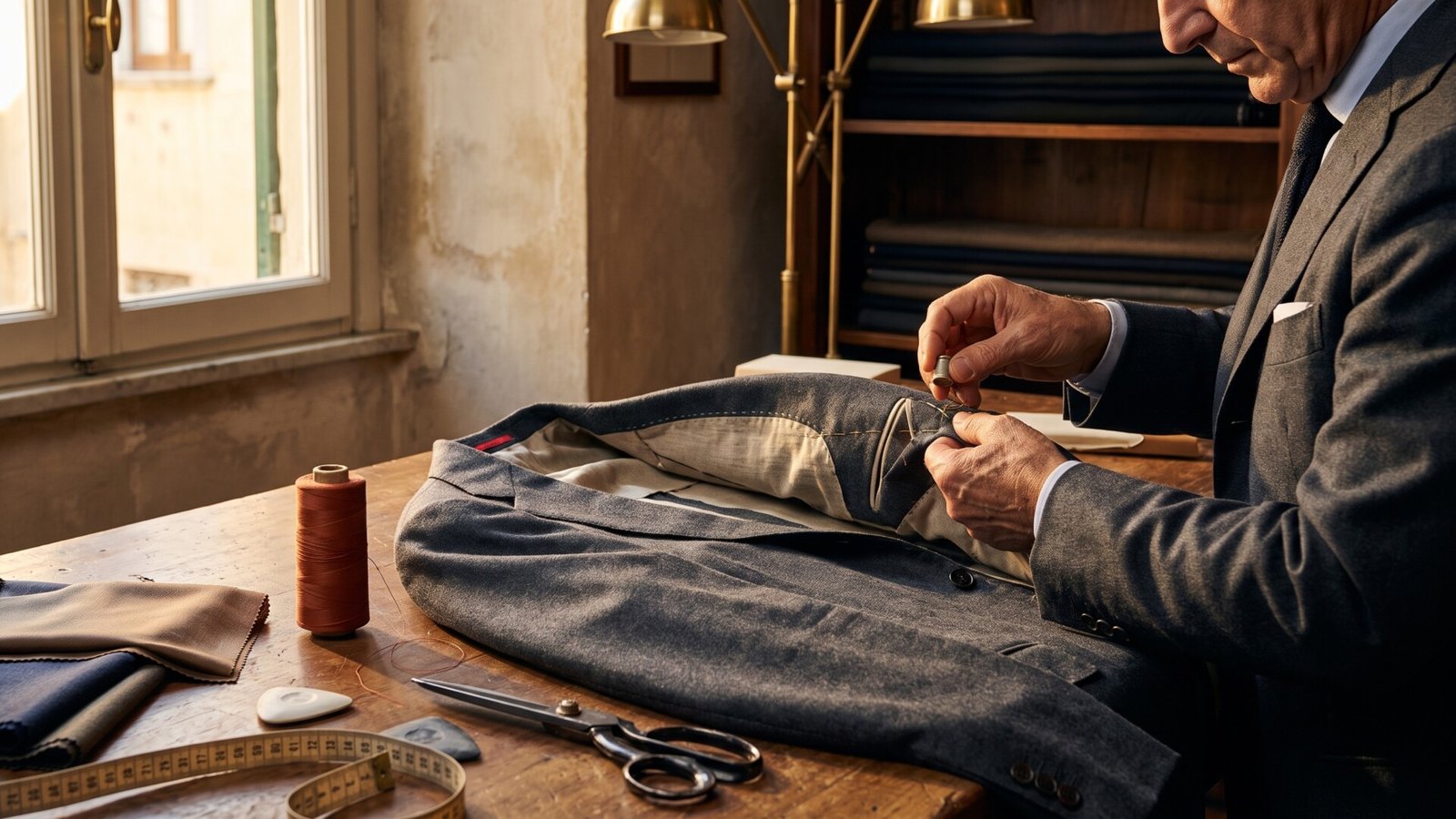
Kiton: The Pinnacle of Neapolitan Tailoring and Handcrafted Italian Luxury
Most buyers assume the gap between a $2,000 suit and a $10,000 suit is mostly branding. At the very top of Italian tailoring the gap is real but narrower to explain than the price suggests: it comes down to how many steps are done by hand, what goes inside the jacket, and how much the maker is willing to reject. Kiton is the house most often used to illustrate that argument.
This guide covers Kiton’s Neapolitan roots, how its jackets are constructed, its main product categories, how it compares with other Italian houses, and whether the price is worth paying. Where a figure comes from the brand’s own account of itself, we say so, and where we could not verify a number we have left it out rather than guess.
Kiton Brand Heritage and Neapolitan Roots
Founding in Naples
Kiton was founded by Ciro Paone, who started with a small workshop in Arzano, on the outskirts of Naples. Sources date the brand itself to 1968, while the parent company, Ciro Paone S.p.A., is dated to 1956; you will see both years quoted. Paone came from a family with a long tradition in the textile and clothing trade, and set out to make tailored garments to the highest standard using Neapolitan methods. He died in 2021 at the age of 88, and the company remains privately held and family-run, with his nephew Antonio De Matteis as CEO and his daughter Maria Giovanna Paone leading womenswear.
The name comes from the chiton, the ceremonial tunic of ancient Greece, a nod to classical ideas of proportion. From the start the brand positioned itself around permanence rather than seasonal fashion.
The Philosophy of “The Best of the Best +1”
Kiton’s own story page describes its standard as “the best of the best +1”: the idea that no garment is ever finished improving. That is how the brand presents its quality control, and it is worth treating as a statement of intent rather than something a customer can measure. What you can check is what the jacket is made of and how it is put together, which the next sections cover.
Growth into Global Ultra-Luxury
Kiton has grown from a small workshop into an international house. Womenswear arrived in 1995, eyewear in 2015, and an athleisure line, KNT, in 2018. The brand has boutiques in cities including Milan (a palazzo on Via Pontaccio that was formerly home to Gianfranco Ferre’s maison), Paris, Hong Kong, Moscow, San Francisco and New York, and its U.S. headquarters is in New York. Production remains anchored around Naples and Campania, with additional factories elsewhere in Italy; confirm the current boutique and factory list on the brand’s own site.
What Defines Kiton Tailoring?
Handcrafted Construction
Kiton is one of the few remaining houses that still builds a substantially handcrafted suit, but “handmade” needs care. Independent reviewers who have examined Kiton jackets describe pieces that are hand-cut and hand-tacked, with hand-sewn buttonholes and hand pick-stitching, alongside some machine work, for example on hems and some padding and canvas assembly. In other words, it is a high-handwork garment, not a garment with no machine involvement at all.
The jacket is fully canvassed with a floating canvas (no fusing or glue). A canvassed chest piece molds to the wearer over time, which is the main practical advantage over a fused jacket, and it is the first thing to look for on any suit at this price.
The Neapolitan Soft Shoulder
The most recognizable feature of a Neapolitan jacket is the “spalla camicia,” or shirt shoulder. Unlike structured British or Roman shoulders, which use padding and wadding to create a crisp line, the Neapolitan shoulder is lightly padded or virtually unpadded, and the sleeve is set with a slight natural ripple at the sleeve head that tailors call “grinze”.
This construction is lighter and more flexible than structured alternatives. It also demands skill: a poorly made soft shoulder collapses, while a well-made one drapes cleanly over the arm.
Fabric Selection Philosophy
Kiton works with fine wools, cashmere, silk, linen and exotic fibers such as vicuna. The house owns its own cloth interests: it acquired the Carlo Barbera mill in 2009, which gives it more control over exclusive weaves and finishes than a brand that only buys from outside mills. Whether a particular suit uses house cloth or fabric from another mill varies by model, so ask which cloth is in the garment you are considering.
Fit and Drape
A Kiton suit is designed to move with the body. The silhouette is soft and the lines fluid. Jackets are typically cut shorter than classic British styles and trousers taper gently, producing relaxed elegance rather than a sharp, architectural line.
Kiton also offers made-to-measure and bespoke services (the brand uses the term Su Misura for its custom work). Lead times and options vary by market, so confirm details with a Kiton boutique.
The Kiton Manufacturing Process
Artisan Production Model
The company employed roughly 850 people as of 2022, spread across several factories and functions. As in most tailoring houses of this level, a garment passes through many specialist hands (cutters, tailors, finishers, pressers) rather than being made start to finish by a single tailor. One published account of the main Arzano factory describes a small number of master tailors supported by a much larger group of finishers.
Time-Intensive Construction
Kiton has said that a suit involves more than 1,800 production steps and about 25 hours of labor. That figure is the brand’s own and covers total labor rather than handwork alone, so treat it as an indication of scale, not an audited number. Published retail prices for Kiton jackets have commonly fallen in a range of roughly $6,000 to $12,000, with suits costing more; prices vary by cloth and market and change over time, so check current figures with the brand or an authorized retailer.
Training the Next Generation
Kiton runs its own school of advanced tailoring in Naples, set up around 2000, a three-year program for young people aged roughly 16 to 21 that begins with jacket-making. The brand reports that most graduates go on to work for Kiton or other companies. It is a useful sign that the company is investing in the skills it depends on.
Core Product Categories
Suits (Core Identity)
Neapolitan soft suits are the heart of Kiton: business suits, formal suiting and lightweight summer suits, in single-breasted, double-breasted and unstructured “deconstructed” cuts. Suit pricing sits above jacket pricing; see the pricing note above.
Blazers and Sport Coats
Casual luxury tailoring in cashmere, silk or cotton blends, with soft shoulders and lighter construction. Blazers are the usual entry point to Kiton tailoring and are covered by the jacket price range above.
Shirts, Knitwear and Outerwear
Kiton also makes high-end cotton shirting, cashmere and fine-gauge knitwear, and tailored coats and lighter outerwear. If knitwear is your priority, compare it with Loro Piana, Brunello Cucinelli and Falconeri, and read our comparison of Loro Piana vs Brunello Cucinelli cashmere; for outerwear, see Moncler and Herno.
Accessories and Womenswear
Ties, pocket squares, belts and small leather goods round out the menswear range, and the house has made womenswear since 1995. Check the brand’s site for current ranges and prices.
Kiton vs Other Italian Tailoring Houses
Kiton vs Brioni
Brioni is associated with Roman tailoring: more structured, with a stronger shoulder and a more formal silhouette (see also stylish Brioni suits for a modern CEO). Kiton is softer and more relaxed. Both sit at the top of the price scale; the choice is largely between structure (Brioni) and ease (Kiton).
Kiton vs Canali
Canali is a modern, more accessible luxury brand with well-made, consistent, wearable suits at a lower price point. Kiton uses more handwork and costs considerably more. Canali is easier to wear weekly; Kiton is for buyers who want maximum handwork.
Kiton vs Zegna
Zegna is a fabric-first brand known for technical innovation and travel-friendly cloths. Kiton is construction-first. Zegna suits are excellent, but they are built at a different scale and price from Kiton’s handwork-heavy approach.
Kiton vs Giorgio Armani
Armani pioneered soft, unstructured tailoring for the fashion market. Armani suits are fluid, fashionable, and design-driven, and the distinction between lines is explained in Giorgio Armani vs Emporio Armani. Kiton suits are traditional, artisanal and construction-driven.
Position in Luxury Hierarchy
Kiton is generally ranked among the most expensive and most handcrafted names in Italian tailoring, alongside Brioni and Cesare Attolini. Below them sit Zegna and Canali, which offer excellent quality at more accessible prices. Rankings like this are a matter of opinion and positioning, not an objective measure.
Italian Tailoring Houses
| Brand | Craft Level | Structure | Price Tier | Identity |
|---|---|---|---|---|
| Kiton | Extremely high | Very soft | Ultra-high | Handcrafted Neapolitan luxury |
| Brioni | Very high | Structured | Ultra-high | Roman elegance |
| Canali | High | Medium-soft | High | Modern wearable tailoring |
| Zegna | High | Variable | High | Fabric innovation |
| Armani | High | Very soft | High | Fashion tailoring |
Why Kiton Appeals to Tailoring Purists
Handwork Over Scale
In an era of mass production, Kiton has kept a labor-intensive model. That does not mean no machines are used, but it does mean the brand invests heavily in the steps where hand finishing changes how a jacket wears.
The Invisible Luxury Standard
Kiton’s quality is not visible in logos. It shows in how the jacket moves, in how the collar sits against the neck, and in how the lapel rolls. This is luxury for buyers who prefer it understated, in the same spirit as the houses covered in our guide to why quiet luxury became a global trend.
Why Construction Matters More Than Fit at This Level
Most buyers worry about fit first. At this price, construction deserves equal attention because it determines how the fit develops. A floating canvas molds to your body over time, a well-set sleeve allows movement, and a well-made lapel rolls without puckering. That said, no construction substitutes for a correct fit, so budget for alterations by a tailor experienced with soft Neapolitan jackets.
What You Are Paying For
A Kiton jacket is expensive because of premium cloth, extensive labor, low production volume and brand positioning. It is reasonable to ask how much of the price is craft and how much is the name: a small Neapolitan maker or a made-to-measure tailor may offer comparable construction for less, though without Kiton’s finishing infrastructure or resale recognition.
How to Wear Kiton in a Modern Wardrobe
Formal Business Wear
A charcoal or navy suit with a white shirt, silk tie and black Oxfords. The soft shoulder reads as relaxed in a conservative setting, which is part of the appeal. For related guidance see Italian suits.
Smart Luxury Casual
A blazer over a cashmere turtleneck, grey flannel trousers and brown suede loafers. The unstructured jacket suits client dinners and gallery openings. Our guide to styling Italian shoes for every occasion helps with the footwear.
Leisurewear and Knit Sets
Kiton’s knit pieces, including the KNT line, can double as travel attire or elevated loungewear.
Travel and Lifestyle Dressing
A lightweight wool-silk or linen blend with a polo knit and white leather sneakers. Soft construction packs better than structured tailoring, though no suit is wrinkle-proof; hang it promptly on arrival.
Investment Value: Is Kiton Worth It?
Cost-Per-Wear Reality
As an illustration, a hypothetical $10,000 suit worn 30 times a year for 15 years comes to roughly $22 per wear, while a $2,000 suit worn 30 times a year for five years comes to about $13 per wear. The expensive suit only wins on cost if it genuinely lasts much longer and you keep wearing it, which depends on care, fit changes over time and your taste, so treat any such math as an illustration rather than a promise.
Resale and Collector Value
There is an active secondhand market for Kiton, and buyers who are patient can find pieces at large discounts to retail, which is a good argument for buying pre-owned if you want the construction without the full price. Sellers should not expect to recover most of the purchase price: resale values vary widely by model, condition, size and cloth, and some jackets sell for a small fraction of retail. Authenticate carefully, using our guide to how to spot authentic Italian designer pieces, and see buying used luxury tailoring online for general precautions.
Wardrobe Role
Kiton is best treated as a considered, long-term purchase. Some owners reserve pieces for occasions; others wear them regularly, and a well-cared-for canvassed jacket can handle regular wear. Which approach suits you depends on your wardrobe and budget.
Care and Maintenance Guide
Suit Rotation Strategy
Avoid wearing the same suit on consecutive days. Rotating lets the wool recover its shape and shed moisture.
Dry Cleaning Sensitivity
Dry clean only when necessary, typically no more than once or twice a year, as frequent cleaning can stiffen the cloth and stress canvas and hand-finished details. Brush after wear and steam to refresh between cleanings.
Storage Best Practices
Use wide, shaped wooden hangers and breathable cotton garment bags, never plastic, and store in a cool, dry closet away from direct sunlight. Cashmere pieces benefit from the care steps in how to clean Loro Piana cashmere.
Tailoring Repairs
If a seam loosens or a button falls off, go to a tailor who specializes in high-end menswear rather than a standard dry cleaner.
The Future of Kiton and Ultra-Luxury Tailoring
Kiton’s tailoring school is one answer to the main threat to this style of making, which is the loss of skilled labor. Demand for visible craftsmanship and slower, longer-lasting clothing continues to benefit houses like Kiton, and a garment worn for many years has a smaller footprint per wear than one replaced often. The brand also says it has invested in solar power at its facilities, though we have not independently verified its environmental claims.
Explore More Italian Brand Guides
Kiton is part of our guide to Italian designer brands. If you are comparing tailoring and menswear houses, see Brioni, Canali, Zegna, Brunello Cucinelli and Loro Piana. For leather and outerwear specialists see Rifugio, Stewart, Valstar, Moncler and Herno; for footwear to pair with tailoring, Santoni, Tod’s and Officine Creative. Other houses in the cluster include Gucci, Prada, Fendi, Valentino, Versace, Bottega Veneta, Salvatore Ferragamo, Missoni and Dolce & Gabbana.
Frequently Asked Questions About Kiton
What makes Kiton different from other Italian suit brands?
Kiton combines Neapolitan soft tailoring with an unusually high share of handwork: hand-cut and hand-tacked pieces, hand-sewn buttonholes and a floating canvas rather than fused construction. The brand says a suit involves more than 1,800 production steps and about 25 hours of labor.
Is Kiton the most expensive Italian suit brand?
Kiton is among the most expensive, alongside names such as Brioni and Cesare Attolini. Published retail prices for its jackets have commonly fallen around $6,000 to $12,000, with suits costing more. Prices change by cloth and market, so check current figures with the brand.
Are Kiton suits fully handmade?
Not entirely. Kiton jackets involve a great deal of hand work, but independent reviewers also note some machine-stitched elements, such as hems and some canvas and padding assembly. They are best described as high-handwork rather than fully hand-sewn.
How long does a Kiton suit last?
With good care, a canvassed jacket can last many years, but no brand can guarantee a lifespan. Rotation, limited dry cleaning, proper storage and skilled repairs matter as much as the original construction.
Is Kiton better than Brioni or Canali?
It depends on what you want. Kiton offers softer, more relaxed Neapolitan tailoring with extensive handwork. Brioni offers a more structured Roman silhouette. Canali offers well-made, more wearable tailoring at a lower price.
Why is Kiton so expensive?
The price reflects premium cloth, many production steps and long labor time, low production volumes, quality control and brand positioning. Some of the premium is craft and some is the name.
Can Kiton suits be worn casually?
Yes. A softer, unstructured Kiton blazer in cotton, linen or cashmere can be worn with chinos or jeans. The soft shoulder and lighter canvas make it more versatile than a structured suit.
What fabric does Kiton use?
Kiton works with fine wools, cashmere, silk, linen and rarer fibers such as vicuna. It owns the Carlo Barbera mill, acquired in 2009, and also develops exclusive cloths; fabric varies by garment, so check the label.
Who owns Kiton?
Kiton is a privately held family company founded by Ciro Paone, who died in 2021. His nephew Antonio De Matteis serves as CEO, and his daughter Maria Giovanna Paone leads womenswear.
Conclusion
Kiton is a useful benchmark for what extensive handwork and a soft Neapolitan cut can deliver in a suit. The floating canvas, soft shoulder and hand-finished details are what the premium pays for, and whether that premium is worth it depends on how you will wear the clothes and how much craft matters to you. If you decide it does, buy from an authorized retailer or a reputable pre-owned seller, budget for alterations, and look after it.
Explore more Italian luxury: Italian Suits | Italian Designer Clothing | Brioni | Canali | Zegna