How to Clean Loro Piana Cashmere
Cashmere is not just another knit. Hot water, a spin cycle or a tumble dryer can felt and shrink a fine sweater in a single wash, and that is true whether it came from a high-street label or from Loro Piana. The safe approach is to follow the care label first, wash gently and rarely, dry flat, and store the garment clean and folded.
This guide covers the cleaning methods (hand washing, machine washing with caution, and professional cleaning), drying and finishing, moth-safe storage, and fixes for common problems such as pilling and stretched cuffs. It is a research-based care guide: we have not hands-on tested the products mentioned, and Loro Piana’s own care label and advice should always take priority over general tips. Prices are left out because they vary by garment, season and market.
The House of Loro Piana and the Gift of Cashmere
Before we dive into soap and water, it helps to understand what we’re dealing with. Loro Piana is an Italian textile house founded in the 1920s in Piedmont; LVMH acquired a controlling 80% stake in 2013, and the founding family kept a minority holding. The house is known for sourcing fine cashmere from goats in Inner Mongolia and northern China, and for its “Baby Cashmere,” a line it describes as made from the fleece of young kid goats. Treat those sourcing claims as the house’s own description rather than independent verification. What matters for care is that very fine, soft cashmere is also delicate, so a gentle method matters more than the brand name on the label.
Cashmere itself is a marvel. It’s not wool, though many people confuse the two. Wool comes from sheep, and the fibers are thicker, coarser, and more resilient. Cashmere comes from the downy undercoat of the cashmere goat. It’s incredibly fine—much finer than human hair—which is what gives it that ethereal softness. But that fineness is also its vulnerability. The fibers are delicate and can be easily broken, matted, or distorted by harsh chemicals, heat, and friction.
This is why a one-size-fits-all cleaning approach is a disaster. You cannot treat a Loro Piana cashmere sweater like a cotton t-shirt. You have to work with the fiber, not against it.
The Critical Difference: Why Cashmere Needs Special Care
Here’s the thing: cashmere is a protein fiber, just like your hair. Think about what happens to your hair if you use the wrong shampoo or aggressively towel-dry it. It gets damaged, frizzy, and brittle. Cashmere behaves the same way.
When you clean cashmere improperly, you’re not just getting it dirty again. You’re actively breaking down the microscopic scales on the fibers. This leads to the two biggest enemies of a beautiful knit: pilling and felting.
- Pilling is the formation of those little balls of fuzz on the surface. It’s caused by friction, which tangles loose fibers together.
- Felting is worse. When you combine moisture, heat, and agitation, the scales on the cashmere fibers lock together permanently. The fabric shrinks, thickens, and loses all its drape and softness. That is how a sweater ends up child-sized after one hot wash.
Proper cleaning, therefore, is about being gentle. It’s about removing dirt and odors without breaking those delicate fibers.
The Best Way to Clean Your Loro Piana Cashmere
There are three main ways to clean your cashmere: hand washing, machine washing (with extreme caution), and dry cleaning. Start by checking the garment’s care label and any guidance from Loro Piana, which sells its own cashmere soap for home washing. Some garments, such as structured coats, jackets and heavily trimmed pieces, are best left to a professional. Below, each method is broken down so you can decide which is right for the piece you own.
Hand Washing: The Gold Standard
For most knitwear whose care label allows it, hand washing is the gentlest option. It gives you control over water temperature and agitation, and it is easy once you have done it once.
Here is a step-by-step process:
- Fill a basin with lukewarm water. The water should feel cool to the touch, around 20-30 degrees Celsius (68-86 degrees Fahrenheit). Never use hot water; it will shock the fibers and cause shrinkage.
- Add a specialized detergent. This is non-negotiable. You cannot use regular laundry detergent. It’s too harsh. Use a dedicated wool and cashmere wash, such as Loro Piana’s own cashmere soap or a product like The Laundress Wool & Cashmere Shampoo, following the dosage on the bottle.
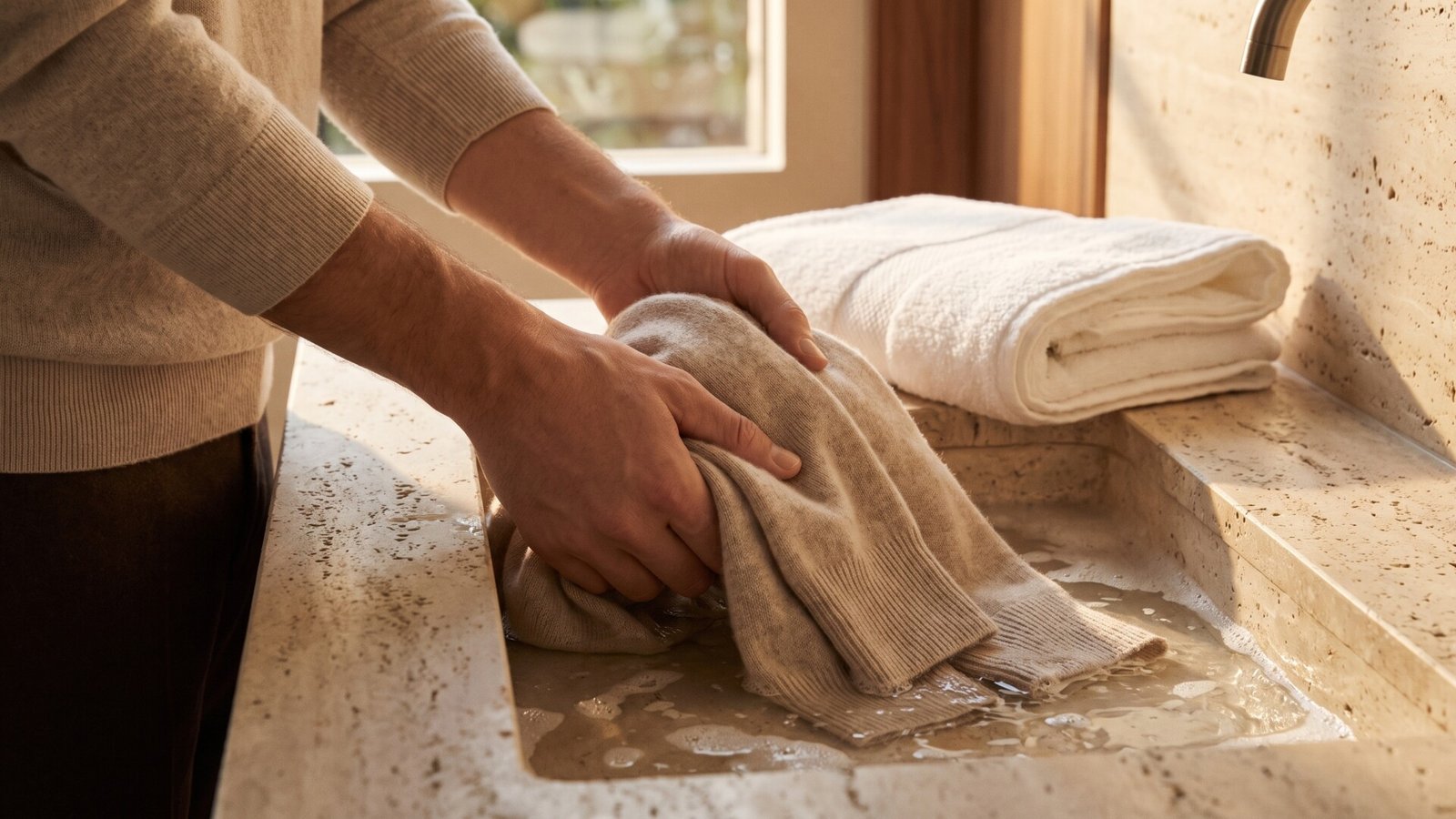
- Submerge the garment and gently press. Do not scrub, wring, or twist. Just press the water through the sweater with your hands to allow the soap to penetrate. Let it soak for about 10 to 15 minutes.
- Drain and rinse. Drain the soapy water and refill the basin with clean, lukewarm water. Gently press the sweater again to remove the soap. You may need to repeat this a couple of times until the water runs clear.
- Remove excess water. Here’s the trick: never lift a wet cashmere sweater by its shoulders—it will stretch. Instead, lift it from underneath, supporting the entire weight. Place it on a clean, dry towel. Roll the towel up with the sweater inside and press gently to absorb the excess water.
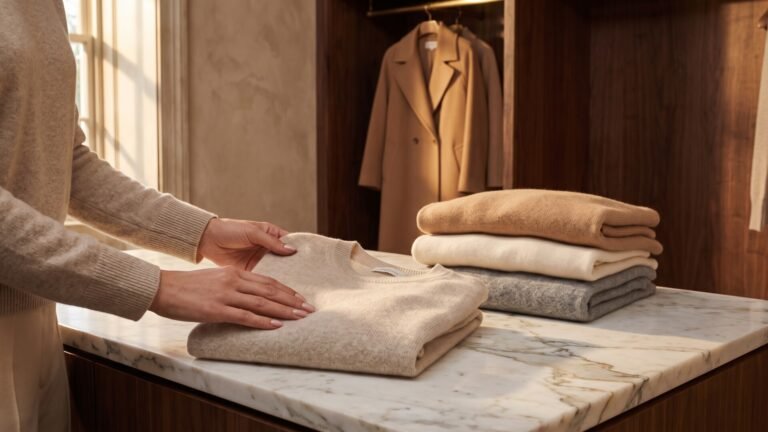
- Dry flat. Lay the sweater flat on a fresh, dry towel on a flat surface, reshaping it to its original dimensions. Keep it out of direct sunlight and away from heat sources.
Machine Washing: The Risky Convenience
Can you machine wash Loro Piana cashmere? Only if the care label explicitly allows it. Even then it is best reserved for sturdy, heavy-gauge knits, because machine washing puts more stress on fine fibers than hand washing does.
If you must use a machine, follow these rules strictly:
- Use a mesh washing bag. This is essential. It protects the sweater from getting snagged on other items and reduces friction. Choose a fine-mesh bag rather than a coarse one.
- Select the most delicate cycle. Look for a “wool” or “hand wash” cycle. This uses minimal agitation and a slow spin speed.
- Use cold water. Again, no heat.
- Use the same specialized detergent. Never use standard powder or liquid detergents.
- Never machine dry. The heat of a dryer is instant death for cashmere. It will felt and shrink without fail.
Even with all these precautions, machine washing causes more wear and tear than hand washing. It’s a convenience, but it’s not the best choice for a high-investment piece.
Dry Cleaning: When to Use It
Dry cleaning is often assumed to be the only safe option, but that is not always true. Some solvents and heavy pressing can leave cashmere feeling drier, so frequent dry cleaning is not ideal for knitwear that can be washed gently, and it can be costly and inconvenient.
However, there are times when dry cleaning is the right choice:
- For structured garments like tailored cashmere coats or blazers that cannot be immersed in water.
- For heavily soiled items or stubborn stains that you don’t feel confident tackling yourself.
- For the convenience of having a professional handle it.
If you go this route, be specific. Ask your cleaner if they specialize in delicate knits and if they use a “wet cleaning” or “gentle dry cleaning” process. Excess heat during pressing can damage cashmere, so choose a reputable professional and always tell them it is cashmere.
Drying and Finishing: The Final Steps
Getting the water out is only half the battle. How you dry and finish the garment is equally important.
- Never tumble dry. The heat and tumbling action can cause irreversible felting. Air drying flat is the safest approach.
- Never hang a wet sweater. The weight of the water will pull the garment out of shape, stretching the shoulders and body. Always dry flat.
- Reshape while damp. When you lay it out to dry, take a moment to gently pull it back into shape. If the sleeves have stretched, nudge them back to their correct length.
- Steam, don’t iron. Once dry, your cashmere may have some wrinkles. Do not use an iron directly on the fabric. The heat and pressure will crush the fibers and create a shine. Instead, use a handheld garment steamer to gently relax the fibers and remove wrinkles. Hold the steamer a few inches away and let the steam do the work.
How to Store Your Cashmere for the Long Haul
Proper storage is the final piece of the puzzle. It’s what protects your investment during the months when your sweaters are tucked away.
- Clean before storing. Never store cashmere that has been worn. Body oils, perfumes, and food particles are like a dinner bell for moths.
- Fold, don’t hang. Hanging a cashmere sweater on a hanger will cause it to stretch out of shape at the shoulders. Fold it neatly and store it on a shelf.
- Use breathable storage bags. Avoid plastic bags. They trap moisture, which can cause mildew. Choose breathable cotton or canvas storage bags. Breathable garment bags protect against dust while allowing the fabric to breathe.
- Repel moths naturally. Moths are the bane of a cashmere lover’s existence. Cedar blocks or lavender sachets are a pleasant alternative to chemical mothballs, but they are only mild deterrents. The most reliable protection is storing garments clean, in sealed breathable bags, and checking them periodically.
Read the Care Label First
Care labels use standard symbols, and they override general advice. A basin symbol with a hand means hand wash only; a basin with a number gives the maximum temperature; a crossed-out tumble dryer means no machine drying; a crossed-out iron means no ironing; a circle means professional cleaning is required or permitted. Blends change the picture too: cashmere with silk or wool, and garments with leather trims, linings or embellishments, may need different handling than pure cashmere knit. If the label and this guide disagree, follow the label.
Fixing Common Cashmere Problems
- Pilling: Remove pills lightly with a cashmere comb or manual shaver; expect more pilling in the first wears and in high-friction areas such as underarms and cuffs.
- Stretched cuffs or hems: Reshape while damp and dry flat; a professional knitwear specialist can sometimes re-block a stretched garment.
- Odors: Air the garment on a flat surface away from direct sun or heat, or steam it lightly, before washing.
- Moth holes: Small holes can often be invisibly mended by a specialist; wash and re-store the garment properly afterward.
- Felted or shrunken pieces: Felting is generally irreversible, which is why prevention matters.
When to Use a Professional or Contact the Brand
Take structured coats, heavily embellished knits, garments with leather or fur trim, and anything with a stain you cannot identify to a specialist. Before you hand over a valuable piece, ask whether they have handled fine knitwear before, whether the process is wet cleaning or solvent cleaning, and how they dry and press it. For high-value pieces, you can also ask Loro Piana’s client service about its care and repair guidance.
The Ownership Reality After 12 Months
Now, let’s talk about the part most care guides skip: the real cost of a garment is its cost per wear, and that depends heavily on how it is treated.
As a hypothetical, imagine a $1,500 sweater (an illustrative figure, not a quoted price). If poor care means it looks shabby after two seasons, the cost per wear is high. If careful washing, drying and storage keep it wearable for many years, the same garment costs far less per wear.
Fine fibers tend to feel softer and can last well when cared for, but even the best yarn can be ruined by a hot wash. Good care is what protects the investment, whatever the fiber grade.
Care also affects resale. Well-kept classic pieces generally resell better than felted, pilled or discolored ones, and platforms such as The RealReal or Vestiaire Collective list pre-owned Loro Piana. Resale values vary widely and are never guaranteed, so treat resale as a bonus, not a reason to buy.
What Most Buyers Get Wrong About Cashmere Care
These are the most common mistakes people make with cashmere, and each is easy to avoid.
- Over-washing. Cashmere doesn’t need to be washed after every wear. In fact, over-washing is one of the quickest ways to damage it. Unless there’s a visible stain or a strong odor, airing it out after wearing is often enough. A common rule of thumb is to wash after several wears, depending on the garment and how it is worn.
- Using fabric softener. This is a big one. Fabric softener coats the fibers with a waxy residue that actually makes them less soft over time and can reduce their breathability. Your specialized cashmere shampoo is all you need.
- Scrubbing stains. When you get a stain, your instinct is to rub it. Don’t. Rubbing pushes the stain deeper into the fibers and can cause felting. Blot the stain gently with a clean, white cloth to absorb as much as possible, then treat it with a specialized stain remover or a bit of your cashmere shampoo.
- Ignoring pilling. Pilling is natural, especially on areas that experience friction like the elbows and underarms. It doesn’t mean your sweater is low quality. The key is to remove pills gently with a comb or fabric shaver designed for fine knits, working lightly and testing on a hidden area first.
The Essential Cashmere Care Kit
You don’t need a closet full of products, but you do need the right ones. Here are the tools that are most useful for anyone caring for luxury cashmere. Product details change, so check the current listing before buying.
[Affiliate: Shop The Laundress Wool & Cashmere Shampoo]
A dedicated wool and cashmere wash is the most useful product to own, because ordinary laundry detergent is too harsh. Use the dosage on the bottle; a little goes a long way.
[Affiliate: Shop a Delicate Mesh Washing Bag]
If you ever decide to machine wash a sturdy knit, you absolutely need one of these. It protects the garment from friction and snags. A fine-mesh bag is better, as the holes are small enough to prevent the fabric from being pulled through.
[Affiliate: Shop the Gleener Ultimate Fabric Shaver]
A manual fabric shaver can remove pills from knitwear. Electric shavers can be too aggressive and cut the fabric, so use any shaver lightly and test it on a hidden area first.
[Affiliate: Shop Wool & Cashmere Storage Bags]
Breathable bags suit off-season storage: they protect sweaters from dust while allowing the fabric to breathe, which helps prevent mildew. They are a better option than plastic dry-cleaning bags.
[Affiliate: Shop the Dryel Home Dry Cleaning Kit]
At-home dry-cleaning kits are sold for quick refreshes between washes, but many involve a tumble dryer, which conflicts with the advice above never to heat-dry cashmere. Check the kit’s instructions and the garment’s care label before using anything like this, or skip it in favor of airing and steaming.
The Secret at the Heart of Cashmere
The value of a fine knit is not only in the buying but in the keeping. A gentle hand wash, careful reshaping on a flat towel and a light steam take little time, and they are what keeps cashmere soft and wearable for years.
When in doubt, follow the garment’s care label, ask Loro Piana or a specialist cleaner about anything structured or heavily trimmed, and test any product on a hidden area first.
For more guidance on caring for a luxury wardrobe, explore our Loro Piana brand guide, our guide to cleaning and protecting Loro Piana suede shoes, and our overview of Italian designer brands. If you want the quiet-luxury look at a lower price, see men’s Loro Piana cashmere sweater alternatives. [Affiliate: browse our selection of Loro Piana-inspired cashmere]
Frequently Asked Questions About Cleaning Loro Piana Cashmere
What is the best way to clean Loro Piana cashmere?
Hand washing with a specialized wool and cashmere shampoo in lukewarm water is the gentlest and most effective method. It gives you the most control and minimizes stress on the delicate fibers.
Can I machine wash Loro Piana cashmere?
Only if the care label allows it, and then with extreme caution. Use a delicate mesh bag, select the most gentle cycle (like a “wool” or “hand wash” setting), use cold water, and always use a specialized detergent. Never put it in the dryer.
How do I remove stains from cashmere?
Blot the stain gently with a clean, white cloth to absorb as much as possible. Do not rub or scrub. Then, treat the area with a small amount of specialized cashmere detergent or a gentle stain remover before washing.
Is dry cleaning necessary for cashmere?
Not always. For most garments, hand washing is sufficient and kinder to the fibers. Dry cleaning is best for heavily soiled items, structured pieces like coats, or when you want the convenience of professional care.
How often should I wash my cashmere garments?
It depends on how often you wear them. As a general rule, you can wear a cashmere sweater three to five times before it needs a wash, provided you’re not wearing it next to your skin and it doesn’t have any stains. Airing it out between wears is key.
Can I tumble dry my cashmere?
No. The heat and tumbling action can cause the fibers to felt and shrink irreversibly. Always air dry your cashmere flat on a towel.
Does Loro Piana sell its own cashmere wash?
Yes, Loro Piana lists a cashmere soap in its At Home range. Check the brand site for current availability and follow the instructions on the product.
How should I store Loro Piana cashmere over summer?
Wash or air it clean, fold it, and store it in a breathable cotton bag or box in a cool, dry place. Avoid plastic, and check the garments periodically for moth damage.