Why Quiet Luxury Became a Global Trend
For decades, luxury was often measured by how visible the logo was. Then, around 2023, the conversation changed. Commentators noticed that a growing number of wealthy and fashion-literate buyers were choosing unlabelled camel coats, plain cashmere knits and bags with no visible branding. The trend got a name, quiet luxury, and it has since moved from fashion pages to mainstream retail.
This article looks at why the movement took hold, where its aesthetic comes from, which houses (many of them Italian) define it, and how to apply its principles to your own wardrobe without falling for the hype. It treats quiet luxury as a way of buying, not a costume: fewer pieces, better materials, and quality you can feel rather than read.
What Is Quiet Luxury?
Quiet luxury is an aesthetic defined by what it leaves out. It strips away logos, flashy hardware and trend-driven silhouettes in favour of exceptional materials, careful tailoring and long-lasting design. The value is meant to be in the stitching, the weight of the fabric and the cut of the shoulder rather than in a monogram print. Related terms include stealth wealth and old money style; they overlap but are not identical, because quiet luxury is about the product while the others describe a social look.
The idea is not new. Before the logomania of the 1990s and 2000s, much of high-end clothing was understated by default: the bespoke suit, the made-to-measure shirt, the garment recognised by people who knew how to look at it. What changed in the 2020s was the scale of attention.
How the Trend Went Global
Fashion media in 2023 tied the rise of the term to two cultural moments. The first was the HBO series Succession, whose wealthy characters wore deliberately unbranded clothes, including a baseball cap by the Italian house Loro Piana that became a much-discussed symbol of the look. The second was the March 2023 trial involving Gwyneth Paltrow, whose understated courtroom wardrobe was widely cited as an example of stealth wealth. Coverage in outlets such as Bloomberg, the Irish Times and Italy’s Il Post helped turn the phrase into a mainstream trend.
Several slower forces sat behind those moments. Many consumers have become warier of fast fashion and its environmental cost, and more aware that a logo-printed item can be made in the same factories as a far cheaper one. Economic uncertainty pushed some buyers toward fewer, longer-lasting purchases. And after years of social-media-driven trend cycles, some shoppers wanted clothing that did not date. Quiet luxury offered all three: a reaction against excess, a sustainability argument, and a look that does not need replacing every season.
Decoding the Aesthetic
Quiet luxury is a study in restraint. Colour palettes are muted and natural: oat, cream, camel, charcoal, olive and espresso. Silhouettes are clean and proportioned rather than exaggerated, and detailing is minimal, often limited to a well-finished buttonhole, a hand-rolled hem or a perfectly set sleeve.
Materials are the main event. Typical fibres include cashmere, vicuña (a very fine and very expensive fibre from the Andean vicuña, which is a protected species), fine merino, silk and long-staple cotton. Wool grades are often described with “Super” numbers such as Super 150s, which refer to fibre fineness; a higher number means finer, softer cloth, though not automatically more durable. The fabric hand, the way a cloth drapes and feels, is the sensory signal that quiet luxury relies on in place of a logo.
Archetypal pieces include:
- The Row’s cashmere sweaters: The Row, founded in 2006 by Mary-Kate and Ashley Olsen, is an American label known for pared-back knitwear and tailoring with almost no embellishment. The focus is on cut, fibre and finishing.
- Loro Piana outerwear: The Italian house is known for premium fibres and technical finishes. Its Storm System treatment is a protective finish used on cashmere, wool and other fabrics, described by the house as water-repellent while keeping the fabric’s feel.
- Brunello Cucinelli’s tailored separates: Often nicknamed the “King of Cashmere”, Cucinelli built his company in the Umbrian village of Solomeo, and is known for relaxed, soft tailoring in a neutral palette. Read our full guide to Brunello Cucinelli.
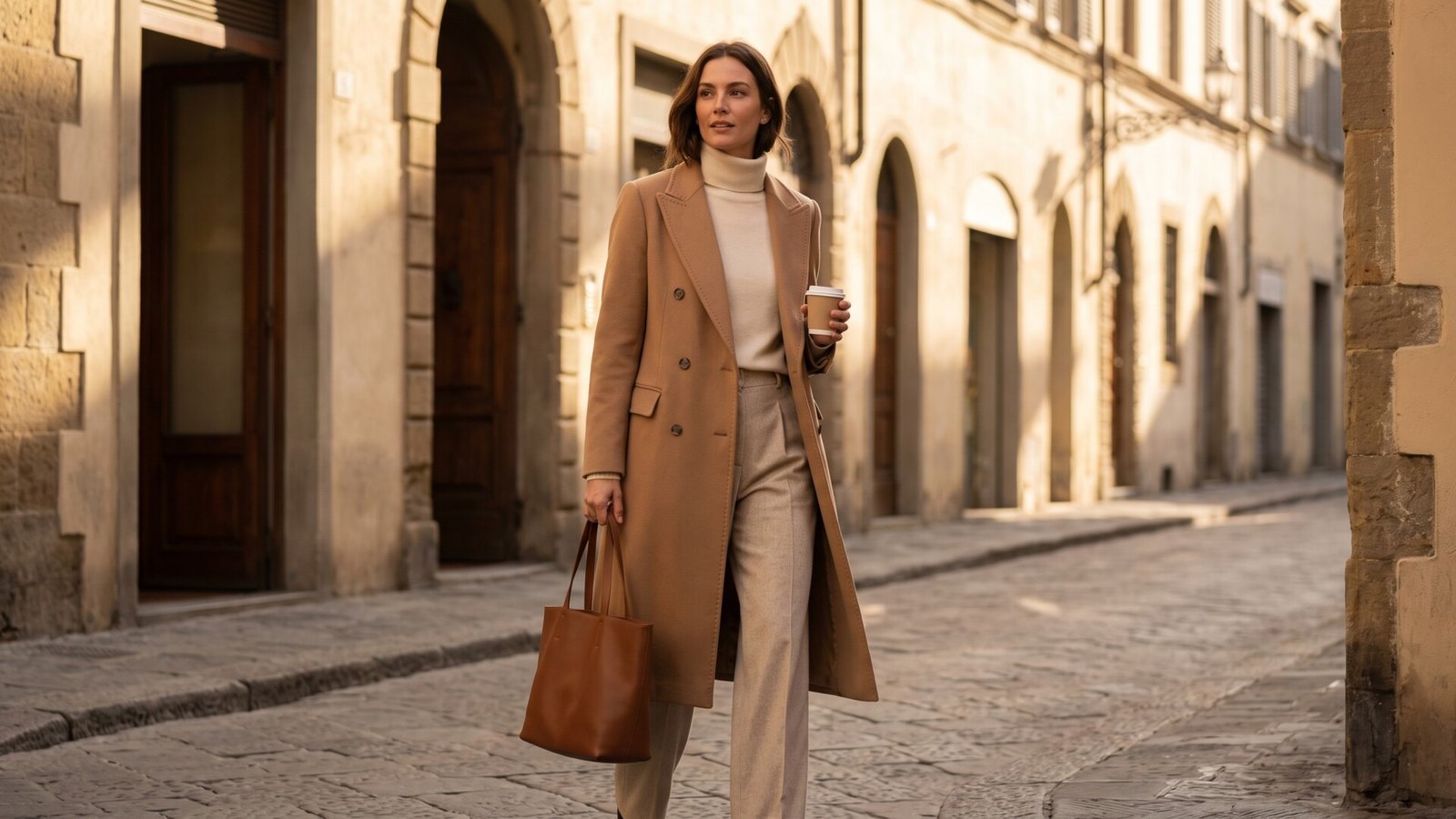
- Max Mara’s 101801 coat: Launched in 1981 and designed by Anne-Marie Beretta for the Reggio Emilia house, the double-breasted wool and cashmere coat is one of the best-known camel coats in fashion.
These pieces share a common thread: they do not demand attention. They earn it through cloth, cut and construction.
Why Italy Sits at the Centre of Quiet Luxury
Italian fashion has long relied on specialised textile and leather districts rather than on single-house mythology. Biella has a long reputation for wool, Como for silk, and Prato for woollens and recycled-wool cloth. Many Italian houses draw on the same families of mills, spinners and workshops, which is part of why Italian quiet luxury is so consistent in quality of cloth and finishing.
The quiet end of Italian fashion also has strong brand identities built on craft instead of logos. Bottega Veneta, founded in Vicenza in 1966 and now part of Kering, is known for intrecciato, a woven leather technique that makes its bags recognisable by texture rather than by a name. Loro Piana, founded in 1924 in the Piedmont wool region, has been majority-owned by LVMH since 2013 and is known for its cashmere and vicuña. Tailoring houses such as Zegna and Brioni, and cashmere specialists covered in our guide to the best Italian cashmere brands, extend the picture. For the wider map of houses, see our overview of Italian designer brands, and for the contrast with Paris, Italian vs French fashion.
Craftsmanship and Materials
The craft argument is central to the movement. A well-made garment or bag will show it in details most people only notice on close inspection: even stitching, reinforced stress points, linings that match the quality of the shell, and edges that are finished rather than simply cut.
Cashmere illustrates the point. Loro Piana describes its Baby Cashmere as coming from the first fleece of young goats, and it is promoted as especially fine; this is the maker’s own description, but the broader principle holds across the category: fibre length, fineness and spinning quality largely determine how a knit feels and how well it resists pilling. Our guide to Italian cashmere sweaters for men explains what to check.
Leather goods work the same way. Hermès says each Birkin and Kelly bag is made by a single artisan, a point the house uses to explain the long production time and its price. Among Italian examples, Bottega Veneta’s woven leather and Prada’s Saffiano, a cross-hatch pressed calfskin, are distinctive because they are material signatures, not logos. Prada’s Saffiano is coated and is designed to resist scratches and water, though like any bag it will still age with use.
Sustainability is increasingly part of the story, from certified fibres to traceable supply chains, but claims vary by brand. Look for specific, verifiable statements such as certification names and sourcing details rather than general language about being responsible.
A Comparison of Quiet Luxury Brands
| Brand | Origin | Known for | Key material | Aesthetic |
|---|---|---|---|---|
| Brunello Cucinelli | Italy (Solomeo, founded 1978) | Soft tailoring, knitwear | Cashmere, wool, cotton | Relaxed, neutral |
| Loro Piana | Italy (founded 1924) | Outerwear, knitwear, fine fibres | Cashmere, vicuña, technical wool | Refined, functional |
| Bottega Veneta | Italy (Vicenza, founded 1966) | Intrecciato bags and leather goods | Woven leather | Artisanal, modern |
| Max Mara | Italy (Reggio Emilia, founded 1951) | Coats, especially the 101801 | Wool, cashmere, camel hair | Classic, polished |
| The Row | United States (founded 2006) | Minimal knitwear, tailoring, bags | Cashmere, silk, fine leather | Architectural, minimal |
| Hermès | France (founded 1837) | Birkin and Kelly bags | Calf and other leathers | Iconic, heritage |
Prices change often and differ by market, size and fabric, so check each brand’s own site for current figures. All of these houses sit at the high end of the market.
The Designers Who Shaped the Look
Every movement has its advocates, and quiet luxury has several:
- Phoebe Philo: Her tenure as creative director at Celine from 2008 to 2018 is widely credited with popularising an intellectual, minimalist wardrobe built on confidence and comfort rather than flash. She launched her own label in late 2023.
- Nili Lotan: A New York-based designer known for utilitarian trousers, shirts and outerwear meant to be lived in.
- Joseph Altuzarra: His designs can be more overtly sensual than strict quiet luxury, but his focus on tailoring and fabric aligns with the movement.
- Brunello Cucinelli: Among Italian figures, Cucinelli’s company is closely associated with the style, with its approach to craft, soft palettes and a stated emphasis on the dignity of labour.
For the wider Italian field, see our guide to Italian fashion designers.
Understanding the Quiet Luxury Consumer
The typical buyer is not looking for a status symbol. Commentary on the trend describes established, discerning shoppers who value money and time and treat clothing as part of a considered personal style. For these buyers, wearing quiet luxury is an inside signal: it communicates knowledge of quality to people who know what to look for, and says nothing to those who do not.
There is also a psychological pull. In a feed-driven culture of constant content, understated clothing offers a way to opt out of the noise. The priority shifts from quantity to quality, from what is visible to what is felt.
The trend has critics. Some argue that quiet luxury is itself a status game, a signal available only to those who can afford very expensive plain clothes, and that “no logo” has become its own logo. That tension is worth keeping in mind when you shop: the point is quality and longevity, not a new uniform of wealth.
The Investment Value of Quiet Luxury
Quiet luxury is often justified on cost-per-wear. As an illustration only, with hypothetical numbers: a $200 pair of trend-driven boots worn 20 times before they fall apart costs $10 per wear. A $1,200 pair of well-made leather boots worn 200 times over several years costs $6 per wear and may be repairable, while the cheaper pair is not. Your own numbers will depend on what you buy and how you wear and care for it.
Resale is a second argument, with caveats. The resale market for luxury goods is large, and well-kept classic pieces from top houses tend to hold value better than fast fashion, which has little resale value at all. But resale prices vary widely by brand, model, condition and market, and nothing is guaranteed to appreciate; treat any claim that a particular item is an investment with caution. Condition matters, so it is worth learning how to look after what you buy, starting with our guides to leather conditioners and caring for Italian leather shoes.
Pieces commonly bought with longevity in mind include:
- A camel coat: Max Mara’s 101801 or a similar wool-and-cashmere coat in a classic cut.
- A structured leather bag: Choose a neutral colour in a durable leather; see our guide to iconic Italian handbags and the top Italian handbag brands.
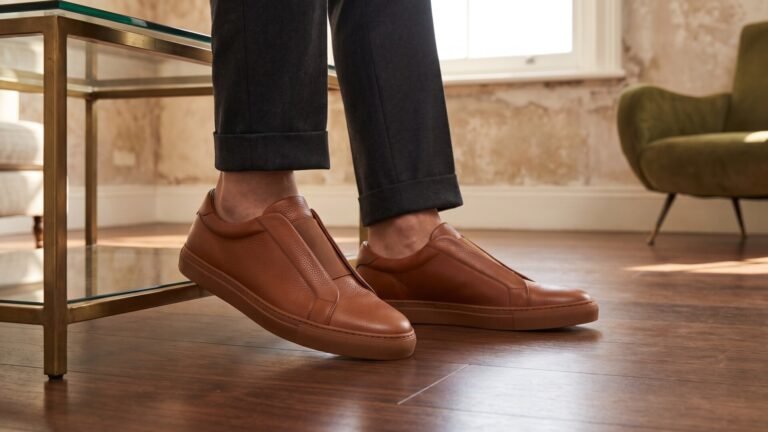
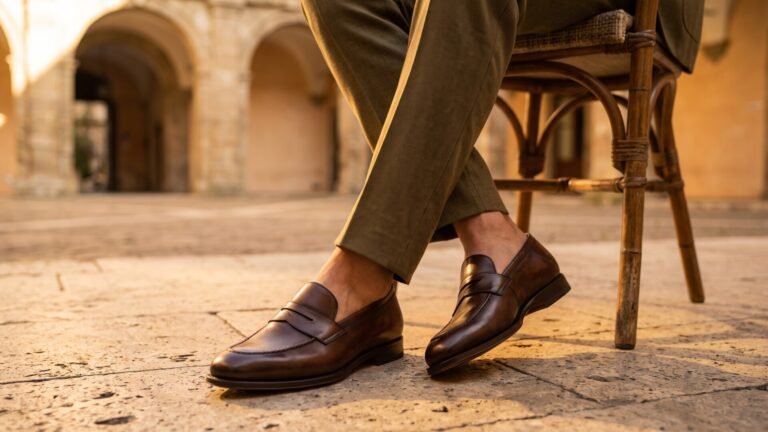
- Well-made shoes: Loafers and driving shoes with leather soles or repairable construction; see whether luxury Italian shoes are worth the money.
- Tailoring: A suit or jacket in a quality cloth, explained in our guide to Italian suits.
- Cashmere knitwear: A crew neck or cardigan in a neutral shade; start with the best Italian cashmere brands.
The key is to buy the best you can afford, focus on timeless styles and choose neutral colours that will outlast seasons. It is about spending smarter, not necessarily more.
The Ripple Effect on the Fashion Industry
The rise of quiet luxury has pushed brands to reconsider how they present themselves. Logo-heavy marketing has lost ground at several houses to storytelling about ateliers, materials and heritage. Some brands now describe their production in detail, and newer labels often launch with a small number of carefully made pieces instead of a large, diffuse collection.
Treat that storytelling with the same scepticism as any marketing. When a house describes its craftsmanship, you are reading how the brand presents itself. Prefer specifics (where a product is made, what the fibre is, how it is constructed) over adjectives.
How to Spot Quality Before You Buy
A short checklist helps cut through branding:
- Read the composition label: Look for natural fibres and the percentage of each. A “cashmere blend” can contain very little cashmere.
- Feel the weight and drape: Good wool and cashmere have density and recover from creasing.
- Check seams and stress points: Even stitching, no puckering, reinforced pockets and straps.
- Inspect linings and hardware: Linings should feel as considered as the exterior; zips and buttons should operate smoothly.
- Ask where it is made: “Made in Italy” is a labelling claim that applies to each product, not to a whole brand, so check individual items.
- Consider repairability: Resolable shoes, replaceable bag hardware and available alterations extend a piece’s life.
How to Build Your Own Quiet Luxury Wardrobe
You do not need to spend a fortune to adopt the philosophy. It begins with a mindset shift: buying less but buying better.
First, audit your closet. What do you actually wear, and which pieces make you feel comfortable and confident? Identify the gaps, then fill them one at a time with the best quality you can afford.
- Neutral essentials: High-quality tees, silk or cotton shirts and well-fitted trousers in white, black, beige and grey.
- Quality layering pieces: A cashmere sweater, a classic blazer and a well-structured coat.
- Timeless accessories: A simple, well-made leather belt, a classic watch and a structured handbag in a neutral colour.
When you shop, ask questions. What is the material? Where was it made? How is it constructed? Look for reinforced seams, natural fibres and sturdy hardware. A wardrobe of ten pieces you wear often beats a closet full of clothes you never touch.
The Real Cost of Getting It Wrong
A common mistake is confusing “expensive” with “quiet luxury”. A designer logo bag is expensive but is the opposite of quiet. The aim is not to spend for the sake of it but to buy pieces that offer lasting value.
Another is buying a low-quality imitation of the look. A cheap beige cashmere-blend sweater will often pill and lose its shape, and a “fast fashion” version of quiet luxury misses the point, which is material and construction. A third is buying beyond your means to fit the aesthetic; a modest wardrobe of well-chosen pieces fits the philosophy better than debt.
The Enduring Value of Subtlety
Quiet luxury is more than a reaction to fashion’s excesses; it is a return to principles of quality, integrity and personal style. It is a more thoughtful way to engage with fashion, built on collecting pieces you will keep rather than a season’s worth of purchases.
If you are ready to start building your own collection of long-lasting pieces, explore our curated selections of [Affiliate: quiet luxury essentials]. For further reading, see our guide to whether luxury Italian shoes are worth the money and our pick of iconic Italian handbags, and use our guide to Italian designer brands as a map to the houses behind the look.
Frequently Asked Questions About Quiet Luxury
What is Quiet Luxury?
Quiet luxury is an aesthetic that emphasizes understated elegance, high-quality materials and careful craftsmanship over visible logos or flashy design. It is the art of dressing well without shouting about it.
Why has Quiet Luxury gained popularity?
Fashion media in 2023 linked its rise to shows such as Succession and to the public attention around celebrity wardrobes, but the trend also reflects a longer shift toward minimalism, sustainability and a desire for pieces that last. It is partly a reaction against logomania and fast fashion.
Which brands are considered Quiet Luxury?
Houses commonly associated with the look include The Row, Loro Piana, Brunello Cucinelli, Bottega Veneta, Max Mara and Hermès, known for restrained design and premium materials.
Is Quiet Luxury worth the investment?
Often, if you buy carefully. Well-made pieces can last longer and cost less per wear than trend-driven items, and well-kept classics from top houses tend to resell better than fast fashion. Resale values vary widely and are not guaranteed, so buy what you will actually wear.
How can I incorporate Quiet Luxury into my wardrobe?
Start with neutral, high-quality essentials that layer easily, favour natural materials such as cashmere, silk and wool, and choose timeless silhouettes over fleeting trends. Add pieces gradually rather than overhauling your wardrobe at once.
Is Quiet Luxury the same as old money style?
They overlap but are not identical. Quiet luxury describes products defined by quality and the absence of logos, while old money style describes a broader social look associated with inherited wealth, including sporty and preppy elements.
Which Italian brands are best for Quiet Luxury?
Brunello Cucinelli, Loro Piana, Bottega Veneta, Max Mara, Zegna and Brioni are frequently cited, each with a different focus: soft tailoring, fine fibres, woven leather, coats, and formal tailoring respectively.