Loro Piana: Mastering Quiet Luxury in Italian Fashion
Loro Piana is the Italian house most often held up as the model of quiet luxury: cashmere, vicuña and fine wool, suede shoes and technical outerwear, with almost no visible branding. Its appeal rests on fibre and finish rather than on a logo, and its prices sit at the very top of each category it sells in.
This hub covers who owns and runs the house, the fibres it is built on, its main product lines with current US prices, how it compares with other quiet luxury names, and where to start if you are buying your first piece. Each section links to our in-depth guides on shoes, cashmere, care and alternatives.
Loro Piana at a Glance
| Topic | What to know |
|---|---|
| Founded | 1924, by Pietro Loro Piana, under the name Ing. Loro Piana & C.; the family had traded wool from Trivero in northern Italy since the early 1800s (LVMH house profile). |
| Headquarters | Quarona, Piedmont, Italy. |
| Ownership | LVMH acquired an 80% stake in July 2013 in a deal reported at about $2.6 billion; it rose to 85% in 2017 and to about 94% after a reported €1 billion investment announced in January 2026 (WWD). |
| Leadership | Frédéric Arnault, previously CEO of TAG Heuer and LVMH Watches, became CEO in 2025, succeeding Damien Bertrand (2021-2025). |
| Signature materials | Baby Cashmere, vicuña, extra-fine merino, lotus-flower fibre. |
| Best-known products | Cashmere knitwear, Summer Walk and Open Walk suede shoes, Windmate and Storm System outerwear, Extra Pocket and Bale bags. |
Ownership, leadership and prices were checked in November 2026. They change, so confirm on the LVMH or Loro Piana sites before relying on them.
A Short History: From Trivero Wool Merchants to LVMH
Loro Piana describes its history as beginning with a family of wool traders in Trivero in the early 1800s. The present company was founded in 1924 by Pietro Loro Piana, and his nephew Franco took over in 1941, according to LVMH’s house profile. After the Second World War the company expanded exports of fine cloth to Europe, the Americas and Japan.
From the 1970s the business was led by Franco’s sons, Sergio and Pier Luigi Loro Piana, who focused on rare fibres and the supply chain behind them. The 1980s brought the first ready-to-wear collection and a luxury goods division, and the first Loro Piana store opened in Milan in 1998. Work with vicuña began in 1994; a 1997 agreement with the Peruvian government and Andean communities committed the house to fibre shorn from living, free-roaming animals, and in 2008 it helped fund a private vicuña reserve in Peru.
LVMH bought control in 2013, with Sergio and Pier Luigi staying in management, and has since raised its stake to about 94%. Under Frédéric Arnault, the son of LVMH chairman Bernard Arnault, the house has stressed fabric development and resistance to trend-led growth. For houses with different ownership structures, compare Brunello Cucinelli, which is listed but founder-led, and the family-controlled Zegna. Loro Piana sits among the houses profiled in our guide to Italian designer brands.
Loro Piana Materials: Baby Cashmere, Vicuña and More
Fibre is what the house is built around, and most of what separates a Loro Piana piece from a generic luxury knit traces back to the raw material. The table uses Loro Piana’s own descriptions and trade reporting; fibre diameters come from a Permanent Style factory visit published in 2021.
| Fibre | What it is | Why it matters |
|---|---|---|
| Baby Cashmere | Underhair of Hircus goat kids in their first year, from Inner Mongolia; the house says Pier Luigi Loro Piana developed it with herders. | About 13 microns versus about 15 for adult cashmere, giving a lighter, softer hand. The house is reported to hold most of the world supply. |
| Vicuña | Fibre from the wild vicuña of the high Andes, shorn from live animals. | Among the rarest fibres in fashion; Peru’s vicuña population had fallen to around 6,000 animals by 1950 before conservation efforts. |
| Extra-fine merino | Merino wool in very fine grades, used in cloth, knitwear and tailoring. | The house began as a cloth and fibre supplier and still sells cloth to other tailors. |
| Lotus flower fibre | A fibre obtained from lotus stems and woven by hand in Myanmar. | A very small-volume specialty, woven on wooden looms in small quantities. |
Loro Piana also says it controls the chain from raw fibre to finished garment. Its house profile lists nine production sites in Italy, and a trade visit described knitwear being made at Sillavengo, with weaving, finishing and quality control at Quarona. The product pages we checked for knitwear and scarves state “Made in Italy”. For the wider picture, read how Italian cashmere is made and why Italian cashmere costs more than Mongolian cashmere.
Loro Piana Shoes
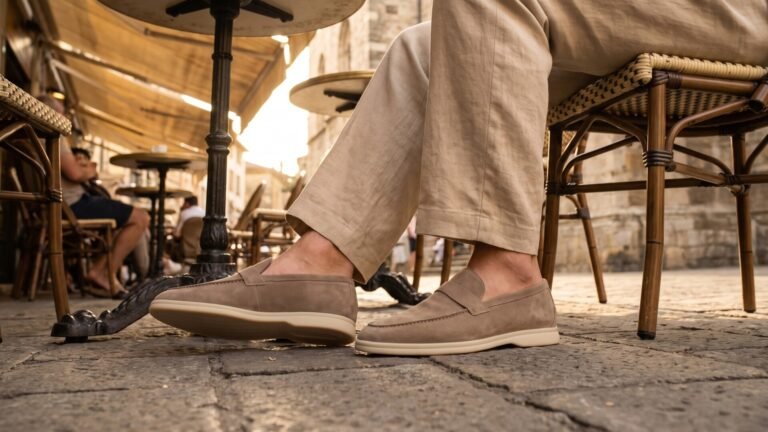
The two names buyers meet most often are the Summer Walk, an unlined suede loafer introduced in 2005 with a flexible white sole, and the Open Walk, its lace-up ankle-boot relative. Both became shorthand for the quiet luxury look. At Loro Piana US in November 2026, a plain suede Summer Walk cost about $980 to $1,045, and the house’s footwear ran from roughly $750 to $2,950 depending on model and material. Construction varies by model, so check the product page for sole, lining and country of manufacture.
Our side-by-side guide to Loro Piana Open Walk vs Summer Walk explains how the two differ, the best Loro Piana shoe styles for everyday wear covers sneakers and boots, and Why Are Loro Piana Shoes So Expensive? breaks down the price against Tod’s and Cucinelli loafers. Unlined suede marks easily, so read how to clean and protect Loro Piana suede shoes before the first wear. For other Italian shoemakers, see Santoni, Salvatore Ferragamo, Tod’s and Gianvito Rossi.
Loro Piana Cashmere and Knitwear
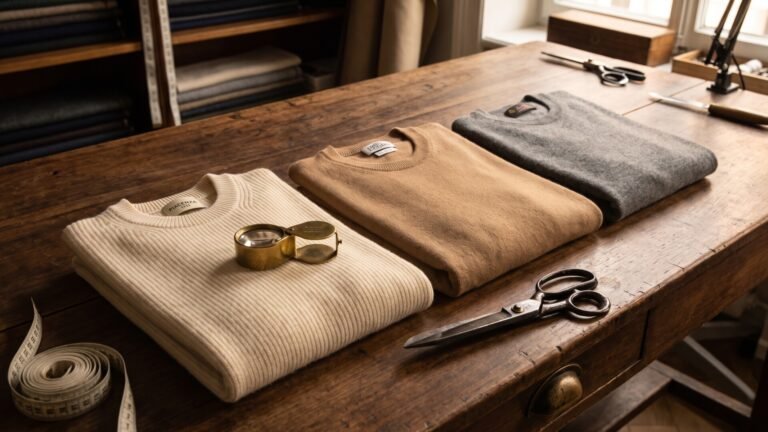
Cashmere is the heart of the house. Loro Piana describes itself as the world’s leading cashmere processor and sources fibre from Mongolia and Inner Mongolia. A men’s Superlight crewneck in Baby Cashmere was listed at $1,900 on Loro Piana US in November 2026, made in Italy from 100% cashmere; regular cashmere styles cost less, and vicuña knitwear far more.
Key features of Loro Piana knitwear
- Fibre quality: Baby Cashmere and extra-fine merino wool are used to produce garments that are light, soft, and long-lasting when cared for properly.
- Classic silhouettes: Sweaters, cardigans, and outerwear are designed to remain wearable for years, using neutral tones and subtle design details.
- Blends: Occasionally, the brand blends cashmere with silk or wool to create different textures and added durability.
For men’s alternatives at lower prices, start with Best Men’s Loro Piana Cashmere Sweater Alternatives and the best Italian cashmere sweaters for men; women can start with the best Italian cashmere sweaters for women. The wider category lives in our Italian cashmere hub, and Italian vs Scottish cashmere explains the regional differences. Once you own a piece, how to clean Loro Piana cashmere covers washing, drying and storage.
Loro Piana Bags, Scarves and Accessories
Leather goods are a smaller but fast-growing category: in a 2024 interview, Damien Bertrand called it the house’s fastest-growing category and named the Bale handbag as a frequent online sell-out. The main line is the Extra Pocket (buyers often search for it as the Extra Bag), a soft bag family named by width, such as L19 and L27. On Loro Piana US in November 2026, Extra Pocket styles ran from $3,500 for an L19 in calfskin to $9,000 for exotic and wicker versions. For other understated Italian bag makers at different price points, see Bottega Veneta, Valextra and Il Bisonte.
Scarves and shawls are the most accessible way into the house’s fibres. The Grande Unita cashmere scarf (175 x 43 cm, made in Italy) was $750 on Loro Piana US in November 2026. When comparing scarves, check the fibre (Baby Cashmere, cashmere, silk blend or vicuña), the size and the weave weight on the product page. Our guide to Italian cashmere scarves covers alternatives.
Outerwear: Windmate and the Storm System
The best-known technical piece is the Windmate traveller jacket, which uses Loro Piana’s Storm System treatment. According to Permanent Style’s factory visit, Storm System is a patented waterproofing treatment developed by the house and licensed to other cloth makers, which is why you will see “Loro Piana Storm System” on cloth from other brands too. Windmate jackets come in men’s, women’s and children’s versions; check the product page for lining and composition. For other outerwear specialists, see Moncler and Herno; for tailoring, Brioni and Kiton.
Sourcing and Sustainability Claims
Loro Piana presents responsible sourcing as central to its identity. The documented programmes are specific: the 1997 vicuña agreement in Peru, later investments in a private reserve there and in shearing rights in Argentina, and a Mongolian trading company the house says it set up after becoming, by its account, the first company to bring cashmere back from Mongolia in the 1980s. These are largely the house’s own claims; sustainability statements in luxury are best read critically, looking for named programmes and independent verification rather than general language.
What You Are Paying For
- Raw material: Baby Cashmere and vicuña are low-volume fibres, and the house is reported to control most of the Baby Cashmere supply.
- Vertical integration: spinning, weaving, knitting and finishing in its own Italian sites adds quality control, and cost.
- Finish and fit: knitwear is described as fully fashioned, shaped on the machine rather than cut from fabric and sewn, which affects drape and durability.
- Brand and retail: part of the price is the name, the boutique network and the service.
Where to Start: A First-Purchase Ladder
Most guides describe Loro Piana category by category. The more useful question for a first-time buyer is which piece gives you the most of what is distinctive about the house for the money. The answer is usually not the most famous product.
| Step | Piece | US price (Nov 2026) | What you get of the house | Buy it if |
|---|---|---|---|---|
| 1 | Grande Unita cashmere scarf | $750 | The fibre and finish, worn against the skin, no sizing risk | You want to judge the cashmere before spending more |
| 2 | Summer Walk loafer (plain suede) | About $980-$1,045 | The signature product, but mostly design and suede rather than fibre | You wear unstructured loafers often and can keep suede dry |
| 3 | Baby Cashmere crewneck | About $1,900 | The fibre the house is built on, in its core category | You wear knitwear weekly and will hand-wash or professionally clean it |
| 4 | Extra Pocket bag | From $3,500 | Leather goods, the newest and most brand-driven category | You already own the basics and want the bag specifically |
Decision rule: if you are paying for the fibre, buy knitwear or a scarf, because that is where Loro Piana’s advantage over cheaper Italian makers is largest. If you are paying for the look, the Summer Walk is the piece people recognise, but similar unlined suede loafers from Tod’s or Cucinelli cost less. Bags are the category where you pay most for the name and least for the house’s fibre expertise.
Three Things Buyers Often Get Wrong
“Loro Piana is still a family company.” It is not. The Loro Piana brothers sold control to LVMH in 2013, and LVMH’s stake has since risen to about 94%. The family name and the Piedmont mills remain, but strategy is set within the LVMH group, and the CEO is a member of the Arnault family rather than the Loro Piana family.
“Every Loro Piana sweater is Baby Cashmere.” Also not true. The house sells regular cashmere, Baby Cashmere, wool, silk blends and vicuña, and the product pages name the fibre separately: the Superlight crewneck is listed as Baby Cashmere, while the Grande Unita scarf is listed as cashmere. Prices follow the fibre, so two similar-looking knits can differ by hundreds of dollars. Read the composition line before comparing prices.
“A Storm System label means the jacket is Loro Piana.” Not necessarily. Loro Piana licenses Storm System cloth to other makers, so a jacket from another brand can carry “Loro Piana Storm System” on its label. That tells you who made the fabric and its waterproof treatment, not who designed or sewed the garment, and it should cost far less than a Loro Piana Windmate.
How Loro Piana Compares With Other Quiet Luxury Houses
| House | Known for | Read more |
|---|---|---|
| Loro Piana | Fibre-led knitwear, Baby Cashmere, vicuña, suede shoes, technical outerwear | This page |
| Brunello Cucinelli | Cashmere and tailored casualwear, Solomeo-based with a humanist narrative | Brunello Cucinelli guide |
| Ermenegildo Zegna | Menswear, wool cloth and tailoring, the Triple Stitch sneaker | Zegna guide |
| Bottega Veneta | Intrecciato leather goods and understated accessories | Bottega Veneta guide |
| Lanificio Colombo, Piacenza 1733, Gran Sasso | Italian mills selling cashmere knitwear under their own names | Colombo / Piacenza 1733 / Gran Sasso |
| Falconeri, Malo, Luca Faloni | Italian cashmere at lower or mid-range prices | Falconeri / Malo / Luca Faloni |
For the broader picture, read the ultimate guide to Italian quiet luxury and why quiet luxury became a global trend.
Loro Piana Comparisons and Guides
- Cashmere head-to-heads: Loro Piana vs Brunello Cucinelli (2026 crewneck prices), Loro Piana vs Brunello Cucinelli cashmere, Loro Piana vs Brunello Cucinelli vs Lanificio Colombo, Lanificio Colombo vs Loro Piana, Piacenza 1733 vs Loro Piana, Piacenza 1733 vs Lanificio Colombo vs Loro Piana, Gran Sasso vs Loro Piana and Loro Piana vs Falconeri, plus Falconeri vs Malo for the mid-range.
- Shoes: why Loro Piana shoes are so expensive, everyday shoe styles and Open Walk vs Summer Walk.
- Care: cleaning Loro Piana cashmere, protecting Loro Piana suede shoes and storing luxury boots.
Who Loro Piana Suits
- Buyers who value touch over visibility: if you want others to recognise the logo, this is not the house.
- People building a small, repeat-wear wardrobe: a few knits, one pair of suede loafers and a light jacket cover many occasions.
- Cold-climate and travel wearers: cashmere layers and Windmate-style jackets are designed for temperature swings.
- Not ideal for: shoppers who want bold colour, trend-led design or the lowest cost per wear.
Buying and Caring for Loro Piana
The most reliable sources are Loro Piana’s own boutiques and website, then authorised department stores and established luxury retailers. Check the composition and care labels before you buy. For pre-owned pieces, ask for photographs of the interior labels and stitching, request proof of purchase where possible, and use a resale platform that authenticates; no checklist can prove authenticity on its own. Resale values vary widely, so do not treat any piece as a financial investment.
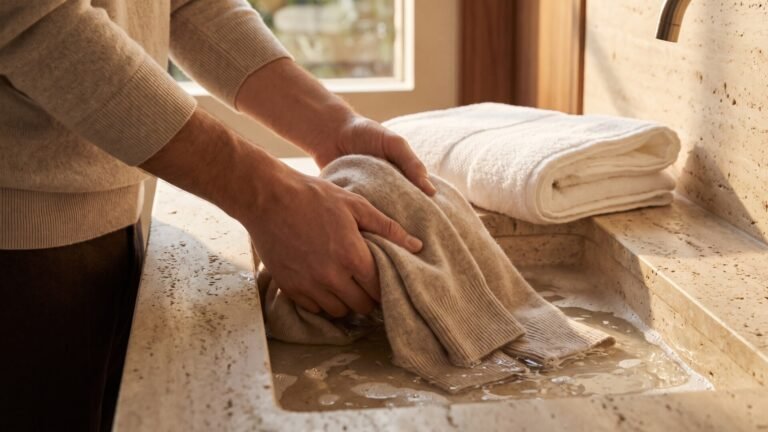
- Cashmere: follow the care label, wash gently or clean professionally, dry flat, and store folded rather than hung.
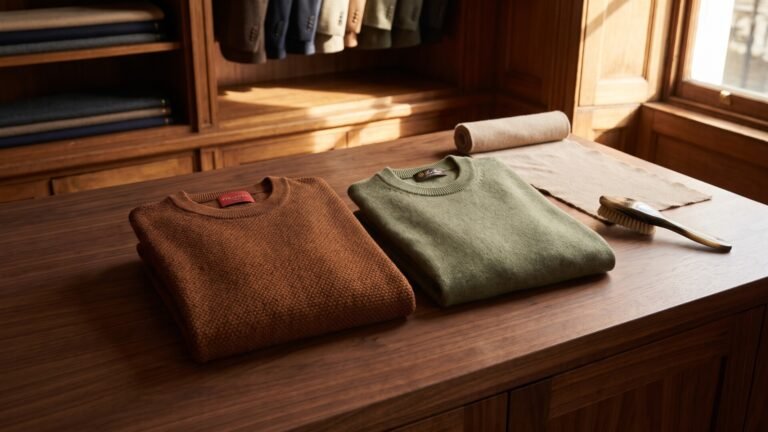
- Suede shoes: brush with a suede brush, use a suede protector spray, and test any cleaner on a hidden area first.
- Coats and technical outerwear: follow the label, store coats on wide hangers in breathable bags, and do not assume machine washing is safe.
Final Thoughts
Loro Piana is a house defined by fibre: Baby Cashmere, vicuña and fine merino, handled by a company that controls much of its own production in Italy. Spend where that fibre shows, in knitwear and scarves, and treat the shoes and bags as design purchases. If you are still deciding, the comparison guides above show where smaller Italian mills offer similar construction for less, and the complete guide to Italian designer brands puts the house in context with Fendi, Canali and the rest of the field.
Frequently Asked Questions About Loro Piana
Does Loro Piana have a creative director?
Not in the usual sense. In a 2024 interview reported by La Conceria, then-CEO Damien Bertrand said the house had no creative director and did not stage catwalk shows, and that it preferred not to be labelled only as quiet luxury. That was before Frédéric Arnault became CEO in 2025, so check recent press for the current design structure.
Is Loro Piana made in Italy?
Loro Piana is headquartered in Quarona and lists nine production sites in Italy. The knitwear and scarf product pages we checked in November 2026 state Made in Italy. Country of origin is labelled per product, so check the product page or label of the exact piece, especially for shoes, bags and accessories.
Does Loro Piana make children's clothing?
Yes. Loro Piana sells kids’ and newborn ranges, including Baby Cashmere knitwear and children’s versions of outerwear such as the Windmate. Availability and sizes vary by market, so check the kids’ section of the official site. For other Italian options, see our guide to Italian children’s fashion.
Is Loro Piana better than Brunello Cucinelli?
They sell different things. Loro Piana is fibre-led, with Baby Cashmere and vicuña and its own mills, while Cucinelli is design-led casual tailoring in cashmere. Crewneck prices overlap. Our Loro Piana vs Brunello Cucinelli comparison sets 2026 US prices, knit and fit side by side.
Does Loro Piana hold its resale value?
Some pieces resell well, especially classic Summer Walk loafers and neutral knitwear in good condition, but resale prices vary widely and are not guaranteed. Buy for wear rather than as an investment, keep receipts and packaging, and use resale platforms that authenticate if you plan to sell later.
What is the difference between the Summer Walk and the Open Walk?
The Summer Walk is an unlined suede loafer, while the Open Walk is a lace-up suede ankle boot from the same family, with a similar flexible sole. The boot covers more of the foot and suits cooler weather. Our guide to Open Walk vs Summer Walk compares fit, prices and use.