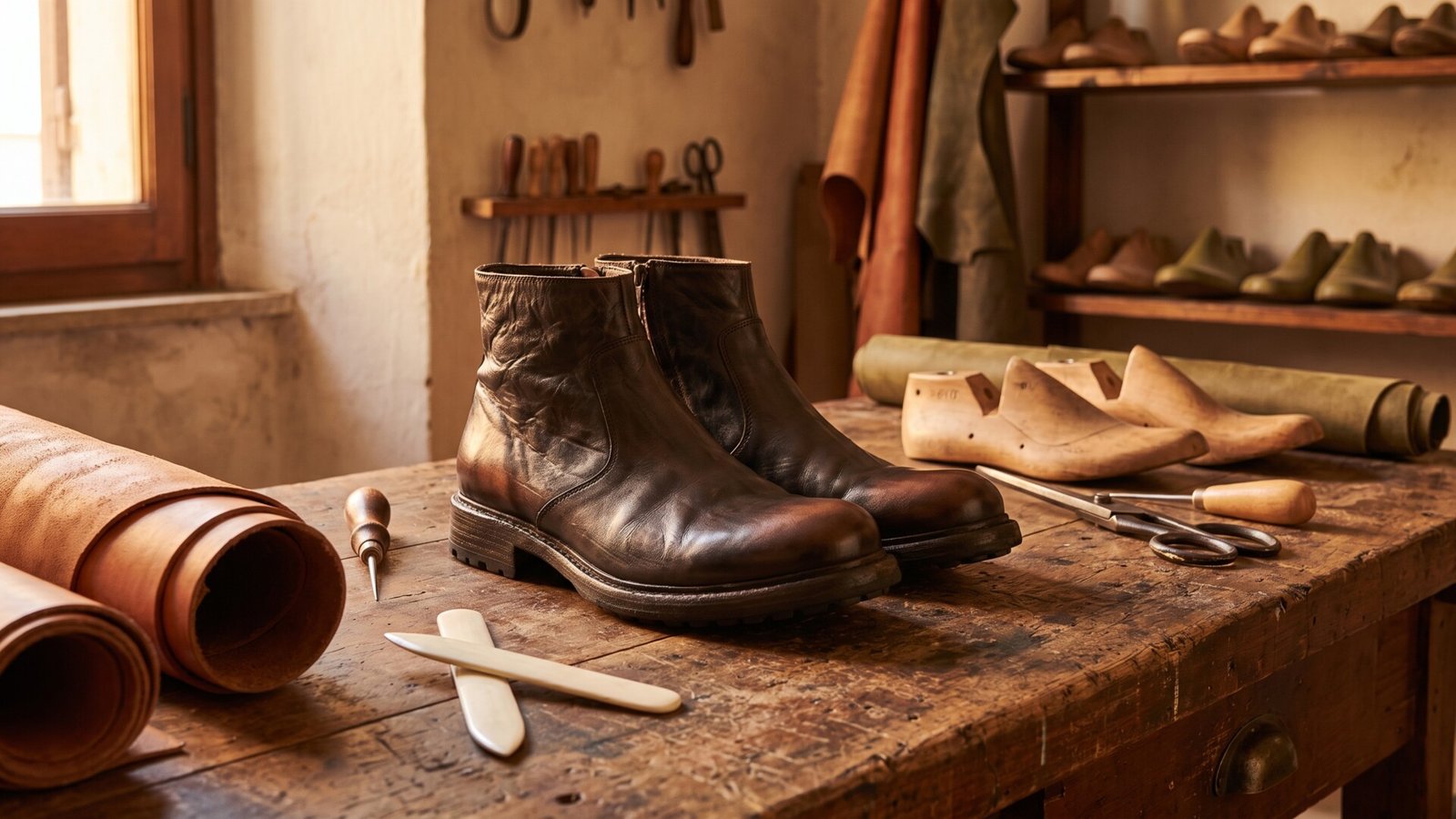
Officine Creative — The Complete Guide to Italy’s Artisanal Footwear Rebel
Most luxury shoemakers sell flawlessness: smooth leather, even colour, a finish that looks identical from pair to pair. Officine Creative does the opposite. Its boots, loafers and sneakers arrive with creased, uneven, deliberately aged leather that looks as if it has already been worn for years. This guide covers who is behind the brand, how the aged finishes are made, what the main styles cost in US dollars, and how Officine Creative compares with other Italian makers such as Santoni, Guidi and Tod’s.
Officine Creative is one of the brands in our wider guide to Italian designer brands. If you are comparing footwear by type, our category pages on Italian designer shoes, Italian boots, Italian loafers and Italian sneakers are good starting points.
Officine Creative at a Glance
| Detail | What is documented |
|---|---|
| Founded | 1968, by Nazzareno Di Rosa, in Montegranaro (Marche region), according to retailer brand profiles |
| Run by | Nazzareno’s sons, Roberto and Luca Di Rosa |
| Signature | Aged, creased, hand-finished leathers with deconstructed (unstructured) construction |
| Range | Boots, Chelsea boots, loafers, derbies, sneakers and some leather accessories, for men and women |
| Made in | Italy; retailer listings cite Montegranaro |
| Typical price range (USD) | Roughly $450 to $1,200 for most shoes and boots, with premium leathers and special lines higher |
The History of Officine Creative
Roots in Montegranaro
Retailer profiles trace the company to 1968, when Nazzareno Di Rosa opened a shoemaking workshop inside the medieval walls of Montegranaro, a town in the Marche region. Marche is one of Italy’s historic footwear districts, with a dense network of family workshops, last makers and component suppliers. The Di Rosa family still leads the business, with Nazzareno’s sons Roberto and Luca in charge today.
Dates in brand biographies vary between sources, so treat 1968 as the date the family workshop began rather than the launch of the Officine Creative label itself, which we could not independently date.
From Workshop to Boutique Brand
The name translates to “creative workshops”, and the pitch is that shoes should show the hand of the person who made them. The brand has built its following in menswear boutiques and department stores rather than through loud advertising, and its pieces are now sold by major international retailers.
Officine Creative Today
The catalogue spans lace-up and Chelsea boots, loafers, derbies, sneakers and a small group of accessories. The look draws on workwear, military boots and vintage footwear, but the leather treatment is what defines it. Ranges and collaborations change each season, so check the current collection before relying on any named model.
What Makes Officine Creative Different?
The Aged-Leather Finish
The brand describes its finishing as a “leather time machine”: each pair passes through more than 100 manual operations that give the leather an aged, broken-in look. Hides are piece-dyed, meaning the colour is applied to the assembled shoe rather than to the flat leather, then tanned and oiled to produce a soft glow. Suede is hand-brushed for a velvety finish. These are the brand’s own descriptions, so read them as how the maker presents its process, but the visual result is easy to verify in person: colour deepens in the creases and lightens on the high points.
Deconstructed Construction
Deconstructed shoes leave out much of the stiff structure found in traditional dress shoes, such as heavy stiffeners and thick linings. The result is flexible and light, with little break-in. The trade-off is less structure and support than a classic welted shoe. We could not confirm which stitched constructions (for example Blake or Blake Rapid) the brand uses across its lines, so we do not name one. If resoling matters to you, ask the retailer how the specific model is built.
No Two Pairs Identical
Because colour and creasing are partly produced by hand, pairs differ slightly. That is part of the appeal, but it also means online photos are an approximation. If a particular shade or crease pattern matters, buy from a retailer with a good return policy.
Quiet on Branding
There are no large logos. Recognition comes from the silhouette and the finish, which suits readers of our guides to quiet-luxury makers like Loro Piana and Brunello Cucinelli.
Materials and Manufacturing
Leathers
Product listings show calf leather in several finishes, hand-brushed suede, and polished leather on dressier models. Soles vary by model: some retailer listings describe leather soles with rubber inserts for grip, while boots such as the Ortega Chelsea are listed with rubber-injected soles for added durability. We could not verify claims about the specific tanneries used, so none are named here, and we do not claim that every leather is full-grain.
Hand Work and Quality Control
The “over 100 manual operations” figure is the clearest published indication of how much hand work goes into each pair. The brand does not publish a reject rate. A pair that feels uneven in the creases is working as designed; a loose stitch, a sole gap or uneven heel height is not, and is a reason to return the shoe.
Core Product Categories and Prices
Prices below are indicative USD ranges based on international retail listings seen in late 2026. They vary by retailer, market, season and sale status, so check the current listing before buying.
| Category | Character | Indicative price (USD) |
|---|---|---|
| Lace-up boots | Workwear and military-inspired, the most rugged category | $550 to $1,200 |
| Chelsea boots | Elastic side panels, aged leather, slimmer profile | $500 to $1,100 |
| Loafers | Soft, relaxed, unstructured | $400 to $800 |
| Derbies and dress shoes | Polished but not shiny, burnished edges | $450 to $1,000 |
| Sneakers | Same aged finishes in a casual shape | $400 to $750 |
Lace-Up and Military-Style Boots
The category the brand is best known for. These boots pair a utilitarian shape with heavily aged leather, and work with jeans, chinos and heavier trousers.
Chelsea Boots
A sleeker option that dresses up more easily. For wider options, see our roundup of the best men’s Italian designer Chelsea boots.
Loafers and Derbies
Relaxed alternatives to polished dress shoes. They suit people who want a loafer or derby without the stiffness and sheen of a classic formal shoe.
Sneakers
Leather and suede sneakers with the same finishes as the boots. If you prefer a more obviously distressed sneaker, compare with Golden Goose.
Accessories
The brand also offers a limited range of leather accessories. Availability varies by retailer.
Officine Creative vs Other Italian Footwear Brands
| Brand | Specialty | Style | Best For |
|---|---|---|---|
| Officine Creative | Aged, unstructured boots and shoes | Contemporary artisan | Individualists, creative dress codes |
| Santoni | Polished dress shoes | Refined, finished | Formal wear, traditional luxury |
| Guidi | Hand-treated leather boots and bags | Dark, sculptural, cult | Buyers who want a statement boot |
| Tod’s | Gommino driving shoes and loafers | Timeless casual | Everyday comfort |
| Golden Goose | Distressed sneakers | Fashion-forward | Casual luxury buyers |
| Gianvito Rossi | Women’s heels and boots | Sleek, sensual | Women who want a clean, elevated silhouette |
| Zegna | Luxury casual footwear | Minimalist | Quiet-luxury menswear |
Officine Creative vs Santoni
Both are Italian and both sit in the premium footwear segment, but the intent is different. Santoni is known for refined, hand-finished dress shoes with a polished look. Officine Creative aims for an aged, informal one. The practical differences are formality and structure: Santoni suits office and ceremony; Officine Creative suits weekends and creative dress codes. If you want one pair for everything, Chelsea or lace-up boots from Officine Creative will cover more casual situations, while Santoni’s dress shoes will do better at weddings and in formal workplaces.
What You Are Paying For
Compared with logo-led luxury shoes at higher prices, Officine Creative charges mainly for finishing labour and leather treatment, not for a prominent logo. That makes the price more defensible than some fashion-house footwear, but it does not make every pair a bargain: the aged look is a style choice, and a perfectly good plain boot can cost less. Buy it because you like the finish, not because it signals status.
Is Officine Creative Worth the Price?
For buyers who like the aesthetic, the main value is comfort from the first wear and a finish that hides scuffs better than polished leather does. Aged leather is more forgiving of creases, and scratches blend into the existing texture. Against that, unstructured construction gives less support than a stiffer shoe, and the brand does not publish an expected lifespan, so any years-of-wear figure is an estimate that depends on how often you wear the shoes, how they are stored and how often the soles are replaced.
As a simple illustration, a $700 pair worn 80 days a year for six years comes to about $1.46 per wear. A $300 pair worn 50 days a year for two years comes to $3 per wear. The arithmetic favours the more expensive shoe only if it keeps being worn and repaired, so choose a style and colour that fits the rest of your wardrobe.
How to Style Officine Creative Shoes
Casual
Lace-up boots with dark jeans, a plain tee and a leather jacket. For a jacket in the same spirit, see Rifugio and Stewart.
Smart Casual
Chelsea boots or loafers with chinos, a merino sweater and an unstructured blazer. Knitwear from Luca Faloni or Falconeri pairs well.
Creative Offices
Lace-ups with tailored trousers and an open-collar shirt. Keep the rest of the outfit clean so the boots carry the texture.
Travel
The soft, flexible leather suits long days on your feet, and the aged finish tolerates the scuffs of travel.
Care and Maintenance Guide
Care advice is general and conservative. Test any product on an inconspicuous area first, follow any care card supplied with the shoes, and take expensive pairs to a professional cobbler or leather specialist for deep cleaning or colour work.
Cleaning and Conditioning
Brush off dust with a soft horsehair brush. Avoid heavy polishes, which can build up in the creases and change the finish. Condition sparingly, since the leather is already soft, and use a light, natural product if it starts to look dry.
Suede
Apply a suede protector before first wear, brush with a suede brush to lift the nap, and keep suede away from rain.
Soles
On models with leather soles, consider adding thin rubber protectors before first wear to improve grip and slow wear. A cobbler can replace worn soles on many models, but ask first whether your specific construction allows it.
Storage
- Use shoe trees: unlined or soft shoes hold their shape better with cedar trees, which also absorb moisture.
- Breathe: store in cotton dust bags, not plastic. See our guide to dealing with mold on stored designer leather goods.
- Avoid sunlight: strong light can fade dyed leather.
Where Officine Creative Fits Today
Interest in understated, textured clothing has helped brands whose appeal is in the material rather than the logo. Officine Creative sits at the characterful end of Italian footwear, between the polish of Santoni and the sculptural darkness of Guidi. Whether it suits you depends less on price than on whether you prefer shoes that look new or shoes that look lived in.
Frequently Asked Questions About Officine Creative
Is Officine Creative a luxury brand?
Yes. Officine Creative is an Italian premium footwear brand, sold by major international retailers, known for aged, hand-finished leather and unstructured construction.
Where are Officine Creative shoes made?
Retailer listings state they are made in Italy, and the company is based in Montegranaro in the Marche region. Made in Italy is a per-product labelling claim, so check the label on the pair you are buying.
When was Officine Creative founded?
Retailer brand profiles date the family shoemaking business to 1968, when Nazzareno Di Rosa opened a workshop in Montegranaro. His sons Roberto and Luca lead the company today.
Why do Officine Creative shoes look worn?
The look is deliberate. The brand describes a process of more than 100 manual operations, including piece-dyeing, tanning, oiling and hand-brushing, designed to give the leather an aged, broken-in appearance.
How much do Officine Creative boots cost in USD?
Most boots are indicatively priced between about $500 and $1,200, depending on model, leather and retailer. Premium styles can cost more. Check the current listing, as prices vary by market and sale.
Is Officine Creative better than Santoni?
They serve different needs. Santoni is known for polished, refined dress shoes. Officine Creative offers informal, aged, unstructured shoes and boots. Choose by dress code and by whether you prefer a perfect or lived-in finish.
Can Officine Creative shoes be resoled?
It depends on the model and its construction. Some have leather soles that a cobbler can replace, while others use rubber-injected soles. Ask the retailer or a cobbler about your specific pair before buying.
Which Officine Creative shoe should I buy first?
A Chelsea boot or lace-up boot in black, dark brown or tobacco is the most versatile choice and shows the aged finish best.
Conclusion
Officine Creative is a family-led Marche shoemaker whose identity is a finish: aged, creased, hand-treated leather on flexible, unstructured shoes. The documented points are its Montegranaro base, the Di Rosa family leadership and the intensive manual finishing. The claims to treat carefully are lifespan, specific constructions and exact leather sources, none of which the brand publishes. If you like the look, it is a distinctive alternative to polished Italian shoes; if you want a shoe that holds a formal shape, look at Santoni instead.
Explore more Italian luxury: Italian Designer Brands | Italian Designer Shoes | Italian Boots | Italian Loafers | Italian Sneakers | Santoni | Tod’s | Golden Goose