The best leather conditioner for all Italian designer goods
Many owners of Italian designer leather goods treat them like museum pieces: dust bag, box, never near rain. That caution is understandable, but leather that is stored away and never cared for can still dry out. Corners, handle edges and folds are usually the first places to look parched, well before any cracking appears.
Leather is a fibrous, fat-bearing material, and the fats that keep it flexible gradually evaporate with age, light and heat. The aim of conditioning is to replace some of those lost oils and add a light protective layer, not to polish the surface. Conditioners are also not interchangeable: a silicone-rich or oil-heavy product on finished calfskin can leave a sticky film or darken the colour, and both are difficult to reverse.
This guide covers what conditioners actually do, what to look for and avoid, five widely available products suited to different leathers, a conservative step-by-step method, and how to match the product to the finish on your Italian bag, shoes or jacket. Suede and nubuck need different care, so see our guide to the best suede cleaners. If you are still deciding where to buy well-made leather in the first place, our look at Italian artisanal leather workshops you can buy from is a good companion.
Quick Comparison of the Five Conditioners
| Product | Type | Darkening risk | Best for |
|---|---|---|---|
| Saphir Médaille d’Or Renovateur | Cream | Slight on pale leathers | Smooth calfskin bags and shoes |
| Leather Honey Leather Conditioner | Thick liquid | High | Dry, neglected, dark or rugged leather |
| Bickmore Bick 4 | Light lotion | Low (maker’s claim; spot-test) | Belts, wallets, light leathers |
| Cadillac Boot and Shoe Leather Lotion | Wax-free lotion | Slight to moderate | Footwear, bags used outdoors |
| Obenauf’s Leather Oil | Oil | High | Work boots, outdoor and rugged leather |
US prices checked November 2026: Saphir Médaille d’Or Renovateur 75 ml $30.95 (Kirby Allison); Leather Honey Leather Conditioner 8 oz about $28 (Walmart); Bickmore Bick 4 8 oz $13.89 list (Chewy); Obenauf’s Leather Oil 8 oz $14.99 (Boot Barn). We could not confirm a current US list price for Cadillac Boot and Shoe Leather Lotion, so use the price-check link below it. Prices vary by size and retailer and change often.
Understanding Leather Conditioners
Most people assume conditioner is about making leather shiny. It is not.
Leather is animal hide. It has been tanned, dyed and finished, but at its core it is a porous, fibrous material that contains natural oils and fats. Those fats keep the leather supple, flexible and resistant to cracking. Over time, through use, sunlight and the simple passage of years, they evaporate and break down. The leather becomes stiff and brittle and can develop micro-cracks that eventually turn into visible damage.
A conditioner replaces some of those oils and adds a protective barrier. It lubricates the fibres, helps the leather keep its flexibility, and leaves a surface layer that gives you a little more time to wipe off spills. How far it penetrates depends on the finish: most designer leathers carry a pigment or protective coating that limits absorption, which is one more reason to apply sparingly.
There are three main types, and each has its place:
Creams are the most common for luxury leather goods. They combine conditioning oils with waxes and sometimes colouring agents, penetrate the leather and leave a subtle natural shine. They suit smooth, finished leathers such as the calfskin used on many Italian handbags.
Oils are heavier and more penetrating. They suit thick, rugged leathers that need deep hydration, like work boots or heavy-duty bags, but they can darken lighter leathers, so test carefully.
Sprays are the easiest to apply but generally the least effective for deep conditioning. They are better for quick touch-ups and surface protection.
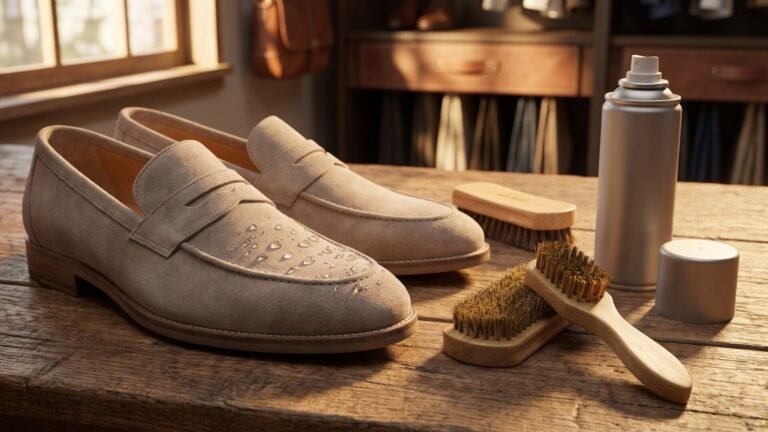
Italian designer goods are not all the same. A Gucci bag in smooth calfskin has different needs from a Tod’s driving shoe in suede, and a Prada nylon bag with leather trim needs different care from a Bottega Veneta woven leather tote. The finish matters enormously. Smooth, polished leathers take creams well. Textured leathers such as Saffiano, Prada’s cross-hatch pressed calfskin, need very light conditioning because the embossed surface can trap product in the grooves. Suede and nubuck should never receive standard conditioners; they need a suede brush, an eraser and a protector (see our suede cleaner guide), because creams are a common way owners ruin suede bags.
Key Factors in Choosing a Leather Conditioner
The ingredient list is the first thing to read, and many commercial conditioners contain things you would not want on a designer bag.
What you want to see:
Natural oils and waxes such as neatsfoot oil, mink oil, beeswax, carnauba wax and lanolin. These are traditional leather-care ingredients. They are closer in character to the fats found in hide than petroleum-based fillers are, and they form a breathable barrier rather than a plastic-like one.
Hydrolysed proteins are a more modern addition that some premium care products use to support the collagen fibres in the leather. Check the product’s own description, since formulations change.
What to avoid:
Silicones and petroleum-based products. Many mass-market conditioners contain them. They give an immediate glossy shine that looks like success, but silicones tend to sit on the surface as a film. Over time that film can trap dirt and make later treatments less effective, and it can leave a tacky surface. Removing it usually means professional stripping.
Petroleum distillates are derived from crude oil, and many leather-care specialists advise against them on fine leathers because they can leave a greasy film and over-soften the finish. Treat initial softness with caution: softness is not the same as nourishment.
Alcohol is sometimes used as a carrier agent in conditioners, but it tends to dry leather rather than hydrate it.
Beyond the ingredient list, three things matter:
Hydration: does the leather feel supple and flexible after application, and does the product absorb or just sit on top?
Protection: does it add a water-repellent layer that buys time against everyday spills?
Compatibility: the one most people overlook. The best conditioner in the world is useless if it does not match your leather. A heavy oil may suit a rugged backpack but will darken and stain a pale, delicate calfskin bag.
Always test a new conditioner on a hidden area first: the inside of a bag, the underside of a strap or an inconspicuous corner of a jacket. Apply a small amount, wait 24 hours and check for darkening, discolouration or a change in texture.
Matching Conditioner to Italian Leather Types
Italian houses use a wide range of leathers, and the right product depends on the finish. Use the care label or the maker’s own material description as your starting point, and when in doubt ask the brand’s repair service.
| Leather or finish | Typical use | Conditioning approach |
|---|---|---|
| Smooth calfskin | Handbags, wallets, loafers | Thin layer of a cream; spot-test; buff well |
| Nappa (soft, lightly finished) | Soft bags, gloves, jackets | Very light cream; avoid heavy oils, which can stain |
| Saffiano (pressed, coated) | Prada bags and small leather goods | Wipe clean; minimal conditioner, as the coating limits absorption |
| Vegetable-tanned | Il Bisonte-style bags, belts, straps | Light conditioning; expect darkening and patina |
| Suede and nubuck | Loafers, driving shoes, bags | No conditioner; brush, eraser and protector spray |
| Woven leather (intrecciato) | Bottega Veneta bags | Light application with a soft cloth; avoid pooling between strips; consider brand care service |
Top Leather Conditioners for Italian Designer Goods
Here are five widely available conditioners, chosen for different leathers and uses. The descriptions draw on manufacturers’ published information and general leather-care guidance rather than hands-on testing by this site.
Saphir Renovateur
Saphir is widely regarded among shoe-care enthusiasts as a top-tier French brand, and the Médaille d’Or line is its premium range. Renovateur is its cream conditioner for smooth leather.
Saphir describes it as a nourishing cream based on natural waxes and oils with a mild cleaning action. Formulations can change, so check the current ingredient list on the bottle or the brand’s site. The texture is a soft cream that adds a subtle, natural sheen rather than a glassy one. It suits the smooth, finished calfskin found on many bags from houses such as Prada, Gucci and Bottega Veneta, though you should always spot-test first.
The main caveat is that it can slightly darken lighter leathers. Test it on a hidden spot first, especially on a pale pink or cream bag.
Best for: Smooth calfskin handbags, luxury shoes, and high-end leather that needs gentle, nourishing care.
[Affiliate: Check the price for Saphir Renovateur]
Leather Honey Leather Conditioner
Leather Honey is the workhorse of the conditioner world: a thick, honey-like liquid made from a blend of oils. It is utilitarian rather than elegant, with a noticeable smell.
Its main strength is penetration. It is typically recommended for dry, thirsty leather that has been neglected for years, such as an older bag that has sat in a closet. It also creates a water-resistant barrier. Leather Honey markets this as a benefit; we have not seen independent test data for how long it lasts, so treat any specific duration with caution.
The downsides are real. It can darken leather noticeably, especially lighter shades, so avoid it on light-coloured bags. It absorbs slowly: you apply it, let it sit for several hours or overnight, then buff off the excess. And because it is heavy, it is not ideal for delicate finished leathers that do not need deep penetration.
Best for: Leather jackets, heavy-duty bags, and dry leather that needs intensive restoration.
[Affiliate: Check the price for Leather Honey Leather Conditioner]
Bickmore Bick 4 Leather Conditioner
Bick 4 is a quiet, versatile option. It does not have the prestige of Saphir, but it is a long-standing and widely stocked conditioner.
The formula is a light lotion that the maker positions as non-darkening, which is its main appeal for tan, white and pastel leathers. Spot-test pale leathers anyway, and check the current label for ingredients if the item is carried against skin every day.
It is meant for regular maintenance on smooth leathers and suits belts, wallets and small accessories that need frequent but gentle conditioning. It is not a heavy-duty protector: it conditions and lightly protects, but it will not match the water resistance of a heavier product or the richness of a premium cream. Think maintenance, not restoration.
Best for: Belts, wallets, light-coloured leathers, and regular upkeep on smooth leather goods.
[Affiliate: Check the price for Bickmore Bick 4 Leather Conditioner]
Cadillac Boot and Shoe Leather Lotion
Cadillac is an American shoe-care brand popular with boot and shoe enthusiasts. Its Boot and Shoe Leather Lotion is sold as a one-step product that cleans, conditions, polishes and protects, and the maker stresses that the formula is wax-free, so it will not harden leather. Cadillac does not publish a full ingredient list, so check the label, and it also markets the lotion for exotic skins.
Cadillac says the lotion protects as well as conditions, but it is not a dedicated water repellent, so pair it with a protector spray for shoes and bags that see regular rain. Some retailer listings mention UV protection; we could not confirm this against the manufacturer’s own data, so check the label before relying on it.
The texture is thicker than Bick 4 but lighter than Leather Honey. It absorbs reasonably well and leaves a soft sheen, and it can darken leather slightly, though less than the heavier options here.
Best for: Leather footwear and everyday bags that need cleaning and conditioning in one step.
[Affiliate: Check the price for Cadillac Boot and Shoe Leather Lotion]
Obenauf’s Leather Oil
Obenauf’s is the heavy artillery of leather conditioning. Its Heavy Duty LP is well known among outdoor users, and the Leather Oil is a slightly lighter option that still provides serious protection.
Obenauf’s describes it as a blend of natural oils, beeswax and propolis, a resin produced by bees, with no petroleum or silicone. It penetrates deeply and leaves a flexible, water-resistant finish, which suits leather that sees rough use: work boots, hiking bags, motorcycle gear.
The trade-off is that it darkens leather considerably and changes the surface texture. It is not a product for delicate finished leathers, suede-lined pieces or fine Italian dress shoes; keep it for thick, rugged leather that needs serious protection.
Best for: Work gear, outdoor leather, and heavy-duty bags that need maximum protection.
[Affiliate: Check the price for Obenauf’s Leather Oil]
How to Properly Condition Your Leather Goods
Here is a conservative step-by-step process for smooth Italian designer leather. For valuable or heavily worn pieces, consider a professional leather specialist instead.
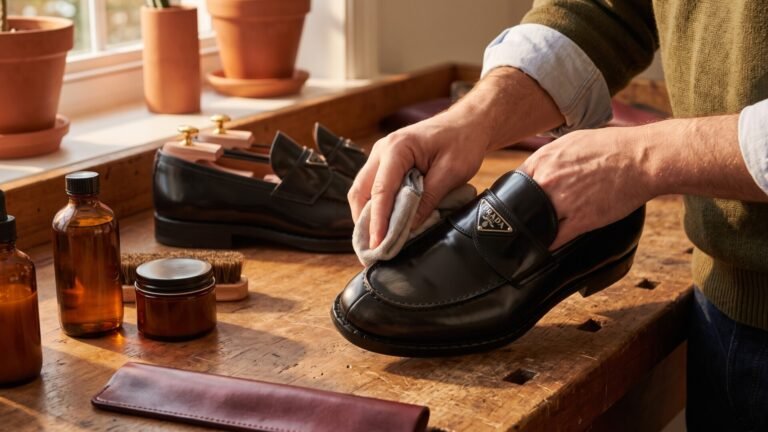
Step 1: Clean the leather. This is non-negotiable. Conditioner applied over dirt seals the dirt into the fibres. Wipe away surface dust with a soft, dry cloth. For deeper cleaning use a dedicated leather cleaner or a barely damp cloth with a drop of pH-neutral soap, then wipe with a clean dry cloth. Let the leather dry completely.
Step 2: Test on a hidden area. Apply a small amount to an inconspicuous spot and wait 24 hours. Check for colour change, texture change or any adverse reaction.
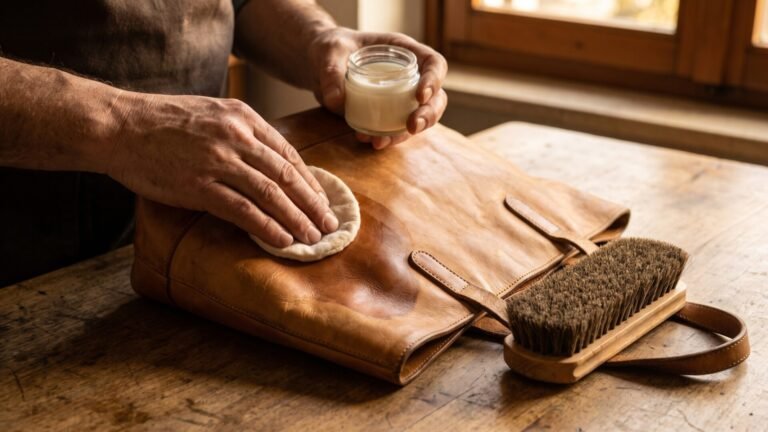
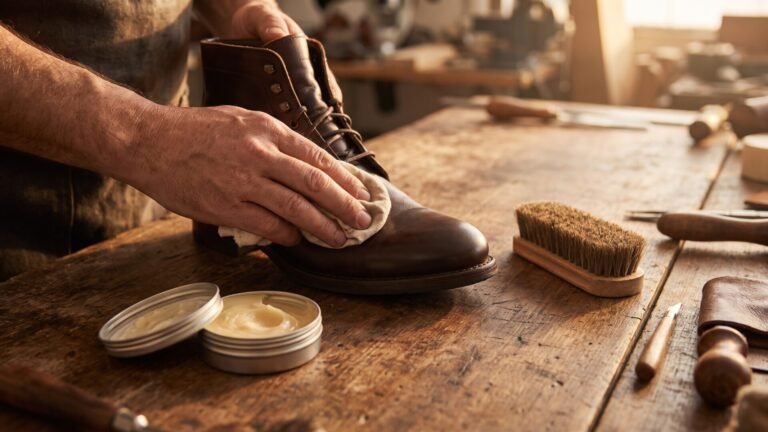
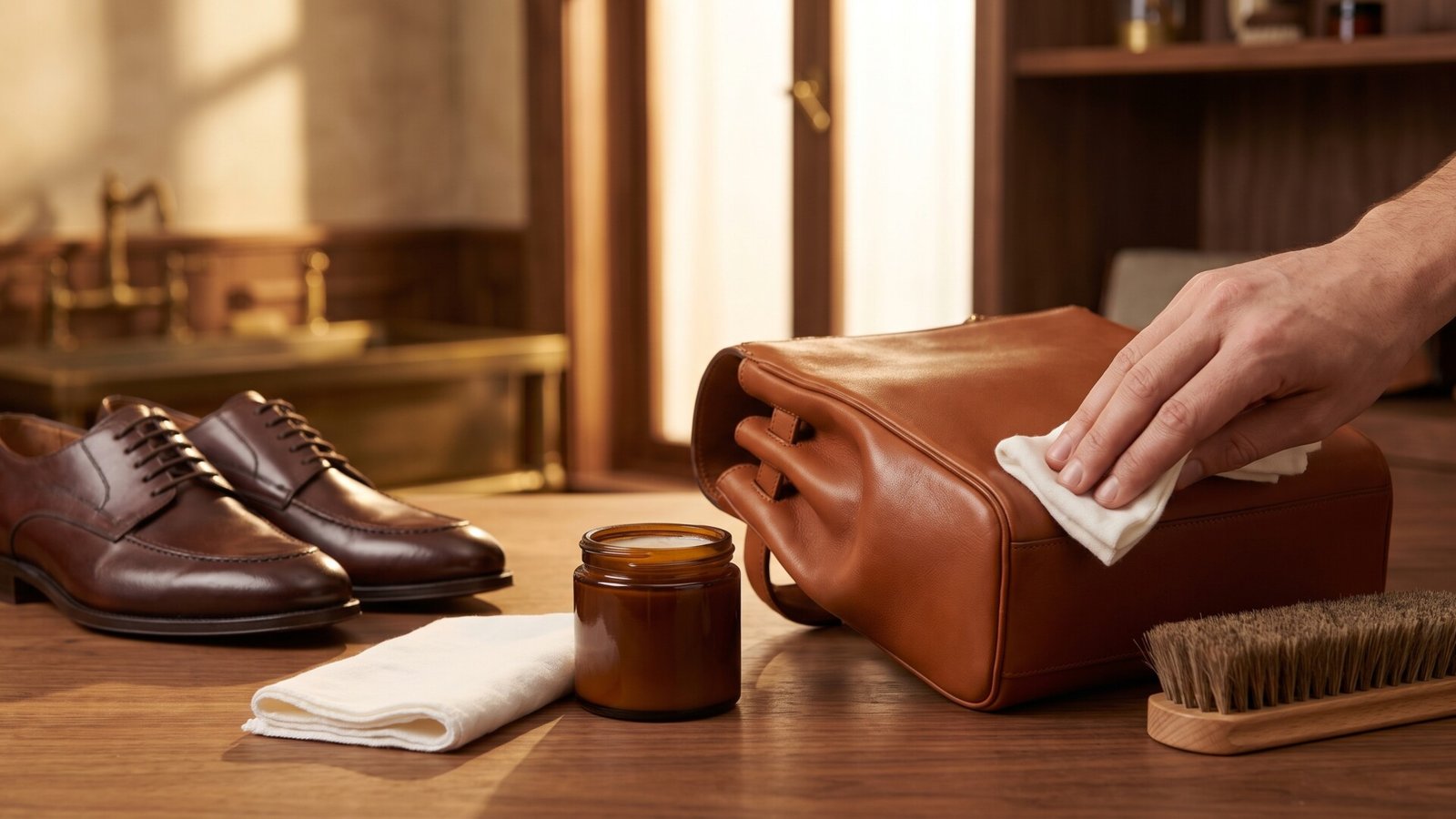
Step 3: Apply sparingly. A little goes a long way. Use a soft, lint-free cloth or a sponge applicator in gentle circular motions. You want a thin, even layer, not a soaked surface.
Step 4: Let it absorb. This is where most people rush. Leave a cream or lotion for at least 15 to 30 minutes. Heavy products such as Leather Honey or Obenauf’s are usually left for several hours or overnight, as their makers describe.
Step 5: Buff off the excess. Use a clean, dry cloth to remove residue and bring out a natural sheen.
Step 6: Let it cure. Wait 24 hours before using the piece so the conditioner settles and the leather stabilises.
How often? It depends on usage and environment. As a general rule, condition every three to six months, more often for a bag used daily or leather exposed to dry air and central heating. If the leather feels dry or stiff, or looks dull, it is time. For suede and nubuck, skip these conditioners and use a suede brush and protector instead.
Common Mistakes to Avoid When Conditioning Leather
Well-intentioned care can still damage Italian leather goods. These are the most common mistakes.
Over-conditioning is the most common. Too much product saturates the fibres, makes the leather soft and floppy, and leaves a greasy residue that attracts dirt. The bag loses its structure and shape. You can always add more, but you cannot easily remove excess.
Using the wrong product for the leather type is the second. Standard conditioners on suede or nubuck ruin the nap, and heavy oils on delicate finished leathers darken and stain them. Match the conditioner to the leather.
Neglecting regular maintenance is the third. Owners who spend thousands on a bag and then never clean or condition it are often surprised when the leather cracks and peels. Leather needs regular care to stay healthy.
Conditioning dirty leather traps dirt and grime in the fibres, where it can abrade the leather over time.
Using household products such as olive oil, baby oil or petroleum jelly is a mistake. These can go rancid or leave permanent marks. Use products made for leather.
Applying conditioner in direct sunlight lets heat dry it too quickly and leave residue. Work in a cool, shaded area.
Rubbing too aggressively can damage the finish. Use gentle circular motions and let the product do the work.
The Importance of Regular Leather Maintenance
Conditioning is one part of leather care, but an important one. It addresses the two biggest threats to leather: cracking and fading. Cracking happens when leather loses its natural oils and becomes brittle; micro-cracks appear, then deepen and widen until they are irreparable. Conditioning keeps the fibres lubricated and flexible.
Fading happens when dyes break down under UV exposure. Conditioning does not directly prevent it. Some conditioners advertise UV protection, but check the label; keeping pieces out of direct sunlight is the dependable defence.
Good habits beyond conditioning:
Clean regularly. Wipe leather goods with a soft, dry cloth after use to remove surface dirt before it builds up.
Store properly. Keep pieces in a dust bag or breathable cotton bag, never plastic, in a cool, dry place away from sunlight and heat. Stuff handbags with acid-free tissue paper to help them hold their shape.
Protect from water. If leather gets wet, blot it with a soft cloth without rubbing and let it air dry away from heat. Then consider conditioning to replace lost oils.
Rotate your bags. If you own several leather pieces, rotating them spreads the wear.
Well-maintained leather goods can last for decades; vintage pieces from many houses survive precisely because they were cleaned, stored well and used. For expensive pieces, many Italian houses also run repair and restoration services, and a specialist is the safer choice for stains, colour loss or structural damage.
What Most Buyers Get Wrong
Many buyers think the value of a luxury leather bag lies in the brand name. A large part of it lies in the leather and the construction.
Materials vary by house and line: many bags use calfskin, some houses use vegetable-tanned or full-grain leather, and others use coated or embossed finishes such as Saffiano. Check the maker’s own material description rather than assuming. Whatever the grade, leather is a natural product and needs care to stay beautiful.
Another common mistake is treating designer bags as investments to be preserved rather than objects to be used. Unused leather can still dry out; regular light care and gentle use keep it supple.
The wrong product can damage a bag worth far more than the product itself. A framework for thinking about it:
Cost-per-wear matters more than purchase price. As an illustration, a bag costing $3,000 and used for 10 years works out to $300 a year. If neglect cuts its life to a few years, the cost per wear rises sharply.
Conditioner is cheap relative to what it protects. A bottle costs a small fraction of the bag it looks after, though no product can guarantee a particular lifespan.
Resale value depends on condition, among other things. Resale platforms and authenticators weigh condition heavily, but resale values vary widely by brand, model and market, and no figure is guaranteed.
Material durability outlasts trends. A classic bag in good condition stays desirable after the season that produced it has passed.
Collectors who keep bags pristine and unused are making a valid choice, but it treats the bag as an investment object. If you want to use your designer goods, care for them as functional objects: regular cleaning, light conditioning, and acceptance that they will show some wear.
Using and Caring for Leather Goods
A leather bag is meant to be used. Scuffs, softened corners and a gentle patina are normal signs of a well-used piece; the aim of care is to keep the leather supple, not to keep it new.
The takeaway is simple: use the piece, clean it lightly, condition it sparingly with a product matched to the leather, and have valuable items looked at by a specialist when in doubt. The artisans behind Italian leather goods made them to be used and to age with their owners, and careful conditioning helps them do that.
[Shop Our Collection of Luxury Leather Care Products]
Frequently Asked Questions About Leather Conditioners
What is the best way to apply leather conditioner?
Use a soft, lint-free cloth or a sponge applicator. Apply a small amount in circular motions, working it into the leather. Let it absorb for 15 to 30 minutes, then buff off any excess with a clean, dry cloth. Always test on a hidden area first.
How often should I condition my leather goods?
Every three to six months, depending on usage and environment. If you use a bag daily, condition it every three months. If you live in a dry climate, condition more frequently. If the leather feels dry or stiff, it is time to condition.
Can I use leather conditioner on suede or nubuck?
No. Standard conditioners will ruin the nap of suede and nubuck and leave a stiff, shiny mess. Use a suede brush to restore the nap and a suede protector spray to guard against water and stains.
What should I do if my leather has water damage?
Blot the water with a soft, dry cloth. Do not rub. Let the leather air dry naturally, away from heat sources. Once dry, condition the leather to replace any oils that were lost. If the water has left a stain, you may need a professional leather cleaner.
Are natural leather conditioners better than synthetic options?
Generally, natural oils and waxes are preferred because they are closer in character to the fats in leather and tend not to leave a surface film. Synthetic conditioners often contain silicones that sit on the surface and create a false shine. However, some modern synthetic formulations are good. The key is to read the ingredient list and avoid silicones, petroleum distillates and alcohol.
How can I tell if my leather needs conditioning?
The leather will feel dry, stiff or rough to the touch, and may look dull or slightly ashy. You might see fine cracks on the surface, especially at stress points like corners and handles. If the leather looks pale or chalky when flexed, it likely needs conditioning.
Can I condition Saffiano leather?
Saffiano has a pressed, coated surface, so it absorbs very little. Wipe it clean with a soft damp cloth and, if it feels dry, use only a tiny amount of a light cream, spot-tested first. Heavy oils can sit in the cross-hatch grooves.
When should I see a professional instead of conditioning at home?
Go to a leather specialist or the brand’s repair service for deep stains, colour loss, mould, cracked or peeling finish, and for very valuable or vintage pieces. Home conditioning cannot repair structural damage.