How Should Italian Designer Shoes Fit?
Picture the pair six months in. The leather has softened across the vamp, the sole has started to follow the way you actually walk, and the shoe has stopped being something you notice. Now picture the other outcome: the same six months, the same money, and a pair that still pinches across the ball of the foot every afternoon, that you keep in the back of the wardrobe because putting them on is a small negotiation with your own toes. The difference between those two futures is almost never the brand. It is whether the last – the shaped form the shoe is built over – matched your foot on day one.
Italian designer shoes should feel secure and close from the first wear, not painful. Leather will give a little; it will not grow a size. Everything below is about telling those two situations apart before you scuff a sole and lose the option to exchange. If you are still deciding whether the price is justified, read Are Luxury Italian Shoes Worth the Money?; for the full category overview, start with our guide to Italian designer shoes.
What a Correct Fit Feels Like
A well-fitting Italian shoe holds the foot the way a handshake holds a hand. Firm, complete, no pressure points. You should feel the shoe along the sides of the foot and across the instep, and you should be able to wiggle your toes without the upper moving with them.
The distinction that matters is between close and tight. Close means the shoe is in contact with the foot all the way around. Tight means it is compressing it – and compression is the thing that does not resolve. Run your thumb along the inside edge of the topline, the rim of the opening, and press where it meets the foot. If it digs, it will dig harder after an hour of walking, not softer.
Toe room is where most buyers misjudge. Your longest toe should sit roughly a finger’s width, maybe a little less, from the front of the shoe. Not touching. Not curling. And the shape of the toe box has to suit the shape of your toes – an elongated, tapering Italian toe can have plenty of length on paper and still crowd the outside of your foot, because the last narrows where your toes need width. Length is not room.
Then the instep, the top of the foot between ankle and toes. Pressure here is the most common complaint in structured leather shoes, and the hardest to fix, because a stiffened upper has very little give across that span. If you feel a band of pressure across the top of the foot when you stand, size up or walk away.
Heel security is the last check. A new leather shoe can move slightly at the heel while the sole is still stiff. What it should not do is lift clear of the shoe with each step, or rub the same spot raw within twenty minutes. That is a last problem, not a break-in problem.
How to Measure Your Foot Before You Order
Italian shoes are sized on the European (Paris point) scale, where one size is about two-thirds of a centimetre. A rough starting point is to measure your longer foot, standing, at the end of the day, from heel to longest toe, then add about 1.5 cm for toe room and multiply by 1.5. A 27 cm foot, for example, lands around EU 43. That is only a starting point, because the brand’s own last decides the rest.
- Measure both feet. Most people have one slightly larger foot; fit the larger one.
- Measure width as well as length. Trace the foot on paper and measure the widest point across the ball. Many Italian makers do not offer width options, so width often has to be solved by choosing a different last or model.
- Note your instep. A high instep needs more volume over the top of the foot, which is why loafers with lower vamps and lace-ups with adjustable lacing behave differently.
- Use the brand’s chart. If your measurement sits between two sizes, read the brand’s size notes and customer fit comments before choosing.
How Italian Designer Shoes Fit by Category
The fit standard changes with the silhouette. A loafer and a lace-up oxford built on the same nominal size are not asking the same thing of your foot.
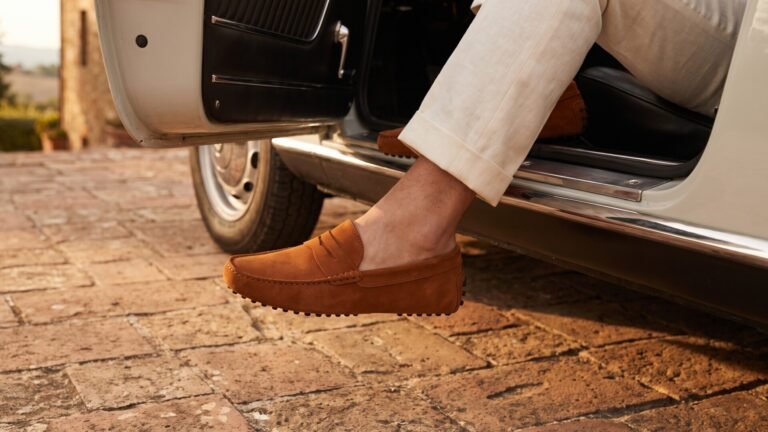
Loafers, moccasins, and driving shoes
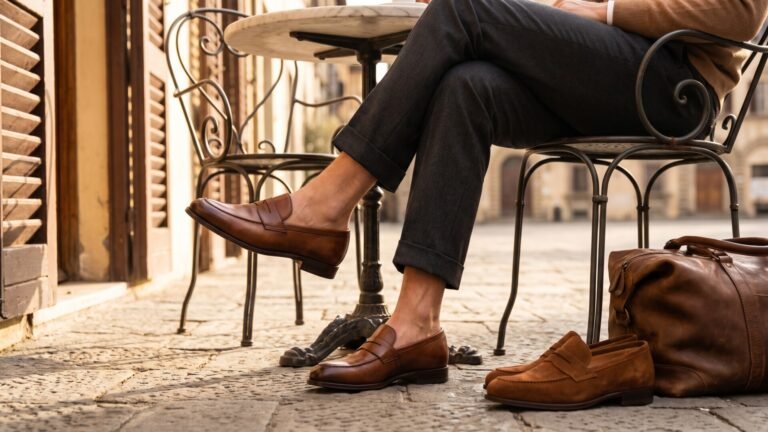
A loafer has no laces to take up slack, so it has to be right on its own. That is why a good loafer feels more secure when new than a lace-up does – there is nothing to adjust, so the maker built the upper to grip. The instep should be held without being cut into, and the heel should sit down in the heel cup.
Tod’s Gommino is the reference point here, and a useful one because the construction explains the feel. The upper is soft, the sole is pebbled rubber, and the whole shoe is designed to mold. On the Gommino and City Gommino you can expect a close, slightly snug first fit that relaxes noticeably over the first month. Model differences between the two are worth knowing before you buy; our Tod’s Gommino vs. City Gommino comparison covers them, and why the Gommino is so popular explains the design. For a wider comparison of casual brands, see Zegna vs. Tod’s and Tod’s vs. Santoni.
What a loafer will not do is fix a heel that slips badly. If the heel is escaping with every step in the shop, it will still be escaping in a month, just with a creased counter. For the wider category, see our best Italian driving shoes guide, the model-specific guides to Italian penny loafers for men and Italian designer loafers for women, and loafers vs. ballet flats.
Dress shoes and formal footwear
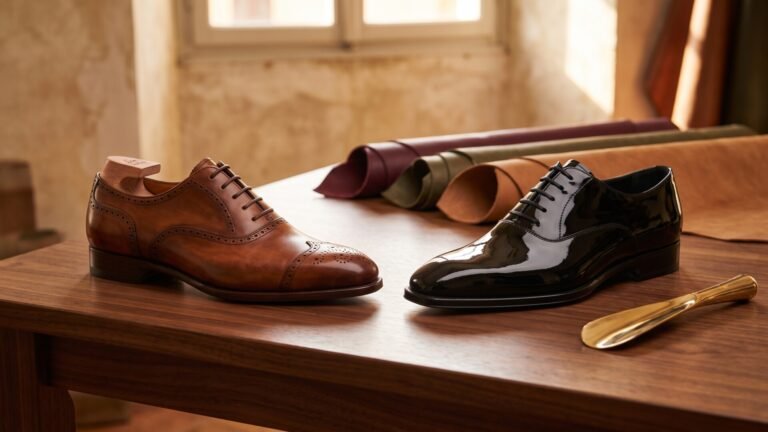
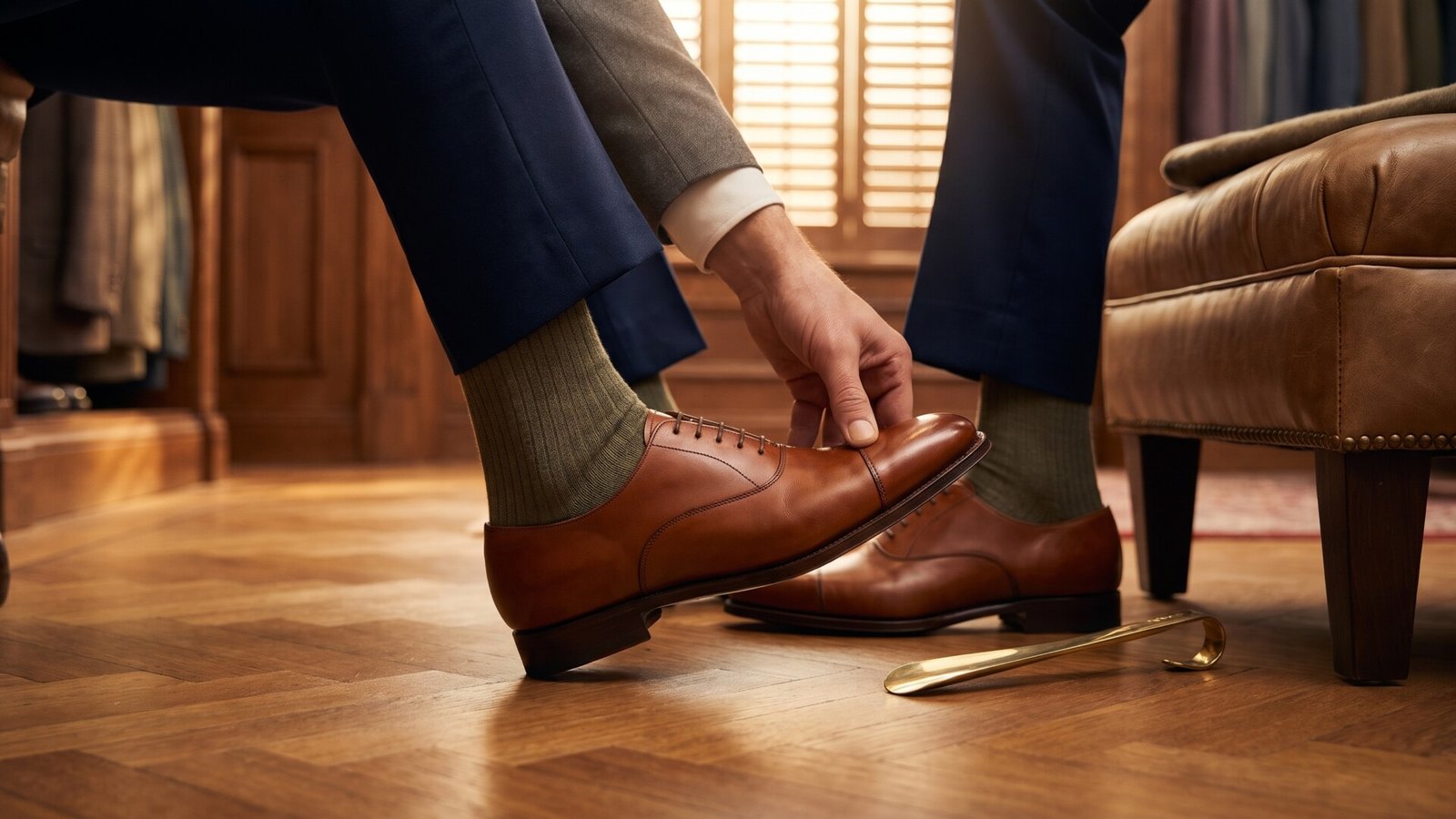
Lace-ups give you adjustability, which is why a good oxford or derby is more forgiving than a loafer across the instep. Santoni and Ferragamo formal styles both lean on this: you can tighten or loosen the lacing to take up volume, and the facings – the two panels the laces run through – should close to roughly a finger’s width apart. If they meet completely, the shoe is too big around the instep. If they splay wide open, it is too small.
Toe shape decides usable space more than size does. Italian dress lasts often run long and elegant, with an extended toe that looks generous and feels narrow across the forefoot. A square or almond toe will generally give more room than a sharp taper at the same length.
Leather soles and structured uppers mean a real break-in period, and that is normal. What is not normal is treating the discomfort as proof of quality. A stiff sole softening over two weeks is expected. A forefoot that aches after ten minutes is a fit failure. Our explainers on handmade Italian shoes and leather vs. rubber soles cover construction, and the Santoni shoes review and Ferragamo shoes guide handle brand-specific sizing.
Sneakers
Luxury sneakers usually sit closer to athletic sizing than to formal sizing, but the internal volume varies enormously between models. Golden Goose Super-Star and Ball Star, Zegna’s Triple Stitch, and Common Projects Achilles Low are all nominally the same kind of object and fit quite differently – the Golden Goose pairs run on the roomier side with a padded interior, the Common Projects on a cleaner, closer last. Our reviews of the Golden Goose Super-Star and Ball Star, and the Zegna Triple Stitch vs. Common Projects Achilles Low comparison, go into model-level fit. Treat any general statement about a brand’s sizing as a starting point and check the individual model.
Padding is the trap. A thick collar, a substantial tongue, and a fixed insole all eat volume, so a sneaker marked 42 can feel like a 41 in the toe. If the insole is removable, take it out and stand on it – your foot should not overhang the edges anywhere.
What you want is natural toe movement, a heel that stays put, and no pressure against the sidewalls. If the upper bulges outward over the sole when you stand, the shoe is too narrow. Our Italian designer sneakers guide has the category overview, and Best Italian Luxury Sneakers for Everyday Walking is the one to read if you plan to be on your feet.
Flats, heels, boots, and sandals
A flat has nothing to hold the foot except the upper itself, so heel and instep contact have to be right from the start. If your heel lifts in a ballet flat, it will rub. There is no lacing to save it. Our Italian designer flats guide covers the category.
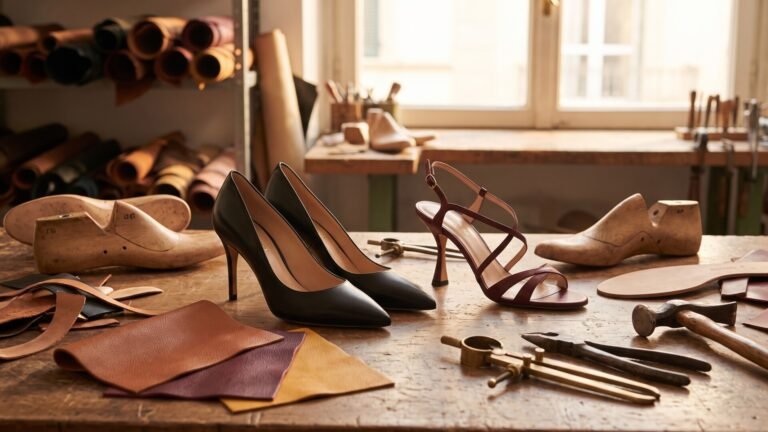
In a pump or heel, the ball of your foot should sit over the part of the shoe built to support it, and your toes should lie flat, not be pushed forward into the toe box. Sizing down to stop a heel slipping is the single most common mistake in this category – it does not fix the slip, it just relocates the problem to your toes. A heel that slips is usually the wrong heel shape or the wrong last, not the wrong length. See the Italian designer heels guide and pumps vs. stilettos for the full picture.
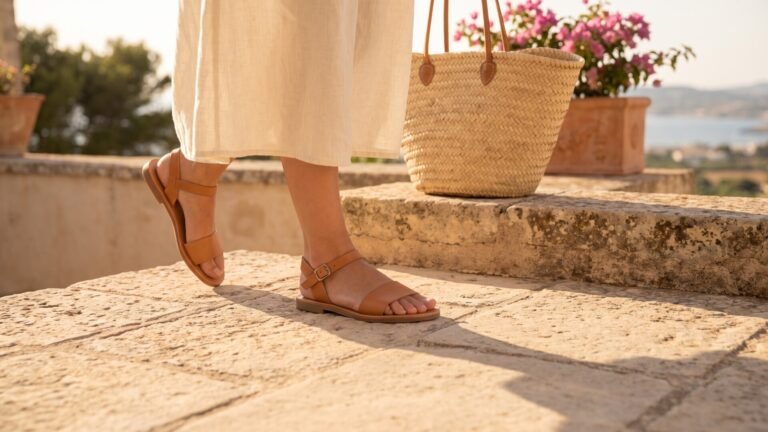
Boots have to fit at three points: the foot, the ankle, and the shaft opening. A boot that fits the foot but grips the calf will be unwearable by the end of the day. Our Italian designer boots guide and Italian designer sandals guide handle those categories in detail.
Why Italian Designer Shoe Sizing Can Feel Inconsistent
Here is the thing the size label hides. A marked size describes a last, not your foot. The same 42 from two brands can differ by half a size in length and considerably more in width, because each house builds over its own last and shapes it to its own house style.
Four things are actually in play, and only one of them is the number on the box:
- Labeled size – the nominal figure, converted inconsistently between EU and US.
- Last shape – the internal geometry: width at the ball, height at the instep, taper at the toe.
- Internal volume – what is left after the insole, lining, and padding.
- Upper behavior – how much the material will give, and where.
A soft, unstructured upper feels forgiving on the first wear and can end up letting the foot slide. A stiffened counter – the reinforced panel at the back of the heel – holds the heel firmly but will not soften into a different shape. A high instep built into the last will press on a high instep foot and float above a low one.
This is why Tod’s, Santoni, Ferragamo, Zegna, Golden Goose, and Brunello Cucinelli can all be "true to size" and still fit you differently. And it is why sizing up is not a universal fix. Sizing up solves one problem – not enough length – and creates two others: heel slip and excess volume. When the real issue is a narrow last, going up a size gives you a longer narrow shoe, which is worse. For how Italian and French houses differ in last shape and style, see Italian vs. French luxury shoe brands.
Fit by Foot Shape
| Foot shape | Often works better | Often causes problems |
|---|---|---|
| Wide forefoot | Square or almond toe, soft unlined loafers, roomier sneakers | Sharply tapered dress lasts, narrow pumps |
| Narrow heel | Lace-ups, models with a firm heel counter, shoes with adjustable closures | Unstructured slip-ons that rely on a loose heel |
| High instep | Lace-ups with open lacing, soft leather uppers | Low-cut structured loafers, stiff leather vamps |
| Low instep | Lace-ups, monk straps, shoes with heel grips | Backless or very open slip-ons |
| Bunions or sensitive joints | Soft, wide toe boxes with stretchable leather in the forefoot | Rigid pointed toes; see a foot specialist if pain persists |
The Home Fit Test Before You Wear Them Outside
Do this on carpet, before the soles see pavement. Once a leather sole is scuffed or a rubber one is marked, many retailers will refuse the return.
- Try them late in the day, when your feet are at their largest.
- Wear the socks or hosiery you will actually wear with them. A dress sock and a trainer sock are half a size apart.
- Stand up. Fit judged sitting down is not fit.
- Walk ten paces and listen – a shoe that flaps at the heel is too loose, one that slaps at the toe is too long.
Then check, in order: longest toe clearance at the front; pressure across the ball of the foot; tension across the instep; heel movement as you walk; whether your arch sits over the shoe’s arch; and, in heels, whether your foot slides forward when you put weight on it.
A thin leather insole, a tongue pad, or a heel grip can take up a small amount of volume or stop a minor slip. They are adjustments, not rescues. If a shoe needs a thick insole to be wearable, it is the wrong shoe, and no insert will make it the right one. Before you decide, turn the shoe over and check the sole and heel for any sign of outdoor wear – that is what the returns desk looks at.
What Most Buyers Get Wrong About Break-In and Leather Stretch
The belief that a tight Italian shoe will stretch into a perfect fit is the most expensive misconception in this category. Leather does relax – modestly, and mostly in width and at pressure points, where the fibers flex. It does not reliably get longer. A shoe that is a half size short will still be a half size short in three months, just softer about it.
Soft leather creates its own trap. It feels wonderful on the first wear precisely because it gives, and that give is what lets the foot slide once you have walked a mile. Sliding means friction, and friction means rubbing and instability. A shoe can feel forgiving and still be wrong.
Some discomfort is break-in. Some is not, and you should not accept it:
- Numbness or tingling anywhere in the foot
- Sharp, localized pressure – a point, not a broad area
- Any toe contact with the front of the shoe
- Rubbing that persists past the first few wears
- Forefoot compression that makes you walk differently
That last one is the tell. If the shoe changes your gait, it is not breaking in. It is winning.
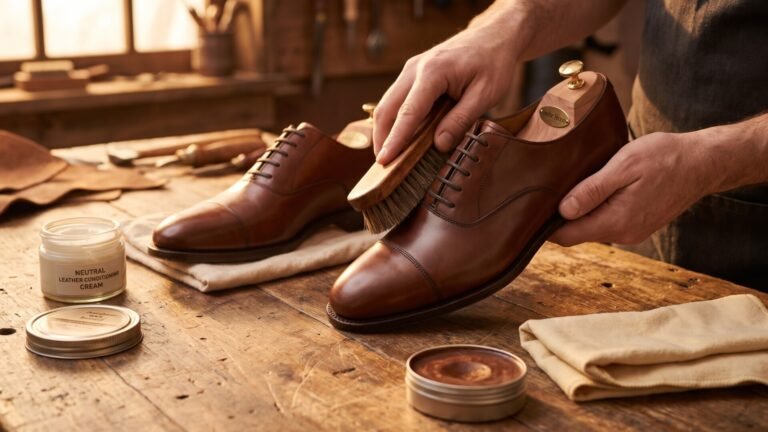
Professional stretching can help with a specific, localized pressure point on a shoe that otherwise fits. It cannot change the length of a last or widen a structurally narrow forefoot. If you are considering paying for stretching on a new pair, price the return instead – it is usually the better financial decision. Once a pair fits, looking after it keeps the fit: see how to care for Italian leather shoes, and use shoe trees to hold the shape between wears.
Italian Shoe Size Conversion and Buying Decisions
Italian shoes are labeled in European sizes, and the conversion to US sizing is where online buying goes wrong. There is no single authoritative EU-to-US chart, because the conversion depends on brand, category, gender, and sometimes the individual model. Treat every chart as a starting point and the brand’s own size notes as the closer authority.
| Shoe category | Correct fit | Common warning sign | Best adjustment |
|---|---|---|---|
| Loafers | Secure instep, controlled heel movement | Heel slips with every step | Try another size or last; skip thick inserts |
| Lace-up dress shoes | Snug forefoot, adjustable instep | Toes touch, or laces close completely | Change size, width, or toe shape |
| Luxury sneakers | Natural toe movement, stable heel | Sidewall pressure or cramped toes | Try another size, insole, or silhouette |
| Flats | Secure heel and instep | Foot slides forward or heel rubs | Reconsider size or foot shape |
| Heels | Ball of foot supported, toes free | Toes pushed forward, forefoot pain | Change size, heel height, or style |
The decision framework is simpler than the sizing charts suggest:
- Keep if length, width, instep, and heel security are all acceptable indoors.
- Exchange for a size if the shoe is clearly too short or too loose overall.
- Change model if the length is right but one zone – forefoot, instep, or heel – is wrong. That is a last mismatch, and another size will not fix it.
- Skip if the pair needs constant inserts, a painful break-in, or compensation for a shape that does not suit you.
Before you order, check the brand’s size chart, any model-specific notes, the material and construction, the return window, restocking terms, and whether the retailer accepts tried-on footwear. That last one decides whether you can test at all.
Which Fit Still Makes Sense After Months of Wear?
The right pair gets better without getting sloppy. Six months in, it should be more comfortable and still holding your foot – not flopping, not visibly misshapen, not creased in a way that says the shoe was fighting your gait.
Poor fit shows up in the object itself. Premature creasing across the vamp where the shoe bent because it was too long. A collapsed heel counter where the heel was never held. Uneven sole wear where the foot rolled to compensate. A stretched upper that has lost its shape. All of these shorten the shoe’s life and dent its resale appeal, which matters more in this category than most buyers expect.
This is where cost per wear does its arithmetic. As an illustration with hypothetical figures, a $700 pair worn twice a month for eight years is a better purchase than a $400 pair worn four times and then abandoned. The beautiful shoe that hurts is not an investment. It is an expensive ornament.
The framework for choosing the silhouette:
- Structured lace-ups when adjustability and foot security matter most.
- Soft loafers and driving shoes when flexibility and casual comfort come first.
- Sneakers for long walking only when the toe box, cushioning, and heel hold genuinely match your foot.
- A different silhouette rather than forcing a prestigious brand or an iconic model to fit a foot it was not built for.
Buying Verdict: When to Keep, Exchange, or Skip
Keep the pair if it is comfortable indoors, holds the heel, leaves natural toe room, and creates no focused pressure anywhere. That is the whole test, and it is enough.
Exchange it if it is clearly too short, clearly too loose, or inconsistent with the brand’s own size chart. Try another model if the length is right but the forefoot, instep, or heel is wrong – that is a last problem, and another size will not solve it. Skip it if you find yourself planning around inserts, hoping a painful upper will soften into comfort, or intending to walk miles in a shoe designed for an evening.
The best Italian designer shoe is not the most famous or the most expensive pair. It is the one whose last matches your foot and whose construction suits how you will actually wear it. Start from the Italian designer shoes guide and learn more about the craft in The Art of Italian Shoe Making, then go to the category guide for the silhouette you are considering.
Frequently Asked Questions About Italian Designer Shoes Fit
Should Italian designer shoes feel tight when new?
They can feel close and secure, especially across the instep, and that is normal. They should not cause pain, numbness, toe contact, or severe pressure. Tightness that restricts circulation is not a break-in requirement – it is a sign the size or last is wrong.
Do Italian leather shoes stretch?
Leather relaxes modestly in width and at pressure points as the fibers flex. It does not reliably stretch in length, and it will not turn an unsuitable last into a correct fit. Buy for the fit you have on day one, not the fit you hope for.
Should I size up in Italian designer shoes?
Size up when the shoe is genuinely too short. Do not size up to solve width or instep pressure – you will get a longer shoe that still presses and now slips at the heel. Check the brand’s own chart and the model’s fit notes first.
How much heel slip is normal in new loafers?
A little movement is normal while the sole is still stiff, particularly in a soft unlined loafer. Repeated lifting, rubbing, or the heel escaping the shoe is not normal and will not resolve with wear. That is a last or size mismatch.
Are Italian designer shoes suitable for wide feet?
Some are. Many elegant Italian lasts run narrow, but roomier shapes exist – square and almond toes, softer unstructured uppers, and specific models built with more forefoot volume. Look for the right silhouette rather than automatically sizing up, and check whether the brand offers more than one width.
How should Italian luxury sneakers fit?
Natural toe movement, stable heel hold, and no pressure against the sidewalls. Remember that padded collars, thick tongues, and fixed insoles all reduce internal volume, so a sneaker can feel a size smaller than its label suggests.
Can insoles or heel grips fix a bad fit?
They can make small adjustments to volume or minor heel movement. They cannot correct a shoe that is too short, structurally too narrow, or built on a last that does not match your foot. If the insert is doing the work, the shoe is wrong.
How do I convert EU shoe sizes to US sizes for Italian brands?
There is no single reliable chart, because conversions vary by brand, category and gender. Use the brand’s own size guide, compare with a shoe from the same brand that you already own, and check the return policy before ordering.
What size should I order if I am between sizes?
Consider the shoe type. For a lace-up with adjustable lacing, the smaller size is often workable. For a loafer or flat that relies on a close fit to stay on, the larger size may slip at the heel. Read customer fit comments for the specific model and choose a retailer that accepts tried-on returns.