Best Italian Driving Shoes: Luxury Brands, Models and Buying Advice
Most people buy a driving shoe for the nubs on the sole. The nubs are the least important part. What decides whether a pair of Italian driving shoes actually works is the gap between the sole and the road – how much of the pedal you can feel through the leather, how the heel sits when your foot rolls off the accelerator, and whether the upper has enough structure to stay on your foot when you are not sitting down. A $700 moccasin with a beautiful pebble sole can be a worse driving shoe than a $200 one built on the same principle, and it can be a worse walking shoe than almost anything else in your closet.
The category’s benchmark is still the Tod’s Gommino, which is the shoe most people picture when they hear the phrase. Car Shoe is the more specialized choice. Santoni, Ferragamo, and Zegna each offer a different answer to the same question, and Gucci, Brunello Cucinelli, Prada, Hogan, and Loro Piana fill in the edges of the category, from logo-forward drivers to rubber-soled loafers that are often mistaken for driving shoes. What follows is how to tell them apart with the shoe in your hand, with US prices checked at the time of writing.
What Makes an Italian Driving Shoe Different
The driving shoe – scarpe da guida in Italian, though the trade more often just calls it a mocassino – is a moccasin first and a shoe second. The upper is usually a single piece of leather wrapped around the foot and stitched to a vamp, which is what gives it that soft, sock-like collapse. The tomaia (the upper) is often unlined, or lined only in the heel, so the leather sits directly against your foot.
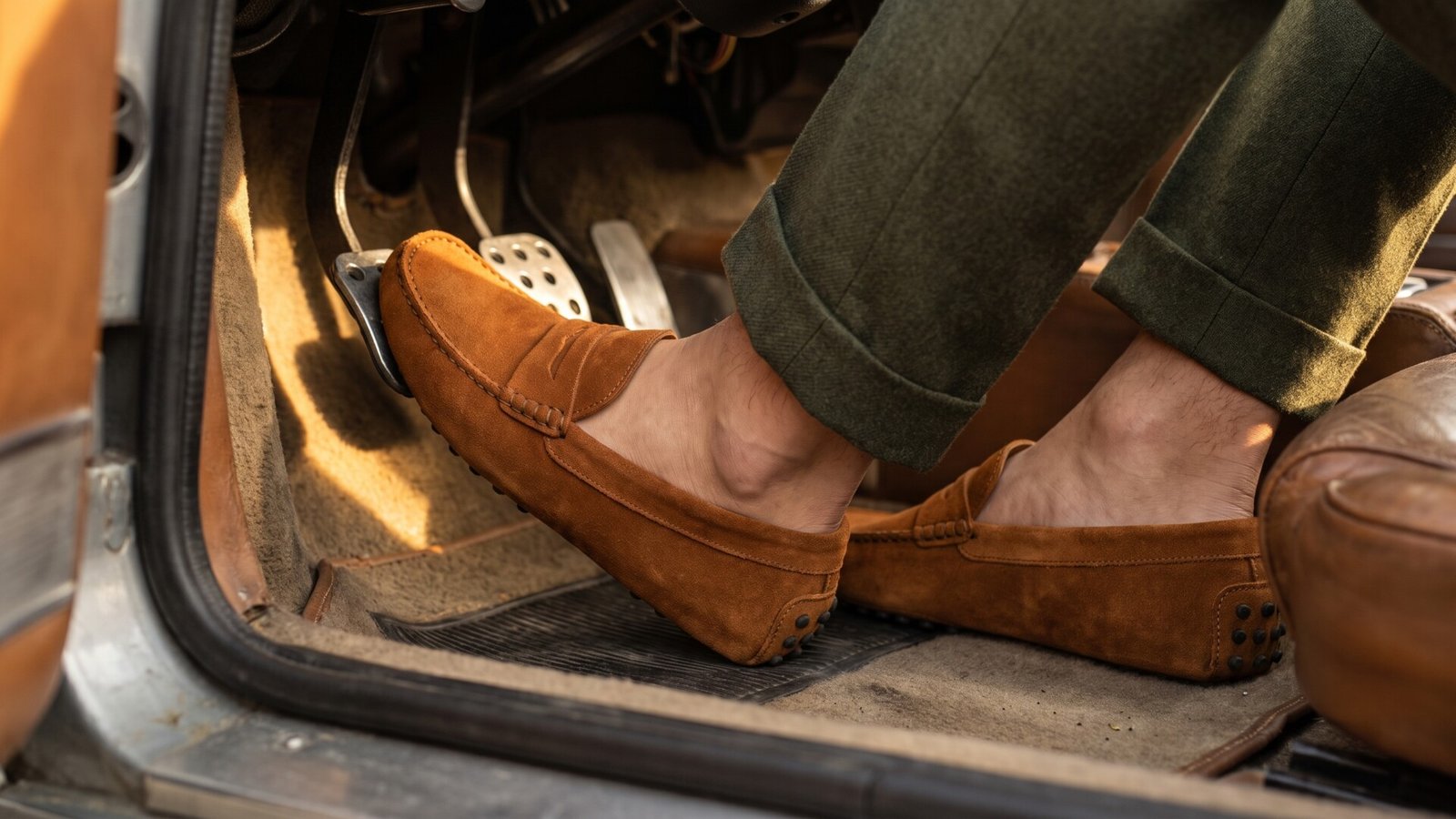
The defining feature is underneath. A true driving sole is a thin rubber base studded with small raised nubs – gommini, little rubber pebbles – that extend from the ball of the foot to under the heel. Those nubs are not decoration. They grip the pedal, they flex with the foot, and they let you feel the throttle through the sole in a way a flat rubber outsole never will.
Here is where three categories get confused, and the confusion costs people money.
Dedicated driving shoes. Tod’s Gommino and Car Shoe’s driving moccasins. The sole is built for pedal contact first, pavement second. Low profile, high flexibility, nubs that wrap slightly up the heel.
Casual luxury loafers with a driving-inspired sole. Plenty of Santoni and Ferragamo styles sit here. The nub sole is present, but the upper is dressier, the last is more structured, and the shoe is really a soft loafer that happens to have pebbles underneath.
Traditional loafers. A penny loafer is not a driving shoe, no matter how soft the leather. The sole is flat, the heel is a heel, and the shoe was designed for standing and walking.
If you are still working out which side of that line you want to be on, our breakdown of the Tod’s Gommino vs. driving shoe difference is the place to start, and our Italian loafers guide covers the adjacent category properly, with dedicated picks for penny loafers for men and designer loafers for women. For the wider picture of Italian footwear, see the complete guide to Italian designer shoes.
The Best Italian Driving Shoes at a Glance
The shortlist below is built on pedal feel, flexibility, upper quality, heel construction, practical comfort, style range, and long-term value. Logo visibility is not a criterion. Prices are US retail, approximate, checked at the time of writing, and move with leather, season, and retailer. Where we could not confirm a current US price, the table says so rather than guessing.
| Model or brand | Best for | Main strength | Main limitation | Approximate price |
|---|---|---|---|---|
| Tod’s Gommino | Best overall classic | 133-pebble sole that wraps up the heel, broad styling range | Nub soles wear quickly on pavement | ~$650–$1,000 (suede at the lower end, smooth leather higher) |
| Car Shoe driving moccasins | Best dedicated driving option | The original patented driving moccasin (1963), technical sole | Less versatile away from the car | ~$650–$900 |
| Santoni driving moccasins | Best refined leather finishing | Hand-applied antique finishing, buckle Riviera drivers | Some versions are casual loafers, not pure driving shoes | ~$990 (Carlo suede driver, Neiman Marcus) |
| Ferragamo Gancini driver | Best understated luxury | Tubular moccasin construction, leather lining, small Gancini detail | Fit and softness vary by model | ~$750–$850 |
| Gucci Horsebit driver | Best for visible house signature | Horsebit hardware, pebbled rubber sole, made in Italy | Most logo-forward option; the hardware adds nothing to pedal feel | ~$980–$1,000 (Neiman Marcus) |
| Brunello Cucinelli suede driver | Best quiet-luxury suede | Leather lining, removable insole, made in Solomeo | Suede needs weather management | ~$750–$850 |
| Zegna driving shoes | Best minimalist styling | Clean silhouettes, quiet luxury appeal | Price does not buy better pedal performance | Varies by model; check current US listing |
| Loro Piana Summer Walk | Best rubber-soled alternative (not a true driver) | Unstructured suede, very light | Flat rubber sole, no driving nubs | ~$1,100–$1,250 |
| Budget Italian leather driving shoe | Best entry point | Lower cost, easy to experiment | Less refined finishing, weaker resale | Usually around $150–$350 |
Treat the table as a decision aid, not a claim that every shoe in a brand’s range performs the same. A brand is a starting point. The individual model is what you are actually buying.
The Best Italian Driving Shoes by Brand and Model
Tod’s Gommino: Best Overall for the Classic Buyer
The Gommino is the reference point. It is the shoe that defined the modern Italian driving moccasin, and it is still the one every other maker is measured against. The construction is straightforward and honest: a moccasin upper, hand-stitched at the apron, sitting on that pebbled rubber sole. Tod’s builds the sole around 133 rubber pebbles of varying size, and the rubber continues up the back of the heel, which is the part of the shoe that actually touches the car floor when your foot pivots between pedals. Branding is minimal – a small stamped logo, sometimes a metal detail at the heel. Nothing shouts.
What makes it work beyond the car is the proportion. The last is neither aggressively tapered nor bulbous, so it pairs with dark denim, chinos, linen trousers, relaxed tailoring, and resort clothing without looking like a costume. That range is the real argument for the price. You are not buying a driving shoe. You are buying a soft leather shoe that drives well and happens to go with almost everything.
The ownership weakness is the sole, and you should hear it plainly. The nubs are excellent for flexibility and pedal feel. They are also soft, and pavement eats them. A buyer who wears Gomminos as city walking shoes will find the nubs flattened at the ball and heel within a season or two of regular use. The upper will still look fine. The sole will not. If you want the deep history and the model differences, we cover why the Tod’s Gommino is so popular and the Gommino vs. City Gommino comparison in detail. At the time of writing, standard Gomminos ran around $650–$1,000 at major US retailers: suede versions at the lower end, smooth calf leather toward the top. Exotic-skin and special editions cost more.
[Affiliate: Browse the Tod’s Gommino collection]
Car Shoe Driving Moccasins: Best for Dedicated Driving Use
Car Shoe exists for the reader who actually cares about the driving identity of the shoe. Gianni Mostile founded the brand in Italy in 1963 and patented his rubber-studded driving moccasin with the Italian Ministry of Industry and Trade; Prada took over the brand in 2001, and it is still part of the Prada Group. The brand’s whole reason for being is the rubber-studded sole, and the construction leans into pedal contact and flexibility rather than wardrobe versatility. If you spend real hours behind a wheel and want a shoe that feels purpose-built, this is the one.
The trade-off is exactly what you would expect. A highly specialized sole looks less natural with formal trousers, and it is not the best single luxury shoe to pack for a trip where you will also be walking through airports and cities. The Car Shoe reads as a driving shoe, because it is one.
Check the exact model before you buy. Car Shoe’s range varies in leather, lining, and seasonal detailing, and the sole treatment is not identical across every style. Look at the underside: the stud pattern, the density of the nubs, and whether the rubber wraps up the heel. That is where the money went. As a reference point, Car Shoe’s suede driving loafers, such as the KUD006, sat around $650–$900 at US-shipping retailers at the time of writing.
[Affiliate: See Car Shoe driving moccasins]
Santoni Driving Moccasins: Best for Polished Leather Character
Santoni is the choice for someone who wants a driving shoe with a richer finish. The leathers are treated with more visible character – hand-colored patinas, deeper tones, a polish that catches light – and the overall effect is dressier than a Tod’s. Where the Gommino is instantly recognizable as the classic driving moccasin, a Santoni often reads as a beautifully finished soft loafer that happens to have nubs underneath. Its Riviera driving series, introduced for Autumn/Winter 2021, is a good example: calfskin with hand-applied antique finishing or fine suede, single- and double-buckle versions, a gently squared toe, and the rubber pebbles carried up onto the heel. As a current US reference, Neiman Marcus listed Santoni’s Carlo burnished suede driving shoe, made in Italy, at $990 in November 2026.
That is the honest comparison. Santoni may feel more overtly crafted. Tod’s is more instantly recognizable as the category’s archetype. Neither is better; they answer different questions.
One warning. A dressier upper does not make the shoe formal. The flexible nub sole still places it firmly in the casual category, and wearing a Santoni driving moccasin with a business suit will look exactly as odd as wearing any other driving shoe with a business suit. Our Santoni shoes review covers the finishing standards in more depth, and Tod’s vs. Santoni puts the two side by side.
[Affiliate: Browse Santoni driving moccasins]
Salvatore Ferragamo Driving Shoes: Best for Understated Luxury
Ferragamo’s strength in this category is shape and restraint. The moccasin profiles are comfortable and well-proportioned, branding is discreet, and the shoes suit a buyer who wants a recognizable name without a visible logo. The brand has been making soft leather footwear for a very long time, and it shows in the way the uppers sit. The current Gancini driver is a useful benchmark: a leather upper with a braided leather lace secured by a single Gancini ornament, a leather lining, and a rubber sole on Ferragamo’s lightweight tubular (moccasin) construction, made in Italy and priced around $750–$850 in the US at the time of writing (Neiman Marcus listed Ferragamo’s drivers at $750 to $795 in November 2026).
Evaluate the shape carefully, because it changes the fit. Rounded moccasin profiles tend to feel more relaxed and forgiving. Tapered versions look sharper but offer less toe room, and if your foot is on the wider side, that taper will make itself known by the end of an afternoon.
The value question is the one to ask honestly. Ferragamo driving shoes are comfortable and well made, but the price is partly brand positioning. Whether that is worth it depends on how often you will wear them. A pair worn three times a week for years justifies the cost. A pair worn twice a summer does not, no matter how good the leather is. The Ferragamo shoes guide covers sizing and model differences.
[Affiliate: Browse Ferragamo men’s and women’s loafers]
Zegna Driving Shoes: Best for Minimalist Quiet Luxury
Zegna appeals to the reader who wants clean lines and no visible branding. The silhouettes are restrained, the leathers are good, and the shoes fit naturally into a modern wardrobe built on quiet luxury – soft tailoring, neutral tones, nothing that announces itself.
The minimalism cuts both ways. It improves versatility, because a plain driving shoe goes with more outfits than a distinctive one. It also makes the shoe less distinctive, which matters if part of what you want from a $900 purchase is that it looks like a $900 purchase. Zegna’s price is justified by leather, finishing, and brand positioning. It is not justified by superior driving performance. If pedal feel is your priority, Car Shoe does that job for less.
Our Zegna vs. Tod’s comparison is the right next read if you are weighing the two.
[Affiliate: Browse Zegna casual footwear]
Gucci Horsebit Driver: Best for a Visible House Signature
Gucci’s driver is the opposite of the quiet-luxury argument. The Horsebit, the snaffle-bit hardware that has sat on Gucci loafers since the 1950s, is right there on the vamp, and recent versions add GG embossing to the leather. Underneath, it is a genuine driving shoe: a leather-lined moccasin on a pebbled rubber sole, made in Italy. In November 2026 Neiman Marcus listed Gucci’s Byorn GG-embossed Horsebit driver at $1,000 and a plain leather moc-toe driver at $980, which puts it level with Santoni and above the Ferragamo and Cucinelli drivers.
Buy it for the hardware and the recognition, not for better pedal feel. The sole does the same job as a Gommino’s, and the metal bit adds weight and a point that can catch on trouser hems. If you want the Horsebit on a shoe that walks better, a classic Gucci Horsebit loafer with a leather sole is the more practical purchase, and the Italian penny loafers guide covers that route.
Brunello Cucinelli Suede Driver: Best Quiet-Luxury Suede
Cucinelli’s suede driver is a plain moccasin with a rubber outsole studded with small nubs, a soft leather lining, and a removable insole, made in Solomeo, the Umbrian village where the company is based. It sat around $750–$850 at US retailers at the time of writing, level with the Ferragamo Gancini driver and in the middle of the Gommino’s range.
The lining and removable insole matter more than they sound. A lined driver holds its shape longer than an unlined one, and a removable insole lets you fine-tune fit or swap in a thin orthotic. The trade-off is suede: beautiful in dry weather, more work when it rains. If you like the brand’s approach, the Brunello Cucinelli sneakers review covers the same quiet design language in a shoe that walks better.
Prada and Hogan: Group Alternatives Worth Knowing
Prada sells its own leather and suede driving shoes, often with the triangle logo on the vamp. They are worth knowing about mainly because Prada also owns Car Shoe: if you want the driving pedigree, the Car Shoe line is where the group concentrates it, while the Prada-branded version is the choice for buyers who want the triangle. We could not confirm a current US price for Prada drivers at the time of writing, so check the brand’s own listing.
Hogan is the casual sister brand to Tod’s within the Tod’s Group, best known for sneakers. Its driving moccasins follow the same pebble-sole formula in a more casual, sporty register, and they make sense for a buyer who wants the shape without the Tod’s name on it. Check model-level details, because Hogan’s range leans sportier and some styles use thicker, more sneaker-like soles.
Loro Piana Summer Walk: The Shoe Often Mistaken for a Driver
The Loro Piana Summer Walk turns up in almost every driving-shoe conversation, and it is not a driving shoe. It is an unstructured suede loafer on a flat white rubber sole with no nubs. That sole is the point: it walks far better than a pebble sole and wears more evenly, while the pedal feel is closer to a light sneaker than to a Gommino. At around $1,100–$1,250 at the time of writing, it is also the most expensive shoe in this guide.
If your real need is a soft, sockless summer shoe that drives acceptably and walks well, the Summer Walk is the honest answer and the nub sole is not. We compare the Open Walk and Summer Walk and round up the best Loro Piana shoe styles for everyday wear.
Smaller Italian Makers: Moreschi and Fratelli Rossetti
Two older shoemakers belong in the conversation as alternatives rather than headline picks. Moreschi was founded in Vigevano in 1946 and is known for men’s dress and casual shoes made in Italy. Buy with care for now: the company was declared bankrupt in 2024 and its brand and production assets were sold at a court-supervised auction, with new owners announcing a relaunch in 2025, so check current availability and retailer support before you rely on a specific model.
Fratelli Rossetti, founded by Renzo Rossetti in Parabiago near Milan in 1953, is best known for the tasseled Brera loafer rather than a dedicated driving line. It is the right name if you have decided you actually want a soft, unstructured loafer that walks better than a driver. For more makers in this tier, see the guide to the best Italian luxury shoe brands.
Women’s Italian Driving Shoes and Unisex Styling Options
Women approach this category through the same shapes, with more room to play. Classic Gommino-style moccasins work, and so do slimmer driving loafers and softer unstructured leather styles. Tod’s, Ferragamo, Santoni, and Car Shoe all offer women’s moccasin styles worth looking at, and Brunello Cucinelli makes a women’s suede driver, though the ranges are not identical to the men’s – check the specific model rather than assuming a unisex fit.
Styling is where the women’s category opens up. Cropped trousers, straight-leg denim, knit dresses, relaxed tailoring, and travel wardrobes all work. A driving shoe reads as intentional with a knit dress in a way a ballet flat sometimes does not, and it is more forgiving on cobblestones than a thin-soled flat.
If you are choosing between a driving shoe and a more traditionally feminine flat, our Italian designer loafers vs. ballet flats piece covers the trade-off, and the best Italian designer loafers for women guide shows the firmer-soled options.
What Most Buyers Get Wrong About Driving Shoes
The central misconception is that softness equals comfort. It does not. A very soft upper feels wonderful in the shop and can be a problem by the third hour, because soft leather without structure gives you no heel security and no lateral support. Your foot slides. The shoe rolls inward when you walk. You feel it in your arch by evening.
Driving shoes are not automatically good walking shoes. This is the mistake that costs the most money. The nub sole is built for pedal feel and flexibility. On a sidewalk, that same flexibility means the sole flexes where pavement wants it to stay rigid, and the nubs abrade against grit. A pair worn for a full day of city walking will age several times faster than a pair worn for driving and short walks.
The thinnest sole is not always the best sole. A slightly more substantial rubber base gives up some pedal sensitivity and gains a lot of everyday durability. If you drive a few times a week and walk a few blocks, the thicker sole is the better purchase. If you are buying specifically for the feel of the pedal, take the thinner one and accept the wear.
And then there is the logo trap. A famous Italian name does not guarantee correct fit, durable construction, or the right use case. Some of the most expensive driving shoes on the market are lifestyle objects first and driving shoes second. That is not a scandal. It is just something to know before you spend.
How to Choose the Right Italian Driving Shoe
Fit and Sizing
Judge the fit by feel, not by the number on the box. Four checks matter.
- Heel hold. Walk a few steps. Your heel should stay seated. If it lifts, the shoe is too long or the last is wrong for your foot.
- Toe room. Wiggle your toes. You want a little space at the front, not a lot. A driving shoe should feel close, not roomy.
- Instep pressure. Press down over the top of your foot. If you feel pressure from the stitching or the vamp, it will not improve.
- Lateral movement. Rock side to side. Your foot should not slide across the footbed.
Unlined moccasins relax with wear, but do not count on leather stretching enough to fix a fundamentally short or narrow fit. Try the shoes with the socks you intend to wear, or sockless if that is the plan, and check the manufacturer’s sizing guidance for each model – it varies more than buyers expect. Our guide to how Italian designer shoes should fit covers this properly.
Sole and Construction
Three sole types, three different jobs.
Full nub sole. Nubs from toe to heel. Maximum pedal feel, maximum flexibility, fastest wear on pavement.
Partial nub sole. Nubs at the ball and heel with a flatter rubber section between. Slightly less feel, better durability, a reasonable compromise for mixed use.
Flat rubber sole. The least driving-specific. Better for walking and weather, less sensitive through the pedal. The Loro Piana Summer Walk is the best-known example. For the wider trade-off, see leather soles vs. rubber soles.
The upper construction matters too. Moccasin-style stitching gives flexibility, but the seam at the apron is a crease point, and if you treat the shoe carelessly in wet weather, moisture will find the stitching before it finds anything else. Suede is comfortable and visually relaxed but demands more weather management than smooth leather.
Leather, Lining, and Seasonal Use
Smooth calfskin is the default for a reason. It takes polish, resists light rain, and ages into a patina rather than a mess. Pebbled leather hides scuffs better and feels slightly more casual. Suede is the softest and the most relaxed, and it is also the most demanding.
Unlined construction breathes well and feels superb in warm weather. It also offers less support and less protection in cold or wet conditions. Choose the material according to your climate and wardrobe, not according to which leather description sounds most luxurious. A suede driving shoe in a rainy city is a beautiful object that you will not wear enough.
Which Italian Driving Shoe Still Makes Sense in Three Years?
The question that actually decides the purchase is not which shoe is best. It is which shoe you will still be wearing in three years. That depends almost entirely on how you use it.
| If your use is… | The shoe that holds up | Why |
|---|---|---|
| Occasional driving and resort wear | Tod’s Gommino or similar classic | Versatile enough to earn its keep without heavy pavement miles |
| Frequent driving, minimal walking | Car Shoe | Specialized sole is the point, and it is not wasted |
| One pair for travel, dinners, light driving | Santoni or Ferragamo | Dressier character, comfortable shapes, broad enough range |
| Quiet luxury wardrobe with premium tailoring | Zegna or Brunello Cucinelli | Clean lines suit the wardrobe, price justified by finishing |
| Want the house signature to show | Gucci Horsebit driver | The hardware is the purchase; the sole is standard pebble rubber |
| More walking than driving | Loro Piana Summer Walk or a classic loafer | A flat rubber or leather sole outlasts nubs on pavement |
The hidden cost is sole wear. On a driving shoe, the sole usually gives out before the upper does, and resoling a nub sole is not always straightforward or cheap. A pair worn hard on pavement can need attention within a couple of years. A pair used mostly in the car can last far longer.
Cost per wear is the honest way to think about it. A $700 pair worn twice a week for three years works out to a few dollars a wear. A $250 pair worn five times because the fit was wrong or the styling did not suit you is the expensive purchase. The cheaper shoe is only cheaper if you wear it.
Resale is realistic but limited. Recognizable models in neutral colors attract more secondhand interest, but driving shoes generally face more sole-wear scrutiny than structured loafers, and buyers know it. Do not buy a driving shoe as an investment. Buy it to wear.
How to Care for Italian Driving Shoes
Most driving shoes die from the sole up, so care is mostly about slowing that down. Keep them for the car and short walks, and do not wear the same pair on consecutive days; unlined leather needs time to dry out from foot moisture. Cedar shoe trees help a soft moccasin keep its shape between wears.
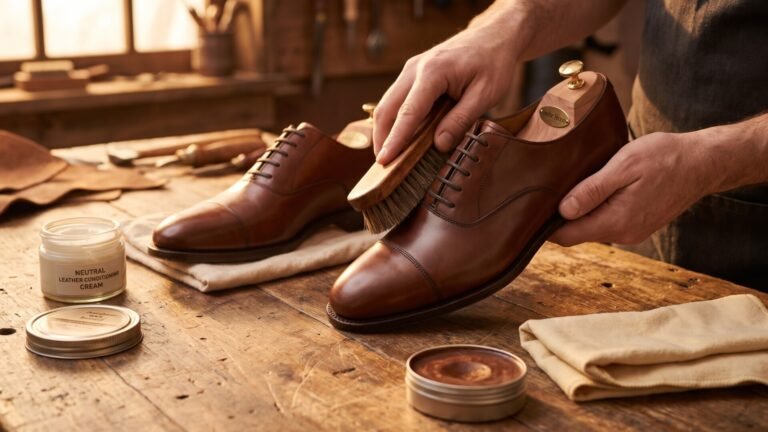
Smooth calfskin needs a light clean and a neutral conditioner a few times a season. Suede needs a dry brush after wear and a protective spray before the first outing; test any product on an inconspicuous area first, because some sprays darken lighter suedes. Our guides to caring for Italian leather shoes and waterproofing Italian suede without darkening it go through both step by step.
When the nubs are worn flat, ask the brand’s boutique about factory repair before going to an independent cobbler. A pebble sole is moulded rather than stitched like a leather sole, so a general repairer may only be able to fit a replacement that changes how the shoe looks and grips. For valuable pairs, professional care is the safer route.
Styling and Real-World Wear
Driving shoes work best when you stop treating them as formal footwear. Pair them with casual tailoring, chinos, linen trousers, dark denim, shorts, and relaxed travel clothing. The soft upper and low sole read as leisure, and that is the point.
In professional settings, they suit relaxed offices, creative workplaces, and business-casual environments. They are usually too casual for conservative suits or formal client meetings. A driving shoe with a worsted suit looks like a mistake. A driving shoe with an unstructured linen jacket looks deliberate.
Travel is where they shine and where they disappoint, often on the same trip. They are light, they pack flat, and they are comfortable for the drive to the airport and the dinner afterward. They offer limited rain protection and reduced walking durability, which matters on a trip that involves a lot of pavement.
The practical answer is rotation. Use driving shoes for driving, short walks, and dry-weather occasions. Rotate in loafers, sneakers, or proper walking shoes for full-day urban travel; the guide to styling Italian shoes for every occasion covers the rest of the rotation. One pair cannot do everything, and pretending otherwise is how people end up with a worn-out sole and sore feet on the same afternoon.
Buying Verdict: Which Pair Should You Choose?
Best overall: Tod’s Gommino. The clearest expression of the category, with enough styling range to justify the investment for most buyers.
Best for dedicated driving: Car Shoe. For the reader who values pedal feel and specialized construction above all-purpose versatility.
Best refined alternative: Santoni. For richer leather character and a slightly dressier casual appearance.
Best understated option: Salvatore Ferragamo. For discreet branding, classic shapes, and a restrained luxury profile.
Best minimalist splurge: Zegna. For a quiet-luxury wardrobe, provided you value the design language and will wear the shoes often.
Best quiet-luxury suede: Brunello Cucinelli. For a lined suede driver with a removable insole, at roughly Ferragamo money (around $750–$850).
Best for a visible signature: Gucci Horsebit driver. For buyers who want the hardware to be seen, and accept that it adds nothing to pedal feel.
Best for more walking than driving: Loro Piana Summer Walk. Not a driving shoe, and that is why it can be the better buy.
Who should skip the category entirely: buyers who need all-day walking shoes, wet-weather footwear, formal business shoes, or a single pair that handles every travel situation. Driving shoes are specialists. Buy them as specialists.
Fit and intended use should decide the purchase, not brand prestige. And choose a neutral color only if it will genuinely increase how often you wear the pair – a beautiful shoe in a color you reach for twice a year is a worse buy than a plain one you wear weekly.
Conclusion
If you take one thing into the shop, take this: buy the driving shoe that matches how you will actually use it, not the one with the best story. The Tod’s Gommino remains the safest all-around recommendation for most buyers. Car Shoe is the specialist choice. Santoni, Ferragamo, Zegna, Brunello Cucinelli, and Gucci each suit a particular wardrobe and a particular way of wearing the shoe, and the Loro Piana Summer Walk is the honest pick if you will walk more than you drive.
The best Italian driving shoe is the one whose driving performance, styling range, and expected wear justify its price for you. Start with the Italian designer shoes guide for the wider category, look at the Italian loafers guide if you are weighing a driving shoe against a classic loafer, and read whether luxury Italian shoes are worth the money before you commit to a price bracket. If you are also considering Paris labels, the Italian vs. French luxury shoe brands comparison sets out the differences.
Frequently Asked Questions About Italian Driving Shoes
Are Italian driving shoes comfortable for walking?
For short walks, yes. The flexibility and soft upper feel good for a few blocks. For full-day city walking, no – the nub sole and minimal structure are the wrong tools for the job, and the sole will wear faster than you expect.
Are Tod's Gommino shoes worth the money?
They are worth it if you wear them often. The design has lasted decades, the styling range is broad, and the construction is honest. They are harder to justify if you plan to walk long distances in them, because the sole will wear out well before the upper does.
What is the difference between Tod's Gommino and a regular loafer?
The sole and the intent. A Gommino has a pebbled rubber sole built for pedal feel and flexibility. A regular loafer has a flat sole and a proper heel, built for standing and walking. Our Gommino vs. driving shoe explainer covers it in full.
Can you wear driving shoes with a suit?
Generally no. They are too casual for conservative suiting. They can work with relaxed, unstructured tailoring in informal settings, but a worsted business suit and a nub sole do not belong together.
Should Italian driving shoes fit tightly?
They should fit closely, not tightly. You want a secure heel and instep with enough toe room to wiggle. Do not buy a size down expecting the leather to stretch into the right fit.
Do driving shoe rubber nubs wear out quickly?
Faster than a conventional rubber or leather outsole when used on pavement. The nubs are soft by design. Driving-focused use extends their life considerably, which is the whole argument for owning them.
Are Italian driving shoes suitable for rain?
Poorly. The low sole, soft leather, and unstructured construction offer little protection. Check the manufacturer’s care instructions, and treat them as dry-weather shoes.
Who invented the Italian driving shoe?
Car Shoe is generally credited as the original. Gianni Mostile founded the brand in 1963 and patented his rubber-studded driving moccasin in Italy. Tod’s Gommino later made the style mainstream. Car Shoe has been part of the Prada Group since 2001.
How many rubber pebbles are on a Tod's Gommino?
133. They vary in size, and the rubber continues up the back of the heel, where the shoe meets the car floor as your foot pivots between pedals.
Is the Loro Piana Summer Walk a driving shoe?
No. It is an unstructured suede loafer on a flat rubber sole without driving nubs. It drives acceptably and walks better than a pebble-soled driver, which is why many buyers choose it instead.