Italian Dress Shoes: The Complete Guide to Luxury Formal Footwear
For years, I wore uncomfortable dress shoes because I believed that elegance required sacrifice. The stiff leather, the unforgiving soles, the blisters that bloomed after every wedding, every interview, every formal event. I told myself this was normal. I told myself that real luxury was painful.
Then I bought my first pair of Italian dress shoes.
The leather was soft. The sole flexed with my foot. The fit was snug but not punishing. I wore them to a full day of meetings, then to dinner, then home, and at no point did I think about my feet. That was the moment I understood that Italian dress shoes are not just beautiful; they are wearable. They are the product of centuries of refinement, of master artisans who believe that the best shoe is the one you forget you are wearing.
Italian dress shoes represent the global benchmark for luxury formal footwear. They combine elegance with craftsmanship, comfort with durability, and tradition with modern innovation. This guide is your definitive resource for Italian dress shoes: the types, the construction methods, the major brands, how to style them, how to choose them, and why they are worth every penny.
What Defines an Italian Dress Shoe?
Italian dress shoes are distinguished by several key characteristics that set them apart from English, American, or mass‑produced alternatives.
Elegant Proportions and Silhouettes
Italian dress shoes are built on sleeker lasts. The profile is lower, the toe is more refined (often a soft square or a gently rounded almond shape), and the overall appearance is lighter and more graceful than the chunkier silhouettes of traditional English shoes. This elegance comes from the Italian design philosophy: a dress shoe should flatter the foot, not encase it.
Premium Leather and Materials
Italian dress shoes use the finest leathers available:
- Calfskin – The standard for luxury dress shoes. Smooth, fine‑grained, and durable. It takes a high polish and develops a beautiful patina over time.
- Full‑grain leather – The highest quality, retaining the natural strength and character of the hide.
- Hand‑finished patinas – Many Italian shoemakers (Santoni is a master) apply hand‑painted patinas that give each shoe a unique, deep, multicolored finish.
- Leather linings – Unlike cheaper shoes that use synthetic materials, Italian dress shoes are lined with breathable, moisture‑wicking leather.
Construction Methods
The construction determines how a shoe feels, how long it lasts, and whether it can be repaired. Three methods dominate Italian dress shoes:
- Blake stitching – The most common method for Italian dress shoes. The upper is folded under and stitched directly to the sole. This creates a sleek, lightweight, flexible shoe. Blake‑stitched shoes are easier to resole than cemented shoes but not as rugged as Goodyear welt.
- Blake Rapid – An extension of Blake that adds an outer sole for additional durability. Used in slightly heavier dress shoes.
- Goodyear welt – The gold standard for durability and water resistance. The upper and sole are stitched to a raised welt, allowing the sole to be replaced multiple times. Goodyear‑welted Italian dress shoes can last decades.
Comfort‑Focused Luxury
Italian dress shoes prioritize wearability. The soles are more flexible than their English counterparts. The leather is softer and requires less break‑in. The lasts are designed to accommodate the natural shape of the foot. This is not a compromise; it is a philosophy. Italian shoemakers believe that a shoe that hurts is not a luxury.
The History of Italian Dress Shoes
Italy‘s dominance in luxury footwear is the result of centuries of accumulated knowledge.
Regional Shoemaking Traditions
Three regions form the backbone of Italian shoemaking:
- Marche – Home to Santoni and Tod‘s, as well as hundreds of small workshops producing shoes for the world’s most famous fashion houses. The region is known for its exceptional craftsmanship and family‑owned factories.
- Tuscany – Florence and its surroundings have been centers of leather craftsmanship since the Renaissance. Ferragamo, the most famous Italian shoe brand, was founded in Florence and still maintains its headquarters there.
- Veneto – The region around Venice and Padua is known for fashion‑forward shoemaking, with brands like Prada producing many of their shoes here.
Rise of Italian Luxury Footwear
In the mid‑20th century, Italian dress shoes began to challenge English and French dominance. Brands like Ferragamo, Gucci, and Prada expanded from local workshops into global luxury houses. Italian shoes were embraced by Hollywood, by European royalty, and by a new generation of consumers who valued style and comfort equally.
Modern Italian Formalwear Evolution
In recent decades, Italian dress shoes have evolved alongside tailoring. The trend toward softer, more relaxed suits has influenced shoe design. Silhouettes have become sleeker, leathers have become more supple, and the line between formal and casual has blurred. Today‘s Italian dress shoes are more versatile than ever, capable of pairing with a tailored suit or a pair of dark jeans.
The Main Types of Italian Dress Shoes
Oxford Shoes
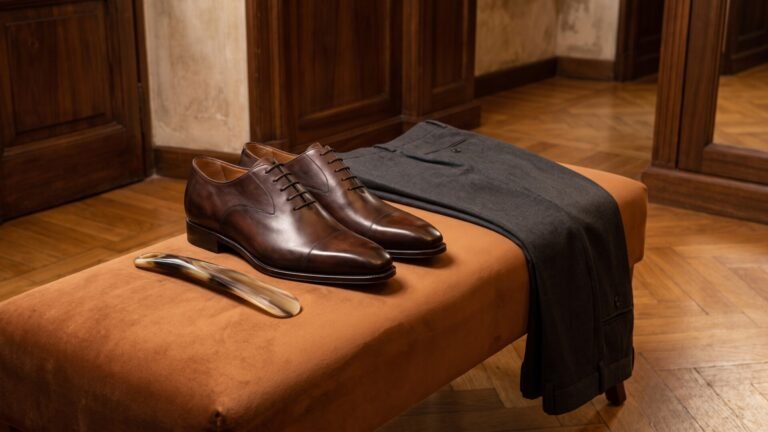
The Oxford is the most formal dress shoe. Its defining feature is closed lacing: the eyelet tabs are sewn under the vamp, creating a clean, uninterrupted line. Oxfords are the correct choice for black‑tie events, formal business settings, and weddings.
Italian Oxfords are typically sleeker than their English counterparts, with slimmer profiles and more tapered toes. They are available in plain toe (minimalist), cap toe (the classic business shoe), and wholecut (seamless, ultra‑refined).
Derby Shoes
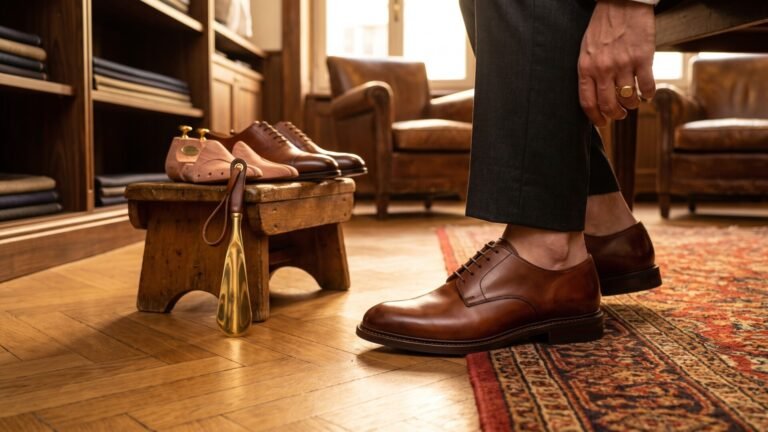
Derbies have open lacing: the eyelet tabs are sewn on top of the vamp. This makes them slightly less formal but more comfortable and accommodating for different foot shapes. Derbies are excellent for business casual, travel, and men with higher insteps.
Italian Derbies often feature lighter, more flexible construction than traditional English Derbies, making them ideal for all‑day wear.
Monk Strap Shoes
Monk straps replace laces with one or two buckled straps. They offer a distinctive, elegant alternative to traditional lace‑ups.
- Single monk – One strap, slightly less formal, very versatile.
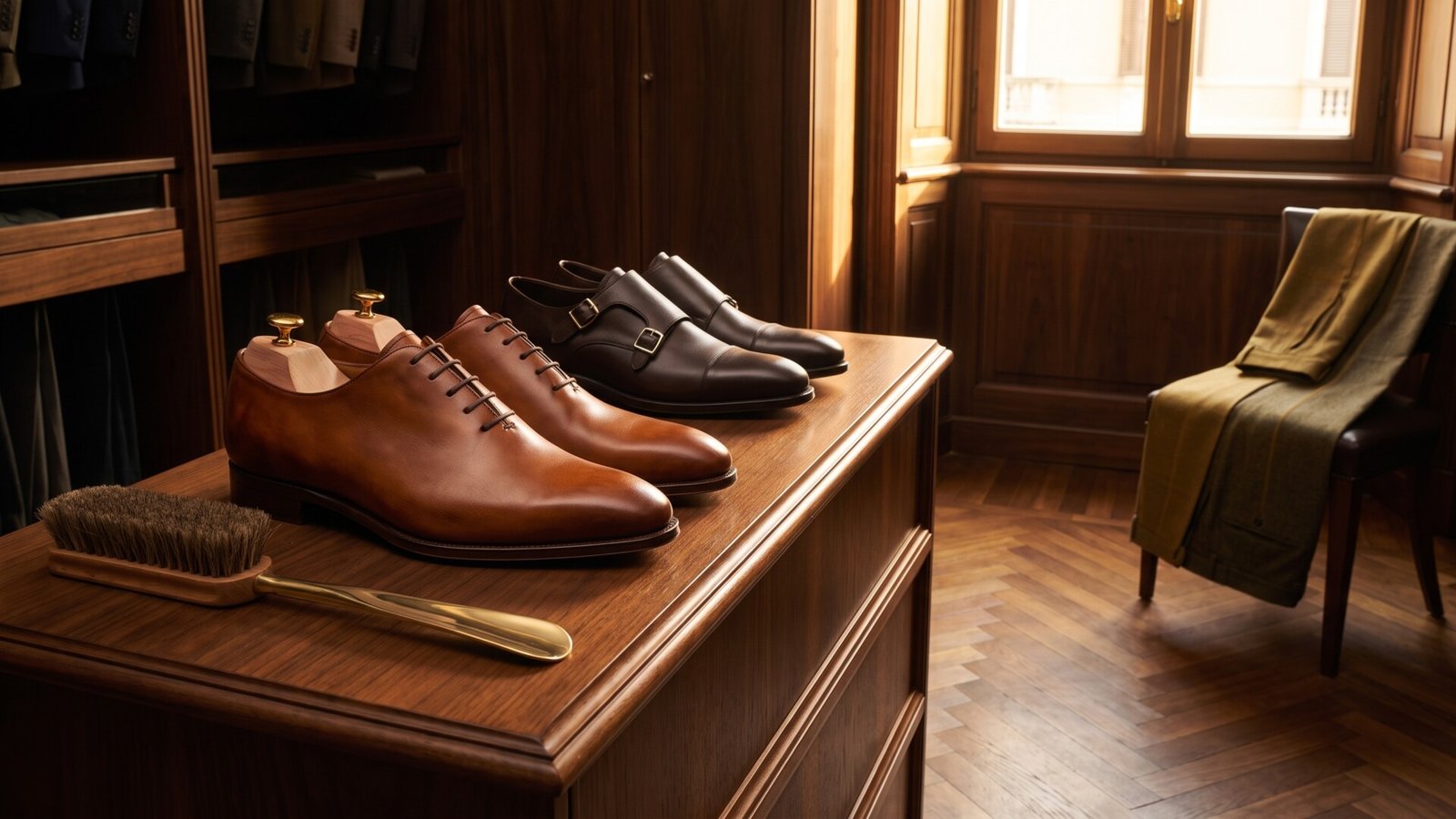
- Double monk – Two straps, more ornate, a favorite among Italian dress shoe enthusiasts.
Italian monk straps are known for their refined proportions and sleek hardware. Brands like Santoni and Ferragamo produce exceptional examples.
Wholecut Shoes
A wholecut is an Oxford made from a single piece of leather, with no seams except at the heel and along the back. This minimalist design requires exceptional leather quality and precision craftsmanship. Wholecuts are the ultimate expression of quiet luxury, perfect for formal occasions and men who appreciate understated elegance.
Formal Loafers
While loafers are generally considered less formal than lace‑ups, certain styles are appropriate for dressy occasions:
- Horsebit loafers – Gucci‘s iconic design, with polished metal hardware, can be worn with suits and tailored separates.
- Penny loafers in polished calfskin – When made from smooth leather and kept in excellent condition, penny loafers work for business casual and some formal settings.
The Best Italian Dress Shoe Brands
Heritage Luxury Houses
- Ferragamo – Ferragamo is widely considered one of the gold standards for classic Italian dress shoes. The brand’s Tramezza line represents the pinnacle of Goodyear-welted craftsmanship, with each pair requiring more than 160 production steps and approximately six hours of handwork. Prices typically range from $800 to $1,600. Iconic styles include the Gancini bit loafer and classic Oxfords.
- Gucci – While Gucci is best known for the Horsebit loafer, the brand also produces high-quality Oxfords, Derbies, and monk straps. Gucci’s formal footwear combines traditional Italian craftsmanship with fashion-forward design details. Prices generally range from $950 to $1,500.
Quiet Luxury Specialists
- Ermenegildo Zegna – Zegna’s dress shoes reflect the brand’s tailoring heritage: sleek, understated, and exceptionally comfortable. The leather comes from some of the world’s finest tanneries, while construction methods typically include Blake or Blake Rapid stitching. Prices range from $900 to $1,600.
- Tod’s – Known primarily for its driving shoes, Tod’s also creates elegant dress loafers and lace-up shoes with a strong emphasis on comfort and understated sophistication. Prices generally range from $700 to $1,200.
Artisanal Shoemakers
- Santoni – Handcrafted in Italy’s Marche region, Santoni is renowned for its hand-painted patinas and Goodyear-welted construction. The brand’s double monk strap is especially well known. Prices range from $700 to $1,800, while exotic leather models can exceed $3,000.
- Fratelli Rossetti – This family-owned brand focuses on traditional Italian craftsmanship and timeless elegance. Fratelli Rossetti is known for producing refined, highly wearable dress shoes. Prices typically range from $600 to $1,200.
- Velasca – Velasca is a newer direct-to-consumer brand offering high-quality Goodyear-welted shoes at more accessible prices, generally between $300 and $500. It is considered an excellent entry point into the world of Italian dress shoes.
Fashion‑Forward Luxury Brands
- Prada – Prada’s dress shoes are minimalist, architectural, and slightly avant-garde. The brand often incorporates distinctive silhouettes and unexpected design details into classic formal footwear. Prices usually range from $800 to $1,500.
- Bottega Veneta – Bottega Veneta incorporates its signature Intrecciato weave into select dress loafer styles, blending heritage craftsmanship with modern minimalism. Prices typically range from $1,000 to $1,800.
Comparison Table: Best Italian Dress Shoe Brands
| Brand | Specialty | Style Identity | Comfort | Formality | Investment Value |
|---|---|---|---|---|---|
| Ferragamo | Classic formal shoes | Timeless elegance | Very High | Very High | High |
| Gucci | Horsebit and luxury formalwear | Fashion heritage | High | High | Very High |
| Zegna | Quiet luxury tailoring shoes | Minimal sophistication | Very High | High | High |
| Santoni | Hand‑crafted patina shoes | Artisanal luxury | High | Very High | High |
| Prada | Modern formalwear | Architectural luxury | High | Medium–High | High |
| Tod’s | Relaxed formal loafers | Casual elegance | Very High | Medium | High |
| Velasca | Entry‑level Goodyear welt | Classic value | High | High | Medium |
How to Style Italian Dress Shoes
Business Formal Styling
For the boardroom, courtrooms, and black‑tie events:
- Oxfords in black or dark brown calfskin. Pair with charcoal, navy, or black suits.
- Monk straps in dark brown or burgundy. Adds a subtle point of distinction without breaking formality.
- Wholecuts in black for the most formal occasions.
Always match your belt leather and hardware to your shoes.
Smart Casual Styling
For business casual, client dinners, and elevated weekend wear:
- Derbies in brown suede or smooth calfskin. Pair with chinos, tailored trousers, or dark jeans.
- Penny loafers in polished calfskin or suede. Works with blazers and knitwear.
- Horsebit loafers in brown or black. A heritage choice that bridges formal and casual.
Black vs Brown Shoes
The old rule — black shoes with navy suits, brown with everything else — has softened. Today, dark brown shoes can be worn with navy or grey suits for a more interesting look. Black shoes remain the standard for formal evening events, funerals, and very conservative business settings.
- Black: Most formal, best with black, charcoal, and navy suits.
- Dark brown: Versatile, works with navy, grey, brown, and beige.
- Tan/cognac: Casual, best for summer and light‑colored suits.
- Burgundy/oxblood: Elegant alternative to brown, pairs beautifully with navy and grey.
Seasonal Styling
- Spring/Summer – Suede Derbies, lighter brown leathers, and loafers. Wear with linen or cotton suits, light trousers, and no‑sock looks.
- Fall/Winter – Smooth calfskin Oxfords, dark brown or black monk straps, and heavier soles. Pair with wool suits, flannel trousers, and overcoats.
How to Choose the Right Italian Dress Shoes
Choosing by Occasion
- Daily business wear – Invest in two pairs: a black or dark brown Oxford or Derby. Rotate them to extend their life.
- Weddings and formal events – A black cap‑toe Oxford is essential. For less formal weddings, dark brown wholecuts or double monks.
- Business casual offices – Brown Derbies or penny loafers in polished calfskin.
- Travel – Blake‑stitched Derbies or loafers (lighter and more flexible) with rubber sole protectors.
Leather Sole vs Rubber Sole
- Leather sole – Traditional, elegant, and breathable. Best for formal occasions and dry weather. Slippery on wet pavement. Can be resoled.
- Rubber sole – More practical for daily wear. Provides better traction and cushioning. Some Italian dress shoes now feature thin rubber top pieces (topy) for durability while preserving the elegant profile.
- Lug sole – Trend‑driven and casual. Not appropriate for formal dress shoes.
Fit and Comfort
Italian dress shoes should fit snugly but not painfully.
- Sizing – Italian sizes run smaller than US sizes. A US men‘s 9 is often an Italian 42. Always check the brand’s size guide.
- Width – Most Italian dress shoes are cut on a narrow to medium last. Wide feet may require sizing up or seeking brands with wider options.
- Break‑in – Expect 5-15 wears for structured calfskin shoes to mold to your foot. Soft leathers (suede, soft calf) require less break‑in.
Quality Markers
Look for these signs of quality:
- Stitching – Even, consistent, and dense. No loose threads.
- Leather finishing – Smooth, no cracks, no unnatural gloss.
- Sole attachment – Clean and precise; no gaps.
- Insole – Leather, not synthetic.
- Heel stack – Leather (not wood or plastic) for Blake or Goodyear construction.
Are Italian Dress Shoes Worth the Money?
Longevity and Repairability
A well-made pair of Italian dress shoes is a long-term investment. For example, a $900 pair of Goodyear-welted Ferragamo Tramezza Oxfords can be resoled multiple times and may last 20 years or more with proper care. By comparison, a $300 pair of cemented dress shoes may only last two years before the soles separate or the leather begins to crack.
Cost Per Wear Value
Assume you wear your dress shoes twice a week for 50 weeks each year — around 100 wears annually. Over five years, that equals approximately 500 wears.
- A $900 pair of Italian dress shoes works out to about $1.80 per wear.
- A $300 pair of mass-market dress shoes, replaced every 2.5 years, costs roughly $1.20 per wear over the same five-year period.
However, the Italian shoes will likely still be in excellent condition after five years and can often be resoled and worn for another decade or more.
In the long run, quality footwear often delivers better overall value.
Timelessness vs Trends
Italian dress shoes are not subject to seasonal fashion cycles. A classic black Oxford or dark brown Derby will never go out of style. This timelessness adds to their value.
Caring for Italian Dress Shoes
Shoe Trees and Storage
- Cedar shoe trees – Insert after every wear. They absorb moisture, maintain shape, and prevent creasing.
- Dust bags – Store shoes in cloth bags, never plastic.
- Climate – Keep away from direct sunlight, heat sources, and damp basements.
Leather Conditioning
- Clean with a soft brush or damp cloth after each wear.
- Condition every 3‑6 months with a quality leather conditioner.
- Polish smooth leather to protect the finish and add shine.
Polishing and Maintenance
- Wax polish for high‑shine (formal shoes).
- Cream polish for color restoration and nourishment.
- Suede requires a suede brush and protective spray; never use wax polish.
Resoling and Long‑Term Care
- Blake‑stitched shoes – A cobbler can replace the sole.
- Goodyear‑welted shoes – Can be resoled multiple times.
- Heel tips – Replace when worn to prevent damage to the heel stack.
Frequently Asked Questions About Italian Dress Shoes
Why are Italian dress shoes considered the best?
Because of their superior materials, expert craftsmanship, elegant proportions, and exceptional comfort. Italian shoemaking combines centuries of tradition with modern innovation.
Which Italian brand makes the best dress shoes?
Ferragamo, Santoni, and Gucci are among the leaders for formal footwear. Ferragamo‘s Tramezza line and Santoni’s hand‑patinated Goodyear‑welted shoes are particularly revered.
Are Italian dress shoes worth the price?
Yes, especially for long‑term value. A well‑made pair, properly maintained and resoled, can last for decades, making the cost per wear significantly lower than cheaper alternatives.
What construction method is best?
What construction method is best?
Goodyear welt is the most durable and water‑resistant, ideal for shoes that will see heavy wear. Blake stitch is sleeker and more flexible, excellent for Italian dress shoes.
Are loafers considered dress shoes?
Polished leather penny loafers and horsebit loafers can be worn as dress shoes in business casual and some formal settings. For black‑tie or conservative business environments, Oxfords are preferred.
How long do Italian dress shoes last?
With proper care, Goodyear‑welted Italian dress shoes can last 20 years or more. Blake‑stitched shoes may last 10‑15 years. The leather upper can outlast several soles.
Conclusion
Italian dress shoes are the foundation of refined menswear and luxury formal dressing. They represent a perfect balance of craftsmanship, comfort, timeless elegance, and long‑term value. Whether you choose the heritage mastery of Ferragamo, the hand‑painted artistry of Santoni, the quiet sophistication of Zegna, or the fashion heritage of Gucci, you are investing in shoes that will serve you for decades.
Italian dress shoes are not trends. They are essentials. And once you experience the difference, you will never go back.
[Explore our brand‑specific guides: Ferragamo | Gucci | Santoni | Zegna | Prada | Tod‘s]
[Read our deep dives: Italian Dress Shoe Construction | How to Care for Leather Soles | The Art of Shoe Patina]