Best Italian Penny Loafers for Men
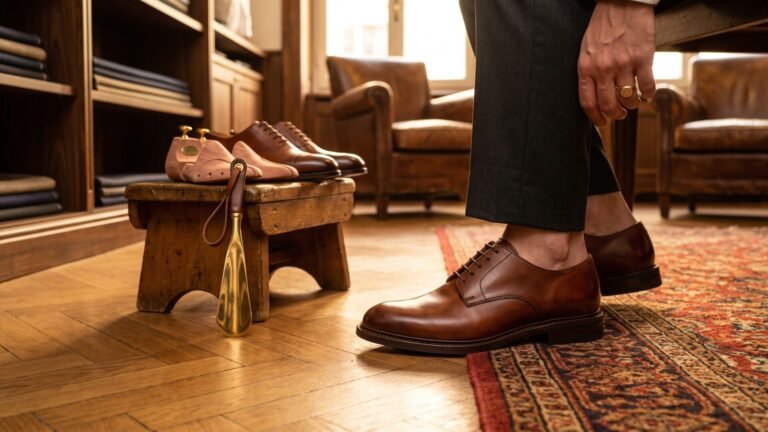
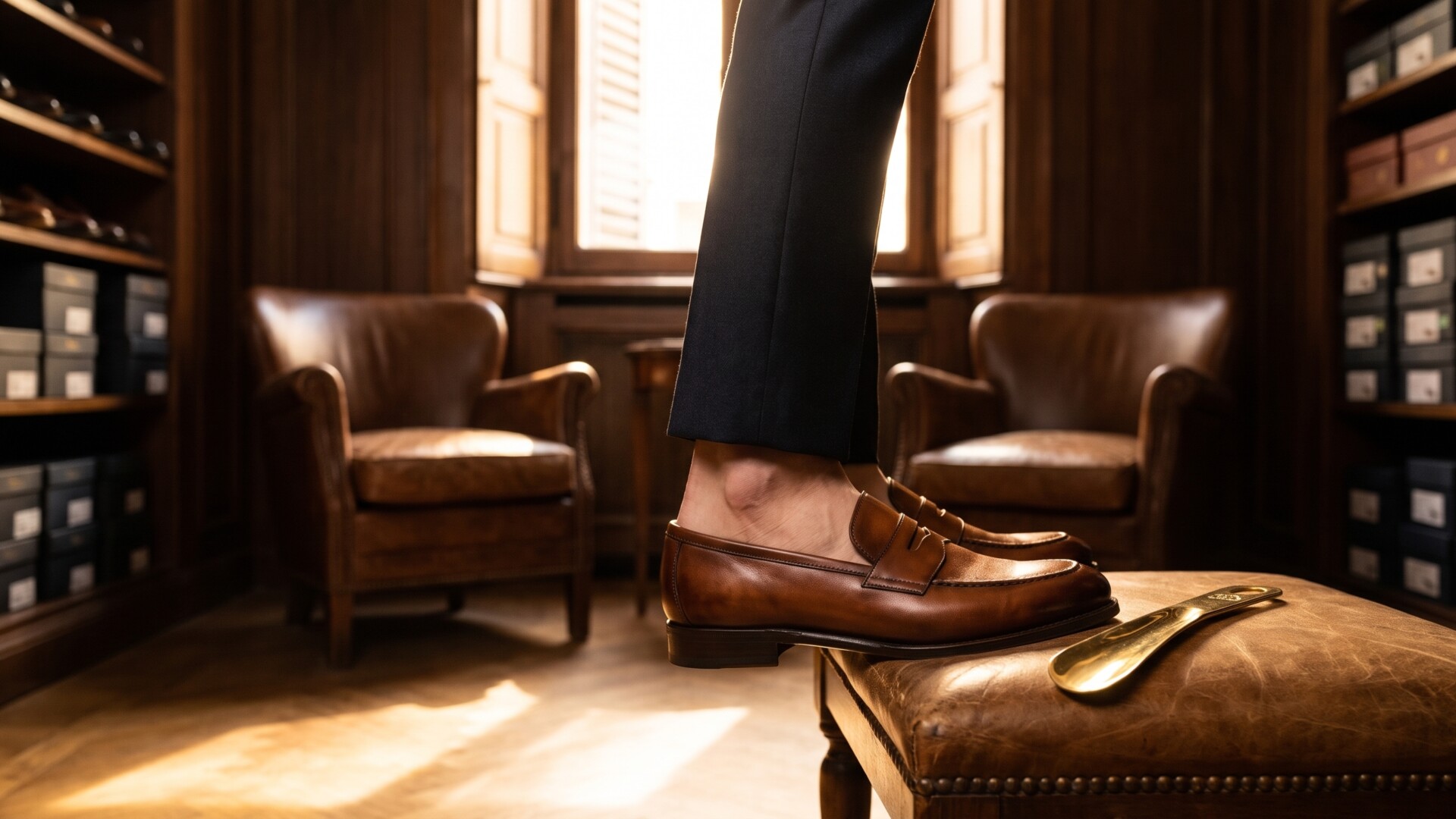
The shop smells of wax and warm leather. A man in his sixties has a Santoni on his left foot and a Ferragamo on his right, and he is staring at the mirror the way you stare at a crossword. His wife has already said something about the price. The fitter, who has been doing this for thirty years, does not tell him which is better. He asks him one question: where are you going to wear them?
That is the whole business, really. The best Italian penny loafer for men is not the most expensive one and it is not the most formal one. It is the one whose last, leather, and sole match the life you actually live. Santoni gives you the finest balance of hand-finishing and dress-casual range. Ferragamo gives you heritage with a softer landing. Tod’s gives you relaxed daily comfort. The handmade makers give you construction that pays you back over a decade.
What none of them give you is a second chance at fit. A penny loafer has no laces, so nothing can be tightened. The shoe is holding your foot or it is not, and you find out within ten minutes of walking.
What Makes an Italian Penny Loafer Worth Buying
Italy makes a great deal of footwear. Some of it is extraordinary. Some of it is a plain cemented shoe with a nice label, assembled in a region where labor is cheaper than the marketing implies. "Made in Italy" tells you where the final assembly happened. It does not tell you who cut the leather, how thick it is, whether the lining is stitched or glued, or whether the sole can be replaced.
Here is what actually decides the shoe.
The leather. You want a full-grain hide with a tight, even surface and a slight natural pliability. Press your thumbnail into the upper near the vamp and watch it spring back. A hide that feels papery or shows a plastic sheen under a phone light has been corrected – sanded flat and coated – and it will crease in ugly, permanent lines rather than developing a patina.
The last. The forma, the wooden form the shoe is built around, determines everything about how it feels. Italian lasts tend to run narrower through the waist than English ones, which suits a lot of feet and punishes others. There is no substitute for trying them on.
The apron and vamp. The raised seam across the toe is the apron; the panel behind it is the vamp. A hand-sewn apron, done with a thick waxed thread in a low, even stitch pattern, is one of the clearest signs of a serious maker. Run your thumb along the inside edge of the apron seam – if it catches on a raw, unfinished edge, someone was in a hurry.
The sole attachment. More on this below, but the short version: cemented shoes cannot be resoled economically, Blake-stitched shoes can, and welted shoes can be resoled repeatedly.
The penny loafer’s shape is unforgiving in a specific way. It is a low-profile shoe with an open throat, so any weakness in the leather shows immediately – a thin upper collapses across the instep within a season. Any error in the last shows immediately – a heel that slips, a toe box that pinches. A lace-up shoe can hide a mediocre fit under tension. A loafer cannot hide anything.
That is why this category rewards patience more than most. Buy the right pair once and you will wear it for years. Buy on brand name alone and you will be reselling it.
Soft, Structured, or Hand-Finished: The Three Families
Most buying advice lumps every penny loafer together. They are not the same object.
Soft unstructured loafers have minimal stiffening in the heel and toe and often a flexible sole. They feel wonderful out of the box and are ideal for travel, weekends, and light walking. Their weakness is shape retention – a soft heel counter will eventually lean, and a thin upper will stretch to your foot and stay there.
Structured dress loafers have a stiffened heel counter, a firmer toe, and a leather sole. They need a break-in period, hold their shape for years, and look correct under tailoring. Their weakness is exactly the reverse: they are less pleasant in the first month and less forgiving of a bad fit.
Hand-finished and handwelted styles sit at the top of the craft hierarchy. More of the work is done by hand, the leather is often better, and the shoe is built to be repaired. They are not automatically more comfortable on day one. Their value shows up in year four.
None of these is "better." A man who travels constantly and wears his loafers with chinos should probably own a soft pair. A man who wears them to an office with wool trousers should own a structured pair. Most people reading this should own one of each before they own a third of either.
The Best Italian Penny Loafers for Men
Each recommendation below is matched to a type of owner rather than ranked against the others. Prices are approximate and move with leather, sole, and retailer.
Santoni penny loafers
Santoni is the strongest single recommendation for most buyers, and the reason is not the name. It is the finishing. Santoni’s uppers are hand-colored and hand-burnished in a way that produces a depth of tone you can see across a room, and the lasts are elegant without being fragile. The apron stitching is clean and consistent. The leather is supple but has body.
For a man building a wardrobe around tailored trousers, wool, dark denim, and unstructured jackets, a dark brown Santoni penny loafer covers an enormous amount of ground. It is polished enough for a client lunch and relaxed enough for a Saturday. That range is the point.
The trade-off is maintenance. Heavily antiqued and high-gloss finishes show scuffs and water marks more readily than a plain calf, and they do not take conditioner evenly. If you want a shoe you can neglect, buy a plainer finish. Also watch the shapes – Santoni makes some fashion-forward toes that look wonderful in a lookbook and fight with a conservative wardrobe. A restrained dark brown model will outlast every trend in the collection.
[Affiliate: Browse Santoni’s penny loafer collection]
Salvatore Ferragamo penny loafers
Ferragamo is where a great many men enter Italian luxury footwear, and the brand earns that position with genuine heritage – this is a house that has been making shoes in Italy since the 1930s, and its factory in Osmannoro remains one of the more serious operations in the country.
The important thing to understand is that Ferragamo’s loafer range is not one product. It spans soft, flexible, almost slipper-like constructions and firmer dress models with leather soles, and the difference between them in durability is substantial. Two shoes with the same name on the box can behave completely differently after a year of wear.
Where Ferragamo works best is the office, travel, and smart-casual dressing, particularly for a buyer who wants a smoother, more immediately comfortable shoe than a traditional structured dress loafer. The leather is generally excellent and the break-in is usually gentle.
The caution is fit and model variation. Ferragamo’s lasts differ across the range, and sizing that works in one model may not work in another. Judge the specific shoe – the sole, the lining, the heel counter – rather than the label. [Internal: Our Ferragamo Shoes Guide covers signature styles and sizing in detail.]
[Affiliate: Browse Ferragamo’s men’s loafer collection]
Tod’s penny loafers
Tod’s is the best answer for relaxed luxury and frequent casual wear. The leather is soft, the construction is flexible, and the shoe is comfortable almost immediately – a real advantage if you are buying for a trip or a season of weekend wear rather than a decade of office use.
The distinction that matters here is between a Tod’s penny loafer and the Gommino driving shoe. They are not interchangeable. The Gommino’s pebbled rubber sole and extended heel were designed for driving, where you need feel through the pedal and grip on a mat. As a walking shoe it offers little protection and wears quickly on pavement. A standard Tod’s loafer with a proper sole is a different proposition entirely.
Tod’s pairs beautifully with chinos, denim, and lightweight trousers, and it belongs in a travel wardrobe. It is too relaxed for conservative business suiting – the softness that makes it comfortable reads as casual under a worsted wool suit.
[Affiliate: Browse Tod’s men’s loafers] [Internal: Why is Tod’s Gommino So Popular?] [Internal: Tod’s Gommino vs Driving Shoe difference explained]
Gucci horsebit loafers as an alternative to a traditional penny loafer
The Gucci Horsebit 1953 is not a penny loafer. It has a metal snaffle across the vamp instead of a leather strap, and that single detail changes the shoe’s entire personality. It belongs in this comparison because it is the major Italian alternative for a man who wants a signature loafer, and because buyers routinely cross-shop the two.
The horsebit has a stronger visual identity and less neutrality. Worn with the right wardrobe it is superb. Worn as a substitute for a quiet brown penny loafer it will feel like too much shoe on the wrong day. If you want one loafer that disappears into an outfit, buy the penny. If you want one that leads it, consider the horsebit. [Internal: Gucci Horsebit 1953 Loafers: How to Spot the 2026 70th Anniversary Edition]
[Affiliate: Browse Gucci’s men’s loafer collection]
Higher-end handmade Italian penny loafers
Above the big houses sit the small makers – Stefano Bemer in Florence, Enzo Bonafe in Bologna, and a handful of others – who build shoes the old way, often handwelted, on refined lasts, with leather chosen by the maker rather than the marketing department. For a cross-border comparison, see our sister guide to French loafer makers such as J.M. Weston and Paraboot.
These shoes are not automatically better for every buyer. The value appears over years: in a sole that can be replaced three times, an upper that molds without collapsing, and a shape that still looks correct after a decade. They are frequently firmer at first than a soft luxury loafer, and they demand correct sizing and a gradual break-in.
The ideal buyer has a stable size, a classic wardrobe, patience, and an interest in ownership rather than recognition. Confirm the exact construction of the specific model before you buy – not every shoe from a small maker is handwelted, and ranges vary. [Internal: Handmade Italian Shoes Explained: What "Artisan Footwear" Really Means in Luxury]
[Affiliate: Browse Stefano Bemer’s collection]
Comparison Table: The Best Italian Penny Loafers at a Glance
| Brand or option | Best for | Design character | Comfort profile | Durability and maintenance | Value position |
|---|---|---|---|---|---|
| Santoni | Best overall balance | Polished, elegant, versatile | Moderate break-in depending on model | Strong with regular conditioning; patina needs care | Strong luxury wardrobe investment |
| Ferragamo | Heritage and office versatility | Refined, recognizable, varied | Often approachable, model-dependent | Good, but construction varies by style | Good entry into Italian luxury |
| Tod’s | Relaxed daily wear and travel | Casual, soft, understated | High initial comfort | Best for lighter use; sole type matters | Good for frequent casual wear |
| Gucci Horsebit | Signature luxury style | Iconic and distinctive | Model-dependent | Good with careful leather and hardware care | Strong recognition, less neutral |
| Stefano Bemer or Enzo Bonafe | Traditional craftsmanship | Classic, structured, restrained | Break-in likely | High long-term potential when maintained | Highest craftsmanship value |
Approximate price positioning, for orientation only: Ferragamo and Tod’s generally sit in the low-to-mid four figures, Santoni and Gucci in the mid-to-upper four figures, and the handmade makers above that. Exact prices vary widely by leather, sole, construction, and retailer, and seasonal models move the numbers considerably.
What Most Buyers Get Wrong About Penny Loafers
They buy the softest shoe in the shop. Immediate comfort is not the same as support. A very soft loafer feels like a slipper on the first day and like a collapsed slipper after two years, because the heel counter has no structure to hold it upright and the upper has stretched to the shape of your foot with nothing to pull it back. If you plan to walk in these shoes, you want some firmness in the heel and a sole with substance.
They assume a shinier finish is a better finish. High-polish and heavily antiqued leathers are beautiful and they are also more demanding. The surface coating that produces the shine is the first thing to crack at the flex point across the toe, and it does not absorb conditioner evenly. Suede is more weather-tolerant than its reputation suggests but shows water marks. Grained leather hides scuffs best. Match the finish to how you actually live.
They buy a formal black loafer that duplicates their dress shoes. A black penny loafer worn with a dark suit is nearly a lace-up in effect, and it fills no gap in a wardrobe that already has Oxfords. A medium-brown or dark-brown loafer in a slightly softer construction fills a much bigger hole – it goes with navy, charcoal, gray, beige, olive, and denim, which a black formal loafer does not.
They size down to stop heel slip. Some early heel movement in a new loafer is normal; the sole flexes and the heel settles. Sizing down does not fix it, because the problem is usually a last that does not match your heel width, and the smaller size creates pressure across the vamp and toes that will never resolve. If the shoe grips the instep firmly and the heel lifts a few millimeters as you walk, that is often correct. If your toes touch the end, it is not.
Leather, Soles, and Construction: How to Choose for Real Ownership
Leather selection
Smooth calfskin is the default for good reason. It takes a polish, develops a patina, and shows its quality clearly. Dark brown smooth calf is the most versatile first purchase in this category, full stop. It is also the least forgiving of neglect – scuffs show, and rain leaves marks if you do not deal with them.
Suede is softer, more casual, and better than its reputation in dry cold. It does not like wet weather or salt. It suits relaxed wardrobes and summer dressing and it is difficult to restore once badly stained.
Grained leather – a pebbled surface, often from a hide with more natural variation – hides scuffs and water marks better than smooth calf and is the sensible choice for variable weather and frequent wear.
Heavily finished leather looks striking in a shop and behaves worst over time, because the finish rather than the hide is doing the work. When it cracks, it cracks visibly.
Judge leather alongside thickness, lining, and construction. The word "calfskin" on a product page tells you almost nothing on its own.
Leather soles versus rubber soles
A leather sole is a piece of oak-barked or vegetable-tanned hide, compressed and stitched to the upper. It breathes, it flexes with the foot, and it looks correct under tailoring. It is also slippery when new on polished stone and it wears faster in wet conditions.
A rubber sole – whether a full rubber outsole or a thin rubber top piece added to a leather sole – gives grip, water resistance, and longer wear between repairs. It does not automatically make a shoe inferior. Plenty of excellent Italian loafers are made with rubber soles by makers who understand that their customers commute.
The honest answer is use case. Leather for dress, office, and indoor wear. Rubber for commuting, wet climates, and long days on your feet. A leather sole with a thin rubber protective sole added by a cobbler is the compromise many experienced owners choose. [Internal: Leather Soles vs. Rubber Soles: Which Is Better for Luxury Shoes?]
Construction and repairability
Cemented construction glues the upper to the sole. It is cheap and fast. It cannot be resoled economically, so the shoe’s life is the sole’s life.
Blake-stitched construction sews the upper, insole, and sole together in a single stitch visible inside the shoe. It is flexible, sleek, and resoleable by a skilled cobbler. It offers less water resistance than a welted shoe.
Blake Rapid adds a second stitch through a midsole, giving more substance and better water resistance while staying relatively flexible.
Goodyear-welted construction stitches the upper to a welt, which is then stitched to the sole. It is robust, water-resistant, and resoleable many times, at the cost of a stiffer, heavier shoe.
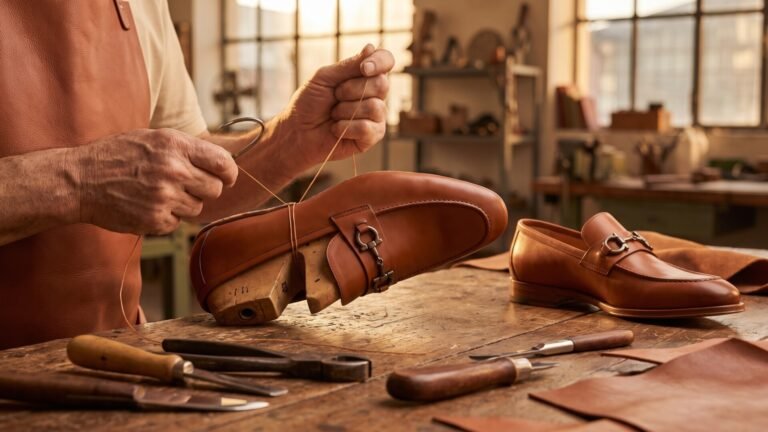
Handwelted construction does the same job by hand with a thicker insole and often a holdfast carved from the insole itself. It is the most repairable and the most expensive.
None of this is a ranking of quality in the abstract. A sleek Blake-stitched office loafer is the right shoe for a man in tailoring. A Goodyear-welted loafer is the right shoe for a man who wants to resole the same pair in 2035. [Internal: The Art of Italian Shoe Making]
Which Penny Loafer Is Right for Your Wardrobe?
The first luxury loafer buyer. Buy a restrained Santoni or Ferragamo in dark brown or black, with a flexible but not floppy sole. Neutrality matters more than a dramatic patina here, because your first pair has to work with everything while you learn what you actually wear.
The business-casual professional. A structured dark brown Santoni or Ferragamo dress loafer, worn with wool trousers, chinos, and unstructured tailoring. Know the limit: a penny loafer under a highly formal worsted suit reads as underdressed, and no amount of polish fixes that.
The frequent traveler. A lighter Tod’s style or a flexible rubber-soled loafer, packed for dinners and weekends. Do not treat a driving-shoe sole as walking footwear – it will not survive a day of sightseeing.
The traditional craftsmanship buyer. A confirmed handmade model from a small maker, sized correctly, broken in gradually, kept on trees, rotated, and resoled when needed. This buyer gets the most value per dollar over twenty years and the least immediate gratification.
The statement-shoe buyer. The Gucci Horsebit, bought as a signature rather than as a versatile workhorse. Buy it because you want the horsebit, not because you want one loafer to do everything.
Styling and Practical Ownership
Trouser break does more to set a loafer’s formality than the shoe itself. A full break that pools on the shoe reads casual and slightly dated. A slight break or none at all is cleaner and lets the shoe’s shape show. With charcoal and navy wool, a dark brown loafer and a thin visible sock is correct. With beige, olive, and light gray, a medium brown works better than black.
Sock choice changes the impression entirely. Visible dress socks read business. No-show socks or bare ankles read summer and weekend. Neither is wrong; they simply belong to different outfits, and mixing them carelessly is what makes a good shoe look off.
On color: black for formal and urban wardrobes, dark brown for maximum versatility, burgundy for a more expressive classic look, suede for relaxed seasonal wear. If you own one pair, own dark brown.
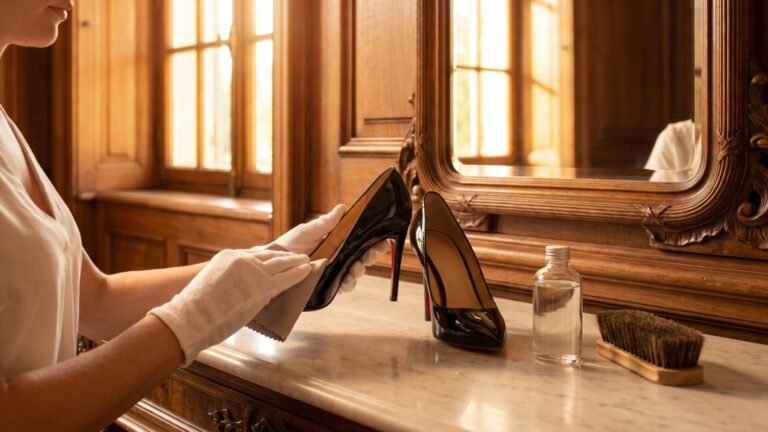
The care routine is short and it is the difference between a shoe that lasts five years and one that lasts fifteen. Cedar shoe trees in every pair the moment you take them off – they absorb moisture and hold shape. Rest shoes a full day between wears. Brush after use with a horsehair brush. Condition sparingly, twice a year at most for most climates. Protect against heavy rain rather than testing the leather’s limits. Have soles and heels inspected before the wear pattern becomes severe, because a heel replaced early is cheap and a sole rebuilt late is not. [Internal: How to Care for Italian Leather Shoes]
[Affiliate: Cedar shoe trees] [Affiliate: Horsehair brush and leather conditioner]
Which Italian Penny Loafers Still Make Sense in Three Years?
Ignore appreciation. Shoes are not an investment in the financial sense, and anyone telling you otherwise is selling something. The question is whether the shoe will still be useful and still look correct.
A restrained dark brown or black penny loafer with a classic toe will be as wearable in three years as it is now. A highly seasonal color, an exaggerated toe, or a conspicuous logo treatment will date. This is the strongest argument for buying the quiet version.
Cost per wear is the framework that matters. A $900 loafer worn three days a week for eight years costs less per wear than a $250 pair that hurts, clashes, and gets replaced in eighteen months. That math only works if the expensive pair fits and suits your wardrobe – which is why the fit conversation comes before the price conversation.
What fails first, in order: the heel top piece, then the sole at the ball of the foot, then the lining at the heel, then the upper at the flex point. Water damage and over-polishing cause finish cracking. Poor storage causes a collapsed heel and a stretched vamp. Almost all of it is preventable.
Resale exists but is modest. Classic sizes, neutral colors, excellent condition, original packaging, and recognizable brands help. Shoes are scrutinized more closely than handbags and recover less of their price. Buy them to wear.
Buying Verdict: The Best Choice for Each Buyer
Best overall: Santoni, for the strongest balance of Italian finishing, wardrobe versatility, and luxury appeal.
Best for heritage and office wear: Ferragamo, provided you select a model whose construction and last suit your foot rather than buying the name.
Best for relaxed everyday use: Tod’s, for casual wardrobes and travel, but not when you need a formal business shoe or a protective walking sole.
Best for traditional craftsmanship: A confirmed Stefano Bemer or Enzo Bonafe penny loafer, for the buyer prepared to pay for construction, break-in, and long-term maintenance.
Best alternative for a signature look: Gucci Horsebit, for someone who values iconic design more than understated versatility.
Who should skip Italian penny loafers entirely: anyone who needs athletic cushioning, anyone walking long distances daily without a suitable sole, and anyone unwilling to maintain leather footwear. Buy a sneaker or a rubber-soled walking shoe and be honest about it.
The Verdict
Buy the Santoni. For most men reading this, a restrained dark brown Santoni penny loafer is the pair that will earn its price – polished enough for a client meeting, quiet enough for a Saturday, and built well enough that a cobbler can keep it going for years. If your wardrobe leans softer and your days involve more travel than tailoring, the Tod’s is the more honest choice. If you want the heritage name and a gentler break-in, Ferragamo serves you well provided you judge the specific model. And if you are the buyer who wants to hand a pair of shoes to a son in fifteen years, skip all three and go to Florence.
For everything adjacent – construction, fit, driving shoes, and the wider category – start with [Italian Loafers: The Complete Guide to Timeless Luxury Footwear] and [Best Italian Loafers: The Definitive Guide to Italy’s Most Iconic Luxury Shoe Category]. When you are ready to look at the softer, more casual end of the same tradition, [Best Italian Driving Shoes: Luxury Brands, Models and Buying Advice] picks up where this leaves off.
Frequently Asked Questions About Italian Penny Loafers For Men
Are Italian penny loafers worth the money?
They are worth it when the price buys better leather, repairable construction, clean finishing, and a fit that lets you wear them often. They are not worth it when you are paying for a name on a cemented shoe you will wear twice a month. Frequency of wear is the variable that decides it.
Which Italian brand makes the best penny loafers for men?
Santoni is the strongest general recommendation for most buyers. Ferragamo is the better answer for heritage and office wardrobes, Tod’s for relaxed daily wear, and a small handmade maker for a buyer who wants maximum construction quality and long-term repairability.
Are Italian penny loafers comfortable for walking all day?
It depends on the last, your foot, the sole, and the break-in. A flexible casual loafer with a rubber sole can handle a full day in a city. A structured leather-soled dress loafer is an office shoe, not a walking shoe. A driving-shoe sole is not designed for pavement at all.
Should men's penny loafers fit tightly at first?
They should grip the instep firmly without pinching. Some early heel movement is normal and settles as the sole flexes. Painful tightness across the vamp or toes is not normal and will not resolve – leather relaxes slightly but does not add length or correct the wrong last.
Are leather soles or rubber soles better for penny loafers?
Leather for dress, office, and indoor wear, where elegance and breathability matter. Rubber for commuting, wet conditions, and long days outdoors. A leather sole with a thin rubber protective piece added by a cobbler is a sensible middle path.
Can Italian penny loafers be worn with a suit?
Yes with a less formal suit – unstructured tailoring, softer cloth, lighter colors. A sleek black or dark brown penny loafer works well there. Highly formal business or ceremonial dressing still calls for a lace-up Oxford.
How long should a good pair of Italian penny loafers last?
With rotation, shoe trees, and prompt resoling, several years of regular wear is realistic, and considerably longer for a welted pair that is properly maintained. Without rotation or care, a year or two is equally realistic. The construction and the routine decide it.