Italian designer wedding shoes for outdoor ceremonies
Outdoor ceremonies ask more of a wedding shoe than a ballroom does. Grass swallows narrow heels, smooth leather soles slip on slopes, and you may cross pavement, gravel and a dance floor in one afternoon. This guide explains what to look for in Italian designer wedding shoes for outdoor ceremonies, which Italian names are worth checking, and how to prepare. It is general buying guidance; we have not tested these shoes and cannot verify every model, so confirm product details with each brand.
We could not verify current US prices for the brands below, so none are quoted. Check each retailer before buying.
Quick Answer
- Sole: choose rubber or a leather sole with rubber inserts for grip.
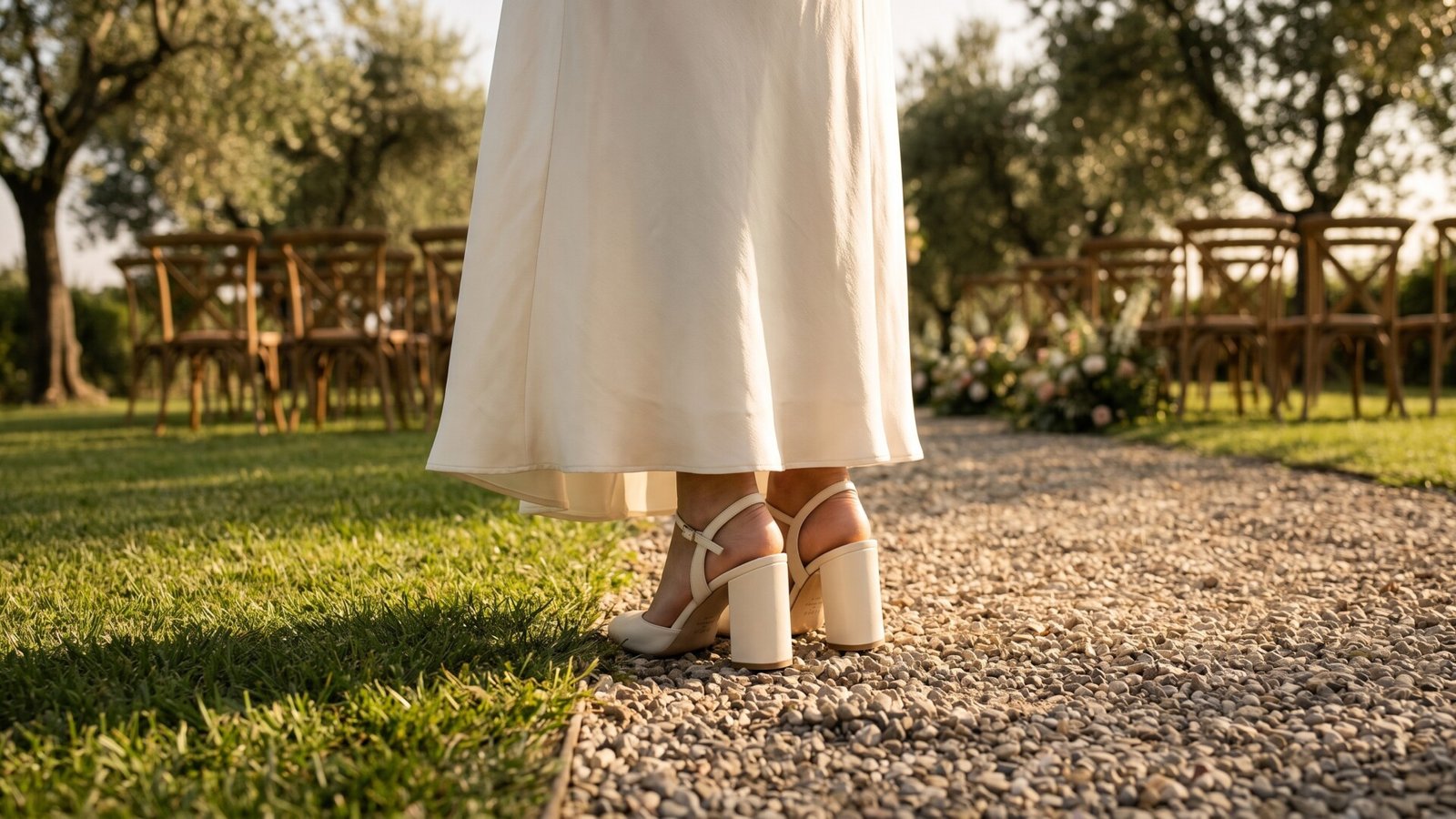
- Heel: a block, wedge or flared heel distributes weight; a stiletto can sink into lawn.
- Material: suede, satin and velvet need protection from damp ground; smooth leather is easier to wipe clean.
- Plan ahead: order months early, walk in them on different surfaces and check the forecast.
The Real Problem Is the Ground
Weather matters, but the surface matters more. Soft terrain yields under a narrow heel, and a leather sole offers little grip on a damp slope. You will also change surfaces: path to lawn to gravel to terrace. A shoe built for one of these can fail on the next. Finally, ceremonies involve standing through vows, so cushioning and stability matter as much as looks.
What to Look For
| Feature | Why it matters outdoors | What to choose |
|---|---|---|
| Sole | Grip and shock absorption | Rubber sole or leather with rubber inserts |
| Heel | Prevents sinking | Block, wedge or flared heel; flat for lawns |
| Upper | Resists dust and light moisture | Smooth leather or treated suede; test fabrics first |
| Strap or closure | Keeps the shoe on uneven ground | Ankle strap, T-strap, or a secure loafer fit |
| Insole | Comfort while standing | Padded or memory-foam insole |
For fit advice, see how Italian designer shoes should fit, and for sole choices, leather soles vs rubber soles.
Italian Brands Worth Checking
These are brands known for dressy footwear. We have not verified individual bridal models, so look for the features above on each product page.
| Brand | Known for | Look for |
|---|---|---|
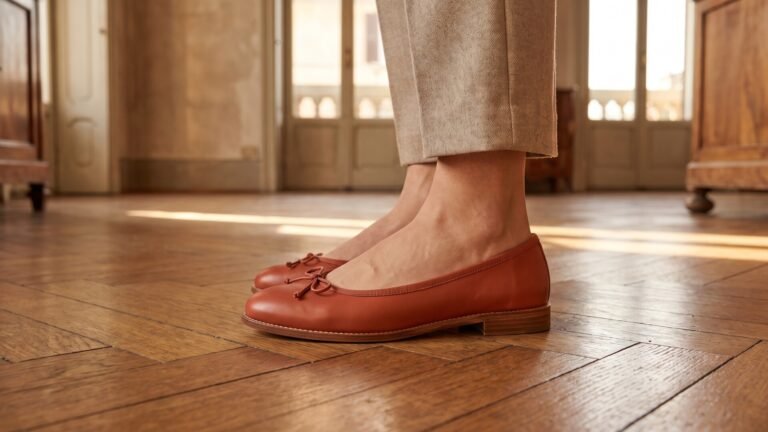
| Ferragamo | Classic pumps, ballerinas and loafers | Lower heels or flats with rubber soles |
| René Caovilla | Crystal-embellished evening shoes (Venetian house) | Chunkier heels and ankle or T-straps for stability |
| Scarosso | Milan-based, with production in Italy | Block-heel or flat bridal-leaning styles; confirm materials |
| Atelier Rangoni | Italian bridal and evening shoes | Square heels and padded insoles |
| Santoni | Grooms’ dress shoes and loafers | Rubber-soled loafers for lawns |
| Tod’s | Comfort-first loafers | Gommino-type rubber soles for grass; see Gommino vs driving shoe |
Note: some brands that market Italian-style shoes, such as TAFT and Del Toro, are not Italian houses, so check where a specific pair is made if “made in Italy” matters to you. Our guide to handmade Italian shoes explains what origin and handmade claims mean.
For the Groom
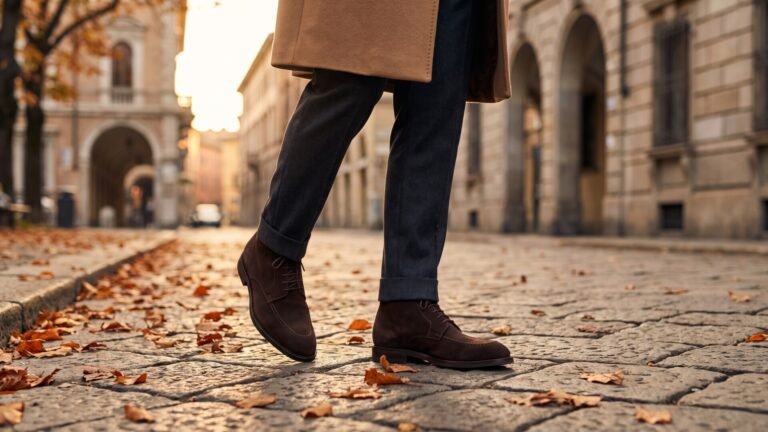
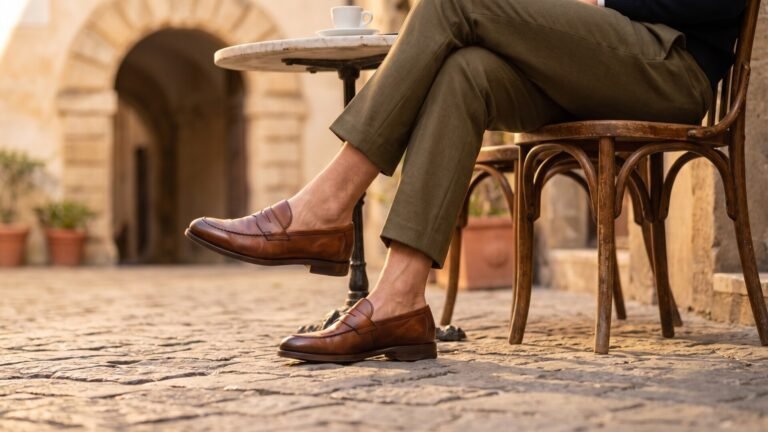
For vineyard or garden weddings with a formal dress code, a dark leather or suede loafer with a rubber sole is often more practical than a leather-soled Oxford. For beach ceremonies, an unlined suede loafer in a lighter tone suits warm weather. Our guides to Italian penny loafers for men and Italian driving shoes cover options, and velvet loafers work for evening receptions. Some couples change into more comfortable shoes after the ceremony.
Timeline
| When | What to do |
|---|---|
| 3 months out | Order, especially from smaller workshops with longer lead times |
| 6 weeks out | Take the shoes to your tailor or dressmaker so hems match heel height |
| 2 weeks out | Wear them indoors on different surfaces to check comfort |
| 1 week out | Check the forecast and treat suede or fabric with a suitable protector, testing first |
Photography
In natural light, texture such as suede, velvet or woven leather shows up well, and mid-tone colors can read better than very dark ones in bright sun. Subtle embellishment catches light in the evening.
Aftercare
- Wipe off dust and pollen with a soft cloth; let damp shoes dry away from heat.
- Brush suede or velvet gently; use a professional for stains on delicate fabrics.
- Store with shoe trees in a breathable bag, not plastic.
For more, see how to care for Italian leather shoes. If you also need a second shoe for the party, our guide to styling Italian shoes for every occasion helps. A related guide is Italian designer wedding shoes for the outdoor ceremony, and the full Italian designer shoes guide shows more options.
Frequently Asked Questions About Italian Wedding Shoes For Outdoor Ceremonies
What heel is best for a grass wedding?
A block, wedge or flared heel spreads weight and is less likely to sink than a stiletto. Flats and low heels are the most stable.
Should I wear leather-soled shoes outdoors?
Leather soles can slip on damp grass or slopes. Rubber soles or leather soles with rubber inserts give better grip.
Can a groom wear loafers at a formal outdoor wedding?
Yes, if the dress code allows. A dark leather or suede loafer with a rubber sole is a practical alternative to a leather-soled Oxford.
How early should I order wedding shoes?
About three months ahead, longer for custom or small-workshop orders, to leave time for fittings and breaking them in.
How do I protect suede wedding shoes?
Use a protector suitable for suede after testing on a hidden area, check the forecast, and brush gently afterwards.
Are all Italian-style wedding shoes made in Italy?
No. Check the label and product page for the country of manufacture.