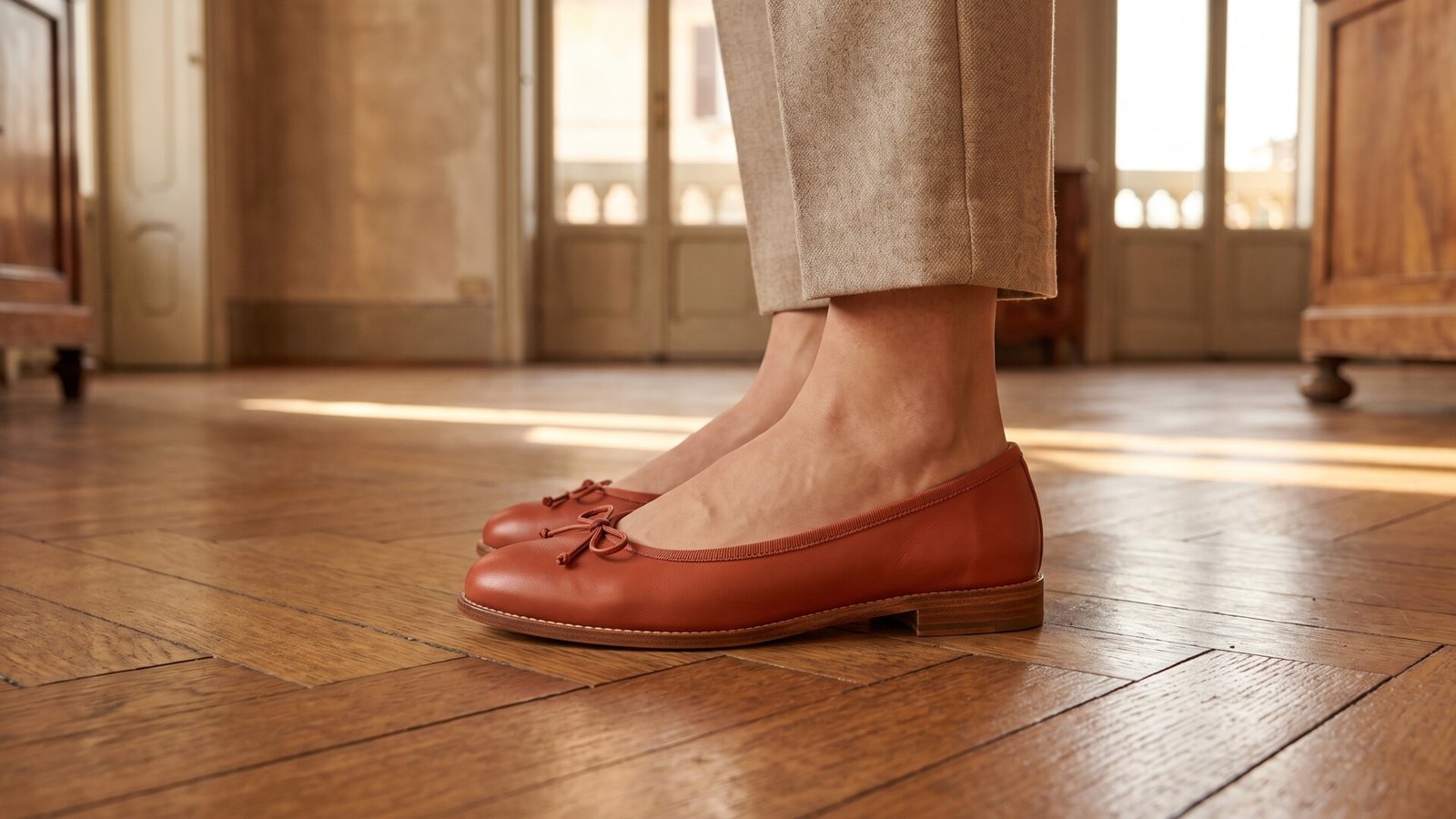
Best Italian Ballet Flats
The best Italian ballet flat is rarely the most expensive or the most recognizable pair. It comes down to four things working together: a last shaped for a real foot, leather that is supple without being flimsy, a fit that holds the heel, and a sole matched to how you spend your days. A well-chosen mid-priced pair can outwear and out-comfort a pricier one.
The central trade-off is softness against structure. Ultra-soft flats feel wonderful in the shop but can feel like nothing by hour six on pavement; more structured pairs take a week to soften but keep their shape and stability. Choose on the three-year outcome, not the first ten minutes. This guide is part of our Italian Designer Flats guide and the wider Italian designer shoes hub.
Models and prices change every season, so we describe brands and relative price positions rather than quoting prices. Check current specifications with each brand or an authorized retailer. Brand descriptions are the brands’ own or from press unless stated.
What Makes an Italian Ballet Flat Worth Buying
Quality shows up in details, not in the hangtag story: leather selection, edge finishing, lining, stitching, sole attachment and insole shape.
The upper. Good leather has enough substance to hold shape without stiffening. Press near the toe: it should give slightly and spring back. Very thin leather feels luxurious but can crease into permanent folds within a season.
The topline. A well-finished edge is folded and burnished or bound with fine leather. Run a fingernail along the inside edge; if it catches, it was finished in a hurry and may rub your instep.
Country of origin is context, not a guarantee. “Made in Italy” tells you where final assembly happened under the labeling rules, not who chose the leather or how the sole is attached. Look at the shoe itself.
Comfort. An unstructured upper with a paper-thin sole feels like a slipper for an hour, but on hard floors the lack of support under the arch and forefoot shows up as fatigue. A modest internal shank, shaped footbed or slightly thicker sole spreads the load.
The criteria used in this guide, and worth applying yourself:
- Comfort across a full day, not the first ten minutes
- Fit consistency from season to season
- Material quality, judged by hand and edge rather than label
- Durability of the parts that fail first: heel lining, elastic, outsole, toe
- Versatility across your actual wardrobe
- Maintenance burden
- Price against cost per wear
The Best Italian Ballet Flats by Buyer Type
No single pair is best for everyone, so the shortlist is split by buyer type. We name brands, and models only where they are long-running and identifiable. Verify the current season’s construction before buying.
Best luxury designer choice: Ferragamo Vara bow
Ferragamo‘s Vara bow is one of the most recognizable bow designs in Italian footwear. It is best known as a low-heel pump; the flat versions are sold as the Varina and as Vara Bow ballet flats, so check that the specific style you want is actually flat. The bow gives it a clear identity and reads as polished with dresses and tailored trousers.
The bow is both the point and the limit: if your wardrobe is built on clean lines, a decorative detail may fight it. Because it is a long-running design, leather, lining and sole details can vary between seasons and lines. Look at the sole attachment, lining and heel grip before you commit.
Best iconic Italian designer choice: Tod’s flats
Tod’s built its reputation on the Gommino driving shoe, a flexible moccasin with a pebbled rubber sole. Its softer flats carry that relaxed, comfortable approach into a more feminine silhouette. They are understated, with no loud logo, and suit travel and casual wear.
The flexible sole is the appeal and also the thing to consider. For light walking, travel and mixed days that give is pleasant. For miles of hard sidewalk a very flexible sole transmits more of the ground to your foot with little shock absorption. If you need strong arch support or a sharply defined office shoe, this is not it. See why the Tod’s Gommino is so popular.
Best everyday value choice: AGL
AGL (Attilio Giusti Leombruni) is a family-run Italian footwear company; press describes it as founded by Piero Giusti and run by his granddaughters, with shoes made in Italy. It sits between logo-led luxury and the anonymous mid-market, with quiet branding and wearable shapes.
Inspect the same things as on any flat: upper leather, lining, flex point and heel grip. Support varies from style to style, so try the specific pair rather than trusting the name. It suits people who wear flats several times a week and care about cost per wear.
Best statement choice: Aquazzura
Aquazzura, a Florence-based house, makes flats for people who want the shoe to be the point: pointed toes, straps, crystal details and evening finishes. They suit events and occasion dressing.
The ownership risk is real: embellishment and delicate finishes reduce everyday durability and need careful storage. Treat them as occasion shoes. A decorated flat in a neutral tone does more work in a wardrobe than a bright one.
A note on minimalist non-Italian options
Pretty Ballerinas, a brand often recommended for classic leather ballet flats, is Spanish: press describes its shoes as handcrafted in Menorca. We mention it because readers often compare it with Italian flats, but it is not an Italian maker, so it is not ranked here. If you want a plain classic ballet flat from Italy, look at the minimalist lines of the brands above and verify the made-in label. For a Paris benchmark set against an Italian house, our sister site compares Repetto’s Cendrillon vs Miu Miu.
Comparison Table
| Option | Price position | Best for | Main strength | Main compromise |
|---|---|---|---|---|
| Ferragamo Vara bow | Premium | Polished designer wardrobes | Recognizable, refined design | Less understated; confirm the style is flat |
| Tod’s flats | Premium | Travel and relaxed luxury | Flexible feel, discreet branding | May lack structure for long urban walking |
| AGL | Mid to premium | Everyday buyers who value cost per wear | Italian design, practical versatility | Fit and support vary by style |
| Aquazzura | Premium | Occasion and statement dressing | Decorative impact | Higher care burden, less daily versatility |
Prices shift with season, material and retailer, so treat these as relative positions. [Affiliate: Check current pricing on the Ferragamo Vara collection] and [Affiliate: browse the Tod’s women’s ballet flat range] before you commit.
What Most Buyers Get Wrong
Softest is not most comfortable. Softness is the first ten minutes; comfort is hour eight and comes from heel security, cushioning and forefoot pressure.
A completely flat sole is a trap. With no shape or shock absorption, every step goes through the heel and forefoot. If you walk often, look for a shaped footbed or modest cushioning under the ball of the foot.
Pointed is not always more elegant. A narrow toe compresses the forefoot. A softly squared or almond toe gives most of the visual length with less pressure.
Brand over fit. A recognizable flat that slips at the heel will sit in the closet next to the plain pair that fits. See Italian Designer Loafers vs Ballet Flats if the decision is still open.
Fit, Comfort and Construction
Toe shape
- Round: most forefoot room, casual look.
- Almond: a little visual length with a forgiving toe box; the safest for most feet.
- Square: good room and a modern line, can look heavy on a fine foot.
- Pointed: longest line, least room, most likely to cause pressure.
Many flats use an elasticized topline for security. It should hold without digging into the instep. The fit check:
- Toes lie flat and are not forced against the end.
- The heel does not lift substantially when you walk.
- The upper does not cut into the instep.
- Walk ten paces on a clean indoor surface and note where pressure builds.
Materials and lining
- Full-grain and smooth leather: most durable; creases gracefully.
- Nappa: softer, comfortable immediately, creases more.
- Suede: supple, but sensitive to rain; needs a protector and brush.
- Patent: surface weather-resistant but scuffs cannot be buffed out.
Leather lining manages moisture better than synthetic, but it does not fix a wrong size. Very thin leather wears faster at the toe and topline.
Sole and support
- Leather soles: elegant, breathable, repairable, but low grip and quick wear on pavement.
- Rubber soles: grip and shock absorption, less elegant.
- Mixed constructions: a leather sole with a rubber insert or top piece balances both.
A sole should flex at the ball, not mid-arch. Check whether it can be resoled: stitched soles often can, while many flats are cemented and not designed for extensive rebuilding. See Best Italian Leather Flats for Walking for more on support, and leather vs rubber soles.
Which Flats Make Sense After Three Years?
Durability depends on wear frequency, climate, rotation and maintenance more than on brand. The choices most likely to age well are simple leather uppers, restrained hardware, repairable soles and colors that stay compatible with your wardrobe. Embellishment, delicate finishes and heavy branding date and degrade fastest.
As a hypothetical cost-per-wear example, a $600 pair worn once a week for three years is about 156 wears, or roughly $3.85 each. A $200 pair worn four times a year over the same period is about 12 wears, or roughly $17 each. The pair you reach for is the cheaper one.
Common failure points: heel lining, elastic toplines, outsole wear, toe scuffing and loss of shape from unsupported storage. Rotating two pairs, using supports and visiting a cobbler extend life more than any single purchase decision. Flats are not a category with strong resale, so buy them to wear.
Styling and Real-World Use
Office: a structured flat with a modest sole and clean toe in black, dark brown or a deep neutral, with tailored trousers and midi skirts. See Best Italian Designer Flats for Work.
Travel: flexibility, low weight and a neutral that works with everything you packed.
Casual: a soft leather flat in a neutral with straight jeans, cropped trousers and casual dresses. Prioritize comfort and sole quality in the highest-wear category.
Events: pointed or embellished flats, kept as a separate pair so your everyday flats stay in shape.
Color: black is the most versatile and forgiving; dark brown is nearly as versatile and warmer; nude-adjacent neutrals lengthen the leg but show marks; burgundy adds depth in autumn and winter; metallic is the most occasion-specific. Toe shape also changes proportion: pointed lengthens the line under wide-leg trousers, while round or almond suits denim and cropped hems.
Buying Verdict
- Ferragamo if you want a polished, recognizable designer flat for tailored or formal clothing.
- Tod’s if flexibility, discreet branding and travel use matter more than firm support.
- AGL if you want the best balance of Italian design, frequent wear and cost per wear.
- Aquazzura if you need an occasion shoe with visual impact and accept the higher care burden.
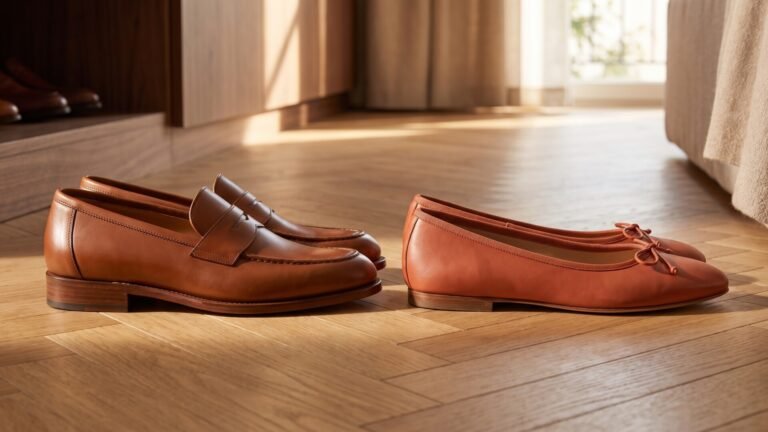
Skip the most expensive option when the shoe will be worn rarely, when the fit is not immediately secure, or when the design suits only a small part of your wardrobe. Fit and intended use matter more than prestige.
Care, Sizing and Purchase Checks
- Measure both feet and shop to the larger.
- Check the retailer’s size guidance; Italian sizing does not convert cleanly across brands (see how Italian designer shoes should fit).
- Read the return terms, especially for final-sale and imported pairs.
- Try the shoe indoors on a clean surface first.
Minor stiffness in firm leather may soften over a week or two. Severe toe compression, a slipping heel or structural rubbing will not resolve. Care: condition smooth leather sparingly and buff scuffs; brush suede and use a protector; wipe patent with a damp cloth and store it apart to avoid transfer marks; keep all finishes away from prolonged moisture and let wet shoes dry at room temperature. See how to care for Italian leather shoes. [Affiliate: Browse leather conditioner and shoe-care essentials] to keep the pairs you already own in rotation.
Frequently Asked Questions About Italian Ballet Flats
Are Italian ballet flats worth the money?
They are worth it when the price reflects leather quality, construction, comfort and repairability, and when you will wear them often enough for cost per wear to fall. They are less worth it when the premium is mostly branding or decoration.
Which Italian ballet flats are best for walking?
Flexible styles and well-fitted leather flats can handle light walking and travel days. If you walk extensively, prioritize sole cushioning, grip and support over a thin classic ballet-flat profile.
Are Italian ballet flats comfortable for all-day wear?
It depends on fit, sole construction, foot shape and the surface you walk on. Look for heel security, cushioning under the ball of the foot and a sole that flexes at the right point.
Do Italian leather ballet flats stretch?
Leather relaxes modestly, usually around the forefoot, but it will not correct a fundamentally wrong size or a narrow toe box. Buy the size that fits on day one.
Are ballet flats still in style?
The silhouette is a durable wardrobe category. Toe shapes, colours and embellishments shift with fashion cycles, so buy a shape and colour that suit your wardrobe.
How should Italian ballet flats fit?
The heel should stay reasonably secure, the toes should lie flat without compression, and the upper should not cut into the instep. Check the brand’s size chart and the return policy.
Which colour is the most versatile?
Black and dark brown work with the broadest range of outfits. A wardrobe-specific neutral can still give better cost per wear if you reach for it more.
Can ballet flats be resoled?
Flats with a stitched sole can often be resoled by a cobbler. Many are cemented and not designed for extensive rebuilding, so ask before you buy if repairability matters.
How long should a good pair of Italian ballet flats last?
It depends on how often you wear them, the climate and how you care for them. Rotation, drying between wears and resoling where possible extend their life.
A flat that fits your foot, matches your routine and can be repaired will do more for you than any brand name. Start with shape and sole, confirm the fit indoors, and consider the label last. See the Italian Designer Flats complete guide for the wider category.