Italian Designer Wedding Shoes for the Outdoor Ceremony
An outdoor wedding changes the brief for your shoes. Grass swallows thin heels, sand fills open sandals, gravel paths twist ankles and a sudden shower can ruin satin. Italian makers have decades of experience with bridal and occasion footwear, but the right pair depends far more on the surface under your feet than on the label inside the shoe.
This guide covers how to match a shoe to the venue, which heel shapes and materials cope with grass, sand and gravel, which Italian houses are worth looking at for the bride, the groom and the wedding party, and how to break in and protect the pair so it survives the day. It is part of our wider guide to Italian designer shoes, which explains how the leading houses differ.
Quick Guide: Match the Shoe to the Venue
| Venue | Best shoe shape | Why it works | Avoid |
|---|---|---|---|
| Lawn or garden | Block heel, wedge, low kitten heel | A wider heel base spreads weight and sinks less | Stilettos, unless fitted with heel protectors |
| Beach or sand | Flat sandal, thin-soled flat, low wedge | Light, easy to take off and shake out | Suede, satin, and any heel that digs in |
| Gravel or cobblestone | Low block heel with an ankle strap | Stability and grip on loose or uneven stone | Slim heels that catch in gaps |
| Vineyard or farm | Closed-toe flat or low block heel | Protects against dust, soil and insects | Pale satin that stains easily |
| Stone steps or terraces | Rubber-soled flat or low heel | Better grip than smooth leather soles | Slick leather soles on wet stone |
Why Italian Designer Wedding Shoes Are Worth Considering
Italy has deep footwear clusters, from the Marche and Romagna to the Veneto and Tuscany, and many of the luxury houses below produce at least part of their collections there. Three practical benefits are worth knowing about:
- Construction. Higher-end Italian shoes are usually lasted over a shaped footbed, with leather linings that mould to the foot, which matters during a day of standing, walking and dancing. Our guide to the art of Italian shoe making explains the main techniques.
- Materials. Many houses work in calf and kid leather, suede, satin and silk-faced fabrics, so you can choose a surface that suits the venue. Read our explainer on what “handmade” actually means in Italian shoes before you rely on marketing language.
- Afterlife. A well-made leather or satin pair can be worn again for later events and resoled by a cobbler, which spreads the cost over more than one occasion. Whether that is worth the premium is a fair question; see are luxury Italian shoes worth the money.
“Made in Italy” applies to individual products, not to a brand as a whole, so check the label or product page of the exact pair if Italian production matters to you.
Types of Wedding Shoes for Outdoor Ceremonies
1. Block Heels
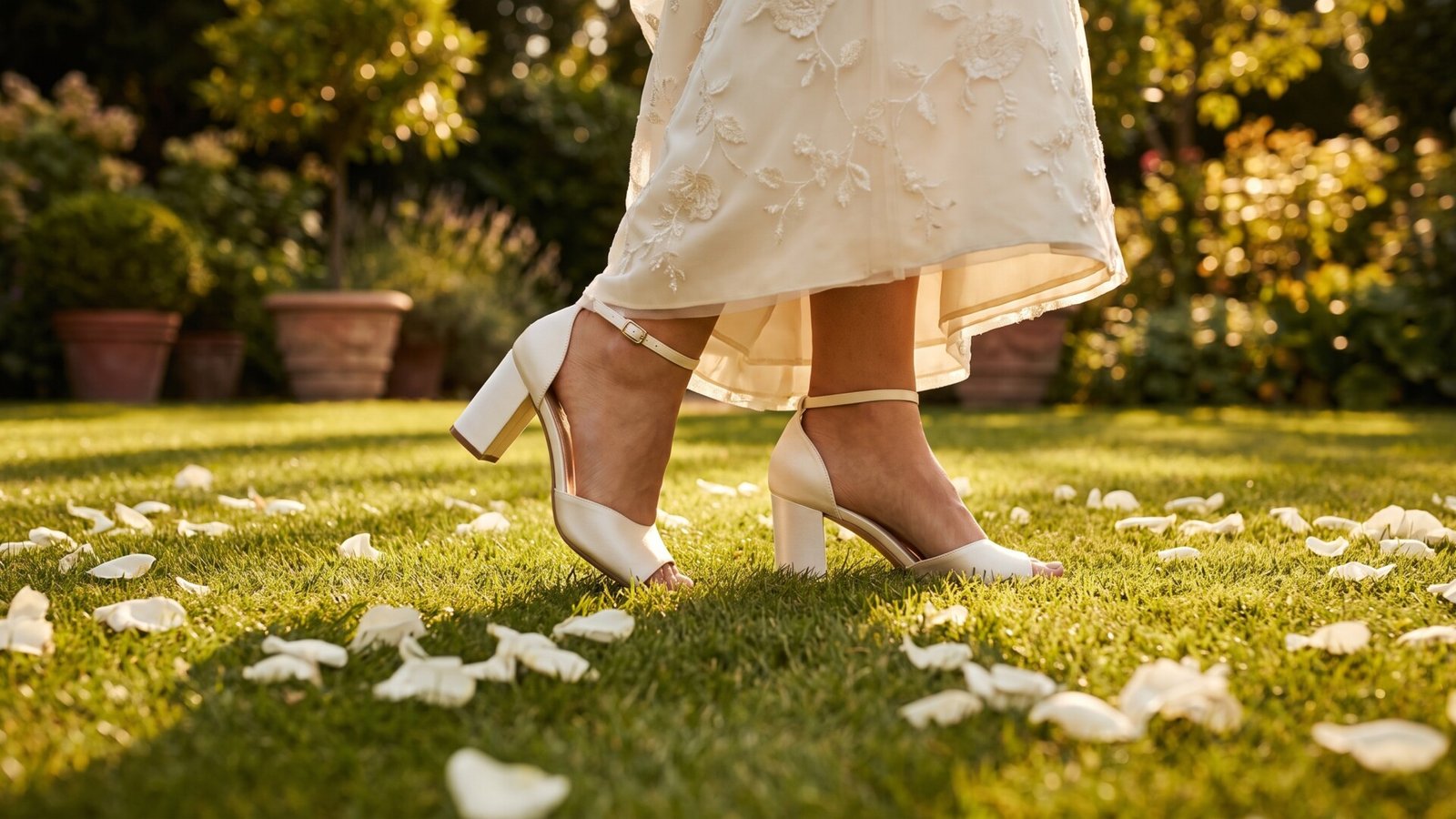
A block heel has a wide base, so your weight is spread over more area and the heel is less likely to sink into turf or slip between paving stones. This is the most versatile choice for lawns, garden paths and sandy hard-pack. Look for an ankle strap, a padded footbed and a heel of roughly 5 to 7 cm, which gives lift without the pitch of a stiletto.
- Italian houses to look at: Sergio Rossi, Gianvito Rossi and Giuseppe Zanotti all make block-heeled sandals and pumps. Gianvito Rossi’s Portofino ankle-strap sandal is a well-known shape, available in different heel heights.
- Styling: Pairs well with flowing or midi-length dresses; a hem that clears the ground helps on uneven turf.
2. Kitten Heels
Kitten heels sit at about 3 to 5 cm, giving a slight lift with far less strain than a high heel. They suit gravel paths and church steps, but the narrow heel tip can still sink into soft grass, so they work best for ceremonies on paving, decking or firm ground.
- Italian houses to look at: Valentino makes Rockstud pumps with lower heels, and several Italian houses offer satin and leather kitten heels with bows or pearl-style detail.
- Styling: A natural partner for A-line and tea-length dresses.
3. Flats and Ballet Shoes
Flats are the safest option for long ceremonies, outdoor receptions and dancing. Ballet flats with a thin, flexible sole feel the ground, which helps on uneven surfaces, but offer little arch support, so look for a lightly padded insole if you will be on your feet for hours.
- Italian houses to look at: Salvatore Ferragamo, whose Vara bow shoe dates from 1978 and exists in flat and low-heel versions; Valentino, with Rockstud ballerinas; and Tod’s and Fratelli Rossetti for softer, understated flats.
- Styling: They pair with floor-length gowns, tailored jumpsuits and shorter dresses alike.
4. Espadrille Wedges
Espadrille wedges spread weight across the whole sole, so they cope well with grass and gravel. The rope-wrapped platform is the weak point: it absorbs moisture, so avoid them if rain is forecast or if the lawn has been watered. Aquazzura’s Costiera espadrille wedge is a widely stocked example that adds ankle ties for security.
- Italian houses to look at: Aquazzura and Valentino both make espadrille wedges, in suede, leather and fabric.
- Styling: Natural for garden, coastal and rustic themes.
5. Sandals and Open-Toe Styles
Open-toe sandals suit warm-weather weddings and keep your feet cooler during a long day. For outdoor use, choose one with an ankle strap and a footbed that grips the foot, because thin front straps alone tend to shift on grass. See our overview of Italian designer sandal trends for summer 2027 for more shapes.
- Italian houses to look at: Aquazzura, Sergio Rossi and Gianvito Rossi all make strappy sandals; metallic and crystal-trimmed versions are common in bridal ranges.
- Styling: Pastel and metallic finishes work well with lightweight fabrics and sun-lit venues.
Choosing the Right Material
| Material | Strengths | Weaknesses outdoors |
|---|---|---|
| Smooth leather | Durable, wipes clean, softens with wear | Can scuff on gravel; pale shades show dirt |
| Satin or silk-faced fabric | Classic bridal look, takes dye well | Water spots easily and snags on rough surfaces |
| Suede | Soft texture, flattering in neutral tones | Stains in damp grass; needs protective treatment |
| Patent leather | Wipes clean quickly | Can crack in cold or show scuffs; warm to wear |
| Mixed leather and satin | Structure where it is needed, softness elsewhere | Satin panels still need care |
If rain is a real possibility, smooth leather in a mid-tone is the most forgiving choice. If you want satin, treat it as an indoor-ceremony or dry-weather shoe and keep a second pair on hand.
Soles Matter More Than You Think
Italian dress shoes and many bridal shoes come with smooth leather soles, which look refined and flex well but can be slippery on wet grass, polished stone and marble steps. A cobbler can usually add a thin rubber half-sole or non-slip pad for a modest fee, and this is worth doing before the wedding rather than on the day. The trade-offs between leather and rubber are covered in our guide to leather soles vs rubber soles for luxury shoes.
For heels, small clear heel protectors that slip over the tip are inexpensive and stop a narrow heel from sinking into turf or catching in decking. They are not a substitute for choosing a wider heel, but they help if you have your heart set on a slimmer shape.
Comfort Features to Look For
- Padded insole to reduce fatigue; some houses add cushioning in the forefoot of dress sandals.
- Ankle or T-bar strap to keep the heel in place on soft ground.
- Flexible forefoot so the shoe bends where your foot does when walking on gravel.
- Correct fit, not just the correct size. Our guide to how Italian designer shoes should fit explains width, heel grip and toe room, all of which differ between houses.
Italian Houses Worth Considering
| House | Background | Best outdoor-wedding style |
|---|---|---|
| Sergio Rossi | Founded 1951 in San Mauro Pascoli, Romagna | Strappy sandals and block-heeled pumps |
| Gianvito Rossi | Founded 2006 by Sergio Rossi’s son | Ankle-strap sandals such as the Portofino |
| Aquazzura | Founded 2011 in Florence by Edgardo Osorio | Espadrille wedges, embellished sandals |
| Valentino | Rome house; Rockstud shoes launched in 2010 | Rockstud ballerinas and low-heel pumps |
| Giuseppe Zanotti | Designer-led Italian label | Bold, metallic and crystal-trimmed sandals |
| Salvatore Ferragamo | Founded 1927 in Florence; Vara bow pump from 1978 | Low-heeled Vara pumps and flats |
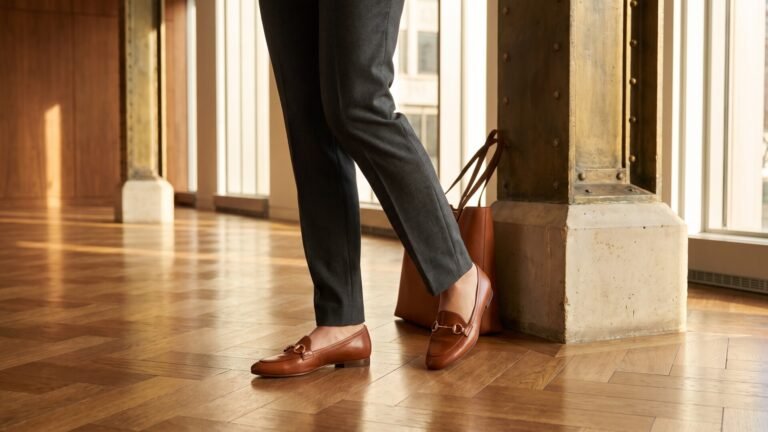
| Fratelli Rossetti | Founded 1953 in Parabiago | Understated flats and loafers, including for grooms |
| Tod’s | Gommino loafer introduced in 1978 | Soft, rubber-soled loafers for casual weddings |
Sergio Rossi and Gianvito Rossi
Sergio Rossi built its name on elegant heels and embellished sandals; Gianvito Rossi, founded by Sergio’s son, is known for a cleaner, more minimal shape. Our comparison, Sergio Rossi vs Gianvito Rossi, sets out how the two differ. For outdoor weddings, choose the block-heel or low-heel models in each range rather than the stilettos both are famous for.
Aquazzura
Aquazzura is a Florence-based label founded in 2011, known for playful, feminine detail such as tassels, ankle ties and embellishment. Its espadrille wedges, such as the Costiera, are the natural pick for garden and coastal ceremonies. Its leather-and-suede sandals suit dry weather but not damp lawns.
Valentino
Valentino’s Rockstud, launched in 2010, adds small pyramid studs to ballerinas, pumps and sandals for a more modern, slightly edgier bridal look. The flat and low-heeled versions are the practical ones for outdoor use.
Giuseppe Zanotti
Giuseppe Zanotti leans toward glamour: metallic finishes, crystal trims and strong shapes. For an outdoor wedding, look at its wedge and block-heel sandals with ankle straps rather than its slimmest heels.
Salvatore Ferragamo
Ferragamo’s Vara bow pump, designed in 1978, comes in flat, low and mid-heel versions and in leather and patent finishes. The low-heeled Vara is an easy choice for a classic bride who wants a closed shoe.
What About the Groom and Wedding Party?
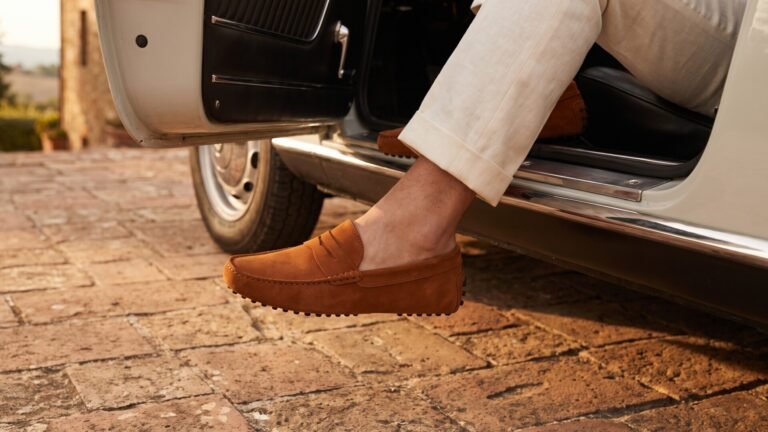
Outdoor surfaces affect men’s shoes too. A leather-soled oxford can slip on dewy grass, and suede loafers can stain in damp turf. For a relaxed garden or beach ceremony, a soft loafer with a rubber sole is more forgiving than a formal dress shoe.
- Casual and destination weddings: The Tod’s Gommino has a pebbled rubber sole that grips well; see why the Gommino is so popular and whether the 2026 bubble-sole versions are better. Tod’s is also the subject of a dedicated guide to the brand.
- Smart-casual: Penny loafers in dark calf suit linen and light-wool suits; start with our best Italian penny loafers for men.
- Autumn and winter ceremonies: A sleek Italian Chelsea boot or a velvet loafer from our holiday loafer guide works for cooler weather.
- Bridesmaids and guests: Women attending outdoor weddings can find options in our best Italian designer loafers for women and guidance on styling Italian shoes for every occasion.
How to Break In Wedding Shoes
- Order early so you have time to exchange for a different size or width.
- Wear them indoors on clean, carpeted or hard floors for short periods, so the soles stay clean and returnable if they do not fit.
- Test on similar ground. Walk on grass or gravel in an old pair of the same heel height to check how the shape behaves.
- Add small fixes: blister plasters, gel cushions and heel grips are cheap and can prevent a painful afternoon.
- Pack a backup pair of flat sandals or foldable flats for dancing.
Styling Your Shoes with the Dress and the Venue
- Dress length: Midi or floor-length dresses should clear the ground when you walk on grass; a long hem catches on gravel and wet turf.
- Colour: Ivory, nude and soft metallic shades are forgiving on mixed surfaces and photograph well in outdoor light. Pure white satin shows grass stains quickly.
- Accessories: Match metal tones to your jewellery and keep embellishment on shoes proportionate to the dress.
- Season: Open-toe styles for summer; closed leather shoes or ankle straps for cooler months.
Care Before, During and After the Wedding
Care advice should be conservative, especially for satin and suede. Always test any spray or cleaner on a hidden spot first, and take valuable pairs to a specialist rather than experimenting.
- Before: Apply a protective spray suited to the material, such as a suede protector for suede, after a patch test.
- During: Carry the shoes to the ceremony site in their dust bags and change into them there if the approach is muddy or sandy.
- After: Brush off dry soil and sand, let damp shoes dry naturally away from radiators, and stuff them with tissue to hold their shape.
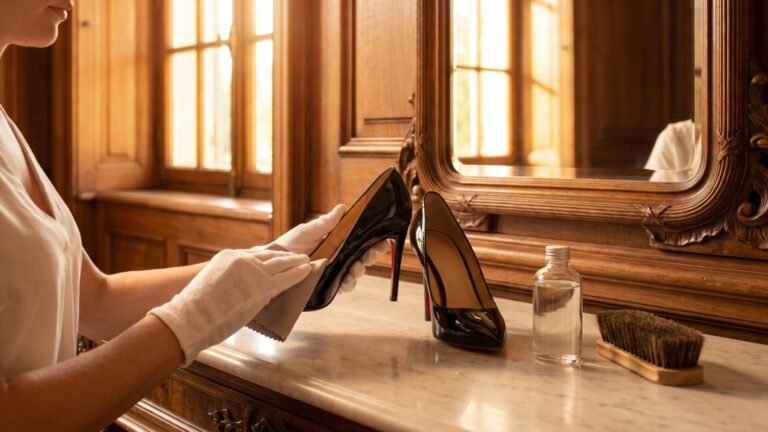
- Storage: Keep them in dust bags in a cool, dry place. For leather and patent pairs, see how to care for Italian leather shoes and the right way to clean patent leather Italian heels.
Planning Your Budget
Luxury Italian shoes are expensive, and prices vary by market, season and materials, so check the current price on the brand or retailer page rather than relying on a guide. As a rule, plain leather block heels and flats cost less than crystal-trimmed or hand-embellished satin sandals, and suede or satin carry a higher risk of damage outdoors. If you plan to wear the shoes again, choose a colour and shape that suits other occasions; if you want a one-day statement shoe, consider whether a second, more practical pair for the reception is a better use of money than a more expensive single pair.
Conclusion
Start with the surface, then the shoe. Block heels and wedges handle lawns and gravel, flats and low sandals suit sand, and smooth leather is the most forgiving material when weather is uncertain. Within that framework, Italian houses such as Sergio Rossi, Gianvito Rossi, Aquazzura, Valentino, Giuseppe Zanotti and Ferragamo offer a wide range of shapes, and Tod’s and Fratelli Rossetti cover the groom. Allow time to fit, break in and, if necessary, add a rubber sole, and you will be able to spend the day thinking about the ceremony rather than your feet.
Frequently Asked Questions About Italian Designer Wedding Shoes For Outdoor Ceremonies
What are the best shoes for an outdoor wedding on grass?
Block heels, wedges and flats. A wider heel base spreads your weight and is less likely to sink into turf than a stiletto. If you prefer a slim heel, add clear heel protectors.
Which heel height is easiest to walk in outdoors?
A block heel of roughly 5 to 7 cm or a kitten heel of about 3 to 5 cm is easier to manage on uneven ground than a high stiletto. Flats are the most stable of all.
Can I wear satin wedding shoes outdoors?
Yes, in dry weather, but satin water-spots easily and snags on rough surfaces. If rain is possible, choose smooth leather or bring a second pair.
Which Italian brands make wedding shoes for outdoor ceremonies?
Sergio Rossi, Gianvito Rossi, Aquazzura, Valentino, Giuseppe Zanotti and Salvatore Ferragamo all make bridal-appropriate heels, sandals or flats, and Tod’s and Fratelli Rossetti offer loafers and flats. Choose the low-heel and block-heel models for outdoor use.
Are leather soles a problem on wet grass or stone?
They can be slippery. A cobbler can add a thin rubber half-sole or non-slip pad before the wedding.
How far in advance should I buy wedding shoes?
Buy early enough to exchange for a different size or width, and to wear them indoors for short periods before the day. Check the retailer’s return policy, because worn soles are often not returnable.