Are Luxury Italian Shoes Worth the Money?
The question people actually type into the search bar is whether luxury Italian shoes are worth it. The question underneath it is narrower: which Italian shoes are worth it, and which are just expensive. Those are different lists, and the gap between them is where most of the money gets wasted.
Here is the honest answer up front. Luxury Italian shoes earn their price when the premium buys construction you can repair, leather that ages instead of cracking, a last that fits your foot, and a design you will still want in five years. They do not earn it when you are paying for a logo on a cemented sole, a shape that will look dated by next spring, or a name stitched inside a shoe that was finished in a hurry. Italy makes some of the best footwear on earth and some of the most overpriced. The country of origin tells you almost nothing on its own.
What follows is how to tell the two apart before you spend anything.
What the Italian Luxury Premium Actually Pays For
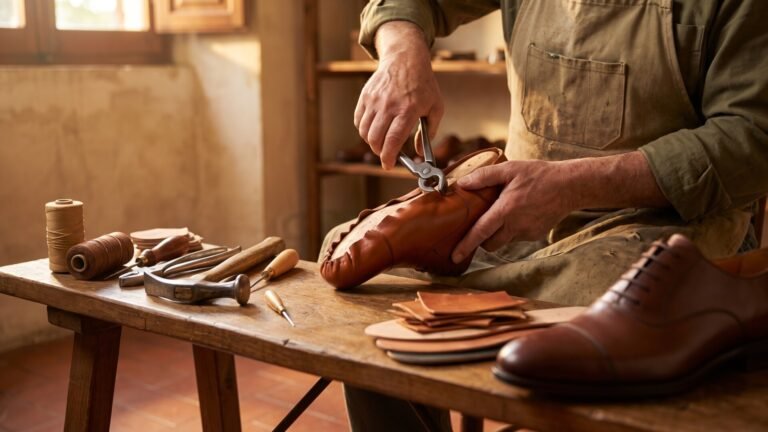
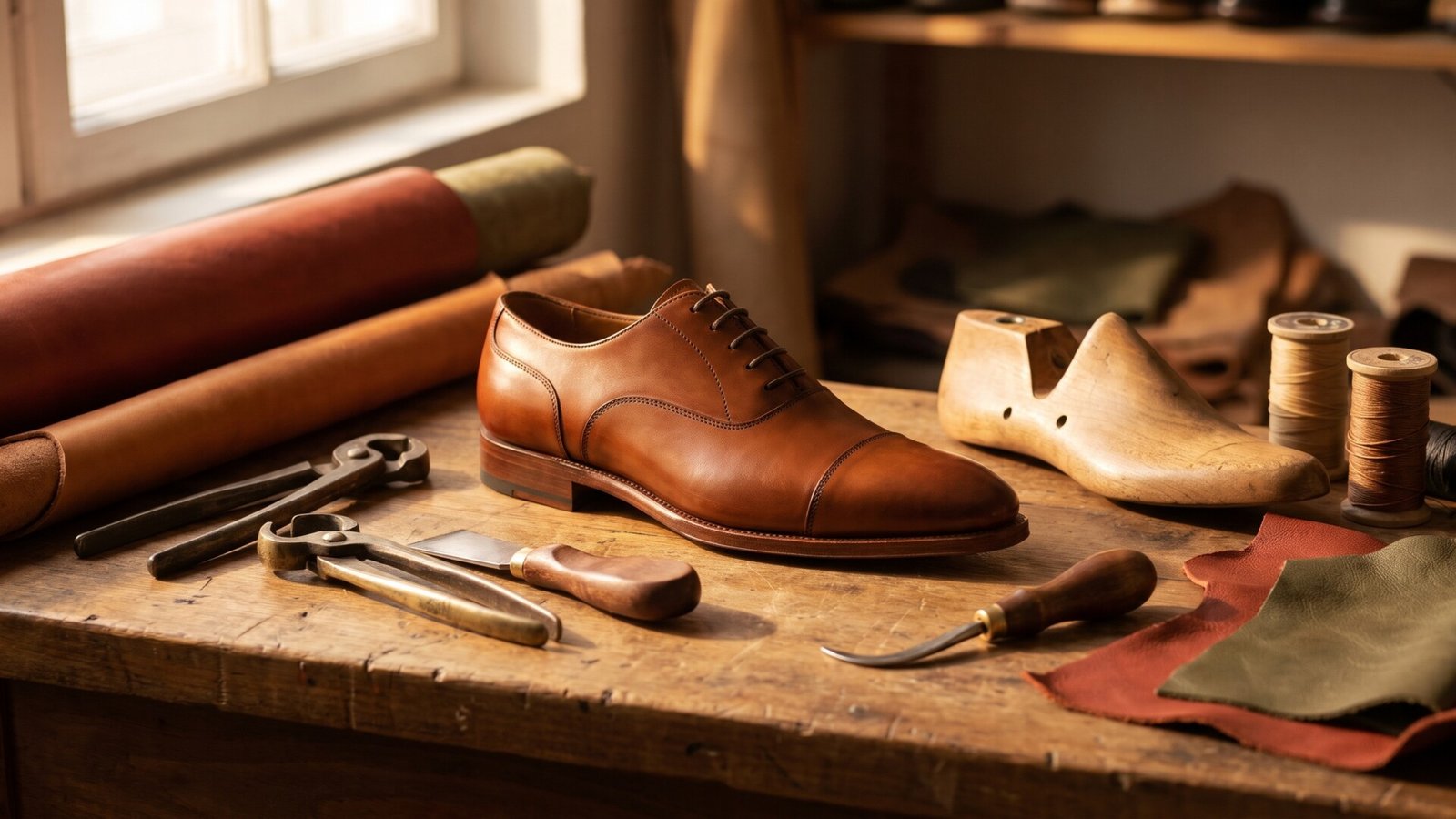
Walk through a small factory outside Fermo, in the Marche, and the first thing that strikes you is how many of the operations are still done by hand and eye. The clicking – cutting the upper leather – is a person reading around flaws in the hide. The lasting, where the upper is pulled over the wooden form of the foot, is done with pliers and feel. You cannot automate the judgment in those steps, and judgment is what the premium buys, when it buys anything.
The upper itself has a name worth knowing: the tomaia (the assembled leather upper), cut from cuoio (leather) that has been tanned and finished to a specific temper. Good calfskin is graded by the mill before the factory ever sees it, and the difference between a first-grade hide and a corrected one shows up years later, not on the shelf.
Then there is construction, which decides everything about how the shoe wears and whether it can be saved. Learn these five and you can judge most of the market:
- Cemented construction. The upper is glued to the sole. Fast, cheap, and impossible to resole properly – when the sole wears through, the shoe is finished. Plenty of expensive designer shoes are cemented.
- Blake stitching. A single stitch runs through the insole, upper, and outsole. Flexible, light, elegant, and resoleable, but with less cushioning and a thinner sole.
- Blake rapid. Blake stitching plus a second stitch attaching a midsole. More weather resistance and more substance underfoot than plain Blake, at a little more weight.
- Goodyear welted. A stitched welt joins upper, insole, and sole, with a cork filler that molds to your foot. The most repairable construction there is – the sole can come off and go back on repeatedly. Stiffer to break in, heavier, and built to last decades.
- Hand-welted. The welt is sewn by hand rather than machine. Rarer, more expensive, and the most flexible of the welted family. Almost never found under $1,000.
A shoe with a Blake or welted sole can be resoled for a fraction of its price. A cemented shoe cannot. That single fact does more to determine long-term value than the label. If you want the full mechanics, [Internal: The Art of Italian Shoe Making] walks through each method step by step, and [Internal: Handmade Italian Shoes Explained] untangles what the word handmade actually covers.
The last thing the premium pays for is finishing – the part you can feel. Burnished edges versus painted ones. A leather lining that is stitched in rather than glued. Hardware that is solid brass rather than plated zinc. None of it shows in a product photo. All of it shows in year three.
Where Luxury Italian Shoes Earn Their Price – and Where They Do Not
The premium is most defensible when it buys a better pattern. A well-cut last follows the shape of a foot rather than a generic average, which is why a good Italian shoe can feel comfortable in a way a cheaper one never quite manages. Add refined finishing, leather that softens into your foot instead of collapsing, and the ability to resole, and you have a shoe that improves with wear.
Comfort, though, is not guaranteed by price. This is the correction most buyers need. A $900 shoe on a narrow last with a steep heel pitch will hurt a wide foot exactly as much as a $200 one. High-end leather can be stiff for the first several wears. An aggressive taper at the toe can pinch. Price buys potential comfort, not promised comfort – the fit has to be right first.
The value also splits sharply by category. Consider the range, keeping in mind that prices move with material, collection, and retailer:
- Tod’s Gommino and City Gommino – the pebbled-rubber-sole driving shoe, usually $600 to $800. A casual shoe with a soft, flexible build. Excellent for what it is; not a shoe you resole.
- Santoni dress shoes – hand-finished uppers, often Goodyear or Blake, typically $700 to $1,200. Here the premium buys genuine construction and finishing.
- Ferragamo loafers – the Gancini-bit and driver styles, roughly $700 to $1,000. Strong house identity, variable construction across the range.
- Zegna Triple Stitch sneakers – a leather sneaker around $900 to $1,100. A design object more than a repairable one.
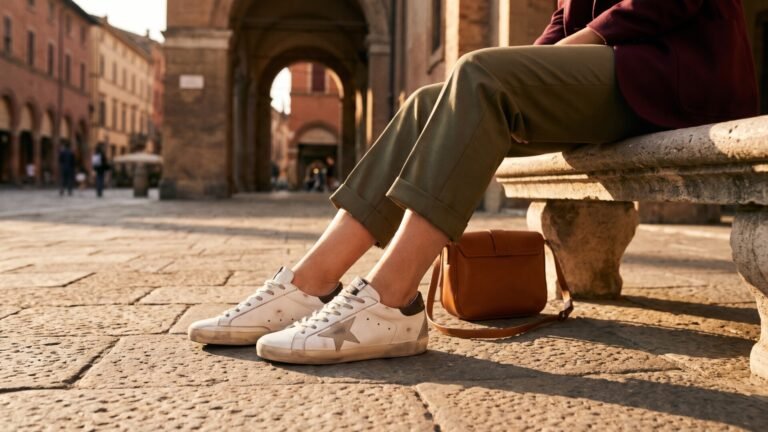
- Golden Goose Super-Star – the deliberately distressed sneaker, $500 to $600. You are paying for a look, and the look is the point.
- Common Projects Achilles Low – the non-Italian benchmark, about $400 to $450. Clean, minimal, Italian-made despite the New York name, and a useful reference point for what a leather sneaker should cost.
The lesson in that list: a hand-finished Santoni derby and a Golden Goose sneaker can cost similar money and offer completely different kinds of value. One is built to be repaired and worn for a decade. The other is built to look a specific way now. Both can be worth it – but only if you are buying the thing you actually want.
What Most Buyers Get Wrong About Italian Shoe Quality
Three beliefs cost buyers the most money. Take them apart one at a time.
The first is that handmade means hand-welted. It does not. "Handmade" in Italian footwear can mean anything from a fully hand-sewn welt to a factory shoe with the uppers hand-burnished at the end. "Hand-finished" is even looser. And "Made in Italy" is a legal label with real rules about where the substantial transformation happens – but it does not promise a particular construction, a particular leather grade, or that the shoe will last. A cemented shoe can be made in Italy. Many are.
The second is that softer is better. Press your thumb into the upper of a very soft leather shoe and it gives easily – which feels luxurious in the shop and can be a warning. Leather that is too soft creases deeply across the vamp, stretches out of shape, and loses the structure that supports your foot. A firmer, well-tanned upper feels less pliable at first and holds its shape for years. The leather should have some resistance, some spring back.
The third is that the most expensive model is the best buy. It rarely is. A simple leather loafer worn three times a week will out-earn a trend-led sneaker worn twice a month on cost per wear every time, whatever the price tags say.
And then there is the logo premium. Recognizable branding has genuine value when it is part of a design you will wear constantly and when it holds secondhand interest – the Gucci Horsebit, the Ferragamo Gancini, the Golden Goose star all do. It has no value when it is the only reason for the price. The test is simple: would you still want this shoe if the logo were removed? If the answer is no, you are buying a badge, not a shoe.
Cost Per Wear, Durability, and the Hidden Ownership Costs
Cost per wear is the only honest way to compare a $250 shoe with a $900 one. Divide the price by the number of times you expect to wear it. A $250 mass-market shoe worn fifteen times costs about $17 a wear. A $900 Italian loafer worn a hundred times costs $9. The expensive shoe is cheaper. But a $1,000 pair worn four times a year for special occasions costs $250 a wear and is worse value than almost anything – especially if it duplicates a pair already in the closet.
What fails first, in rough order of frequency: the sole wears through at the toe or ball, the heel cap grinds down, the lining abrades at the heel counter, the upper stretches or creases badly, and glued components separate. Weather and storage do the rest – a soaked leather shoe dried near heat will crack, and a shoe stored without shape will collapse at the vamp.
Maintenance needs differ by category, and so do the hidden costs:
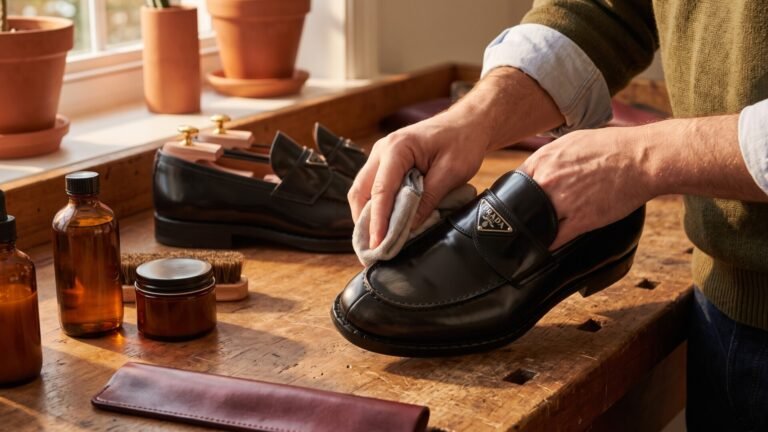
- Leather loafers and dress shoes want a soft brush, conditioner, cedar shoe trees, and a resole every few years. Trees and conditioner together run perhaps $40 to $80 once.
- Suede needs a protector spray and weather awareness; a proper clean is a specialist job.
- Luxury sneakers are the hardest to repair economically. Once a bonded midsole or cupsole deteriorates, there is often no resole path, and the shoe becomes disposable despite the price.
- Patent leather and delicate finishes need careful storage and gentle cleaning; scuffs are difficult to reverse.
Budget for a protective sole on leather-soled shoes if you walk on pavement, and for professional repair every couple of years on anything worn hard. Our guide to [Internal: How to Care for Italian Leather Shoes] covers the routine, and [Internal: Leather Soles vs. Rubber Soles] explains which sole suits which life. If you own patent, [Internal: The right way to clean patent leather Italian heels] is the one to keep.
Which Types of Luxury Italian Shoes Offer the Best Value?
Value concentrates in the categories you will wear most and can repair. Here is how the field sorts out.
Best value for frequent formal wear: classic leather loafers, derbies, and understated dress shoes from Santoni, Ferragamo, and selected Zegna styles. Conventional silhouettes – a plain derby, a penny loafer – stay useful for a decade because nothing about them dates. This is where a repairable construction pays you back. See [Internal: Italian Dress Shoes: The Complete Guide to Luxury Formal Footwear] for the full landscape.
Best value for smart-casual wardrobes: the Tod’s Gommino and City Gommino, classic Italian loafers, and restrained leather sneakers. These get worn constantly, which is exactly what makes a premium worthwhile – provided you accept the limits. The Gommino’s pebbled sole is soft and wears faster than a leather sole, and it does not love wet weather. A leather sneaker is more versatile but less repairable. If you are choosing between the two Gommino versions, [Internal: Tod’s Gommino vs. City Gommino: What’s the Difference?] settles it.
Best value for signature style: the Golden Goose Super-Star, the Ferragamo Varina flat, the Gucci Horsebit 1953 loafer, the Valentino Rockstud. These earn their price only when the house identity is the reason you are buying and you will wear the shoe repeatedly. Bought for the design and worn hard, a signature shoe can be excellent value. Bought to be seen once, it is not.
Hardest to justify on durability alone: delicate evening shoes, heavily embellished styles, fashion-forward soles, and sneakers priced mainly for branding or distressing. These are occasion purchases, and should be budgeted as such.
| Shoe category | Typical value strength | Main risk | Best buyer |
|---|---|---|---|
| Classic leather loafers | High cost-per-wear potential | Fit and maintenance | Frequent office or smart-casual wearer |
| Italian dress shoes | High when construction is repairable | Formal styling limits | Buyer with regular formal use |
| Driving shoes | Moderate to high for casual use | Sole wear and weather limits | Driver seeking relaxed luxury |
| Luxury leather sneakers | Moderate | Bonded construction and fashion shifts | Buyer prioritizing everyday styling |
| Delicate heels or evening shoes | Low to moderate | Low frequency of wear | Occasion-focused buyer |
The pattern is blunt: the plainer the shoe and the more often you wear it, the better the Italian premium performs. The more decorative and occasional the shoe, the more you are buying a moment rather than an investment.
How Italian Luxury Shoes Compare With the Alternatives
Italian luxury is not the only sensible answer, and pretending otherwise would be dishonest. A well-made mid-priced shoe can beat a designer equivalent outright for basic black pumps, plain white sneakers, or anything you will wear in bad weather. If maximum durability per dollar is the goal, the premium is usually the wrong tool.
Against French luxury, the difference is one of temperament. Italian houses tend toward softer leather, more flexible construction, more expressive design, and casual elegance. French houses often lean to formal structure, heritage silhouettes, and a stiffer, more architectural finish. Neither is better in the abstract; they suit different feet and different wardrobes. Our comparison, [Internal: Italian Shoes vs French Shoes], goes deeper, and a dedicated Italian versus French brands piece is coming.
Made-to-measure and independent makers deserve a mention too. For the buyer willing to research and wait, a commissioned shoe can deliver a better fit and construction than any ready-to-wear label – at the cost of convenience and recognizability.
| Option | Main strength | Main compromise | Best for |
|---|---|---|---|
| Luxury Italian shoes | Design, finishing, comfort potential, brand range | High price and uneven value between models | Buyers seeking refined Italian design and long-term wardrobe use |
| Premium non-designer shoes | Often strong construction per dollar | Less distinctive design or status | Practical buyers prioritizing durability |
| French luxury shoes | Formal structure and heritage appeal | Can feel stiffer or less casual | Buyers seeking classic formal footwear |
| Quality made-to-measure or independent shoes | Fit and construction potential | Less convenient and less recognizable | Buyers willing to research and commission carefully |
| Fashion-led designer shoes | Strong visual identity | Lower durability or limited versatility | Buyers buying for a specific aesthetic |
The honest read: Italian luxury wins on design and finishing, ties on comfort when the fit is right, and loses to construction-focused independents on pure durability per dollar. Know which of those you are shopping for.
Which Option Still Makes Sense in Three Years?
Run the three-year test before you buy. Ask five questions: Will I wear this at least monthly? Can it be repaired where I live? Is the shape likely to look current in three years? Will the material survive my climate? Does it work with the clothes I actually own?
The shoes that pass most reliably are the quiet ones – classic loafers, restrained derbies, elegant ballet flats, simple block heels, and versatile leather sneakers with durable uppers. These are the shoes that look reasonable in a photograph taken years from now.
The ones that fail are the extremes: towering platforms, heavy seasonal embellishment, distressed finishes that date the moment the trend moves, delicate pale colors that show every mark, and anything bought because it is visible in fashion coverage right now. None of these is wrong to own. They are simply poor candidates for the "worth the money" calculation.
Resale deserves a clear-eyed word. Recognizable models from Gucci, Ferragamo, Prada, Valentino, Tod’s, and Golden Goose do attract secondhand interest, but condition, size, color, originality, and current demand decide the price – not what you paid. A scuffed, out-of-season, odd-sized shoe recovers very little. Treat resale as value retention, a modest bonus, never a financial return. Buy the shoe to wear it.
A Practical Buying Framework: Who Should Pay the Premium?
Match the purchase to the buyer, not the other way around.
The frequent wearer should spend more. If a shoe will go on your feet weekly for years, a comfortable, versatile, repairable model – a well-finished loafer, derby, or flat – is the best money in the category. The premium pays itself back in cost per wear and in resoles.
The style-led buyer should buy the signature model – the Gucci Horsebit 1953, the Golden Goose Super-Star, the Ferragamo Varina – but only when the design solves a real gap in the wardrobe rather than duplicating a pair already there. Buy it because you want that exact shoe, and plan to wear it.
The cautious value buyer should compare before committing. Put the Italian luxury model next to a premium construction-focused alternative, check the fit and the repair path, and only then decide whether the label is worth the difference.
The occasional wearer should be careful. If you need formal shoes a few times a year, do not overinvest in fragile or highly formal pairs. A single good versatile shoe beats three delicate ones you rarely touch.
A short buy-or-skip test:
- Buy if the fit is immediately promising, the shoe fills a real wardrobe gap, and you expect to wear it often.
- Pause if the appeal is mainly the logo, the trend, or the discount.
- Skip if the shoe fights your foot shape, your climate, your walking needs, or your willingness to maintain it.
Fit is where this all starts, and it is worth reading [Internal: How Should Italian Designer Shoes Fit?] before you commit to a size. For work wardrobes, [Internal: Best Italian Designer Shoes for Business Casual Outfits] narrows the field.
Buying Verdict: Are Luxury Italian Shoes Worth the Money?
Selectively, yes – and the word selectively is doing the work. Prioritize construction, fit, frequency of wear, repairability, and versatility over country of origin or logo. A Blake-stitched or welted shoe you will wear weekly and can resole is worth its price. A cemented, trend-led, rarely worn shoe at the same money is not.
The strongest purchase categories are clear. Classic Italian loafers for repeated smart-casual wear. Well-constructed Italian dress shoes for regular formal use. Versatile leather sneakers when you accept the lower repairability and higher fashion risk. These are the shoes where the Italian premium consistently pays.
The buyers who should skip it are just as clear. Anyone chasing maximum durability per dollar. Anyone who rarely wears formal or designer shoes. Anyone whose preferred model is uncomfortable or too delicate for their actual life. For these buyers, a premium non-designer shoe is the smarter purchase, full stop.
Resolved into recommendations rather than a shrug:
- Best practical investment: a versatile leather loafer or derby with a reliable repair path.
- Best design investment: a signature model you will wear frequently and confidently.
- Best value-conscious decision: compare the designer shoe with a premium non-designer alternative before buying.
- Best casual luxury choice: the Tod’s Gommino or a restrained Italian leather sneaker, depending on your walking needs and climate.
For the wider map of the category, start with [Internal: Italian Designer Shoes: The Complete Guide to Luxury Footwear Craftsmanship] and the [Internal: Best Italian Luxury Shoe Brands] guide.
Frequently Asked Questions About Luxury Italian Shoes
Are luxury Italian shoes worth the money?
They can be, particularly when you choose a versatile, well-fitting, repairable model and expect to wear it often. The country label alone does not justify the premium – construction and fit do.
Are Italian shoes better quality than other luxury shoes?
Italian footwear often has real strengths in leather finishing, flexible construction, design, and casual elegance. But quality varies widely by brand and model, so compare construction and materials rather than nationality.
How long should luxury Italian shoes last?
It depends on construction, wear frequency, climate, maintenance, and repair access. A resoleable leather shoe worn regularly and cared for can last many years with resoling; a cemented shoe or a sneaker with a bonded sole has a much shorter practical life.
Do Italian luxury shoes hold their value?
Selected recognizable models retain some value, but condition, size, demand, and timelessness are decisive. Treat resale as a secondary benefit, never a guarantee.
Are handmade Italian shoes always better?
No. Handmade, hand-finished, and factory-made describe different things, and a carefully designed factory shoe can outperform a poorly specified handmade one on consistency, comfort, or durability.
Which Italian luxury shoe category is the best investment?
Classic loafers, versatile dress shoes, and understated flats or low heels tend to offer the most styling opportunities and the highest cost per wear for most buyers.
Should I buy Italian designer shoes on sale?
Check authenticity, return terms, condition, sizing, and whether the original price reflects the real market. A discount does not fix poor fit or low expected wear. The one thing to carry into the shop: put your thumb on the sole seam and ask whether it can be resoled. If it can, and it fits, and you will wear it, the premium is money well spent. If it cannot, you are buying a shoe that ends when the sole does – whatever the name inside.