10 Up-and-Coming Italian Designers to Watch in 2026
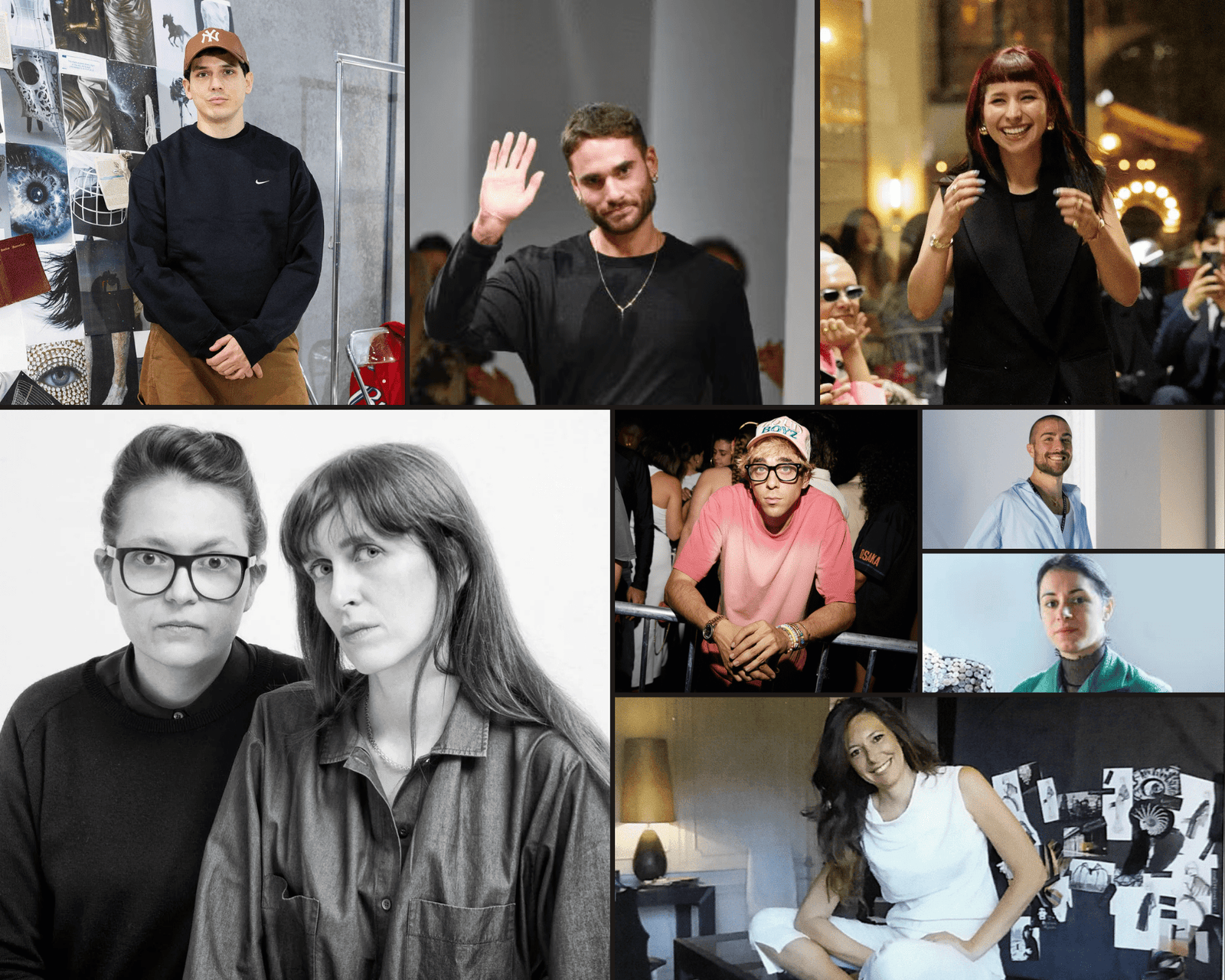
If you’ve been scoping the fashion scene, you know Italy isn’t just about the big legacy houses anymore. Beneath the echoes of Armani, Versace and Prada, there’s a new wave of Italian designers stepping up, bringing fresh energy, fresh ideas, and a fresh take on Made in Italy. These are the names inheriting the craft, shaking it up, and worth your attention. Below are 10 Italian designers to follow as 2026 plays out, with what each one actually does, what has been documented about their careers so far, and who each is likely to suit.
A note on how this list works: “up-and-coming” here means labels that are still small or newly visible, not household names. Some of the designers below are only a few seasons old; others have been building quietly for years and are only now getting attention. Details come from the designers’ own biographies, prize announcements and fashion-press coverage, and we flag where something is still uncertain.
The 10 Designers at a Glance
| Designer / label | Known for | Notable milestone | Best for |
|---|---|---|---|
| Francesco Murano | Draped, sculptural womenswear | LVMH Prize 2025 finalist; label founded 2021 | Evening and occasion dressing |
| Giuseppe Di Morabito | Tech-meets-tailoring drama | Milan runway debut for AW25 | Statement pieces, futuristic glamour |
| Domenico Formichetti (PDF) | Streetwear with 1990s and 2000s references | Label launched 2023; shows at Milano Fashion Week Uomo | Streetwear fans |
| Francesca Cottone | Structured outerwear and tailoring | Debuted at Altaroma in 2020 | Coats and blazers with sharp cuts |
| Melampo (Lulù & Anna Poletti) | Modern shirts from a family shirt-making business | Family business dates to a 1947 hat shop | Elevated wardrobe staples |
| Jezabelle Cormio | Eccentric, handmade, kitsch-embracing womenswear and menswear | Studied at the Royal Academy of Fine Arts in Antwerp; selected for Vogue’s Fashion Panorama | Personality-led dressing |
| Alessandra Cappiello (Morfosis) | Structured silhouettes in silk, chiffon and linen | Rome-based label founded in 2004 | Wearable, artistic dresses |
| Nicola Brognano | Romantic couture-influenced streetwear | Winner of Who Is On Next? (womenswear); Blumarine creative director 2019–2023 | Dramatic, hyper-feminine looks |
| Federico Cina | Romagna-rooted, intimate menswear | Semi-finalist for the 2021 LVMH Prize | Quiet, personal menswear |
| Vincenzo Palazzo (Vìen) | Tailoring fused with contemporary streetwear | Shown at Milan Fashion Week | Comfortable, tailored menswear |
Francesco Murano
First up is Francesco Murano, born in 1997, who founded his label in 2021 and has already caught major industry attention: he was one of the eight finalists for the 2025 LVMH Prize (the prize itself went to the Japanese label Soshiotsuki). His earlier recognition includes the Camera Moda fashion award linked to his 2019 graduation from IED Milan, a place in Vogue Italia’s Who Is On Next? in 2020 and an Italian Fashion Trust grant in 2024.

What makes him special:
- His aesthetic: draped, sculptural, blending classical and baroque art with modern contradictions, balancing rational and irrational.
- He works meticulously: moulage, asymmetry, clean lines yet fluid movement.
- He is still early in his career, which is why he suits shoppers who want to buy a label before it becomes a household name.
Murano is one to watch for evening dressing where the construction is the story. If you like moulage-draped pieces, compare his approach with the heritage of Giorgio Armani, whose quiet-power tailoring sits at the other end of Italian fashion.
Giuseppe Di Morabito
Next: Giuseppe Di Morabito, who made his runway debut at Milan Fashion Week with his Autumn/Winter 2025 collection, Alone With The Stars. The show made headlines for including Ameca, a humanoid robot: the robot was shown on screens around the catwalk while a performer mirrored its movements, rather than walking the runway itself.

Why he’s worth watching:
- The collection covered womenswear and menswear, with slick blazer dresses, trench coats tied at the waist, metal bodices and crinkled leather pieces, plus silver glitter on bags, tights and shoes.
- It pairs Italian tailoring and leatherwork with a futuristic tone, reinterpreting historical elements through a contemporary lens.
- A bold debut gets attention, but a label this theatrical will be judged on how wearable the follow-up collections are.
Domenico Formichetti (brand: PDF)
Switching gears: from couture drama into streetwear. Domenico Formichetti launched PDF (short for Project Domenico Formichetti) in 2023. Born in Chieti, Abruzzo, he studied at the Accademia di Belle Arti and NABA in Milan and worked as a stylist for Italian rap artists before starting the label. PDF debuted at Milano Fashion Week Uomo and has since shown there again.

The angle:
- Streetwear with Made-in-Italy credentials and hip-hop culture references from the 1990s and 2000s.
- Recognisable oversized cuts, soft curved lines and denim, with extreme sports, skating, graffiti and manga as reference points.
- Press coverage describes the label as already sold internationally.
For streetwear lovers wanting some Italian flavour, PDF is one to watch. For more established Italian streetwear and pop-culture labels see our profiles of Sunnei and GCDS.
Francesca Cottone
Another fresh face: Francesca Cottone, who works under her own name. Born in Camerino in the Marche region, she moved to Milan at 19, decided to launch her own brand in 2018 and debuted it in September 2020 at Altaroma with the Spring/Summer 2021 collection “Main+Gender= Human”. Her recent work has centred on outerwear and tailoring: coats, jackets, blazers and suits.

Why this mix matters:
- Press coverage describes eclectic silhouettes built on defined cuts, with textile contrasts and careful tailoring details.
- Tailored outerwear is one of the most durable categories to invest in.
- A designer with a clear point of view on cut is easier to build a wardrobe around than one chasing trends.
Lulù & Anna Poletti (Melampo)
Sister act: Lulù and Anna Poletti are behind Melampo. They are direct descendants of the family that turned a 1947 hat-making shop into a workshop making shirts for some of Italy’s major labels from the 1970s, with Armani and Valentino among the best-known clients. The sisters turned the family-run company into a brand of their own.

Why watch them:
- Real manufacturing heritage: the family’s workshop made shirts for other brands before this one existed.
- Press coverage describes a vocabulary of wearability, lightness and freedom: sheer pieces, oversized shapes, ruffles, pleats and colour-blocking.
- Shirts are a versatile product: elevated basics with a point of view.
Jezabelle Cormio
Here’s one for individualists: Jezabelle Cormio, a designer of Italian-American origin based in Milan, who studied at the Royal Academy of Fine Arts in Antwerp under Walter Van Beirendonck. She began producing under her own name while still at university after an opportunity with Opening Ceremony, and has described the brand as existing in various forms for around a decade.

Why she matters:
- An eccentric aesthetic that embraces kitsch and challenges traditional gender roles, often through embroidery, jersey, denim and graphics.
- An emphasis on handmade, emotionally resonant pieces.
- Recognised by Vogue through its Fashion Panorama selection.
Alessandra Cappiello (Morfosis)
Alessandra Cappiello runs the Rome-based label Morfosis, founded in 2004 after she worked as a fashion consulting designer for the Malloni brand. The label is known for strong lines softened by floaty accents, working in fabrics such as silk, chiffon, lurex, denim and linen (as described for the Spring/Summer 2020 collection). Her inspirations include classical studies, art and her painter grandmother.

Why keep an eye on her:
- Maxi and mini dresses, wide-leg trousers and wrap dresses in warm earth tones, plus colour-blocking and floral prints.
- Artistic but wearable: a good option if you want a dress that is not a runway costume.
- Rome is a quieter fashion capital than Milan, so the label tends to fly under the radar.
Nicola Brognano
Nicola Brognano won the womenswear category of Who Is On Next?, the AltaRoma talent contest run with Vogue Italia, in July 2016. He graduated in 2011 from the fashion design programme at Istituto Marangoni’s Milan school, and his winning Spring/Summer 2017 collection was inspired by the character Susy from Fellini’s Juliet of the Spirits. He then spent four years as creative director of Blumarine, from the end of 2019 until the house announced his departure in October 2023, where his Y2K-flavoured collections drew wide attention. His next move had not been announced when we last checked, so follow his own channels for news.

Why he’s interesting:
- He blends visionary romanticism from French haute couture with streetwear’s bold shapes and ample proportions.
- Ruches, floral and animal prints and bodices appear in hyper-feminine dresses, alongside menswear trousers and oversized sweatshirts.
- Italy’s talent-scouting contests, like Who Is On Next?, give emerging names a platform, but a prize does not guarantee commercial success.
Federico Cina
Federico Cina was born in Sarsina, a small village in Romagna, and was a semi-finalist for the 2021 LVMH Prize. He has described his collections as personal and intimate, shaped by the “romantic and refined atmosphere” of his home region, and press coverage has noted his decision to return to rural Italy to build his menswear label.
Why he counts:
- A regional, small-scale approach that fits the “quiet” end of Italian menswear.
- A recognised prize pedigree without the pricing of a major house.
- A good counterpoint to the louder streetwear names on this list.
Vincenzo Palazzo (Vìen)
Finally: Vincenzo Palazzo, the designer of the menswear label Vìen (also written Vien). Press coverage describes the brand as fusing tailoring and contemporary streetwear to make comfortable looks, such as tracksuits lined like tailored jackets and cropped varsity jackets worn over skirts, and the label has shown at Milan Fashion Week (most press coverage dates from its 2020–2022 collections, so check its own channels for recent work).
Why this matters:
- Designs a “new uniform” with the functionality of technical sportswear, combining suits and running-inspired looks.
- Menswear in Italy still has room for breakout names that sit between tailoring and sportswear.
- Comfort-first tailoring suits the way many people now dress for work.
What They All Share — The Italian Signature
So what ties these ten together beyond being Italian and up-and-coming?
- Craft focus: even as styles vary, most emphasise cut, fabric and construction.
- Heritage meets innovation: they remix Italian references rather than copying them.
- Global mindset: they are Italian, but show on international calendars and sell abroad.
- Narrative & identity: each brand has a clear story.
- Institutional support: the Camera Nazionale della Moda Italiana runs programmes such as Designers for the Planet, which supports emerging brands built around sustainability and presents them in the Fashion Hub during Milan Fashion Week, and Fashion Hub Market, which introduces emerging brands to international press and buyers, especially those keeping handcrafting alive.
Why 2026 Is the Year to Watch Them
- Milan Fashion Week and Italian fashion bodies have been giving emerging names more visibility through the Fashion Hub and prize programmes.
- Buyers, media and shoppers are looking for “next gen” labels with a strong identity.
- With established houses shifting creative directors, space opens for fresh voices.
- Sustainability, craft and cultural storytelling are bigger themes, and many of these designers lean into them.
Emerging Designers vs. Established Houses: What to Expect
Buying from a young label is not the same as buying from Prada or Armani. Production runs are small, which makes pieces more distinctive but also harder to find in your size. Return and repair services are usually more limited, and sizing can vary between collections. On the plus side you are often dealing directly with a small team, you can learn how and where a garment is made, and you are backing a business at an early stage. Always check the care label and, if “Made in Italy” matters to you, ask where the garment was actually made: it is a per-product legal claim, not a promise about the whole brand.
If you prefer to start with names that already have a track record, our profiles of Miuccia Prada and Roberto Cavalli show how established Italian designers built their houses, and our complete guide to Italian designer brands maps the major houses.
Stilisti emergenti italiani: in breve
Per chi cerca giovani stilisti italiani e brand emergenti: i dieci nomi di questa guida spaziano dalla sartoria drappeggiata di Francesco Murano allo streetwear di PDF, dalle camicie di Melampo agli abiti di Morfosis, fino al menswear di Federico Cina e di Vìen. Le informazioni provengono da fonti pubbliche e dai siti dei designer; le collezioni cambiano ogni stagione, quindi verifica sempre i canali ufficiali.
Go Deeper: More Emerging Italian Talent
These breakout designers are part of a larger geographic and cultural shift happening across Italy. To understand how specific cities are driving this evolution, read The Next Wave of Italian Fashion: Designers to Watch by City, along with our focused deep dives into Emerging Milan Designers and Emerging Florence Designers. For a wider view, see our guide to emerging and niche Italian designers, the Italian fashion designers hub, and profiles of The Attico, Sara Battaglia and ATP Atelier.
Up-and-Coming Italian Designers: Frequently Asked Questions
Which new Italian fashion brands are worth following in 2026?
This list covers Francesco Murano, Giuseppe Di Morabito, PDF by Domenico Formichetti, Francesca Cottone, Melampo, Jezabelle Cormio, Morfosis, Nicola Brognano, Federico Cina and Vìen. They range from sculptural womenswear to streetwear and menswear.
Which Italian high-end fashion brands are most influential?
The established influential houses include Prada, Armani, Gucci, Versace, Fendi and Bottega Veneta. This guide is about the smaller labels coming up behind them; see our complete guide to Italian designer brands for the big houses.
What does up-and-coming mean for a fashion label?
Here it means small or newly visible labels that are not yet household names: for example winners of talent competitions, finalists for prizes such as the LVMH Prize, or brands that have only recently begun showing at Milan Fashion Week.
What is the LVMH Prize?
An annual award for young fashion designers run by the LVMH group. Francesco Murano was a 2025 finalist and Federico Cina a 2021 semi-finalist, according to the prize’s designer pages.
How can I support emerging Italian designers?
Buy directly from the designer’s own site or from stockists, follow their shows, and ask about production. The Camera Nazionale della Moda Italiana also promotes emerging brands through the Fashion Hub during Milan Fashion Week.
Are emerging Italian designers expensive?
Pricing varies widely by label and category. Small production runs and Italian manufacturing usually put prices above the high street, but check each designer’s current pricing directly.
Where can I find Italian streetwear designers?
PDF by Domenico Formichetti is the clearest example in this list. For more established names, see our profiles of Sunnei and GCDS.