The Attico: Penthouse Glamour Meets Milanese Cool
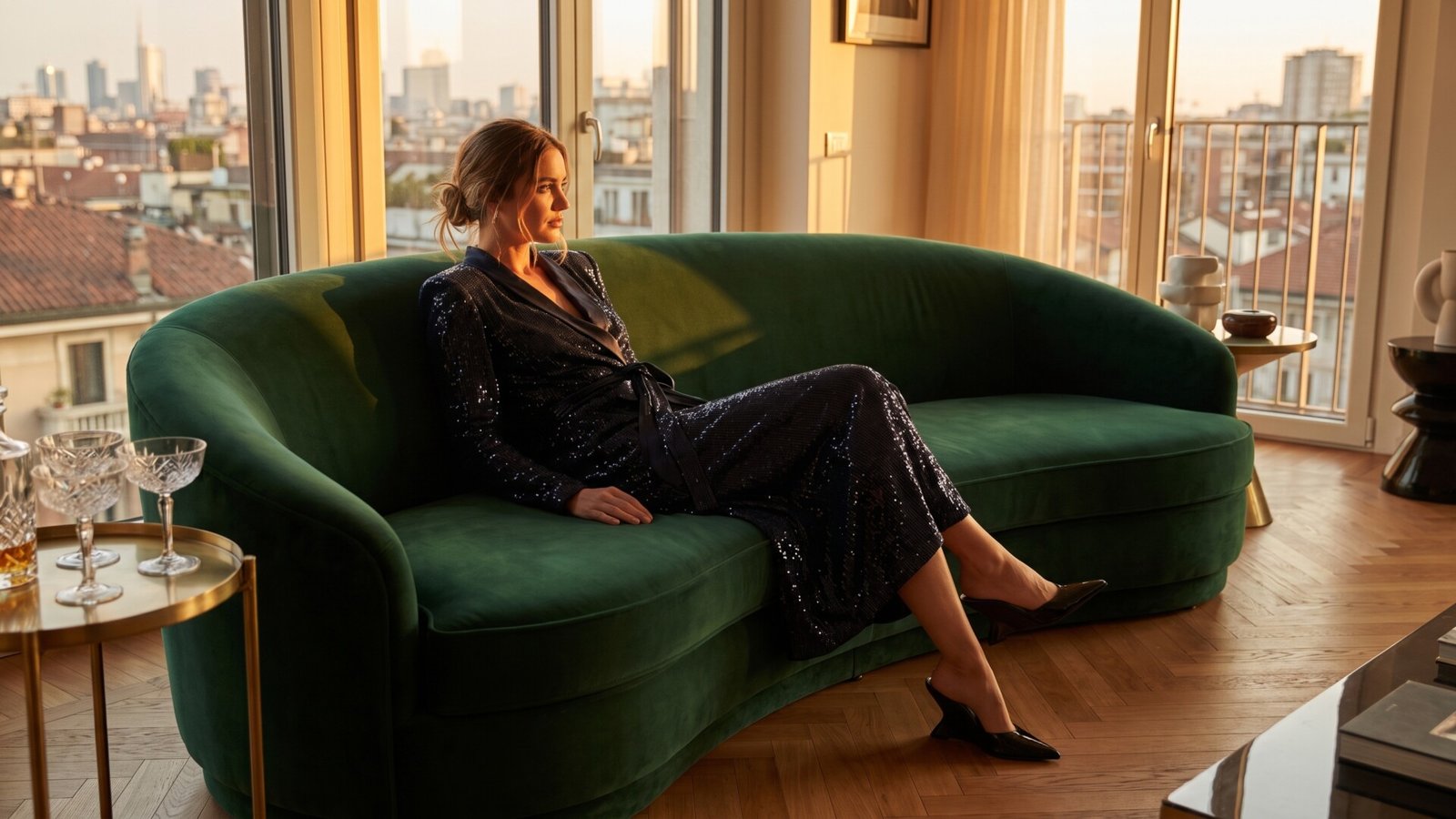
Imagine a penthouse: velvet sofas, a chandelier, late-night dressing, and more than a little swagger. That’s the spirit behind The Attico, a Milan label that does glamour with a wink rather than an ego.
Founded in 2016 by two friends with opposite tastes, The Attico has grown from a robe-dress project into a full brand stocked by more than 200 retailers, and it marked its tenth anniversary in 2026. This guide covers who is behind the label, how it grew, who owns a stake in it, what it makes and what it costs in the US, when it pays to wait for a markdown, and what to check before you buy.
The Attico at a Glance
| Founded | 2016, Milan (the idea dates to September 2015) |
| Founders and creative directors | Gilda Ambrosio and Giorgia Tordini |
| Name | Italian for “penthouse” |
| Started with | Robe-style evening dresses, kimono silhouettes and going-out clothing |
| Now also makes | Ready-to-wear, shoes, bags, swimwear and leisurewear |
| Minority investor | Archive, a vehicle linked to Remo Ruffini’s family holding, took 49% in 2018 |
| First runway show | Milan Fashion Week, September 2023 (spring/summer 2024) |
| Own stores | Ibiza and Seoul (2025) |
| Signature shoe | Devon mule, US list about $740–$1,130 |
| Best suited to | Buyers who want occasion dressing with a distinct, playful point of view rather than quiet-luxury understatement |
Origins: Two Designers, One Vision
Gilda Ambrosio and Giorgia Tordini both had strong roots in fashion, but very different ones, and that difference is what drives the label.
- Gilda, born and raised in Naples, is the maximalist: statement pieces, sequins and a joyful theatricality. According to her Istituto Marangoni alumni profile, she graduated in Fashion Design there in 2013, then moved to Milan and worked as a consultant for brands, magazines and street-style figures before co-founding The Attico.
- Giorgia, from the Marche region (Italian press reports Civitanova Marche as her birthplace), brings a quieter, more disciplined aesthetic. Profiles describe her as the classicist of the pair, leaning toward clean lines and refined silhouettes.
They were already friends before the label existed (a 2026 interview says they met while studying fashion in Milan). In September 2015, in a taxi in New York between fashion shows, the idea was born, and The Attico launched in early 2016. Net-a-Porter approached the pair before the first collection had officially launched, and Tordini has said that partnership pushed the brand into a high-end position from the start.
Why “The Attico”? The Name and the Mood
Attico means penthouse in Italian. The name signals elevation and a touch of indulgence, but also a home: the founders present the label as a world you are invited into rather than a distant luxury house. The idea now carries into retail, where the brand describes its stores as rooms of a single home (more on that below).
The Early Years: Robes, Kimono Dresses, and Sparkle
The first collection set the signature: gowns that felt like dressing gowns, silk robes, peignoirs and kimono silhouettes that could be worn at home or to a glamorous event. Press profiles describe the early robe and slip dresses as made in Italy, though that is a per-garment labelling claim, so check the label on any piece you are considering.
The pieces quickly caught the eye of boutiques and editors with their mix of velvet, satin, lace and vintage details. The founders were profiled in American Vogue in 2016 and 2017, and early stockists included Net-a-Porter, Bergdorf Goodman, The Webster, Moda Operandi and Matchesfashion, which also invited the duo to design a capsule collection. Current published profiles put the label at over 200 retailers, boutiques and concept stores worldwide.
Growing Up, but on Their Own Terms
In 2018, Archive, an investment vehicle linked to Moncler chairman Remo Ruffini’s family holding, took a 49% stake. Business press at the time described the deal as leading to a restructuring of the company and a shift in strategy; the founders kept the majority. Rather than chase fast drops, they say they chose a scarcity strategy: grow slowly and deliberately to protect the brand’s long-term value.
The design team has changed too. In July 2023, Italian financial daily MF Milano Finanza reported that head designer Alessandro Vigilante, in the role since 2020, had parted ways with the founders and would still design the September 2023 show, with Maurizio Iapicca (formerly at Burberry, Dior and Miu Miu) joining. The same outlet reported revenue of about €15 million for 2021. Treat both as press reports rather than company-confirmed figures.
Expanding the World: Product Lines & Collaborations
- Ready-to-wear: tailored trousers, tops and daywear that keep the penthouse mood. Leisurewear followed in 2021.
- Shoes and accessories: heeled sandals, mules and bags with distinctive shapes. The first bag collection arrived in November 2021, per MF Milano Finanza.
- Swimwear: a 2019 capsule with the French swim specialist Eres.
- Vintage rework: a capsule with Re/Done built around re-cut vintage dresses and denim.
- Sneakers and other partners: a special pack for the Nike Air Jordan 1 Mid Milan in 2020, plus collaborations with Linda Farrow (eyewear), Kith and the Milanese restaurant Sant Ambroeus.
- Design events: at the 2022 Salone del Mobile, a design exhibition with the New York gallery Superhouse extended the penthouse idea to furniture and interiors.
Signature Pieces and What They Cost
If you are researching what to buy, the label’s output falls into a few recognisable groups. Prices are US list prices seen at retailers in November 2026 and vary by material and season.
| Category | What to expect | US price guide | Best for |
|---|---|---|---|
| Robe and slip dresses | The founding silhouette: satin, silk-look and velvet, wrap or kimono shapes, often with feathers, sequins or crystal trims | Varies widely by trim; check current listings | Evening events, weddings as a guest, hotel dinners |
| Tailoring and daywear | Blazers, trousers and tops with the same sensual cut in a more wearable register | Washed long trousers about $1,150 (Kith) | Dressing up an everyday wardrobe |
| Devon mule | Square toe, 115 mm pyramid heel, in leather, patent, satin, denim or holographic finishes | About $740–$1,130 | An occasion shoe wardrobe |
| Mini Devon mule | Same angular lines on an 85 mm heel | About $610 | Longer events and lower heels |
| Bags | Structured top-handle and shoulder shapes, plus evening clutches; first collection 2021 | La Passeggiata medium top-handle about $1,726 | Statement accessories rather than a daily carry-all |
| Swimwear | Bikinis and resort pieces | Bikini sets about $450 | Holiday and poolside dressing |
Exact materials, hardware and country of manufacture differ item by item. The Devon in leather, for example, is listed as made in Italy with a calf upper and leather sole, but read the composition and “made in” tag on each product page rather than assuming a house-wide standard.
Full Price or Markdown? How Attico Pricing Behaves
Most profiles of the label skip this, but it matters more here than with heritage houses. Because The Attico is sold through a large wholesale network, seasonal pieces regularly reach off-price retailers at steep discounts: in 2026 listings, seasonal Devon colours appeared at The Outnet and FWRD at 55–70% below list, and some Kith colourways were cut by 40% or more. Core black and neutral styles are reordered and discounted far less.
The practical rule: pay full price only for what you need for a specific date, or for core black and neutral pieces. For seasonal colours, embellished dresses and novelty finishes, waiting one season usually costs you choice of size, not the piece itself. Check the return terms first, because deep-discount items are often final sale.
Business Moves: Strategy, Distribution & Retail
- Wholesale first: Net-a-Porter, Matchesfashion, concept boutiques and department stores built the early audience.
- Own channels and pop-ups: the brand built its own e-commerce, opened its first pop-up in New York during Fashion Week in September 2022, and has staged installations with Harrods, Selfridges and La Rinascente.
- Own stores: in 2025 it opened its first store in Ibiza, inside the Ibiza Gallery mall in Playa d’en Bossa. Trade press describes a roughly 120 square metre space styled as a luxury bathroom, with a sculptural bathtub, mosaic tile, onyx and travertine. It is the first of what the brand calls a “Floorplan” network, in which each city is a different room of one home; the second, a library-themed store inside The Galleria in Seoul, opened in August 2025.
- Tenth anniversary: in October 2026 the label launched SUPERATTICO10, a capsule reworking signature shapes such as the boudoir robe and chandelier dresses, with a campaign shot at Casa Mollino in Turin and a temporary boutique in Milan.
Aesthetic & Identity: The Attico Woman
The founders describe their customer as multifaceted: dressed for a party, but living in this world day to night, and buying collectible pieces rather than one-season items. The brand plays with dualities (bold and minimal, retro and modern, extravagance and restraint) that mirror the two founders, one maximalist and one minimalist. Their Spring/Summer 2026 show was titled Lei è così (“she is just like that”), a refusal to define the woman too narrowly.
The founders are street-style regulars, and the label has been worn by Dua Lipa, Rihanna, Kylie Jenner and Hailey Bieber, according to published profiles. That visibility explains the label’s reach, but construction and fit are better reasons to buy than celebrity wear.
Defining Moments & Milestones
- 2016 launch: first collection of satin robes and kimonos built around evening dressing gowns.
- 2017 recognition: Launch of the Year at the Footwear News Achievement Awards and a place on the BoF 500.
- 2018 investment: Archive takes 49%.
- 2019: the Eres swim capsule, and the Altagamma Foundation’s Young Business Award for the founders.
- 2022: first New York pop-up and the Superhouse exhibition in Milan.
- September 2023: first runway show at Milan Fashion Week (spring/summer 2024).
- 2025: first own stores in Ibiza and Seoul.
- 2026: tenth anniversary, the Where We Are From Fall/Winter collection and the SUPERATTICO10 capsule.
Where to Buy The Attico and What to Check
The label is sold through its own e-commerce site, its stores and a wide wholesale network. Multi-brand retailers that list the label include Mytheresa, SSENSE, THE CORNER, Moda Operandi, The Double F and Kith, as seen on their brand pages at the time of writing. Availability and sizing vary by retailer and season.
- Read the composition label. Satin, silk, viscose, acetate and polyester can look similar online but behave differently when worn and cleaned.
- Check where the piece was made. Country of manufacture is stated per item.
- Look at the embellishment. Sequins, crystals and feathers add weight and fragility; ask whether the item can be repaired or re-trimmed.
- Understand the return policy. Occasion pieces are often fitted tightly, and sale items are often final sale.
- Be careful with resale. Buy from authorised retailers or resale platforms that offer authentication, and keep invoices and tags. No checklist can prove authenticity on its own.
What You Are Paying For (And Who It Suits)
Compared with heritage houses, The Attico sells a point of view more than a leather-goods tradition. You are paying for a recognisable silhouette, fashion-forward cutting, trims and embellishment, and a limited-distribution model the founders describe as a scarcity strategy. You are not paying for a century of workshop history, and the brand does not promise heirloom construction. For that kind of buying, the guides on Italian designer handbags and Italian designer shoes are better starting points.
- It suits you if you dress for events regularly, like a sensual, slightly theatrical silhouette, and want something that does not look like the standard cocktail dress.
- It suits you less if you want logo-free understatement, in which case the brands in our guide to Italian quiet luxury are a closer match.
- Think about cost per wear. A heavily embellished dress may be worn a handful of times, while tailoring and plain satin pieces return more wears. Given how deeply seasonal pieces are discounted, do not buy on the assumption that they will hold resale value.
The Attico Among Emerging Italian Labels
The Attico sits in a group of newer Milan-centred labels that built their audience through social media, street style and selective wholesale rather than heritage. Each of the others in our coverage takes a different angle:
- Sunnei leans playful and conceptual, with a more casual sensibility than The Attico’s evening focus.
- GCDS is the pop-culture and streetwear counterpoint: louder graphics, logo-led, aimed at a younger buyer.
- Marco Rambaldi is the craft-led option, built around crochet and handwork rather than satin and sequins.
- For city-by-city discovery, see emerging Milan designers, emerging Florence designers and the next wave of Italian designers to watch by city.
To see how a newer label differs from the established houses, compare it with our overview of Italian fashion designers and the wider guide to Italian designer brands. For wardrobe-building context, Italian designer clothing and Italian designer accessories show where a statement label fits next to core pieces; for clutches and occasion bags, see Italian evening and bridal bags; and for attitude, Italian vs French fashion.
Caring for Satin, Sequin and Embellished Pieces
The care label is the final authority, and valuable or heavily embellished items usually warrant a specialist dry cleaner rather than home washing. A few conservative habits apply to most of the label’s signature fabrics:
- Satin and silk-look fabrics snag easily and can water-mark. Blot rather than rub wet spots, and take the garment to a cleaner.
- Sequins and crystals can lose their finish with heat and abrasion. Store flat or on a padded hanger, with tissue between embellished areas.
- Velvet crushes under pressure. Hang it rather than folding, and keep it away from rough bag straps.
- Perfume, hairspray and deodorant can mark delicate fabrics. Apply them before dressing and let them dry.
- Test first. Try any spot-cleaning product on an inside hem, and stop if the colour moves.
Leather shoes and bags from the label follow the usual rules in our guides on Italian leather handbags and Italian leather craftsmanship: keep them stuffed, away from direct heat, and let them rest between wears.
Styling The Attico Without Looking Costumed
Because the pieces are strong on their own, let one item lead. A robe dress or sequin piece works best when the shoes, bag and jewellery stay simple; a plain black satin dress gives you room for a bolder shoe such as a Devon mule. Tailored trousers or blazers are the easiest entry point because they mix with the rest of a wardrobe. If you are weighing the label against more classical options for the same occasion, our guide to styling Italian shoes for every occasion covers how to match footwear to dress codes.
Explore the full Emerging / Niche Italian Designers hub for more profiles, including Giuseppe di Morabito and the labels above.
Frequently Asked Questions About The Attico
Who owns The Attico?
The founders, Gilda Ambrosio and Giorgia Tordini, kept the majority and lead the brand creatively, and the CEO is Stefano Marcovaldi, a co-founder of Archive. In 2018 Archive, an investment vehicle linked to Remo Ruffini’s family holding (Ruffini heads Moncler), acquired a 49% stake. Ownership can change, so check recent business press for the current position.
Is The Attico made in Italy?
The Attico is a Milan-based Italian brand, and many pieces, including leather Devon mules, are listed as made in Italy. Country of manufacture is stated per product, though, so check the label or retailer page for the exact item rather than assuming every garment or accessory is Italian-made.
Are Attico Devon mules comfortable?
They are a statement heel rather than an all-day shoe. The original Devon has a 115 mm pyramid heel and an open back, so it suits events where you can sit between dances. The Mini Devon keeps the same shape on an 85 mm heel, which is the more practical choice for longer evenings.
Is The Attico sustainable?
The brand has worked with Re/Done on a capsule of reworked vintage pieces and says it favours slow growth and limited production. That is not the same as a certified sustainability programme, and the label does not present itself as a sustainability-first brand. Check the fibre content and any retailer statements for specifics.
What is SUPERATTICO10?
The tenth-anniversary capsule launched in October 2026. Rather than reissuing archive pieces, it reworks the label’s signature shapes, such as the boudoir robe Tordini has favoured since the first collection and Ambrosio’s chandelier dresses, and it was presented with a campaign at Casa Mollino in Turin and a temporary Milan boutique.