Must-Have Italian Accessories for 2026
Italian accessories rarely work on a trend cycle. The categories that matter in 2026 (bags, shoes, watches, eyewear, belts, scarves, jewelry and small leather goods) are largely the same ones that mattered five years ago, with refinements in weight, construction and branding. This guide maps each category, names the Italian makers worth knowing, and says what to check before you buy.
Each section links to a deeper guide. If you want the full category overview first, start with our Italian designer accessories hub.
The Short List: One Piece Per Category
| Category | What to prioritise | Brands to look at |
|---|---|---|
| Handbags | Soft structure, lighter hardware, versatile size | Il Bisonte, Furla, Coccinelle, Bottega Veneta, Valextra |
| Shoes | Flexible soles, leather quality, resolability | Tod’s, Santoni, Ferragamo |
| Watches | Clear dial, honest origin, wearable size | Unimatic, Locman, Panerai, Bulgari |
| Eyewear | Balanced frame, acetate quality, timeless shape | Persol, Retrosuperfuture |
| Belts | Leather quality, solid buckle, versatile width | Orciani, Anderson’s, Il Bisonte |
| Scarves | Fibre, weight, drape | Faliero Sarti, Loro Piana, Brunello Cucinelli |
| Jewelry | Everyday wear, clean finishing | Pomellato, Marco Bicego, Bulgari |
| Small leather goods | Slim profile, edge finishing | Valextra, Il Bisonte, Bottega Veneta |
The Big Picture: How Italian Accessories Are Shifting in 2026
The common thread is refined utility: pieces designed for daily use rather than novelty. Across the categories below you will notice:
- Quieter branding, with logos reduced or moved inside
- Attention to materials at every price point
- Accessories designed to move between work, travel and evening
- Neutral, adaptable colour palettes
- Leather that is meant to age and develop a patina
This reflects what these brands say about their own direction and what we see in their current ranges, not a forecast of any single trend.
Italian Handbags: Functional Icons, Not Seasonal Props
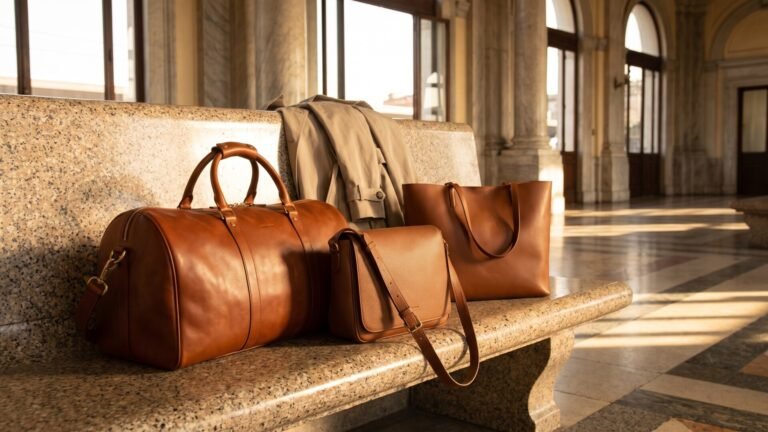
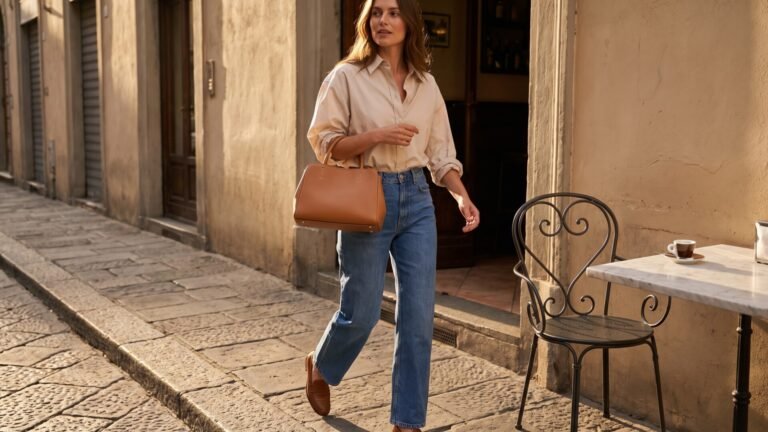
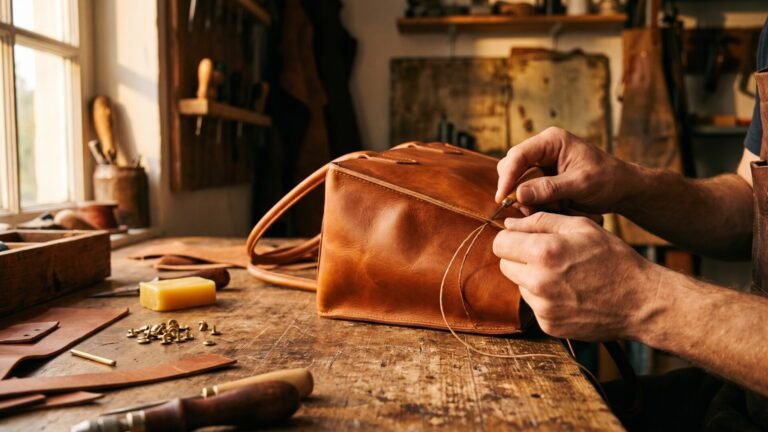
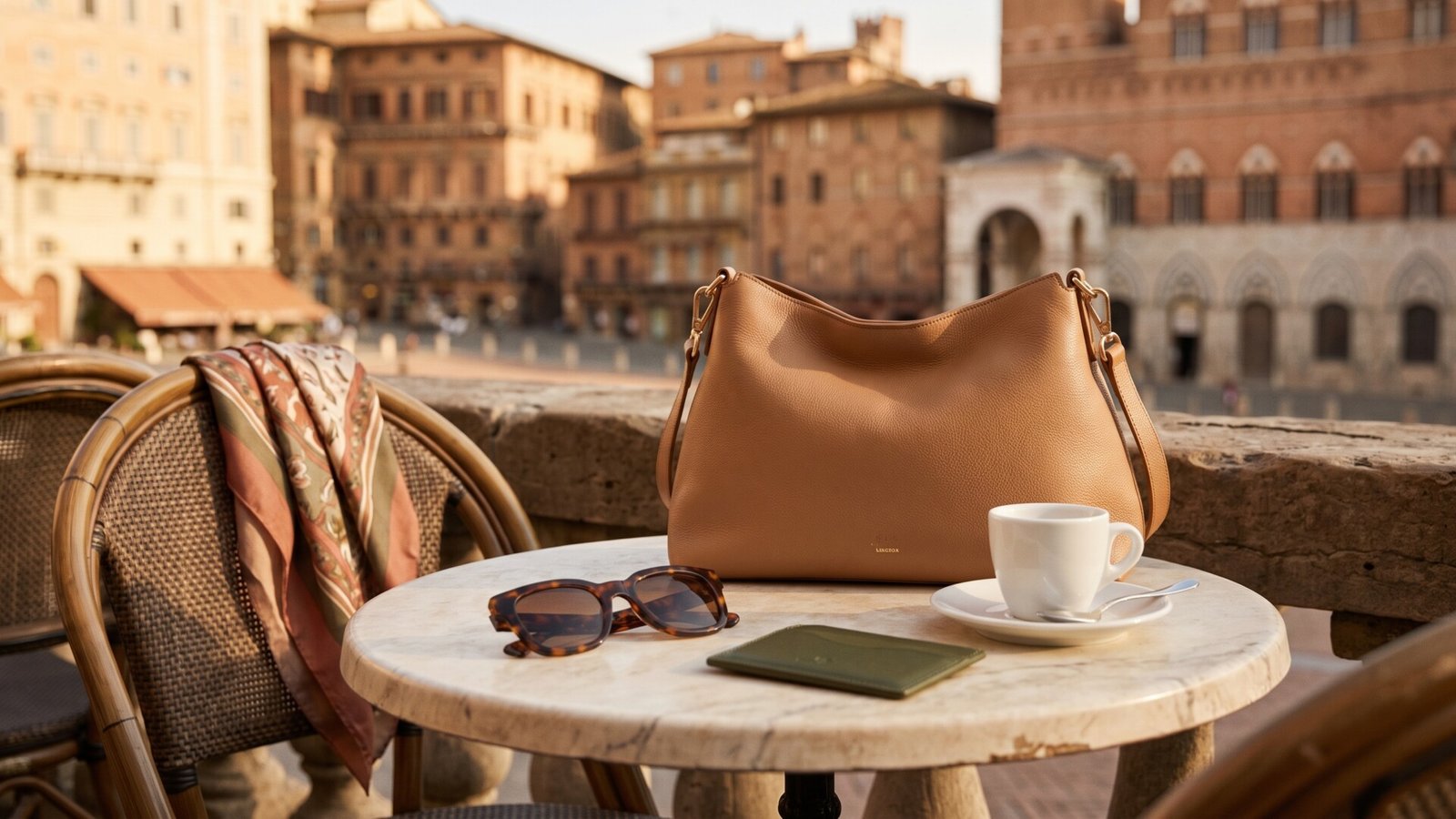
Handbags remain the backbone of Italian accessories. The silhouettes that keep selling are the practical ones: crossbody bags, medium totes, soft shoulder bags and carry-on-friendly travel formats. For a deeper look at how an Italian bag is built to last, see why Italian leather bags last a lifetime.
Brands to compare, from accessible to luxury:
- Coccinelle and Furla for accessible Italian bags.
- Il Bisonte, Campomaggi and The Bridge for leather-focused mid-range bags (see also our guide to underrated Italian handbag brands).
- Bottega Veneta, Prada and Valextra at the luxury end.
What to check before buying: stitching along stress points (handle attachments, strap anchors), whether edges are folded or painted, hardware weight, and whether the interior has the pockets you actually use. Our top Italian handbag brands for 2026 guide ranks the brands in more detail, how to style Italian handbags covers outfits, and best Italian travel bags by price range covers luggage. If you are weighing two famous silhouettes, Fendi Baguette vs Dior Saddle compares them directly.
Italian Shoes: Comfort Is No Longer Optional
Italian footwear has always balanced elegance and craftsmanship, and the current emphasis is on wearability: loafers, low-profile sneakers, refined boots and hybrids that sit between formal and casual. Lighter soles and softer linings are common, because shoes are expected to handle a full day.
- Tod’s for refined everyday footwear.
- Santoni for elevated craftsmanship.
- Salvatore Ferragamo for modern classic silhouettes.
- Diadora Heritage for an Italian sportswear crossover.
- Brunello Cucinelli at the luxury end.
What to check: leather lining (it affects comfort and breathability), whether the sole can be replaced by a cobbler, and how the shoe is constructed. The right shoe is the one you can walk in all day, so try on late in the day when feet are at their largest.
Italian Watches: Design First, With an Honest Look at Origin
Italian watches tend to compete on design and identity rather than technical complications. One caveat matters for buyers: several famous Italian names, including Panerai and Bulgari, have Italian heritage but are now produced in Switzerland. If “made in Italy” is important to you, check the watch’s stated origin and movement before buying, because case, assembly and movement can all come from different places.
| Brand | Italian link | Worth knowing |
|---|---|---|
| Panerai | Italian heritage (Florence) | Now produced in Switzerland |
| Bulgari | Italian heritage (Rome) | Now produced in Switzerland |
| Unimatic | Founded 2015, Milan workshop | Minimalist tool watches using Seiko or Sellita movements |
| Anonimo | Florentine brand | Watchmaking has migrated to Switzerland |
| Locman | Founded 1986, Isle of Elba | Cases made in Italy; movements from Japan |
| Gucci and Ferragamo | Fashion houses | Fashion-driven designs |
For the full list and what each brand is like to wear, read Italian designer watches you need to know.
Italian Sunglasses and Eyewear
Italy is a major eyewear manufacturing country, with much of the industry concentrated in the Veneto region. Persol, for example, was founded in Turin in 1917 by Giuseppe Ratti, is now part of the Luxottica group, and makes plastic frames in Italy from cellulose acetate. Oversized novelty frames have faded, while rectangles, soft squares, refined aviators and subtle cat-eye shapes remain reliable.
- Persol for long-standing acetate craftsmanship.
- Retrosuperfuture for a more modern, design-led take.
- Gucci and Prada for fashion-forward frames.
What to check: how the hinges feel, whether the frame sits level on your face, lens protection against UV, and whether the arms are comfortable behind the ears.
Italian Belts: Small Detail, Big Impact
Belts are underrated. A good Italian belt starts with leather quality, clean edges, a solid buckle and proportions that feel deliberate, with little or no logo. Slim, versatile widths suit jeans, tailored trousers and casual suits; our guide to affordable Italian designer belts for business attire covers that use. Brands to look at include Orciani (founded in Fano in 1979, with belts still its core product), Anderson’s (founded in Parma in 1966), Il Bisonte and Santoni.
Italian Scarves and Wraps: Texture Over Flash
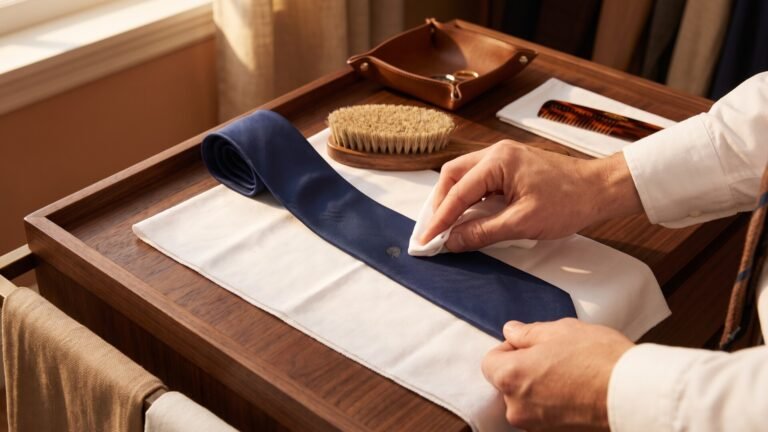
Scarves add depth to an outfit and are especially useful in transitional seasons. The emphasis is on texture, fibre and drape: wool, cashmere blends, silk-wool mixes and light linen. Makers to look at include Faliero Sarti (a Prato woollen mill founded in 1949, which launched its scarf collection in 2000), Loro Piana, Brunello Cucinelli and Missoni for controlled pattern. For silk pieces, our guide to cleaning and caring for a silk Italian tie applies equally to silk scarves.
Italian Jewelry: Everyday Elegance
Italian jewelry is known for expressive design, but the pieces that suit daily wear are slim chains, textured gold, sculptural silver and small signature details.
- Bulgari for bold, recognisable design.
- Pomellato for modern, colourful pieces.
- Marco Bicego for organic, hand-worked textures.
- Gucci for expressive silver pieces.
What to check: hallmarks and metal purity stamps, clasp security, and whether the piece can be resized or repaired. For gem-set pieces you plan to wear daily, also check how hard the stone is; this gemstone hardness scale explainer shows which stones cope with everyday knocks.
Small Italian Leather Goods
Wallets, cardholders, passport holders and key cases handle constant use, so leather quality and edge finishing matter. Slim cardholders and compact zip wallets have largely replaced bulky bifolds. Strong names include Valextra, Il Bisonte, Bottega Veneta and Coccinelle. If the leather is a Prada Saffiano, our guide to removing ink stains from Saffiano explains how to look after it.
Italian Hats and Headwear
Headwear is a niche category, strongest in summer and travel. Borsalino, founded in Alessandria in 1857, is the best-known Italian hat maker, known for felt hats. Look for proportion and material (felt, straw or fine wool) over logos.
How to Build an Italian Accessories Wardrobe
Rather than buying everything, buy coverage:
- One versatile bag you will use every week
- One comfortable shoe that works with both tailoring and denim
- One daily watch with a clear dial
- One pair of sunglasses in a shape that suits your face
- One quality belt in a neutral colour
- One scarf in a fibre you enjoy wearing
- One refined small leather item
Buying Tips: What to Check Before You Pay
- Origin: “Made in Italy” is a labelling claim that applies per product, not necessarily to a whole brand. Check the label or product page.
- Materials: look for specific descriptions (leather type, fibre, metal) rather than generic wording.
- Repairability: choose pieces that a cobbler, leather workshop or jeweller can service.
- Prices: they change by market and season, so compare the same item on the brand’s site and at an authorised retailer.
- Authenticity: buy from the brand or authorised retailers, and keep receipts and documentation.
Frequently Asked Questions About Italian Accessories
What are the best Italian accessories to buy first?
A well-made bag, a comfortable pair of shoes and a quality belt cover most daily needs. Add small leather goods and a scarf next.
Are Italian watches made in Italy?
Not always. Panerai and Bulgari have Italian heritage but are now produced in Switzerland, while smaller makers such as Unimatic assemble in Italy using Japanese or Swiss movements. Check each watch’s stated origin.
Is Persol an Italian brand?
Yes. Persol was founded in Turin in 1917 and makes its plastic frames in Italy, though it is now owned by the Luxottica group.
What should I check on an Italian leather belt?
Look at the leather quality, edge finishing, buckle weight and stitching, and choose a width that works with your trousers.
How can I be sure an accessory is really made in Italy?
Check the product label and the brand’s product page, and buy from authorised retailers. Origin applies per product, not to a whole brand.
Final Thoughts
The Italian accessories worth owning in 2026 are not the loudest. They are well-made, comfortable to use and easy to wear with what you already own. Start with one piece per category, check origin and construction, and use the linked guides to go deeper on the categories that matter to you.