Campomaggi: The Complete Guide to Italy’s Vintage Leather Brand
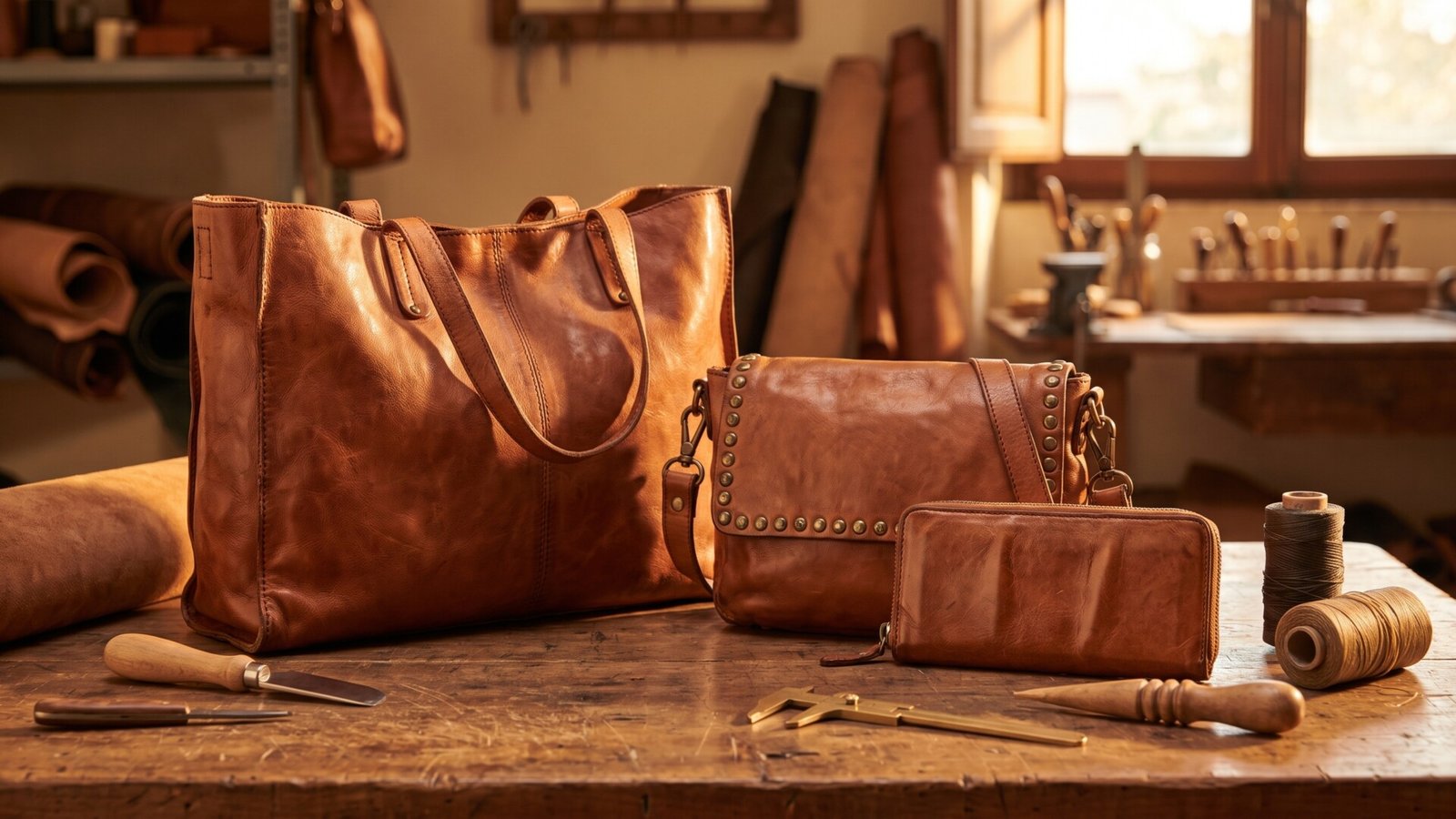
Most luxury leather is sold on the promise that it will stay unblemished. Campomaggi sells the opposite: bags that arrive with a worn, oiled, slightly rough look and are meant to darken and soften from there. If you are weighing it against smoother Italian names, the useful questions are what the finish actually is, how the bags are built and cared for, and which buyer it suits.
This guide covers the brand’s background, its signature look, what to check when you buy, how it compares with Il Bisonte and The Bridge, and how to look after the leather. It sits within our wider guide to Italian designer brands.
[Explore Campomaggi’s most durable leather designs]
Campomaggi Brand History
Founder and Origins
According to a profile on The Brander, Marco Campomaggi started the brand in 1980, the son of a sculptor, and is said to have stitched his first bags from old saddle leather while still at school, decorating them with metal studs. The same profile places the company in San Carlo di Cesena, in Emilia-Romagna. This is a single secondary source; the brand’s own site was not reachable when this article was updated, so treat the dates and the origin story as the brand’s narrative rather than independently confirmed history.
The brand describes its attitude with the slogan “Il tempo non toglie, ma dà” (roughly, “time does not take away, it gives”). That idea explains the whole range: the finish is designed to look lived-in, and the brand frames ageing as a feature.
Production and Materials
Campomaggi presents its bags as Italian-made and finished with vegetable oils rather than heavy surface coatings, per the profile above. We have not been able to verify the tanning method, the leather grade or which parts of production happen in which workshop, so we avoid repeating claims such as “full-grain throughout” or “entirely hand-made”. If those details matter to you, check the product page or ask the retailer before buying. Italian labelling rules apply per product, so confirm the “Made in Italy” label on the specific bag you are considering.
For background on how vegetable-tanned hides are produced, see our explainer on how Italian leather is made.
The Campomaggi Look
The signature is a matte, oiled, slightly mottled leather, usually in brown, olive or black, with visible stitching, solid-looking buckles and, on many models, studs or rivets. Because a finish like this is applied to natural hides, individual bags will differ in shade and surface marking; that variation is part of the appeal and not a reason to return a bag.
| Element | What to expect |
|---|---|
| Finish | Matte, oiled, worn-in appearance from new; marks blend into the surface over time |
| Colours | Mostly earthy: browns, olive, black, with occasional seasonal colours |
| Hardware | Studs, rivets and buckles in darkened or antique-looking metal |
| Branding | Understated; logos are small or absent on many styles |
| Shapes | Fairly consistent from year to year: crossbodies, totes, shoulder bags, backpacks, small leather goods |
Bags and Accessories by Category
Campomaggi’s catalogue changes from season to season, so rather than listing individual models that may be discontinued, here is how the main categories differ in practice. Browse current styles at your retailer of choice.
Crossbody and Small Bags
The easiest entry point for most buyers. Look for adjustable straps, whether the closure is a flap, zip or buckle, and how many external pockets you actually want. Small bags show the distressed finish best because there is less hardware competing with the leather.
Totes and Work Bags
Larger bags in this style tend to be heavy because of the leather thickness, so check the product weight if you carry a laptop daily. Look at handle attachment points and whether the interior has a zipped pocket.
Shoulder and Hobo Bags
Softer, slouchier shapes suit the relaxed finish well. Our guide to Italian hobo bags explains how the silhouette wears and what to check on strap length.
Wallets, Cardholders and Belts
Small leather goods are the lowest-commitment way to see the finish in person. Compare card-slot count and closure type, and note that darker oiled leathers can transfer slight colour onto light fabric when new.
Pricing
Prices vary by retailer, season and market, and we have not been able to confirm current figures from the brand, so we do not list specific amounts. As a general positioning point, Campomaggi sits below the major fashion houses and in the same broad territory as other Italian leather-focused labels. Compare the same style across two or three retailers, and check currency, import duties and return terms before committing.
A Simple Cost-Per-Wear Check
A rough way to judge value is to divide the price by the number of times you expect to carry the bag. As a hypothetical example, a bag costing $600 and carried 150 times a year for five years works out to under $1 per use; the same arithmetic applies to any bag. This is an illustration, not a statement of Campomaggi’s actual prices or lifespan, and longevity depends on how you use and care for the leather.
Campomaggi vs Other Italian Leather Brands
| Brand | Look | Best for |
|---|---|---|
| Campomaggi | Rugged, oiled, worn-in | Buyers who want character from day one |
| Il Bisonte | Smoother, vegetable-tanned, softer lines | A natural patina with a cleaner look |
| The Bridge | More structured, classic tailoring-style bags | Work and travel bags with a refined shape |
| Guidi | Dark, treated, avant-garde leather | Buyers who want an unconventional look |
| Tod’s | Polished, casual-luxe | Everyday elegance |
We do not claim any of these brands is objectively better. Campomaggi suits people who like a rustic look; The Bridge suits those who want more structure. For a wider comparison, read our guide to the top Italian leather brands.
Who Should Buy Campomaggi?
A Good Fit
- Buyers who like a worn-in look and do not want to worry about scuffs
- Daily users who want a bag that does not look damaged when it picks up marks
- Gift shoppers looking at small leather goods
Probably Not a Fit
- Minimalists who prefer smooth, uniform leather
- Logo seekers, since the branding is understated
- Anyone who needs a light bag, as thick leather adds weight
Where to Buy Campomaggi
Options include the brand’s own channels and a range of multi-brand retailers and fashion marketplaces, which carry Campomaggi at varying levels of depth. Availability and shipping change, so check stock directly. For pre-owned pieces, look at established resale platforms with authentication policies and ask for clear photos of stitching, hardware and the interior label. We cannot offer an authentication checklist that proves a bag is genuine; buying from a platform with a verification process and keeping documentation is the safer route.
[Shop Campomaggi Crossbody Bags]
[Shop Campomaggi Totes]
[Shop Campomaggi Accessories]
[Shop Campomaggi Men’s Collection]
Care Guide for Distressed Leather
General guidance for oiled, distressed leather; always test on an inconspicuous area first, and take valuable or damaged pieces to a professional. Our broader guide to caring for Italian leather goods covers the basics.
- Go light on conditioner. Oiled leather already holds a lot of oil; see how often to condition high-end Italian leather in our conditioning guide.
- Do not try to remove marks. Light scuffs usually blend in with handling.
- If it gets wet, blot with a clean cloth and dry at room temperature away from heat. Water spots can leave marks on oiled leather, so dry it evenly.
- Store it stuffed with tissue or a soft cloth in a dust bag to keep its shape.
Are Campomaggi Bags Worth It?
That depends on what you want. If you like the oiled, rustic look, the leather is built to hide everyday wear, which makes it practical. If you want crisp structure or a recognisable logo, other brands will fit better. We have not tested these bags, so we cannot make claims about lifespan; judge construction yourself by checking stitching density, edge finishing, handle attachment and zip quality in person or in detailed product photos.
Frequently Asked Questions About Campomaggi
Is Campomaggi a luxury brand?
It is an Italian leather-goods label positioned below the major fashion houses and above mass-market brands. Whether that counts as luxury depends on your definition.
Where is Campomaggi from?
One profile places the company in San Carlo di Cesena, Emilia-Romagna, and says Marco Campomaggi founded it in 1980. Confirm details with the brand.
Why do Campomaggi bags look worn?
The worn, oiled look is a deliberate design choice. The brand’s slogan, “Il tempo non toglie, ma dà”, reflects the idea that time adds character to leather.
Is Campomaggi leather full-grain or vegetable-tanned?
We could not verify the leather grade or tanning method from the brand directly. Check the product description for the specific bag before buying.
Is Campomaggi better than The Bridge?
They suit different tastes. Campomaggi leans rustic and relaxed, while The Bridge leans toward more structured, classic bags.
How do I care for a Campomaggi bag?
Condition sparingly, blot water and dry away from heat, store it stuffed in a dust bag, and test any product on a hidden area first.
Which Campomaggi style should I buy first?
A crossbody or small bag in a neutral colour is an easy starting point; a wallet or cardholder is a cheaper way to try the finish.
Verdict
Campomaggi is a good option for buyers who want rugged, low-maintenance-looking leather rather than a polished finish. Check the details that matter to you, such as leather description, weight and construction, before you buy, and compare it with the other leading Italian leather brands first.