Malo: The Italian Cashmere Brand Guide for Luxury Knitwear Enthusiasts
Malo is a Florence-born cashmere house, founded in 1972, that has spent five decades building its name on knitwear rather than logos. It is less recognized than Loro Piana or Brunello Cucinelli, which is exactly why cashmere buyers who have already tried the big names often look at it next. This guide covers Malo’s history and ownership, how it makes its knitwear, which pieces to buy first, how it compares with Falconeri, Fedeli, Brunello Cucinelli and Loro Piana, and who it does and does not suit.
Malo sits inside our wider Italian cashmere guide, which is part of the Italian designer clothing collection. If you are still deciding which brands to shortlist, read Best Italian Cashmere Brands alongside this page. Prices change by season and market, so we give no fixed price list here; check current figures with Malo or an authorized retailer.
Malo at a Glance
| Detail | What to know |
|---|---|
| Founded | 1972, Florence (originally Malo Tricot) |
| Founders | Brothers Alfredo and Giacomo Canessa, per public company profiles |
| Base | Campi Bisenzio, near Florence, where production began in 1973; a second atelier is in Borgonovo Val Tidone (Piacenza) |
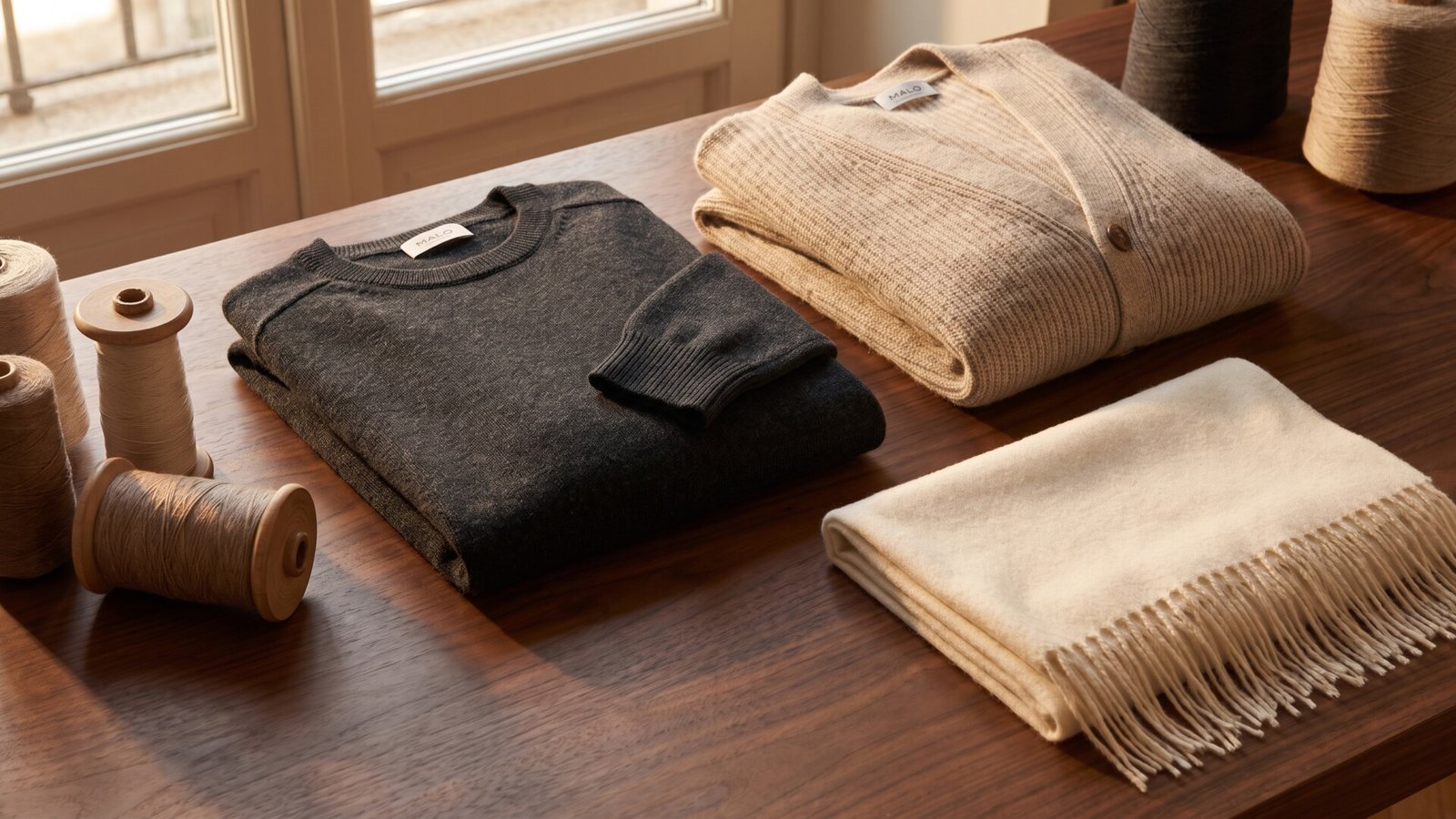
| Core products | Cashmere sweaters, cardigans, turtlenecks, scarves, accessories and outerwear |
| Fashion debut | New York Fashion Week, 2006 |
| Current owner | US investment fund Glickman Capital, which acquired the brand in 2025 |
| Key competitors | Loro Piana, Brunello Cucinelli, Fedeli, Falconeri |
The History of Malo
Founding and Early Years
Malo was founded in 1972 as Malo Tricot. By the brand’s own account, the idea was to take the heavy Scottish cashmere sweater and make it feather-light, Italian and brighter in color. Production moved to Tuscany, and the factory opened in 1973 in Campi Bisenzio near Florence. For context on how Italian knitting differs from the Scottish tradition, see our comparison of Italian and Scottish cashmere.
Growth and Expansion
Public company histories describe the company becoming Malo S.p.A. in 1980, opening a showroom in Milan, and opening a New York subsidiary in 1984. It later bought other knitwear producers, and boutiques opened in cities including New York, Düsseldorf, Paris and Tokyo. Malo presented its first runway show at New York Fashion Week in 2006, and the late fashion editor Anna Piaggi is quoted by the brand as calling it the finest cashmere house in the world, which is the brand’s framing rather than an independent ranking.
Ownership Changes
Malo has changed hands several times. It joined the Itierre (IT Holding) group in 1999, was acquired in 2010 by Evanthe, part of the Exa group, and passed to a private investment fund in 2014; Giacomo Canessa returned to the brand in 2015. In 2025 the US fund Glickman Capital acquired the company, and Michelle Kessler-Sanders joined as CEO. Under the new owner the brand has been relaunched with a new creative direction led by David Lipman, a pre-spring 2026 capsule drawing on the archives, and a return to the US through select Saks Fifth Avenue and Neiman Marcus stores and a global e-commerce site. The brand has said it plans to return to US boutique locations it previously operated.
What this means for buyers: Malo is in a relaunch phase. Expect new collections and more US availability, but also some change in styling compared with older Malo pieces you may find on resale sites.
How Malo Compares: At a Glance
| Brand | Positioning | Best for | Read more |
|---|---|---|---|
| Malo | Knitwear-led, low-logo, Florence base | Buyers who want cashmere craft without branding | This guide |
| Loro Piana | Fibre-focused ultra-luxury, global recognition | Those who want the benchmark for fibre and finish | Loro Piana guide |
| Brunello Cucinelli | Lifestyle brand with muted palette and relaxed tailoring | Buyers building a full wardrobe | Cucinelli guide |
| Fedeli | Understated Italian cashmere | Buyers who prize quiet design | Fedeli guide |
| Falconeri | Accessible Italian cashmere | First-time buyers and value seekers | Falconeri guide |
What Makes Malo Different?
A Knitwear Specialist First
Malo’s identity is built around knitwear. Its catalogue has widened to include outerwear, accessories and other categories, but cashmere remains the center. Because it is not trying to dress a whole life, its range is easier to understand than a full lifestyle house.
Control of the Production Chain
Malo states that it has overseen every stage of production, from fibre selection through spinning, dyeing, knitting and finishing, and that a single handmade knit can take eight to sixteen hours. These are brand claims we have not independently verified, but they match the way Italian knitwear houses typically describe vertical production. Per public profiles, knitwear is produced in the Florence and Piacenza areas, and the cashmere technique originates in Mongolia, with fleece spun and dyed in Italian workshops.
Fibres Beyond Cashmere
The brand’s heritage page lists vicuña, alpaca, baby llama, camel, mohair, silk and Makò cotton alongside cashmere. That matters if you want something other than a plain cashmere sweater: silk blends and lighter-weight knits are useful for spring and for warm indoor settings.
Quiet Styling
Malo does not rely on visible logos. The relaunch emphasizes archive-led design: classic patterns, stitches and silhouettes, with some Fair Isle and hand-embroidered floral styles in the first capsule. The CEO has described the aim as refining what timeless luxury looks like rather than chasing trends.
Why Enthusiasts Often Discover Malo Later
Many buyers start with the best-known names, then look for something less visible. Malo fits that second step because it offers Italian cashmere craft with lower brand recognition, though recognition outside Italy has been limited by its shifting retail footprint.
Malo Cashmere: What to Look For
Without handling a specific garment, no guide can promise how it will feel. When you shop, use these checks that apply to any cashmere sweater, Malo included:
- Fibre content: check the label for 100% cashmere versus a wool, silk or cotton blend, since blends change the feel and the care.
- Ply and weight: a fine single-ply knit is light and drapes; a multi-ply or heavier gauge is warmer and tends to be more durable.
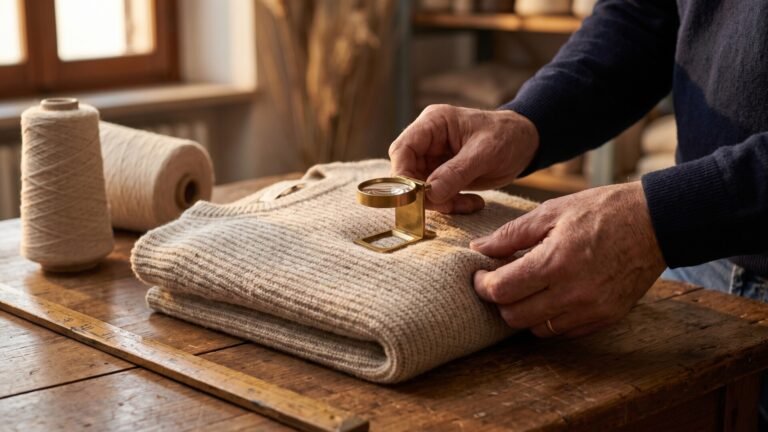
- Seams and finishing: look at the neckline, cuffs and underarms. Neat linking and flat seams point to careful finishing.
- Pilling: all cashmere pills a little at first, especially under the arms and on bag straps. A comb or stone removes it, and it usually settles as loose fibres are shed.
For more on how the fibre becomes a sweater, see How Italian Cashmere Is Made, and for why Italian knitwear costs more than Mongolian-made equivalents, read why Italian cashmere is more expensive than Mongolian cashmere.
Best Malo Products to Buy
Cashmere Crewneck Sweaters
The foundation piece. A crewneck in a neutral shade such as navy, charcoal or camel works under a jacket, over a shirt or on its own. It is the safest first purchase from any cashmere maker. Our guides to men’s and women’s cashmere sweaters compare options across brands.
Cashmere Turtlenecks
Useful for cold weather and layering under tailoring. Check that the neck is soft enough for all-day wear, because stiff ribbing is the most common complaint with turtlenecks.
Cardigans
Versatile between jeans and tailored trousers. The relaunch has featured a sculptural cardigan, so styling is moving beyond the plain classic.
Scarves and Accessories
A cheaper way into the brand than a sweater. Compare with our guide to Italian cashmere scarves before you buy.
Lightweight and Blended Knits
Lighter cashmere and silk blends work for spring and for overheated interiors. Read the fibre label, since blends need slightly different care.
Malo vs Falconeri
Falconeri is positioned as accessible Italian cashmere with a large store network, while Malo is a smaller, more specialized house. Our detailed Falconeri vs Malo comparison covers price and value in depth. In short, Falconeri is the easier first purchase for value-conscious buyers, and Malo suits those who want a heritage knitwear label and are willing to pay more.
Malo vs Brunello Cucinelli
Brunello Cucinelli is a lifestyle brand covering tailoring, casualwear and accessories in a muted palette; Malo is more focused on knitwear. Cucinelli knitwear tends to be relaxed and textured, whereas Malo’s heritage is in lighter, colorful Italian knits. If you want a full wardrobe from one brand, Cucinelli is the more complete answer; if you only want exceptional knitwear, Malo is worth comparing. We compare Cucinelli with Loro Piana in Loro Piana vs Brunello Cucinelli.
Malo vs Loro Piana
Loro Piana is widely regarded as the fibre benchmark among Italian cashmere houses and has far wider recognition. Malo is a smaller alternative with a knitwear-first identity. Price gaps vary by style and season, so compare the specific garments you are considering rather than assuming one brand is cheaper. The comparison table above and our Loro Piana guide help frame the choice.
Malo vs Fedeli
Both are understated, low-logo names. See our Fedeli guide for its background; the practical difference is that Malo is the more knitwear-centered of the two in its identity.
Who Should Buy Malo?
- Cashmere enthusiasts: buyers who care about knit construction and yarn and already know the big names.
- Luxury minimalists: buyers who prefer understated design with no visible branding.
- Heritage-minded buyers: those who value a Florence-based house with a fifty-year history.
Who Should Not Buy Malo?
Logo-oriented buyers: Malo has no prominent branding, so it will not signal status at a glance. Trend followers: the stated focus is timeless knitwear rather than seasonal fashion. Buyers who need store access: Malo’s US retail presence is still being rebuilt, so trying on in person may be harder than for Falconeri or Cucinelli.
Is Malo Worth the Money?
What You Pay For
You are paying for Italian production, yarn selection and finishing rather than for advertising, which is the brand’s own pitch. You are also paying a premium over mass-market cashmere, so judge each sweater by fibre content, knit density and finishing rather than by the label.
Cost Per Wear
As a purely illustrative example, a $700 sweater worn 40 times a year for eight years costs about $2.20 per wear, while a $200 sweater that pills badly and is retired after two seasons of 20 wears costs about $5. These are hypothetical numbers to show the arithmetic, not Malo price quotes, and they only hold if the garment stays in good shape.
Resale
Malo pieces appear on resale platforms, but there is no reliable data to support an expectation of value retention, and the relaunch under a new owner may change demand. Treat a sweater as clothing to wear rather than as an investment.
Caring for Malo Cashmere
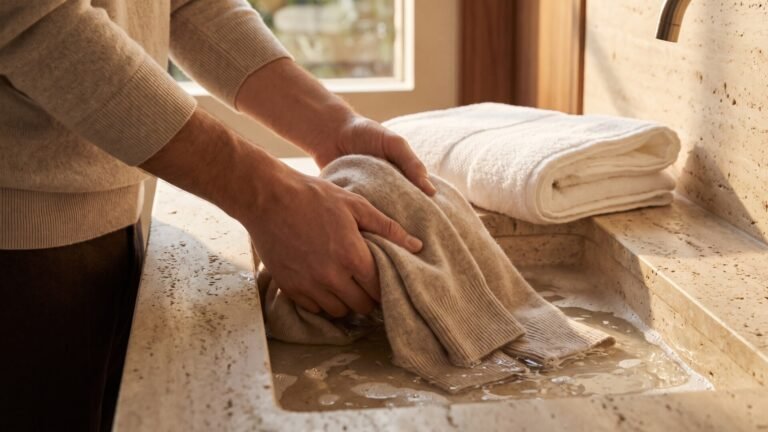
Follow the care label first. As general cashmere practice, wash rarely, use a cool hand wash or a wool cycle with a gentle wool detergent, press water out in a towel instead of wringing, and dry flat away from heat. Fold rather than hang, and store with moth protection. See our wider Italian knitwear guide for more.
How Malo Fits Into the Italian Cashmere Landscape
Malo sits between accessible names like Falconeri and top-tier houses like Loro Piana in terms of reputation, though its relaunch under new ownership may shift that position. It shares the quiet-luxury values of Italian luxury basics and belongs in any serious shortlist of Italian knitwear brands. Together with the other pages in the cluster, it helps you choose between ultra-luxury, mid-luxury and accessible options.
Frequently Asked Questions About Malo
Is Malo a luxury brand?
Yes. Malo is a Florence-founded Italian luxury knitwear house, established in 1972 and known for cashmere.
Where is Malo made?
Public company profiles place Malo’s knitwear production in the Florence area (Campi Bisenzio) and in Piacenza province, with Italian spinning and dyeing. Check the label of any specific garment for its stated origin.
Who owns Malo?
The US investment fund Glickman Capital acquired Malo in 2025. Earlier owners included the Exa group and a private investment fund.
Is Malo better than Falconeri?
They serve different buyers. Falconeri is positioned as accessible Italian cashmere, while Malo is a smaller, more premium knitwear label. Compare specific garments by fibre content and construction.
How does Malo compare to Loro Piana?
Loro Piana is the better-known fibre benchmark with wider recognition. Malo is a quieter alternative focused on knitwear. Compare actual garments and prices rather than relying on reputation alone.
Why is Malo less famous than other luxury brands?
Malo does little logo-led marketing and its international retail footprint has shifted over the years, including a gap in US boutiques before the 2025 relaunch.
Where can I buy Malo in the US?
Following the relaunch, Malo is available through select Saks Fifth Avenue and Neiman Marcus stores and its global e-commerce site, malo.com. Availability may change.
What is the best Malo product to buy first?
A cashmere crewneck in a neutral color such as navy, charcoal or camel is the most versatile starting point.
Final Verdict
Strengths: a knitwear-first identity, a fifty-year Florence heritage, quiet styling and a wide fibre palette. Weaknesses: lower brand recognition, a limited retail footprint outside Italy and a brand in transition after new ownership. Who will like it: cashmere enthusiasts, luxury minimalists and heritage-minded buyers who want to look beyond Loro Piana and Cucinelli.
Conclusion
Malo is a brand for people who want cashmere without logos. Check the fibre label, compare the construction with Falconeri, Fedeli, Cucinelli and Loro Piana, and see current prices before you buy. If it is in your budget, a neutral crewneck is the best way to find out whether the house suits you.
Explore more Italian luxury: Italian Designer Clothing | Italian Cashmere | Best Italian Cashmere Brands | Falconeri vs Malo | How Italian Cashmere Is Made | Italian Cashmere vs Scottish Cashmere | Best Italian Cashmere Sweaters for Men | Best Italian Cashmere Sweaters for Women