How Giorgio Armani Changed Italian Fashion
When you think of Italian fashion, your mind probably drifts to sleek lines, impeccable tailoring, and the quiet confidence of Milan. Few designers shaped that image as profoundly as Giorgio Armani. His influence isn’t just about clothes — it’s about a shift in attitude, silhouette, and Italian identity. From the mid-1970s until his death in September 2025, Armani changed not just wardrobes, but the way Italian fashion is perceived around the world.
Understanding Giorgio Armani’s legacy means looking at how one designer bridged tradition and modernity, and why his work still resonates in 2026. It’s a story about soft tailoring, a lifestyle empire, and the question every Armani buyer now asks: what happens to the house after its founder?
Giorgio Armani at a Glance
| Question | Answer |
|---|---|
| Who created Armani? | Giorgio Armani, with business partner Sergio Galeotti |
| Born | 11 July 1934, Piacenza, Italy |
| Company founded | 24 July 1975 in Milan (first men’s ready-to-wear collection shown October 1975) |
| Is Armani an Italian brand? | Yes — founded and headquartered in Milan, privately held |
| Died | 4 September 2025, Milan, aged 91 |
| Who leads design now? | The house’s bylaws set out how menswear and womenswear style directors are appointed; Pantaleo (Leo) Dell’Orco, Armani’s long-time collaborator, handles menswear and Silvana Armani, his niece, heads womenswear |
The Early Days: Milan, Vision, and Risk
Giorgio Armani was born in 1934 in Piacenza, Italy, and his journey into fashion was far from linear. He grew up through the war years, began studying medicine at the University of Milan, and left in 1953 to join the army. After his service he took a job as a window dresser and sales clerk at the Milan department store La Rinascente, which led into visual merchandising and buying.
He then designed menswear for Nino Cerruti and freelanced for several manufacturers. These years were formative: he absorbed Italian craftsmanship, learned fabrics intimately, and began developing the minimalist, fluid silhouettes that would define his brand.
In 1973 Armani and Sergio Galeotti opened a design office in Milan, and on 24 July 1975 they founded Giorgio Armani S.p.A. At the time, Italian fashion was dominated by structured, formal garments, often rigid and ostentatious. Armani’s approach was radically different: comfort, natural fit, and understated elegance.
Revolutionizing the Suit: Power Without Intimidation
Perhaps the most iconic part of Giorgio Armani’s legacy is his reimagining of the suit. Before Armani, men’s suits were typically stiff, heavily padded, and formal. Armani introduced a soft tailoring approach: unstructured shoulders, natural drape, and lighter fabrics that allowed movement without sacrificing elegance. Technically, the change came from removing canvas and padding and relocating the buttoning point and proportions so the jacket followed the body rather than shaping it.
This “power without intimidation” style resonated beyond fashion insiders. Executives and public figures embraced it because it projected authority with ease. Armani suits were fluid, modern, and subtly confident.
His innovations also influenced women’s fashion. Armani brought tailored women’s suits in soft fabrics into professional dressing, pairing femininity with authority without copying male-dominated styles.
Armani and the Rise of Lifestyle Fashion
Armani didn’t just design clothes; he built a lifestyle. From the 1980s the brand expanded beyond suits to casual wear, sportswear, and accessories. Italian fashion was known for luxury, but Armani showed that luxury could be integrated into everyday life.
Key innovations included:
- Giorgio Armani casual wear – soft sweaters, unlined jackets, and relaxed trousers that maintained elegance without formality.
- Armani accessories – shoes, belts, and bags that extended the ethos of the brand into lifestyle staples.
- Home collections – Armani Casa brought the same design language into interiors.
Dressing the Stars: Armani and Hollywood
A crucial element of Giorgio Armani’s legacy is his relationship with cinema. For American Gigolo (1980) he worked on the costumes for Richard Gere’s character, Julian Kaye, and the film cemented the Armani jacket as a symbol of sleek modernity — soft shoulders, muted tones, relaxed elegance. He later designed costumes for more than 100 films, including The Untouchables (1987).
His tailored womenswear and red-carpet gowns extended that visibility, and the screen presence helped put Italian fashion in front of a global audience.
Building an Empire: Which Armani Line Is Which?
Armani’s impact isn’t limited to one label. Over decades he built a layered group. If you are deciding what to buy, the differences matter:
| Line | Positioning | Best for |
|---|---|---|
| Giorgio Armani | The flagship ready-to-wear line: refined tailoring, fine fabrics | Investment suits, tailoring and evening |
| Armani Privé | The couture line, shown in Paris | Special-occasion, couture clients |
| Emporio Armani | Younger, more accessible designer line (introduced early 1980s) | Contemporary wardrobe pieces |
| Armani Exchange | Urban, casual line (early 1990s) | Everyday casualwear |
| Armani Casa | Furniture, textiles and home | Interiors |
Not sure where the main line ends and Emporio begins? Read Giorgio Armani vs Emporio Armani: What’s the Difference? and Is Armani Collezioni considered high fashion? For pre-owned couture, our guide on buying used Armani Privé online covers the risks. Treat the table as a simplified guide: line positioning and availability change, so confirm details with the brand.
The Signature Aesthetic: Minimalism Meets Elegance
What defines Armani style is a signature aesthetic that blends minimalism with luxury. Key characteristics include:
- Neutral color palettes – the “greige” of soft greys, blues, creams, and blacks, emphasizing versatility.
- Clean lines – jackets, trousers, and dresses favor clarity over ornamentation.
- Fluid fabrics – silk, cashmere, and fine wool that drape naturally.
- Subtle detailing – pockets, buttons, and seams that are functional but carefully considered.
For a deeper look at the minimalism behind it, read Why Giorgio Armani Became the King of Minimalism; the same restraint links to the wider quiet luxury movement.
Influence on Italian Fashion History
Armani shifted Italian fashion from formality and flamboyance toward restraint, elegance, and global appeal. This had ripple effects:
- Other Italian designers began exploring soft tailoring and understated luxury.
- Italian houses adopted more wearable, lifestyle-oriented collections.
- Globally, Milan became synonymous with modern elegance, not just haute couture.
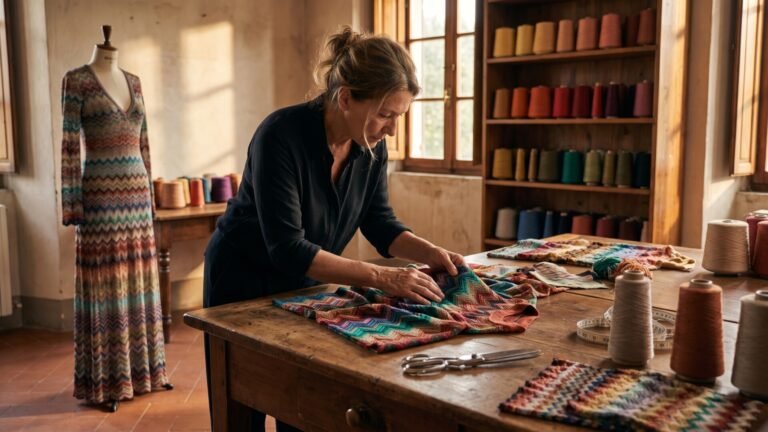
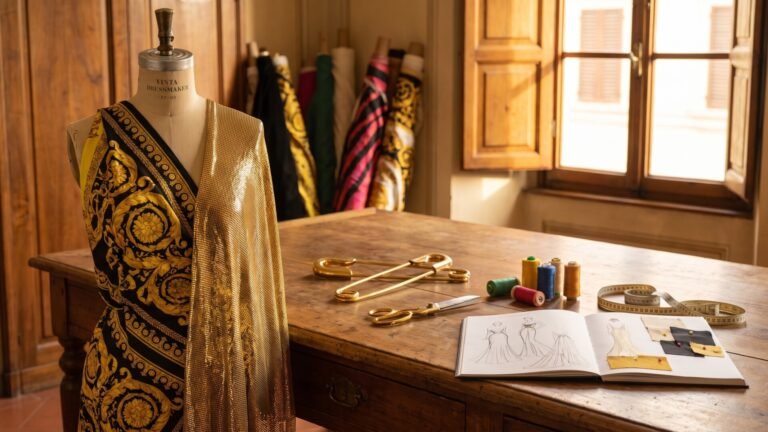
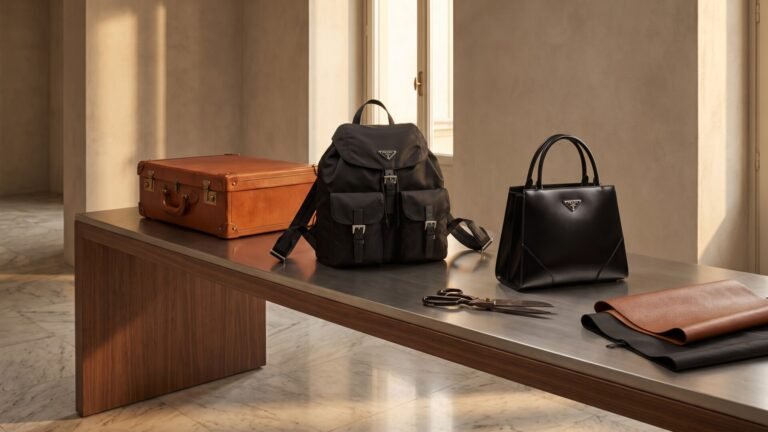
To see how his peers differed, compare him with Valentino Garavani (couture romance), Gianfranco Ferré (architectural construction), Gianni Versace (bold glamour), Prada (intellectual minimalism) and Angela Missoni (colour and knit).
Giorgio Armani and Sustainability
Armani has spoken in recent years about slower fashion and quality. The focus on quality materials and longevity aligns with sustainable principles, though the group does not make every claim verifiable here:
- Good fabrics can last decades when cared for.
- Timeless design reduces the need for frequent replacement.
- Fewer, better pieces mean less waste than fast fashion.
For a brand-by-brand look at who backs this up, see how Italian designers are embracing sustainability.
After Giorgio Armani: The House in 2026
Armani died at his home in Milan on 4 September 2025, aged 91. He had missed his own Milan Fashion Week shows in June 2025 for the first time. The company remains privately held, and a long-planned succession structure took effect:
- Ownership. Under the will published on 12 September 2025, ownership is split between Pantaleo (Leo) Dell’Orco, the Armani Foundation (set up in 2016 as a succession vehicle), niece Silvana Armani and nephew Andrea Camerana; reporting gives Dell’Orco 40%, the foundation 30% and Silvana Armani and Camerana 15% each, after the sales described below.
- Stake sales. The will instructs heirs to sell an initial 15% minority stake within 18 months, with LVMH, EssilorLuxottica and L’Oréal named as priority buyers (or a group of equal standing), and further sales or a public listing in later years.
- Creative direction. Leo Dell’Orco, Armani’s right-hand man for nearly forty years, presented the Giorgio Armani Fall/Winter 2026–27 menswear collection in January 2026 — described as his first solo menswear effort and a tribute reworking house codes with muted palettes, velvet, brushed cashmere and felted wool.
The will asks that the group be run “ethically, with moral integrity and fairness” and keep “an essential, modern, elegant and unostentatious style.” Ownership and leadership details are still evolving; check recent news before relying on them.
Notable Collections and Iconic Pieces
Certain moments define Giorgio Armani’s legacy:
- The soft-shoulder suit (from 1975) – reshaped men’s tailoring and was widely imitated.
- Red-carpet gowns – dresses for screen stars such as Cate Blanchett strengthened his Hollywood link.
- Emporio Armani casual lines – introduced approachable Italian style for younger buyers.
Why Armani Still Matters
In 2026, many brands chase trends. Armani remains relevant because the work emphasizes durable principles:
- Craftsmanship – Italian tailoring and attention to detail remain central.
- Wearability – Clothes designed to move naturally and fit real bodies.
- Recognisable restraint – instantly recognizable but never overbearing.
- Lifestyle integration – fashion, interiors, and accessories form one aesthetic.
How to Buy Armani Today
For those adding Armani to a wardrobe, there are several approaches:
- Signature suits and tailored jackets – the core pieces. Check the fabric label (wool, wool-silk blends) and whether the jacket is half-canvassed or fused, as that affects how it ages.
- Casual ready-to-wear – Emporio Armani pieces that balance style and comfort.
- Accessories – shoes, belts, and bags that carry brand identity at lower entry points.
- Pre-owned and vintage – older Giorgio Armani tailoring can be good value, but buy from reputable sellers and read our guide on how to spot authentic Italian designer pieces. No checklist can prove authenticity on its own.
Prices vary widely by line, season, fabric and market, so check current figures with the brand or authorised retailers before buying.
Frequently Asked Questions About Giorgio Armani
Is Armani an Italian brand?
Yes. Giorgio Armani S.p.A. was founded in Milan in 1975 and is a privately held Italian company. “Made in Italy” labelling applies per product, so check each garment’s label.
Who created Armani?
Giorgio Armani founded the company with his partner Sergio Galeotti in 1975.
Who is the current designer for Armani?
After Giorgio Armani’s death in September 2025, Leo Dell’Orco handles the house’s menswear and Silvana Armani heads womenswear, under the succession structure the founder set up.
Why is Giorgio Armani so famous?
He made the soft-shoulder suit a modern standard, dressed film characters from American Gigolo onward, and built a multi-line lifestyle group estimated at over $2.68 billion in annual revenue according to Fortune.
Which luxury brands offer the most wearable ready-to-wear for everyday life?
Armani is a classic answer for soft tailoring and neutral palettes. For other quiet options, compare Brunello Cucinelli and Loro Piana.
Conclusion
Giorgio Armani was a force of cultural and sartorial change. His approach — soft tailoring, wearable luxury, lifestyle integration — redefined Italian fashion and set a global standard that younger designers still measure themselves against. With its founder gone, the house now has to prove that restraint can outlast the man who made it famous; for anyone building a wardrobe in 2026, the tailoring principles are what endure.