The Sabato De Sarno Effect: How Gucci’s Rosso Ancora Red Defined 2026
When Sabato De Sarno was announced as Gucci’s new creative director in January 2023, I felt a familiar wave of skepticism. Alessandro Michele‘s maximalist, gender-fluid, Renaissance-fair aesthetic had defined Gucci for nearly a decade. His departure left a void the size of the Florentine Duomo. And now, here was a relatively unknown 39-year-old from Valentino—a behind-the-scenes designer, not a “star”—tasked with reinventing one of fashion’s most iconic houses.
Then, in September 2023, the first images emerged. And with them, a color.
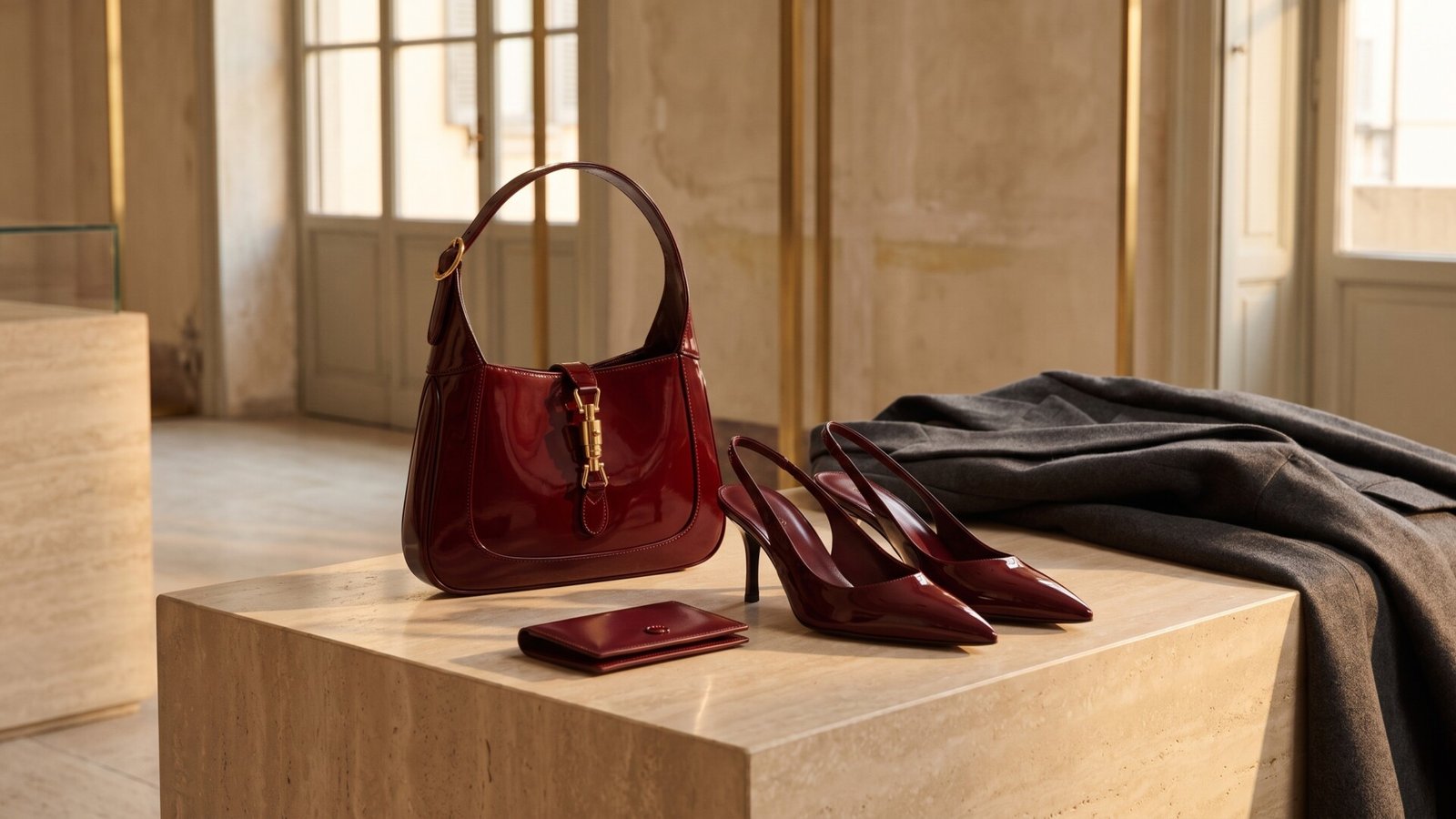
Rosso Ancora. A deep, rich, oxblood red. Not the bright, poppy Valentino red. Not the candy-apple of a sports car. This was something darker, more brooding, more sophisticated. It appeared on gleaming bralettes, on fringed skirts, on leather bags and pumps. It drenched the runway. It felt like a statement, even without words.
Rosso Ancora became the visual heartbeat of De Sarno‘s Gucci. It was his calling card, his manifesto, his way of saying: this is the new Gucci—sensual, restrained, but unforgettable.
In 2026, with De Sarno already departed and the brand under the leadership of Demna, we can finally look back. Was Rosso Ancora merely the color of a failed “quiet luxury” experiment? Or did it succeed in defining an entire era of Gucci, shaping its accessories, its commercial strategy, and its cultural footprint for years to come?
This article explores the Sabato De Sarno effect: the meaning behind the shade, its impact on Gucci’s best-selling bags, the collector frenzy it created, and whether Rosso Ancora will be remembered as a defining moment in the house’s history—or simply a beautiful footnote.
Who Is Sabato De Sarno?
Sabato De Sarno was never meant to be a household name. Born in Cicciano, near Naples, he started his career at Prada in 2005, then moved to Dolce & Gabbana before joining Valentino in 2009. There, he worked closely with Pierpaolo Piccioli, eventually becoming Fashion Director for both men‘s and women’s collections. For thirteen years, he operated behind the scenes—a craftsman, not a celebrity.
When Gucci‘s parent company Kering appointed him in January 2023, the choice echoed the strategy that had worked with Michele: hire an experienced but relatively unknown designer who could build a new universe, not just borrow from the old. “We salute Kering’s decision,” said Bernstein analyst Luca Solca at the time. “Gucci needs courage and an original point of view”.
De Sarno‘s mandate was daunting. Following Michele’s explosive tenure—which saw Gucci’s revenues almost triple—was never going to be easy. But De Sarno had a clear vision: move away from Michele’s ornate maximalism and toward a “quiet sensuality.” His collections were built on precise tailoring, clean lines, and, most memorably, a single, powerful color.
What Is Rosso Ancora Red?
Rosso Ancora is not your average runway red. It is a deep, rich, burgundy-tinged oxblood—a shade that feels both vintage and modern, familiar and new.
The name Ancora is Italian for “again” or “encore,” evoking a sense of longing, of wanting more, of a romance that doesn‘t end. De Sarno chose it to title his first collection and to name the color, hoping to make the world “fall in love with Gucci again.”
The inspiration came from an unexpected source: the elevator of the Savoy Hotel in London, where Guccio Gucci worked as a bellboy before founding the house in Florence. The interior of that elevator was lined in a deep, rich red—a shade De Sarno uncovered while researching the archives. He called it “a marriage between the past and present of the fashion house”.
The color first appeared on the Spring/Summer 2024 runway, taking shape in pumps, embossed leather skirts, and the newly reimagined Jackie Notte bag. It was, as critic Cathy Horyn noted, “so rich, so robust, it’s nearly aromatic—you can practically bring a little bit of Milanese aperitivo hour to your company happy hour”.
Why Gucci Needed a New Signature Color
In luxury fashion, a signature color is nearly as valuable as a logo. Tiffany’s robin’s-egg blue. Hermès’s warm orange. Christian Louboutin’s red sole. These hues have been trademarked, litigated over, and protected for decades because they transcend language and culture.
When De Sarno arrived at Gucci, the house had no such color. Alessandro Michele had popularized vibrant, eclectic palettes, but no single shade was “Gucci.” De Sarno recognized the opportunity. As cultural historian Dr. Regina Lee Blaszczyk notes, “Colours are valuable assets for brands. It is a way for them to differentiate themselves from competition”.
Rosso Ancora was De Sarno’s answer. It was sophisticated enough for quiet luxury, distinctive enough to be instantly recognizable, and versatile enough to appear on everything from handbags to lipstick to home décor.
How Rosso Ancora Took Over Gucci
The Rosso Ancora strategy was not limited to the runway. De Sarno and his team saturated the brand’s entire ecosystem with the color.
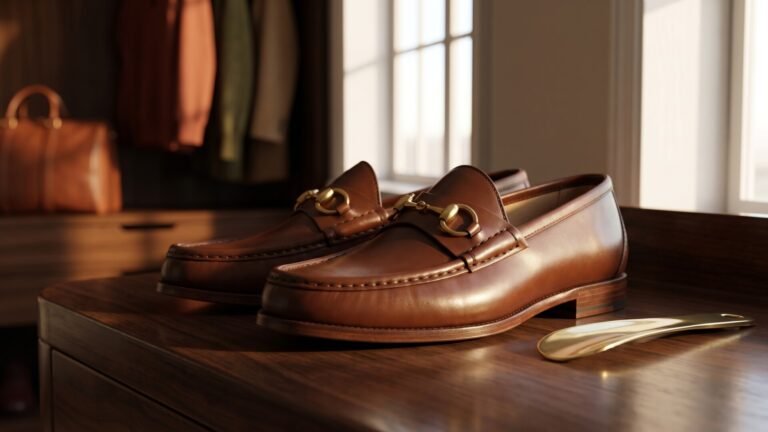
On the runway, it was a throughline in both his debut Spring/Summer 2024 collection and his subsequent shows. In accessories, the color appeared on the reimagined Jackie Notte bag, on Horsebit loafers, on GG Marmont crossbodies, and on small leather goods like wallets and cardholders.
A selection of women‘s handbags and accessories was specifically infused with Gucci Rosso Ancora, marketed as a “signature hue inspired by the elevator interior of the Savoy Hotel where Guccio Gucci worked as a porter”. The Jackie 1961, in particular, became a canvas for the color. Gucci released the classic crescent silhouette in Rosso Ancora patent leather, natural grain leather, and a “new soft silhouette” with matching Web strap.
Beyond products, Gucci deployed Rosso Ancora in store design, packaging, and campaigns. A custom Gucci Ancora Airstream traveled through New York City in early 2024, offering warm beverages to visitors and reinforcing the color‘s omnipresence. The shade was also featured in the Gucci Ancora exhibition at Triennale Milano, described as “the embodiment of an unrepeatable moment”.
Even the beauty line got the message. Gucci released a “Rosso Ancora Matte Lipstick” as part of the Rouge à Lèvres Mat collection, tying makeup directly to the fashion narrative.
Why Rosso Ancora Worked So Well
Despite the commercial challenges De Sarno would later face, Rosso Ancora as a marketing and design concept was a genuine success. Several factors explain why.
First, emotional luxury sells. Consumers are increasingly buying mood, not just products. “Ancora” captured a feeling—longing, nostalgia, a desire for more—that resonated deeply in a post-pandemic world.
Second, quiet luxury needs identity. In an era dominated by beige, gray, and “stealth wealth,” Rosso Ancora offered a way for Gucci to be subdued but not invisible. It was quiet luxury with a spine.
Third, the color perfectly captured a broader shift. Burgundy and oxblood were already trending. Google searches for the shade were at a five-year high, and Lyst reported a 666% increase in interest in burgundy-related fashion. Rosso Ancora rode that wave but gave it a proprietary, Italianate spin.
Finally, it was seasonlessly versatile. Rosso Ancora worked in winter on a cashmere coat and in summer on a patent leather sandal. That versatility made it a sustainable investment for the brand.
The Impact on Gucci‘s Best-Selling Bags
The most tangible expression of the Rosso Ancora effect was on Gucci’s handbags. De Sarno wasted no time in dressing the house‘s most iconic silhouettes in his signature hue.
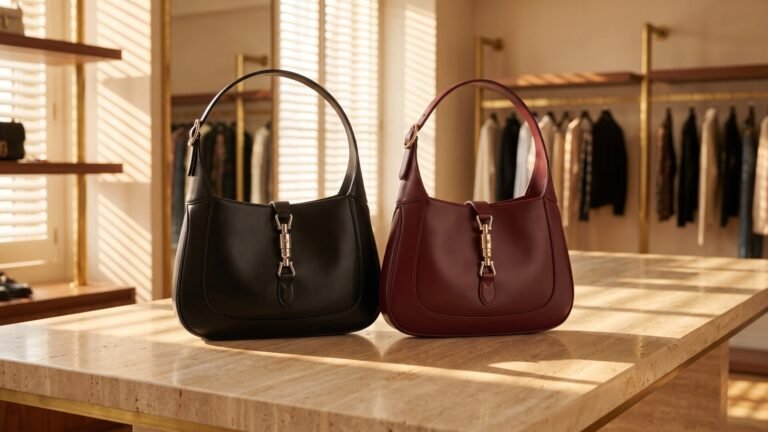
The Jackie 1961 became the poster child for the new color. Available in Rosso Ancora patent leather, natural grain leather, and a soft grainy version, the Jackie was reimagined with new hardware and a detachable Web strap. The large Jackie shoulder bag retailed at approximately €3,700, while the medium version sold at around €3,300.
The Jackie Notte—a mini evening version with a chain strap and glossy patent finish—was De Sarno‘s first original bag for Gucci. Priced at approximately $2,500, it quickly became a celebrity favorite, carried by IU, Park Ji-hoo, and others.
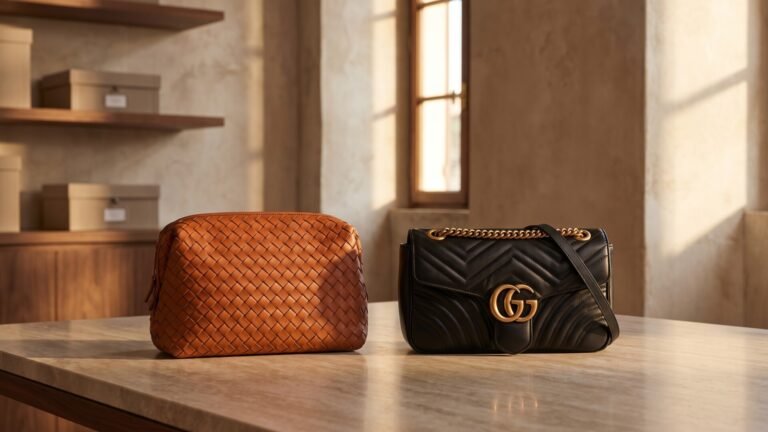
The GG Marmont, Dionysus, and Horsebit styles were also infused with Rosso Ancora. The color appeared on everything from the Totissima Medium Tote (retail: $2,490) to the small Marmont shoulder bag with matelassé chevron leather.
Why Rosso Ancora Editions Became Collectible
For collectors, debut-era pieces from a new creative director are always special. Rosso Ancora bags were the first fruits of a new Gucci—a clean break from the Michele years. That alone gave them historical value.
But the color added another layer. As one fashion insider noted, “Rosso Ancora is more than just the color of the season—it’s a new house signifier for Gucci”. A limited edition Jackie Rosso Ancora from De Sarno‘s debut, featuring platinum-plated hardware, was listed in excellent condition on Vestiaire Collective, with the seller’s price reflecting its collectible status.
The fact that De Sarno‘s tenure was short-lived (ending in February 2025) adds to the allure. Short-lived creative directors often produce the most sought-after archive pieces. When a vision is cut short, every item from that era becomes a document of a road not taken.
Rosso Ancora vs Other Iconic Fashion Colors
Rosso Ancora entered a crowded field of fashion “power colors.” To understand its impact, it helps to compare it to its rivals.
Valentino Red, created by Valentino Garavani, is a bright, poppy, glamorous red—the color of passion and Hollywood royalty. Rosso Ancora is its moodier, more introspective cousin: less Valentino, more Milanese tram interior.
Bottega Veneta Green (the “parakeet green” popularized under Daniel Lee) was a social-media-driven phenomenon. It was playful, punchy, and instantly identifiable. Rosso Ancora is more elegant, more understated, and arguably more timeless.
Hermès Orange is packaging-centric, product-agnostic. It is the color of the box, not the bag itself. Rosso Ancora was integrated into the product, not just the wrapping.
Where Rosso Ancora distinguished itself was in its emotional depth. “Ancora” meant something beyond aesthetics—it was a plea to love Gucci again. That narrative power gave the color staying power beyond its run on the runway.
The Commercial Reality: Did Rosso Ancora Sell?
This is where the story becomes complicated. By most accounts, De Sarno‘s Gucci struggled commercially. By the third quarter of 2024, Gucci’s revenues were down 25%, and they fell another 24% in the fourth quarter. In 2025, sales reportedly dropped 22%, and the brand‘s operating profit fell by nearly 40%.
Critics argued that De Sarno’s “quiet luxury” shift alienated Michele‘s loyal fanbase while failing to attract new customers. “The sense of wonder and novelty, the lifeblood of fashion, was missing,” wrote NSS Magazine.
But did Rosso Ancora itself fail? Or did it simply get caught in a larger luxury downturn? The evidence is mixed. Searches for the color remained high throughout his tenure. Collectors scrambled for limited editions. The bags themselves, when well-designed, sold steadily.
In February 2025, Gucci announced De Sarno‘s departure. The Fall/Winter 2025 show was handed to the in-house design team. The Rosso Ancora era was over.
The Legacy: Defining 2026
So, did Rosso Ancora define 2026?
Yes—but not in the way De Sarno might have hoped.
By the time 2026 arrived, De Sarno was already gone, replaced by the provocative Georgian designer Demna. The brand was pivoting again, this time toward edgy minimalism and disruptive nostalgia. The Gucci Ancora Airstream had been retired. The boutiques were repainted.
But Rosso Ancora lingered. In the resale market, Jackie Notte bags in the signature hue commanded premiums. Burgundy and oxblood remained dominant trends, their momentum traceable directly to De Sarno‘s runway.
More importantly, Rosso Ancora taught the industry a lesson: color can be a logo. In an era of ad blockers and short attention spans, a distinctive, emotionally charged hue can be more memorable than any monogram.
The color also served as a bridge. It connected Guccio Gucci’s Savoy-era origins to a modern, minimalist future. It was romantic without being saccharine, bold without being loud.
Investment and Collector Value in 2026
For luxury investors, De Sarno‘s departure creates a classic opportunity. First-era pieces—especially those tied to a short-lived creative directorship—often become more collectible after the designer leaves.
The best Rosso Ancora buys fall into three categories:
Jackie Notte and Jackie 1961 Rosso Ancora – These debut bags are historically significant and visually distinctive. A Jackie Notte in patent Rosso Ancora with chain strap, new with tags, could be a strong long-term hold.
Limited edition Rosso Ancora accessories – Small leather goods, like the Rosso Ancora cardholder or belt, offer an affordable entry point into the collector market.
Runway-only pieces – The Rosso Ancora garments and accessories that never made it to mass production are the rarest and potentially most valuable.
Risks remain. Gucci‘s resale market has historically been volatile, and color-driven hype can fade. But for collectors who buy early and hold long, De Sarno’s Rosso Ancora may prove to be a wise investment—a beautiful reminder of a brief, beautiful moment when Gucci decided to paint the world red.
Final Verdict: Fashion Moment or Future Icon?
Sabato De Sarno‘s tenure at Gucci will always be viewed as a “what if.” His vision was coherent, his aesthetic pure, but the market was unforgiving. In a different era, his restrained sensuality might have thrived. In the turbulent 2020s, it struggled to find an audience.
But Rosso Ancora was never the problem. It was the solution.
The color remains one of the most beautiful and thoughtfully conceived signatures in recent fashion history. It was romantic, historic, and infinitely wearable. It made Gucci feel both ancient and new. It will be remembered long after the logo-mania of the 2010s has faded.
So, did Rosso Ancora define 2026? Perhaps not commercially. But culturally, aesthetically, and emotionally—yes. It defined a year in which luxury fashion desperately needed meaning, and a single shade of deep, oxblood red delivered it.
The Sabato De Sarno effect was real. It was just cut short.
[Explore Gucci Rosso Ancora collections on the secondary market. Find Jackie Notte bags, limited edition accessories, and investment-worthy pieces at the links throughout this guide.]
[Shop Gucci Rosso Ancora Collection]
[Shop Jackie 1961 in Rosso Ancora]
[Explore Gucci Investment Bags]
[Compare Debut vs Contemporary Gucci]