Gran Sasso: The Italian Luxury Knitwear Guide
A Gran Sasso wool crewneck lists at about $295 at US menswear stores. Loro Piana’s Baby Cashmere Classic Crewneck is $1,900 on its US site, and its Gift of Kings merino crewneck $2,900. The gap buys you something real: Loro Piana’s yarn development is genuinely exceptional and the finishing is a notch finer. But it does not buy you six or ten times the sweater. What it buys, mostly, is the name on the label and the certainty that comes with it.
That is the honest starting point for Gran Sasso. It is a serious Italian knitwear maker that sits in a sweet spot most shoppers never quite locate: above the accessible premium labels, below the ultra-luxury houses, making clothes that are quietly excellent rather than loudly expensive. This guide is part of our Italian designer brands guide and our wider Italian knitwear guide.
A Knitwear Specialist, Not a Fashion House
| Detail | What to know |
|---|---|
| Founded | 1952, by the four Di Stefano brothers (Nello, Eraldo, Alceo and Francesco) |
| Base | Sant’Egidio alla Vibrata, Abruzzo, central Italy |
| Ownership | Family-run, now in its second and third generations |
| Scale | About 400 employees; turnover reported above €45 million; sold in 40+ countries |
| Fibers | Merino and other wools, cashmere, wool-cashmere blends, cotton, linen and silk |
| Typical price (Nov 2026) | Wool knits and polos about $295-$495 at US stores; wool-cashmere crewnecks about $220 in Europe |
The important word is knitwear. Not "luxury lifestyle brand," not "ready-to-wear with a knitwear category." Gran Sasso makes sweaters, cardigans, polos and knitted outerwear, designed, sampled and produced at its own headquarters, and it has spent seven decades doing the same thing well.
Why does specialization matter? Because knitwear is a craft with a long learning curve, and the skills do not transfer from other garment categories. Selecting yarn is its own discipline: knowing how a cashmere lot will behave after washing, how a merino will hold its shape through a season, how cotton drapes against a silk blend. Then there is gauge (stitches per inch, which determines how fine or chunky a knit is), panel shaping, seam finishing and the balance of the ribbing at cuffs and hems. A label that makes sweaters, coats and handbags spreads that expertise across categories. A specialist concentrates it.
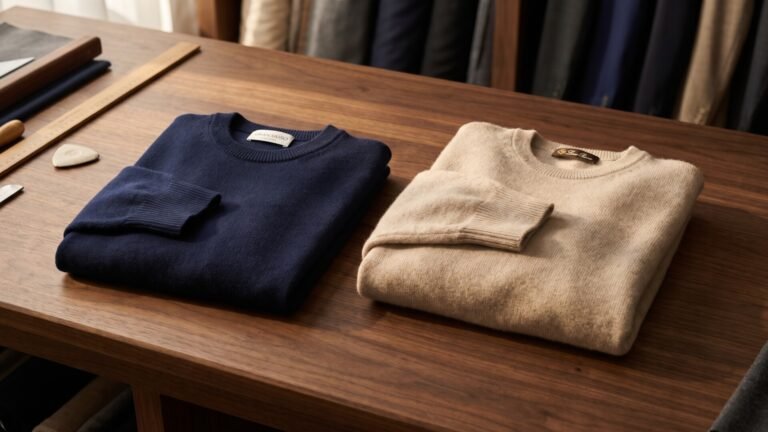
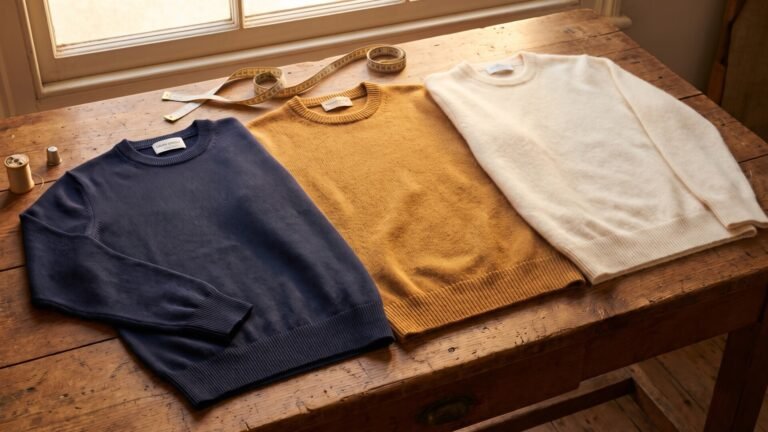
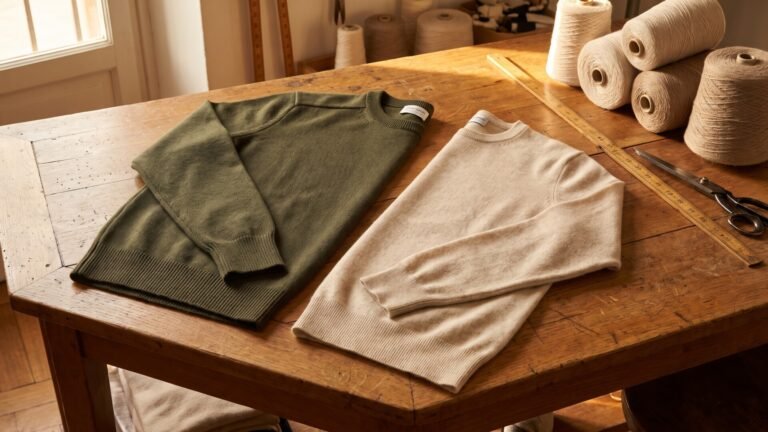
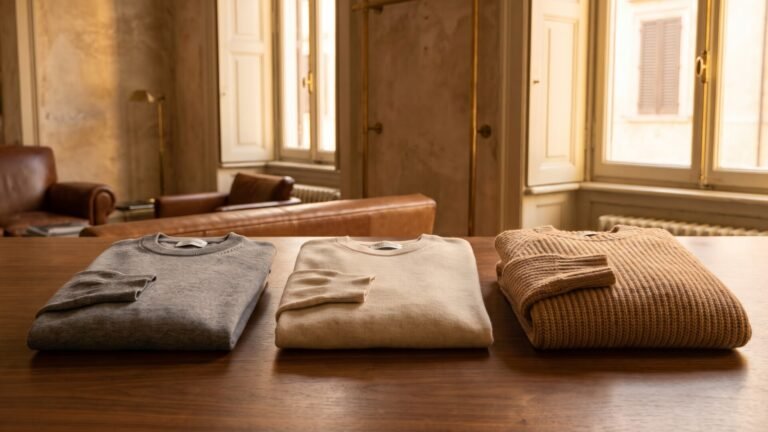
The visual language follows from that: restrained colors (navy, charcoal, camel, cream, grays), classic silhouettes and polished textures. A Gran Sasso sweater reads as expensive to someone who knows what they are looking at and as a plain good sweater to everyone else. For a certain kind of buyer, that is exactly the point.
The Value Nobody Talks About
Here is the contrarian observation worth carrying into the shop: the best Gran Sasso purchase is almost never the most expensive piece in the collection. Most buyers walk in drawn to the cashmere, and cashmere is where the brand’s pricing climbs fastest. But the merino and fine-wool knits are where Gran Sasso’s specialist skill shows most clearly per dollar, and where you will get the most wears. A $295 merino crewneck is a price point at which the big houses do not compete at all.
Consider what actually happens to a sweater in a real wardrobe. It gets worn under a jacket, folded into a bag for a trip, washed more often than the label recommends, and pulled over the head a hundred times a season. A fine-gauge merino handles all of that. It recovers its shape, resists pilling better than soft cashmere, and tolerates careful washing. A delicate cashmere knit worn as often will show wear sooner, and it demands more from you in return.
Fine gauge itself is underrated. A thin merino layer fits beneath a blazer or coat without bulk, travels flat, and layers over a shirt as readily as it wears alone. The sweaters people reach for most are rarely the thickest or the softest; they are the ones that fit cleanly and go with everything. So start with the workhorse, and add cashmere when you know your fit and will actually protect the garment.
What to Examine Before You Buy
The word "cashmere" on a label is not a quality verdict. It tells you the fiber, not the grade, the staple length, or how the yarn was spun. So ignore the word and examine the garment.
Fibers and what each one asks of you
Merino wool comes from a specific breed of sheep and is fine enough to wear against the skin without itch. It is resilient, holds its shape, regulates temperature, and is the most versatile fiber in the range. Cashmere is the soft undercoat of the cashmere goat: softer and warmer for its weight than wool, and considerably more delicate, because the fibers are shorter and finer. Wool-cashmere blends (Gran Sasso sells many at around 10% cashmere) trade some softness for durability and a lower price. Cotton and linen extend the brand into warmer months. Our guide to how Italian cashmere is made explains why fiber length matters as much as fineness.
The trade-off is always softness against durability. A very soft hand can signal a delicate knit. A slightly firmer merino that feels almost crisp at first will often outlast a cloud-soft one and soften with washing anyway. Read the fiber composition and the intended use, not the adjective on the tag.
Construction and finishing
Gauge tells you how fine the knit is: higher gauge means more stitches per inch and a thinner, more refined fabric. Fully fashioned shaping means the panels are knitted to their final shape rather than cut from flat fabric, which produces cleaner seams and less waste.
Then there is the finishing, which you can judge in your hands. Run your thumb along the inside shoulder seam: if it catches or feels bulky, it was finished in a hurry. The ribbing at cuffs and hem should feel dense and spring back when stretched. The collar should sit level and hold its shape, and the side seam should be flat, without a ridge.
On pilling, be honest with yourself. Even good cashmere pills in friction zones, under a bag strap or where a coat rubs. That is the nature of soft animal fiber, not a defect, and it is managed with a fabric comb rather than prevented by spending more.
Collections and Where to Start
Rather than memorize the range, shop by purpose: everyday merino, polished office knitwear, cashmere layers, seasonal cotton and linen, textured cable knits, and heavier knitted outerwear. For most buyers, the strongest first purchase is a fine-gauge merino crewneck or mock neck in navy, charcoal or dark brown. It offers the broadest styling range, the easiest care and the best cost per wear. Compare it with other brands in our guide to the best Italian cashmere sweaters for men.
On silhouette: a crewneck is the most versatile and layers cleanly under tailoring. A V-neck flatters under a jacket but wants a shirt beneath. A rollneck is the warmest and most elegant under a coat. A polo or cardigan is the refined casual option. Choose by wardrobe need and climate, not by what looks newest.
Matching the knit to the wearer
- The professional dresser: fine-gauge merino in a crewneck, V-neck, polo or cardigan, worn beneath a blazer without bulk.
- The frequent traveler: lightweight merino or a wool-cashmere blend that packs flat and recovers its shape after a day in a bag.
- The cold-weather buyer: heavier cashmere or wool, judged on warmth-to-weight and whether it fits under your coat.
- The wardrobe minimalist: one neutral crewneck, one polo or cardigan, and one lighter seasonal knit before adding color or texture.
How Gran Sasso Compares
Brand comparison only means something if you weigh the right things: fiber prestige, manufacturing depth, design language, price and likely cost per wear. On those measures Gran Sasso lands as a premium-to-luxury specialist, above the accessible labels and below the houses that sell material mythology alongside the garment.
Loro Piana leads on rare fibers and fabric development, and its prices reflect both that and its status. Gran Sasso is the more rational purchase for a buyer who wants understated Italian construction without paying for the top tier of prestige. Brunello Cucinelli sells a complete lifestyle aesthetic, soft, relaxed and instantly recognizable, and part of what you pay for is that identity. Gran Sasso is the more discreet, knitwear-focused choice.
Falconeri is the accessible entry into cashmere; Gran Sasso asks a little more and delivers more specialist construction and a more tailored Italian look. For buyers drawn to textile heritage, Piacenza 1733 and Lanificio Colombo are the names to know: both are Piedmont mills first, with prices to match (roughly $550-$850 and $1,300-$1,850 for a cashmere crewneck in late 2026). Malo brings cashmere heritage and a bolder color sense, and Fedeli excels at refined resort dressing.
| Brand | Best known for | Typical buyer | Relative positioning | Main trade-off |
|---|---|---|---|---|
| Gran Sasso | Versatile Italian knitwear, refined construction | Understated everyday luxury | Premium to luxury | Less global prestige than the famous houses |
| Loro Piana | Rare fibers, fabric innovation | Material prestige and status | Ultra-luxury | Very high prices, diminishing practical return at the top |
| Brunello Cucinelli | Soft tailoring, relaxed luxury | A complete luxury wardrobe language | Ultra-luxury | Paying partly for brand identity and styling |
| Falconeri | Accessible cashmere and fine knitwear | First premium knitwear buyer | Premium | Less specialist distinction, simpler construction |
| Piacenza 1733 | Biella mill heritage, refined yarns | Material and heritage depth | Luxury | Smaller brand visibility |
| Malo | Cashmere, color, tradition | Expressive premium cashmere | Luxury | Fit and styling less universally versatile |
| Fedeli | Luxury leisurewear and knitwear | Understated resort wardrobe | Luxury | Strongest appeal is lifestyle-specific |
| Lanificio Colombo | Premium natural fibers, textile expertise | Exceptional raw materials | Luxury | Less wardrobe breadth than a knitwear label |
For deeper head-to-heads, see our comparisons of Gran Sasso vs Loro Piana, Gran Sasso vs Brunello Cucinelli and Gran Sasso vs Falconeri, or the three-way Gran Sasso vs Piacenza 1733 vs Lanificio Colombo. If fiber quality is your priority, Piacenza 1733 vs Loro Piana is the relevant read.
Where to Buy Gran Sasso and What It Costs
Gran Sasso has no large US boutique network, so most buyers meet it through department stores, independent menswear shops and online marketplaces. Prices at one US specialist retailer (Boyd’s Philadelphia) in November 2026 give a fair picture of the range:
| Piece | Full price | Note |
|---|---|---|
| Wool turtleneck or long-sleeve wool polo | $295 | The best-value entry point |
| Linen or linen-blend polo | $295-$325 | Spring and summer |
| Plush knit crew or Johnny-collar polo | $395 | Seen on sale at about $258-$298 |
| Full-zip knit cardigan | $495 | Heavier layering piece |
European retailers list wool-cashmere crewnecks (80% wool, 10% cashmere) at around €190, roughly $220. We could not verify a current US price for Gran Sasso’s pure-cashmere crewnecks, so check the retailer before you buy. Sale prices we saw ran 25-35% below full price, which makes the end of season a good time to try a first piece. Buy where returns are easy: a sweater that fits is worth more than any discount. If you are weighing it against a mill brand, our Lanificio Colombo vs Gran Sasso comparison shows what the extra money buys.
The Hidden Cost of the Wrong Sweater
Fit is the largest hidden cost in knitwear, and it does not appear on any price tag. A technically superb sweater that pulls across the shoulders, balloons at the waist, or bunches at the wrist will spend its life in the drawer. Divide its price by the two or three times a year you actually wear it and the cost per wear is dreadful, no matter how good the yarn.
Care is the second cost. Cashmere and delicate wool may need hand washing or professional cleaning, flat drying, folding rather than hanging, and protection from moths and abrasion. If that routine does not fit your life, a merino you can wash gently and dry flat will serve you better than a cashmere you are afraid to touch. Our guide on how to care for luxury sweaters sets out the routine.
Wardrobe mismatch is the third. If you live in structured tailoring, fine-gauge knits are what you need. If your climate is mild, cotton, merino and linen blends will earn their place far more than heavy cashmere. And beware the discount trap: a deep markdown is not a saving if the color, size or silhouette rarely leaves the wardrobe.
Judging Value Over Five Years
Divide the price by the realistic number of times you will wear the sweater each year, then add care and repairs. A $300 merino worn weekly for five years costs a little over a dollar a wear. A $900 cashmere worn a dozen times a year costs $15 per outing, however beautiful it is. The cheaper sweater is frequently the smarter buy.
Gran Sasso tends to hold up because the construction is sound and the colors are classic. Recognizable Italian specialist names can resell better than anonymous premium knitwear, but treat resale as partial recovery, not an investment: condition, fiber, color, size and season all move the number. See our guide on whether cashmere holds its value.
- Best value: a well-fitting neutral merino or wool knit worn weekly.
- Best luxury upgrade: a cashmere piece for a buyer prepared to care for it.
- Weakest value: a seasonal novelty that duplicates what you own or demands more care than its wear justifies.
Styling for a Real Wardrobe
The fine-gauge Gran Sasso knit is at its best under a navy blazer, a suit jacket or a tailored coat, where a thinner knit disappears beneath the structure. A charcoal crewneck under a wool coat, with tailored trousers and leather loafers, is the whole argument for the brand in one outfit.
Casual is just as easy: a cream or camel crewneck with dark denim and leather sneakers, a polo under an unstructured jacket, a rollneck with chinos and a peacoat. Keep the palette disciplined (navy, charcoal, gray, cream, camel, dark brown) and let a stronger color be the single accent. A workable capsule: two fine-gauge neutral knits, one polo or cardigan, one lighter seasonal piece, and one cold-weather cashmere or wool layer.
Is Gran Sasso Worth It?
Buy Gran Sasso if you want understated Italian knitwear, value specialist construction over logo recognition, prefer classic silhouettes, and expect to wear the piece regularly for several seasons. For that buyer, it is one of the more sensible purchases in the category.
Choose Loro Piana or Brunello Cucinelli instead if the goal is ultra-luxury identity, exceptional material prestige or a complete recognizable lifestyle aesthetic, and the higher price is genuinely acceptable to you. Choose Falconeri if a lower entry price into cashmere matters more than specialist distinction. Choose Piacenza 1733, Lanificio Colombo, Malo or Fedeli if your purchase is driven by a specific strength: textile heritage, rare fibers, vivid color or resort dressing.
One condition attaches to all of this: Gran Sasso earns its price only if the sweater fits you properly and the fiber matches how you will actually wear it. A beautiful cashmere in the wrong shoulder, or a delicate yarn bought for hard daily use, will disappoint whatever the label. Try it on if you can, check the seams in your hands, and buy the sweater you will reach for, not the one that looks best on the hanger.
Frequently Asked Questions About Gran Sasso
Is Gran Sasso a luxury brand?
It sits in the premium-to-luxury segment. Founded in Abruzzo in 1952 and still family-run, it is known for Italian knitwear construction rather than brand visibility. Its prestige and prices fall below ultra-luxury houses such as Loro Piana and Brunello Cucinelli.
Is Gran Sasso knitwear made in Italy?
Gran Sasso designs and produces at its headquarters in Sant’Egidio alla Vibrata, Abruzzo, and the retail listings we checked state Made in Italy. Check the country-of-origin label on the specific garment, since sourcing can vary by product.
Who owns Gran Sasso?
The Di Stefano family, which founded the company in 1952. Second- and third-generation family members run it today, and it has not been bought by a luxury group. It sells through department stores and menswear boutiques in more than 40 countries.
Does Gran Sasso hold its value?
Recognizable Italian specialist brands tend to resell better than anonymous premium knitwear, but resale depends on condition, fiber, color, size, season and demand. Do not buy it as a financial investment.
Which Gran Sasso sweater should I buy first?
A fine-gauge merino or wool crewneck in a versatile neutral, at around $295 in US stores, suits most buyers. Reserve cashmere for when you are prepared for more careful ownership and already know your preferred fit.