Lanificio Colombo vs Gran Sasso: Italian Knitwear Compared
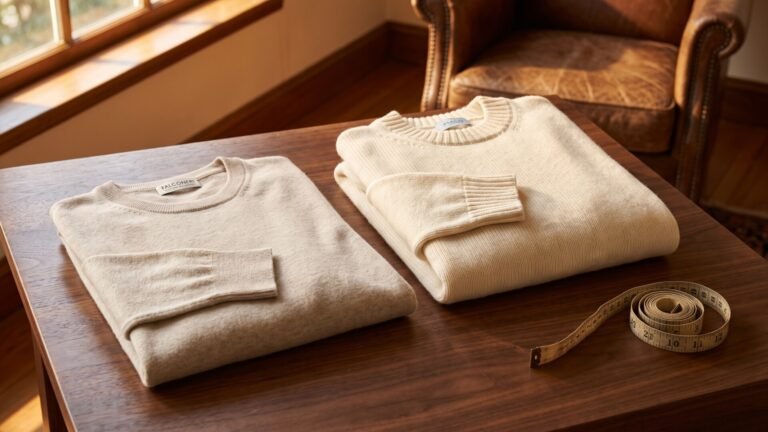
Lanificio Colombo and Gran Sasso both make their knitwear in Italy, both are still run by their founding families, and both sell cashmere crewnecks that look almost identical on a hanger. The price tags are not close: a core Colombo kid cashmere crewneck costs roughly one and a half to three times what a Gran Sasso cashmere crewneck does. This comparison explains where that gap comes from and which buyer each house actually suits.
The short answer: Lanificio Colombo is the stronger choice when exceptional fiber and quiet, material-led luxury are what you are buying. Gran Sasso is the more versatile choice for a working knitwear wardrobe – a wider range of yarns, weights and silhouettes that survive real rotation, at a lower price per piece. The trick is knowing which of those two buyers you are before you spend the money. For the wider field of names, see our guide to the Italian cashmere landscape.
A Mill and a Knitwear Factory: Why the Prices Differ
Most comparisons treat these as two sweater brands. They are better understood as two different kinds of company, and that difference explains most of the price gap.
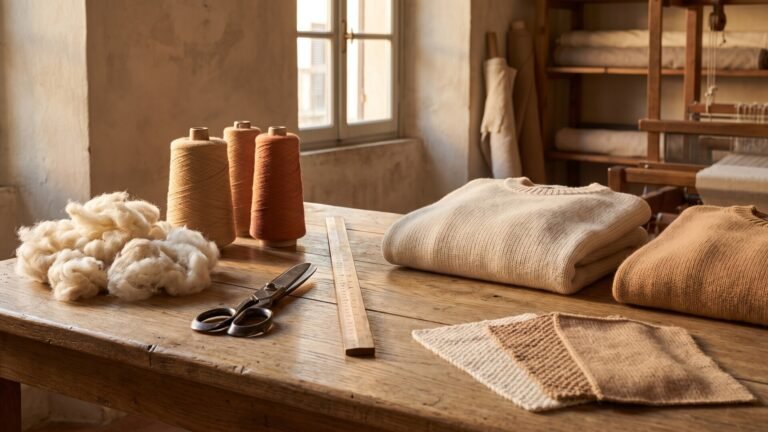
Lanificio Colombo is a mill first. As our Lanificio Colombo brand guide details, Luigi Colombo founded the Lanificio Luigi Colombo in Borgosesia, in the Valsesia textile district of Piedmont, in 1967, and the company still does its dyeing, spinning, weaving and finishing in two Piedmont plants, Borgosesia and Ghemme. It is one of the world’s largest producers of cashmere and noble-fibre fabrics – cashmere, kid cashmere, camelhair, guanaco and vicuña (the fleece of the South American camelid, finer and far rarer than cashmere) – and it supplies cloth to the major luxury houses. In November 2025 Hermès confirmed it had taken a minority stake, reported at 15%, as part of its supply-chain strategy; the Colombo family keeps control. The Colombo ready-to-wear and knitwear line is, in effect, the mill showing what its own yarns can do.
Gran Sasso is a maglificio, a knitwear factory. It was founded in 1952 in Sant’Egidio alla Vibrata, in Abruzzo near the border with Marche, by the four Di Stefano brothers – Nello, Eraldo, Alceo and Francesco – and is still family-owned and headquartered there (more in our Gran Sasso knitwear guide). Its expertise is turning bought-in yarns into finished knits at scale: fine-gauge merino, cashmere, cotton, linen and silk blends, polos, zip-necks, cardigans and heavier seasonal knits. Where Colombo narrows your choice to concentrate it on fibre, Gran Sasso widens it.
What that means for the buyer: with Colombo you pay for vertical control of rare fibre from raw material to finished cloth, and for proprietary yarns such as its Cashmere 4.0 and Kid Wool 12.8. With Gran Sasso you pay for skilled Italian knitting of good commercial yarns, without a mill’s raw-material premium. Neither is a lesser product; they are priced for different things. If you want to understand the fibre side in more depth, read how Italian cashmere is made.
One caution applies to both. Never judge either house by an entry-level piece or a deep-sale item. Compare like with like – match the fibre, the knit weight, the construction and the intended use – or you end up comparing a Colombo scarf with a Gran Sasso heavy wool sweater and learning nothing.
Materials, Yarn Quality, and Construction
Lanificio Colombo: Fiber as the Main Selling Point
The Colombo appeal begins with hand, drape and warmth-to-weight ratio. A good fine-gauge Colombo cashmere sweater feels almost weightless for the heat it holds, and it drapes rather than sits. That combination – light, warm, fluid – is expensive to produce because it depends on long, fine fibres and careful spinning.
Here is the thing most buyers never hear: cashmere is a spectrum, not a binary label. The word on the label tells you the goat, not the grade. What matters is staple length (how long the individual fibres are), yarn strength, knit density and finishing. Long fibres spun tightly into a dense knit will outlast short fibres spun loosely into a cloud-soft one, even if the cloud feels better in the shop.
Colombo’s strongest use cases follow from that: fine cashmere sweaters worn close to the skin, lightweight layers under a coat, scarves, and pieces where the point is the sensation of the cloth. The current range leans on kid cashmere crewnecks, turtlenecks and cardigans, cashmere-and-silk knits for women, and the Kid Wool 12.8 superfine wool line for buyers who want a lighter, more practical alternative to cashmere.
The trade-off is real. Exceptionally fine, soft fibres are less resistant to abrasion. They need rotation, careful washing, protection from rough straps and seat belts, and proper storage. Buy a Colombo cashmere crewneck expecting it to survive daily wear under a backpack and you will be disappointed – not because the sweater is bad, but because you asked it to do a job it was not built for.
Gran Sasso: Breadth of Knitwear Expertise
Assess Gran Sasso through construction variety rather than a single fibre story. The house covers fine-gauge merino, cashmere, cotton, linen, silk blends, textured knits, cardigans, polos and zip sweaters – a genuine wardrobe range rather than a single material thesis. It also makes felted (boiled) cashmere crewnecks, a denser, more abrasion-resistant finish than standard fine-gauge cashmere.
That breadth has practical value most comparisons miss. A denser wool knit or a structured cotton-cashmere layer will often withstand more frequent wear than an ultra-soft, delicate cashmere piece. If your week involves a commute, a desk, a school run and a weekend in the car, a slightly denser knit is frequently the smarter purchase – not because it is finer, but because it suits your habits.
The important discipline: check the specific garment, not the brand in the abstract. Gran Sasso’s durability and value vary by yarn, knit structure and finishing. A tightly spun merino crewneck and a loosely knit cashmere blend from the same label are different products with different lifespans. Read the fibre content, feel the density, look at the seams. Our Gran Sasso vs Falconeri comparison goes deeper on Gran Sasso’s merino-versus-cashmere choices against a cheaper rival.
What Most Buyers Get Wrong About Italian Cashmere
The most common mistake is buying the softest sweater in the shop. Excessive softness feels luxurious immediately and often signals a loosely spun yarn with shorter fibres – which means more pilling, more abrasion and faster shape loss. Softness and longevity pull against each other, and the buyer who chases maximum softness usually gets a garment that looks tired by its second winter.
The second mistake is separating brand prestige from garment suitability. A premium fibre is wasted if the sweater is too delicate for how you actually live. If you commute with a shoulder bag, travel with a carry-on and layer under a coat, you need a knit with some density and recovery.
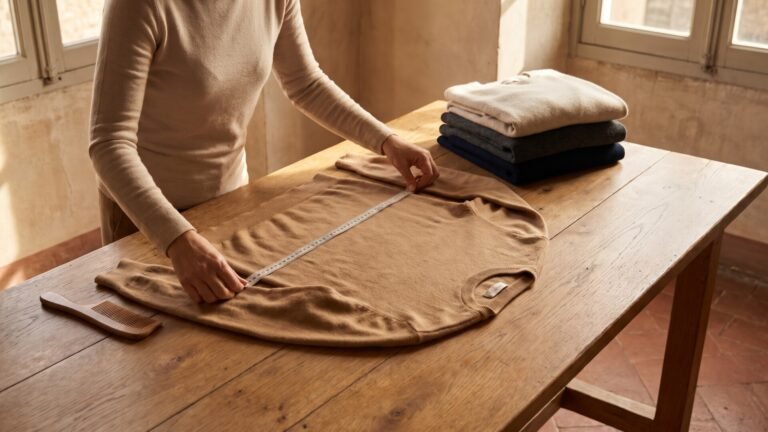
Third, buyers fixate on fibre grade and ignore what decides a sweater’s fate over five years: knit density, recovery at the cuffs and hem, shoulder construction, seam finishing and consistent sizing. A sweater that stretches out at the hem after a season is a bad purchase whatever the label says.
A repeatable framework: first choose the garment’s job – office layer, weekend piece, travel sweater, special-occasion knit. Then compare fibre, construction, fit, care burden, price and expected frequency of wear, in that order. The job comes first because it eliminates most of the range before you look at a single price tag.
Side-by-Side Comparison: Lanificio Colombo vs Gran Sasso
| Feature | Lanificio Colombo | Gran Sasso |
|---|---|---|
| Founded | 1967, Borgosesia (Piedmont), by Luigi Colombo | 1952, Sant’Egidio alla Vibrata (Abruzzo), by the Di Stefano brothers |
| Type of company | Vertically integrated cashmere and noble-fibre mill with its own label | Knitwear factory (maglificio) with a broad men’s and women’s range |
| Ownership | Colombo family; Hermès minority stake since 2025 | Di Stefano family |
| Core strength | Rare fibres and in-house yarns (kid cashmere, Cashmere 4.0, vicuña) | Range of yarns, weights and knit structures |
| Cashmere crewneck, US full price | About $1,200-$2,800 | About $690-$880 |
| Style language | Quiet, polished, minimal | Classic Italian, more texture and silhouette variety |
| Durability outlook | Strong with careful rotation; fine fibres need protection | Easier to rotate often, depending on yarn and knit |
| Best buying strategy | Buy fewer exceptional pieces and protect them | Build a rotation across weights and materials |
Prices are US full-retail ranges seen at the brands’ stockists in November 2026; they move with seasons and exchange rates. Read the table as brand tendencies, not a verdict on every product – both houses make pieces that buck the pattern.
The decision rule is simple. Choose Colombo when material rarity and sensory luxury are the point of the purchase. Choose Gran Sasso when wardrobe range, regular use and construction variety matter more. If you are also weighing a third Italian maker, our three-way Gran Sasso vs Piacenza 1733 vs Lanificio Colombo comparison adds Piacenza’s mill heritage to the picture, and Lanificio Colombo vs Piacenza 1733 compares the two mills directly.
Fit, Styling, and Real-World Ownership
Which Brand Works Better for a Refined Capsule Wardrobe?
For a quiet-luxury capsule, Colombo is the natural fit: simple crewnecks, cashmere cardigans, lightweight turtlenecks and neutral layering pieces. The restrained aesthetic sits easily with tailored trousers, dark denim, understated outerwear and minimal accessories – nothing in the outfit is trying to be noticed.
Gran Sasso suits the buyer who wants variation within the same wardrobe: polos, zip-neck sweaters, textured knits and pieces that bridge smart and casual. If your week moves between a client meeting, a dinner and a Saturday market, Gran Sasso covers more of those transitions. Both fit into the broader approach in our Italian knitwear guide.
Fit priorities differ too. Fine cashmere usually looks best with a clean, close-to-body fit – too much room and the drape collapses into shapelessness. Textured or layered Gran Sasso pieces often need more room, because the knit is bulkier and you will wear them over a shirt or under a jacket.
Travel, Office, and Weekend Use
Colombo travels well as a lightweight, polished warm layer – a fine cashmere crewneck under a coat reads as considered rather than fussy. But it is less forgiving when packed carelessly or worn repeatedly against rough straps. A crossbody strap against a fine cashmere shoulder is a friction problem, and friction is what fine fibres hate.
Gran Sasso earns its keep in frequent rotation, business-casual dressing and transitional weather, where a sweater goes over a shirt or under a jacket. The denser knits take the abuse of a working week more gracefully.
The scenarios buyers overlook are always the same: backpack straps, seat belts, desk edges, jewellery, coat friction, repeated laundering and wearing the same piece several days running. Treat premium cashmere as part of a rotation, never as the only layer in the closet. Three sweaters worn in turn will outlast one worn to death.
Care, Durability, and the Hidden Cost of Choosing Wrong
The ownership requirements are the same for both houses. Follow the care label – Gran Sasso’s cashmere crewnecks, for example, are labelled hand wash. Favour hand washing or professional cleaning where specified, and dry knitwear flat: a wet sweater on a hanger stretches under its own weight, and a dry one does the same more slowly.
The likely failure points are consistent across fine knitwear: pilling in high-friction areas, stretched cuffs, shoulder distortion, moth damage, seam stress, and shape loss from heat or incorrect drying. None of these is brand-specific; they are care-specific.
This is where a purchase can quietly become expensive. A delicate sweater you are afraid to wear, and therefore rarely do, has a worse cost per wear than a sturdier knit you reach for weekly.
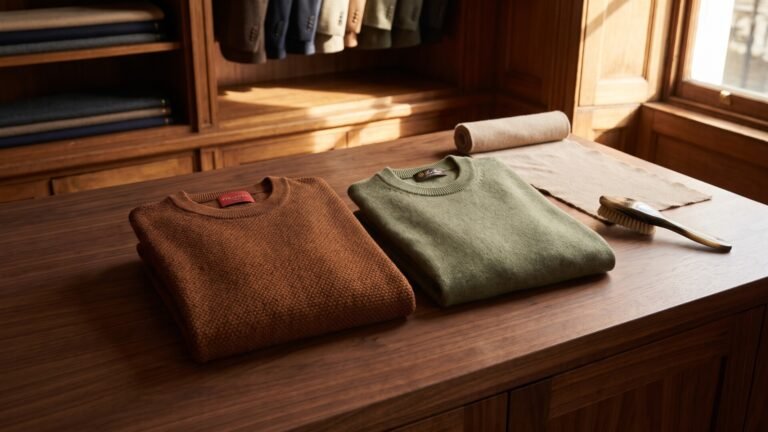
Build a care system. Rotate wears and let fibres rest between outings. Store in a breathable cotton bag rather than sealed plastic, with cedar or lavender against moths. Remove pills with a cashmere comb rather than pulling at them. [Affiliate: a gentle cashmere detergent and a good cashmere comb] cost little and extend the life of everything you own. Our guide on how to care for luxury sweaters covers washing, drying and moth-proof storage step by step.
Price, Cost Per Wear, and Long-Term Value
Compare price by garment category rather than treating either brand as a single price point. At US stockists in late 2026, Gran Sasso’s 100% cashmere crewnecks carry full prices of roughly $690-$880, and off-price retailers regularly sell past-season colours for about $300-$350. Colombo’s core kid cashmere crewnecks start around $1,200, cashmere-and-silk and Cashmere 4.0 pieces run higher, and specialty knits at US boutiques reach $2,000-$2,800; vicuña sits well above everything else. For why Italian-spun cashmere commands a premium at all, see why Italian cashmere is more expensive than Mongolian cashmere.
Cost per wear is the number that matters over time: purchase price divided by realistic uses over the garment’s useful life, with maintenance folded in. Run it on the two crewnecks. A $1,200 Colombo crewneck worn 25 times a winter for six winters costs about $8 per wear; an $800 Gran Sasso crewneck worn 40 times a winter for five winters costs $4. The Colombo only matches the Gran Sasso on cost per wear if you wear it as often and it lasts longer – which is exactly the job fine kid cashmere is least suited to. That is why the honest pitch for Colombo is the experience of the fibre, not value.
Three buyer scenarios show how differently this plays out.
- The occasional luxury buyer who wants one exceptional cashmere piece. Colombo makes the most sense here – buy one, care for it, wear it for a decade.
- The professional buyer who needs several dependable sweaters for weekly rotation. Gran Sasso’s breadth and lower price let you build a rotation across weights and materials for the cost of one Colombo piece.
- The value-conscious luxury buyer who shops seasonal sales or authenticated resale. Both brands reward patience, but check fibre content and condition carefully on resale – a stretched hem does not photograph well.
Neither brand should be treated as an appreciating asset. Neutral colours, classic fits, excellent condition and clear fibre content support resale demand, but resale prices for both sit well below retail; our analysis of whether cashmere holds its value runs the numbers. The best purchase matches your wear pattern, not the highest fibre prestige.
Buying Verdict
Lanificio Colombo wins for pure cashmere experience, understated presentation, and buyers assembling a small collection of exceptional natural-fibre pieces they will rotate and care for. Three years in, a well-kept Colombo crewneck still looks and feels like the reason you bought it. Gran Sasso wins for overall wardrobe utility, broader category coverage and Italian knitwear that works across more occasions; three years in, you own a rotation that covers more of your life.
Skip Colombo if you want a hard-wearing daily uniform or a sweater that tolerates heavy bag friction with little attention. Skip Gran Sasso if you specifically want the most elevated rare-fibre experience and are willing to pay mainly for material refinement rather than range. Choose neither if the fit is uncertain, the care routine is unrealistic, or the piece duplicates sweaters you already own.
Before you buy either, compare the exact fibre composition, knit weight, fit, country of manufacture, care instructions and return policy – those decide more than the label does. Start with neutral colours (navy, charcoal, camel, cream, dark brown) unless you already own those foundations. Then:
- Best for exceptional cashmere: Lanificio Colombo.
- Best for everyday Italian knitwear: Gran Sasso.
- Best for a balanced wardrobe: one premium Colombo cashmere piece supported by Gran Sasso wool, cotton or cashmere layers.
For model-by-model picks beyond these two houses, see the best Italian cashmere brands, or our shortlists of the best Italian cashmere sweaters for men and for women. Both brands also belong in a wider Italian designer clothing wardrobe.
Frequently Asked Questions About Lanificio Colombo Vs Gran Sasso
Who owns Lanificio Colombo?
Lanificio Colombo is still controlled by the Colombo family, who founded it in Borgosesia in 1967. In November 2025 Hermès confirmed it had bought a minority stake, reported at 15%, to secure its supply of cashmere and noble-fibre fabrics. The deal does not make Colombo an Hermès brand: the family keeps operational control and the Colombo label continues under its own name.
What are Colombo's Cashmere 4.0 and Kid Wool 12.8?
They are Lanificio Colombo’s own yarn names. Cashmere 4.0 is used for light knits and deconstructed jackets marketed as crease-resistant; Kid Wool 12.8 is a superfine wool line sold at slightly lower prices than kid cashmere. Treat performance claims as the brand’s description, and compare fibre content and knit weight on the label as you would for any sweater.
How does Gran Sasso sizing work?
Gran Sasso sells in Italian/European sizes, typically 46 to 56 for men. As a rough guide, an Italian 50 corresponds to a US medium (about a 40-inch chest) and 52 to a US large, but cut varies between slim and regular fits. Check the garment’s chest and length measurements on the retailer’s size chart before ordering.
Can you find Gran Sasso cashmere on sale?
Yes. Gran Sasso is widely stocked by multi-brand and off-price retailers, so past-season cashmere crewnecks with a full price around $820 regularly appear for roughly $300-$350. Colombo is sold through fewer stockists and its own boutiques, so deep discounts are rarer. Check the fibre content and size carefully on final-sale items.
Can Lanificio Colombo or Gran Sasso cashmere go in the washing machine?
Follow each garment’s label. The Gran Sasso cashmere crewnecks we checked are labelled hand wash, and fine kid cashmere from either house is safest washed by hand in cool water with a wool or cashmere detergent, then dried flat. A machine wool cycle risks felting and shrinkage on delicate knits, so reserve it for pieces whose label allows it.