Gran Sasso vs Piacenza 1733 vs Lanificio Colombo: Comparing Italian Knitwear Craftsmanship
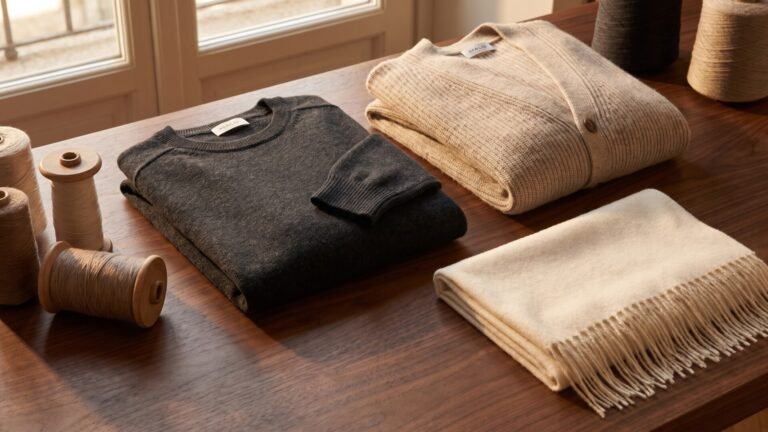
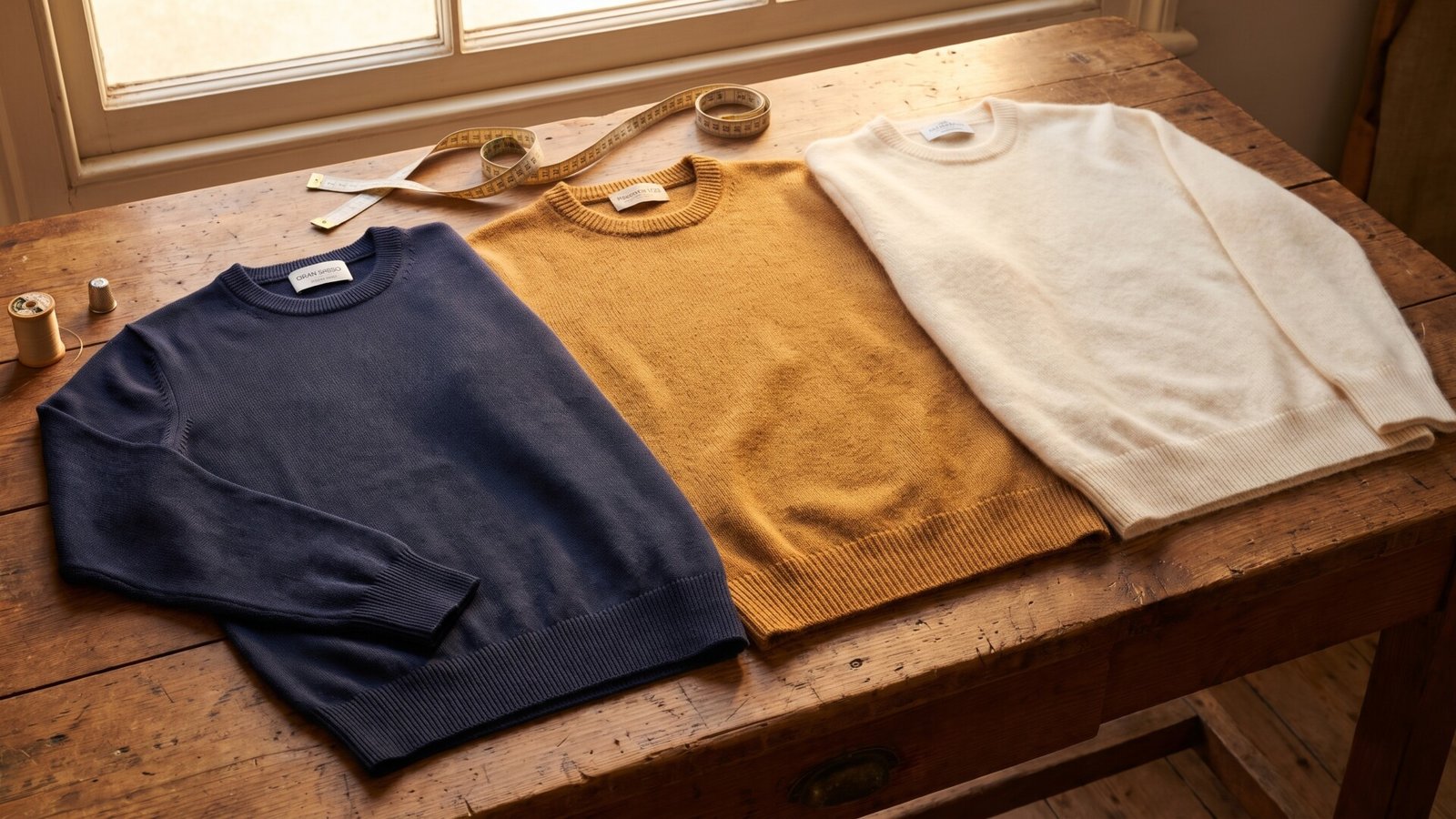
If you want a sweater to wear three times a week, put it in a bag, and not think about it again, Lanificio Colombo is not for you, and neither is most of what Piacenza 1733 makes. If you want to understand why a plain cashmere crewneck lists at around $600 at one of these houses and $1,500 or more at another, and whether the difference is real, all three are worth your attention. The whole tradeoff in one sentence: Gran Sasso gives you the most useful knitwear wardrobe for the money, Piacenza 1733 gives you mill-made cashmere with heritage-led discretion, and Lanificio Colombo gives you the finest fiber experience of the three, provided you are willing to treat the garment like what it is.
The comparison is not about softness, and it is certainly not about prestige. It is about yarn quality, gauge, finishing, silhouette, and how often the thing will actually leave the drawer. Get those right and the brand name becomes a detail. Get them wrong and you have bought a very expensive sweater that lives in tissue paper.
How the Three Houses Approach Italian Knitwear
Italian knitwear splits into two families, and knowing which family a brand belongs to tells you most of what you need before you touch a single garment.
Gran Sasso is a knitwear-led house. Founded in 1952 by the four Di Stefano brothers in Sant’Egidio alla Vibrata, in the province of Teramo, and still family-run, it builds garments (sweaters, polos, cardigans, fine-gauge layering pieces) across a wide spread of fibers and gauges. It buys yarn rather than spinning it, so its identity is the finished object, not the mill behind it. That is a meaningful distinction because a knitwear-led house lives or dies on fit, finishing, and range coherence. It has to make a whole wardrobe, not one hero piece.
Piacenza 1733 and Lanificio Colombo are textile-led houses. They are mills first, spinning yarn and weaving cloth for other luxury labels, and the garment is an extension of the fabric rather than the other way around. Piacenza 1733 was founded in 1733 in Pollone, in the Biella foothills, by Pietro Francesco Piacenza and his son, and the family still owns it; in 2022 the group also bought the Biella cloth mill Lanificio Fratelli Cerruti. Lanificio Colombo is the younger house: Luigi Colombo founded it in 1967 in Borgosesia, in the Valsesia just east of Biella, and it built its reputation on cashmere and rarer fibers such as kid cashmere, vicuña and guanaco.
Heritage, then, means different things depending on who is using the word. For Gran Sasso it means specialist garment construction and a deep bench of knitwear shapes. For Piacenza 1733 it means nearly three centuries of wool and cashmere production. For Lanificio Colombo it means control over the yarn and fiber selection at the top of the market.
Knitter or Mill: What Your Money Buys at Each Price Point
The knitter-versus-mill split is also the clearest way to read the prices, which most comparisons leave out. US list prices below were seen at the brands’ stockists in 2026; end-of-season sales regularly cut them by a third or more.
| House | Type | Plain cashmere crewneck (US list) | Cheapest way in |
|---|---|---|---|
| Gran Sasso | Knitwear maker | About $500–$880 | Merino, cotton or wool-cashmere knits from about $295 |
| Piacenza 1733 | Mill with own label | About $630–$850 | Cashmere scarves and sale knitwear |
| Lanificio Colombo | Mill with own label | About $1,300–$1,850 | Scarves; kid-cashmere knits run higher |
Two things fall out of this. First, Gran Sasso and Piacenza 1733 overlap on cashmere price, so between roughly $600 and $850 you are choosing between a knitter’s fit and range and a mill’s yarn and colour, not between cheap and expensive. Second, Colombo costs about double either of them, and that premium buys fiber: finer and rarer yarns, not more durability. The decision rule: if you will wear the sweater weekly through winter, the $600–$850 band is where the value is; pay Colombo prices only for a piece you want precisely because it is the finest fiber you can buy, and only if you will rotate and hand-wash it.
Craftsmanship, Materials, and Construction Compared
Gran Sasso
Gran Sasso’s strength is breadth, and breadth is underrated. The house works in merino wool, cashmere, cotton, linen, silk blends, and combinations of them, across fine-gauge sweaters, chunkier knits, polos, and cardigans. You can build an entire cold-weather wardrobe from one label without repeating a silhouette.
What to examine in the hand: gauge, the knitting-machine measure of needles per inch and the single best predictor of how a knit behaves. A fine-gauge merino (14 to 16 gauge) layers under a jacket and drapes close to the body. A 7-gauge cashmere is a different garment entirely: warmer, chunkier, more casual. Gran Sasso makes both, and the gauge tells you more about intended use than the fiber label does.
Look at the ribbed cuffs and hem. Good ribbing has recovery: stretch it between thumb and forefinger, release, and it should snap back flat rather than stay stretched. Run your thumb along the inside of the collar seam; if it catches on a raw or hurriedly overlocked edge, the finishing was done quickly.
The trade-off is real. A house that makes this many garments across this many fibers will have variation. A cashmere crewneck and a cotton polo from the same label are not made to the same standard, because they are not the same product. Assess garment by garment.
Piacenza 1733
Piacenza 1733 sits in the quiet-luxury register, and it earns the position through yarn and color rather than design tricks. The core knitwear is classic: restrained proportions, deep and slightly muted color, and a hand feel that comes from yarn selection rather than surface treatment. Alongside the basics, the house also sells jacquard scarves and brighter brushed-cashmere pieces, so the collection is more seasonal than its reputation suggests.
The test here is color depth. Hold a navy Piacenza sweater next to a cheaper navy knit under the same light. Good yarn takes dye evenly and holds it, so the color reads as depth rather than as a flat coat sitting on top of the fiber. Cheaper cashmere often looks slightly chalky or patchy at the surface. Turn the garment inside out: the color should be consistent through the thickness of the yarn, not just on the face.
Finishing on a Piacenza piece tends to be conservative and correct: flat seams, balanced ribbing, no decorative hardware. That is the appeal. It is also the limitation. If your wardrobe runs toward contemporary proportions (a wider shoulder, a cropped body, an oversized fit), Piacenza’s classic silhouettes may feel like they belong to a different wardrobe than the one you actually own.
Lanificio Colombo
Lanificio Colombo is where the fiber conversation gets serious. The house is built on premium cashmere and other luxury natural fibers, and the buyer-facing result is a garment that feels different the moment you pick it up: lighter than expected for the warmth, with a drape that moves rather than sits. Our head-to-head of Lanificio Colombo vs Piacenza 1733 goes deeper into how the two mills differ.
Warmth-to-weight ratio is the term worth knowing. Fine cashmere fibers trap more air per gram than coarser wool, so a thin Colombo sweater can be warmer than a thick commodity knit. You feel this as a garment that layers under a coat without bulk and still holds heat on a cold platform.
The honest caveat: the most luxurious-feeling garment is not automatically the most durable. Very fine fibers (cashmere fineness is measured in microns, with lower numbers meaning finer and softer) are more vulnerable to abrasion, pilling, and shape loss under friction. Wear a Colombo kid-cashmere knit under a rough jacket strap every day for a winter and you will see the cost of that fineness. For the chain from Mongolian goat to finished knit, see how Italian cashmere is made.
Where Gran Sasso gives you breadth and Piacenza gives you heritage balance, Colombo gives you the material experience at its most refined; our comparison of Lanificio Colombo vs Gran Sasso sets that against everyday practicality.
Comparison Table: Gran Sasso vs Piacenza 1733 vs Lanificio Colombo
| Category | Gran Sasso | Piacenza 1733 | Lanificio Colombo |
|---|---|---|---|
| Founded | 1952, Sant’Egidio alla Vibrata (Abruzzo) | 1733, Pollone (Biella) | 1967, Borgosesia (Valsesia) |
| Ownership | Di Stefano family | Piacenza family | Colombo family |
| Core strength | Versatile knitwear and broad wardrobe coverage | Heritage mill, refined cashmere, understated luxury | Premium and rare-fiber cashmere |
| Design character | Classic with practical variety across gauges | Restrained basics plus seasonal jacquards | Luxurious, polished, material-focused |
| Best for | Building an adaptable everyday knitwear collection | One refined piece for work and evening | Fiber-first buyers who rotate and hand-wash |
| Main trade-off | Quality varies by garment and fiber | Less suited to trend-led or casual wardrobes | Highest price and highest care demands |
Read this table as a map of positioning, not a ranking. A Gran Sasso cashmere cardigan may well be the more sensible purchase than a less versatile premium sweater from another house, and the table should not talk you out of that.
What Most Buyers Get Wrong About Luxury Italian Knitwear
The most common mistake is buying the softest sweater in the shop. Excessive softness usually means very fine fibers or heavy brushing, and both pill, abrade, and lose shape faster than a firmer knit. A cashmere sweater that feels like a cloud in the store may look tired by February. The right question is not "how soft is this" but "how will this look after thirty wears."
The second mistake is trusting the fiber label. Two garments can both say 100% cashmere and behave completely differently. A long-staple yarn spun tightly at a firm gauge will outlast a short-staple yarn spun loose and brushed to feel soft on the shelf. The label tells you the fiber. It does not tell you the yarn, the spin, or the finish, and those decide how the garment ages. Our explainer on why Italian cashmere costs more than Mongolian cashmere breaks down what the extra money pays for.
The third mistake is assuming price equals cost per wear. A $1,500 Colombo sweater worn four times a year for three years costs $125 a wear; a $600 Gran Sasso worn forty times a year costs $5. A beautiful garment that is too delicate for your commute, too warm for your office, or too formal for your weekends spends its life in storage.
And fit decides more than any of it. A correctly proportioned Gran Sasso merino crewneck that works with your trousers, jackets, and coats will deliver more practical value than a Colombo cashmere piece that fights everything you own. Measure the garments you already wear well, and buy to those numbers.
Real-World Ownership: Comfort, Durability, and Care
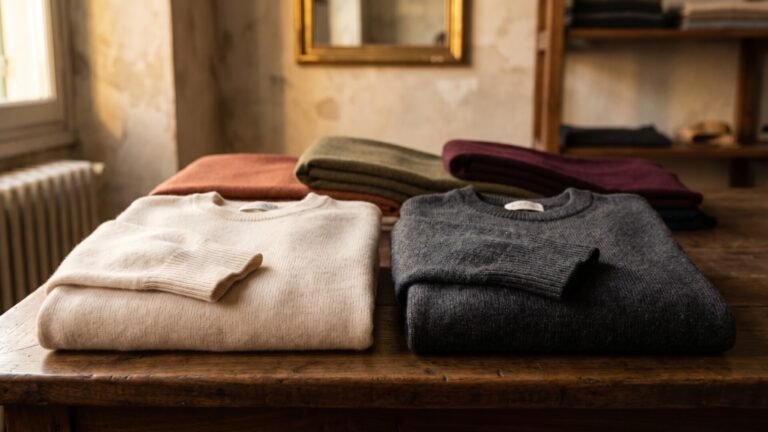
Think about where each house actually fits in a week. Office layering under a blazer: a fine-gauge Gran Sasso merino or a Piacenza crewneck. Travel: a lightweight cashmere that packs flat and holds warmth on a cold flight, which is Colombo’s argument. Weekend wear: a chunkier Gran Sasso knit or cardigan. Formal dinners: a Piacenza or Colombo piece in a deep neutral. Transitional weather: cotton, linen and silk blends, where Gran Sasso’s range gives you the most options. Our Italian knitwear guide explains how gauge changes the way a knit sits under a jacket.
What wears first in fine knitwear is predictable. Cuffs and hems go before bodies, because they take the friction of sleeves on desks and hands in pockets. Underarm areas thin from movement. Shoulder seams strain if the garment is hung rather than folded. Bag straps and seat belts abrade the side of the body, and that is often the first visible damage on an otherwise healthy sweater.
Pilling deserves an honest paragraph. Some pilling is normal in soft natural fibers, especially at friction points, and it is not a defect: it is loose fiber working its way to the surface. A cashmere comb or a fabric shaver used gently on a flat surface removes the pills without pulling the knit. Rejecting a garment because it pills once is the wrong call. Rejecting one that keeps pilling after several sessions is the right one.
Maintenance burden differs across the three. Gran Sasso’s everyday options are easier to integrate and easier to replace. Premium cashmere from Piacenza 1733 or Lanificio Colombo justifies more careful rotation and storage, because the garment costs more and the fiber is finer: rotate sweaters so fibers rest between wears, fold rather than hang, follow the care label, and store clean garments protected against moths. Our guide on how to care for luxury sweaters covers washing, drying and storage step by step.
Which Brand Offers the Best Value Over Three Years?
Value is a calculation, not a feeling: purchase price divided by expected wears, adjusted for care cost, versatility, and likely replacement cycle. Run every candidate garment through it before you decide by brand name.
| Scenario | Best value | Why |
|---|---|---|
| Building a full knitwear wardrobe | Gran Sasso | Breadth across fibers and gauges, strong cost per wear |
| One refined piece for work and evening | Piacenza 1733 | Classic proportions, discreet finish, long rotation life |
| Fiber-first buyer, careful owner | Lanificio Colombo | Warmth-to-weight and hand feel at the top of the market |
| Frequent, rough daily wear | Gran Sasso merino or blend | Robust fibers tolerate friction better than fine cashmere |
Gran Sasso wins where you need several dependable staples and wear knitwear often. Piacenza 1733 justifies its price where one refined cashmere or wool piece moves between professional and formal settings for years; its classic proportions do not date. Lanificio Colombo justifies its premium where you notice fiber quality and will care for the garment properly. If you wear a fine cashmere crewneck twice a week through winter and store it well, the per-wear math works. If it comes out for dinners and holidays, it does not.
The contrarian conclusion: the highest-priced option can have the weakest value. A delicate Colombo cashmere worn rarely and cared for reluctantly is a worse buy than a workhorse Gran Sasso merino worn constantly. And none of the three should be bought for resale; our analysis of whether cashmere holds its value shows why lesser-known mill labels resell for a fraction of retail.
Buying Verdict: Which Italian Knitwear House Should You Choose?
Choose Gran Sasso if
You want the most versatile starting point for an Italian knitwear wardrobe. You need everyday sweaters, polos, cardigans, and layering pieces rather than one specialized luxury garment. Start with a merino crewneck or a cashmere blend, then expand. If you are also weighing a cheaper cashmere label, see Gran Sasso vs Falconeri. [Affiliate: Browse Gran Sasso knitwear collections]
Choose Piacenza 1733 if
You prefer understated luxury and mill-made cashmere at a price that overlaps with Gran Sasso’s. You want a cashmere or wool garment in a deep neutral for professional wardrobes and refined casual dressing that will still look right in a decade. Our Piacenza 1733 vs Falconeri comparison covers it against a lower-priced label. [Affiliate: Explore Piacenza 1733 knitwear]
Choose Lanificio Colombo if
Your primary buying criterion is exceptional cashmere and textile refinement. You are comfortable paying roughly twice as much for hand feel, drape and warmth-to-weight, and you will rotate, store, and clean the garment carefully enough to preserve it. [Affiliate: Shop Lanificio Colombo cashmere]
Before you choose by reputation, compare the exact garment: fiber, gauge, fit, construction, care requirements, and intended use. The label is the last thing you should check, not the first. For the wider field, see our Italian cashmere guide, our ranking of the best Italian cashmere brands, and our Italian designer clothing guide, which puts knitwear in the context of a whole wardrobe.
Frequently Asked Questions About Gran Sasso Vs Piacenza 1733 Vs Lanificio Colombo
Are Gran Sasso, Piacenza 1733 and Lanificio Colombo made in Italy?
All three are Italian companies that manufacture in Italy: Gran Sasso in Abruzzo, Piacenza 1733 near Biella and Colombo in Borgosesia and Ghemme. Made in Italy is still a per-garment label, so check the tag on the specific piece. The raw cashmere itself comes mainly from Mongolia and China, as it does for every Italian brand.
Do Piacenza 1733 and Lanificio Colombo make cashmere for other brands?
Yes. Both are mills that spin yarn and weave fabric for other luxury labels as well as selling knitwear under their own names, and neither generally names its clients. Gran Sasso works the other way round: it is a knitwear maker that buys yarn and also produces knitwear for other labels.
Is Piacenza 1733 connected to the city of Piacenza?
No. Piacenza is the founding family’s surname. The mill is in Pollone, in the province of Biella in Piedmont, while the city of Piacenza is in Emilia-Romagna. The 1733 in the name is the year Pietro Francesco Piacenza and his son set up the wool mill.
How do Italian sweater sizes convert to US sizes?
All three label much of their knitwear in Italian sizes. As a rule of thumb, Italian 48 is about a US 38 chest, 50 about a 40 and 52 about a 42. Fit varies by model, and Gran Sasso tends to run trim, so check the retailer’s measurements before ordering.
Do these brands go on sale?
Yes, mainly through multi-brand retailers at the end of each season. Gran Sasso and Piacenza 1733 knitwear is regularly reduced by a third or more, and in November 2026 some Piacenza crewnecks were marked down from $800 to $320. Colombo appears on sale less often. Sale pieces are often final sale, so confirm size first.
Which is best for a first luxury cashmere sweater?
For most first-time buyers, a midweight crewneck from Gran Sasso or Piacenza 1733 in a neutral colour is the safer start: it costs well under half a Colombo knit and is more forgiving in daily wear. Move to Colombo once you know your preferred fit and weight and are sure you will hand-wash and rotate it.