How to Style Italian Shoes for Every Occasion
Italian shoes are made to be worn, not kept in dust bags for special occasions. A good pair of loafers, Oxfords or boots will usually outlast several outfits, jobs and seasons, provided it is rotated, cared for and resoled when needed. This guide explains how to style the main Italian shoe types for the situations most people actually face: the office, a wedding, travel, a first date, a funeral and an ordinary weekend.
It is organised by shoe type first, then by occasion, then by the small details (trouser break, socks, belts, colour) that decide whether an outfit looks considered or merely expensive. For the wider picture of brands and construction, start with our complete guide to Italian designer shoes.
The Quick Answer: Which Italian Shoe for Which Occasion
| Occasion | Best shoe | Colour and finish | Pair with |
|---|---|---|---|
| Office, business casual | Penny or tassel loafer | Dark brown or black calf | Tailored trousers, sport coat |
| Office, formal | Cap-toe Oxford or derby | Black or dark brown calf | Suit in navy or charcoal |
| Wedding (guest or groom) | Cap-toe Oxford, or a refined loafer for summer weddings | Black or deep brown, polished | Suit, light wool or linen blend in summer |
| Funeral | Plain Oxford | Black, matte to soft shine | Charcoal or black suit |
| First date or dinner | Suede loafer or Chelsea boot | Mid-brown, tan, or dark green suede | Chinos, knit, unstructured jacket |
| Travel | Driving shoe or minimal leather sneaker | Navy, tan, or white leather | Chinos, light trousers, polo or shirt |
| Rain and cooler months | Chelsea or field boot | Waxed or grained calf, rubber or commando sole | Wool trousers, denim, overcoat |
| Weekend | Loafer, suede chukka, leather sneaker | Tobacco, tan, white | Denim, linen, cotton trousers |
The Philosophy of “Sprezzatura”
Before the specifics, it helps to know the idea behind Italian style. Sprezzatura was described by Baldassare Castiglione in The Book of the Courtier, published in 1528, as a studied nonchalance: the art of making difficult things look effortless.
In shoe terms, it means never look like you tried too hard. A pair of well-made loafers is meant to look as if you reached for it without much thought, even though the shoe itself, with its hand-lasted shape, hand-finished edges and fine leather, took a great deal of work. Our piece on what “handmade” really means in Italian footwear explains where that work happens and which claims to treat with caution.
The practical consequence: the more expensive and carefully made the shoe, the less the rest of the outfit should compete with it. Keep colours quiet, keep proportions clean, and let the shoe do its work.
Why Italian Shoes Style Differently: Lasts, Leather and Construction
Styling advice only makes sense if you understand what you are styling. Italian makers tend to use slimmer, more elongated lasts than traditional English makers, whose Oxfords are typically rounder and sturdier. The last (the wooden or plastic form a shoe is built over) decides the toe shape, the volume over the instep and how the shoe sits under a trouser hem. A longer, tapered last reads as more elegant but can look narrow with very wide trousers.
Construction matters as well. Three methods come up repeatedly in Italian shoemaking:
- Goodyear welt: a strip of leather (the welt) is stitched to the upper and insole, then to the outsole. It is durable, water-resistant and easy to resole, so it suits Oxfords, boots and shoes you plan to wear in all weather.
- Blake stitch: the upper is stitched directly to the sole through the insole. The result is a slimmer, more flexible profile that sits close to the foot, which is why it is common on dressier Italian shoes and loafers. It can be resoled, but the process is more specialised.
- Bologna (sacchetto) construction: the upper is stitched into a sock-like pouch, creating a very soft, flexible loafer. It is most associated with unstructured Italian loafers and driving shoes.
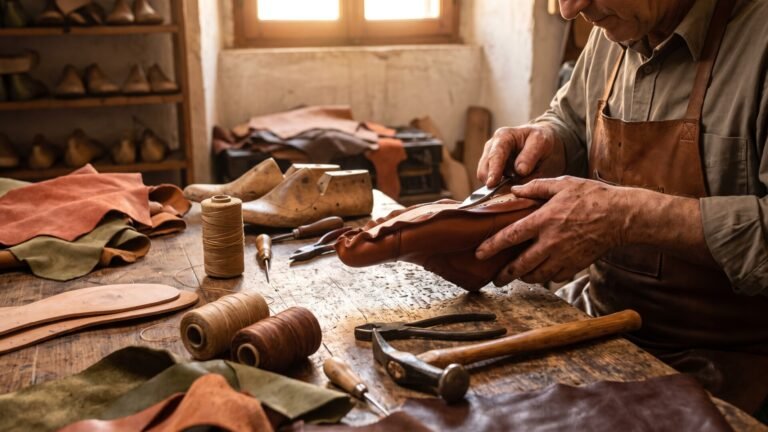
Not every Italian-brand shoe uses these methods, and “Made in Italy” is a labelling claim that applies per product rather than to a whole brand, so check the individual product page when it matters. For soles, see our comparison of leather vs. rubber soles for luxury shoes, since sole choice also changes how a shoe wears in rain and on stone pavement. For the craft behind it, read The Art of Italian Shoe Making.
The Loafer That Does Everything
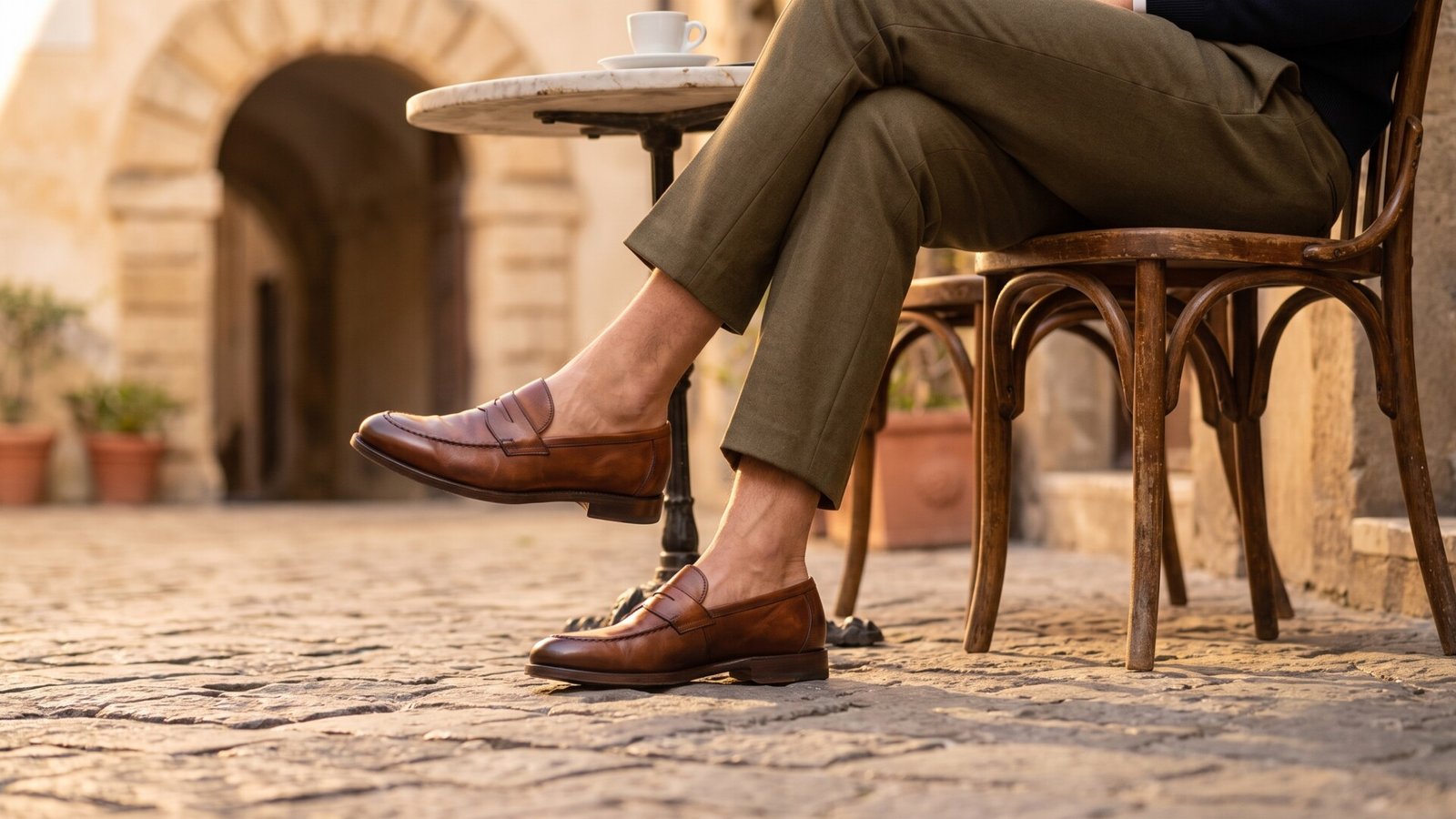
The leather loafer, whether plain, strapped, tasselled or fitted with a horsebit, is the most versatile shoe in an Italian wardrobe. It sits between formal and casual so comfortably that it works in both settings with only small changes. If you are choosing one, see our guides to the best Italian penny loafers for men and the best Italian designer loafers for women.
For the office, a dark brown or black loafer worn with tailored trousers and a sport coat is polished without being stiff. The trouser should just touch the top of the shoe with a slight break, not pool around the ankle and not hover well above it.
For the weekend, the same loafer works with raw or dark denim and a linen shirt. Cuff the jeans once or twice and show a little ankle, which keeps the shoe from looking heavy under a full-length hem.
For evenings, a loafer in velvet or fine black calf, with a slightly elongated last, can be worn with a dark suit and no tie. It is a more relaxed alternative to an Oxford, and it works best when the suit is cut cleanly and the shirt is crisp. Our selection of Italian velvet loafers for the holiday season covers the options.
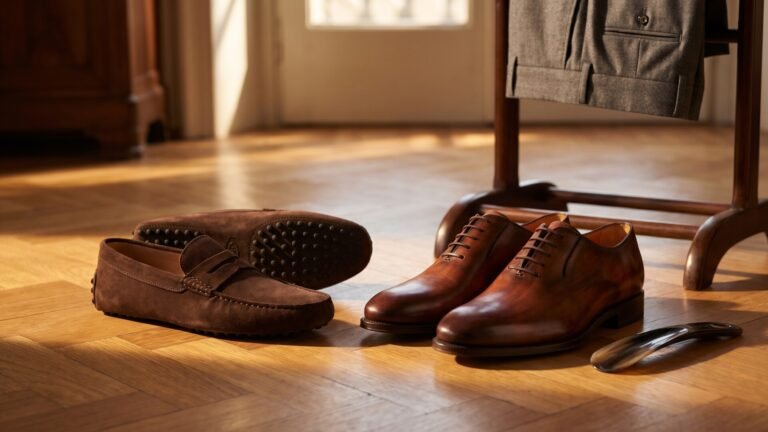
If you want a loafer with a softer, more casual character, the Tod’s Gommino uses a moulded rubber sole with small pebbles and is built for easy wear. See the Gommino vs. driving shoe comparison for how it differs from the classic moccasin-style driver.
The Oxford That Refuses to Be Boring
The Oxford, with its closed lacing, is the most formal shoe in the Western wardrobe. In Italian hands it tends to be slimmer and longer than its English counterpart, which gives it a lighter look with a suit.
For a wedding, as guest or groom, a black cap-toe Oxford is the safest choice for a formal ceremony. A polished toe with a slightly more natural finish on the rest of the shoe looks more refined than an overall mirror shine. If the ceremony is outdoors, check our advice on Italian designer wedding shoes for the outdoor ceremony, because grass and gravel are hard on thin leather soles.
For a funeral, a plain black Oxford with a matte or soft finish, worn with a charcoal or black suit, is the conventional choice. The aim is to avoid attracting attention.
For a job interview, a dark brown Oxford can feel less severe than black while still reading as formal. Black remains the safer pick in conservative sectors such as law and banking.
Derbies, with open lacing, are slightly less formal and often more comfortable for wide feet. If you are unsure whether a style will suit your foot, read how Italian designer shoes should fit before buying.
The Boot That Crosses Borders
Italian boots are generally cut sleeker than work boots and are designed to be worn with tailoring as readily as with denim. They are what you reach for when the weather is uncertain or the evening is undecided.
The Chelsea boot, in brown suede or black leather, is the most flexible option. It slips on without laces and works with jeans, chinos and an unstructured coat. Keep the trouser narrow enough to sit over the elastic gusset without bunching.
The chukka boot, in tan or tobacco suede, is a long-weekend shoe. Wear it with corduroy in autumn or lighter cotton trousers in spring.
The field boot, in waxed or grained calf with a commando or lugged rubber sole, is the practical choice for rain and country walks. Suede is a poor choice for wet weather unless it has been treated; see the care section below.
The Sneaker That Forgot It Was a Sneaker
Italian luxury sneakers are not performance shoes. They are meant for days when a loafer feels too formal and a boot feels too heavy. The reliable formula is leather uppers, a clean white or neutral palette, minimal branding and a slim profile. Our roundup of Italian luxury sneakers that are actually comfortable is a good starting point, and our Zegna Triple Stitch sneaker review looks at one of the more tailoring-friendly options.
For travel, a leather sneaker or a driving shoe is easier to walk in all day than a leather-soled loafer, and neither needs a hard separate sock line.
For the weekend, wear the sneaker with tailored cotton trousers cropped just above the ankle and a knit polo or overshirt. Keep the shoe clean; scuffed white leather undermines the whole outfit.
For a relaxed office, a sneaker works only when everything else is sharp: a blazer, a pressed shirt, trousers with a crease. The shoe is the concession, not the focus.
Styling Italian Heels, Flats and Sandals
The same principles apply to women’s footwear, with a few additions. A pointed or almond-toe pump in nude, black or deep red works with tailored trousers and dresses alike; a block or low stiletto heel is easier to wear through a full day than a very thin one. Italian flats, such as ballet flats and refined loafers, replace a heel in smart-casual settings when paired with cropped or ankle-length trousers that show the shoe.
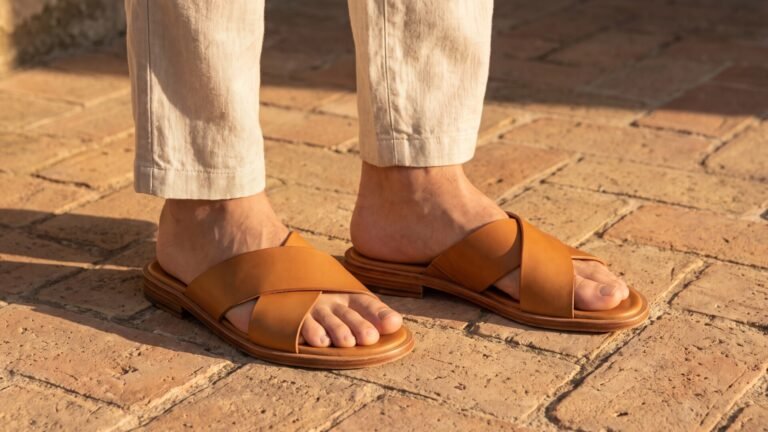
Sandals are strongest when the rest of the outfit is simple, so the strap work and leather finish stand out. For current directions, see 5 Italian designer sandal trends for summer 2027. If you own patent leather, our guide on cleaning patent leather Italian heels explains how to keep it looking sharp.
The Shoe That Matches the Room
The Italian proverb l’abito fa il monaco (the habit makes the monk) captures the idea that clothing shapes how others read you. The shoe, as the point of contact with the ground, is often the first place people look. A useful question is not “what goes with this outfit?” but “what does this setting require?”
Business meeting: choose a shoe with some structure, such as a cap-toe Oxford or a loafer with a leather sole and a small heel. You want something that reads as serious.
First date: suede or a softer colour tends to look approachable. Avoid anything that looks over-prepared.
Funeral: black, polished but not gleaming, with no visible decoration.
Celebration: this is when velvet, a bolder colour or a tassel or buckle detail makes sense.
Colour, Belts, Socks and Trouser Break
Small details do most of the work in making shoes look right. A few rules that hold up:
- Belt and shoes: they should be in the same colour family, not an exact match. Black with black, brown with brown (within a shade or two) is enough.
- Navy and grey suits: dark brown and black both work; with navy, mid to dark brown reads slightly more relaxed. With a black suit, wear black.
- Socks: choose them deliberately. Fine wool or cotton in a tone close to the trouser is the safe option with tailoring; no-show socks suit loafers and sneakers in warm weather but look out of place with a suit.
- Trouser break: a slight or no break suits slim Italian lasts. A full break swallows the shoe and shortens the leg.
- Suede: works best from autumn through spring in browns, greens and greys. It is less formal than calf and not ideal for wet weather.
Common Styling Mistakes
Wearing new shoes to a big event. Leather needs a few outings to adapt to your foot. Wear new shoes at home and on short trips before a wedding or a long day of standing.
Matching too exactly. A belt a shade off the shoes looks natural; a perfect match can look like a uniform.
Ignoring the sock. The sock is the transition between trouser and shoe, so pick it deliberately rather than as an afterthought.
Assuming price equals style. A more expensive shoe does not style itself. A well-fitted, clean, well-chosen pair at a lower price will look better than an ill-fitting luxury pair. If you are weighing cost against quality, read are luxury Italian shoes worth the money?
Saving them for later. Shoes that never leave the dust bag do not age well; leather can dry and creases can set when it is stored for long periods without wear. Regular wear, with rest days between wears, is better for the leather.
Building a Small Italian Shoe Wardrobe
You do not need many pairs. A compact, practical rotation for a man might be: one pair of black cap-toe Oxfords, one pair of dark brown loafers, one pair of suede Chelsea or chukka boots, and one pair of leather sneakers. For women, a comparable core could be a neutral pump, a leather loafer, a flat or ballet shoe, an ankle boot and a minimal sandal.
Rotating pairs, ideally giving each at least a day of rest, lets leather dry out and lets cedar shoe trees restore the shape. That is also the most economical approach: a shoe that is resoled and cared for lasts far longer than a pair worn daily until it fails. Our comparison of Italian vs. French luxury shoe brands and the broader Italian shoes vs. French shoes piece can help you decide which houses suit your taste and budget.
The Care That Completes the Style
Maintenance is part of how a shoe looks. A well-brushed, conditioned pair catches light differently from a dry, scuffed one, and shoes kept on shoe trees hold their shape. For a full routine, see our guide to how to care for Italian leather shoes.
After each wear: insert cedar shoe trees, wipe off dust and let the shoes dry naturally if damp, away from direct heat.
Weekly or monthly, depending on use: brush the surface, and apply a suitable conditioner if the leather looks dry. Test any product on an inconspicuous area first.
Yearly: have a cobbler check the heels and soles. Replacing a worn heel tip early is cheaper than repairing a damaged heel block, and a Goodyear-welted shoe can usually be resoled more than once. For valuable or delicate leathers such as exotic skins, patent or heavily coloured suede, professional care is the safer option.
Where to Go Next
If you are still choosing, start from the Italian designer shoes guide, then narrow down by shoe type through the loafer, driving shoe and boot guides linked above. The most useful habit is simple: buy the pair that fits and suits how you actually live, then wear it and look after it.
Frequently Asked Questions About Styling Italian Shoes
What are the most versatile Italian shoes to own?
A dark brown or black leather loafer is the most versatile single pair, since it works with tailoring and with denim. Add a cap-toe Oxford for formal events and a suede Chelsea boot for cooler months.
Can you wear Italian loafers with a suit?
Yes, in most business-casual and many evening settings. Choose a slim, dark loafer in calf or fine suede, keep the trouser break slight and avoid chunky or heavily decorated styles for formal meetings.
Should shoes match your belt?
They should be in the same colour family rather than an exact match. Black shoes with a black belt and brown shoes with a brown belt of a similar shade is enough.
Are Italian shoes good for rainy weather?
Leather-soled shoes are poor in sustained rain, and suede stains easily. Goodyear-welted boots with rubber or commando soles, in waxed or grained calf, are the better option. Always let wet shoes dry naturally on shoe trees.
What socks should you wear with Italian loafers?
With tailoring, choose fine cotton or wool socks in a tone close to your trousers. No-show socks work with loafers in warm weather or casual outfits but are not suited to a suit.
How often should you wear the same pair of leather shoes?
Ideally, no more than every other day. Resting a pair for a day on cedar shoe trees lets moisture escape and helps the leather keep its shape.
What is the difference between Italian and English Oxfords?
Italian Oxfords generally use a slimmer, more elongated last, while English Oxfords tend to be rounder and sturdier. Construction varies by maker in both countries, so check the individual product.